



The day is quite warm today, as in, no jacket required, and The Girlfriend and I were checking out the property, mostly tallying the beaver activity, which will come along in a later post since it’s on video. But right near where the ibis had snagged the suspicious, eel-looking thing, I was remarking about wanting to drag a net through the shallows in the spring to see what could be dredged up, when I spotted something, again, suspicious-looking, and fished it out of the debris at the edge of the pond. It was an exact match for the ‘eel,’ what I could make out in the earlier pics anyway, and changed my mind about the species.
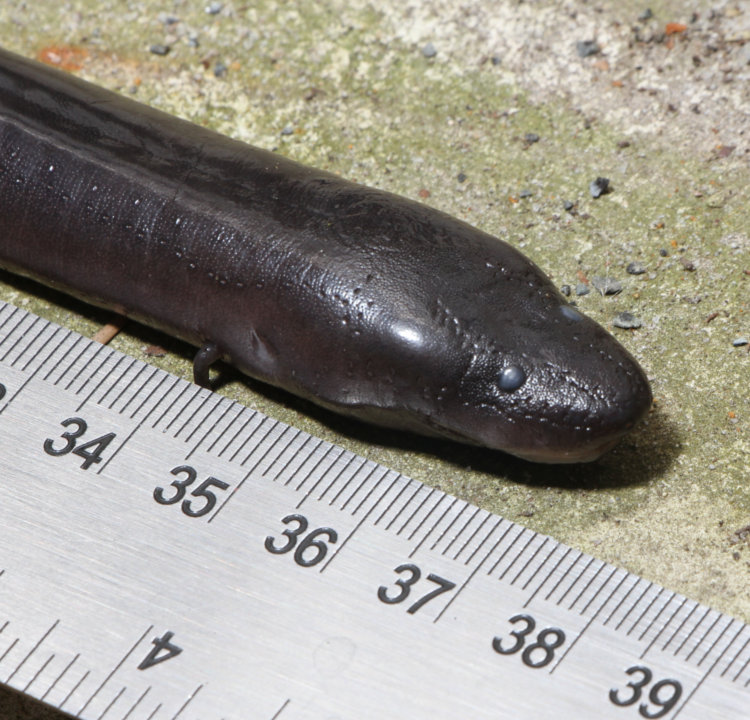
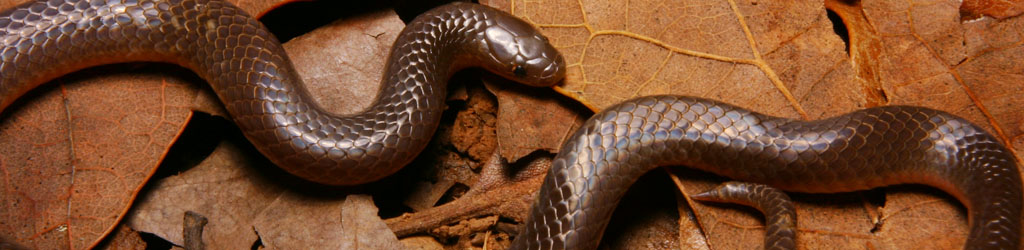
The little legs, at least, indicated that this was a salamander of some kind, but the lack of dorsal and ventral fins added to that. I wasn’t at all familiar with this species, especially not one as big as this, and it was big:
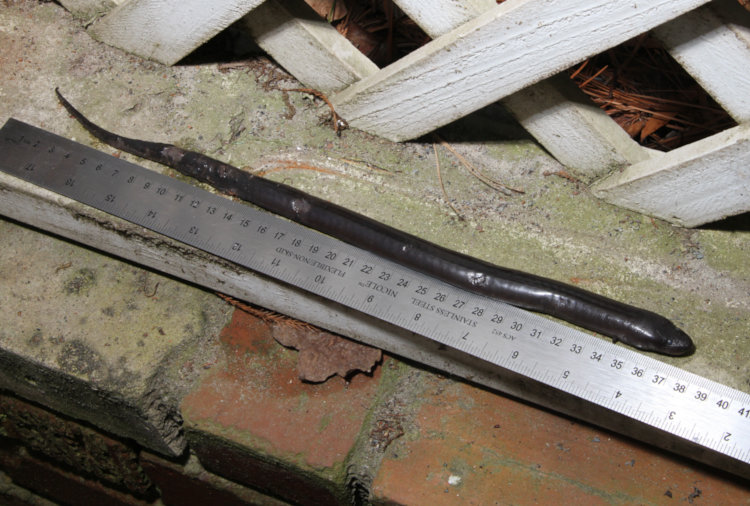
That’s 38cm in length, so I can perhaps (probably not) be forgiven for mistaking it for an eel, since my experience with salamanders has been with specimens less than a third this length, with much more noticeable legs. However, this is likely a two-toed amphiuma (Amphiuma means,) and they can get much, much larger than this – like, better than a meter! They are also occasionally, colloquially, referred to as, “conger eels,” so I’m not the only one making the mistake, though granted, comparing myself to the ‘locals’ isn’t doing me any favors
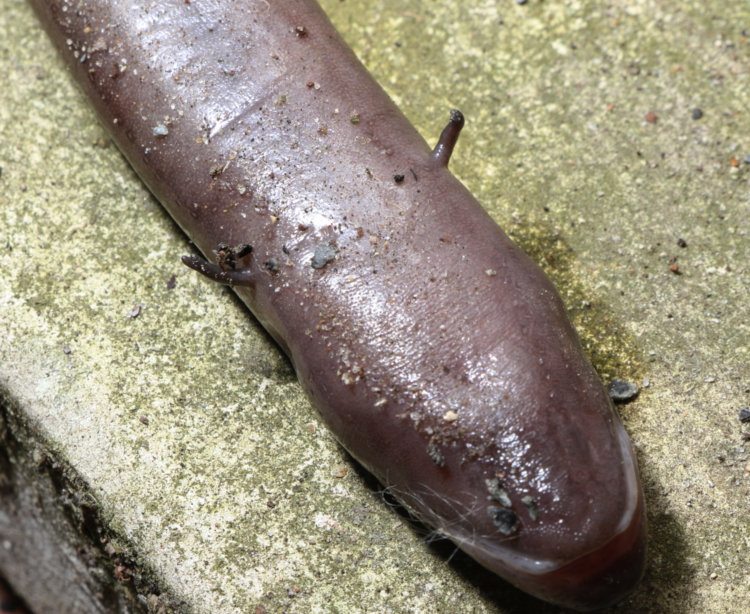
A better look at the forelegs, and we’re being generous to call them, “legs,” really. But we need a closer look at the ends of them, so we crop much tighter and go full-res:
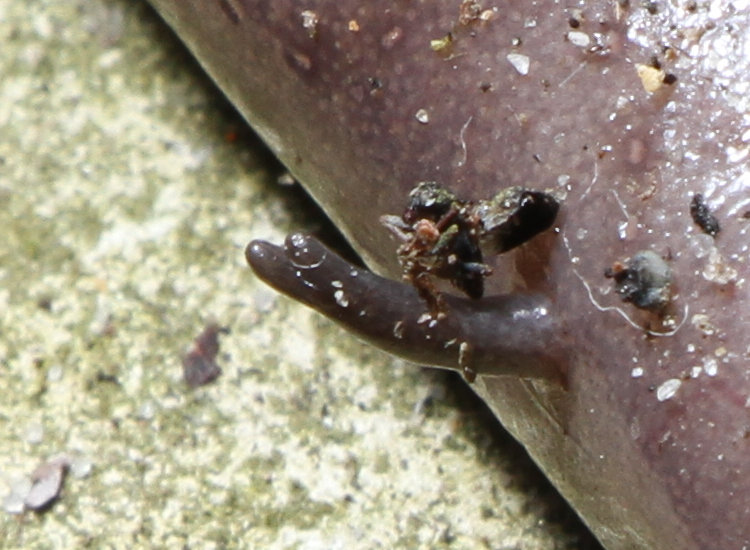
Now we can just make out where the name comes from, but it’s probably safe to call these, “vestigial.” We’re not going to see them climbing trees with these, is what I’m saying.
This is exactly their habitat, though, and I’m a little surprised not to have found any before this, but I’ve also done very little in the pond, and will likely be correcting this in the spring when the water’s a bit warmer. Meanwhile, looking this up has made me realize that I don’t know a lot about the various salamanders in the area, though the vast majority of species in NC are all mountainous, and often very specific portions thereof to boot.
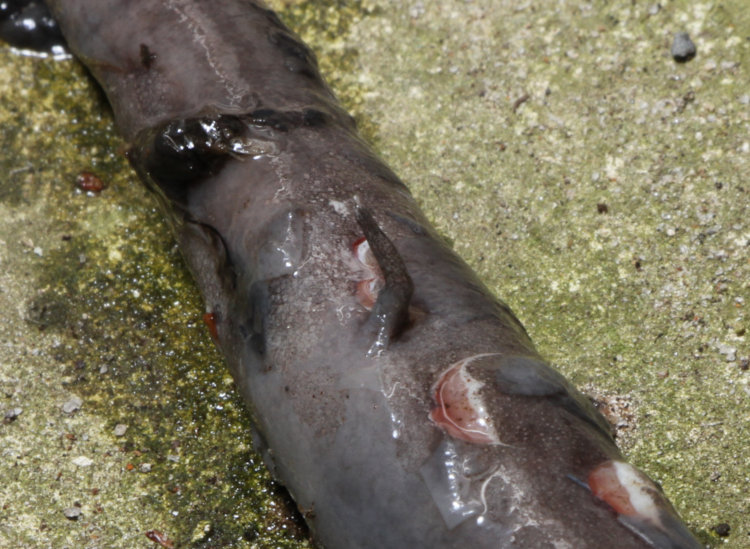
A look at one of the hindlegs, as well as what appears to be some damage from a potential predator. It’s possible, given the location and its presence right near the surface, only partially hidden in the debris, that the ibis had found this one too, but discarded it as being dead too long. Or perhaps it had gotten interrupted, since we were under deep-cooling to frozen conditions while the ibis was hunting – my specimen doesn’t seem too degraded.
Anyway, that’s one mystery solved, and another set of goals for the spring. And maybe dinner tonight…