A few other bloggers have eviscerated this article, and I’ve specifically avoided seeing what they had to say because I wanted to read the article first. Once I did, I found I needed to make my own comments. So while three of my four readers might already have seen those same bloggers, I’m taking the chance of sounding like a broken record by posting my critique of Be Scofield’s 5 Myths Atheists Believe about Religion.
Scofield gets off to a decent start, really, by admitting that atheists on average know more than most religious folk, an interesting fact demonstrated by more than one exam on scriptural passages. And he says something I’m in total agreement with:
But of course simply knowing more than other religious people about their traditions doesn’t preclude holding to false beliefs of their own.
… which is a fine point and a good thing to remember, even if he only made the comment as lead-in to his top five list. Nonetheless, Scofield mostly remains careful to make distinctions rather than overgeneralize, and certainly makes an effort to be fair, for which I give full credit.
So we move onto the myths, counting down from #5. Liberal and Moderate Religion Justifies Religious Extremism. Scofield relates, accurately, how some prominent atheists maintain that even moderate religious belief allows for extremism to be present or grow, in essence stating that even a mild belief system can foster the damaging aspects of rabid fundamentalism. Scofield finds this to be exaggerated, and draws several analogies:
Are the people who casually smoke marijuana in any way responsible for the death of someone involved in a violent heroin drug trade? Is a social drinker of alcohol creating the environment that leads to alcoholism? Should they be shunned for supporting conditions that cause tens of thousands of alcohol-related unwanted deaths? Is a pediatrician responsible for Nazi medical experiments simply because he or she participates in the field of medicine?
Let’s get that last out of the way first, since it’s a terrible example of a Slippery Slope fallacy and doesn’t even make sense (and Scofield even provided more, just as far afield.) The other three are more on target, but demonstrate an oversimplification of the issues that misses the thrust of the debate. Change the second question is a small way, to, “Does a culture that permits and even glorifies alcohol lead to alcoholism?” Does this sound a lot more like what religion actually does, and if so, what now of the answer? Scofield hopes to draw a parallel between the actions of an individual and religious belief within a culture, but obviously this is hard to support. Religion is not, and has not ever been at any point in human history, a personal choice kind of thing; if it was, there would be far fewer people decrying it. But when there are active movements throughout the US to teach it in schools, enforce it through laws of the states, and define or take away individual liberties based on some supposed divine authority, to then try and compare this to personal preference or action is juvenile at best, but I’m going to go for incredibly dishonest myself.
Scofield may want to label such actions as “extremism,” but the amount of support for these is not coming solely from radical churches and individuals – it’s pretty pervasive, and can be traced by state, not by (as one might expect) proximity to a radical church. One could ask whether Scofield thinks the various senators, congresspeople, and state representatives who support bills against gay marriage are considered “extremists.”
Regardless, there’s another point in there that’s completely missed, which is how moderates actually respond and react to extremism, something I’ve brought up numerous times before, here and elsewhere. Our culture is deeply involved with the idea of religious people being “good,” and rarely makes the distinction between the label and the actions thereof. It takes no effort whatsoever to find plenty of people finding ways to defend priests and churches caught deeply involved in unethical and criminal acts – this is not done by people who can distinguish good from bad in the slightest, but only by those who want to blindly defend the label of “good.” Those that consider themselves moderately religious are virtually never seen speaking out against extremism, most especially from their own particular tenet of religion, and, like Scofield, become quick to defend religion from a standpoint of the good it does rather than accepting any blame for the bad.
I could list example after example, but to state my point simply, the more rational and tolerant uses of science, religion, medicine or government cannot be blamed for the destructive and harmful uses of them.
Of course, right off I’m going to ask what the rational use of religion is, which is one of the points that is made often by atheists; you cannot consider it rational if it has no premise to base rational thought upon. As soon as you go outside scripture to say something like giving aid to the homeless is good from a sympathetic, societal point of view, you have eliminated religion as the pre-eminent cause of such altruism anyway.
There is also the recognition, conveniently ignored here, that religion is an ideology, and as such, doesn’t really compare in any way to science and medicine, and only vaguely to government in the broadest of senses. Ideology can guide science, medicine, and government – it does not stand as a body of knowledge, but as an instigator of value itself. It can, most certainly, be blamed for destructive and harmful uses.
Further, what Scofield dodges with this analogy is that a cultural dependence on supernatural causes and beings allows for the more obvious abuses thereof. Religious folk are very fond of claiming that we have no way of knowing what might lie outside our immediate physical senses, but somehow this does not slow them down into supposing and even asserting what this must be. And once you’ve opened the door to unprovable assertions, you make these permissible to use by others. Religion relies on a special exemption: not only are we allowed to believe in ethereal concepts, we are actively encouraged to, and requiring some kind of supporting facts for a standpoint is considered blasphemy, sometimes literally. In this way we have created a culture of reliance on, and deference to, imaginary ideas. Yes, they are indeed imaginary – there is absolutely no way anyone could examine the pantheon of religious belief and find any consistency whatsoever, much less testable facts, so what else could it possibly be called? And it is this point that the more prominent atheists have made. Nowhere else in our culture, or any culture, is someone allowed to dodge providing support for their viewpoints or proposals by invoking unknowable sources. When people do this with topics such as alien abductions and government conspiracies, we consider them cranks. Why do we allow this inconsistency to continue?
Scofield continues with #4. Religion Requires a Belief in a Supernatural God, which would seem to be in response to the point I made above about imaginary ideas. True enough, the dictionary definition of religion is rather broad, and plenty of people chose to interpret it as they see fit, sometimes merely as “spirituality.” In practice, however, what anyone hopes to accomplish with this kind of argument is exactly what I pointed out above: exemption from examination and proof (as well as granting importance to their emotions.) While the majority of people behind any movement such as denying gay marriage or women’s rights will be theistic, specifically christian or muslim, apparently addressing the majority reliance on an unprovable source of authority means that atheists are finding “easy targets.” And despite his desire to refer to dictionary definitions to make a weak point, he misses the exact same point with atheism, which by definition means “non theism,” and theism doesn’t refer to spirituality or vague earth consciousnesses, but only a singular, active god. In reality, though, most atheists are such because they require something concrete, not to believe in, because belief is considered a corrupt crutch on thinking, but to actually provide some reliable effect. As such, every vague definition of “religion” that Scofield would like to wield falls flat. Not much of an argument for a top five.
Taking the bronze is #3. Religion Causes Bad Behavior, which is a favorite among many.
A common way for atheists to denounce religion is to simply list all of the horrors that have been done in the name of religion and then say, “Look how awful religion is!” Religion becomes synonymous with all of the bad things done by religious people. But is religion the cause of bad behavior or simply a mitigating factor?
Scofield then goes on to extensively quote Christopher Hitchens as saying, very clearly, that bad behavior is a human trait, only exacerbated by religion. I can’t help but think that it might have been better to actually demonstrate that the myth exists, rather than quote a prominent atheist debunking it, but at least he’s not avoiding the evidence of contradictory viewpoints. The discussion about religious violence has progressed far beyond religion as a root cause for decades now – the question has long been, “How much does religion encourage, allow, or condone violence?” One must ask, if they have any sense whatsoever, why religion is so very frequently found inextricably tied up with violence throughout the world? While correlation is not necessarily causation, correlation is a very distinctive indication of relation, and one that bears careful examination. To ignore that a lot of people throughout history have been moved to violence by the belief that they are doing something “good” is nothing but abject denial.
Of course religion is also a very powerful re-enforcer of our most beautiful, inspiring and profound aspects as well. It can inspire the best and worst in us.
Scofield seems to want credit for bringing up here that religion is indistinguishable from ordinary human behavior. There is a distinct point, however, that gets conveniently ignored every time such arguments are used: religion is specifically supposed to be a force for good. If it isn’t, why fucking bother? And that’s where we find atheists pointing out how often religion fails to inspire good deeds. There is a difference between saying “religion makes people bad” and “religion fails to make people good,” but this distinction is lost on people like Scofield (or, more likely, ignored in favor of an easier argument.) There is no shortage of people willing to give religion credit for all the good that people do, and even for the medical advances and expertise that science has provided, but this is very selective. When someone dies in a pointless way, religion is not to be blamed (or, occasionally, we’re supposed to believe there’s a higher, yet still good, reason.) This is nothing but confirmation bias, like a child proudly proclaiming their superiority when they successfully called a flip of the coin.
And we return to myth #5 as well. The deference to religion, the belief that it just might explain how the world really works, leaves us with absolutely no answer whatsoever to religious terrorism. We cannot pronounce a suicide bombing or the beheading of a heretic as “bad” whenever a religious motive is claimed, because we have a culture that glorifies religion and allows it to exist without rational support. True enough, many individuals decide on their own what religion is “real” and thus all others are false, but there is no way to establish this in a reasonable way – it can only be arbitrary. Humans need a method of establishing “good” and “bad” outside of the realm of religion, to which religion must defer and be subservient, if we are to have any expectations of countering extremism.
So far, our best point was at #5, and we’ve been going downhill ever since; Scofield does not break this trend with #2. Atheists are Anti-Religious. We see here that Scofield can indeed determine what atheism actually means, and this little point is one that occasionally crops up on forums.
Atheism is not in any way shape or form related to an opinion about religion. It is simply the assertion that god does not exist, nothing more and nothing less.
This is useful only to people who lack the ability to think on their own so badly that they need everything rigidly defined for them. There are definitions for Democrat and Republican too, and what those parties are actually supposed to be in favor of – who really fucking cares? Does it actually apply to what most Democrats and Republicans support? Should there be some kind of effort to coin terms referring specifically to anti-theism, anti-deism, a-spirituality, and whatever else someone wants to be pedantic about? Maybe I’m a vastly superior exception to most of the human race, because I can read, and thus determine what attitude someone has from the points that they make; but I suspect this ability is more prevalent than that, and handy-dandy labels aren’t really needed.
Scofield here demonstrates something that crops up way too often from religious apologists, and often merely from everyday religious folk as well: that everyone else is stupid and needs help understanding simple concepts. I have made the point myself, several times, that I’m more into critical-thinking (or skepticism if you like that label) than atheism, since it covers topics unrelated to religion as well, but it doesn’t stop me from using the term atheist, nor do I think I’m drastically misleading people this way. Am I also anti-religious? Yes, from the standpoint that it is used to determine cultural standards and ideal behavior; no, from the standpoint of what someone wants to believe on their own without dictating terms to others. What’s the label for that? Who cares?
The downward spiral actually lessens a bit with #1. All Religions are the Same and are “Equally Crazy”, but still doesn’t rescue Scofield from poor arguments. Instead, we start to get wrapped up in value judgments:
Many atheists often claim that they are wrongly accused of not understanding the differences between religions. “Of course we do!” I’ve heard them say. But yet this is meaningless unless they are willing to treat these differences differently.
Scofield then goes on to quote Greta Christina, who talks not about the differences between, for instance, buddhism and christianity, but on the common factors that get them labeled as religion in the first place. The point is valid; reliance on immaterial, unprovable, and untestable assertions is a pointless way of attempting to choose what works for people.
Now, you have to recognize someone who quotes just one person, attempts to redefine what it is they’re saying, and then lists this as a myth that atheists are prone to. You recognize them, naturally, as someone who really can’t find a decent argument, and all he needed to get to was five:
For example, by using the term “all religions” she conflates a church attending atheist Unitarian Universalist with a Bible believing, homophobic theist. The venerable Vietnamese Buddhist religious leader Thich Nhat Hanh becomes synonymous with Pat Robertson simply because they are both religious leaders. Dr. King is in the same category as Osama Bin Laden.
No, she said nothing of the sort, and claiming that she did is fatuous. What she was talking about was the basis of religious belief, as she clearly outlined, and thus, each of those figures is equally corrupt in claiming authority and justification for their actions, as opposed to using reasoned and/or scientific or biological facts in their decisions. This does not mean that what they do with this belief becomes exactly the same, and this comparison is shamelessly opportunistic (much like Pat Robertson.)
But again, I feel the need to point out the subtle argument here. Scofield is clearly trying to make a distinction between “good” religious behavior and “bad” religious behavior, but religion cannot, by definition, be qualified that way – religion is the force for good and/or “truth,” as we are constantly reminded. As such, there can be no “bad” religious behavior unless we deny that religion bears that definition. Once we do, of course, we have to consider good and bad from another standpoint, such as what works best for society as a whole, whereupon religion becomes just another political movement. The authority of supernatural guidance or spiritual knowledge cannot hold up for all religions – they are irreparably contradictory, and so one must seek a method of determining which is more “true” than the others, something that has been going on without progress for a few thousand years. Or we can simply go with what works better for people, and use that as a sole (and perfectly functional) authority, and have done with all of the failures of religion that Scofield has been kind enough to outline above.
Misdirection and misunderstanding of useful values is nothing new, and neither are Scofield’s arguments. About the best that I can say is that he may not have intentionally exploited this, but might actually have been honest in intention, if not exactly on target. Then again, who cares? Whether you’re intentionally lying, or innocently misinformed, when you offer bad information makes no real difference.
Amusingly, Scofield makes several points about lumping religious people together throughout the article, but never realizes he attempts to define atheists in exactly the same way. Atheism isn’t a goal, cause, or movement – it’s a standpoint. Whether some statement is made by Christopher Hitchens, Richard Dawkins, Greta Christina, or anyone else really doesn’t matter to me, nor to many atheists I’ve encountered – what matters is what anyone says, and quite frankly, everyone should be following this guideline. While we sometimes find that we (the human “we”) determine that most things expressed by some individual are intelligent or insightful, we sometimes invert this to mean that this person will thereby always be intelligent and insightful, changing the value judgment from the idea expressed to the person expressing it. But it should forever remain on the ideas alone, recognizing fallibility as a human trait, and keeping us alert to distinctions rather than abdicating thought.
For those who missed the significance of the title, it’s a quote from the Wizard of Oz, as the witch sets fire to the scarecrow. Despite Scofield wanting to highlight atheist strawmen with this article, there was no evidence that he had the ability to identify them in any way. Or hoped to misdirect the reader away from his own – one or the other.









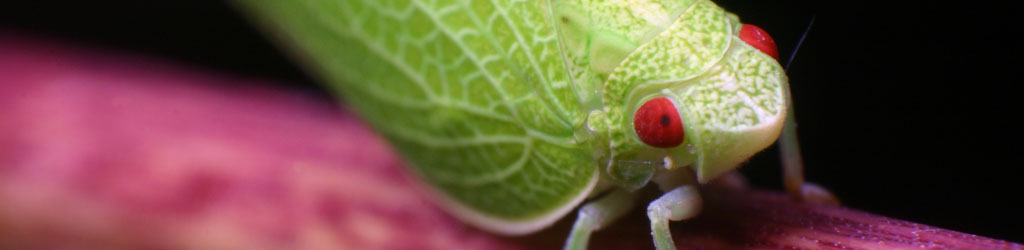








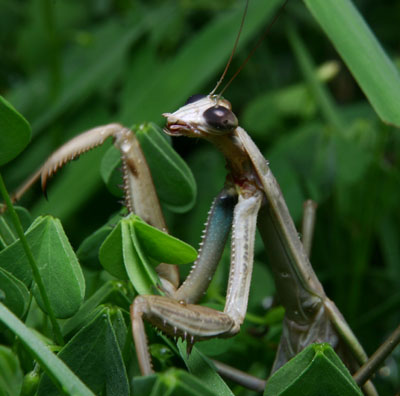 Did you ever wonder, since alien visitors seem to have this thing for sexually examining humans and cutting out cow tongues (because, of all the organs that prove interesting to study, the tongue certainly tops the list,) do they ever abduct insects as well? You’d think they’d have to, wouldn’t you?
 There are tricks that can be used to help alleviate this, but often the result is unnatural-looking and awkward. There are lens filters called graduated neutral density, which are basically tinted through half of the glass, the remainder being clear – the tinted half goes over the brighter portion of the image and is used to reduce the light level closer to that of the darker portions. The problem with these is that one rarely has a nice straight horizon, and when it is present, the fuzzy line between the tint and clear portions of the filter would show unnatural transitions in the resulting image. Most photographers left such filters alone and simply avoided the situations that suffered from too much contrast, watching for conditions that alleviated the problem.
 Now, I’m torn on the issue, personally. Generally, the resulting image represents something not seen in nature, presenting light conditions that really don’t exist, and often cannot. In these times when removing people, trash, or distractions from a scene can cost a photojournalist their career (not just their job,) it seems hypocritical to freely accept a blatant technique of selective imaging. And one of the skills that I’ve learned, and teach, is to work with the light that’s there, or find ways around it. The really good images from the top photographers are often the result of careful planning and being on location for just the right moments – it’s what makes those images special. The prevalence of altered images makes these accomplishments cheaper, and indeed hurts all really good images. It takes virtually nothing anymore for someone to cry “Photoshop!” at an image, even one that saw no such editing, because the media is saturated with alterations, and this makes those special efforts barely worth it anymore.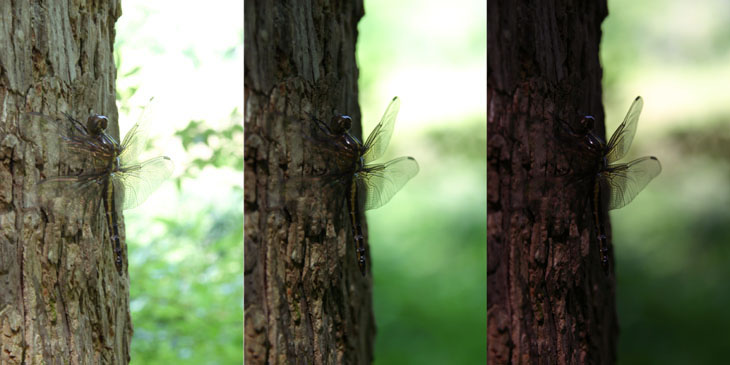
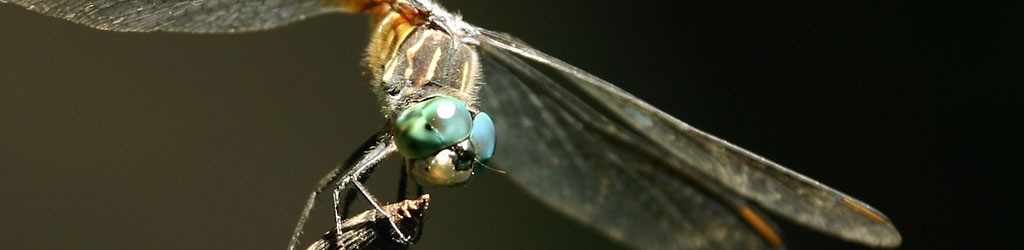
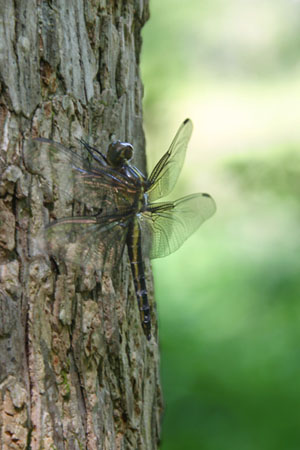 So with those, you can see what got used from each in the resulting image here. Notice how the background blends easily and, while there’s still a blowout of detail into pure white, it’s much less noticeable and harsh. The wing details remain present and sharp, and nothing has gone too dark. Now, in these conditions, I would have been unlikely to get the depth-of-field looking this way, since the depth needed to get the wings on both sides would have rendered more detail from the background, but this is hardly something that jumps out even at experienced photographers and editors. Capturing lighting like this in nature is difficult, since bright sunlight falling on the dragonfly would be necessary to keep it so close in level to the background, but such light would increase the contrast and the shadows of the bark. I could accomplish it easily with a strobe unit and softbox (I had the strobe, and even used it for one image in the
 We know that birds can imprint readily on whoever feeds them from birth, and spiders have much teenier brains, so it’s safe to assume that their “pile on mom” instinct is extremely primitive.
 So this morning I was checking out a new area for nature photography near me, supposedly before the day got too hot (I was wrong.) I wasn’t in search of any particular subject matter, just whatever opportunities arose. When I stumbled across (well, not literally) a dragonfly perched low on a tree trunk right alongside the path, wings still not dried from its new molt and transformation from larval stage, I sat down and start taking photos of it. For forty five minutes.
 “Transitional forms,” as that video clip demonstrated (I apologize for that, but Comfort and Cameron are the most astoundingly bad promoters of creationism,) is another aspect grossly misunderstood. Nobody in their right mind ever proposes one species turning into another existing species; what the evolutionary change provides for is an entirely new species. Religious apologists proclaiming that the world contains no “combination” species are simply demonstrating their profound ignorance, dismally, since this information is readily available even online. If you really want to see a transitional species, look no further than penguins, birds that cannot fly but swim exceptionally well – preyed on, no less, by sea lions, mammals that lack feet anymore (though their skeleton betrays the ancient evidence of them) that also swim better than they walk, yet still have to breathe air, not water. Both of these species, and many more besides, are completely pointless and inept from a design standpoint, and would be much better off with traits that fish have, like gills and scales. They possess the traits that they do because selection makes them work from the changes that the species have undergone in times past. Smaller wings does not do much for flying birds, but they offer an advantage to swimming birds. Fins would be better, but fish have had a much longer time to specialize in their swimming appendages, so penguins and sea lions cope with modified limbs from times when they were flying or walking species.
 We weren’t far from shore, either, and the view was almost as good from there, though it appeared to be private beaches. There was plenty of dolphin activity in our area, and in every direction – we even got glimpses of a “baby” dolphin (years in wildlife rehab make me put that in quotes, since the more appropriate term is “juvenile,” it just doesn’t give the right impression.) Speaking of juveniles, the young children on our boat were a hoot, excitedly pointing out every last appearance, though occasionally they were a bit misleading. “Mom! Look!” they would cry, and as nearly everyone on the boat craned around to see where they were pointing, they’d exclaim, “Jellyfish!”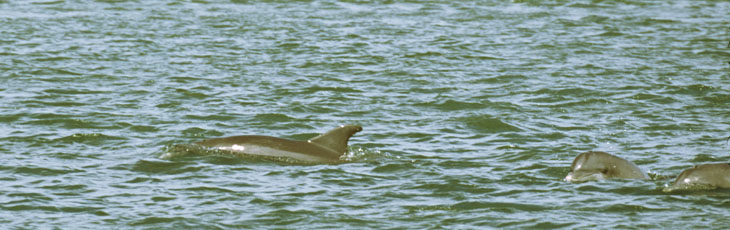
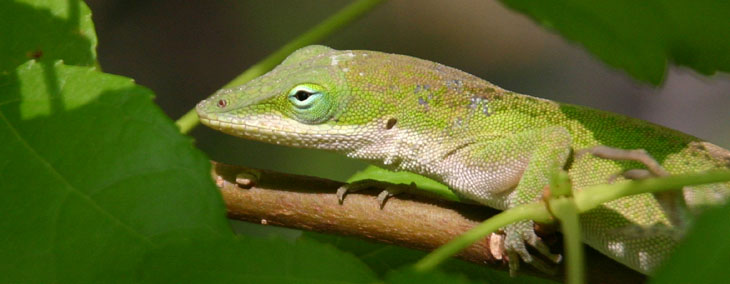
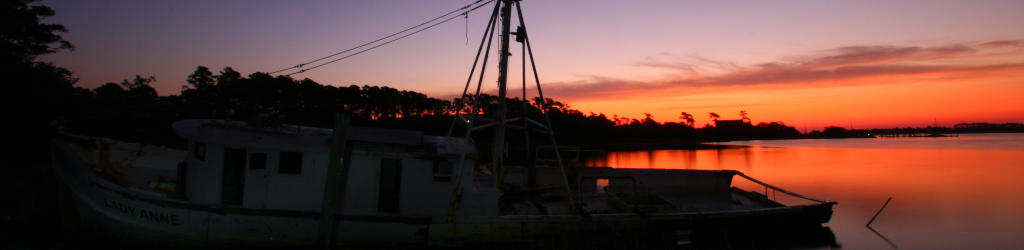
 Returning to our rooms, I came in quietly and set the alarm to get up before sunrise, because that’s what you do – not to keep repeating this point for anyone who’s been reading a while, but the best light is near sunrise and sunset, so if you’re serious about nature photography, you arrange your shooting schedule around these whenever possible. I had planned on slipping out without disturbing anybody, but The Girlfriend heard the alarm and roused herself to come along while our friends continued snoozing, which was fine by me.