
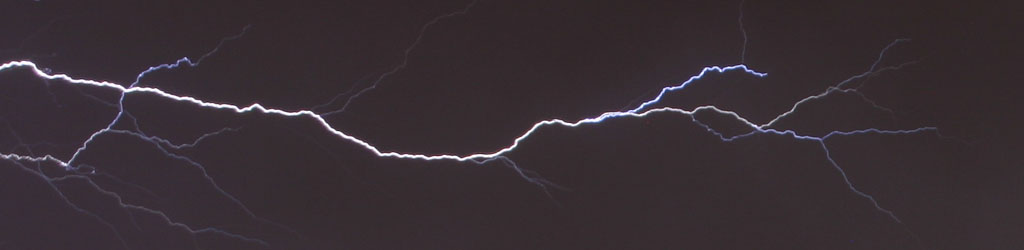
… that one of these days I’ll break my streak of bad luck in attempting to capture meteors. That’s how odds work, right?
Anyway, the Geminids meteor shower is peaking over the next few nights, specifically Saturday at about 10 PM EST (or 0300 UTC Sunday morning,) while the moon will be dark, so if you have clear skies, go for it and show me up. According to informed sources, it’s supposed to be a good year for Geminids.
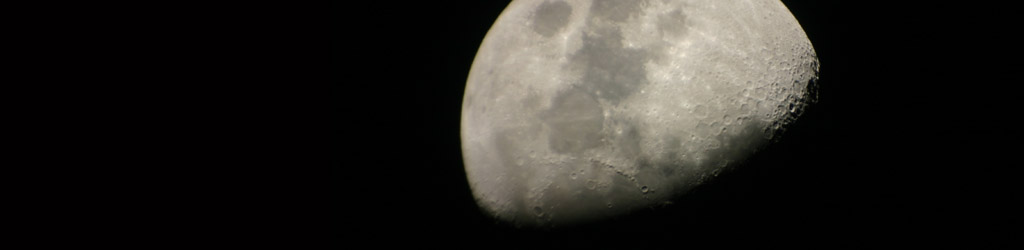
Not only that, but there’s a campaign to observe meteor impacts on the moon itself, since it will be a waning crescent rising in the early morning (1:25 AM EDT tonight/tomorrow morning, 2:23 AM Saturday night/Sunday morning,) so if you want to participate, check out this link. There’s a chance I might have the ability to do some lunar video, since at present, the tracking motor seems to be working correctly; the initial tests and timing of the rotation seem reasonably accurate, anyway. I was busy with video last night and so did not perform an acid test, and tonight might be too cloudy to allow it. We’ll see, I guess.
While I’m here, several days back there was a claim of significant sunspot activity, naturally occurring while we were under steady overcast and rain conditions. Within two days, it cleared to a decent degree in the morning, but my first attempt was while the sun was still peeking through bare winter branches.
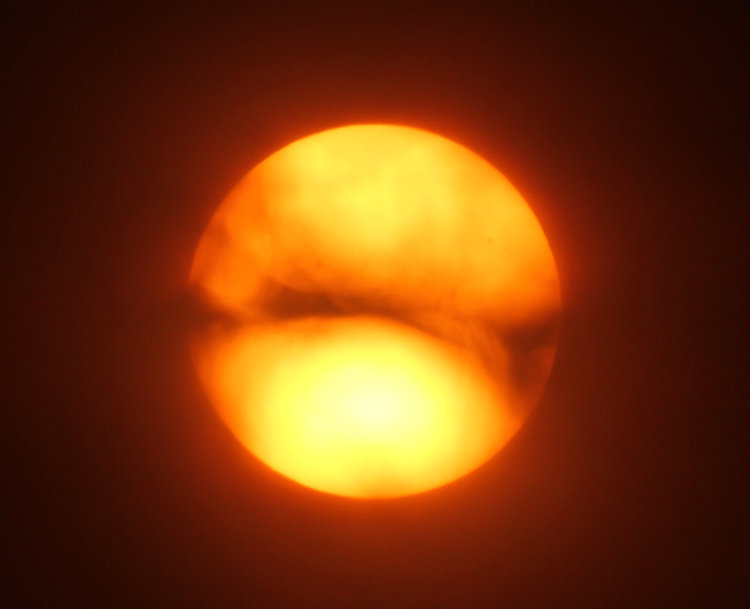
No problem – I could wait for it to rise high enough. Unfortunately, the clouds couldn’t, and they were already blocking the sun before it even cleared the trees – not completely, but enough that seeing any sunspots was out of the question. However, as the day wore on, the clouds wore thin at sporadic times, and for one of those, I snuck in and snagged a couple of frames in the thirty seconds or so that I had, even with wisps crossing the face of the sun.
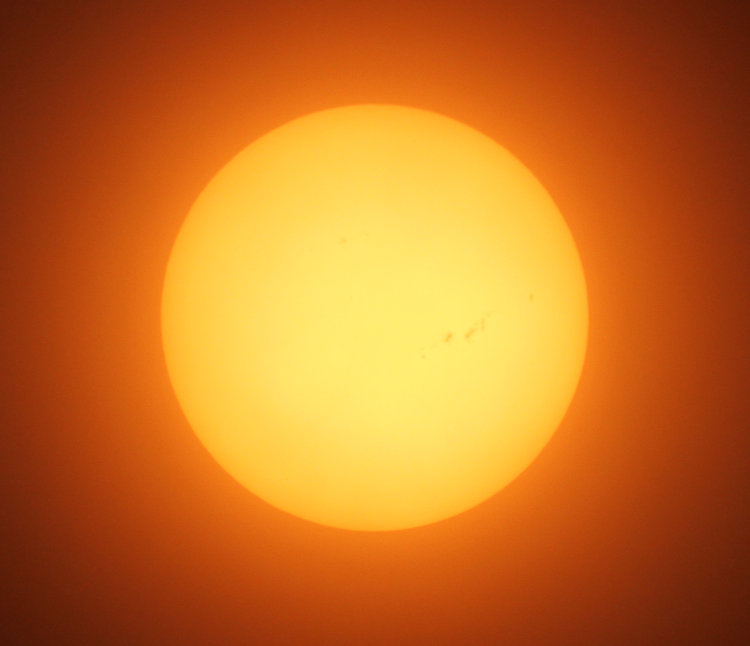
Yeah, that’s not exactly ‘significant’ sunspot activity, though granted, this was a few days past the alert. And apparently, in the very early days of the activity, Australia got bombarded with the effects of the solar flare that accompanied the first of the spots, so initially it was pretty active, at least.
[A note on sunspot and solar flares: the sun rotates, and is a significant distance away. This means that the radiation from solar flares doesn’t come straight out from the flare, or any spot, but is affected by precession, as well as taking a little time to get here since it’s not traveling at the speed of light. So spots and flares that appear directly towards us are not likely to send anything our way, but ones just appearing around the western ‘limb’ might, and this seems to have been the case. My photos were taken December 7th, while Australia got affected back on the 1st.]
Anyway, go chase some Geminids, and good luck!