




To say that the property is littered with lizards is understating things to a serious degree, since they can be seen nearly everywhere when the day is warm enough and the sun is out, and I’m used to seeing them scampering away around the edges of the house, shed, and greenhouse – in fact, I have to regularly check the shed to see who’s gotten locked inside because, if the door is open for longer than ten seconds, they’re compelled to go in there. We even leave the garage door cracked at the bottom now so they can escape from their forays into there.
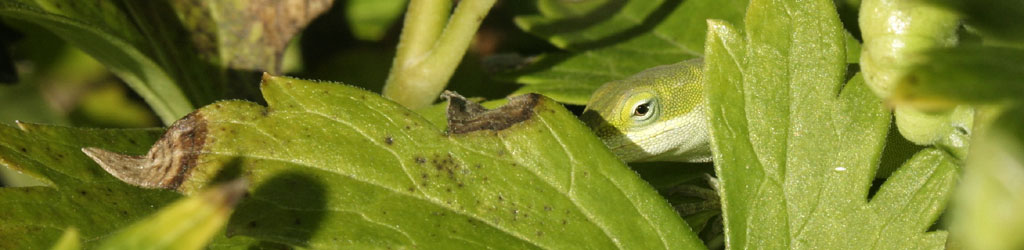
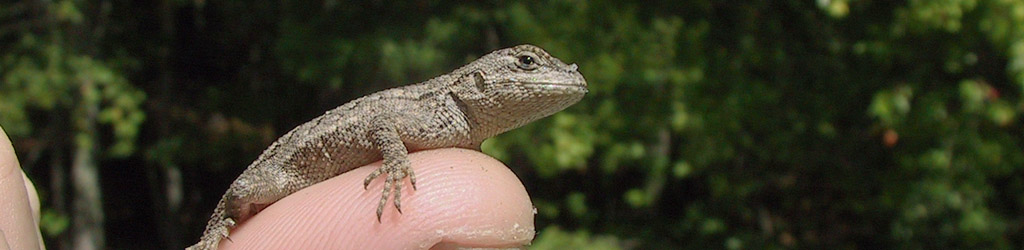
So why I specifically noticed this Carolina anole (Anolis carolinensis) as it sat on the ramp into the shed, I can’t say, but I thought something looked odd. I managed to capture it easily, too easily, and then had to find something to put it into since they’re sneaky little cusses and can easily slip between fingers. Eventually I got it into the bathroom ‘studio,’ but it resolutely refused to stay in the dish setting and flew out of it instantly, twice, and so I decided to take it outside to the coral bark Japanese maple and use that as a setting. Thankfully, the anole stayed put and I could get some detail shots.

This is about what I was first seeing, the lizard only half of adult size so the head a mere 10mm in length, and I couldn’t tell if that black ball was a seed or debris simply adhering to the head, or some serious issue; it turned out to be the latter.

That’s either the eye itself, or some growth thereon, but either way I’d say there’s no going back from that. Checking the other side wasn’t a lot better.

The right socket was entirely empty so the anole was completely blind, making its mad dashes out of the dish that I was using as a photographic setting rather surprising – at least it paused on the leaves of the tree and remained there as long as I didn’t disturb it.
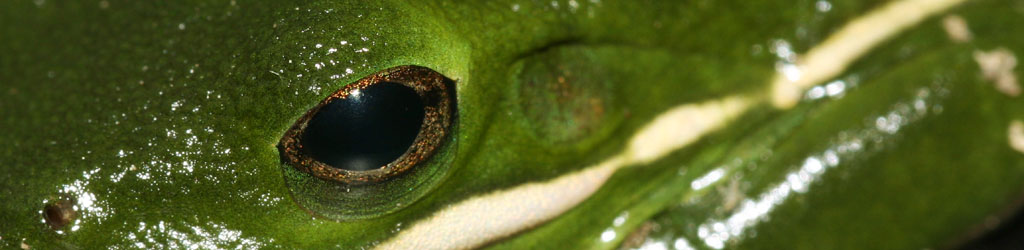
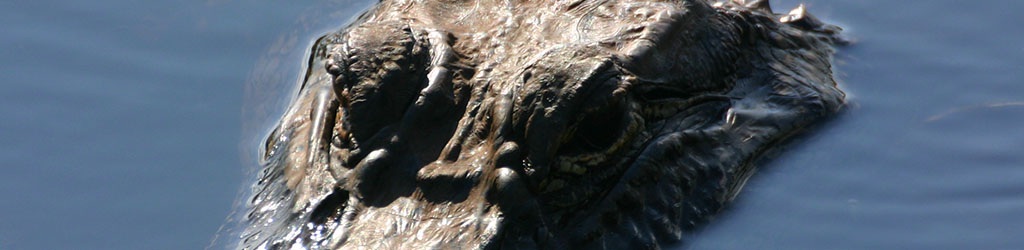
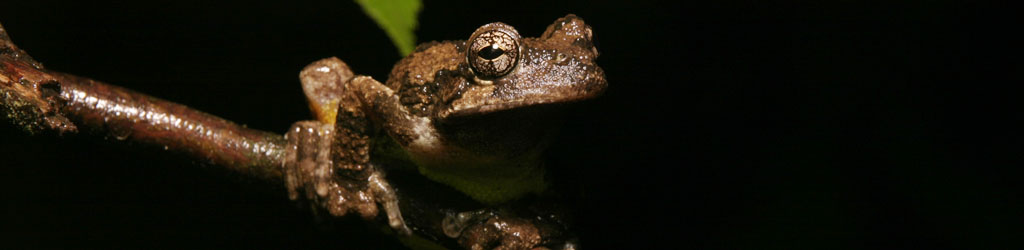
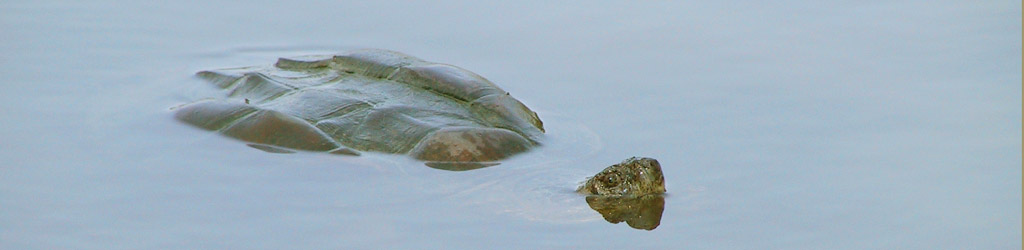
I seem to recall reading about something infecting wild reptiles, but can’t remember exactly what and can’t find it now. I know I’ve come across both a green treefrog that was missing its eyes, as well as a yellow-bellied slider back in the pond near the old place:

Now, I can’t vouch for how well a slider can cope with not being able to see, since they’re herbivorous and mainly feed on subsurface plants – can they do that by smell or feel? I honestly don’t know. But anoles are sight feeders, pouncing on insects in a lightning fast manner, and lacking sight, this one’s simply going to starve.

It started to move out of easy sight behind some leaves, but my gentle nudge caused it to start to flee, stopping only when it was finding no purchase for its front legs, and it remained there, unsure of what danger was present. This isn’t precarious for them – they can sleep like this, and climb vertical and quite smooth surfaces like the plastic sides of the greenhouse, so I left it alone, but then after confirming its condition by examining the photos that I’d gotten in detail, I gathered it up again. It had dropped to the grass beneath and was making its way along in short dashes, easy enough to capture again.
Knowing that it would only deteriorate from here, I started the car and flooded with container with car exhaust gases, then sealed it tight overnight so the carbon monoxide could do its work. It was that, or slice its head off with a sharp knife, so I opted for the cleaner and more peaceful method, not to mention that I couldn’t count on the lizard to hold still enough and I’d probably end up slicing off a fingertip instead.