
I’m sitting here reflecting on perspectives, somehow believing that something profound will be produced by it and yet not really finding anything that isn’t trite, and the reason for this is, this marks the end of the seventeenth year of the old blogoblob. Reaching the age of seventeen, personally I mean, seemed interminable, and now I’ve been posting for that period of time. Weird.
I looked for some trivia related to seventeen, and only pulled up some South Korean boy band, and the US magazine of course (never actually read by seventeen-year-old girls, but always much younger than that – by seventeen they’d switched to Cosmopolitan in the belief that it was more worldly.) Neither of those was something I wanted to even attempt working with, so I let it go.
What I can say is that this marks the 3,233rd post, with at least nine of those being interesting. I could have put a list of some notable (to me, anyway) ones up here, but that would take a lot more time and it’s been taken up with far too many other things lately, but perhaps I’ll slip it in for the year-end retrospective or something. This year also set a record for images uploaded, and for a short while I was mentally fretting over too many of them not being my own, but that is no longer a concern; the previous record was 1,037 in 2020, while with this post we have 1,116, and a few more will sneak in before the end of the year.
This has also been the year of video, with 34 being uploaded specifically related to wildlife photography and/or this blog, plus a few others here and there; thirteen of those were Estate Finds as well. Most pleasing was capturing the wood duck broods (multiple times,) the epic snake battle, a yellow-bellied slider in the act of laying eggs, the hyperactive juvenile nutria, and of course, the saga of the mallard ducklings we raised. Refinements in the equipment, techniques, and editing are still being made.
[I have to note that, after knowing there were at least four distinct turtle nests in various places of the yard, not one of them seemed to produce any young – I was checking routinely. Two of them might have been raided by predators, based on faint evidence, and I’d found other examples of this, but two remained pristine. Just have to keep trying…]
So now we have a few photos that didn’t get into posts earlier.

The dusky Canada goose (Branta canadensis occidentalis) that was a regular visitor for a few weeks can be seen peeking out from behind the thick forest of yellow cow lilies (Nuphar lutea) that almost completely covered the pond surface in the height of the season. Not too long after this image, the beavers began harvesting those lilies and they nearly disappeared, then rallied and bounced back, then got harvested again. Somewhere in there, the dusky stopped visiting and never returned; while we have numerous geese now raiding the corn we throw down, none of them are the dusky subspecies.

These are the feeding pits of ant lions, which are the larvae of several species of lacewings (Myrmeleontidae) that are highly predatory at this age; I had a huge colony of these under the overhang alongside the outside door to walkabout Studios. The larvae sit at the bottom of these steep-sided pits that they construct themselves, waiting for insects (primarily ants, surprise surprise) to wander in and find that the sides are quite unstable and slippery, whereupon the ant starts to slide towards the waiting larva; their death slide is often assisted by sand flung by the larva. I had intended to do a detailed post and/or video, but never got around to it, and so this solitary image languished in the folder.

Here we have an unidentified orbweaver (Araneidae) with a captured firefly species (Lampyridae) that was still flashing regularly within its bonds; I was out without a tripod so I couldn’t do any longer exposures to capture this display. Even I look at this image and think the spider is facing away from the camera, but no, you can see the eyes when you look close. Soon after this, I read an article that described how some spiders would keep fireflies alive in the web because it attracted other fireflies to be captured, the arachnid equivalent of Uber Eats. I was thinking of doing a post on this, but never got any further pics or video and thus this one also sat there in the folders.

When we moved here a year ago September, we brought three butterfly bushes (Buddleja davidii) from the old Walkabout Estates, one of which did okay, one thrived so fiercely we don’t walk too close in case it grabs us, and one struggled. So when that one finally produced its first flower cluster following the move, in July, I took note of it. It still didn’t get a firm foothold, but in late October it popped out a measly three blossoms while everything else was entering the autumn dormancy:

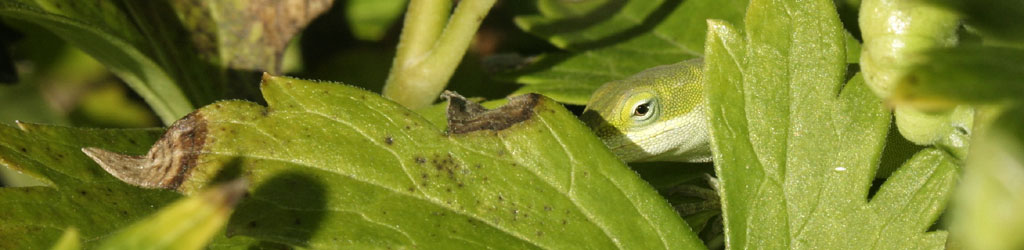
While I definitely like and want to feature some images, they go unused because I’ve been featuring too much of the same subjects and try to maintain a variety, so we have ones like this Carolina anole (Anolis carolinensis) fast asleep while clutching its teddy twig:

To be honest, I could still be featuring the anoles routinely; not only are several living it up in the greenhouse, the weather got warm enough today that a few are scampering around the yard, while some turtles are basking on their own island.
And we close with another ‘avoided for the sake of variety’ images, a wood duck (Aix sponsa) portrait when the light and the pose was right, which is a challenge for such a wary, spooky species. One of these days I’ll find a way to be closer and not have to crop so tightly, but for now, this is what we have. And thus we enter in year eighteen with plenty more challenges to tackle and species to capture. Once again, thanks for coming by!
