
Noticed a hint of activity partially hidden behind a tree trunk in the backyard, which was clarified after a few moments, but the red-shouldered hawk is once again working on the same nest right in the backyard. None of the main floor or upstairs windows offered a clearer view, but I could see a bit better from the outside stairwell of Walkabout Studios, i.e. my basement office. That is, of course, when the hawk wasn’t actually positioned behind a fork in the trunk.
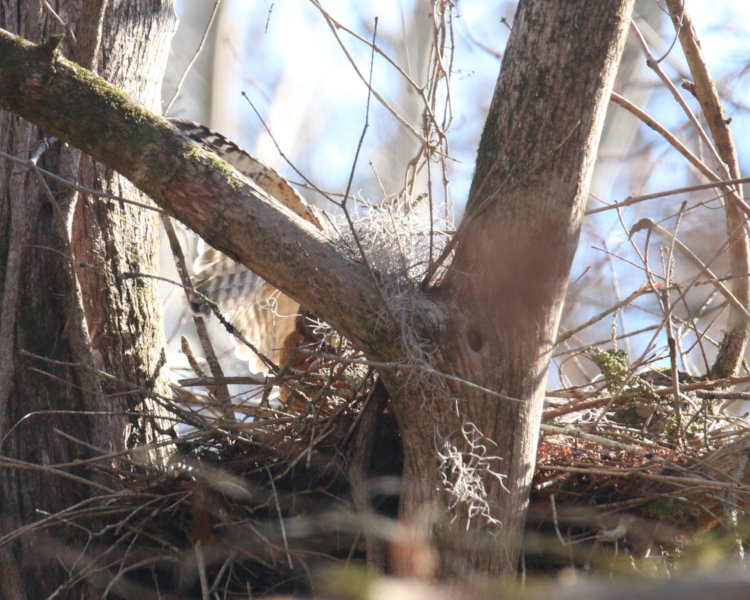
I didn’t have the camera raised as it flew in, but caught it just after landing – I plan to do better, with a tripod set up to do some video, but whether it will be from this spot or up on the deck, I can’t say yet. More likely here, since any other activity out back spooks the ducks off.
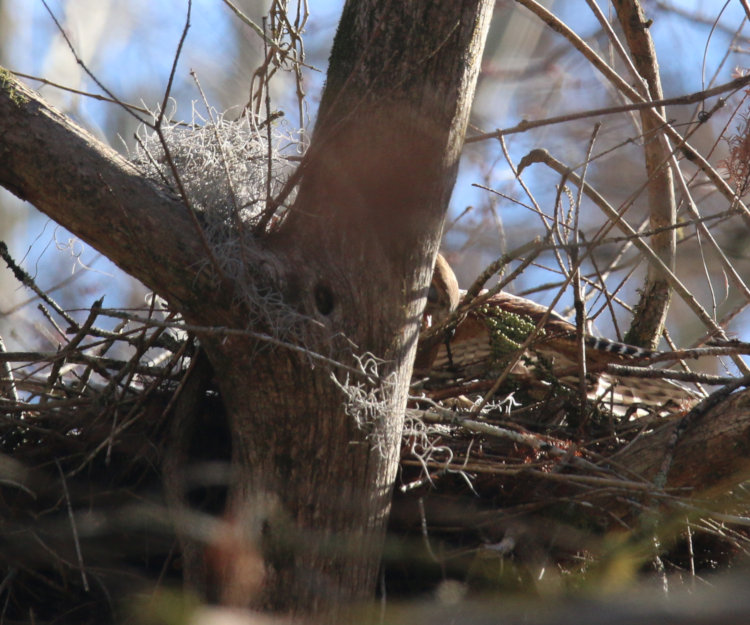
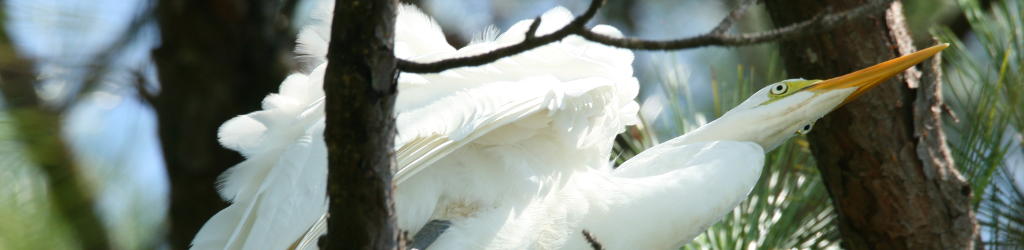
Just the barest peek of the forehead and eye, with one wing outstretched, as the hawk arranges some nest material. Right under that wing, you can see it apparently found something that was already budding.
Ah, but the ducks! Therein lies our dilemma, because like last year, we’d be delighted to have a nest of young red-shouldered hawks so convenient to observe, but we also feed the ducks (geese/nutria/beavers/et al) just a dozen or so meters away from this spot, and we know the red-shouldered hawks will take a shot at the ducks when they can. I mean, that’s the way nature is, circle of life and all that, without predators the duck population may grow too rapidly. But we also like observing the ducks and have encouraged them to be in one location with our very own actions of putting corn down, so we’ve created this situation. These are the consequences of doing anything like feeding, because it changes the dynamic that exists outside of our influence. Yet we can’t actually call it “unnatural,” since we’re a native species of this planet too – we can only dither on how much direct effect we have, while we also plant crops, divert waterways, and pile trash in handy locations. For instance, after witnessing one wood duck falling prey to a red-shoulder, we began putting the corn down right at the water’s edge and no further; the reasoning was, a hawk is less likely to try and snag a duck out over water, since such prey is very difficult to manage entirely in the air and most times the hawk will have to ground it first, so they’ll aim for prey that allows this. Considering that we’ve only seen passing evidence of any further captures, it seems like it might have worked.
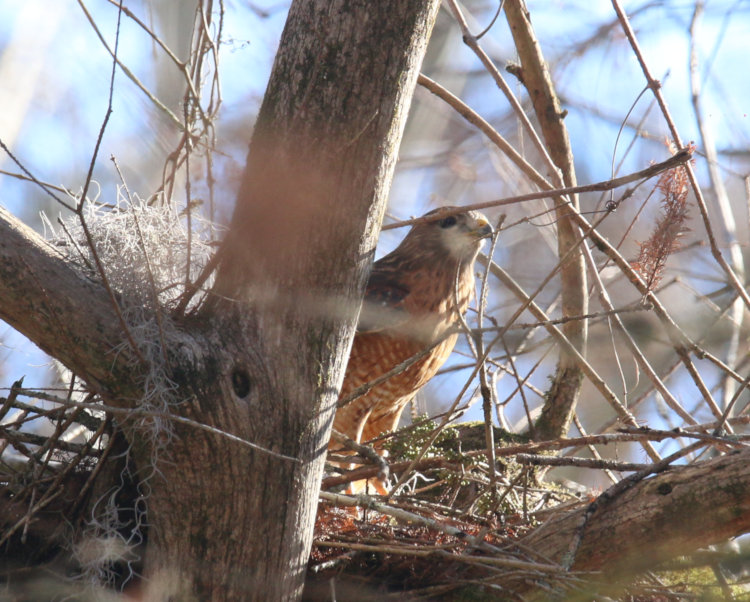
Eventually the hawk stepped out for a clearer view, and I was a little curious about this, because this one seems to have a noticeable amount of pale feathers around the face and chin, not typical for the species. It would make it easier to recognize, but at the same time, I was fairly sure I’d never seen one so marked before, here or otherwise. A few other frames revealed the truth however: there’s only an intervening leaf right there, well out of focus, but enough to throw a grey pall where it sits.
And between that and the branches, you can imagine that, come spring, the view is going to be radically different, perhaps much more difficult to see the nest at all. Last year, the hawks seemed to abandon the nest before mating, and we’re fairly certain they (or some pair) had a nest down The Bayou a bit; their activity was still apparent in the area, but not too close by.
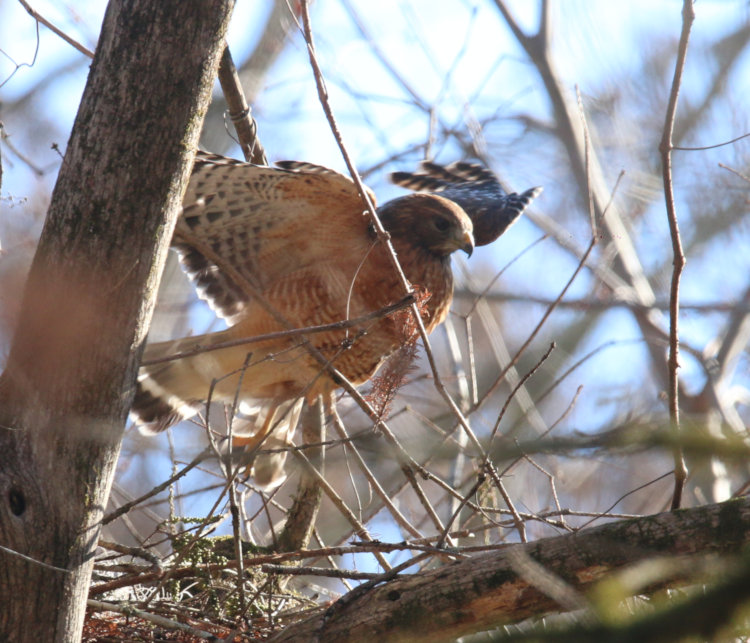
After about 30 seconds, the hawk hopped over a bit to come into clearer view, and we can see that it doesn’t have a pale chin at all.
Typically, this would be the male, completing the nest as an incentive to prospective mates. Generally, we see only one in the vicinity, though at times it will be apparent that there are two. While red-shouldered hawks have a certain small level of variation in their plumage, there’s no distinctive difference between male and female, and we’ve only been able to tell them apart through directly comparing their size, since the females are slightly larger. And like last year, the nest-building activity seems to take place only in the morning, and I can’t offer any opinions, much less real knowledge, as to why this is.
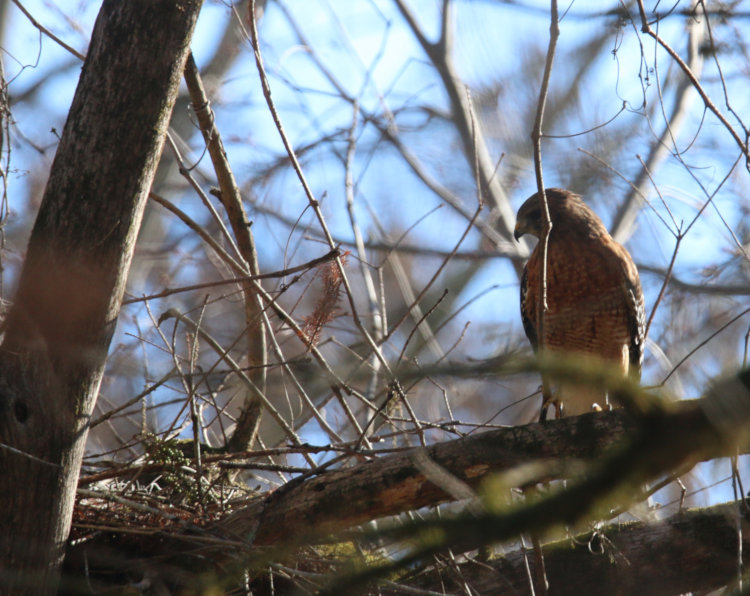
This one took a moment to survey its own handiwork from a short distance, perhaps trying to gauge how it would look to company calling by. Or it could simply be observing the ground beyond for potential prey, or even judging our lack of landscaping back there. It was looking in the opposite direction from the duck apron, though, so that’s fine.
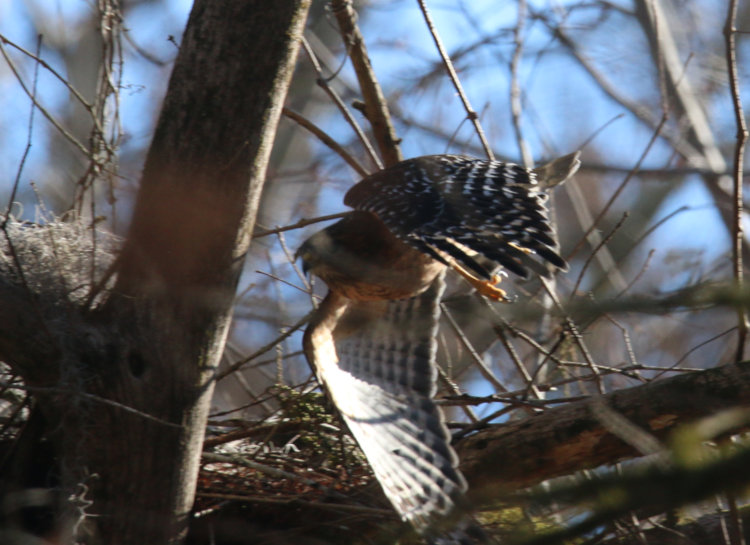
After a minute it flew off to gather more material, and I elected not to stand out there and wait for another appearance because I hadn’t set up the tripod, plus I was freezing my ass off (I’d gone out without a jacket, not wanting to waste the time when the hawk may be returning.) But as always, we’ll see what transpires from here, and if you don’t see anything, you’ll know that nothing really came of it. Here’s hoping that it’s better than last year, though.