



Poking around tonight, I spotted the first eastern spadefoot (Scaphiopus holbrookii) of the season, and so commemorated this event, naturally.
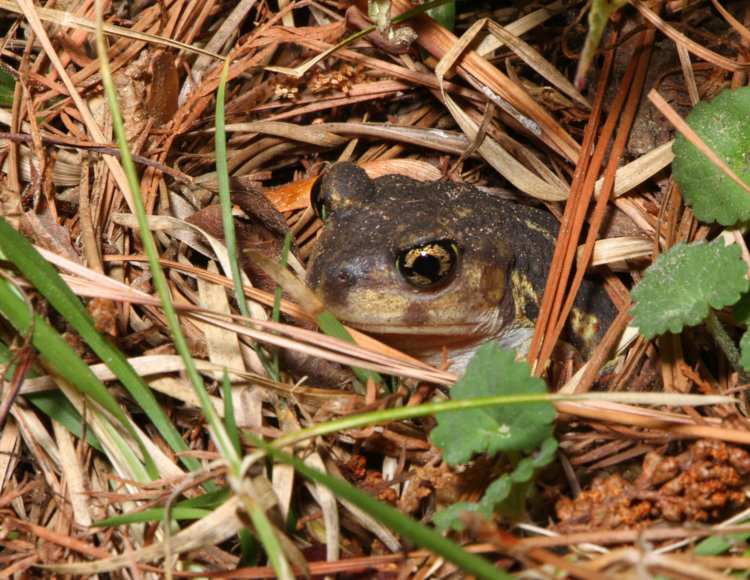
This one is partially backed into its burrow, which is where they often sit, simply waiting for food like crickets to walk by. It’s amusing (honestly, a little frustrating) that this actually works; I’ve sat outside for hours on many occasions and haven’t yet had a plate of barbecued beef ribs happen along, or even a simple quesadilla. Seriously.
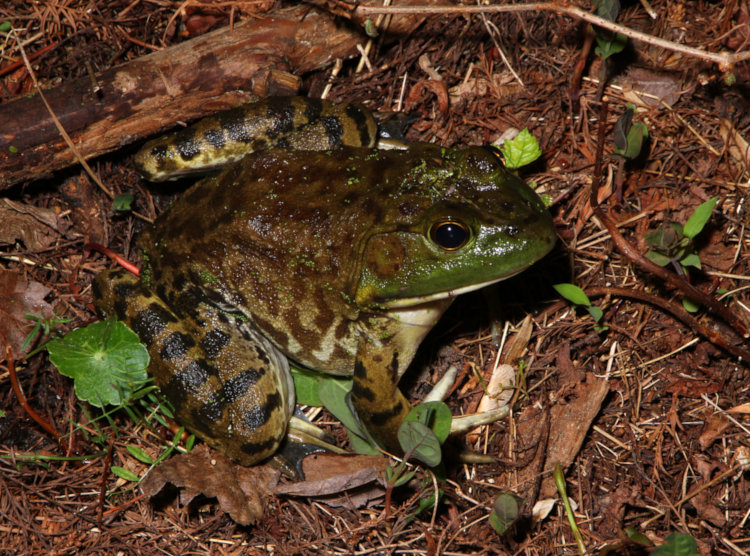
I also got a few other nocturnal amphibian images, like an American bullfrog (Lithobates catesbeianus)…
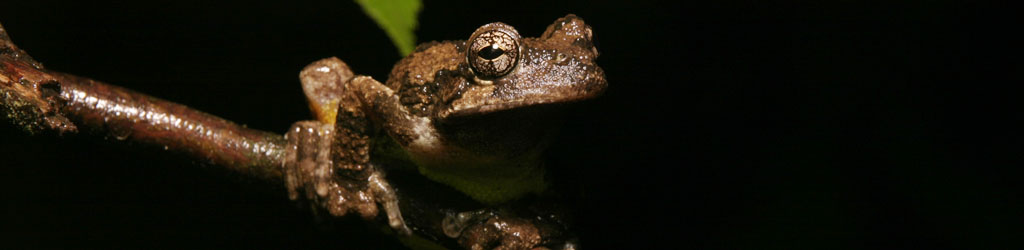
… and even a small green treefrog (Dryophytes cinereus,) one of many that stake out the weeping willow (Salix babylonica) by day and hunts the tree and surrounding area at night:
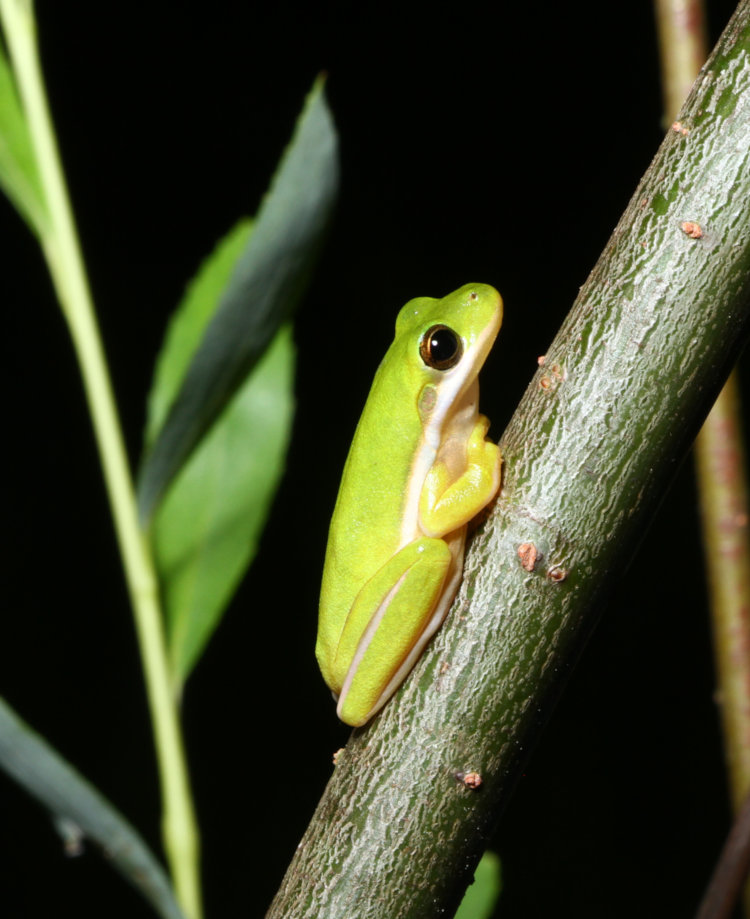
This one was less than half of adult size, as are all of those that sleep on or near the tree, such as on the posts of the protective fencing around it until it gets big enough to fend for itself (beavers adore willows, and deer are known the strip the ends off of branches, so it’s shielded in its vulnerable sapling stage.) The count of green treefrogs sleeping around the tree by day has been as high as nine, by the way. Yet it occurred to be that I had quite a range of sizes for the one night, but could I show scale decently? Turns out, by going out and trying to find the same subjects again, that I could. The green treefrog first:
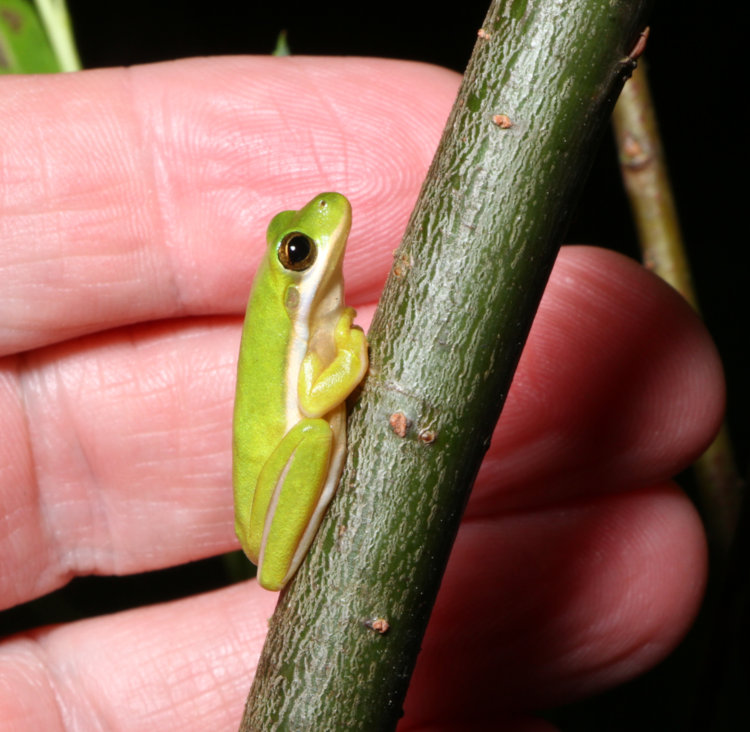
It’s a shame I couldn’t locate the smallest one that hangs out here, probably about the size of my thumbnail, but this suffices, and treefrogs can be fairly complacent at times – it’s usually worse if you disturb what they’re perched upon.
So okay, how about the spadefoot?
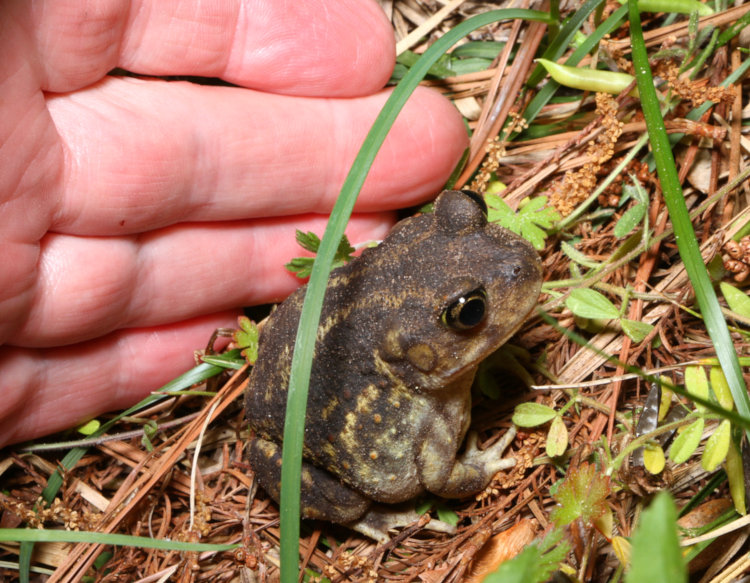
Not too hard to locate again – in fact, I found two – and also quite complacent, so no sweat here.
But, now the bullfrog. They’re notoriously spooky, able to be photographed as long as you keep the headlamp on them, but quick to vault into the water the moment something becomes visible in the beam, or even if the noises sound too suspicious, and my original photo subject had indeed made its escape earlier, with a leap of well over a meter in length and close to half that in height as it fled to safety (leaving a trail of urine in the air momentarily, it must be said.) It had been over an hour, though, and thus there was a chance it had returned to the shore. But even if I found it, could I somehow get something close enough to it for scale without sending it off again?
Turns out, I was extraordinarily lucky tonight. Yes, there it was on shore again, and I managed to approach quietly enough. Then, when directly behind it, I tilted the headlamp up so it shone on the frog, just barely, but left shadow behind it, and gently slid my foot forward. It was sufficient for a couple of frames.
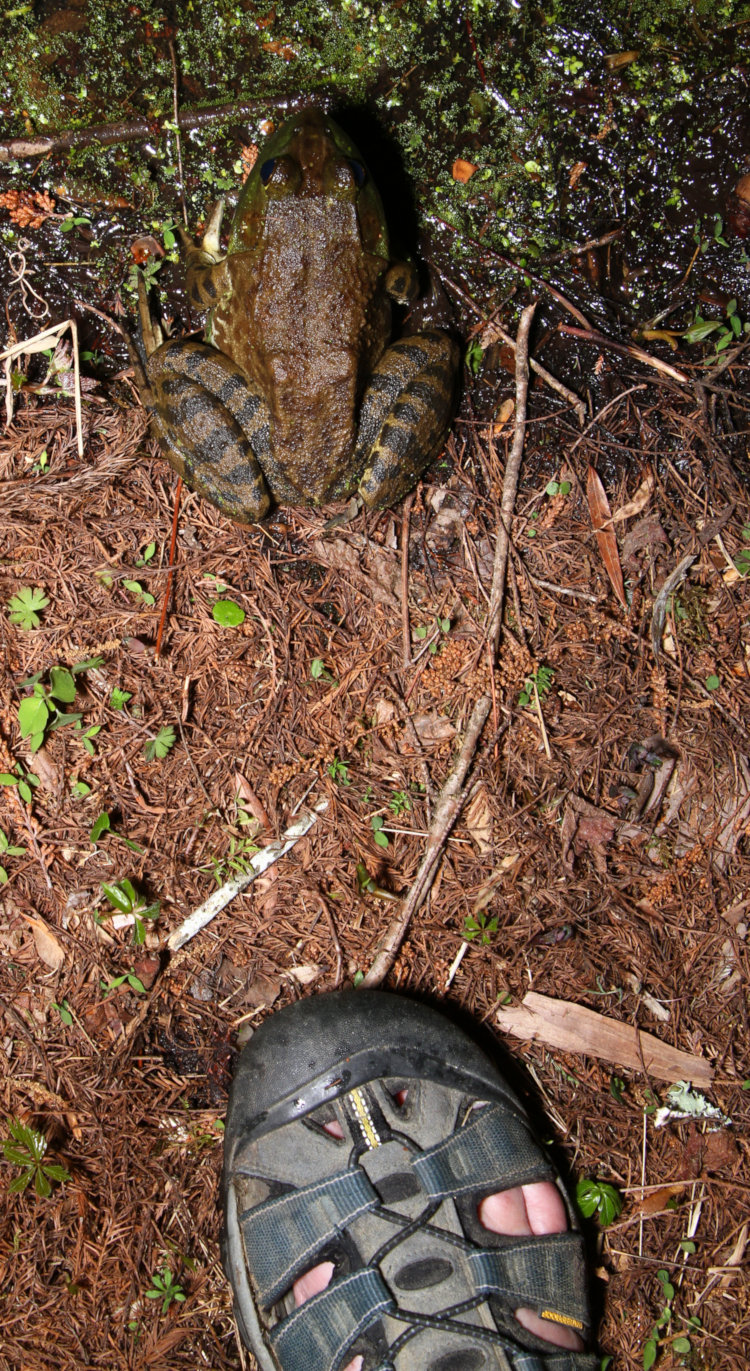
This was a monster, about the largest that I’ve seen, far more than a handful. Just for the sake of it, I extended my hand close enough to confirm that the head was three fingers wide, but in doing so I revealed my presence and once again sent it sailing off into the water. Still, I had my scale shot, so I was pleased, and could illustrate the range of amphibian sizes visible right here, on one night. It can be even more extreme, but that might wait for another night.