












Despite many warning signs, including clouds just a wee bit too thick when I was setting up the tripod only ten minutes before the event, the skies were perfectly clear when the Falcon 9 stage impacted the moon, and I was indeed shooting video as it was supposed to happen. I’m not bothering to upload it, since there isn’t a damn thing to see – as predicted in the previous post. But I would have been quite annoyed with myself had I trusted those predictions and there had been a visible impact while I wasn’t bothering to shoot video. Can’t go back and redo that.
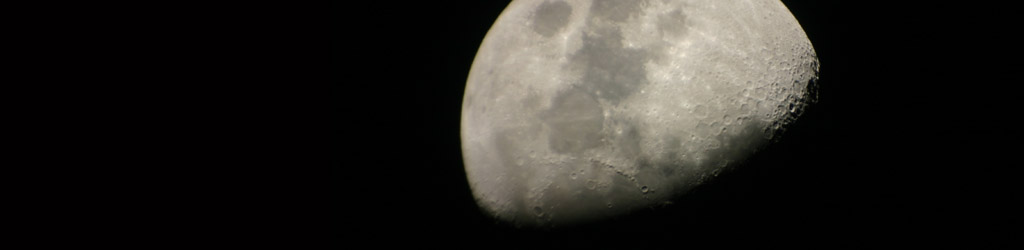
However, I also fired off several frames at different exposure levels to see if a dust and debris cloud was visible in these unique circumstances.
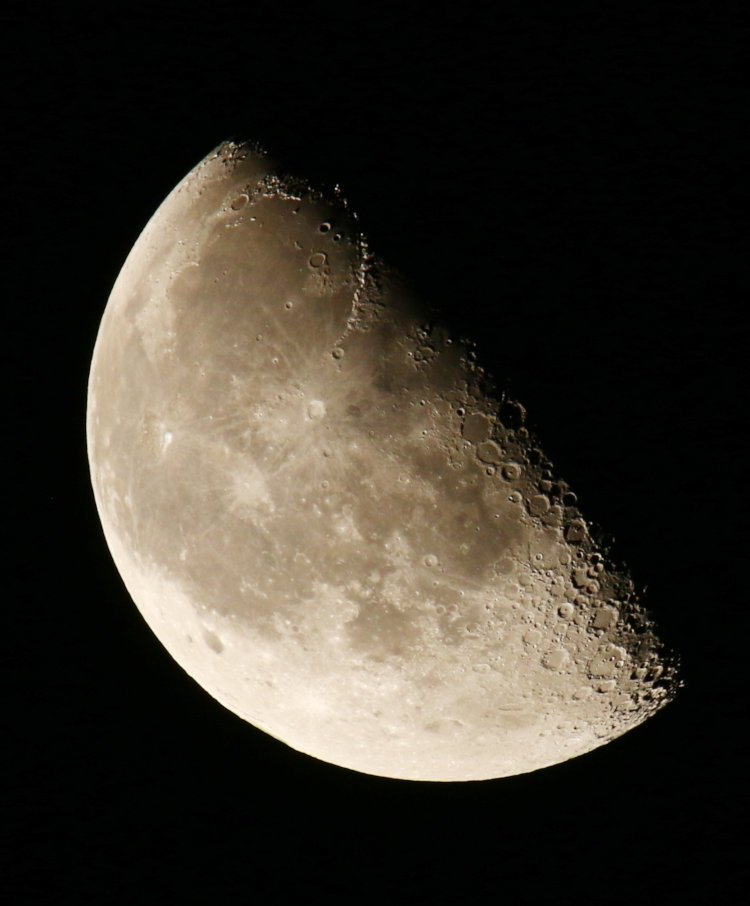
This is about 20 minutes past impact, when a dust cloud would have had time to rise far enough off the surface to be detected – maybe. We really don’t know, me least of all. If it were there, it would be just off the left edge (“limb”) just a little below the halfway mark, brighter against the dark background. Nada.
BUT… let’s take a look at things with the exposure blown out to highlight the fainter evidence.
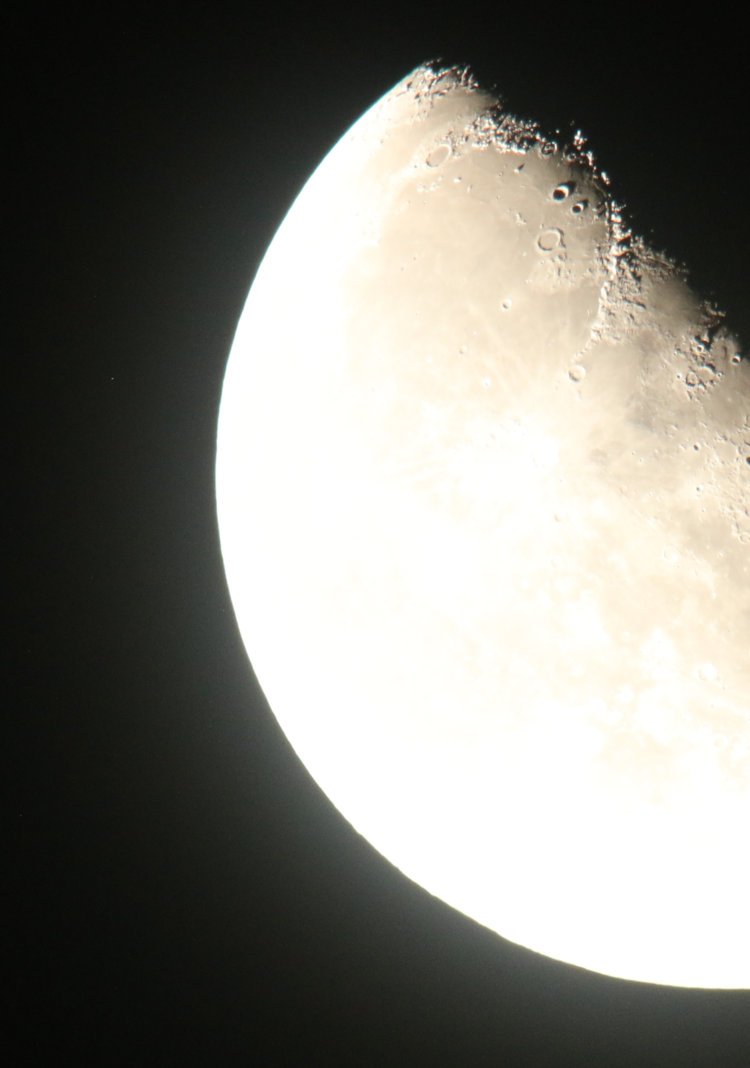
Ah, there, we can see… nothing. This is about ten minutes after impact, picking up either the humidity in the atmosphere catching a little of the moon’s light, or internal scattering within the lens, possibly both. But far too uniform to even give a hint that any dust cloud is there.
I went back out after 90 minutes, just in case the rising cloud was now catching some light.
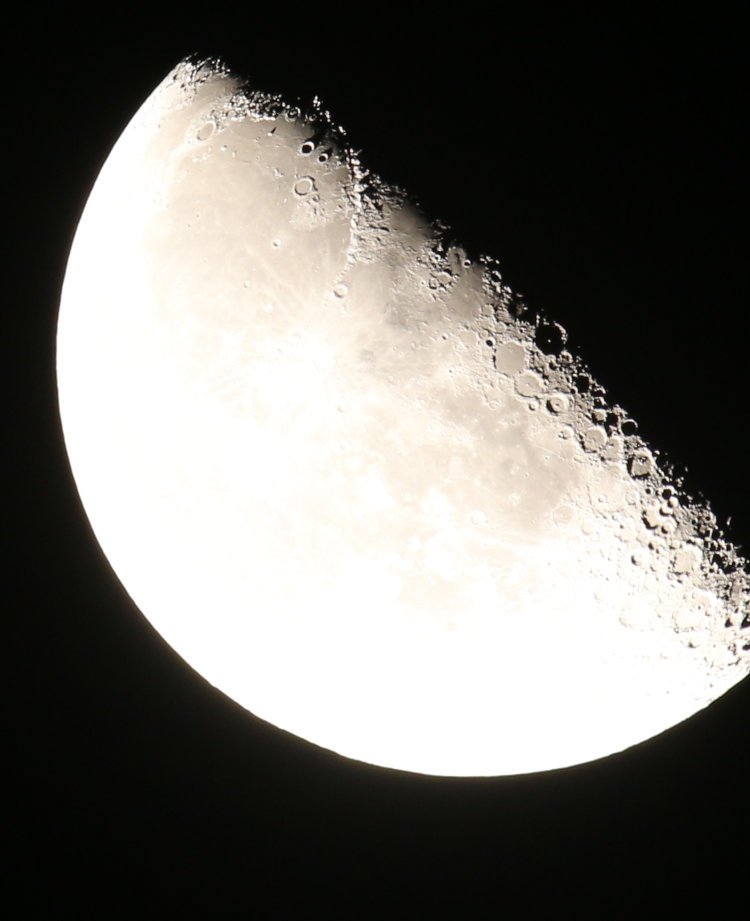
Aha! Still nothing! The exposure, by the way, was almost exactly the same – for the former shot, I was using the 2x teleconverter, and not for this one, though the ISO was adjusted to compensate (1600 top vs 400 bottom.) You’ll notice that haze around the moon is virtually gone, so was this humidity or the teleconverter? I’d have to do tests with a bright light a leetle closer than the moon was, to see if the teleconverter was the culprit – I just don’t see the trivial point right at the moment.
I include, instead, a full resolution crop of one of the normally exposed frames, because I’m pleased with the detail.
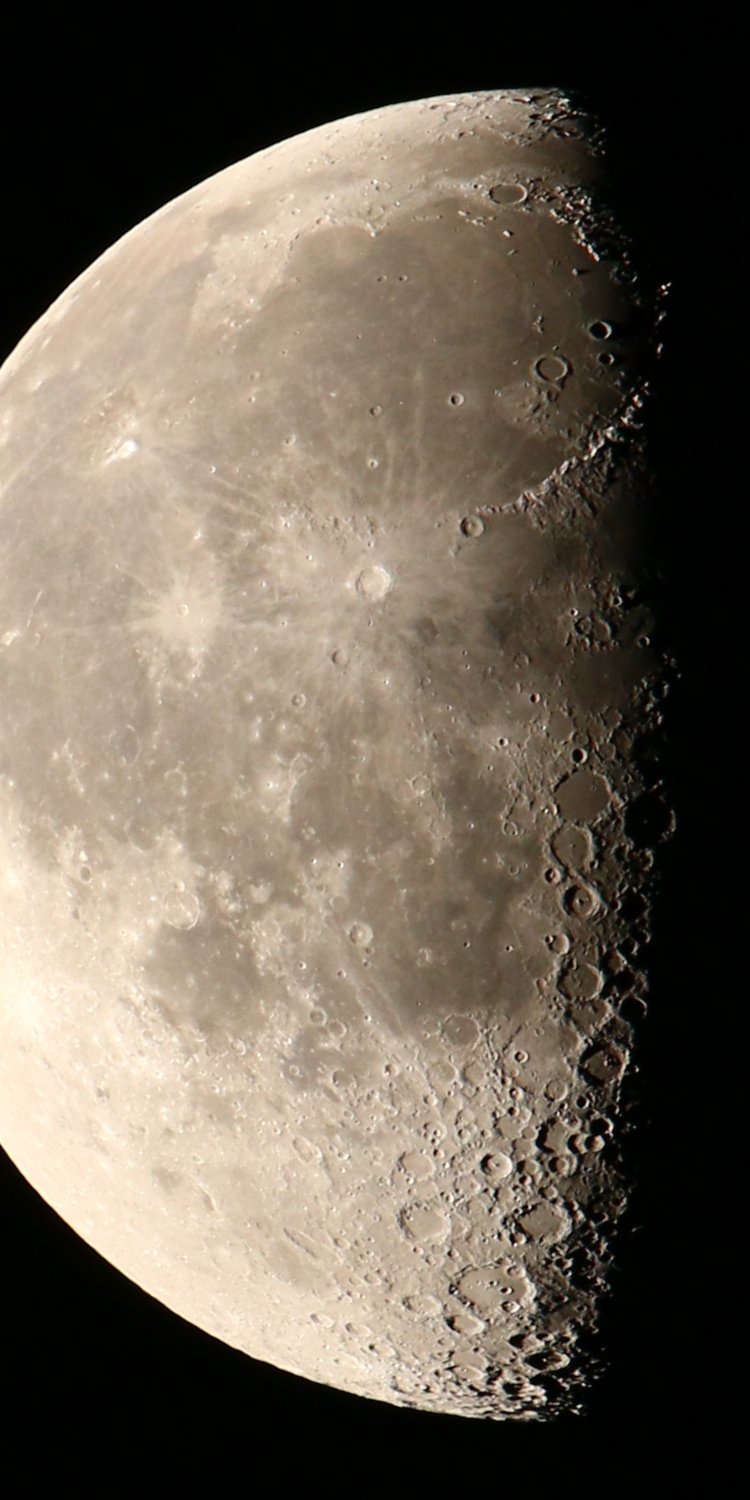
You can follow along with this lunar map, which I use frequently. Tycho is the nice, round, medium-sized crater with the darker edge close to the bottom – you can see one of the ejecta rays that always seems to be not-quite aimed at the crater coming in across the lunar mare from above. Copernicus is the larger crumbly-walled crater in the middle of the mare (Insularum) a little above the middle of the frame, with smaller and more distinct Erathosthenes sitting right at the end of the distinct ridge of Montes Appeninus. However, that ridge has become Montes Caucasus as the bases dip into shadow on the terminator. Also, if you look on the terminator right near the middle of the frame, you’ll see a larger crater with the central peak just barely catching the last rays of the sun (this is a waning gibbous phase, getting narrower each night now): This is Albategnius, and that peak is more distinct in the image above this one – use those three aligned craters to its left to orient yourself. Just a great night to catch a lot of detail.
And there’s something else. You’ll notice that there is a uniform brownish color cast just left of the terminator, visible through all sessions. Initially and without thinking, I put this down to the sunlight passing through the thicker atmosphere of Earth right at the edges, but that’s utter nonsense – that might apply to the shadow edge of a partial lunar eclipse, but the sunlight is passing nowhere near Earth for these shots and none of this light is passing through a thicker atmosphere than the rest. Right now, I’m inclined to say that the oblique light, a shallower angle as it gets close to the terminator, is reflecting from the surface material differently, if not evidence of the very very thin atmosphere, though this seems farfetched because it’s quite distinct here.
So I didn’t capture what I was out there for, which happens, but have a few nice frames to add to the folders, thus I can’t complain. Well, again, I can, and frequently do, but not justifiably in this case…