
Too cool, part 53: Two comets

For reasons unknown, I never went looking for these after returning from the trip, but I also never had any such images pop up anywhere in my usual haunts, so I suspected that no one got anything worth keeping. Until now, that is.

Astronomy Picture of the Day features someone who actually got comet 12P/Pons-Brooks during the total solar eclipse, something that I’d intended to try for but was defeated by the failure of the barn-door tracker and the cirrus clouds across the sky. Lin Zixuan, however, was not.

Image of total solar eclipse with comets 12P/Pons-Brooks and SOHO-5008 visible, by Lin Zixuan, from Astronomy Picture of the Day

In fact, Lin Zixuan caught two comets in a long exposure – one of which was unknown to everyone until just a few hours before the eclipse, when it was captured in a coronograph (photographs aimed to image only the sun’s corona) by Worachate Boonplod. As always. clicking on the image will take you to the Astronomy Picture of the Day page, and clicking on it there will open up the full resolution image with much better detail. And it shows that Lin Zixuan actually got more than a hint of earthshine on the moon, the rat bastard (said entirely out of envy and frustration.) Both Lin Zixuan and Worachate Boonplod are amateur astronomers, which demonstrates that it’s not only the professionals with the expensive and elaborate equipment that can make discoveries or capture the cool stuff.

Moreover, SOHO-5008 was what’s called a sungrazer, a comet that approaches extremely close to the sun, and yes, I said, “was,” because it vanished only hours afterward, likely torn apart by the sun’s gravity. This means that there was only a narrow window to even know that it existed, and it was captured by at least two amateur astronomers in that time.

Now, we depart the “Too cool” classification for a shameless springboard, but I’d uploaded this last night before the APOD even posted and intended to do a follow-up post anyway, so I’m cramming them together, like someone putting broccoli in with your mandarin chicken. I think I’d mentioned that I had a video clip, and here it is, for what it’s worth (and that’s not much.) Almost forgetting about it during the eclipse, I suddenly realized that the sunset colors were indeed visible all around the horizon, and quickly grabbed the camcorder out of the car and slammed the battery into it, then had to blast through the setup menu because the internal battery had died and the camera wanted me to set the correct date and time (which I did not do – I just approved January 1, 2009 at 12:01 AM I think.) C’mon, the entire eclipse lasted not quite four minutes and we were already well into it.

But watch for Venus to pop up briefly to the lower right of the eclipse as the camera tracks up to it, to disappear entirely as the autofocus went spastic in confusion. Jupiter was also plainly visible in the sky, both immediately visible the moment totality closed in, but again, because of the clouds (which are somewhat visible in the video,) I did not pursue any deep sky shots.


What you’re seeing here is the sunlight outside of the zone of totality, the shadow cast by the moon, which is a little less than 200 kilometers wide, so that light on the horizon was a bit less than 100 kilometers away where the sun was still shining. Just after totality ended but the sun was still largely blocked to us, I looked all around at the sky overhead and, while no “shadow” was distinctly visible on the cloud cover, moving away, there was a definite difference in brightness from the sky in the shape of a huge parabolic arc, perhaps only visible because of those cirrus clouds. A time-lapse series taken of the sky as totality came and went might have been cool, but it never occurred to me to try it. Someone else might’ve, though.

As noted earlier, the birds got quieter when totality closed in, but did not go completely silent – we were definitely hearing some of them singing. My recollection was that they went silent just as the eclipse ended and the sun broke out again, but the video seems to indicate otherwise.

As an amusing aside, The Manatee was standing right alongside the car and would have appeared in the video, but he saw me panning around and ducked below the camera as it passed – that’s him commenting that it was getting brighter. Not long after that, my watch alarm went off telling us that totality was soon to end, and I got ready for the diamond ring frames.

Just once, part 16

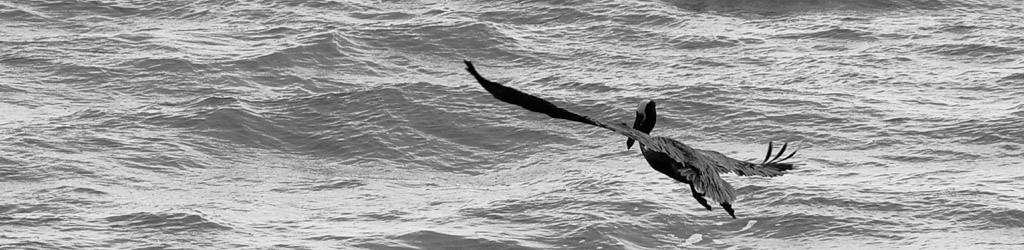
glossy ibis Plegadis falcinellus in flight over Merritt Island National Wildlife Refuge, Florida
Initially, I find it no surprise that this species has only been featured here once, since I don’t recall seeing them often at all – perhaps only at this very location, which is Merritt Island National Wildlife Refuge in (wait for it) Merritt Island, Florida. This is a glossy ibis (Plegadis falcinellus,) and while I have seen and photographed plenty of its relative the white ibis, including out on the Carolina coast, the glossy ibis seemed scarce and very selective of their locale. But as I check further details, I find that they can be found throughout the state of Florida and indeed well up the East Coast, including and past North Carolina. So why haven’t I seen them again?

In a way, this might be a reflection of how territorial maps are used, since they never show the relative density of the birds in any location – just the fact that they’ve been spotted there, more routinely than a mere fluke. And then again, it may be a reflection of my own habits, never around during their migrations or perhaps not venturing often enough into the areas like stillwater wetlands, which describes practically the entirety of Merritt Island NWR.

I ponder things like this sometimes – more so as I’m writing about them. For instance, it occurs to me that if I specialized more, sticking entirely to avians or even further, like to birds of prey, I might have spent more time getting educated in their specifics, but having a wider range of interests and subject matter means I pick things up haphazardly; today, some habits of the glossy ibis, while last week it was what the purpose of those funky eyes is.

Or maybe I’m just too lazy to follow through. Could be that.

Two curiosities

Haven’t been in much of a blogging mood the past week or so, and thus haven’t been in search of subjects, but I’ll throw down two quick ones because… um… I really have no idea why anymore…

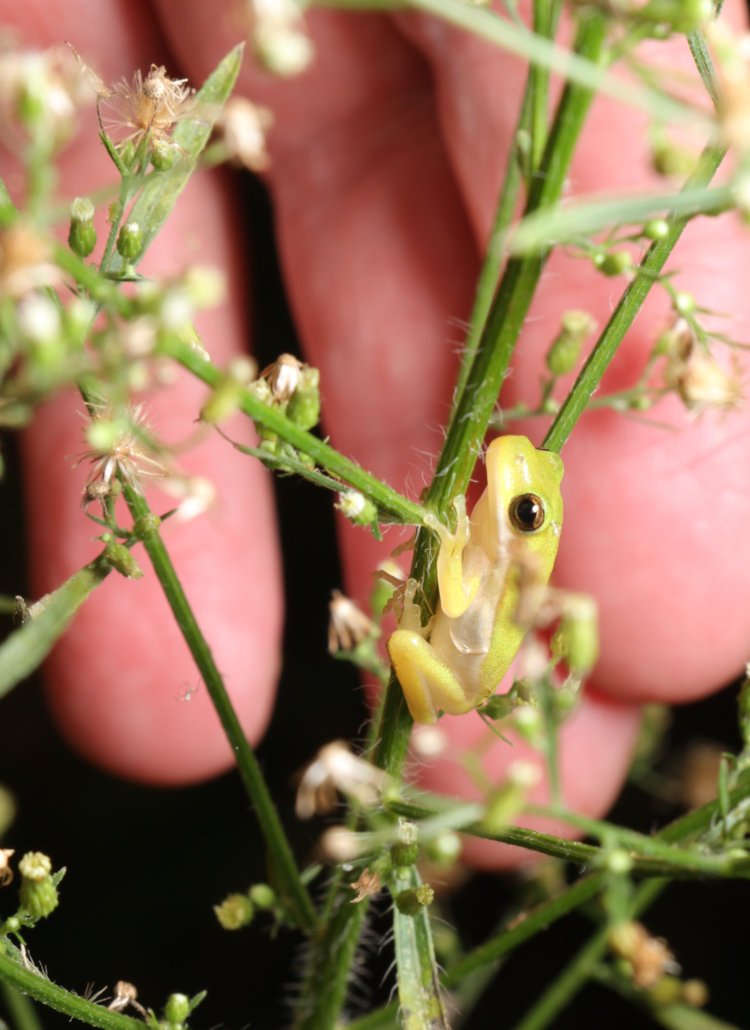
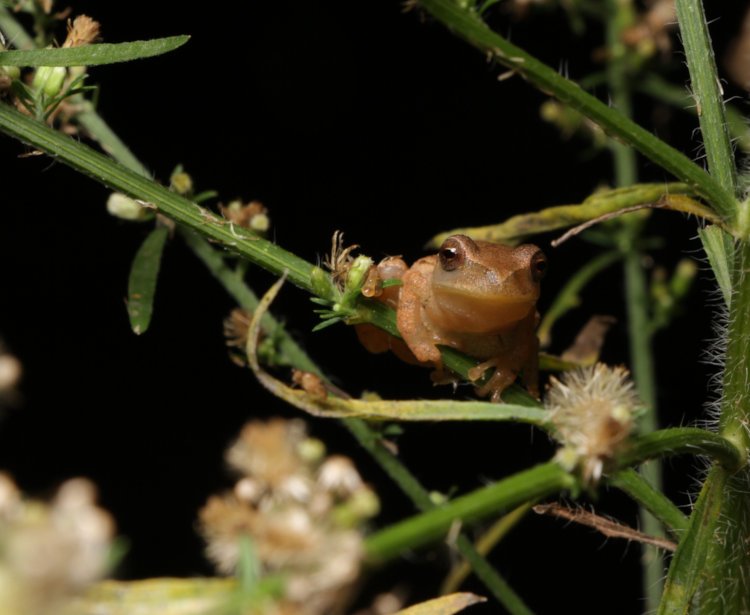
As the treefrogs become more prevalent in various areas of Walkabout Estates, I’ve been seeing some patterns of appearance and can tell a few apart, somewhat, simply by these habits. One of which turned out to be very recognizable, but I neglected getting good photos of it while I had the chance, and then it disappeared for a few days. But it reappeared, and I shirked not this time.

green treefrog Dryophytes cinereus with odd blue spot on back
This green treefrog (Dryophytes cinereus, and I still can’t quite keep that in memory and I’m still annoyed that they changed it,) sports a distinctly blue spot on its back, for reasons completely unknown. The spot is quite centered on the spine, which might make it genetic, or it might be an injury sustained to the spot in contact with the surfaces it had secreted itself into somewhere. For the time being, this makes it easy to know that I’m seeing the same individual, but how long this might last is anyone’s guess. Yet it’s definitely bright blue.

While at the neighborhood pond, a red-shouldered hawk wheeled overhead briefly, and I fired off a few frames. Close examination showed something interesting:

red-shouldered hawk Buteo lineatus scratching face in flight
The frames that showed the detail weren’t the sharpest, but sufficient to illustrate that the hawk was scratching its face while flying – either that or on the phone, but it wasn’t displaying the typical inability to maintain a regular speed nor stay in its lane like most of those I see dicking with their iTwats when driving, so I’m going to go with scratching. I’ve never seen this before and I would have thought it might make their glide a little erratic, but I suppose there’s no reason to believe this and it displayed no evidence of difficulty as I watched – I didn’t suspect a thing until I saw the details after unloading. But you gotta admit it looks odd.

There will be more along shortly – I have photos, I just don’t have the motivation to explain them right at the moment. Won’t be long though.

Fulfilled that obligation

I’m here to tell you from personal experience how nice it feels to accomplish something, and coincidentally, this ties in with the holiday, because today is Finally Make A Bare Minimum Advance Towards Goals Day. Yep, it’s the day when we get something done, no matter how minimal, that we can feel proud of instead of the usual background embarrassment over ongoing complacency.

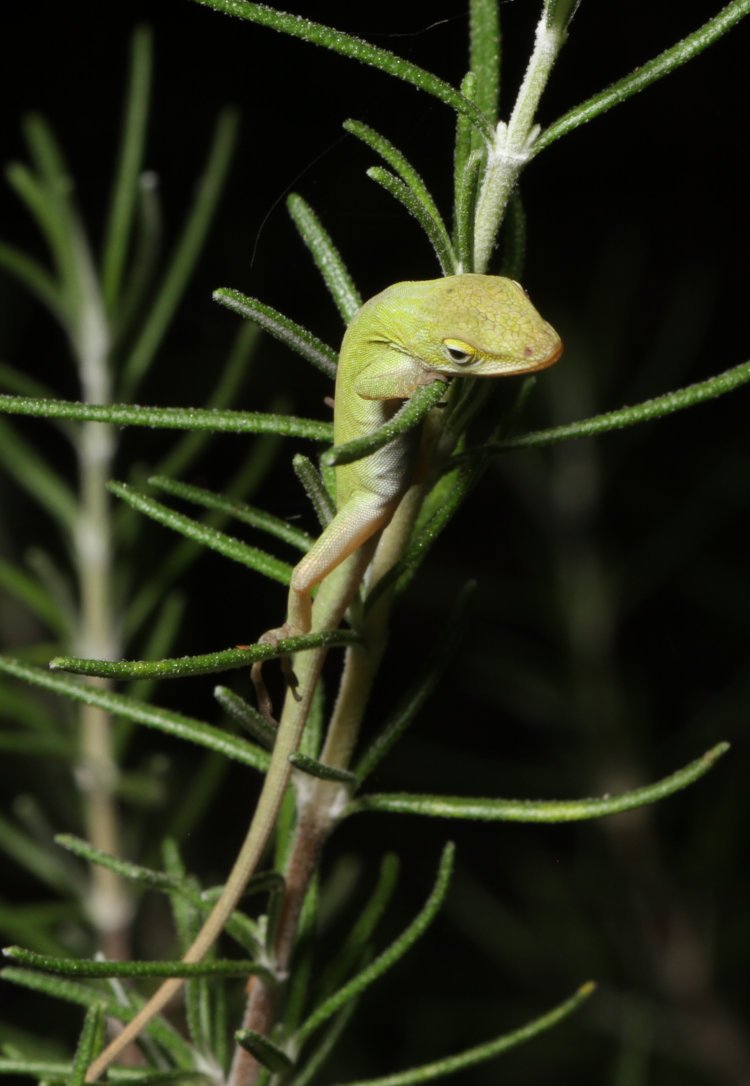
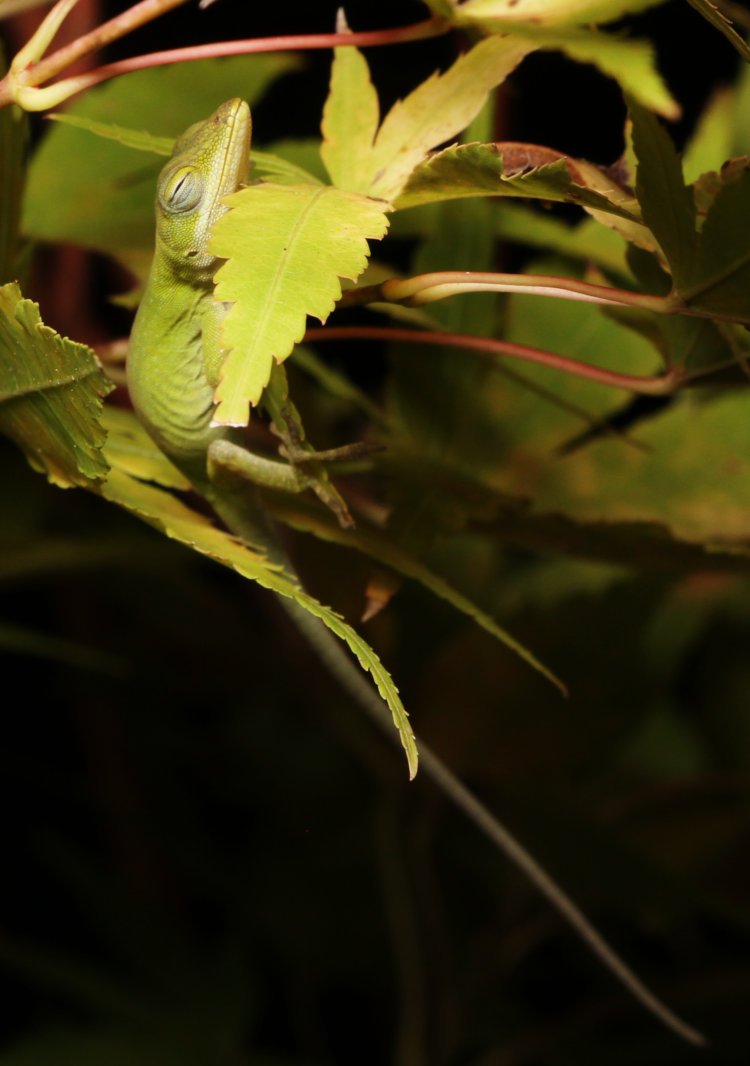
For my part, it’s illustrating a little more behavior from my local and easy-to-observe photographic subjects, to wit, the Carolina anoles (Anolis carolinensis.) This actually occurred three days ago, but I hung onto it until now to make celebrating the holiday even easier; otherwise I might have had to accomplish something further today, the thought of which is more than a little galling. So let’s see what I got:

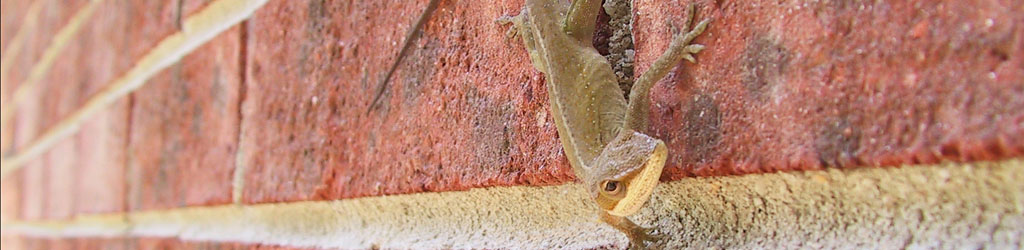
Carolina anole Anolis carolinensis shedding skin on fence
While doing a bunch of gardening, now that spring may actually be here (or maybe not,) I was marching back and forth among the sprawling expanse of Walkabout Estates, including multiple trips through the gate between the anterior and posterior spreads, spotting anoles more than a couple of times – they were attempting to enjoy the brilliant sun and pleasant temperatures and would probably have preferred not to be seeing me so much, but the gardening is almost as much for their benefit as it is for mine. Well, some portion of it anyway – a non-zero percentage at least. But a little later on, I glanced over and found this. This is how an anole sheds its skin, which happens several times a year – not like we do in tiny flakes, nor how a snake does all at once in one distinct piece. It’s pretty decrepit-looking, really. While we’re here, I’ll point out the curved shadow on the fence just beneath the lizard; this is the shadow of my own head, carefully maintained down low where the sudden eclipsing of the sun might have spooked the lizard off. We can go in a little bit closer.

Carolina anole Anolis carolinensis shedding skin on fence
The lizard was well aware of me closing in, but I moved as gently as possible and kept the noise to a minimum, managing not to disturb it. The chances are fairly good that this was one of those that I was seeing earlier that day, though no signs of the impending shed were noticed, and it’s also fairly likely that this was the one that I’d caught sleeping two days previous, since this was a bare meter from the location on the gardenia bush; I was leaning into/through the bush to get these frames.

This is the kind of thing that I want to capture more of, illustrating the various life habits of the species that I pursue, and the fact that it doesn’t happen often suggests that I should be spending a lot more time ‘stalking,’ observing as much as I can from enough distance that they don’t feel too threatened by my presence. This isn’t that difficult with the lizard species, since a few minutes of motionlessness is enough to convince them that the threat is gone – I just haven’t been dedicating the time to it. As for seeing more, such as through video, there really wasn’t anything more to see for this one: the anole was simply basking, probably helping the skin to dry out, and said skin would eventually be brushed away with passage down the fence and among the leaf litter, at least from what I’ve seen so far. Capturing the start would be nice, but admittedly a matter of blind luck. Still, it’s a goal.

What are those goals, you ask? There’s always a list, for any given species, and among them for the anoles is:

  • Foraging, and capturing meals
  • Mating
  • Giving birth (highly unlikely – this probably takes place in deep concealment)
  • Territorial displays and encounters
  • First emerging from shelter
  • Avoiding (or not) predators
  • Anything else that illustrates their typical behavior
  • Most of that would be ideal for video, of course, which requires adequate light and usually having the tripod already set up, because handheld macro video is far too shaky and nausea-inducing. So, not quite as casual as I implied above, but it’s also not going to happen unless I make it happen, so I need to kick myself in the ass to make it happen. Good thing that I’ve already observed the holiday for today though, so I can kick back instead and revel in the sense of progress.

    On the negative side 2

    don't drop your camera in the waterI guess I’m not shocking anyone when I say this is not how I intended this image to look at all. And it’s a shame, because it was a rare opportunity that might actually have come out with some artistic merit. I know, right?

    The scene opens on a casual photo competition on this thing that used to exist called, ‘Usenet,’ that somehow died in favor of chatrooms (pretty much the same damn thing) and Tumbler and Reddit and such – don’t ask me, people are weird. The challenge for this week was to get an interesting photo with a disposable film camera, the basic premise being that good photographers could produce something compelling regardless of the equipment, which is a point I’ve often promoted myself. These little plastic, inexpensive cameras were about as simple as they could get, and of course extremely limited in their abilities: single molded acrylic lenses, fixed shutter and aperture and focal length, questionable quality control and accuracy, and preloaded with a specific film. Nobody was expecting National Geographic images, but what would we be seeing?

    While I had used these from time to time before, because waterproof ones were available and, at that point in history, the only way to do subsurface or water-sports images without spending a lot of money on specialized equipment, the one I purchased for this attempt was not waterproof, but included a flash instead. I was out prowling around with the camera in a shirt pocket, and visiting one of my haunts in Florida, a wading-area that stayed shallow for hundreds of meters out, playing home to horseshoe crabs and manatees and the occasional dolphin.

    I noticed that the light conditions were producing an effect that I’d used before, where looking downward into the water near my feet produced a clear view, but as my gaze went further up and out, the water gradually turned reflective and showed only the sky, producing a nice fading effect and color change – I was determined to capture this visual curiosity, and went in search of something under the surface to provide a focal point for the transparent water portion. With delight, I spotted a stingray not far away, and managed to get quite close to it without spooking it, an accomplishment of its own since they’re notoriously sensitive to movement in the water and don’t tend to hang around people. While the focal length listed for this one seems short, it’s on an earlier small-sensor digital camera, and is an equivalent of 190mm, moderate telephoto.

    So I framed the image the way I wanted just as the stingray became aware of my presence and bolted – it’s barely visible in the photo, the only shape right at the edge where the water goes from green to purple (we’re getting to that – just be patient.) The ray is facing away, the tail towards the bottom left corner if that helps. Obviously my ability to keep the camera level in my haste left a bit to be desired, but I succeeded in nailing the stingray right at the transition from transparent to reflective. Cool!

    And then, a short while later while wading in the same location, I bent over to scoop up something at my feet and the camera vaulted out of my shirt pocket and into the water. I immediately snatched it up, but really wasn’t holding out much hope that the snap-together construction would be sufficient to prevent or even slow the incursion of saltwater into the depths of the camera, especially when the flash capacitor discharged into my hand as I picked it up (I do not recommend this experience, by the way – it’s a hefty amount of voltage and god will damn you to hell for cursing.) Nevertheless, I took it in to be developed, and managed to salvage a few images from early in the roll, tightly wrapped by successive layers of film. This, however, was not one of them, and the salt damage is rather prominent.

    There is a curious, somewhat illusory effect within, as well. The deep purple spot in the sky is not what happened to the sun, since I was facing north, but just a random reaction of the emulsion to the salt and mineral content – even though it appears to produce a reflection from the horizon beneath it. It’s just coincidence, but one that’s easy to slip past us because it mimics something we expect to see.

    This event occurred in those tumultuous days when digital was gaining popularity, and the early adopters were seeking any examples they could to denigrate film. This image might have caught their attention momentarily, until they realized that a digital camera would probably have fared a bit worse with the dunking…

    Pizza boy

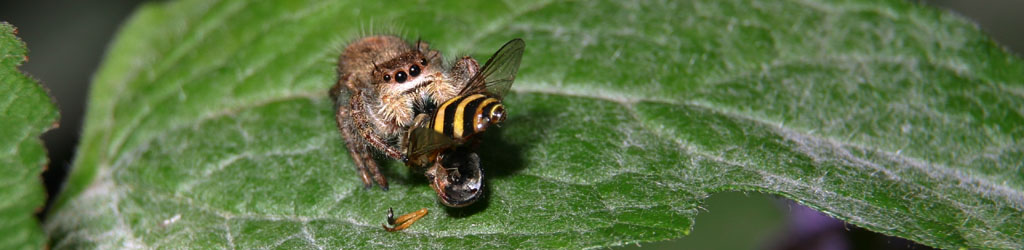
    This is probably the best photo I’m ever going to get of this, so I have to share. This is what spider sex looks like.

    Boomchikka
    The female is the larger one, which is very typical of spiders. The little ‘legs’ seen here extending out to the front are pedipalps, and one of the ways you can easily (well, more or less) tell the gender of a spider, because the male’s are always larger – very often club-shaped rather than slender like the female’s. His are visible too, the dark blobs extending towards the underside of the female’s abdomen. Arachnosex consists of the male stretching his pedipalps underneath his own abdomen and depositing semen therein, then crawling or reaching underneath the female and delivering the semen, uh, manually. It all seems odd from our perspective, until you think about our perspective anyway.

    This is the scale shot – all of it took place in the female’s lair on the underside of a holly leaf (one of my current go-to’s for arthropod pics, at least until more plants come into full leaf.) The female might be all of 3mm in body length – the blurry blobs in the top image are not ghosts or spirits, but pine pollen.

    Voyeurism
    The best I can say is that these belong to the family Theridiidae, otherwise called the cobweb spiders, which includes probably half of the species you might find within your home. That identification only came about because I recognized the body shape and eye positions (visible in other images not shown here) to be very similar to black widows; eye position is actually a very good way to determine families of arachnids.

    I had spotted the two spiders within her protective cluster of web strands and knew something was imminent – spiders do not tolerate close proximity unless either mating or newly hatched. I returned with the camera just in time to catch the money shot action. No way to use a tripod and nothing to brace against, so these are handheld while partially crouched and aiming slightly upwards, tripping the shutter as I swayed into sharp focus range. Sounds like I’m drunk, but when sharp focus is obtained within a 2mm bracket (for the lens used in the closeup image anyway,) only the rock-steadiest of people will not be leaning in and out of range constantly.

    Artistically, however, I like this pic better, a neighbor only 15cm away on the same tree. That would be within earshot, except spiders don’t have ears, so the horrified look is just how jumping spiders appear normally. I love the cartoon eyelashes.

    GrannyJumper

    How’s that sound?

    This is a follow-up to the earlier book review of Brain Bugs, by Dean Buonomano. The author raised an interesting bit of speculation within that I wanted to examine – first noting that the likelihood to establish any such speculations as accurate or even worthwhile is pretty slim. This is more of a thought exercise.

    In chapter 8, Buonomano admits to leading away from the clinically-supported findings of human brain functions that he had dealt with in previous chapters, and venturing into speculative realms about how supernaturality and religion enter into the picture. It’s a worthwhile avenue of investigation, since they’re common aspects of many cultures even when specifics are so wildly disparate. In fact, many people point to the widespread belief in “god” as a point of evidence supporting such an existence; this ignores numerous factors, such as how this only works if the definition of “god” is loosened to be exceptionally vague; that a population of people believing without evidence is no stronger than an individual who does so; and that such an argument only indicates how swayed we might be by social drives and the desire to blend in. These are fun points to examine in and of themselves, and Buonomano actually tackles some of them elsewhere within the book.

    All of that sidetracks from the primary question, which is why supernatural beliefs spring up. Buonomano suspects that the tendency to see non-human, directed causes for any particular occurrence (such as lightning, volcanoes, etc.) – something that is easier to term as agency – is evolved into our brains, and he isn’t alone in this speculation. The followup question, of course, is how such a thing could have evolved in the first place. At this point, the layperson speculation is often that if it did, it must have been for some benefit, but this isn’t exactly right. Two other types of properties can spring up within natural selection: neutral traits, which do not provide a benefit but also provide no detriment either, possessing nothing to select for or against; and ‘co-opted’ traits, which provide a benefit but in a different way than they may currently be used. Buonomano gives the example of human interest in sports, which really doesn’t provide any benefit, yet at times in the past, emphasis on both competitive physical activities, and just the tribal support for those that participated (sports fans,) could have been important factors in the strength of the tribe.

    In support of the idea that a belief in agency is evolved, Buonomano offers a study where children watched a puppet show where a mouse was eaten by an alligator, then asked if the mouse was still scared of the alligator; most of the children answered, “Yes.” Buonomano also references studies where patients are asked about their beliefs, and outright transcendental experiences, while serotonin inhibitors were being tested, or when portions of their brains had to be removed because of dangerous lesions; both gave indications that the posterior areas of the parietal cortex has significant influence in supernatural thoughts. The study with the children indicates that belief in, at least, life after death may be ingrained, while the brain studies indicate that certain portions of our minds may be conducive to thoughts of agency. We’ll come back to this in a moment.

    Buonomano also points out that animals often show a belief in agency, demonstrated by dogs growling at windblown umbrellas (an actual example from Darwin) only when someone else was not present near the umbrella to have caused the movement. It’s easy to see something similar in cats chasing leaves (or every other thing that twitches or squeaks.) This leads him to speculate that believing in agency may be very widespread in the animal kingdom (of which we are part,) but that one of the primary differences in humans is instead the ability to recognize the part played by undirected physics; in other words, to not see agency in everything. I say again that this is all admittedly speculative.

    From there, Buonomano gives three principle areas of reasoning [paraphrased here] towards how agency may have evolved within us:

    1. The ability to separate problems into categories such as solvable [how do plants grow, and can we grow our own] and unsolvable [what makes the rains come] may have allowed our ancestors to focus attention on useful functions;

    2. Belief in agency could have strengthened tribal cooperation, providing for group-selection aspects of evolution such as altruism;

    3. Refinements in the belief in agency could have led to organized religion, which would have further reinforced itself by introducing moral codes and community guidance beyond the tribal level.

    I bring this chapter up because I’m in disagreement with much of it, even though I think not only that examining the topic from this standpoint is a great way to get people to recognize how our minds evolved, but Buonomano paid due diligence in offering support for his speculation. Yet I think there are other factors to consider. I have previously written on exactly this topic, and some parallels are able to be seen, but there are a few problems that I’m finding in his supporting studies.

    We’ll start with the account of children and the idea of life after death. For those interested, the study (or at least one of several along the same lines) can be downloaded here. Notable within is that the older children in the study were less likely to allow for any functions after death, including fear and hunger – but what this indicates is not necessarily an innate tendency to believe in life after death, but an imperfect understanding of death as a mental state (or, indeed, any particular mental state) in younger children. Children are not born with a fear of death, or show any fear of things that can harm them – these are learned responses developed with experience. What may be at work here is a concept of future – what are we planning to do, and what can we hope to experience? How innate is this concept in the mind, as opposed to living strictly in the present, with no planning and no concern over ‘tomorrow?’ Can we say that any other species, such as dogs, has any concept of days beyond the present? If such a thing is a trait of humans, then death is the eradication of future, the destruction of plans and tomorrow. It may not be that children have any concept of life after death, only of future, and it takes time (and culture) to recognize that death is the antithesis of such.

    No arguments with the parietal cortex studies, but I will readily admit that these are merely suggestive of brain structures specific to thoughts of (supernatural) agency, and not terribly conclusive in themselves. It does raise some interesting questions about the differences between unknown but human agency (the person who invented the electric toaster,) unknown but mundane agency (why earthquakes are hard to predict,) and supernatural agency (what started our universe; I find it amusing to note that I struggled to find an example that is still held by some as ‘supernatural’ that isn’t already explained.) There are far more people who accept earthquakes as natural physical occurrences than the beginning of the universe being the same, yet in what ways are these different, or at least seen differently?

    Agency itself isn’t terribly surprising either, in any species of animal. As Buonomano points out, when you hear something rustling in the bushes, it might be the wind blowing leaves, or it might be a jaguar – erring on the side of complacency is going to get bred out of any species in relatively short order. Every species that has any significant external sensory mechanisms such as sight, hearing, and such have them for two primary reasons: to find food, and to escape danger. But nothing could escape danger without at least inferring that something could be dangerous, and that’s agency. But his speculation that we are unique in not seeing agency is reaching too much, I think. Anyone watching a puppy dealing with a new toy can see the process of determining the lack of agency play itself out, and from my own experience, I’ve watched plenty of animals that openly ignore traffic, even close by at high speeds – but if we stop the car and get out, the fear of agency takes over and they skedaddle. Seeing a lack of agency seems to require observation for patterns of cause-and-effect in more species than our own.

    So, what about the ability to differentiate between solvable and unsolvable problems? This is very hard to support when considering actual behaviors, both past and present. We’ve all heard of rain dances, and the entire process of sacrificial offerings throughout many cultures shows a lack of distinction between solvable and unsolvable factors in life (and offers a realm of speculation all on its own.) Even today, people pray by the millions, often to bring about miracles which certainly fall into the unsolvable category. This doesn’t seem to demonstrate that we have an evolved trait to distinguish between them.

    However, the attention we pay to patterns, and cause-and-effect scenarios, may help explain this aspect a bit better (Terry Pratchett even approached this obliquely in the novel Small Gods.) If we make any kind of connection between an event/action, and a subsequent event, we often assume the former caused the latter, without requiring a significant amount of repetitions – we tend to believe in the cause-and-effect scenario much quicker than we can persuade ourselves that no such thing is present. This shows in how often someone has a ‘lucky’ talisman, and is wildly prevalent in sports – even in our inability to fathom random factors (winning streaks, the payoff is ‘due,’ and so on.) Coupled with this is the influence of confirmation bias, where once we start to consider something as a cause, we give greater emphasis to factors which support this conclusion, and ignore or downplay those which fail to.

    We have plenty of reasons to see patterns, and this ability might be one of the primary players in our distinction from other species. Yet, over-emphasizing this ability/desire causes us to see patterns where they do not exist, and this can be coupled with, or even a contributing factor within, the belief in agency. We also have a strong drive to figure things out, actively seeking cause-and-effect scenarios, and this is strong enough to make us experiment constantly to see just what happens. Moreover, it is so active that we engage in pointless activities such as solving puzzles and word games, pleased with ourselves (no doubt fomented by an internal chemical reward system) when we unscramble the letters to find the word “angered” – unless the target was actually “enraged.” Which is a secondary part of this formula, because we also get frustrated when we fail to figure things out, or are wrong. In the circumstances that Buonomano considers the ‘unsolvable’ puzzles such as natural disasters, we don’t simply shrug and accept that they’re a mystery; consider how much effort we put into cancer research, and our overall reactions to even the word “cancer.” Instead, we still want answers, and supernaturality was/is one way in which we derive an answer without actually having one. In effect, it’s a placebo, but in many cases enough of one to ease the frustration of the unsolvable puzzle. Conversely, for countless atheists including myself, religion was abandoned (at least in part) because it didn’t answer questions, even when so many proponents claim that as its most useful trait.

    Much the same may be said for the very simple factor of fearing death. No case needs to be made for the evolutionary benefits of such a thing, nor its presence in most other species. The question about how we jump from fearing death to outright denying it is the most curious part, but like many things we presently take for granted, it needs to be shown that this is not culturally influenced rather than a natural aspect of our brains. And, since we are a social species that depends so measurably on interacting with others almost constantly, is denying the finality of death merely a way of dodging the pain we feel from the death of others?

    This brings us to the social benefits of finding agency, point 2 of Buonomano’s. Can agency really be said to contribute to altruism? He extends the idea that group acceptance of agency would lead to common cause, tribes that are united in standpoint and goals, which can produce ‘group selection’ benefits. Group selection refers to traits that may not be particularly beneficial to an individual, but if applied throughout a group, will average out to a benefit; honeybees tearing off their stinger is one example, since it kills the individual but the retention of the stinger and venom sac will often kill or drive away the invader of the hive, providing an overall benefit. The same can be said for human tendencies towards warfare, which has obvious detriments for numerous individuals but can benefit the tribe overall. Here, however, there seems to be some confusion over the difference between agency and ideology. It doesn’t take a belief in supernatural causes to stir altruistic activities, just a belief in greater benefit – these might be related in some cases, but do not have to be. Agency, in fact, could just as easily be a detriment to altruism, in contributing to the idea that any particular outcome is controlled by outside forces rather than by individual actions. Agency is, in fact, insufficient; it must be sympathetic agency, something that acts in our benefit, for it to be considered useful in any way.

    It gets interesting here, so permit me some sidetracking to deal with it. Agency, even when it exists, isn’t often too sympathetic, and the evolved aspects of seeking it are usually for exactly the opposite purpose: to determine if the rustle in the undergrowth is a threat. Many of the stunning natural displays that we once credited to agency – floods, lightning, volcanoes, earthquakes, pestilence, plague, etc. – don’t fit the bill either. In order for us to cope with what appears to be antagonistic agency, we had to apply the idea that some purpose is greater than the detriments, or that we deserved our fates. To produce altruism, first we had to believe in benefit. To some extent, the concept of justice contributes – we get what we deserve, and if ill fortune befalls us, we did something to generate it. But this is most likely a corruption of a social drive within our species simply to foster cooperation, keeping the tribe strong by dealing with beneficial and detrimental members, and is visible in countless species. If we start to consider the agency to be very similar in thought processes to our own species (rather than, for instance, like a wolf or alligator) – “made in his image” is a phrase that comes immediately to mind – then we can believe that such agency plays by the same social rules, and even becomes a father figure.

    We constantly make the mistake that human social interactive structures are present in other species, such as when we believe that we can ‘communicate’ with the dolphins or that a squirrel rescued by us feels gratitude – it’s hard for us to get rid of it, actually. But we also have no problem with not applying this to the wolves and alligators, seeing them right off the bat as hostile (which is, again, a social structure of humans – what we mistake for aggression is just hunger and/or defensiveness.) Much of this has to do with appearances – baby animals have traits that we recognize within the newborns of our own species, for which we have instincts to provide care because without those we never would have survived as a species. Those species with less human faces, or with apparent expressions that communicate hostility (compare the ‘glaring’ eyes of the wolf with the ‘smiling’ face of the porpoise) fail to gain the perceived traits of social similarity to us. It seems very unlikely that any perceived agency without a face would commonly be seen as sympathetic, especially in cases where the effect on us was detrimental (floods etc.)

    Now, consider something else for a moment. If, as Buonomano suggests, other species like wolves also believed in agency, what form would it take for them? Since the communication of any particular concept isn’t going to take place, the agency in each individual’s mind is likely to be formed only by their own experiences. One might see snakes as representing antagonistic agency, another bears, and sympathetic agency might be represented by whatever they experienced in avoiding such dangers. So for agency to be considered altruistic within our ancestral tribes, it would have to be a cohesive concept of such, and likely could only arise after we had a decently developed language.

    From my perspective, this was one of the key factors in the establishment of religion. As nomadic hunter-gatherers, the detrimental aspect of antisocial behavior would contribute to it being easily weeded out, and goads towards any particular moral code (typical of religions) would have been as unnecessary then as it is now for any other species. Given any concept whatsoever of justice or fairness, freeloaders would easily be shunned or punished by other tribal members and any genetic influence towards such behavior would be selected out fairly quickly. But once the establishment of fixed farming communities arose, the tribes could grow in size, and the immediate repercussions of laziness or selfishness would start to falter, especially in the face of the curious mental recordkeeping of how hard someone worked that past summer in order to deserve their share of stored food come winter. Villages could become big enough to make personal knowledge of everyone within difficult. The pattern-seeking aspects of our ancestors could also have easily demonstrated that greater benefit might come at the expense of others, and tribes could have started losing cohesiveness in favor of selfishness, much like our corporate profit structures today; this does presume that the drive towards survival is stronger than the drive for justice, but that’s not particularly hard to believe is the case. This is where the threat of ultimate consequences, a consistent concept of agency, begins to have the greatest benefit within any society – even if it seems pretty slick now, you’ll earn your punishment in the end! It also exploits any belief in life after death. But this can only be of use if the concept is both widely accepted and communicable, and seems unlikely to have arisen at any point in time before the establishment of villages. In evolutionary terms, however, this is far too recent to have had much if any influence on naturally selected traits; we can find evidence for villages only back about 10,000 years, while the history of Homo sapiens as a distinct species goes back somewhere between 100,000 and 200,000 years. Villages are far too recent to have influenced natural selection significantly.

    So, I find myself in agreement with point 3 of Buonomano’s, but not in how we might’ve gotten there. And I think, as outlined in the same post I linked to previously, there were lots of other factors at work. We’re still left with how we made the jump from agency (often antagonistic) to sympathetic agency – until we go one step further in this process of cohesive concepts of agency (a god with specific traits,) and realize that any other tribe is unlikely to have the same concept of agency. In the circumstances where any tribe has conflicts with another, agency – especially that derived from pattern-seeking behavior – gets reinforced by anything that brings about a benefit to one’s own tribe. It’s not necessarily the tribes competing at this point, but the favor of the gods bestowed upon the tribes, indicating that those animal sacrifices or devotional chants weren’t in vain (getting an additional boost from mere ego, as well – ours likes us better, and/or my daddy can beat up your daddy!) This is where religious-linked altruism can be fostered, but only after a cohesive concept of agency has been established, and only in cases where benefit can in some way be derived from such agency.

    What we’re intruding into here, however, is cultural influence, not evolutionary – nurtured religion, not natural instincts towards such. There is a chance that tendencies towards belief in supernatural (sympathetic) agency might have influenced our ancestors in conflict, in believing that they had more power on their side, but this would only affect selected traits of a species in interspecies conflicts – human genetic variation would be overcome by intertribal mixing, and a psychological ‘edge’ is a weak trait in comparison to honest aggression and body size. In other words, such a trait may have separated us in a distinctive way from Neanderthals (and any other concurrent hominids,) but there seems little avenue to develop it otherwise and other traits are more likely to be selected for naturally.

    To be forthright in all of this, Buonomano has a hell of a lot more education than I, and is exposed to a lot more studies as well – he may know of supportive factors for his standpoint that he didn’t enumerate within the chapter. Not to mention whatever I might have missed in my own suppositions. Yet, the point I’m making is that I think there are aspects that he didn’t account for in his speculations, and that religious tendencies may well be explained by other factors of our development. It is unlikely that we could ever prove any of it, since evolutionary psychology is all ‘after the fact’ and open speculation about traits we developed millions of years ago – the best we can do is build a case that sounds plausible, since there’s very little to test empirically. That’s philosophy, which is likely of limited actual benefit – what sounds right is only slightly more useful than what feels right. What this can demonstrate, however, is that there are ways of explaining religious tendencies in a species as a quirk of evolutionary development, trashing the hackneyed idea that it is either beneficial, or actual evidence of supernatural influence. Which beats hell out of the typical “Well, you can’t prove that god doesn’t exist” arguments in favor of actual supernatural agency.