As I warned you about below, this is a continuation of the controversial “Don’t be a Dick” opera brought to us by Phil Plait, which I started from my perspective in this post. Phil has now posted
Author: Al Denelsbeck
I’m torn
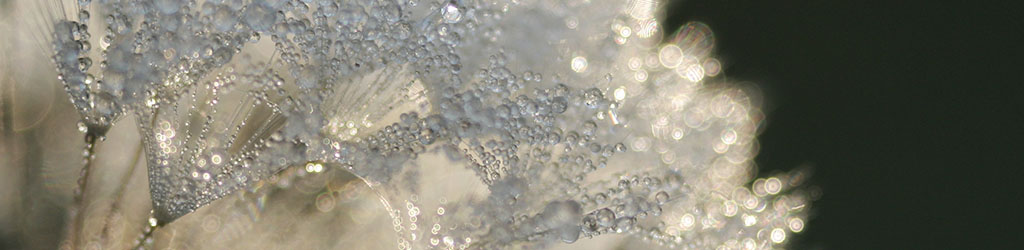
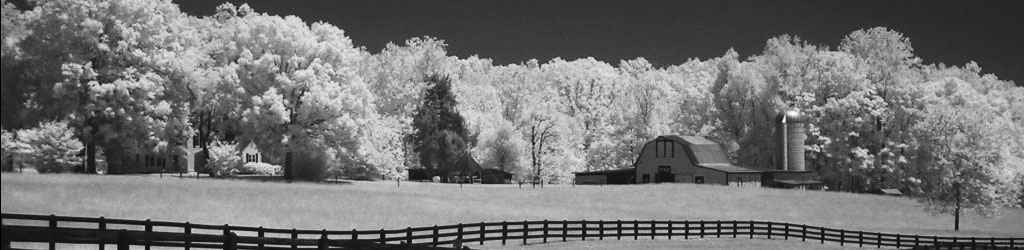
Usually, I can look at an image I take and tell pretty quickly whether it works or not, and so far my judgment seems to be, if anything, a little harsher than the average viewer. But this image has me stumped.
I scanned it from slide some months back because I liked it, then decided it wasn’t working for my marketing materials and never did anything with it. From time to time since, I come
Who is he talking about?
I guess I’m going to join the ranks of bloggers who are posting their own views on Phil Plait’s “Don’t Be a Dick” talk from The Amaz!ng Meeting 8 recently, without waiting for Phil’s promise of parts two and three. The feedback on
Oh, for…
This is what I get for walking around without a lenscap on, ready for action. Swung the camera through a spiderweb without realizing it. Lovely pattern, isn’t it?
Spider webbing usually takes lens cleaning fluid to get off (I know this because I have had jumping spiders leap onto the lens to run around,) but I lucked out this time. The rim of the lens actually suspended the web across it, so
Quick items of interest
Just a brief mention of two items that may be of interest.
The first is, I created a webpage about understanding the aperture within your camera – what it is, how it works, what it does for your photos, and so on. Lavishly illustrated and a nonstop rollercoaster ride from start to finish, it can be found at http://wading-in.net/Tips/aperture.html.
The second is, I’m selling one of my cameras,
Frustrations, part three
First, we’ll talk about the photo. What you’re seeing below is a two-by-two stake (so 1.5 inches square, or 4 cm) that was probably used to anchor a crab trap or something similar. It had fallen into shallow salt water in Florida’s Indian River Lagoon near Melbourne, and everything that is not wood colored in this image is alive. The largest things are barnacles, which grow surprisingly
On composition, part two
Unfortunately, I don’t use this blog to demonstrate composition in nature photography as often as I should, and instead you get illustrative, detail, or portrait-style images. I do a little of everything: illustrations and identifying details are important for many uses, but it never hurts to have a well-composed image as well. So now I’ll talk a little more about
Digital has its uses
Yesterday was definitely not the day to really be tackling this, but I spent a little time down at the North Carolina Botanical Garden in Chapel Hill, and still managed to get a couple of useful images while there. The sun was hiding behind either heavy haze or clouds while the temperature hovered in the high nineties, and the sweat
Superstitious?
During a phone conversation with a friend the other night, I admitted to holding some senseless superstitions, and got (rightfully) berated for it. As punishment, he assigned me a five hundred word essay on superstition, so don’t be blaming me if this is boring – it’s his assignment. I’m just not sure I can keep it down to five hundred words…
Superstition actually appears
Even weirder
Recent downpours have kept the amphibians happy, which means I encounter at least one a day. Sometimes the encounters are closer than I’d like.
I have to draw you a picture here, so you understand what happened. Maybe. It’s still hot outside, so my clothing is loose shorts. In order to get decent portraits of this Southern Cricket Frog (Acris gryllus gryllus), I had to be in


