
Walkabout podcast – But how? Part 2
This continues a new trend that I began here, where the concepts that support a religious (or at least, in this case, deistic) worldview receive critical examination. The topic of discussion this time around
Category: Astronomy
Half a century
Fifty years ago today, Yuri Gagarin became the first human to travel into space, as well as the first to orbit the planet, beginning what is widely considered the Space Age of human development and accomplishments. For the first time, we left the planet and set foot among the stars.
Well, okay, that’s being a bit dramatic. We’d been leaving the planet for quite a while, just not very
Too cool, part nine: A star is born
As wintertime drifts away here in the northern hemisphere, we’ll lose the opportunity to see the most recognizable constellation on earth in the universe by human standards still visible in the evening sky: Orion. Shown here, but technically not in its entirety (there are
The VAB
I threatened that I would have more on this topic, and I don’t issue empty threats. Herewith, a little trivia about a curious structure: the Vehicle Assembly Building at Kennedy Space Center, Cape Canaveral, Florida.
With the race to the moon came, naturally enough, a significant infrastructure to support the endeavor, and the most visibly prominent part of this in this area of Florida is the
Just because, part four
I just wanted to throw this one out there, because I liked the effect. It was taken four years ago as an experiment, and came out differently than expected. Take a moment and see if you can figure out how it was produced.
I can provide a clue: Most times, TTL flashes operate by measuring the light that makes it to the exposure meter within the camera, and gets shut off when enough
Lucky guess
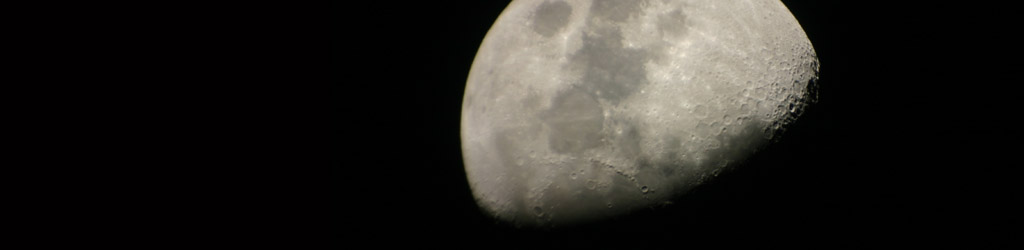
I amused myself earlier this evening by doing a little astronomical shooting, but in a strictly casual way. I have an 8-inch Galilean telescope which I can use to get fairly decent photos like the one for this post, but it’s packed away and I wasn’t motivated enough to dig it out. Instead, I simply used the
Too cool, part seven
One of the more interesting things about paying attention to new science releases is watching our knowledge grow. Bearing in mind that many of the books that I read growing up were not published that year, I’ve watched our knowledge about the age of the universe, the origins of the planets, and even theories of where our moon came from get changed and solidified as new info poured in from
Wait a minute…
I have a book entitled, “Space Shuttle: The First 20 Years” which details the shuttle missions from the perspective of the astronauts. It’s from the editors of Air & Space/Smithsonian
Cold weather tips
Six months ago, I provided some tips for shooting in hot weather, so I think this obligates me, by the unwritten laws of blog topics, to write about cold weather tips now. Just as a matter of amusement, I’ll note that in that linked post from June 30th of this year, I remarked about writing it at the break
As close as it gets
Yep, I’m actually out watching the lunar eclipse progress – or at least, I was. The conditions are deteriorating and I’m both too cold and too tired to stay with it. This is as close as I’m likely to get to live-blogging, by the way. I know that’s disappointing my legions of followers who have been waiting for an update.
In my area, we’ve got thin overcast starting