



Once again, we find ourselves (that’s the royal “we,” not [necessarily] including you) on Darwin Day, without anything prepared to show for it. I have long maintained that we should be celebrating the scientist on some other day than his birthday, since the dead of winter is a hard time to find topical content. The fictional readers that I insist are real shoot back that I’m being too narrow-minded on how to interpret Darwin’s contributions and am, instead, just shitty at planning ahead.
Aha! say I in return, in this inner monologue that would never take place in real life, Natural selection hasn’t anything to do with planning, but with pinning down the singular trait that just barely squeaks by. And so a tailor-made post is actually counter to the entire concept, a lot more like that nonsensical and self-indulgent ‘religion’ that, despite the plethora of evidence that species are not very well designed at all, still gets bandied around, probably because of the traits that wiggled us as humans through the selection process. Thus, to celebrate this day properly, what we need is something that allows this post to survive, if only by millimeters. And since the selection process for all content is, solely and entirely, “me,” well…
In the days running up to (and including) Darwin Day, came several demonstrations of how natural selection actually works. Really. Stay with me, here.
Back in January, I snagged this image of a camellia blossom right alongside the front door.
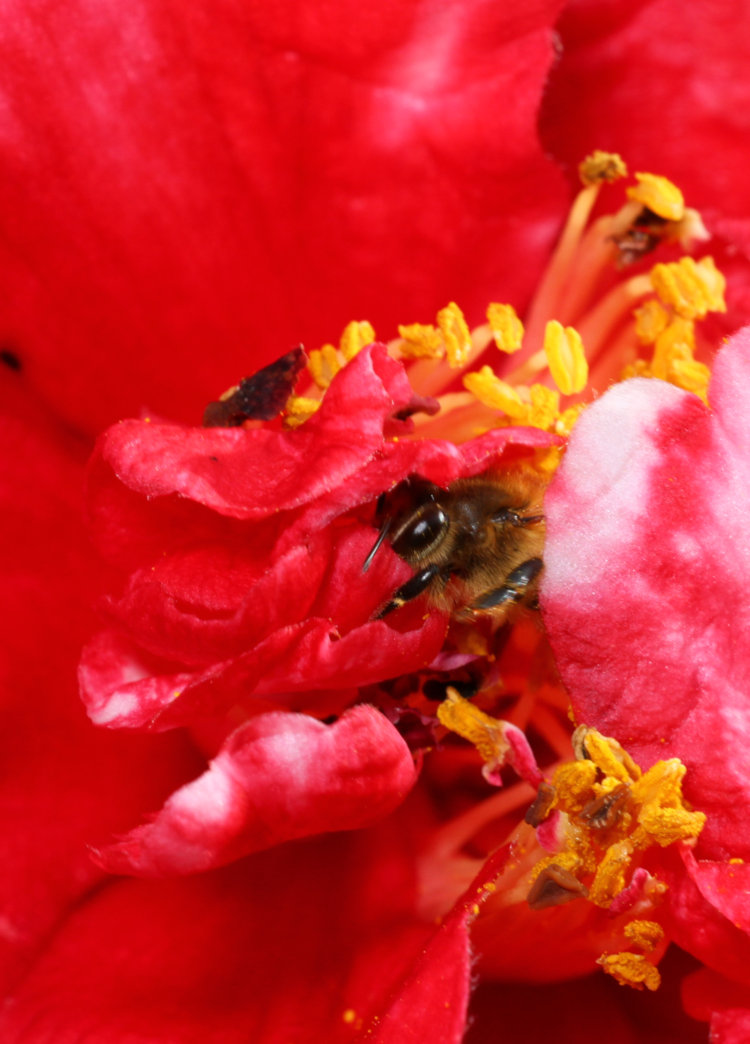
The camellia (Theaceae) bushes bloom quite early, generally while it’s still winter, and this one in particular shows a distinct difference in color between the cold season and the warmer months when we expect to see flowers – you can see a hint of the variegation that they display now, but they will go solid pink in spring. And as the temperature climbed into the “only chilly” territory, it nonetheless attracted a European honeybee (Apis mellifera) to pollinate it, making it the first of the year in my personal observation, which might have been more notable had I actually posted it back on January 9th when it was taken.
Despite this response in the winter months, however, camellia blossoms don’t actually tolerate sub-freezing temperatures, and the heavy snow and persistent cold temperatures that we received recently changed the appearance of the flowers drastically, so they looked like this yesterday:
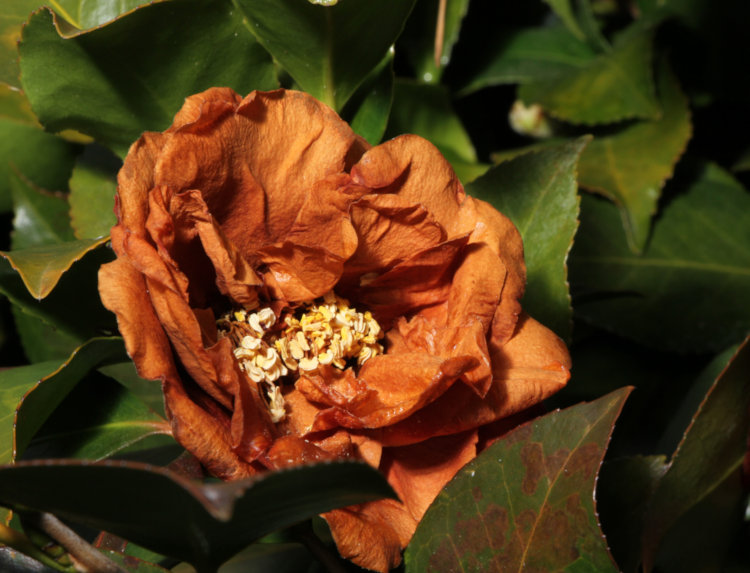
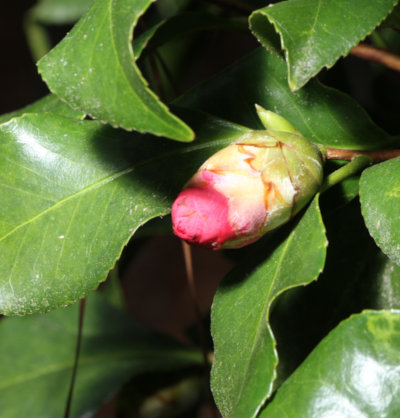 The question remains, can the reproductive process that the flowers facilitate survive the temperatures if the pollination occurs before such temperatures arrive? And I cannot answer that, because I thought of the question specifically for Darwin Day and not back in January when I could have marked that particular branch to see what happened. Yet, while all of the opened flowers were affected in the same way, some of the later buds (like the one at right, also taken yesterday) are beginning to emerge, showing no signs of damage from freezing, so we have to surmise that the enclosing leaves are better proof against the cold temperatures. This suggests that camellias found a niche of being the first to attract pollinators, with virtually no competition, as soon as the weather is warm enough, but still capable of handling the variable nature of, well, nature, specifically temperatures toying chronically with freezing.
You think I’m reaching, don’t you? Psscchhfftt. This is selection at work. And speaking of pollinators…
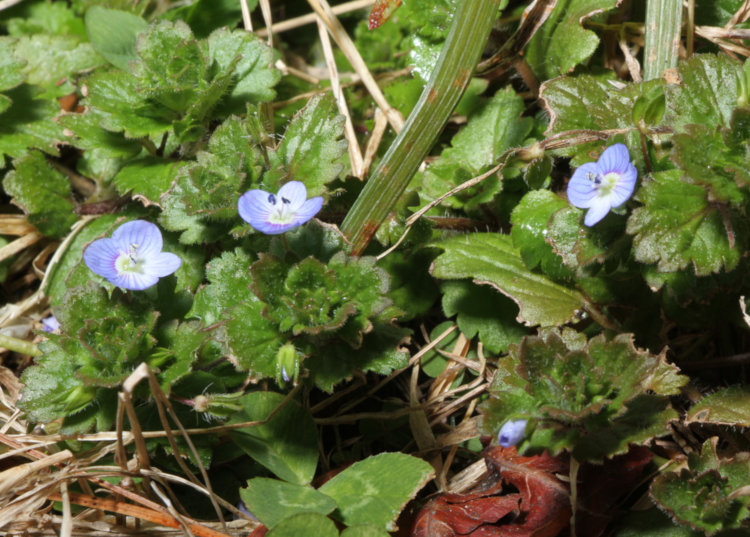
The winter speedwell (Veronica persica) blossoms always arrive about this time, though they’re so tiny and occur in such small patches that they’re easy to overlook. These obviously aim for certain pollinators too, though I doubt it’s honeybees, given the size – they’re about the same diameter as a bee, so I’m not even sure they could support the weight of one. I really should’ve staked these out to see what does visit them, while the weather was warmer, but yesterday when I shot this it wasn’t Darwin Day, so it didn’t occur to me. I could do it today, but then I’d probably never get this post done, and thus it would defeat the purpose ironically.
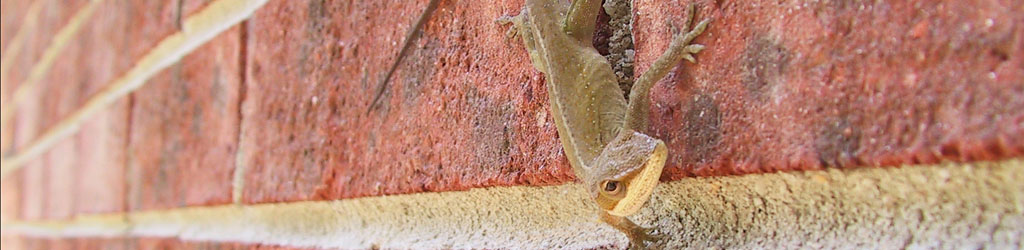
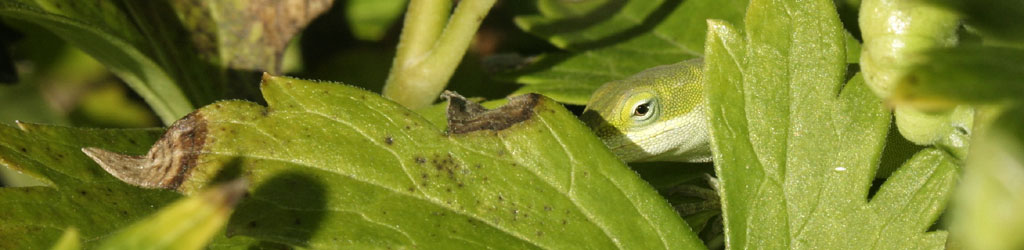
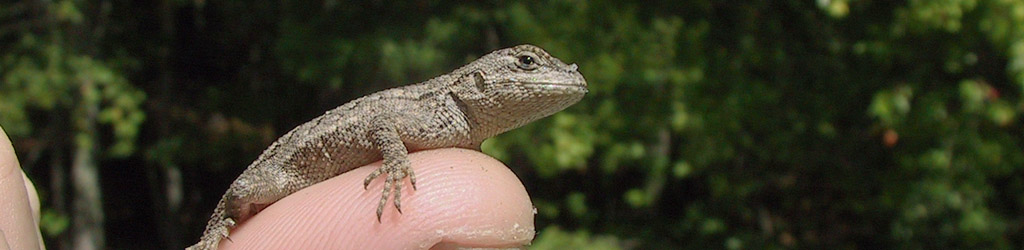
Close by, a sudden movement on the liriope attracted my attention, and only a moment’s examination netted this guy:
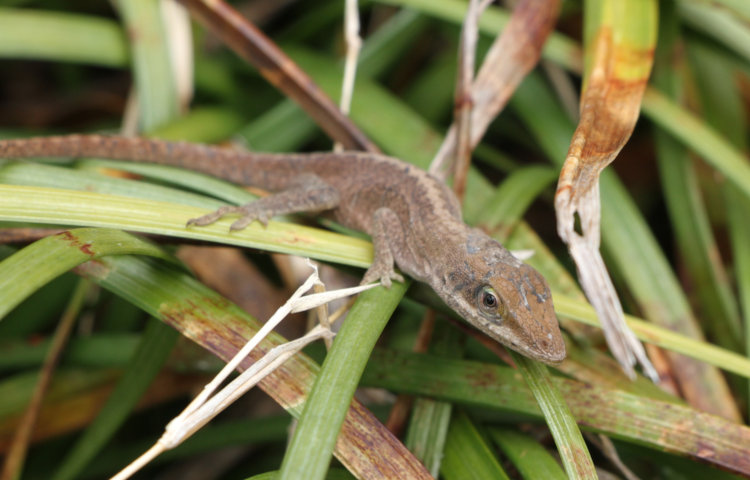
Whatever does pollinate the winter speedwell stands a chance of being preyed upon by the Carolina anoles, since they don’t waste any time getting active as soon as it’s warm enough, either. I can’t say that this is the first I’ve seen this year, since several days in January got warm enough (generally, sunny and above 12-14°c) to bring them out in search of the early-appearing insects. It’s a cutthroat world out there.
Still speaking of pollination…
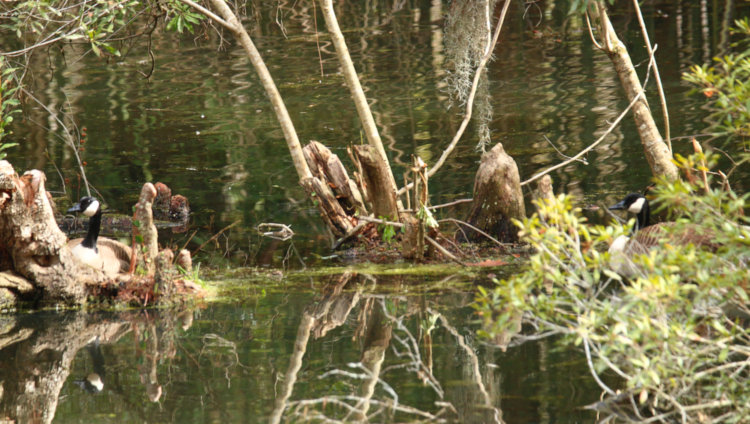
Looking out at the pond this morning, we saw these two Canada geese (Branta canadensis) hanging out on separate little islands in the pond – the one on the left definitely seems to be settled in, and was snoozing when we first spotted them. You can also see that the beavers have been working these islands over too, which as yet remain nameless, but this may not be for very long.
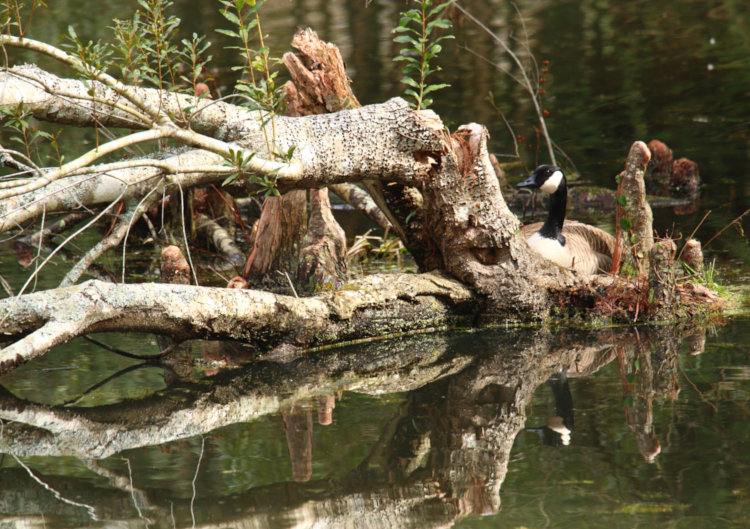
Given that this one was asleep while the other was standing and watching, I’m guessing this is the female, and she certainly seemed to be settled in. We’ve had plenty of geese visiting, several distinctive regulars, but to date no one has shown any indication of wanting to build a nest, though we’re hoping this is a good sign, and it’s an ideal spot for one: decently subtle, but completely isolated from predators, and of course very handy to the food. I considered it still a little early for mating season, but not by much.
Did you catch the past tense in there?
A little after this when I looked out the downstairs bathroom window, which has a good view of the north end of the pond that sits well to the left of this spot, I saw two geese side-by-side, head to tail, dipping their heads in the water almost in unison, and I wondered if this wasn’t courtship behavior. In only seconds, this was confirmed as they mated, and so this is a very good sign, especially since a little later on we found them both back in the same spots. We’ll be monitoring this development closely.
So there, see? Selective pressures produced a post that suffices and survives, possessing the traits necessary to maintain. Not at all an excuse to just throw up some recent pics, but topical and demonstrative. Isn’t nature wonderful?