


The other day (well, eight days ago) when The Girlfriend and I were out doing various property tasks, she came across three nearly identical finds that remain a small mystery, one I may be attempting to solve as I find the means to do so. To wit:
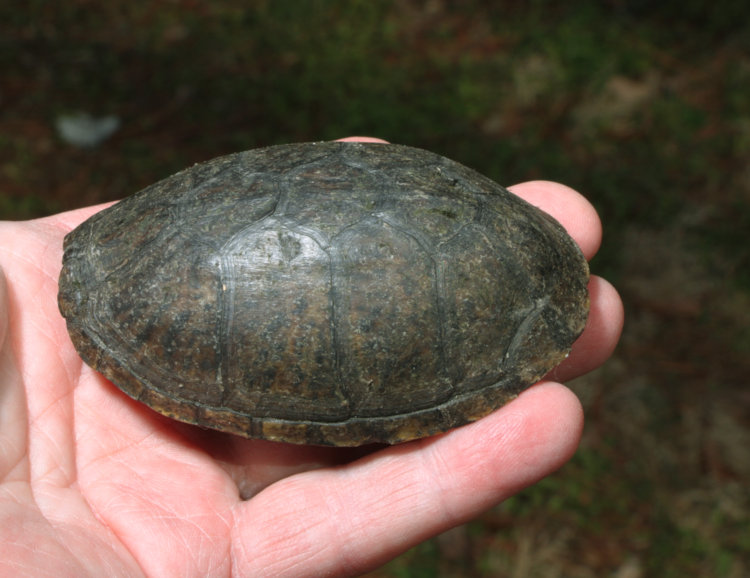
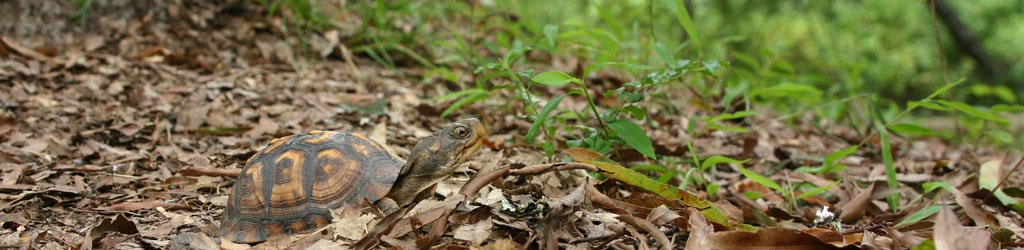
Right in one of the paths through the less-traveled sections of the property, she came up with this, the carapace of, most likely, a common musk turtle (Sternotherus odoratus.) While it was a warmer day, it had recently been quite cold, and so unlikely for the turtle to be out and about on its own for any reason, nor was it likely that this had been in the path since the time when it would have been out.
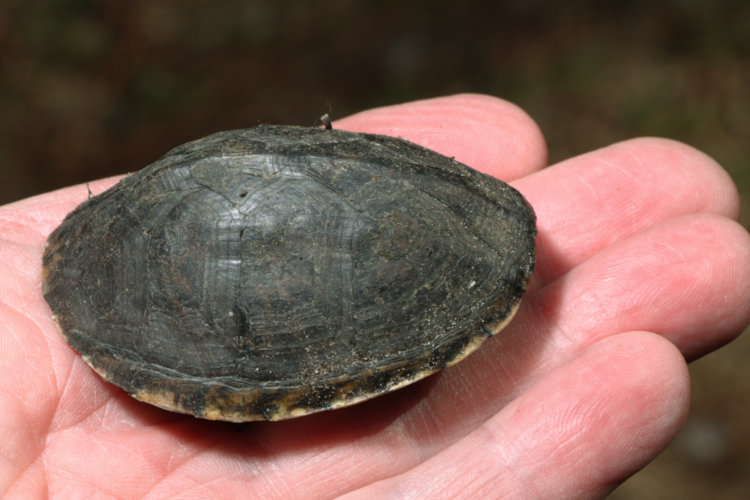
And another, smaller, but same species; we can tell by the faint ridge along the spine, and the small plastron:
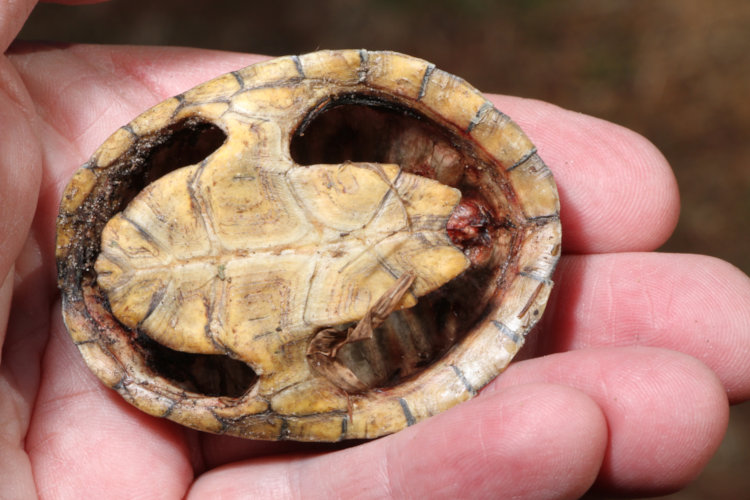
Any of the other species in the area that might have a carapace similar to what we’ve seen would also have a plastron (belly shell) larger than this. Noticeable upon close inspection, however, was that these were fairly fresh, and by that I mean, had been in possession of their living owner until relatively recently, since remnants of flesh were still within, not fully dried out nor scavenged by ants.
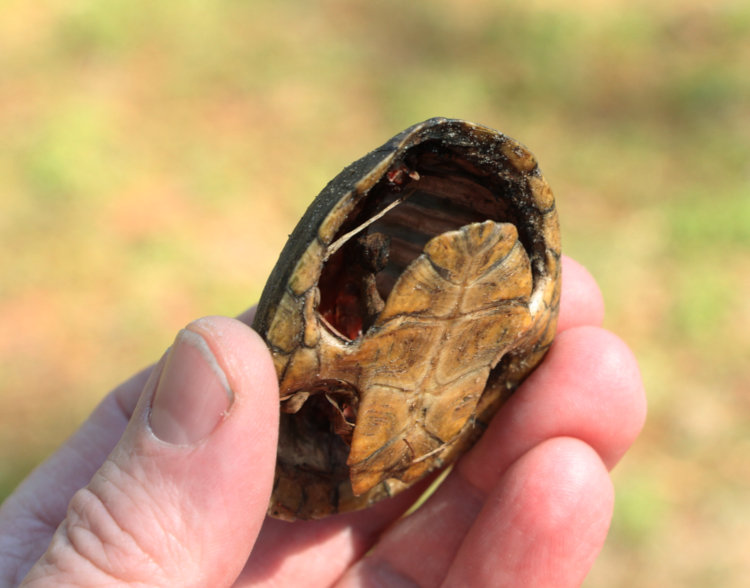
In fact, a third that she’d found still had ants working on it, and so did not get photographed in my palm like these. Even I have my limits.
What’s curious to me is, what was digging up turtles hibernating for the winter, most likely in the mud at the edge of the pond, to eat them so recently? I was vaguely suspicious of the white ibis, since a few days earlier it had spent the entire day on the property, but this isn’t the kind of meal they tackle, nor is their beak made for this; they swallow prey whole for the most part, and certainly couldn’t section out a turtle. So I’m leaning towards raccoon, because we’ve seen them here and this might be something they’re adept at finding. Certainly not the nutrias or the beavers, which are both vegetarian. Also odd that the turtles seem to have been eaten in roughly the same time frame, all left out in the open in plain sight.
Most such activity, of course, would take place at night, and while I’ve been out quite often at night and caught glimpses of various critters, the opportunity to actively observe them hasn’t been there, given that a) they’re usually aware of me before I’m aware of them (though not always,) and b) I don’t have that night vision thing going on. There are options and I’m working on a couple, but the property is also quite large and so covering any decent portion of it is tricky. We actually did have a camera trained on the backyard and pond edge, which may be back in operation within a week or two, but it was so distant from the pond (wide-angle lens, of course,) that its motion sensor probably wouldn’t be triggered by anything smaller than a deer. Still working on it all.
The same day as the turtle shell finds, the late afternoon light was great and the wood ducks were congregating at the pond edge, so I slipped upstairs and managed to open the window without spooking them, and thus got a few nice portraits while their feathers were shining in the bright sunlight. Usually they avoid such conditions but, you know, corn…
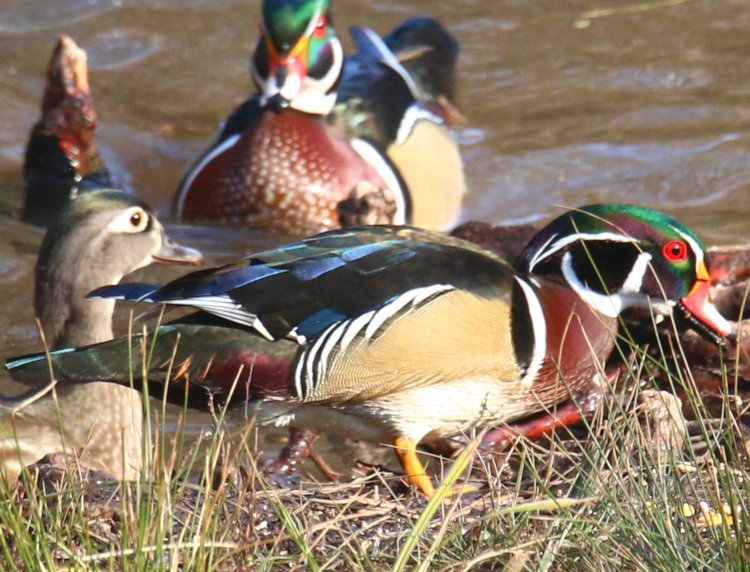
These were at 600mm focal length but quite far removed from the ducks, so this is tightly cropped but not bad for that. The color palette is what I was after, and this shows the iridescence of the head feathers, the muted blue iridescence of the wings folded across the back, and a faint hint of the very fine stippling that adorns their sides (seen in better detail here.)
And then a couple of direct portraits.
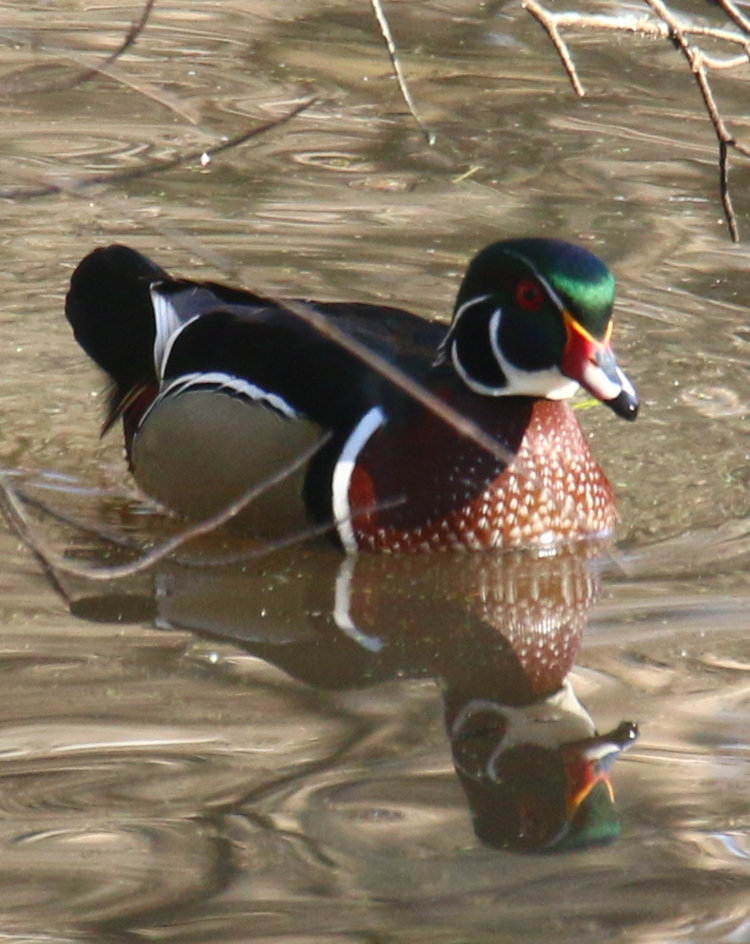
I like this one for the reflection, which is almost ideal, a chance timing thing when the rippling of the water was just right. I could do without the intervening branches (I say that a lot, don’t I?) and it would be nice if the water reflected greenery instead of the winter browns, but hey, I’ll still take it. and the next is better, I think.
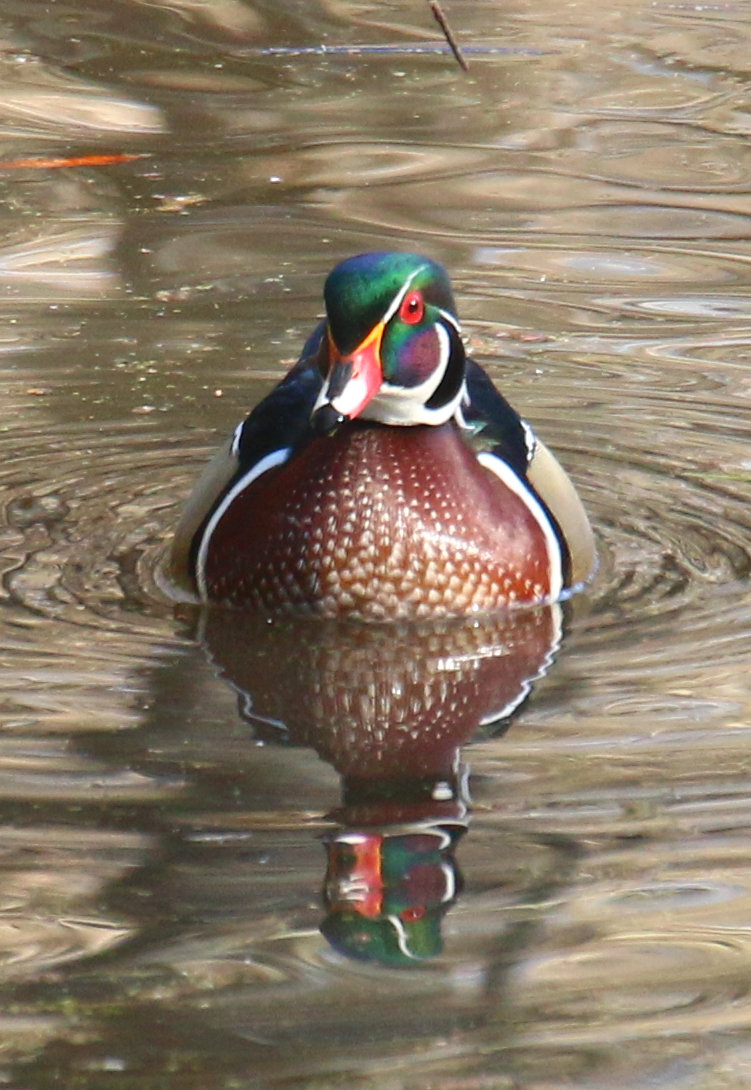
Better light and head angle, even if we don’t have as much of the colors. It’s funny: we’ve unintentionally conditioned the nutrias, and to a smaller extent the beavers, simply by putting down corn for food, but the wood ducks haven’t even begun to habituate since they always flee at the first sign of us in the backyard – they don’t even realize it’s us that distributes the corn since they’re well out of sight before this happens. So my attempts to get closer portraits (and a wider variety) is not progressing much at all. The ducks, in fact, inhibit a lot of work I might do in the backyard since I hate to spook them. Then again, I remember what I was considering a little over a year ago, and it didn’t realistically include the ducks being right freaking here, so I can cope, even while I keep trying.