













When doing the end of the month tallying for the ol’ Walkabout blogaroosta, I found that I had uploaded 497 photos for the first half of the year. Three more, and I would have had a nice even 500 – I even had three waiting in the blog folder for a post! You can imagine the pain that this caused me.
Which was, not much at all. ‘Round’ numbers are a conceit, little more – cool if you like math tricks, but ultimately meaningless. I’ve gone into this before. Even as an average, it doesn’t mean I’d hit 1,000 images by the end of the year, since these are highly variable depending on both the subject matter that I discover and my mood in pursuing such. Even having a certain number as a ‘goal’ can be good or bad: forcing me to seek out more to photograph, perhaps, or on the other hand, making me settle for something I otherwise wouldn’t have, just to meet this arbitrary number.
Anyway, let’s look at those three images, shall we?
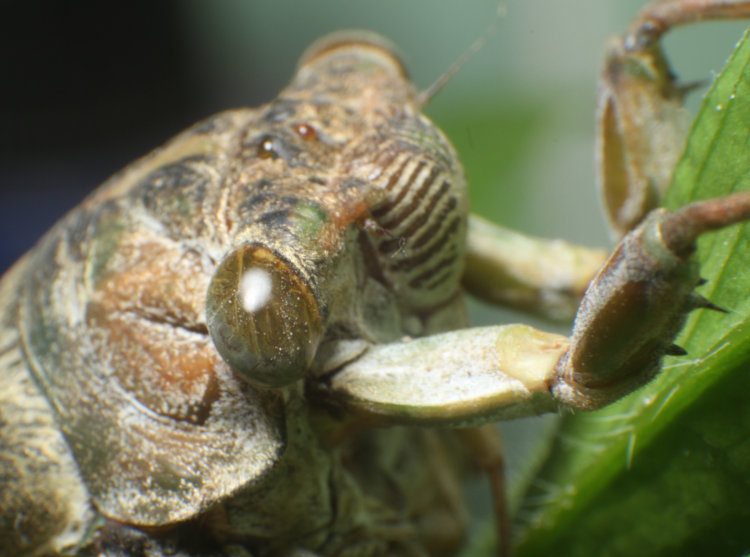
Found this largish, greyish specimen of a cicada, a species I don’t recall ever seeing before, and brought it in for some detail photos. It will remain unidentified, however, because the distinctions within the Family Cicadidae are numerous and, really, not worth the effort. But we do need a closer look at that eye.
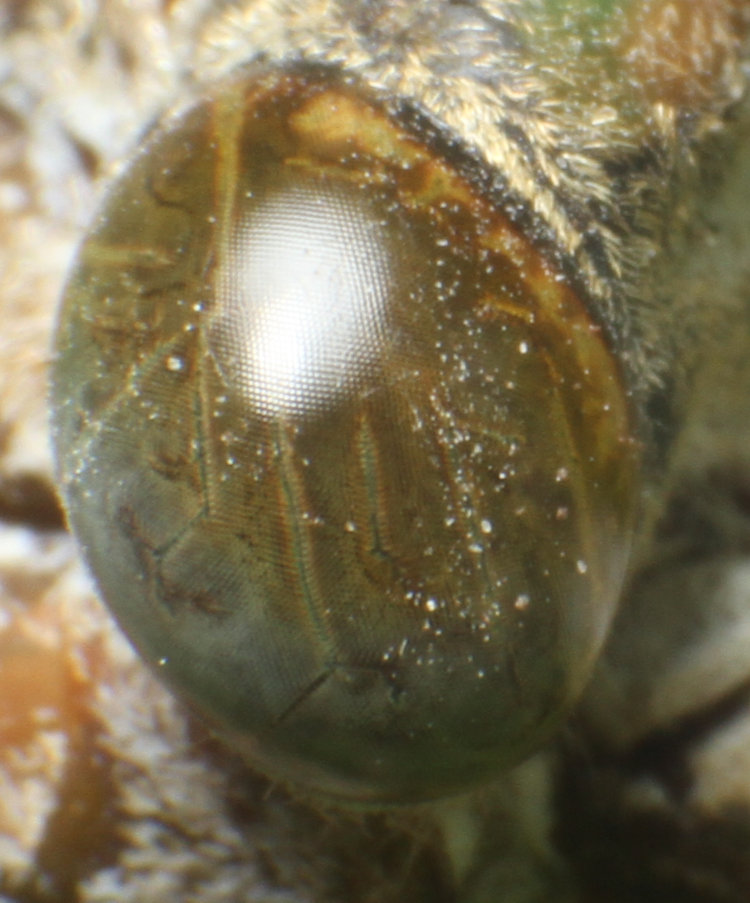
Now, here’s something I was just thinking about: This is a pretty complex, large eye for something that consumes plant sap, especially in the adult phase which only lasts for a few weeks at most. Do they need these to find mates? Escape predators? It’s a puzzle, and more so when you realize that the nymph form has only slightly smaller eyes and they spend months to years of their lives completely underground. Contrast these with the eyes of butterflies, which are more active and more visible, and thus more of a target for predators, while also needing to find the flowers that they feed upon right at the peak of their nectar production. It’s not making sense to me right now.
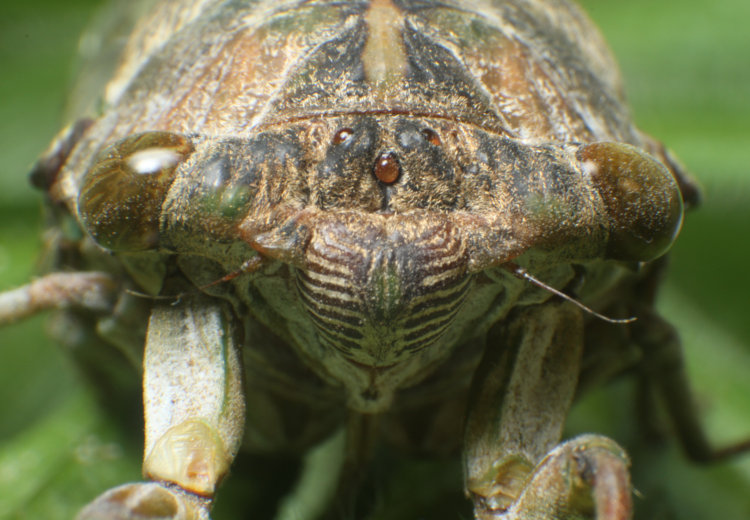
And here we see three ‘simple’ eyes clustered in a triangle on the frons (forehead.) These are, I believe, only used for flight, mostly in staying level – they can’t use their ears for that like we can since they’re stone cold deaf from hearing their own songs at close range. No, I tell a lie – being deaf doesn’t affect the vestibular system in most cases, but cicadas probably don’t have such anyway. We’re wandering…
Regardless, pretend these went up at least four days ago, and then join me in celebrating this remarkable achievement. I mean, what else ya gonna celebrate?