


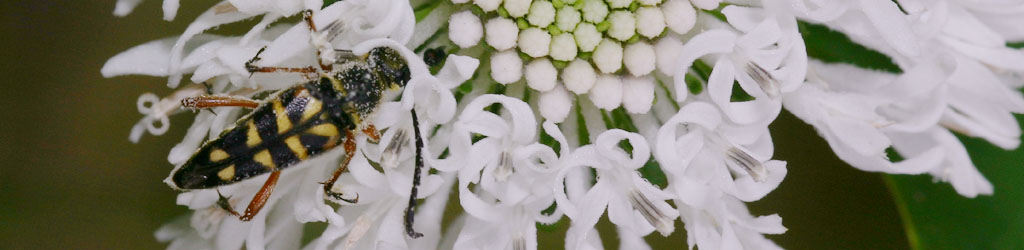

I was about to title this post, “Just playing,” because it was a quick effort to get a few clear closeups of a jagged ambush bug (Genus Phymata,) but considering the number of frames that I shot trying to get these, it hardly counts as foolin’ around. It was also intended as a lead-in to a further bit of news, but that hasn’t been done yet, so here we are.
Earlier, I showed some quick pics of an ambush bug on the butterfly bush, and decided while dead-heading it yesterday to try for better – the first step was locating one, which wasn’t hard, and I let it be on its own dead flower cluster until I tackled this last night, clipping the entire cluster and bringing it in with me for ‘controlled studio work,’ which essentially means tripod for the camera and a clamp for the cluster. Eventually, I got something looking like this:
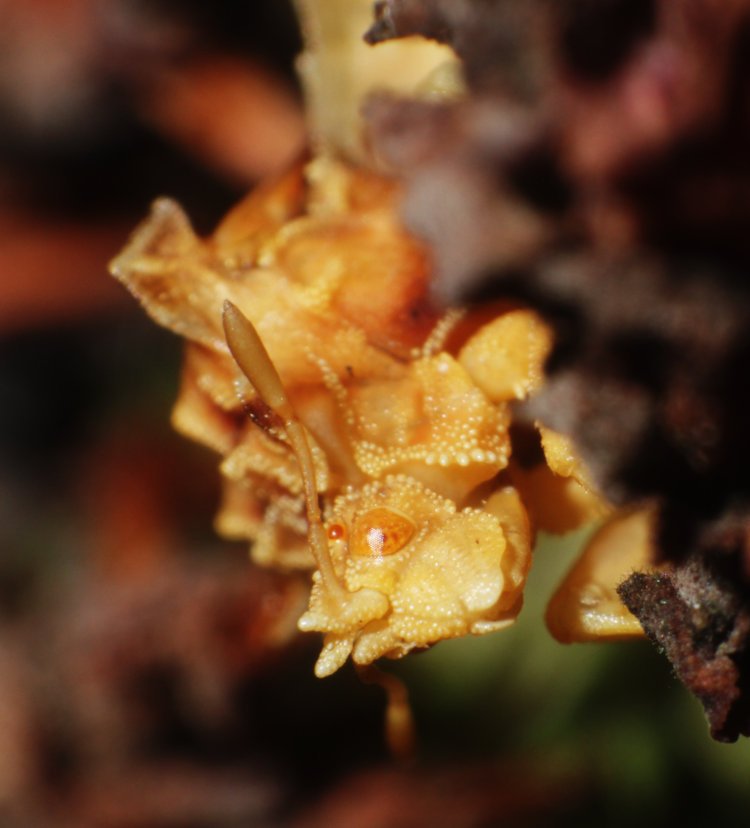
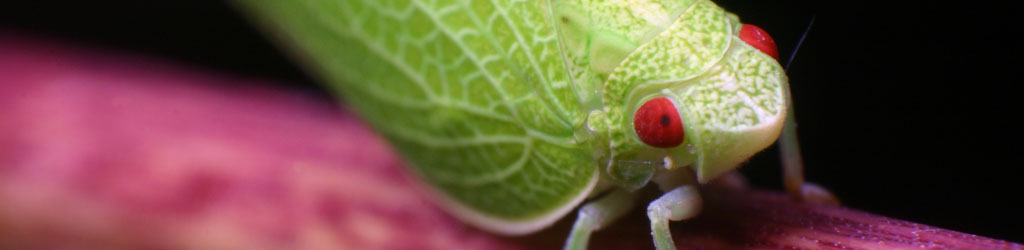
The insect’s head is toward us and slightly downward, underside to the right. The one thing I regret is not getting those forelegs in view, since they have lovely little clamps for their prey, but achieving tight focus and good lighting was enough of a chore, especially since this little guy was getting somewhat anxious over all the shifting that was taking place. However, we can go in closer than this.
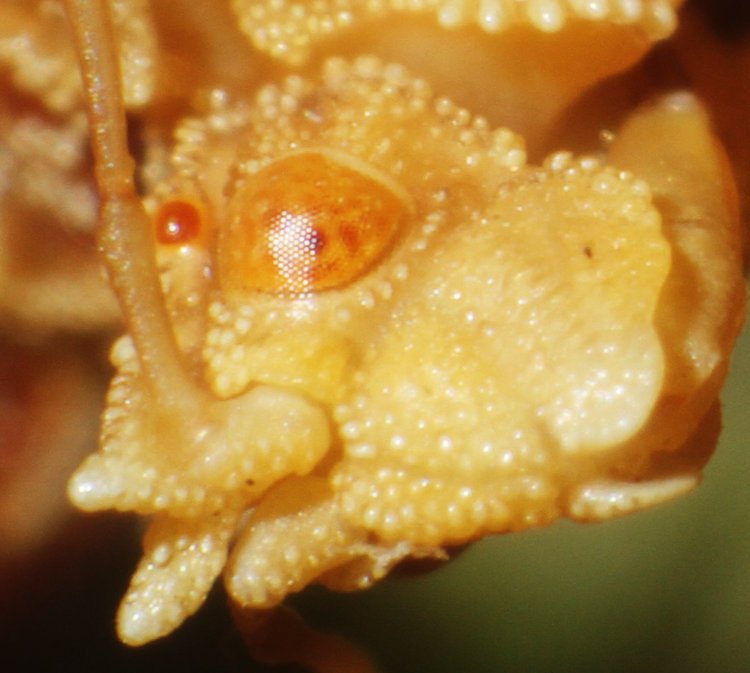
While they obscured the multiple false pupils that ambush bugs display, I’m still glad to get the facets of the compound eyes this clearly. I’m not even going to try and guesstimate just how small these really are, but I’ll let you try if you like, since I also did a scale shot:
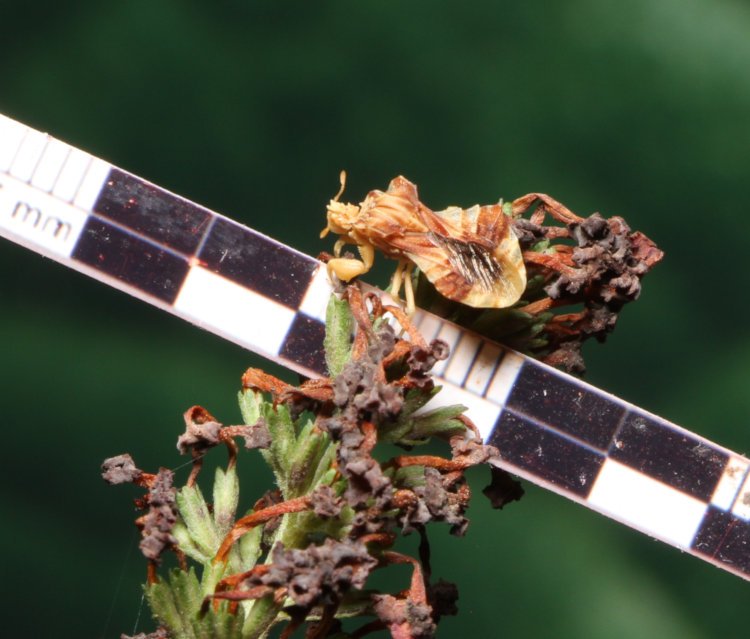
While this was done with the Canon 18-135, the previous image (there’s only one, but two versions of it) was accomplished with the reversed Sigma 28-105. Don’t get confused with the dried flowers – the bug has a nice rounded yellow-and-brown hind end. You can see that the little bugger doesn’t top 10mm in overall length, that head running roughly a millimeter. So the eye cluster is, what, 0.8mm across maximum? Then you can go from there. Have at it.
My subject was returned to the butterfly bush once I was done, onto a fresh and blooming cluster even – the best I could do towards obtaining it some food. I treat my models well. Usually.