






Another twofer, discoveries that occurred in the past week just a couple days apart. We’ll start with the video, because why not?
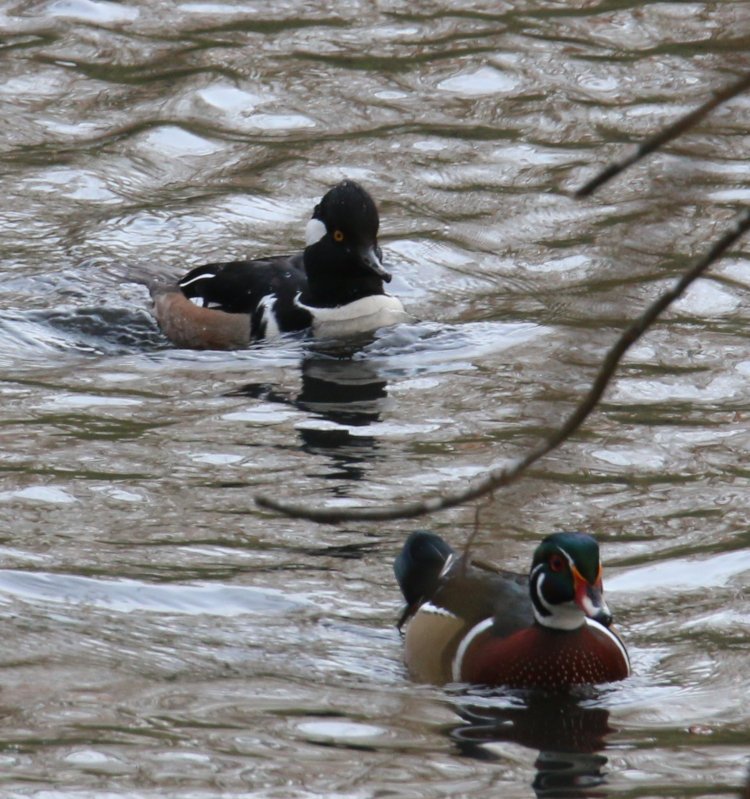
The initial discovery occurred one morning as The Girlfriend and I were chatting in the breakfast nook while I did a routine scan of the pond with the binoculars. She was in the middle of relating something to me when I rudely blurted out, “That’s a merganser!” and rushed upstairs to the bathroom/photo blind. To her credit, she didn’t smack me in the back of the head, instead picking up her own binoculars to try to find what I had seen, then following me upstairs. Eventually, with several tries as the little bugger slipped in and out of sight among the trees and intervening branches, I snagged a couple of clear-enough images.
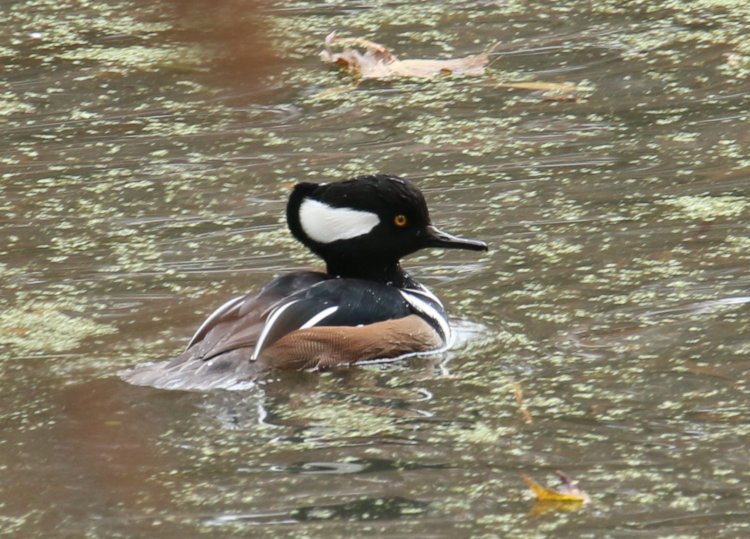
I’d only captured images of the species in the wild once previously, a female that (of course) lacks the distinctive coloration of the male shown here; a neighbor had said she’d spotted them before on this pond, but some years back, so this was good to see. As the clip shows, a little later on it was revealed that we had two, both males, and it’s remained that way now for several days.
A day or two later, off in the more distant portion of the pond, I spotted something else, but this one was even more adept at remaining obscured by leaves or trunks, and it took several minutes just to snag a couple of frames.
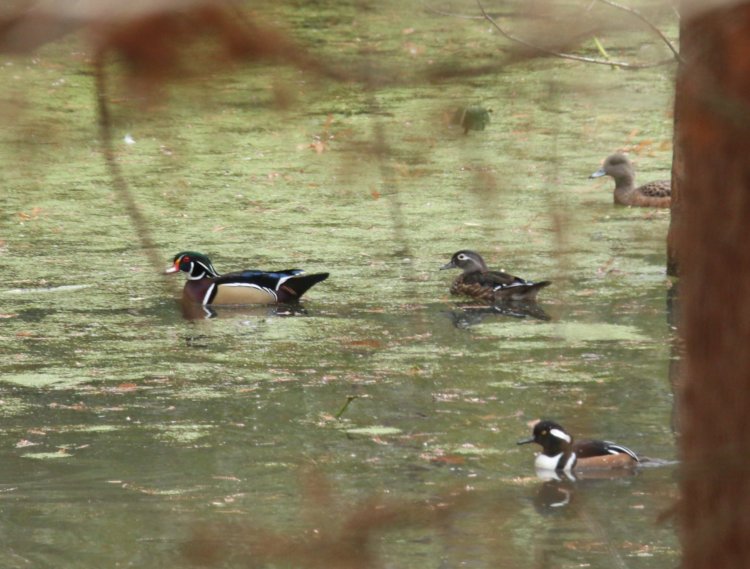
That’s two wood ducks in the center, a merganser at bottom, and the new one at top peeking out. We can go in for a closer look:
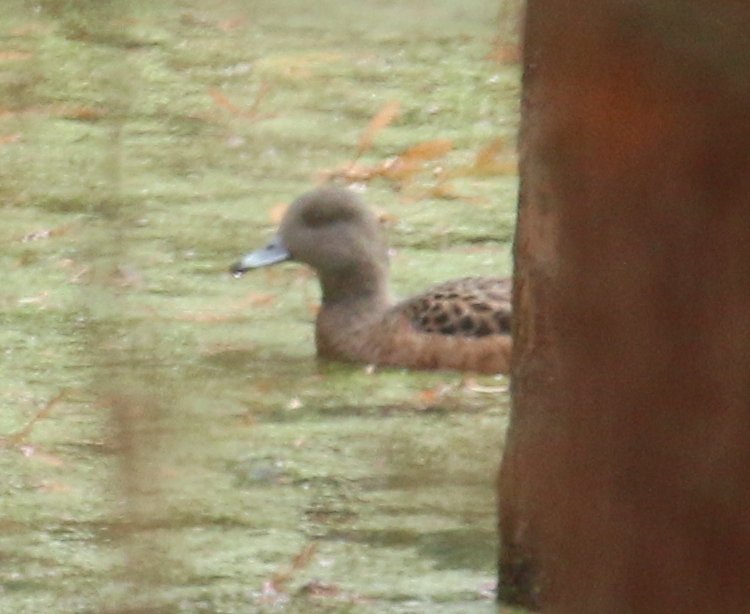
Intervening leaves and vines prevented a clear view, but this was adequate for the task. No markings on head save for the dark shadow around the eye, and short, blue-grey bill, which initially had me thinking this was a female ruddy duck, but no, they don’t look like that. Meanwhile, it was endeavoring to come into the clear as little as possible.
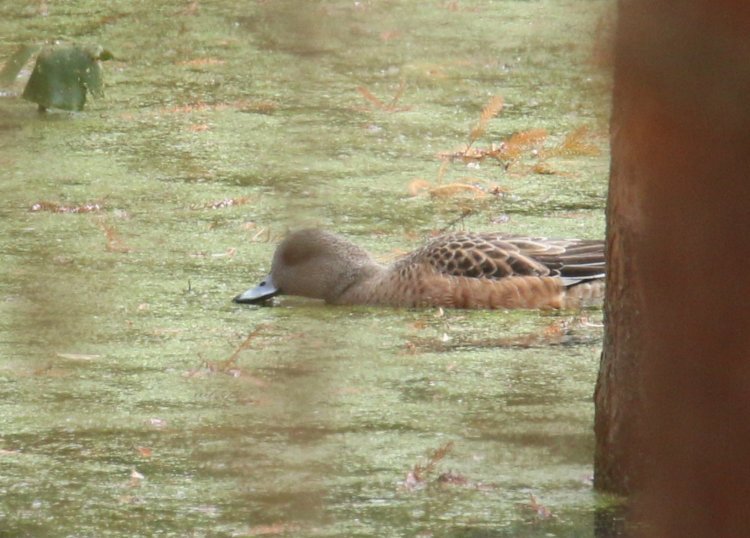
I’m not as up on my species as I perhaps should be – some readers have likely already pegged this – but I was after clear enough images to use for identification, and resorted to my Sibley Guide to Birds to determine that this is a female American wigeon (Mareca americana.)
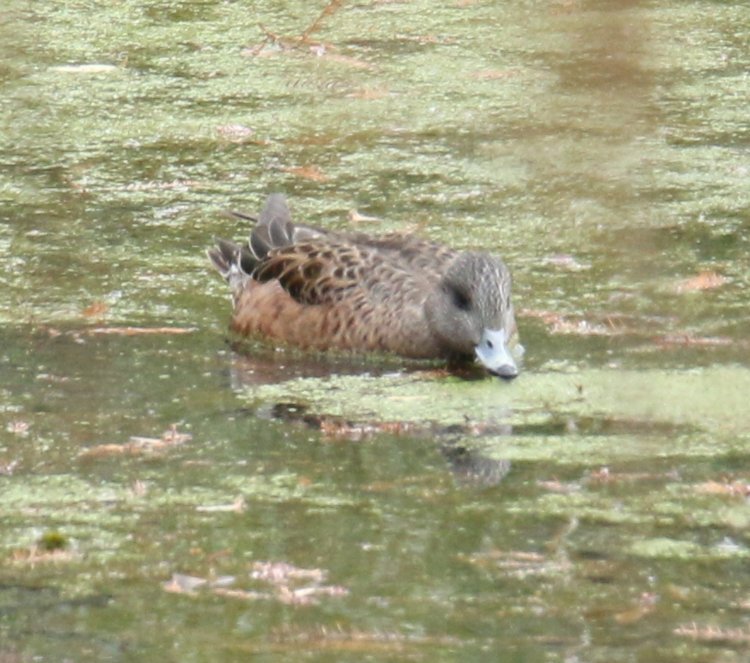
Unlike the fish-eating mergansers (who apparently are finding enough food since they’ve been around for several days now,) the wigeon feeds on both aquatic plants and field plants and seeds with equal facility – this one seems fond of the duckweed. So far, it’s been only the one female, who stays in reasonable proximity of the wood ducks but hasn’t ventured too close to the shore. Will a male, or even more of a flock, show up later on? We can only keep watching.
Meanwhile, the mergansers seem pretty cool with the area.
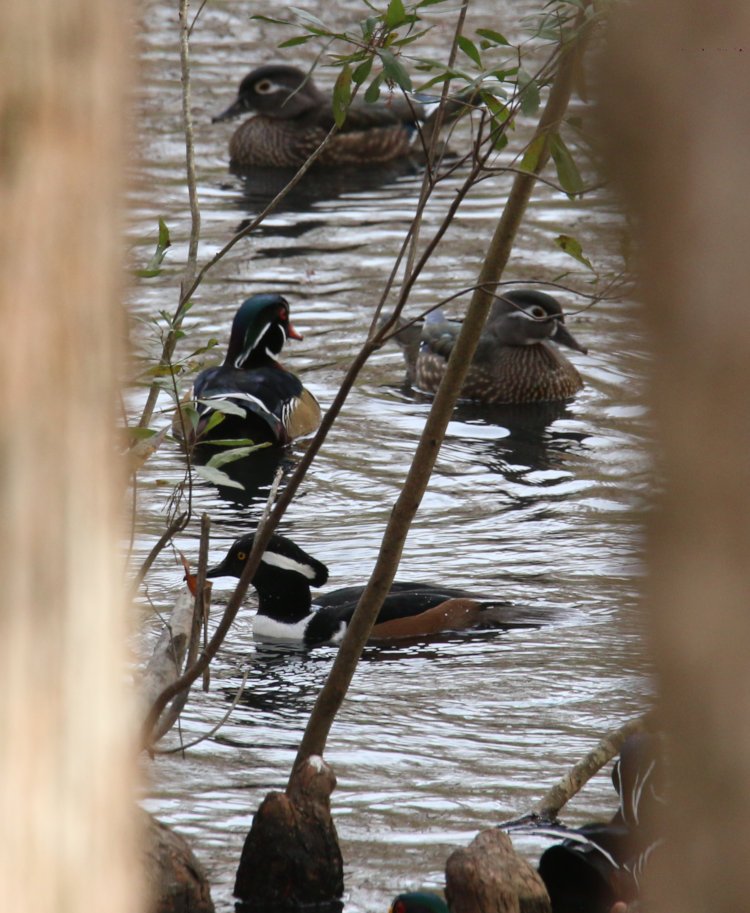
Not at all interested in the corn we distribute, the mergansers nevertheless are fine with following the wood ducks around, though we haven’t yet seen them join in the raiding parties in the morning. We’re guessing it’s the safety-in-numbers thing. No sign of females for either of the males, but mating season isn’t for a couple months yet, and given how many times we’ve seen only brief appearances of varied species, we can’t say that these have ‘moved in’ yet.
You’ll notice that the white marking on the hood/crest is smaller here, but they can control this at will, as, coincidentally, bird and moon illustrated just recently. Even better, my one previous capture from 12 years ago bears that same cynical look as the females in the comic (pre-voop, of course):
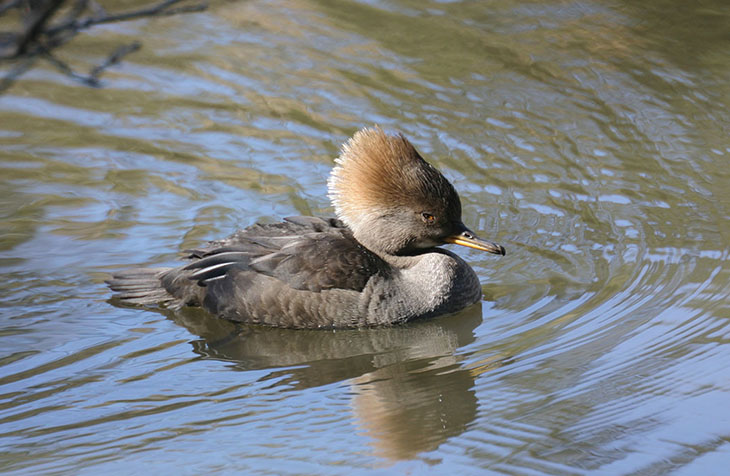
That’s some serious, Bride-of-Frankenstein conditioner in use there.
One last pic of one of our (temporarily?) resident males, cruising in with a male wood duck. While the poses and position in the frame are nice, it’s the unreal textures of the water that I like the most; the more I look, the more it seems almost like a composite, mixed-media image, photos of the ducks overlaid on impressionist oils or something. Or maybe I’m reaching…