
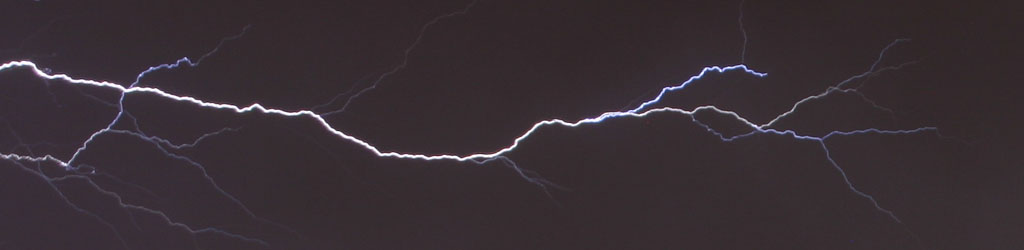
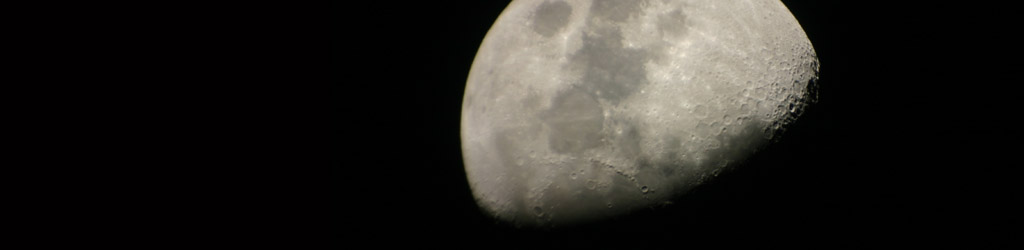
I amused myself earlier this evening by doing a little astronomical shooting, but in a strictly casual way. I have an 8-inch Galilean telescope which I can use to get fairly decent photos like the one for this post, but it’s packed away and I wasn’t motivated enough to dig it out. Instead, I simply used the
Category: Science & Evolution
Too cool, part seven
One of the more interesting things about paying attention to new science releases is watching our knowledge grow. Bearing in mind that many of the books that I read growing up were not published that year, I’ve watched our knowledge about the age of the universe, the origins of the planets, and even theories of where our moon came from get changed and solidified as new info poured in from
But what if I’m wrong?
Yeah, we’re back on the subject of debating religion, but at least I’m warning you ahead of time, and providing other topics you can go to as well. I’m that kind of guy ;-)
Among the many common debates that arise is a simple question, posed by religious folk to atheists: “What if you’re wrong?” And initially, it often seems like a valid question.
Communicating science
So in an earlier post I denigrated some efforts that were being taken supposedly to “communicate science,” or to be more specific, to help foster an interest and understanding of science and try to reduce the idea of scientists as either hopeless nerds or conmen pulling a fast one on the public
Book Review: Your Inner Fish
In a previous review, I talked about a book that dealt with the concerted efforts by creationists to discredit evolution, and the book was specific to the goal, but not aimed towards greater familiarization with evolution itself. Enter Your Inner Fish: A Journey into the 3.5-Billion-Year History of the Human Body by Neil Shubin, which tackles that aspect more specifically.
Shubin opens with some
Too cool, part six
Sometimes I just kick myself for being stupid. At Why Evolution is True, Jerry Coyne does a post on one of the most remarkable of animals, and of developed forms of locomotion: the Paradise Tree Snake, the only snake that flies.
Now, this wasn’t news to me, since I’d seen a brief mention in a book years ago, but then, before I started blogging, found videos of the research that was being
Define, “poisons everything”
I talked a little bit about this subject in an earlier post, but a couple of things I’ve come across recently reminded me that it can stand a bit better detail. Part of this comes from a concern I’ve harbored for a while, one that has no small difficulty in establishing whether it is legitimate or not. Bear with me for a bit while I lay this out.
John Shimkus, a member of the US House
Book Review: Last Chance to See
Last Chance to See by Douglas Adams and Mark Carwadine is a curious book format. Adams, best known for his “Hitchhiker’s Guide to the Galaxy” series, writes with a distinctively quirky style, outside the box and off the wall, and he is supremely capable of taking the reader completely
Sampling of the season
While I have unfortunately been unable to get out and do justice to the autumn season around here, I feel obligated to at least get a few examples up. The biggest issue I have right now is with trying to get my digital images to adequately represent the colors that I’m actually seeing. The sky in particular has been remarkably clear and rich in color, but the digital
Frustrations, part five
Now that the season for such things is effectively over, I can admit to myself that I didn’t get what I was after this year, and go with what I have so far.
The Sphingidae is one of the more interesting families of moth. While not as big or impressive as luna moths, they have a very finely developed protective camouflage, which is exhibited not only in coloration, but in body size