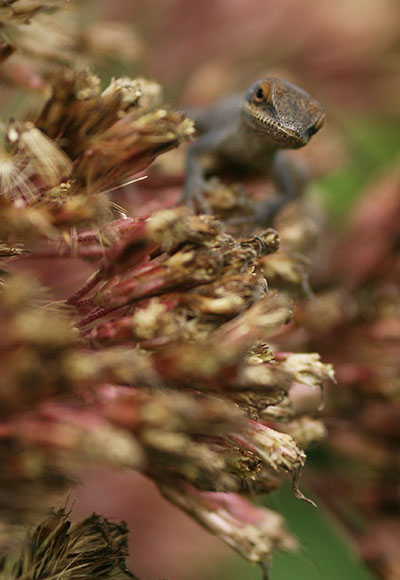
 You may well ask, what, exactly, is that title supposed to mean? Well, it refers to the idea that I don’t really do artsy stuff, so this must be fartsy stuff instead. Basically, just throwing down a bunch of recent photos for the sake of it – not everything has to have exposition.
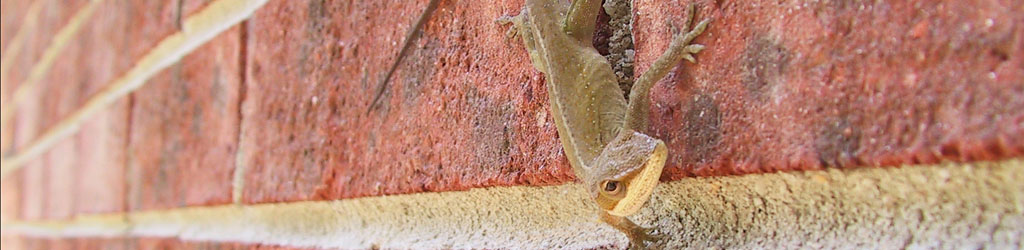
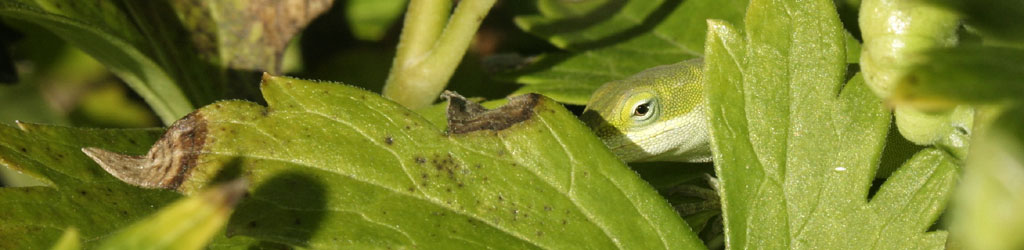
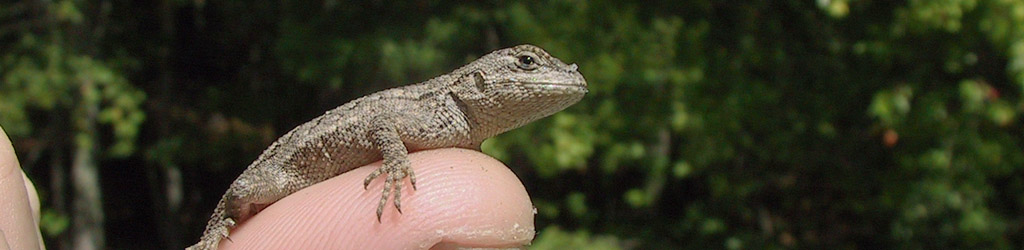
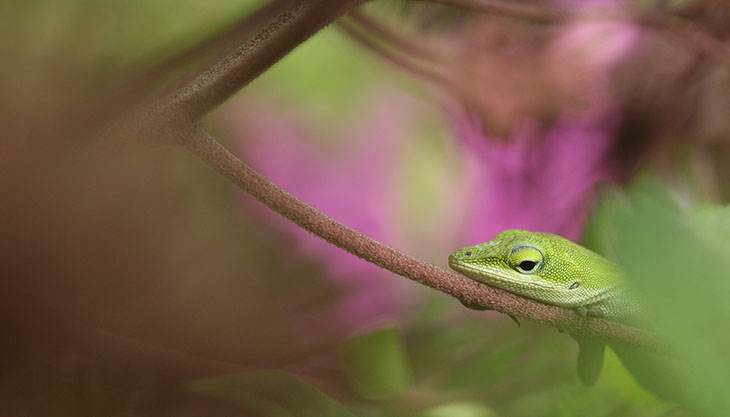
This little guy might be the same green anole (Anolis carolinensis) seen in this post – it was the same size and in the same immediate area. Sold in pet stores for years as “chameleons,” the anoles have the ability to change their skin color as well, though usually not as elaborately as the true chameleons, and this is the darkest that I’ve ever seen a green one get. This might have been for camouflage purposes, considering the foliage it was perched upon, but more likely is either a sexual or warning display, and this is reinforced by the presence of another green anole not far away, not seen in the photo (and indeed, not even photographed since it scampered for cover too quickly.) I have more detailed shots of this fella, but liked this one for the fartistic perspective.
[Okay, a trivial bit of nonsense. In pulling up the link that appeared in the previous paragraph, I put the post title, “Just lizard things,” into the search bar – startlingly, the third post considered a match was this one. Curious, I searched for “lizard” within that text and didn’t find it, shocking as that may seem, but I’m really trying to figure out why that post fell so high on the list of matches.]
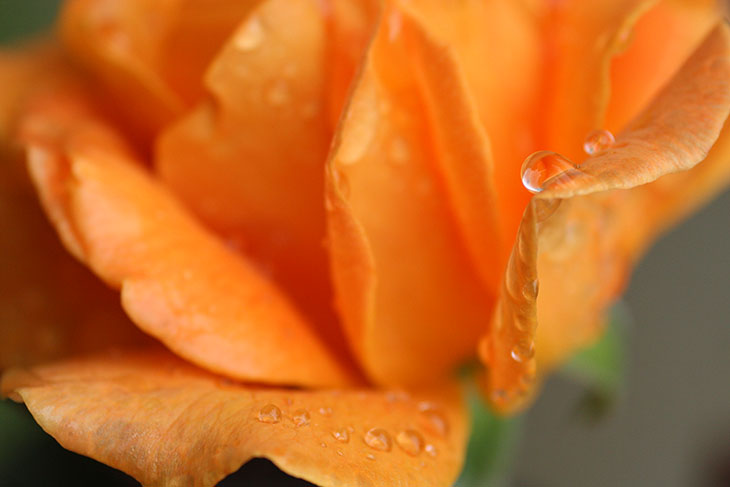
We’ve had two full days of rain here, and I spent a couple of minutes playing around with the rose bush temporarily in our care (no longer playing host to a treefrog – see previous post) to try out some semi-abstract compositions. One of the tricks to using water droplets in images is to find the angle and/or supplemental lighting (this is natural light) that brings them out with the sharpest contrast to draw attention. While there are a lot of raindrops in this frame, only one is producing an internal reflection of the sky that produces a white edge to the drop, and that’s the one I chose to focus upon. The shadows, however, are important for shaping the defocused petals – direct light would have looked brighter in color, but much flatter and less dynamic.
 I have no idea what these are, but those sure look like grape leaves. A quick search on “blue grapes” didn’t turn up any matches, but I like the colors all the same. Actually, they look extremely tasty to me, and if they’d ever made a children’s cereal that looked like that I probably would have eaten nothing else in my youth (maybe not even now,) but I’m also not fooled by it. Found in a nature preserve brimming with birds, I was going to say these were suspiciously untouched, but there are a few empty stems there, so now I’m not too sure. If anyone wants to find out for themselves, stop by and I’ll take you over there – if you survive, I’ll try a few myself and post the results.
I’ve been to this nature preserve a couple of times with a student, and both times the light has been overcast and lousy (I don’t pick the meeting times.) I usually don’t set up the lighting bracket unless I’m going to be working in one area for a while, since it takes time to set up and tear down, and of course won’t fit into a bag when erected. Even though it is able to be held by hand and that’s how I usually shoot with it, it’s also heavy and bulky, making even changing lenses a bit awkward, and it’s the student’s time so I’m usually not aiming to shoot much anyway – none of my students, at this point, are doing dedicated macro work. This means I generally use natural light, which on overcast days that often means at maximum aperture, and usually only subjects of opportunity – these grapes are one example, and the anole at top another. It has a different affect on color and mood, one that many people can detect in an image even when they’re not sure how they know it. Bright sunlight might have been too contrasty for some of these subjects, but a hazy bright sky could have improved things, I suspect.
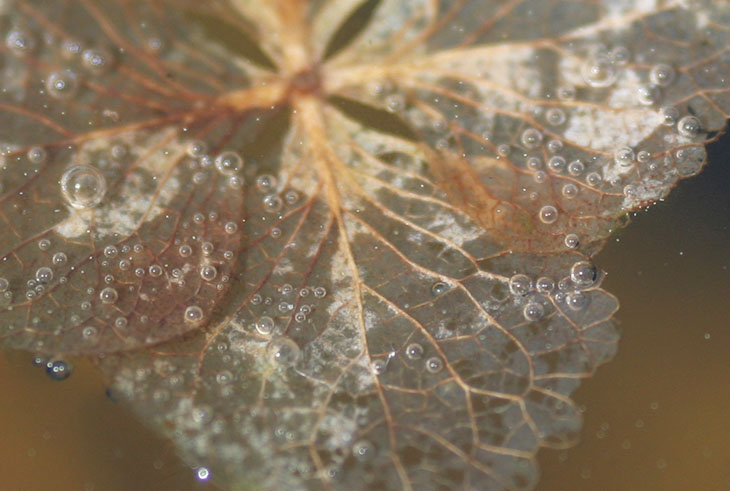
This was from way back, lost in the mists of time (well, okay, March of this year.) Just some unknown leaves decaying in a pond. Well, I thought it was cool, anyway…
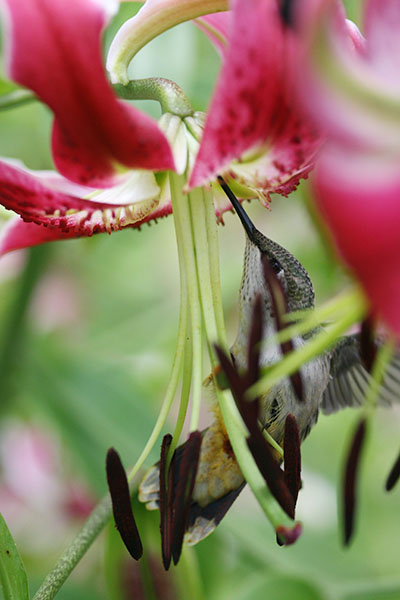 At the botanical garden one day, a ruby-throated hummingbird (Archilochus colubris) that wasn’t doing very well took a sip from a lily while I was nearby. Ideally, of course, you want a clearer view without another bloom in the way, but I kind of liked the idea that this was an almost-obscured perspective, a sneak peek at the bird. The yellow feathers near the tail, however, aren’t normal, but a sign of discharge, part of the reason why I said she wasn’t doing very well – the other was the tendency to perch and fluff out her feathers on a perfectly warm, dry day. Birds that are ill often do this to conserve their body heat and divert their resources towards areas where they’re needed more. Something was amiss, and I have a lot of very detailed frames of her while she simply sat on branches, not quite oblivious to close approaches, but certainly a lot more tolerant of such than is typical.
I’m going to take the opportunity, and the column space, to reflect on something that I noticed recently. While considering photos for this post, I had nearly all vertical compositions to work with, and they’re actually not the easiest to use in a post unless I make them “full” column width – otherwise I have to include a lot of verbiage alongside to try and prevent ugly blank spaces. I often remind new photographers about turning the camera to shoot sideways if the subject works better as a vertical, but it almost seems I’ll have to start reminding myself to shoot horizontally. I have no idea why this is – maybe I’m just in favor of vertical compositions anymore, or perhaps it’s a brain tumor.
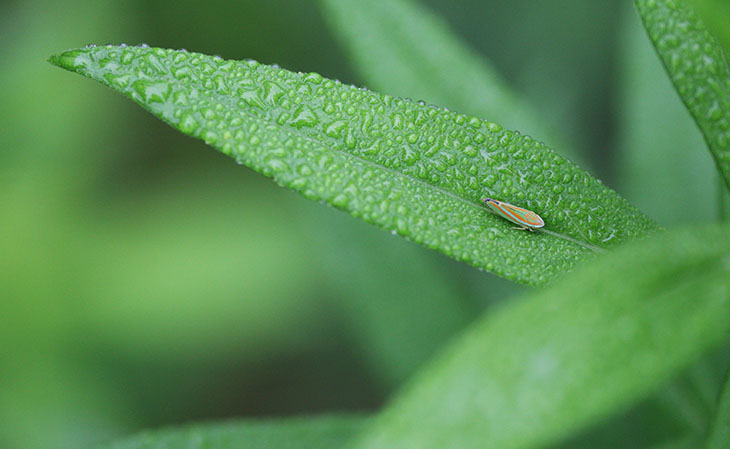
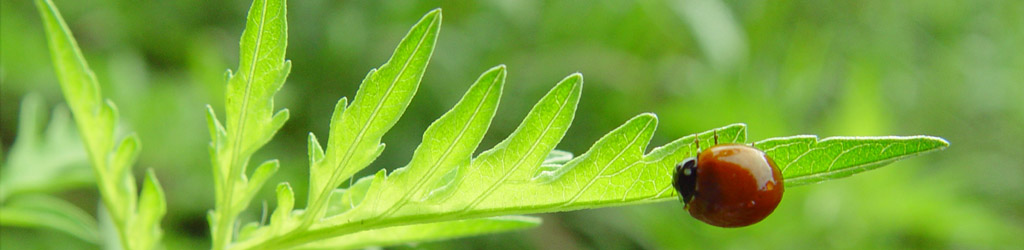
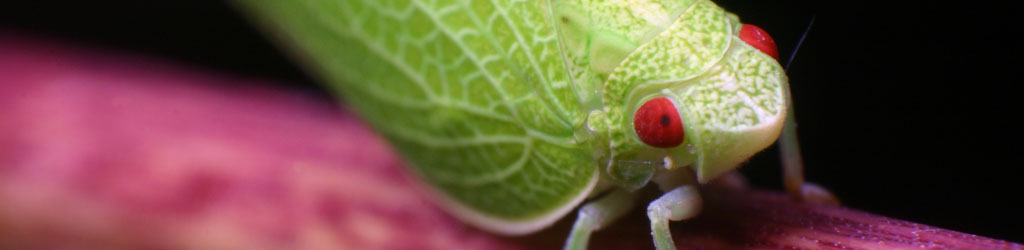
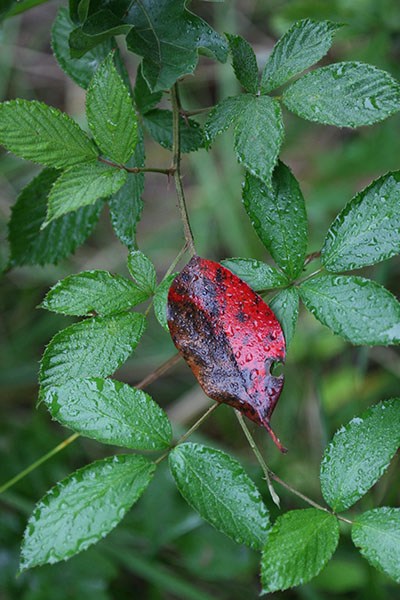 Both of these images were taken on the same morning, after a deep overnight fog that I failed to take advantage of. Above, a lone Graphocephalo genus leafhopper aligns itself with the shape of the leaf yet somehow manages not to be inconspicuous – it still attracts less attention than the lone red leaf that fell across its healthier brethren. I know you were waiting to see if I could make it ten days without posting images of some insect, but it was not to be. Let it go a little longer – the winter months will be hard on me, and I’m already doing too many ‘studio’ shots because the pickings are leaner. The other day a small male mantis appeared on the porch, but only allowed a couple of half-ass frames before flying off in desperation. I really need to live in a rainforest someplace…
A little over a week ago, I went out scouting a new location and simultaneously trying to locate a bombardier beetle for a presentation I’m working on. It required hiking a long trail through the forest, and in a few dozen meters I’d already walked through six spiderwebs, despite having pushed twice that many out of my way. I switched to my typical tactic in such conditions and began swishing a long stick up and down in front of me as I walked; this has to be done fairly rapidly, because it’s easy to time it so the stick drops down beneath the web as you’re stepping forward and you still end up with a face-full even though you ostensibly cleared your way. I did this for about two kilometers and damn near developed blisters on my hand just from waving a thin stick around. Anyway, I’m sparing you photos of all of those – I didn’t take many anyway, since the conditions were too breezy to focus tightly on a spider in a web, and I already have quite a few frames of all those species to boot.
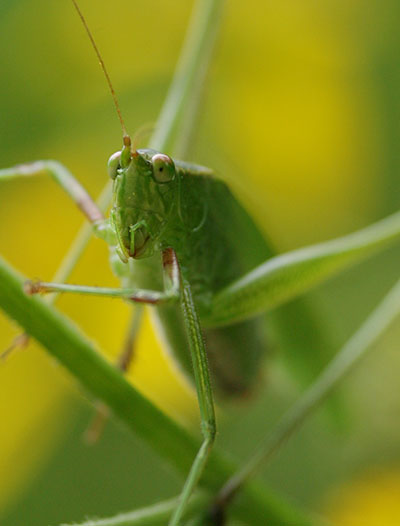 And so I leave you with a katydid portrait, because everyone should have one, don’t you think? Once again shooting wide-open in poor light, the background colors set up a pleasant but low-key contrast to the orthopteran, who adopted an insect-of-action pose for the shot – some species just can’t act natural in front of a camera. One antenna is of course rather visible, but the other droops down in an arc over the head, and believe it or not, I shifted position and timed it to be that way – I’ve been burned many times before on antennae falling in front of an insect’s eyes and ruining the shot. It’s one of those stupid things you never imagine you’d have to think about when chasing macro photos, but there you go, a little tip from your Uncle Al. Who’s wondering why you keep forgetting his birthday, not to mention Uncle’s Day…
 This is just a couple of quick comments – nothing really thought-provoking. I say that as if it’s different from the rest of the content…
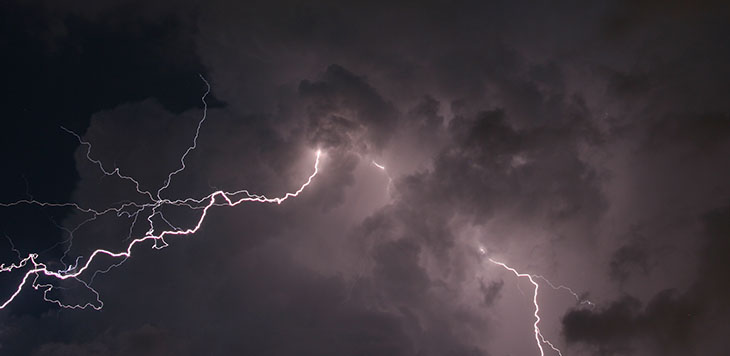
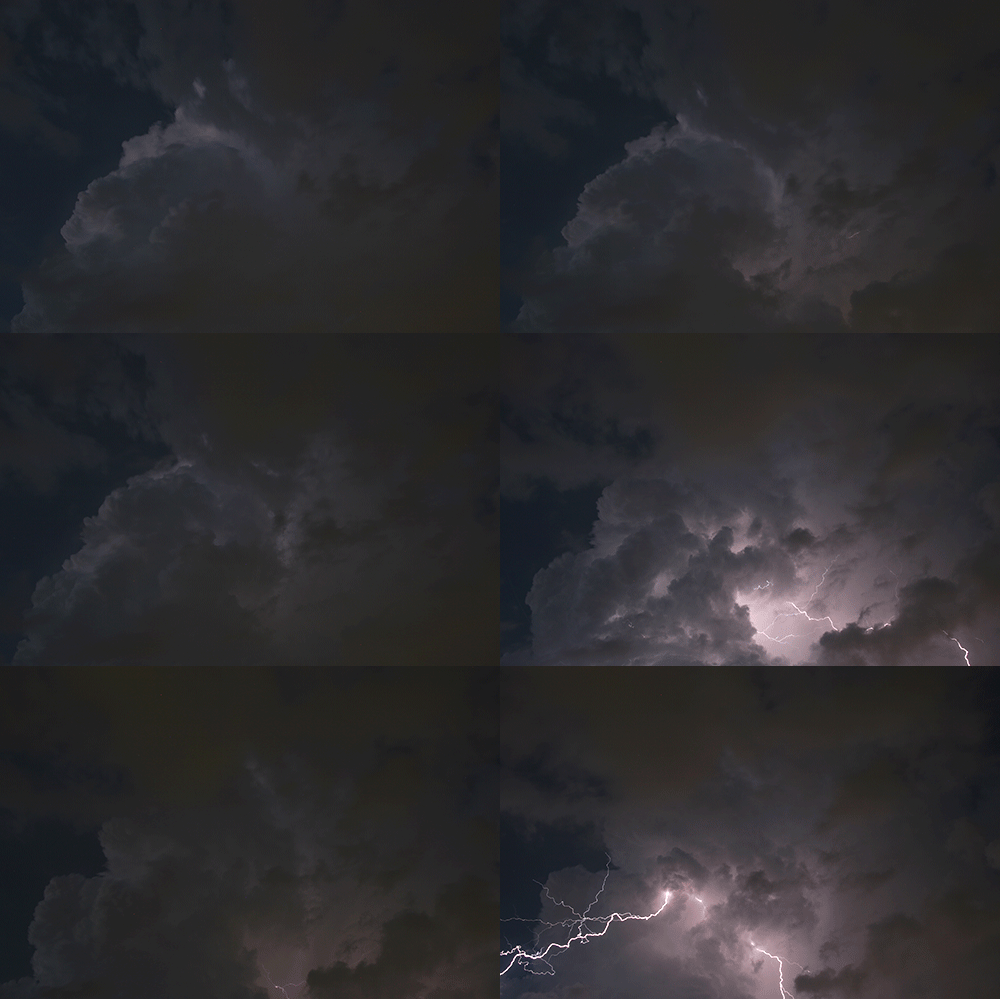 While waiting on those responses (I imagine it will be a while,) I’ll leave you with an animation made from twelve consecutive frames of that storm. These were all ten-second exposures with roughly ten seconds or less in between, so overall this spans just under three minutes – you’ve seen cropped versions of two of these frames in that earlier post. Right after the last frame seen here, I switched camera position, so the big ground strike – which occurred three frames later – could not be included in the gif (pronounced “hal-a-PEEN-yo”) without drastic cropping. Still, this does a great job of illustrating the twisting and depth of the clouds, and the activity therein.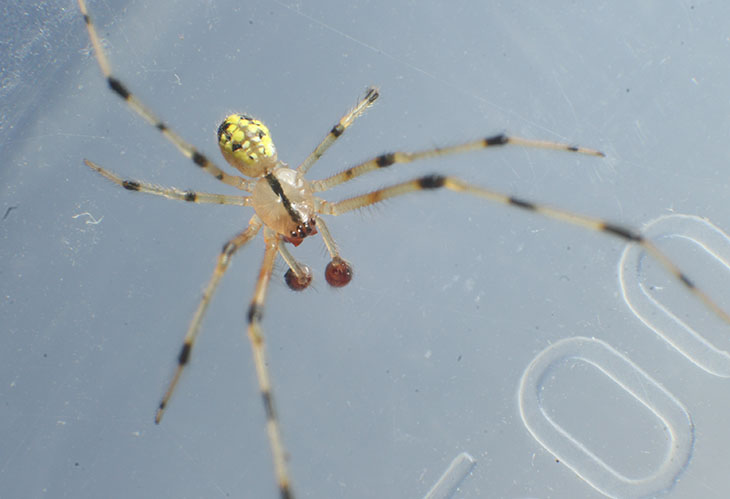
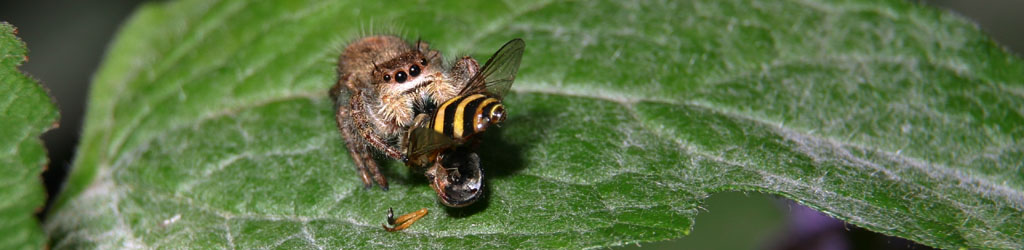
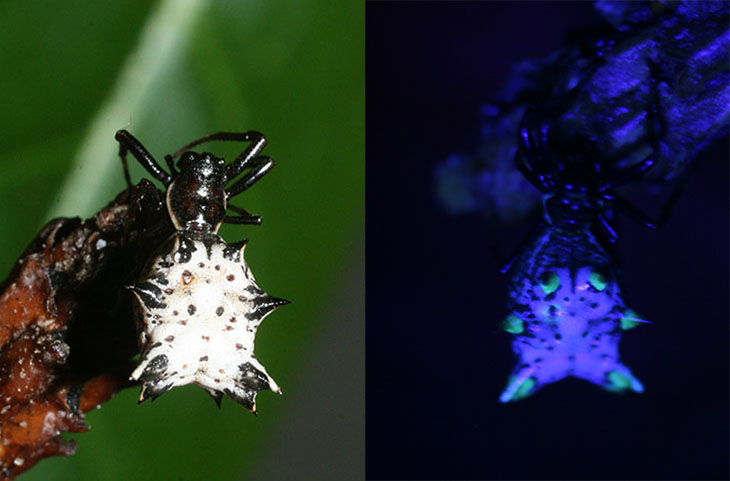
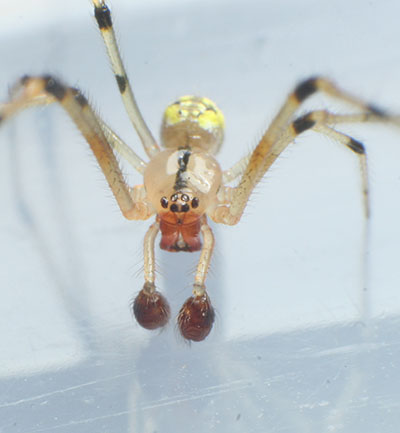 My specimen is small, as the male spiders often are, this one measuring 8mm in body length at best (I forgot to confirm when I could.) I went in for a face shot because, hey, anyone can do an overhead full-body pic, plus I was, as I said, testing out the lighting. After I unloaded the memory card, I noticed (besides the eye reflections) that the chelicerae appeared somewhat distinctive, and since I had not yet identified the species, I decided I’d like a closer look. He was still sitting where I’d taken these shots and left him, which was on a graduated container sitting on the porch (containing other arthropods, if you must know, ones not half as interesting as this one,) so it was an easy matter to capture him and go for slightly more controllable conditions.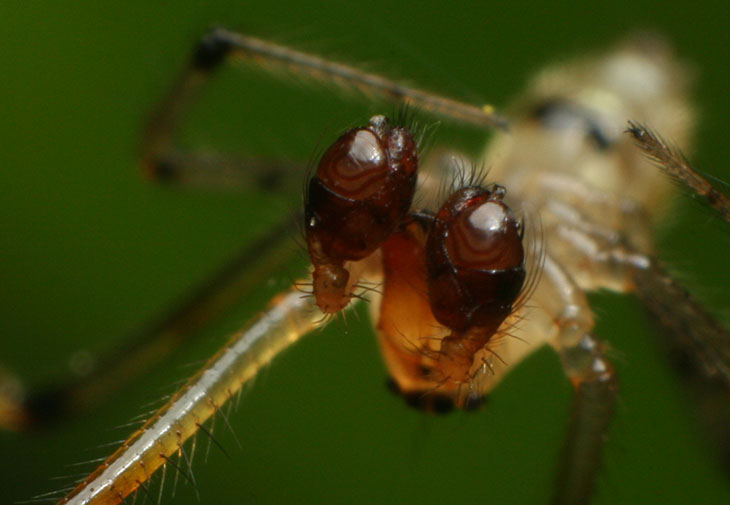

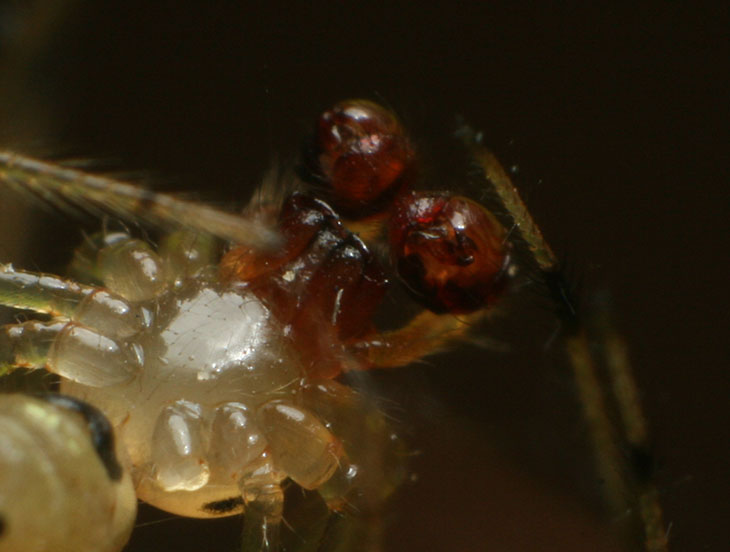

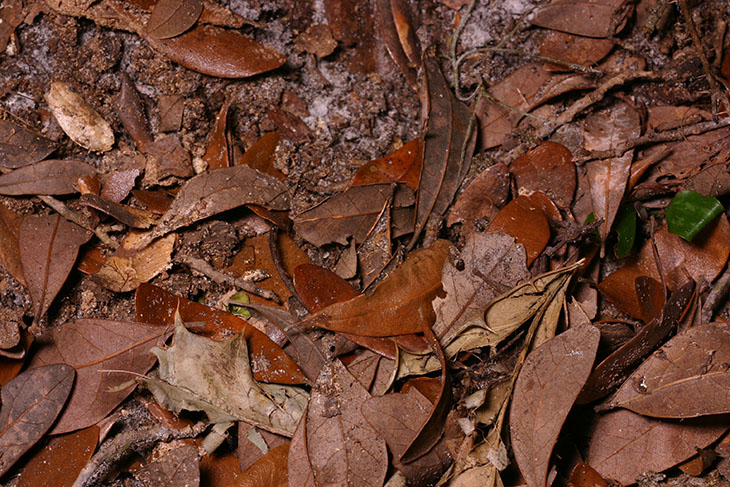
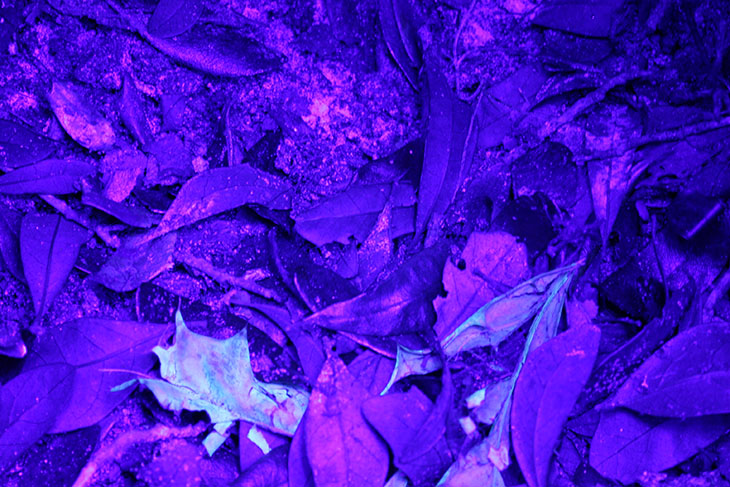
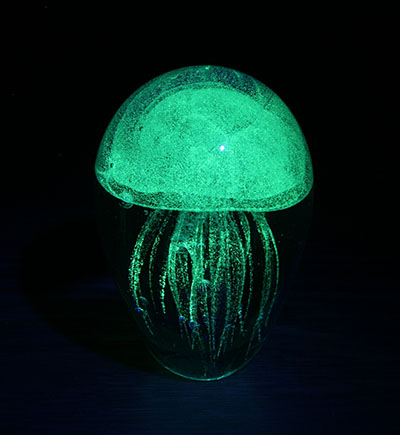 Now we get to fluorescence. Fluorescence (and phosphorescence, a close relative) is a curious trait where a substance absorbs energy that it then re-emits as visible photons. In cases of UV fluorescence, possessed by some substances, some arthropods, and even some minerals, the UV photons are absorbed into the substance as greater activity in the atom, electrons jumping to a higher energy state. Almost immediately, they drop back down to their ‘normal’ state and re-emit this energy, but at a different level, thus producing a different wavelength, one that we can see. So it’s not like the normal situation we find ourselves in every day, where photons simply bounce off of an object and reach our eye, but a trade, where objects keep the photon energy and exchange it for photons that we can see – a chemical ‘currency exchange’ system.
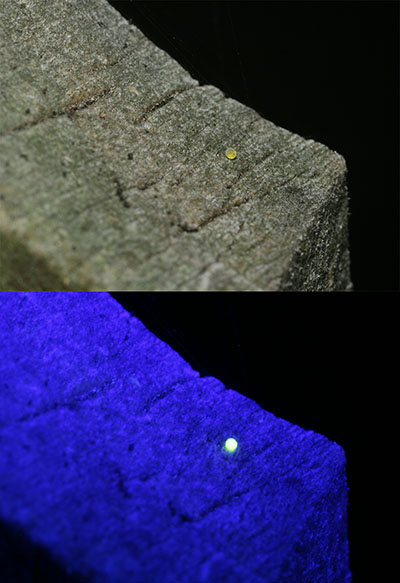 Anyway, as I was typing all this I realized that I hadn’t tried out the UV light around the new yard yet. I had done a little exploring in different areas around the old place, finding very little of interest, but so far hadn’t checked out this area. I knew there were no scorpions to find, but what about other arthropods? Some macro photographers,
 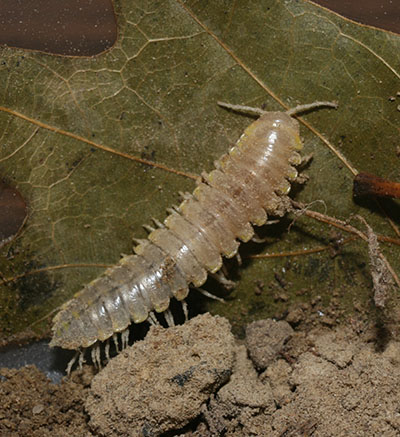 At one point, I found the juvenile form of an Apheloria virginiensis montana, a large black & yellow centipede that’s not hard to find around here – see

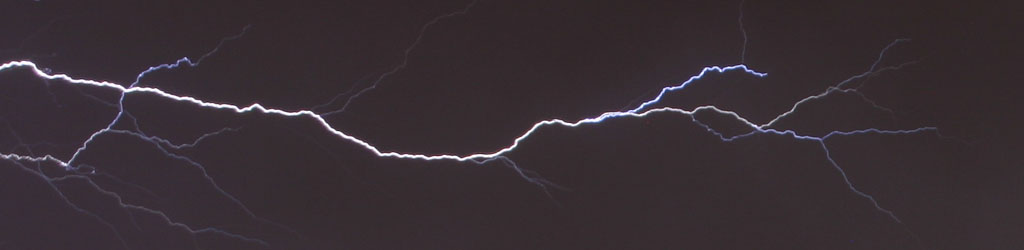
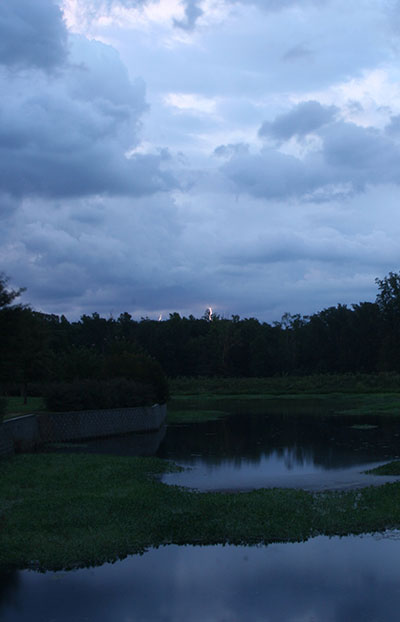 I stress this a lot: lightning isn’t cooperative and may strike in a broad area. Go with a wide angle lens, and while you might capture the bolt, it may have been reduced so small in the frame that it appears feeble and not terribly imposing. Too narrow, or course, and the strike occurs just outside of your frame. And then there’s the timing. Just like the breezes kick up the moment you go in close to some fragile plant, making it impossible to focus, lightning is notorious for striking dramatically while your shutter is closed in between frames (the same can be said for meteors, by the way.) There is, however, one small trait that can increase your odds just a little. For some reason, lightning is somewhat periodic; start counting the moment you see a bolt, and note when the next one occurs in the same general area. Use this as a pattern, and open your shutter a little before the next one is ‘due.’ It’s far from perfect, but I’ve seen it so often that I’m convinced it’s true. Note that another strike may occur from a different portion of the thunderhead in the meantime, which is why I stress that ‘same area’ thing above – the flashes can alternate.