

On this recent trip, we actually got into three different wildlife refuges, although none of them at an optimum time (and all of them in South Carolina.) Nevertheless, we managed plenty of sightings and a few photographs here and there. I am, for some unknown reason, having a hell of a time getting the slide scanner to lock onto the colors, so these images are less impressive than they should be, and I apologize.
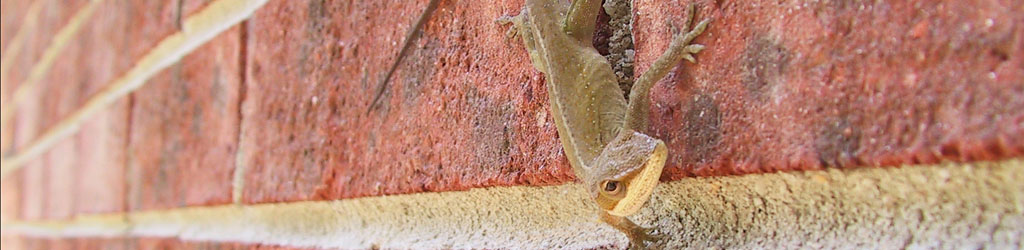
On the drive down, we stopped at Santee National Wildlife Refuge on Lake Marion near Summerton, SC. This has easy access off Interstate 95 and is well-marked. We were there at midday, not the best of times, and the heat seemed to have kept many critters less active. I was on the lookout for water moccasins, something I have yet to capture on film in the wild, but we saw only a few lizards, deer, and a raccoon that scampered off before I could retrieve the camera from the bag. I have no doubts that there would be lots more to see, judging from the area and their visitor’s center, but we were on the outward leg of our journey and not going to tarry long.
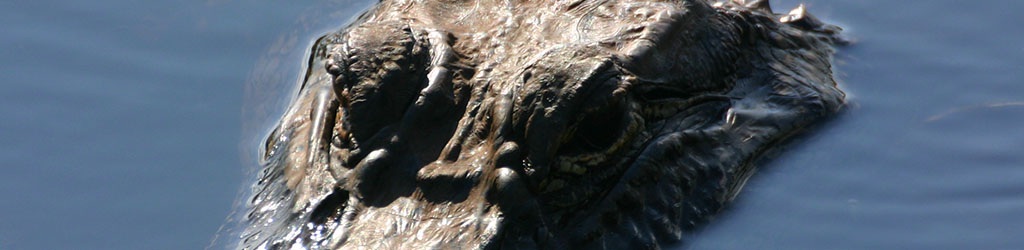
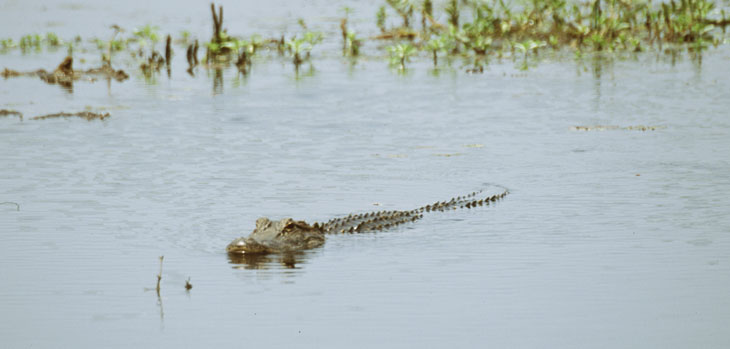
A few days later, we checked out Savannah National Wildlife Refuge, which is actually just over the border into South Carolina from Savannah. Many of the trails and the vehicle drive were closed due to maintenance, so we saw only a tiny fraction of the area, and were delayed getting out of the house on both days we visited, so again, not there at optimum times. Despite the fact that we were only accessing the walking trail (between sections 7 and 8) and kept that to a minimum because of the heat, both times we were greeted by American alligators (Alligator mississippiensis) almost as soon as we got out of the car – quite literally on the second day. Seen at the top of this post, one gator turned and headed straight for where we stood, plainly obvious on the bank – there is no doubt in my mind that people have been feeding them. It halted before it reached my “return to the car” line, apparently because we weren’t actually exhibiting any signs of offering food. I make it a point to maintain safe distances and practices with wildlife, knowing all too well that they can be provoked into protective or territorial behavior by cues we’re not familiar with. Someone might have an impression of the “intrepid” nature photographer braving danger to get that really cool shot, but that’s a stupid nature photographer, and needs not be encouraged. If you’re that close, you’re not only putting yourself at risk for a mere photo, but interrupting the natural behavior of the animals and providing a bad example for others. People often consider nature photographers to be naturalists in their own right, knowledgeable about habits and behavior of their subjects and thus a good person to emulate, but owning a camera with a long lens does not grant automatically this knowledge.
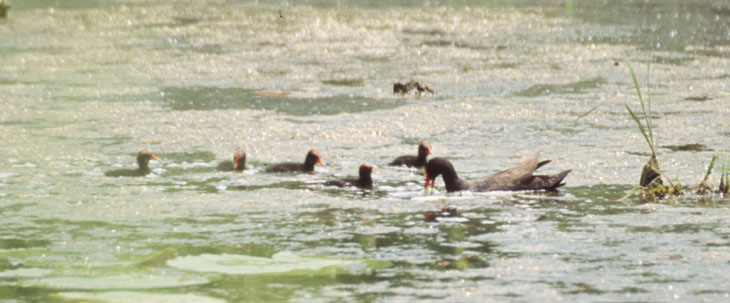
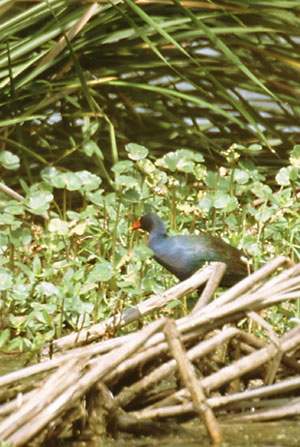 The most common subjects we saw in this refuge were the purple gallinules (Porphyrio martinica,) where the males displayed rich, iridescent blue/purple coloring, but the females a very drab black. About the size of bantam chickens, we had arrived at fledgling time, and numerous mothers were out with their chicks showing them how to forage for food. Most areas of the walking path were shrouded from the adjoining channel by tall cattail reeds, and it often required shooting through a screen of them. The gallinules frequently called to one another, as well as maintaining quieter clucks to keep the chicks oriented with their mother. The Girlfriend and I had witnessed the same thing in the NC mountains with the wild turkeys there; the mothers provide a near constant series of quiet, muttering calls which don’t carry very far, which the chicks know to keep within earshot. These calls are faint enough to avoid attracting attention from greater than 15 meters (50 feet) or so. If the chicks stray beyond hearing range, they frantically start a louder call to try and find mama.
The screening cattails meant that we only saw birds on the opposite side of the channel, though the soft (and sometimes loud) calls told us we were often only a few meters away from ones on our side of the channel, but totally unable to see them. It is frustrating to know you’re close enough for much better images, if only you could see through the foliage. A kayak would have provided a view of both sides, though it’s unlikely the presence of such a vessel would be ignored. I have never lived close enough to a good location to construct a floating blind, but I have made up my mind that the next place I live will be in easy proximity to a lake, at the very least. A nice wetlands area would be even better…
Late in the trip, we ended up going to Hilton Head Island. This wasn’t in the original plans, but our friends treated us in order to coax us to stay a little longer – they felt guilty because of their intrusive work schedule, I think. I normally avoid touristy areas, since I’d rather be farther away from people, but I’m game to explore anyplace once. We had to wait to check into our suite, so we backtracked a little and checked out the refuge we passed on our way onto the island. Pinckney Island National Wildlife Refuge is a small place mostly made up of tidal flats, just a little turnoff between two causeways and not terribly promising in appearance. The path was a gravel road that seemed at first too open and exposed to offer much in the way of viewing opportunities. Not too far along, however, we came across a mudflat area that could have kept me busy for a while.
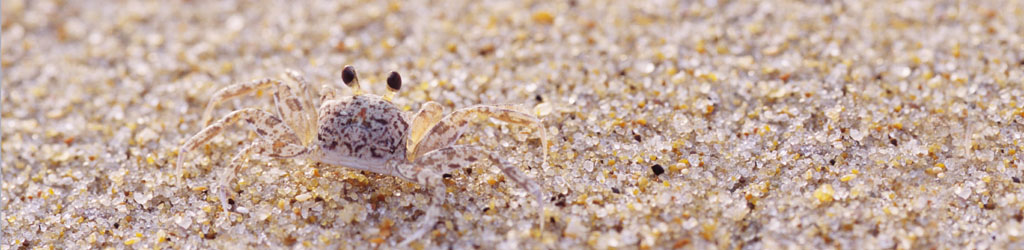
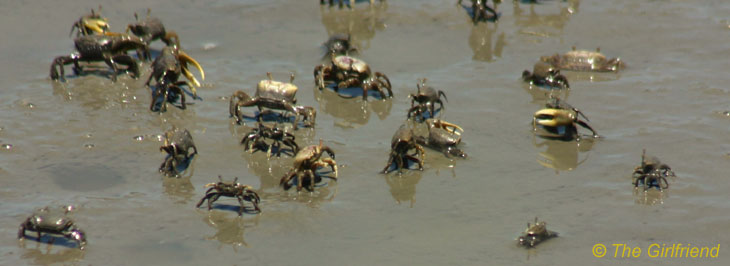
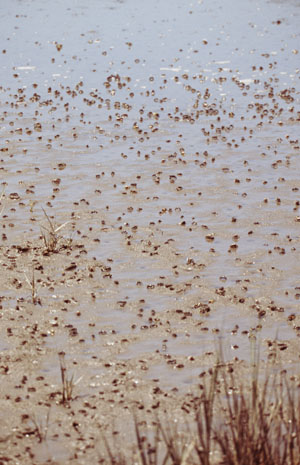 Once again, the fiddler crabs were in evidence, and I don’t say this lightly – it was the largest collection I’ve ever seen. The number of them was so great that one could be excused for imagining they were only stubs of plants or something, and being diminutive and off the trail a short ways, they could be totally missed if someone wasn’t being alert. I suspect I’ve mentioned before that I like crabs, and could have spent no small amount of time right there – I also could have gotten really filthy doing so, trying to get up close to a subject standing not two centimeters tall that liked soft mud. Decorum won out, however, as the patience of my friends and the prospect of getting back into their car covered in black mud prevented me from indulging in my native instincts. I still spent a few minutes chasing them and watching their antics.
Male fiddlers have a dominant cheliped (“claw”) that can be either side, but always outweighs its opposite by a wide margin – they earned their common name because they wave this in both warning and mating displays. The species – these were most likely mud fiddlers (Uca pugnax) – live in small holes dug into the sand or soft mud, and feed on little bits of organic matter in the mud, either vegetation or scavenged animal matter and plankton. While they need to keep their breathing apparatus moist, they’re not an aquatic species like a blue crab and can handle being out of the water. The eggs are released into neap tide to be carried away, and the young live on plankton in deeper water, before coming back into tidal zones as adults. Handling them, if you’re quick enough to catch one, is easy, since the chelipeds are rarely large enough to do more than pinch a bit, and mostly they just try to sidle away shyly (unlike the very aggressive aquatic blue crabs, for instance.) They’re also a subject you need very little patience for; scare them into their burrows with an incautious movement, and you only have to wait a minute or two before they venture out again.
A little further on, we watched a pair of American white ibis (Eudocimus albus) foraging in the same kind of area and tried for some useful compositions, unaware of what waited a little further up the trail. We were just thinking of turning back, partially because of the heat, partially because we hadn’t planned on being in the open so long and hadn’t applied sunscreen, when we came to what I think was identified as “Osprey Pool.” In an earlier post, I enthused about Venice Audubon Society Rookery in Florida, but I’d never heard of Pinckney Island before, and they have their own version. June seems to me to be too late to find nesting birds, especially in warmer southern states, but nobody apparently told the white ibis that – they were nesting in abundance, and much easier to photograph than at Venice as well.
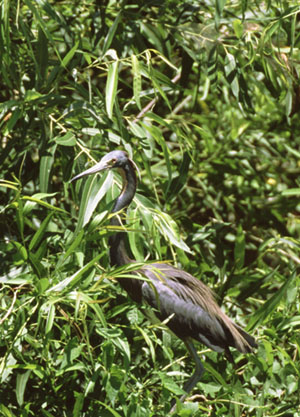 Countless other species were raising their young there too. A couple of fledgling tricolor herons (Egretta tricolor,) seen at right, were flying heavily from perch to perch and making a ridiculous amount of noise, upset because their mother was trying to convince them to find their own food. A few anhinga (Anhinga anhinga) youngsters could be seen, and we spotted double-crested cormorants, great egrets, wood ducks, black-crowned night herons, and at least one example each of little blue and green herons. The activity was constant, one of those situations where you can only look in one direction at a time and thus know you’re missing something in another (that’s why there were three of us shooting.) Since The Girlfriend’s camera was being balky, she used my digital while I shot film, and so she got to be a bit more serious in chasing subjects – it convinced her to invest in her own DSLR now (and will have a significant upgrade over mine.) Among three cameras we have several hundred images, and could have remained there half the day, if we didn’t need water and shade. Next time, it’ll be a picnic lunch, I’m sure. And much earlier in the day.
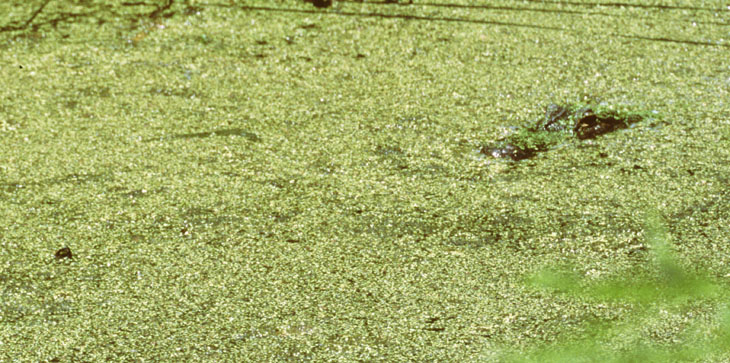
The pond was little more than a moat around an island, and I’m not really sure where the fresh water came in. We were never more than a few hundred meters from the tidal flats, though, and an opportunistic alligator was in evidence here, too. It had chosen some duckweed to skulk about within, and had surfaced from underneath rather than swimming into it, resulting in a nice coating across its head, increasing its camouflage – I have no doubts that this is an instinctive habit. While there, it heard a mother gallinule hiding in the reeds of the island, and if I can judge from the different nature of her calls, she knew quite well the gator was there, and was telling the kids to stay close and hidden. We only got the barest glimpse of her and the young in the reeds, but the gator nosed up to the very edge of the water pointed directly at her location, hoping for a snack from an incautious fledgling. Some might consider the gator to be the villain in this scenario, big nasty thing feeding on cute little fluffy thing, but that’s the natural order – the gallinules themselves feed on insects and frogs as well as aquatic plants, and this is no less, or more, cruel. It is merely the food cycle, no emotions involved, and our attempts to pin some kind of value judgment on any of it is inappropriate and misleading. Just observe.
Again, I’m not in a hurry to check out Hilton Head again, being too developed for my tastes, but I will certainly try to return to Pinckney Island and spent a lot more time there. Our visit was longer than intended and far briefer than it warranted, and serious birders and nature photographers should include it in their list of locales. The benefit, of course, is that you can then crash and eat on Hilton Head rather than in a tent someplace ;-)
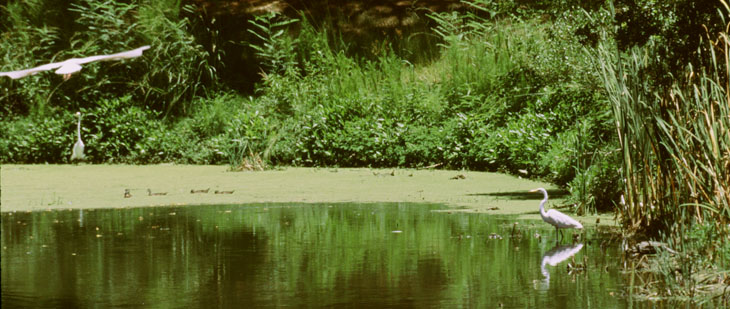
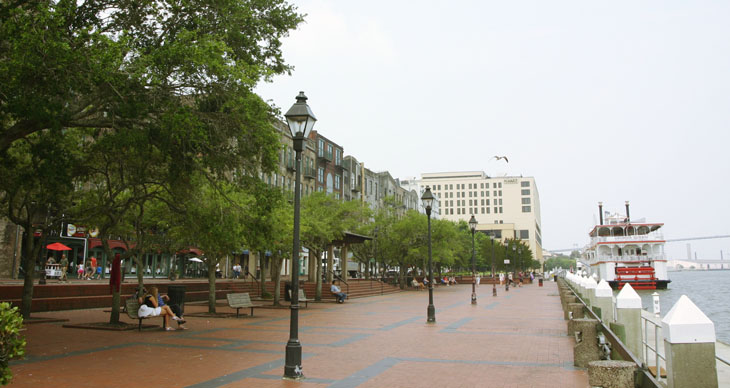
 I currently live in a town that has some historic sections of its own, but this is night and day in comparison with Savannah. We have a couple of older buildings and cemeteries (one of which is almost completely trashed,) but that’s about it. Savannah was a more prosperous city, being a trading riverport, and maintained this level of income to this day, so an astounding number of the buildings downtown are in great condition and date to colonial times. They also realized that this was a tourist draw, and so keeping or restoring the buildings is an investment. While modern life takes place in the heart of the city, it often does so in classic structures. They have also maintained some of the original roads down to the riverfront, and many of the iron gaslights. In fact, ironwork abounds in the city, and my speculation is that this was a status symbol of the time, the colonial equivalent of a Lamborghini. The well-to-do flaunted their success with iron facings, accents, gates and lamps, much of which remains today.
 Yes, of course I’m noticing the wildlife anyplace I go – you really didn’t expect else, did you? This applied to a couple of evenings later too, when we watched flying squirrels flashing from tree to tree in the twilight, too fast and unpredictable for me to capture on film (silicon, whatever.) We were downtown to catch an historic ghost tour, departing from the gates of the cemetery seen here. Tours are Savannah’s raison d’être it seems, and Savannah is considered the most haunted city in the US, so we couldn’t pass up a ghost tour – we’d already been by several of the haunted buildings on the trolley tour, but on a sunny day this doesn’t have the right atmosphere. So we selected a candlelit walking tour in the later evening.
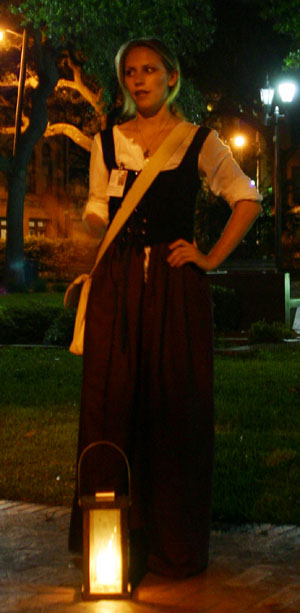 The tour itself was interesting, but not as dramatic as you might expect – other ghost tours and noisy buses going past don’t lend themselves to the right kind of atmosphere. We did not go into any of the haunted buildings – most of them are in regular use as inns or offices, and while some such tours undoubtedly exist, they’re also probably a lot more expensive. I amused myself by attempting several long existing-light exposures as we went along, sans tripod since I didn’t desire the encumbrance, so I braced where I could to try and reduce camera shake. In one such image, I discovered the secret of the historic ghost tour, seen here. I thought it meant it was a tour about historic ghosts, but our guide’s right arm seems to indicate that I was mistaken. Always check the fine print.
 A few weeks back now, a horde of unidentified caterpillars descended on flowering trees of a certain species in the backyard, devouring leaves at an alarming rate. I naturally took the opportunity to add to my photo stock, including some interesting compositions. This particular one always strikes me as enigmatic, for some reason. Seeing the two of them working towards each other on the same leaf puts me in mind of the spaghetti dinner scene from Lady and the Tramp. Somehow, I think the eventual face-to-face (or whatever it is caterpillars have) encounter would have been considerably less charming.
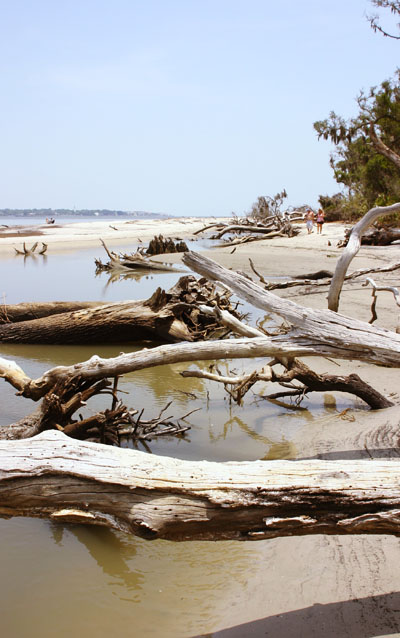 So, after the Georgia Sea Turtle Center, we poked around Jekyll Island a little bit. This was a day trip and we weren’t staying long, so there wasn’t enough time to do a proper exploration of the place, and while I normally would dig in and wander off into the hinterland, I was with friends who weren’t all into exploring. So our target was the north end of the island, where the island was eroding away into an old oak forest which gave it the name Driftwood Beach. It was appropriately named, decorated with elaborate tangles of dried grey trunks and branches in many places, while perched on the inlet end where wave action was practically nonexistent, at least while we were there. I would have loved to have been there at sunrise or sunset, because this is the kind of subject that benefits from low angle, contrasty light and deep sky colors – most beaches do, but driftwood and rocky beaches especially. That wasn’t going to happen on this trip, which was a shame, but you work with what you get. Sometimes you’re simply scouting locations, planning your return during more opportune conditions, which is why I recommend longer photo trips whenever possible. The weather won’t always be ideal, and some areas or subjects benefit the most from multiple visits. You may find that this image is nice enough, but it can be even better, and pursuing that is what makes the better photographers.
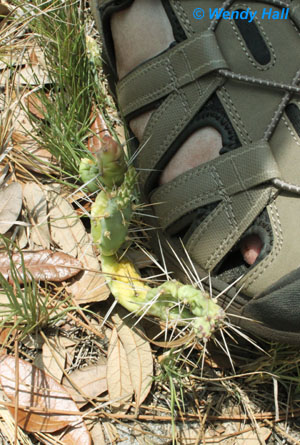 But that wasn’t the only abuse my feet took on this trip. Taking my friend’s cue and wandering off the trail a short distance, we both ran afoul of another hazard to unprotected feet – my collection here was gathered when I stepped over to help her with her own, so she kindly took this picture after her own was removed. That’s the kind of gal she is. While they don’t look like they were embedded in more than the sandals, I had three deeply lodged in various places on my foot, and luckily had my pocket knife. Instead of attempting to grasp the little caltrops, I simply slide the blade between my foot and the bulb and pried them out gently. I made it a point of reminding my friend how much my foot still hurt, long after it had stopped, because that’s the kind of guy I am ;-)
 Georgia, and most especially Savannah, is known for its Spanish moss (Tillandsia usneoides,) and this epiphytic bromeliad drapes the trees in huge quantities, giving them a charming, somewhat prehistoric air. The plant is almost completely innocuous, feeding entirely from the air and humidity and doing no damage to anything else in its vicinity – even its weight is negligible, and some southern companies use it as a quaint packing material for local crafts. Up close, it’s simply strands of twisted thin vegetation, completely dry and pale grey in color with a hint of olive. The only negative effects are that it hampers the growth of the host tree at times by blocking some of the sunlight, and may contribute to storm damage from its greater wind resistance, but I would think this is minimal because it pulls free easily and is unlikely to exert much drag on tree limbs. It is, naturally, something that must be photographed while in the southern states, and
 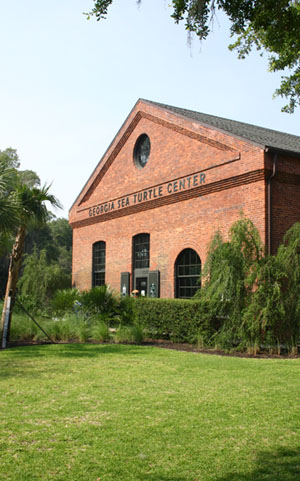 The Girlfriend and I spent some time with friends in the Savannah, Georgia area, and got around a bit to check out some interesting items in the vicinity. The first thing we visited, and thus the first I’ll talk about, is the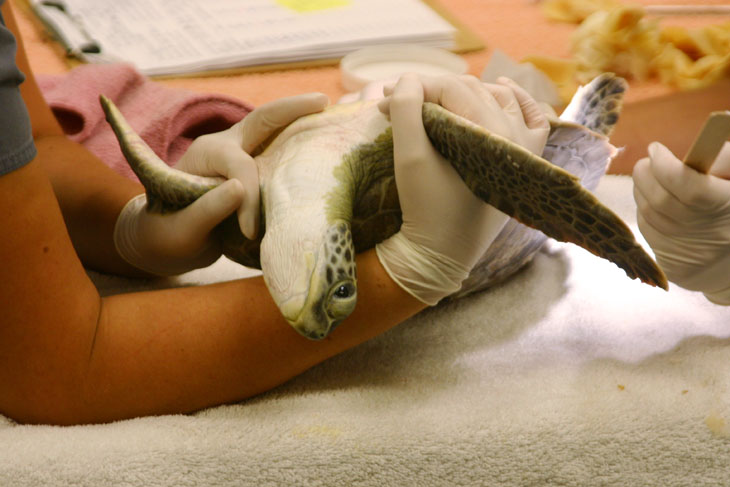
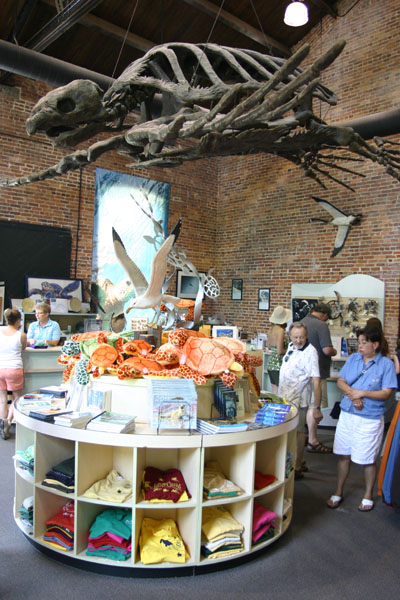 Even the gift shop is impressive. Nicely laid out and with a wide variety of interesting items, from t-shirts and decals to fantastic artwork, it’s another aspect that shows what a bit of effort can do for a center. Proceeds, of course, go towards funding the center and its efforts, so even somewhat unreasonable prices are excusable, but actually the items were very competitively priced. Even here, the staff noticed visitors’ interests and volunteered pricing information or fetched an item to be examined. Sometimes little things like this go unnoticed, and I want to emphasize that it’s a nice touch, and I’m pleased with their attention to this.
 [Since I’m out of town, this post was scheduled ahead of time to appear today.]