
Is this going to go on all spring? Well, so be it – I can cope.
Glanced out the kitchen window while making lunch and saw a bold splash of white where there had been none before. The view of this particular spot on the edge of The Bay wasn’t good from that angle, nor from the back deck, so I slipped out front and went around the end of the garage, which was more than adequate.
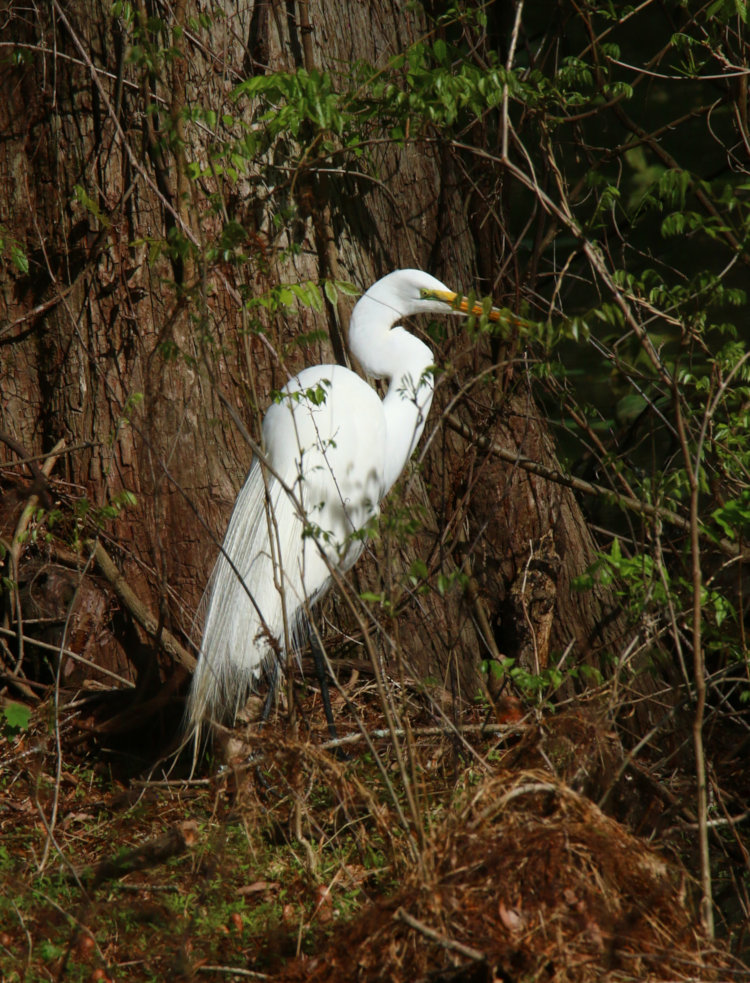
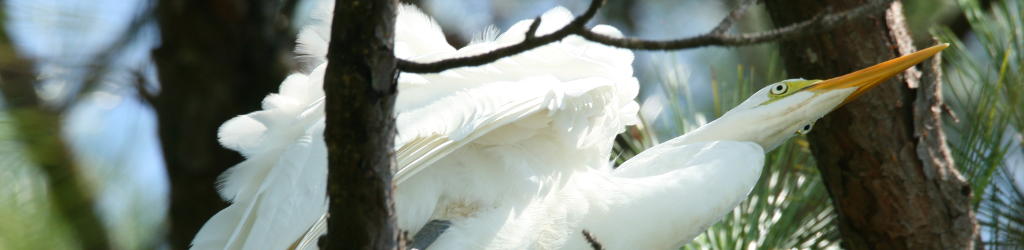
This marks the first time we’ve seen a great egret (Ardea alba) on the property – hopefully not the last. This appearance isn’t too surprising, since the great blue herons come by semi-routinely to snack, and egrets like the same conditions. The herons at least rarely stay long, probably because the water cycle in the ponds doesn’t encourage bigger fish, so this is more of a snack stop to them, a quickie mart.
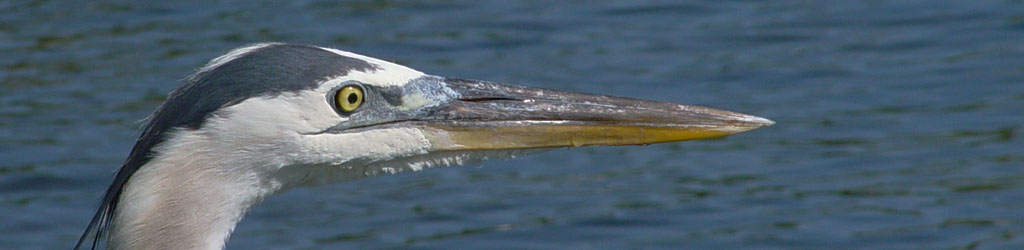
The egret was simply standing there enjoying the sun, so after several decent portraits, I let it be and returned indoors, but this didn’t last long. Catching movement right outside the back windows, I found a great blue heron (Ardea herodias) coming to roost in a tree right off the deck – it could only have been closer had it landed on the railing.
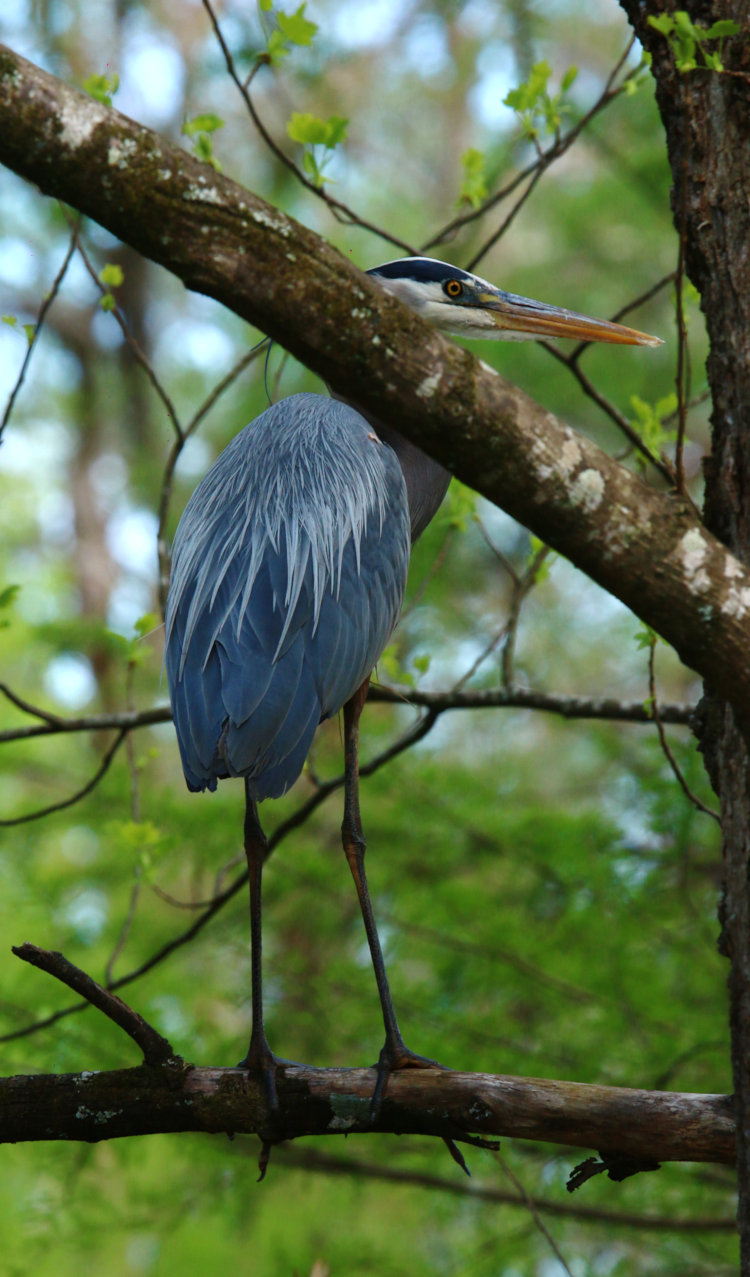
The back door was in direct line with these branches, blatantly obvious. I did a few frames through the glass of the storm door, but that has a tinting film on it; good for not spooking the ducks so we can watch them, and also for softening photos (not good, actually.) So after taking a few ‘safety’ frames through this, I eased the door open while the heron was looking away, and got the end of the lens out into the open for more frames, like this one. The heron realized it was being peeped upon, and shortly flew down to the upper edge of The Bay – notably, with a casual demeanor and not at all with the frantic honking manner that all other herons on the property have adopted when they realize I’m there. This one might actually be a little mellow. Or it might simply have been concentrating on the egret that it was trying to keep an eye on, and didn’t want to stir things up too much.
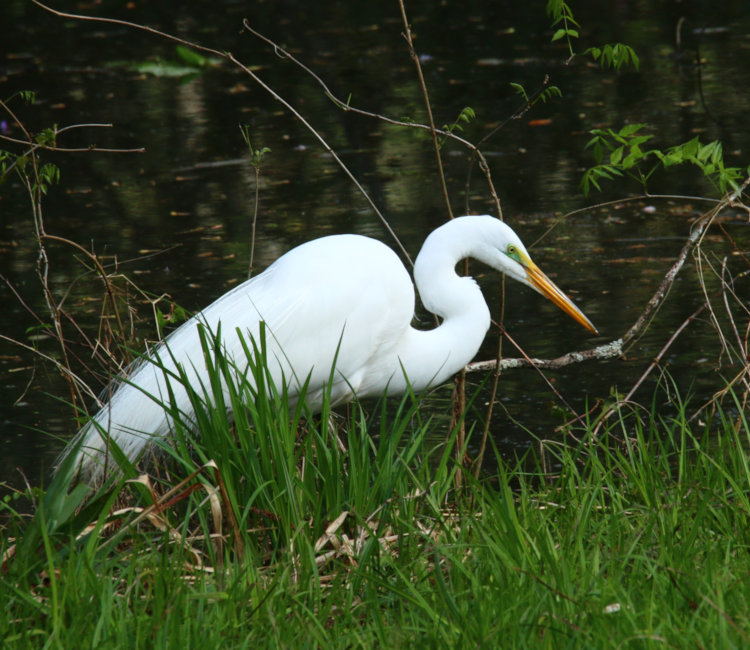
Meanwhile, the egret had now taken up hunting on the water’s edge. Back around the garage went I.
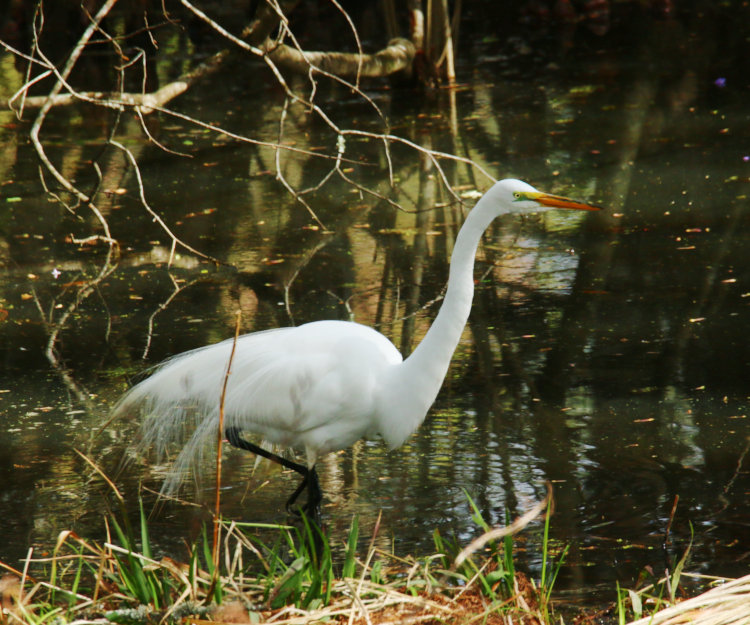
Now, the egret was passing in and out of the direct sunlight, as well as changing its background while it stalked, so I was attempting to manage the exposure compensation to avoid blowing out the white plumage while still getting the shots, and I missed a little too often. Brilliant white birds, man.
However, this frame might give an indication of why the heron was being circumspect. Or maybe not.
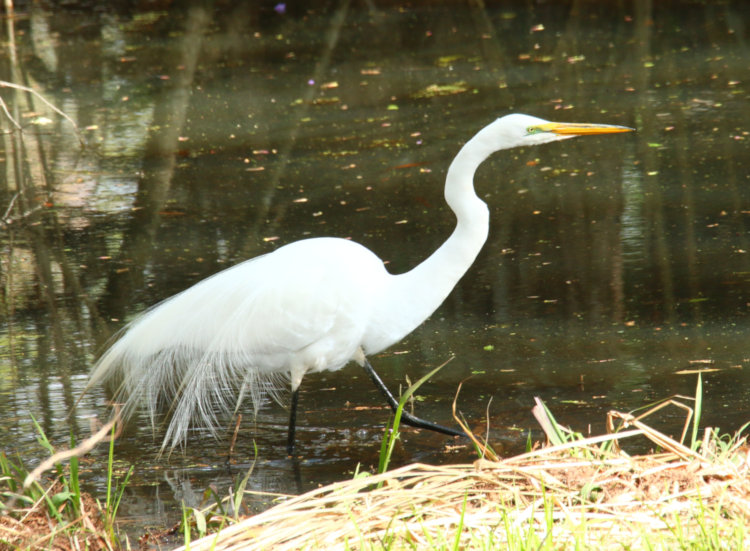
Those lovely willowy feathers off the back are breeding plumage, which I just found out are named, “aigrettes.” I initially thought only the males might have them – this is a typical pattern for many bird species – but no, both sexes have them in egrets. Like the great blues, it’s next to impossible to tell the sexes apart, but perhaps the heron knew a way, and decided not to dispute territory with a breeding male. Or perhaps it simply didn’t care, being a different breed, but they sure notice when another heron shows up on the property, and we always know it too, since there is much honking and chasing when that happens.
The egret did indeed locate something to eat, though I’m using this word loosely.
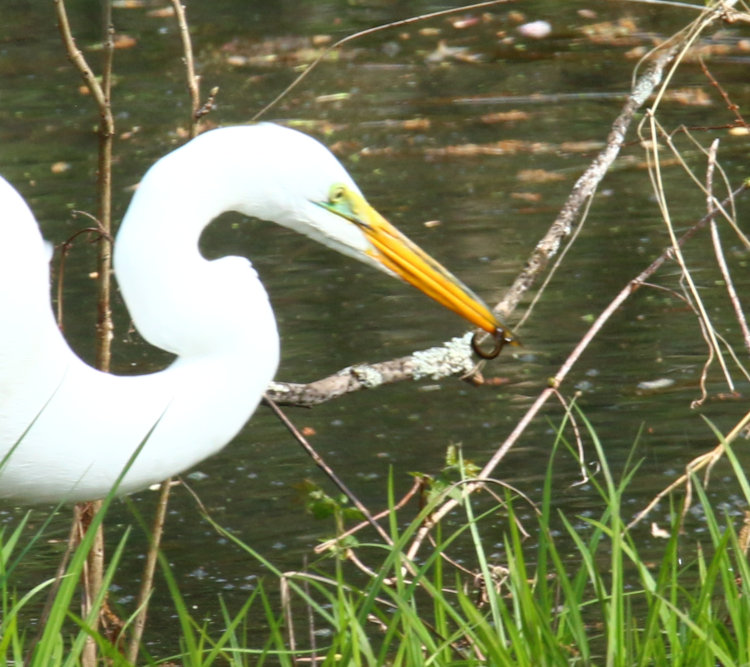
This is where the light conditions varied too much from my settings, and the plumage started bleaching out. But you’re not supposed to be looking at that – you’re supposed to be looking in the beak at that little wriggly thing that the egret had caught. Don’t be proud of that capture, my friend.
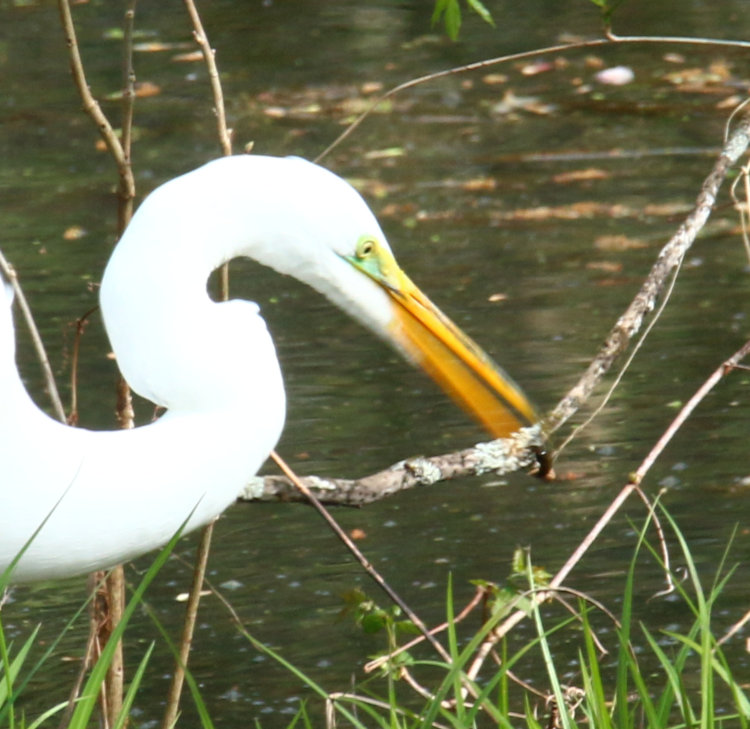
I guess habits die hard, since the egret insisting on juggling this morsel to get it down head first, even though this is barely a swallow. It’s like celery, hardly providing the calories to even get it down! To say nothing of the risk of actually losing it while doing such manipulations. Silly bird.
I got my exposure back on track soon afterward, for a couple of nice portrait frames though.
Now that I have those out of the way, I’ll use them to springboard to a few other frames that I obtained two days ago, and simply haven’t uploaded yet. A great blue heron, perhaps the same one, was at the other end of the backyard pond hunting, and I used its distraction to slip out the door to Walkabout Studios and snag some frames with a decently clear view.
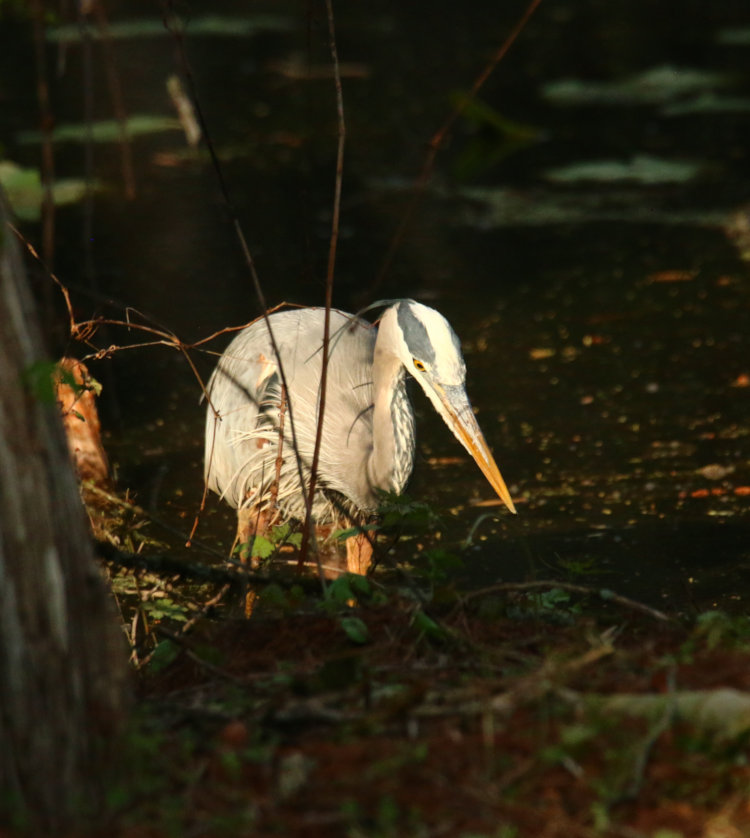
Notice the difference in light color, as this was late afternoon and just before the sun stopped reaching the pond at all (which is still well before sunset, because trees and geography and all that.) The heron was taking stabs at things, but I never saw it come up with anything.
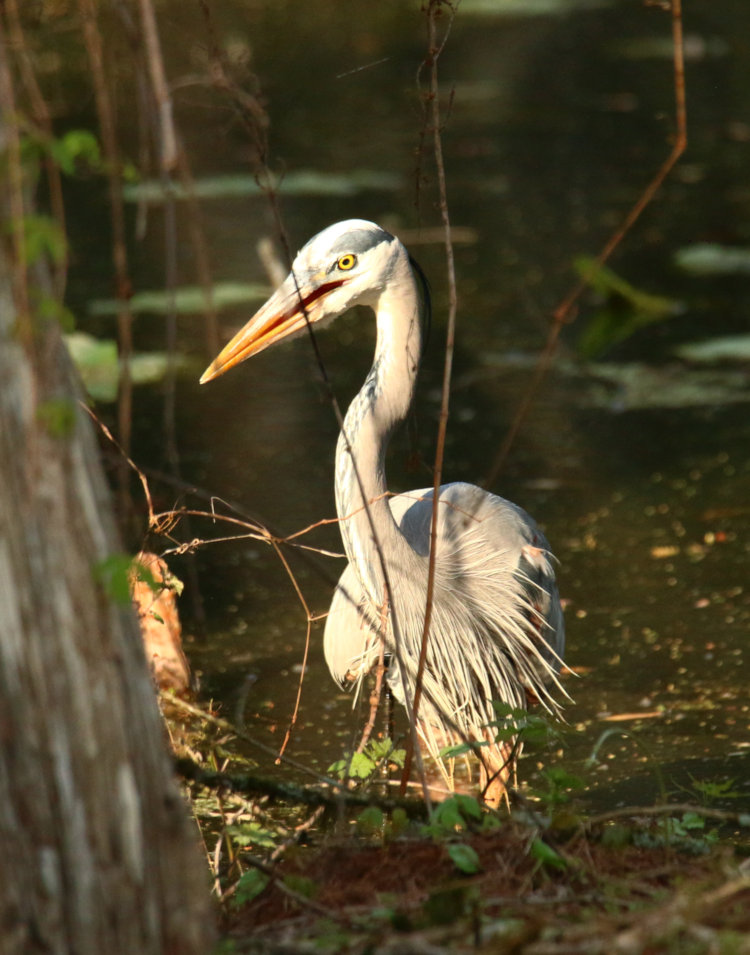
Yeah, I know: we could do without an awful lot of little fiddly branches and stuff getting in the way, and I’m working on that, though man, there are a lot. You can still see that herons have the ability to move their lower beak more independently, by that gap near the edge of the mouth while the tips are closed. Fascinating, huh?
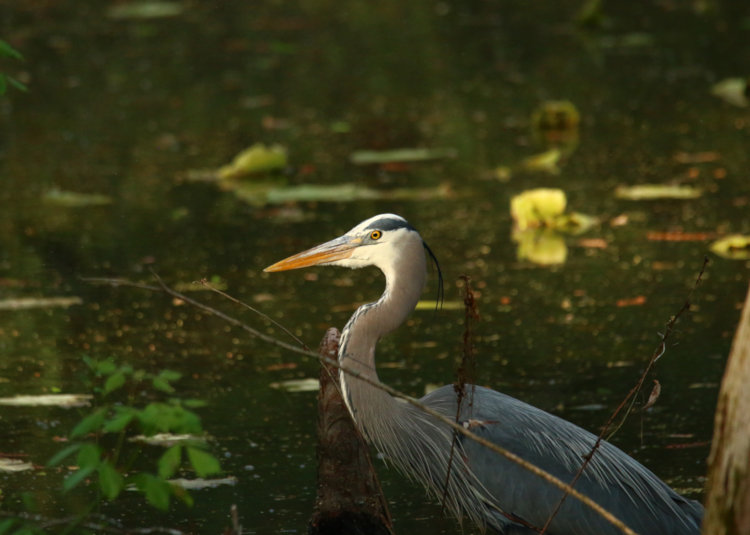
And evidence of the light angle, as the heron moved a little further onto the other side of the tree and started getting into the shadows – within minutes, this light would be entirely gone. But while I was firing off frames, I caught an interesting trait during the sorting, and made an animated gif (pronounced, “jith”) from them.
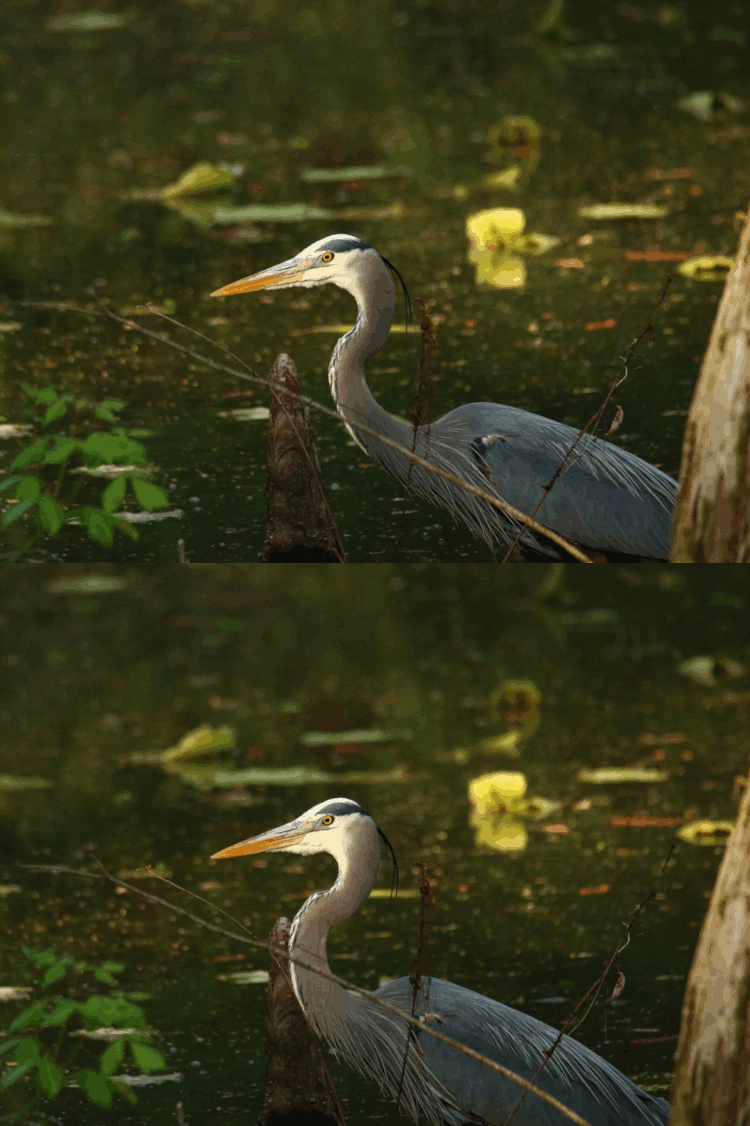
The heron was only stepping forward here, but look carefully at not just the head, but the cypress knee behind the weed in front. The head is remaining perfectly still while the heron steps forward, and then between steps it will dart the head forward slightly into a new position before doing this again, bobbing faintly like pigeons do, only much slower. Likely, this helps them spot the subtle movements of potential meals that might be stirred into action by their steps, but I never realized just how steady they could be. Lucky capture.
The heron, by this time, knew that I was leaning around the edge of the latticework flanking the steps back there, and didn’t flee madly either; maybe we finally have one that’s not ridiculously spooky. It would be nice, since to date all have flown off in a panic the moment I’ve become known, regardless of the distance. We’ll see what happens.