




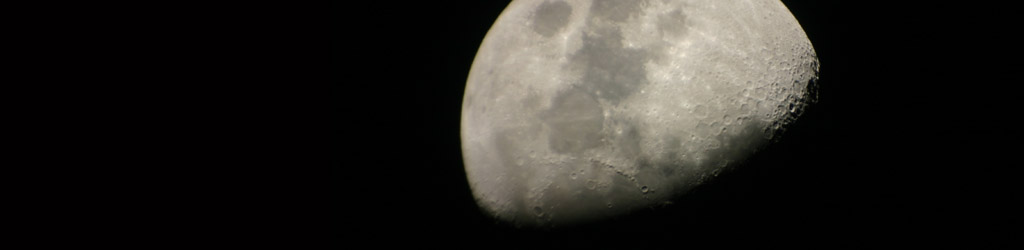



In case you missed it, there was a post specific to moon photography last week, if you were looking to pursue that. This will deal with other kinds of night photography.
Note, too, that a significant amount of my macro work and even quite a few videos are all shot at night, mostly because that’s when certain subjects appear, but also because it’s easier to get close to those same subjects when my presence in lost in the glare of the headlamp. Instead, what we’ll deal with here are specific aspects of night sky, ambient light, and moonlight photography.
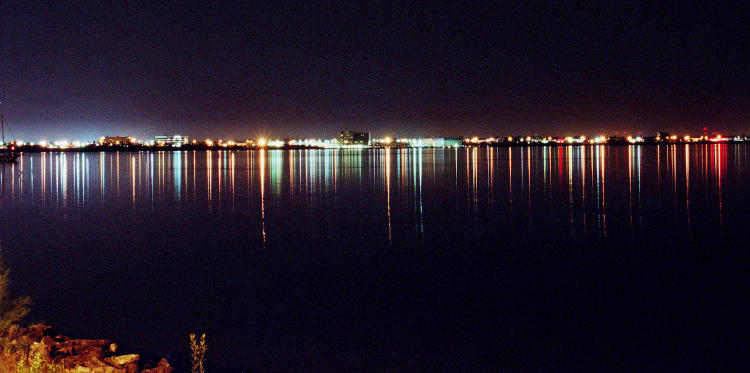
Again, a firm tripod and a remote release are almost an absolute necessity, mirror lock-up is recommended for exposure times between 1/10 second and ten seconds, and I’ll add in a headlamp or flashlight to assist in setting up. And another layer of clothes as the temperature drops at night. If the night is cold, a spare set of freshly-charged batteries is also helpful, since batteries lose their ooomph quickly in the cold (it bounces back once they warm up though.)
Now let’s look at some specifics.
Astrophotography, night sky, starfields and star trails. Let me get this out of the way early: A lot of the images that you might find showing the night sky, especially an extremely vivid Milky Way, are digitally enhanced at best, but far too often a composite image. This is especially true when you see a vivid starfield over a detailed landscape. The reason is, getting enough light from stars and the Milky Way, regardless of where you are or what camera you have, requires a long exposure – only the Earth keeps stubbornly turning, meaning the entire sky is moving east to west. You can do three things: a) deal with the movement and have stars that smear across the sky to varying degrees; b) have a tracking motor that moves the camera in time with the sky (which will then smear the landscape instead; or c) paste in a separate exposure of the landscape afterwards. The last option seems to be a common practice now, and it’s up to you to decide if you want to pursue that or not – I don’t, and I won’t tell you how to go about it, since there’s no skill in composite images. Just be aware that the drastic difference in the minimal amount of light from stars, much less nebulae and dust clouds, and just about any landscape you can find is far too great to capture in a single exposure, and even with a tracking motor, getting such stark detail from something like the Milky Way without residual noise and skyglow isn’t going to happen without specific image processing.
All that said, you can capture the Milky Way to a reasonable degree without tricks – in the right location, at the right time, and when the conditions allow it. Specifically, someplace with extremely dark skies, using a high ISO and, for preference, a fast lens (large maximum aperture such as f4, 2.8, or 1.8.) While the Milky Way can stretch across the entire sky, the really elaborate portion falls along the plane of the ecliptic in the summer months, meaning it sits close to the same arcing path that the sun and the moon take across the sky, a certain degree south of ‘straight up’ when viewed from the northern hemisphere (and vice versa.) Stellarium can help you plan things like this, tremendously. The stickler is, the plane of the ecliptic is also where the apparent movement across the sky is the greatest, so the sky will ‘smear’ there faster/more than anyplace else, thus your exposure times have to be the shortest to prevent this. Just as a rough guideline, f4, ISO 3200, 15 seconds. And this only applies to a fairly wide-angle lens, in this case 18mm; going longer means that the movement of the sky will be magnified more and start to show distinctive star trails and smearing.

This will produce nothing if the light pollution or humidity is too high, generating skyglow that might rival the Milky Way, or at least destroy the contrast that makes the details stand out. Get as far away from cities and towns as you possibly can, preferably to the south (if you’re in the northern hemisphere) to put that glow behind you.
The movement and smearing reduces the closer you aim towards the poles. These would be the celestial poles, such as Polaris/The North Star; there is no handy candidate for the southern hemisphere, but the Southern Cross asterism helps indicate the rough spot. The closer you aim towards these regions, the less apparent motion the stars show and the longer your exposures can go without noticeable streaks. This depends quite a bit on your focal length; if you’re really trying to zoom in on a small region, let’s say by using a 500mm lens, that motion will still show very quickly. You will likely need to experiment a lot.
Experiment a lot. There are too many variable to provide adequate guidelines, up to and including how well your camera handles high ISO settings. Do as many exposures as possible, changing settings by small increments, to try and ensure that you capture what you’re after.
Focus. This can be extremely difficult, since autofocus will virtually never snag stars, and even trusting lens markings is too imprecise to be useful. Best bet is to pick the brightest star (actually, planets are far brighter) you can find and focus manually on that, and do test exposures that you then examine under high magnification in the camera’s LCD – make sure you exposure time is short enough not to show star motion. Once you have the tightest focus possible, don’t touch that focus ring and use that setting thereafter. However, as we said last week, redo focus every ten minutes or so because changing temperatures can change the lens barrel and twitch your focus off.
I have also used a distant radio tower beacon light, well over a kilometer away – they’re brighter and easier to find in the viewfinder. I’ve noticed that the Tamron 150-600, even when focused on distant treetops, is somehow not at the ‘infinity’ focus necessary for stars, so be sure to pick a focusing target that’s at least several hundred meters away, the further the better.
Meteors. I’m really not the one to advise on this, given my execrable past history in capturing any, but I’ve also noticed that nearly every decent meteor that’s occurred while I was out shooting was outside the view of the lens. The wider your viewing angle (shorter focal lengths,) the greater the field of view – but also, the smaller any such streak will appear in the frame. Fix your view upon the radiant? Perhaps, but not in my experience, with the exception of just one storm in over twenty years; they might appear to emanate from the radiant, meaning the trail will point back in that direction, but the trails can still be all over the sky, including on the opposite side. My advice is to pick the darkest portion of the sky someplace not too far from the radiant, just to allow longer exposures without skyglow overwhelming the frame.
Meteors tend to show much better after midnight, since the rotation of the Earth now means your view is more into the debris stream that creates meteors. Many sources will list peak times, which are often fairly accurate, and predictions of the numbers, which rarely are in my experience.
Again, experiment. Meteors tend to be very brief and often only marginally brighter than stars, so set an exposure that allows as many stars as possible to show up in a two-second exposure, and then simply lengthen your shutter speeds until the glow starts to overwhelm the frame, and back off a little from that. Too much skyglow or too many/long star trails can obscure what you do capture, so go for shorter periods, more often. It will mean you blow through a lot of frames with nothing to show for it, but it’s digital – discard them.
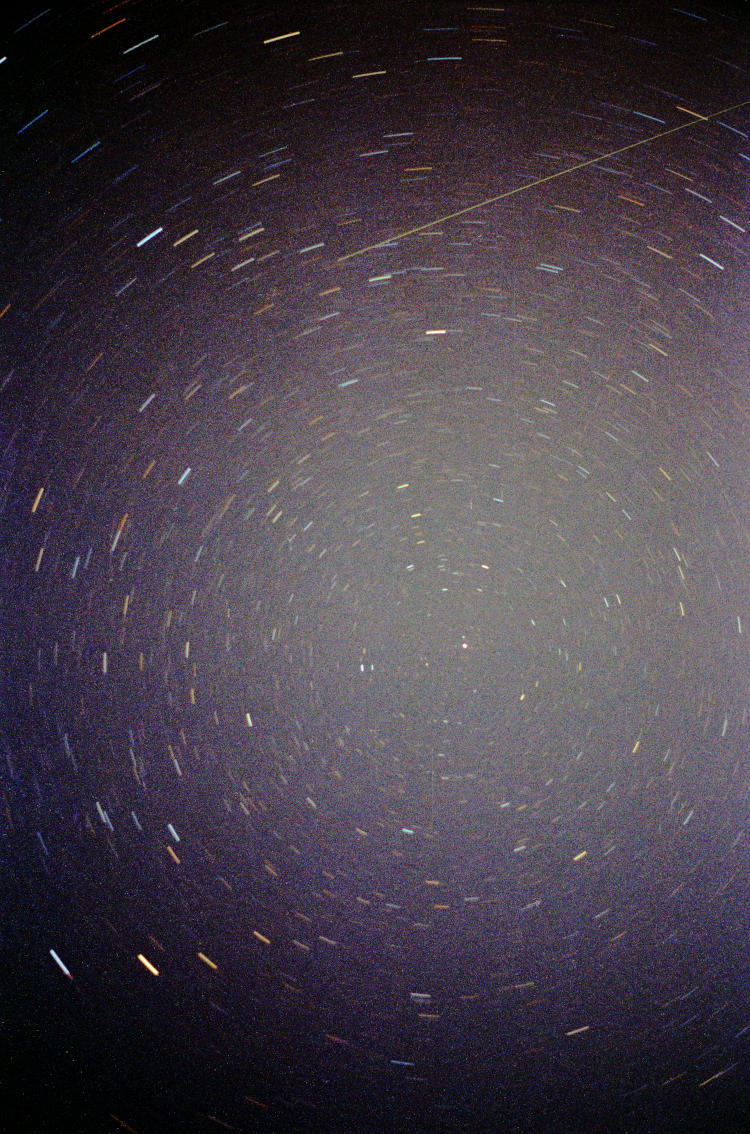
A quick tip: If you suspect you might have snagged one, the very next frame should be either extremely short or done with the lens covered. That way, any frame ahead of a black one should be examined carefully when back home for evidence of that meteor.
We all want to capture that spectacular fireball, the bolide that flares brilliantly and perhaps breaks up into separate chunks – I’ve seen them a few times, but never captured one. However, if it does happen to you, shoot several frames of the same section of sky (even if you never captured the fireball,) because residual glow and particles can actually show for minutes afterward, even being blown across the sky by high altitude winds.
Don’t be fooled by satellites, of which there are far too many anymore. Typically, if you see a faint streak in an image, examine the frames on either side of that one, in the same general vicinity, to see if there’s a matching streak, which would indicate you captured a much slower satellite rather than a meteor. Stellarium can also help pinpoint some of the satellites up there, but with more getting added every day, it won’t be a guarantee. However, most satellites only show when they’re reflecting the sunlight around the edge of the Earth, so often within an hour or two of sunset or sunrise. Around midnight, virtually none of them will show.
Satellites as a subject. Certainly possible, though in the majority of cases all you’ll get is a streak like a meteor. The major exceptions are the International Space Station and China’s Tiangong space station, since they’re big enough and close enough to actually resolve to more than a speck – not much more, but possible. Stellarium can plot the major satellites, and this site can plot when the space stations will pass in front of the moon (and the sun, though that doesn’t count for this post) for your location.
Long exposure noise reduction. Some cameras have this, and I’ve tried it exactly once. It froze the camera for the same length of time that the exposure itself had been while it processed the frame, meaning I couldn’t capture anything while that was happening, and thus would only get half as many frames as I would have without it. I say skip it – you can clean things up in post-processing, but you have to actually capture it first.
Star Trails. Depending on your view, you can aim for very long exposures, from ten minutes to a few hours, letting the stars streak across your frame. If you’re aiming at or near the celestial poles, you’ll get circles around these points, while aiming near the plane of the ecliptic will produce much straighter streaks – a wide angle lens centered on the ecliptic plane will produce trails that are straight (ish) in the middle and bow outwards the farther away they get. This is also a great way to see the different colors of the stars better, since they show in the streaks far more than in singular dots.
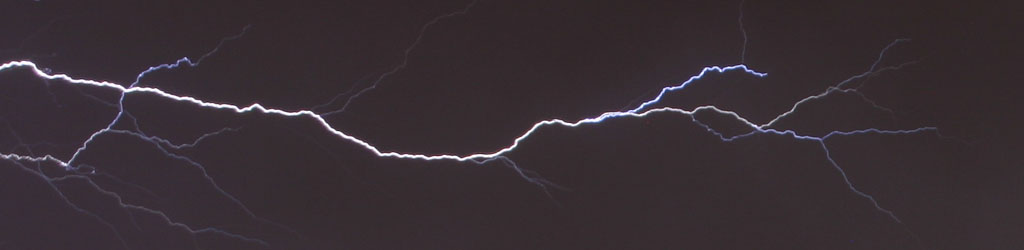
Lightning. Night is the best time to capture lightning images, since you can leave the shutter open for extended periods while waiting on a strike. Ensure that you are a safe distance from the storm, not directly under trees but with some perhaps twenty meters away (the lightning is more likely to ground to them and not you,) and pay attention to the movement of the storm. If thunder follows a visible strike within 6-10 seconds, pack it up and get inside, or at least in the car.

Try to pick a decent landscape as a setting, and water to reflect a bolt within is excellent. Set exposure to get a decent view of the landscape so you have a nice setting, and as with meteors, don’t close the shutter until you have the exposure for the landscape pinned down, regardless of when a strike occurred – if you caught it, you caught it, and no reaction after the fact will change anything.
Best is to have a fixed exposure time, for instance 20 seconds, and simply let it happen. However, lightning really does follow a faint pattern at times, and strikes may occur almost routinely. Counting to yourself every time you see a strike will help you establish this pattern, and then you can open the shutter 5-10 seconds ahead of when a strike is ‘due,’ increasing your chances of capturing it. As the storm moves, this timing will alter, but you may have 10-20 minutes of semi-predictable strikes.
Have rain gear, for yourself and the camera, and be ready to don it immediately. If you do get wet, make sure you get everything out of the bag as soon as possible, and dry both the equipment and your bag thoroughly before recombining – a wet bag can drive moisture into cameras and lenses easily.
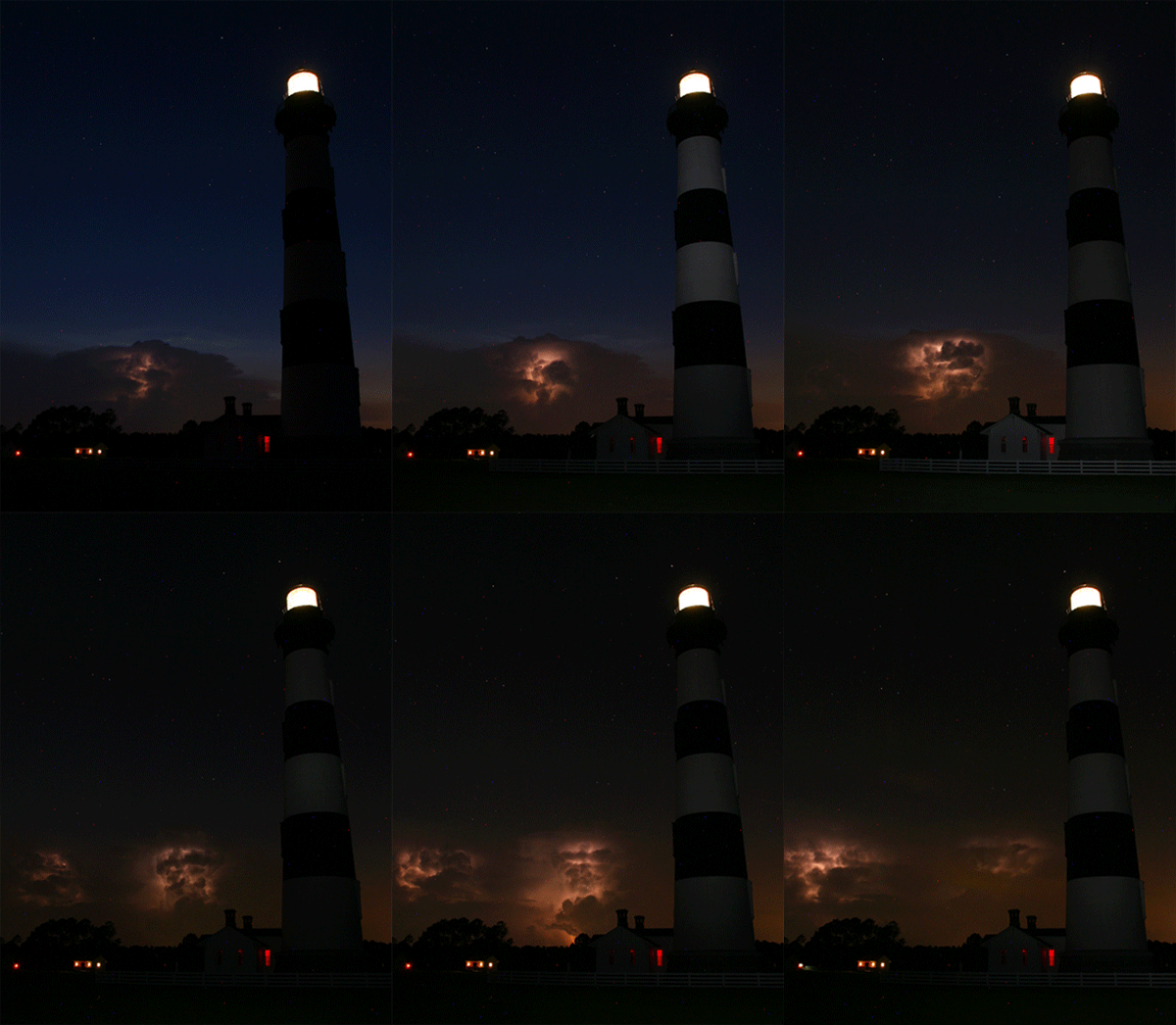 Lightning trackers can be very handy to know when a storm is approaching and from where, but in my experience, their strike location plotting is wildly variable (and will rarely tell you when cloud-to-cloud bolts occur.) And getting those bolts that light up the clouds without even showing themselves can be very dynamic too, sometimes much richer than just a white streak against the sky.
Red Sprites/Blue Jets. These are very rare, hard to capture phenomena that happen occasionally, emanating from the tops of the storm clouds. They are very brief and very dim, so your exposure has to be in the range of capturing dim stars, but the nice thing is, you don’t have to worry about them streaking like stars do. I have yet to see one (confirmed, anyway,) but to all accounts, they occur very high above the thundercell, so your best bet is a wide-open view of the advancing or retreating storm from a great distance – like, mountaintop or out to sea, without obscuring clouds.
Car Light Trails. If you have a decent view of a road, especially one that curves across the frame in an interesting manner, you might try a long exposure as cars pass, producing white, red, or orange streaks across your frame. It’s best if you start and end the exposure while the cars are out of sight, so you don’t have trails that abruptly stop in midair, but you can be creative with that. Two things to avoid: getting too much of a direct line with approaching headlights, which will overwhelm the frame with glare, and getting too many cars in the frame – usually a couple is enough. Highway overpasses afford a great view sometimes, but be aware of traffic on the road you’re standing next to – a reflective vest is highly recommended. Doing this under a bright moon can help light up the landscape too.
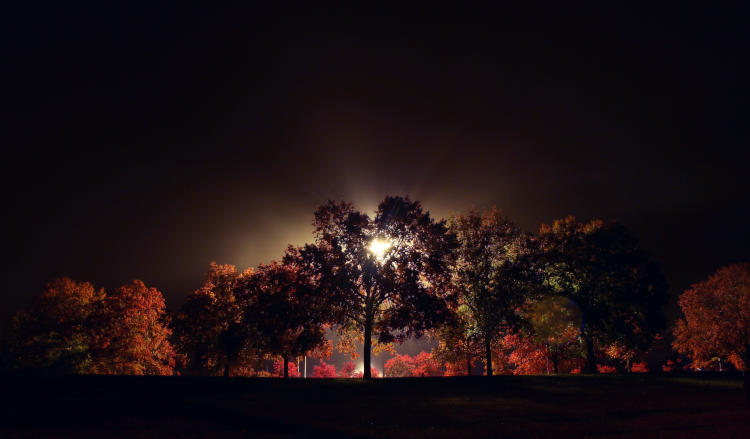
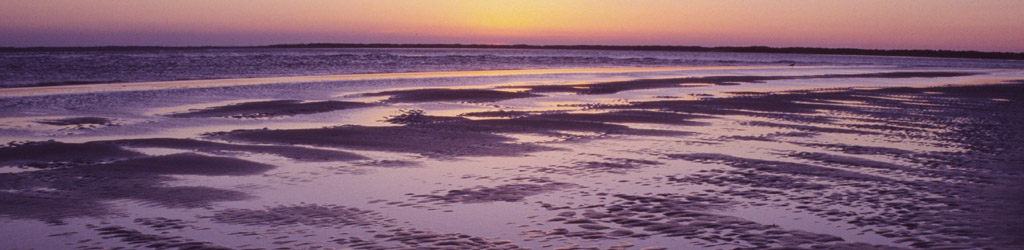
Other night photography. Such as, using the ambient light nearby or the light of the moon. No real guidelines for this exist because the variables are too great, so experiment freely. With a long enough exposure by moonlight, the image can appear to be in daylight, perhaps only betrayed by star trails in the sky. Know that your exposure times may run from a full minute to twenty or more, depending on what you’re after, and all you’re doing is killing time while this happens; resist the urge to look around with your headlamp or flashlight, because even residual light getting into the frame may make things look weird, and of course you don’t want direct light in there. Or maybe you do – some experiments produce great results.
Most times, you’ll want to try and keep lights (street lights et al) from shining directly into the lens, since at longer exposures the glare will typically be overwhelming, but you can also go with a very small aperture to turn these into starbursts as you like – then your challenge is to balance that aperture with the other ambient light for a proper exposure. Meanwhile, these longer shutter speeds can produce blurs from moving water and plants blowing in the breeze, or drifting boats and even any wildlife that you might happen to capture. You can also get creative with a flash burst or, as hinted above, illuminating your subject or portions thereof with your headlamp/flashlight. It can take a lot of experimenting to determine how long to do this for, and as always, don’t trust the LCD preview on the camera to give an accurate impression, since the brightness will likely be deceiving – do several variations bracketing the exposure to get the one that will work.
Weather. Fog, rain, and mist can all lend a lot of character and mood to night shots, and it’s never a bad idea to have a couple of potential locations in mind for when the weather reports indicate that fog is likely. With these, light direction can make or break the shot, so work around the light and check different directions and positions to see what works best. A full moon and fog? Better get your ass out there to shoot something, since such conditions are rare – I missed an opportunity nearly forty years ago and have been kicking myself ever since.
Okay, that’s enough to get you started and give you some ideas at least – I’m sure I missed something I could have included, but this is plenty long as it is. Next week I gotta do a short one…
