

As promised, we’re now getting back to World Waterfowl Day, which we spent a significant portion of over at Sylvan Heights Bird Park in Scotland Neck, NC – seems appropriate, since the folks there were responsible for actually creating the holiday. We’d been meaning to get back, simply trying to find the right time, and this was the best excuse. Not that you’d need one, because it’s a damn cool place.
First, let’s return to that teaser pic from a few days ago, because it deserves an explanation.
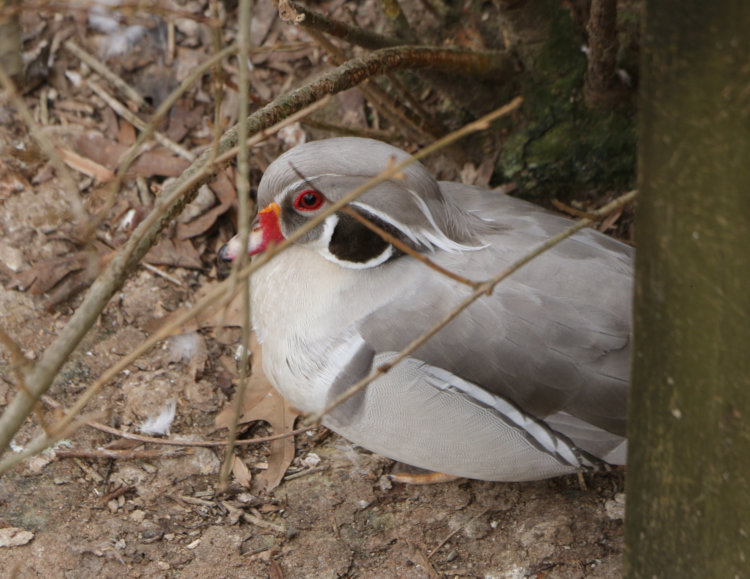
What struck me about this is that the size, feather structure, and pattern all said, “wood duck,” but of course the colors were all wrong. Wood duck (Aix sponsa) is correct, but this is a leucistic mutation, lacking most of the pigmentation, which happens occasionally in lots of different species. From what we were told, the Park was maintaining a small population of these. Their initial purpose had been breeding endangered or threatened waterfowl species, but they branched out after a while and expanded the Park to include a broad representation.
A note about conditions, to which I took affront: the day started out beautifully sunny and warm, no jacket required, and remained that way up to our entry into the visitor center, which we might have spent ten minutes within. Upon exiting, we found the sky had become completely overcast and the temperature had dropped at least five degrees celsius – it was like we crossed to a different state, and naturally it remained that way for the entire visit. So the colors are all muted and contrast down a bit, quite annoying in light of the way the day had been right up to that point.
But let’s see what kind of video we obtained, before switching over to more still photos.
Mentioned briefly therein, the biggest hassle with this and many other animal parks are the enclosures. Naturally there needs to be enclosures, but this means that almost always, you’re shooting through fences or netting or what-have-you, often quite noticeable. Credit to Sylvan Heights in that most of them are black, which makes them less noticeable when defocused as far as possible (usually by getting right against the fence and trying to keep the lens centered in openings,) and there are several aviaries where you can actually go through a double-door system to be inside with the birds – yet the fencing is usually still visible in the background, and now harder to get rid of because the focus trick only works if there’s a significant difference between the subject and the fencing. The trick is, either get right against the fencing to fuzz out that which is between you and the subject, or be significantly closer to the subject than the subject is to the background fencing. Difficult to achieve. This is where smaller lenses, especially smutphone cameras, work much better, at least for the former. As long as the subject isn’t moving around a lot, of course.
[Sylvan Heights does offer photographer passes which provide access to ‘portholes’ in the fences in many places, allowing an unobstructed view, but this fails to eradicate the background fencing, which is extremely difficult to frame around. Not something I’d personally drop the money on.]
Let’s get to the photos, shall we?
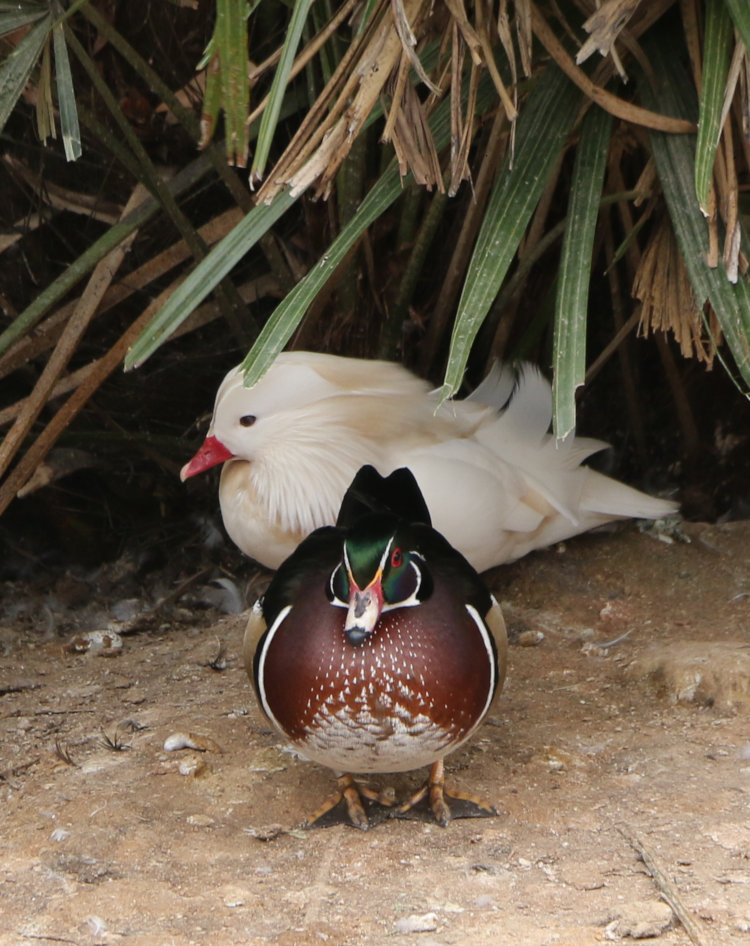
In the front is a male wood duck, of course, but what’s that behind? In normal circumstances, it’s the main color rival to wood ducks, the mandarin duck (Aix galericulata,) though in this case it’s another mutation, either leucistic or albino, not sure which. Typically, the males look like this:
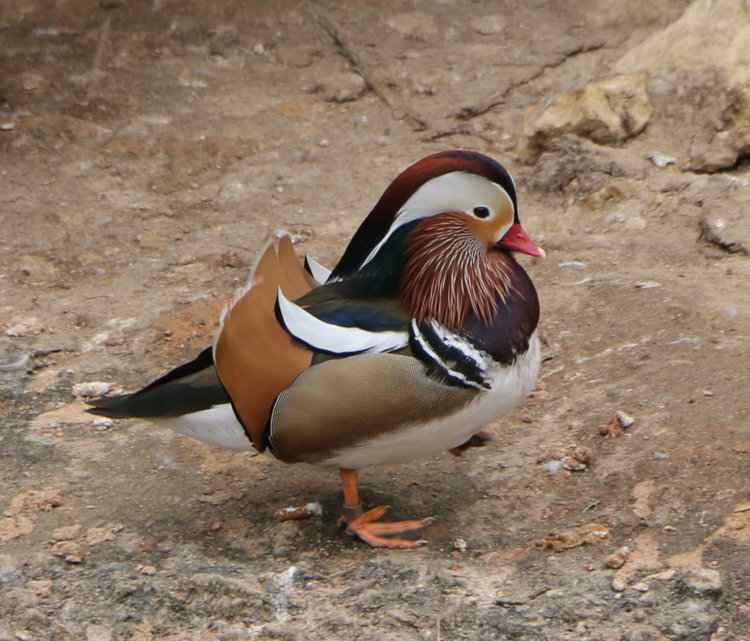
See what I mean? They’re not native to this country, being a species from China instead (bet you never would have guessed that from the name,) but they’ve been imported as an ornamental species often enough to be found in many places here. And don’t ask me whether those vertical buff feathers are parts of the wings, or the tail, or what, because I don’t know. They seem awkward, but that pops up surprisingly often in the avian kingdom.
These, by the way, were found in the duck pond immediately outside of the visitor center, the first thing that you come to, as were this pair:
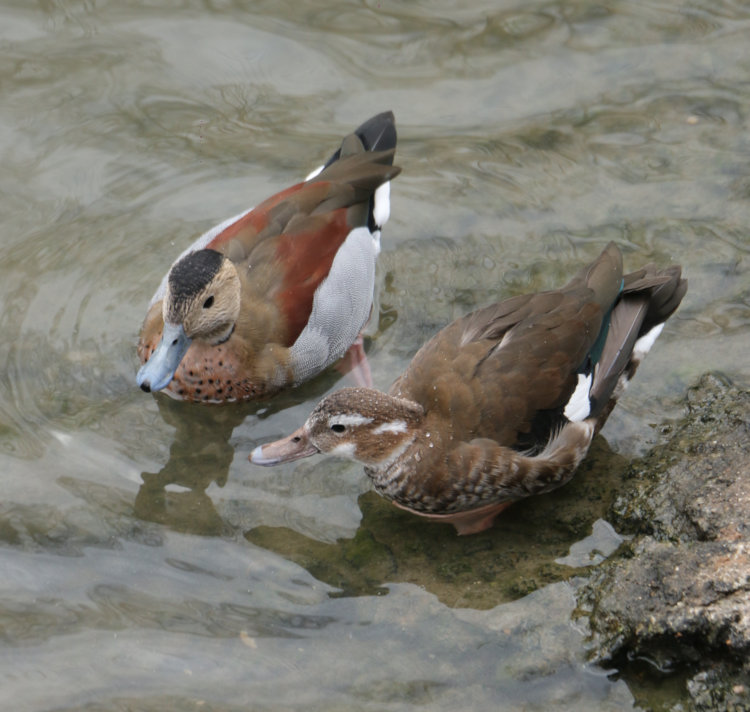
This is both sexes of ringed teals (Callonetta leucophrys,) the male in back, though I think they’re in transition between winter and breeding plumage. Spring is the best time to view birds, since they’re on their most flamboyant displays for breeding season, but one of the reasons I like the Sibley Guides is, they’ll show all of the seasonal changes (and juvenile plumage as well,) very helpful for those times when birds are not in their ‘typical’ colors.
The Girlfriend and I both liked this next one, which probably camouflages amazingly well when on the nest:
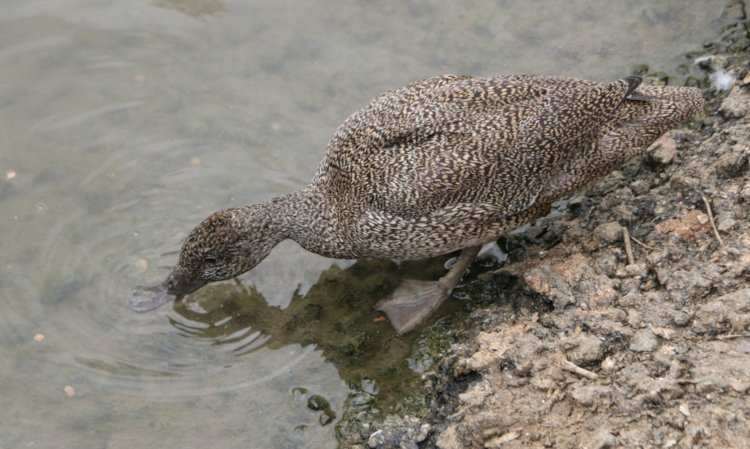
This is a female freckled duck (Stictonetta naevosa) – while the females of many bird species are quite drab (ahaha, get it?) to avoid detection while nesting, the males of this one aren’t much better.
I’m not sure how many species the Park actually features; the identification board for this pond alone had 30 species, and I don’t think that was everything therein. A few hundred, is my guess, and it probably changes frequently.
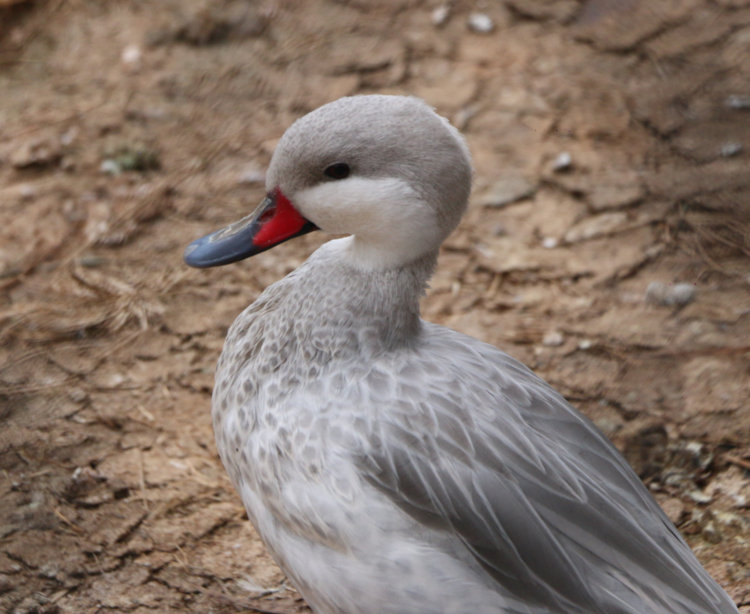
I couldn’t find this one on the boards or plaques, but then I found some matching traits, and I suspect this is another leucistic, this time a white-cheeked pintail (Anas bahamensis.) Like the wood duck, it actually seems to make for an understated but pleasant grayscale palette.
Moving away from the initial pond, we also got into more variety, though you’ve already seen that in the video (right?) The emu didn’t want to provide any worthwhile poses, and we never saw the cassowary, but this guy struck a quick pose:
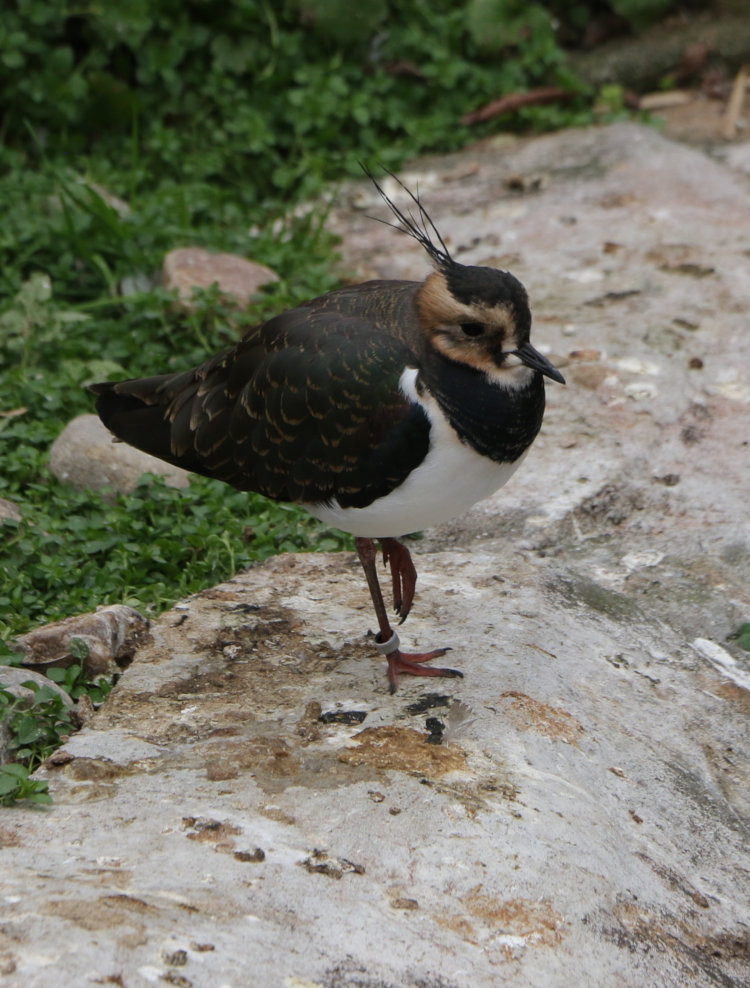
I wasn’t sure about the identification of this one from the plaques, but a websearch confirmed it; this is a northern lapwing (Vanellus vanellus.) Quite small and dainty birds, and not from around here, instead being Euro-Asian. On occasion, the single image on the ID plaques in the park aren’t quite the best examples, and as mentioned, plumage can change with seasons anyway.
[A couple of species that I got images of remained unidentified, necessitating more websearches, and let me tell you, far too many pages on the greater webbernets lack any vestige of accuracy in species identification – makes me proud of the efforts I put into it here.]
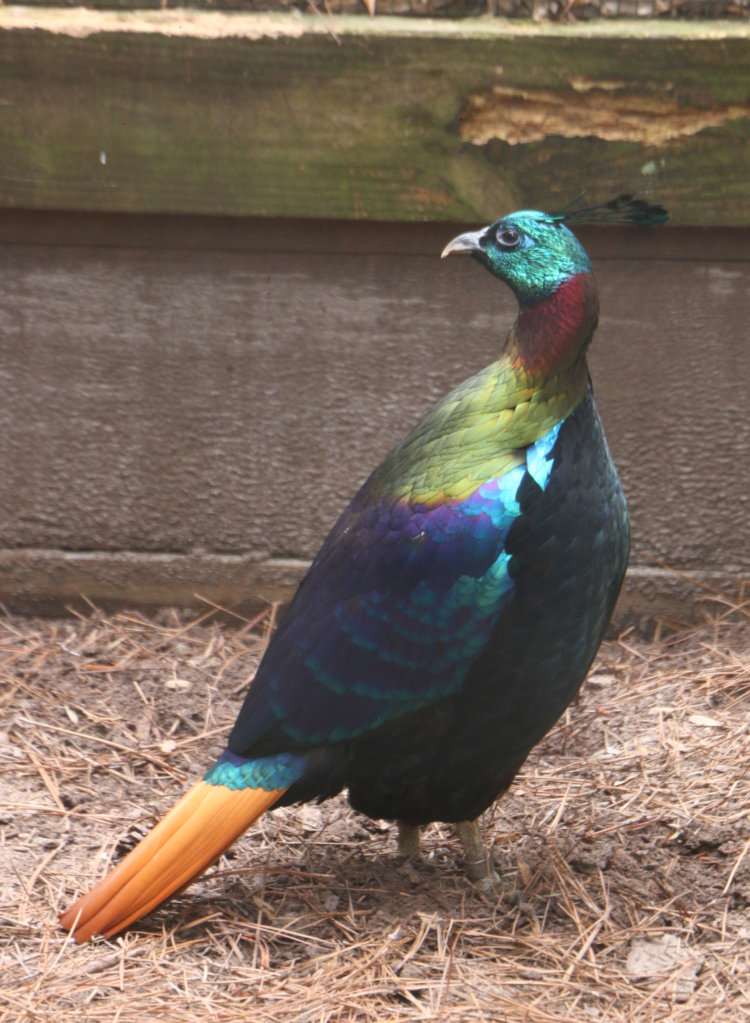
Even in the muted, indirect light of the day, this Himalayan monal (Lophophorus impejanus) shows some great iridescence, but from other photos that I’ve seen, it can get a lot better. It can also get better if the intervening screening didn’t soften the entire image so much…
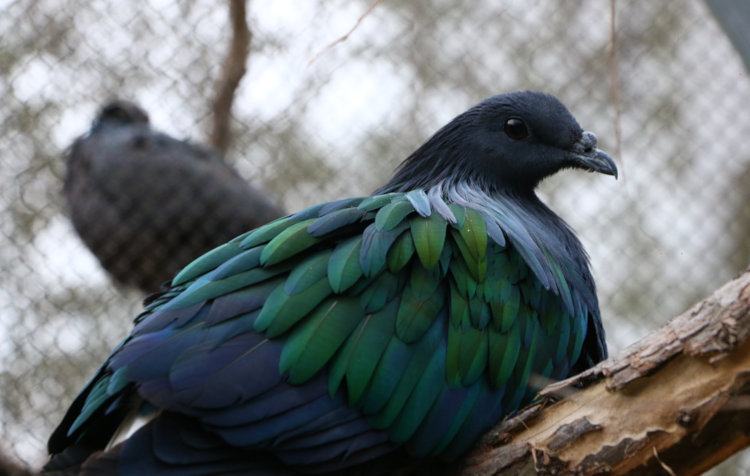
On the other hand, this Nicobar pigeon (Caloenas nicorbarica) probably doesn’t get a whole lot brighter even in direct sunlight, but the palette is nicely understated. I know I have virtually nothing in these for scale, but this is slightly larger than a typical North American pigeon (or rock dove, the proper common name,) while the monal before it is close to goose-sized. Okay, that’s not the best of descriptions either, because geese feature a lot of size variations – let’s call it a full armload, because it was a damn sight larger than this:
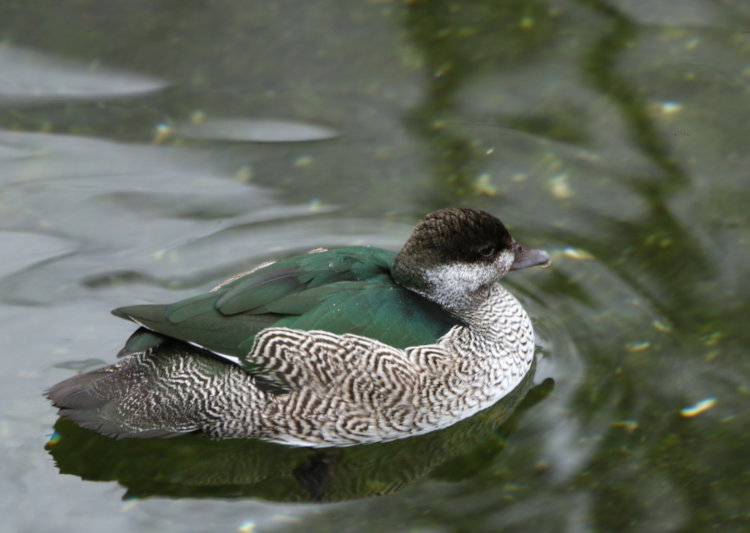
This is a green pygmy goose (Nettapus pulchellus,) which virtually no one would guess because it was a lot smaller than any goose that I’ve ever come across, or any chicken, or even a wood duck; it was slightly smaller than the aforementioned rock dove/pigeon. I’m glad this one was on the ID boards because I would have had a hard time finding it under any search term I would have entered.
And then there are the descriptive common names that are anything but.
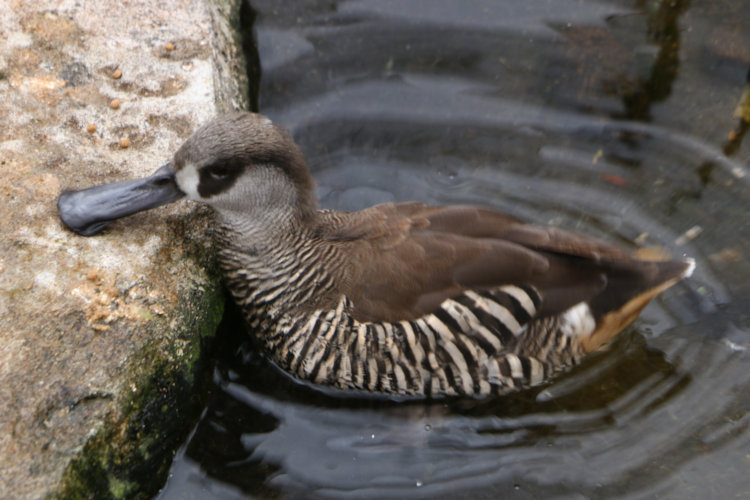
I’ve been annoyed at names like the red-bellied woodpecker, which has a faintly pinkish belly at the best of times, or the double-crested cormorant which only displays this in one sex during peak breeding season, but then we have this pink-eared duck (Malacorhynchus membranaceous.) What, do you mean under those feathers? No, they’re there, but only if you’re right on top of it. We need a closer crop:
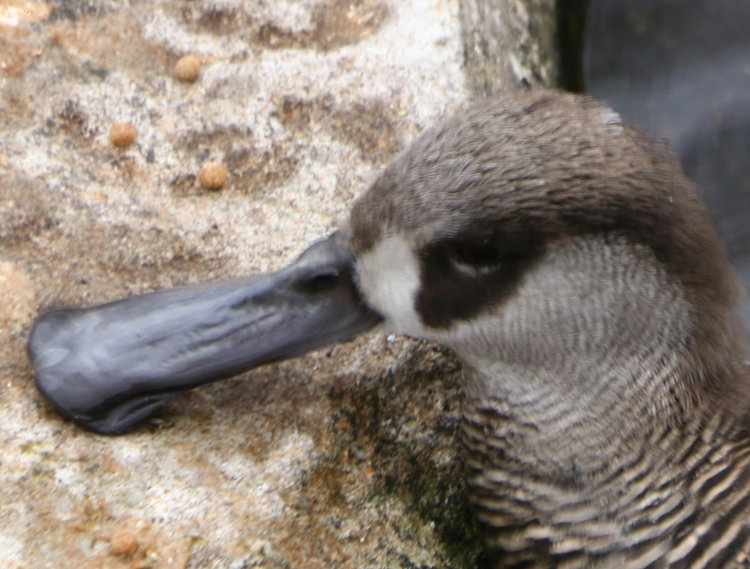
Do you see that faint discoloration that looks like a berry stain, at the back of the dark eye patch? Yeah, that’s the “pink ear.” Sheesh. But while we’re here, that bill needs some attention, because it looks like someone left it on the hot stove – my guess is that this is a frequent bottom feeder, using that to shuffle around in the sand and mud for its food, much like the spoonbill.
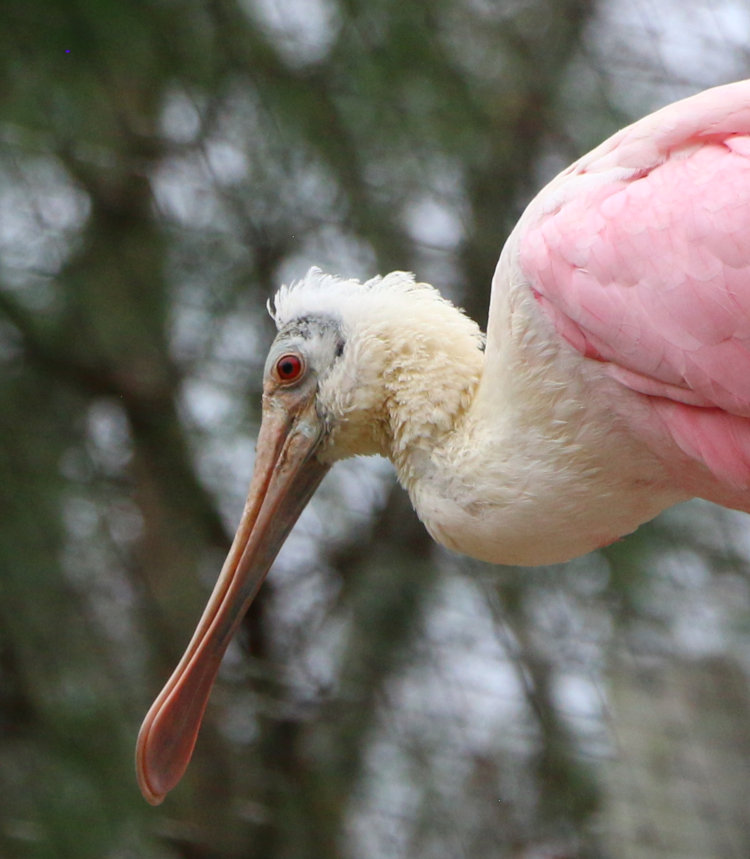
I wasn’t wild about the pattern of the fencing showing up so well in the background, but I liked the head detail of this roseate spoonbill (Platalea ajaja,) and of course we see the specialized namesake bill. I am demonstrating my age when I say this reminds me of Phyllis Diller, or Wayland and Madame…
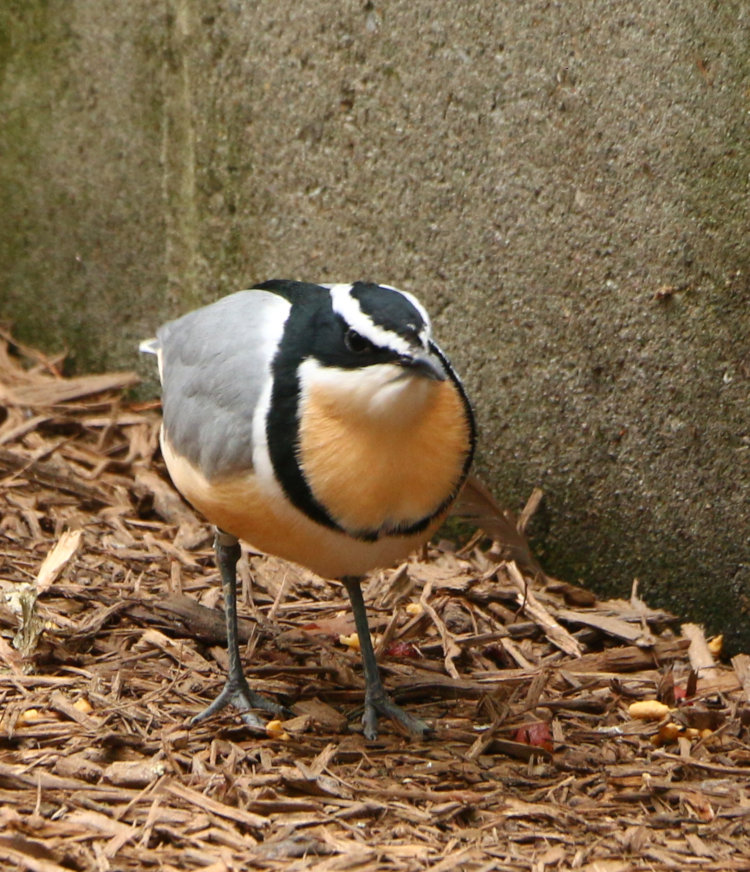
A very faint indication of the size of this Egyptian plover (Pluvianus aegyptius) is there in the background, since that’s a standard cinder-block wall behind it, or I could simply tell you it was perhaps the size of a cardinal – a small handful. But I liked the coloration, and had to track its hyperactivity to snag a few decent frames.
Though, sorry, this one needs some professional guidance:
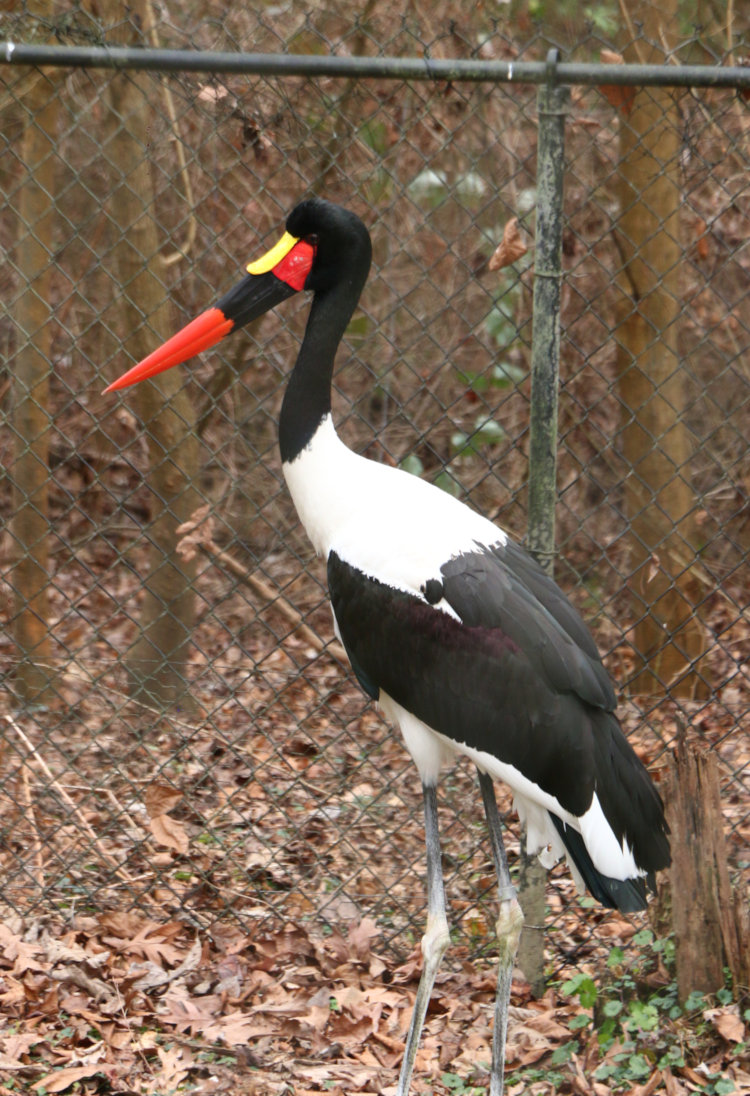
This is a saddle-billed stork (Ephippiorhynchus senegalensis,) looking like the kids got ahold of the markers they weren’t supposed to and started coloring it in before they were caught. I mean, that’s a cry for attention, that is – and that scientific name isn’t a lot better. You just know there are some tattoos and piercings underneath those feathers…
Is this long enough? There’s, like, three posts in this one alone. But before we close out, there are a couple of things to throw in, like a shot The Girlfriend captured as I was following a hyperactive jay for video:
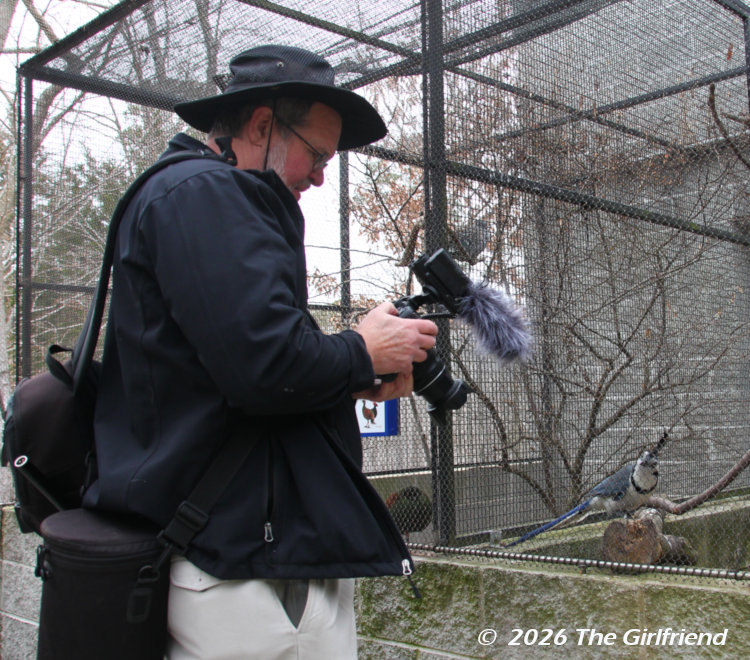
I had the long lens with me, and it probably would have helped with a handful of images, but I never bothered switching to it, instead keeping solely with the Canon 18-135. You can see the Takstar mic with the ‘dead cat’ wind guard, which worked reasonably well in the circumstances, not getting in the way and cutting the off-axis sounds in half at least. And this was the first real workout of the second option for improving video, which I’ll go into in a later post. Overall, it worked pretty well – when I didn’t forget to turn the mic back on…
Some of the birds were more cooperative than they should have been.
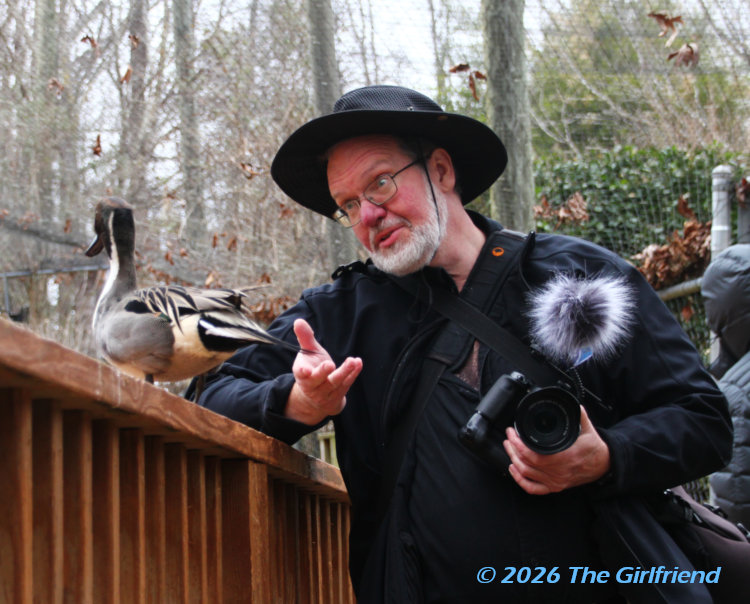
This northern pintail (Anas acuta) seemed uncomfortable while I was explaining the myriad issues with the concept of free will, for unknown reasons. But at least it was mellow enough to stay put, and was even joined by its mate (probably) for a nice portrait:
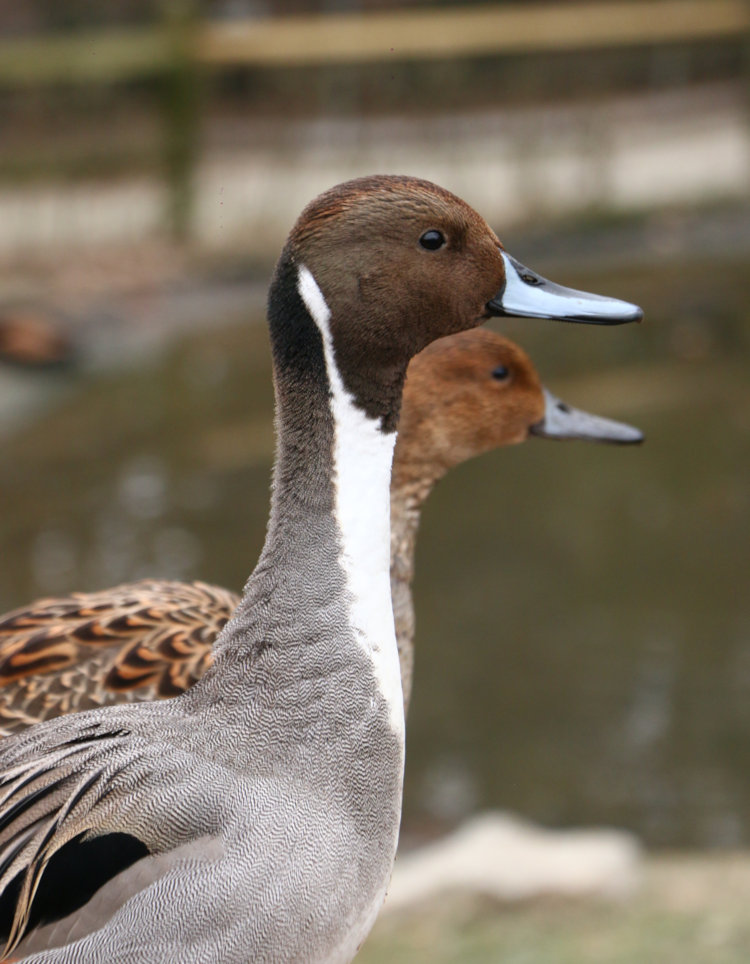
They were pretty chill, allowing me to get a small variety of poses before we let them be – I don’t think they ever flew off. This is a fairly common species in North America, so not the rare or exotic images that would have been better to obtain, but hey…
I also snagged something quite expressive from the fish eagles.
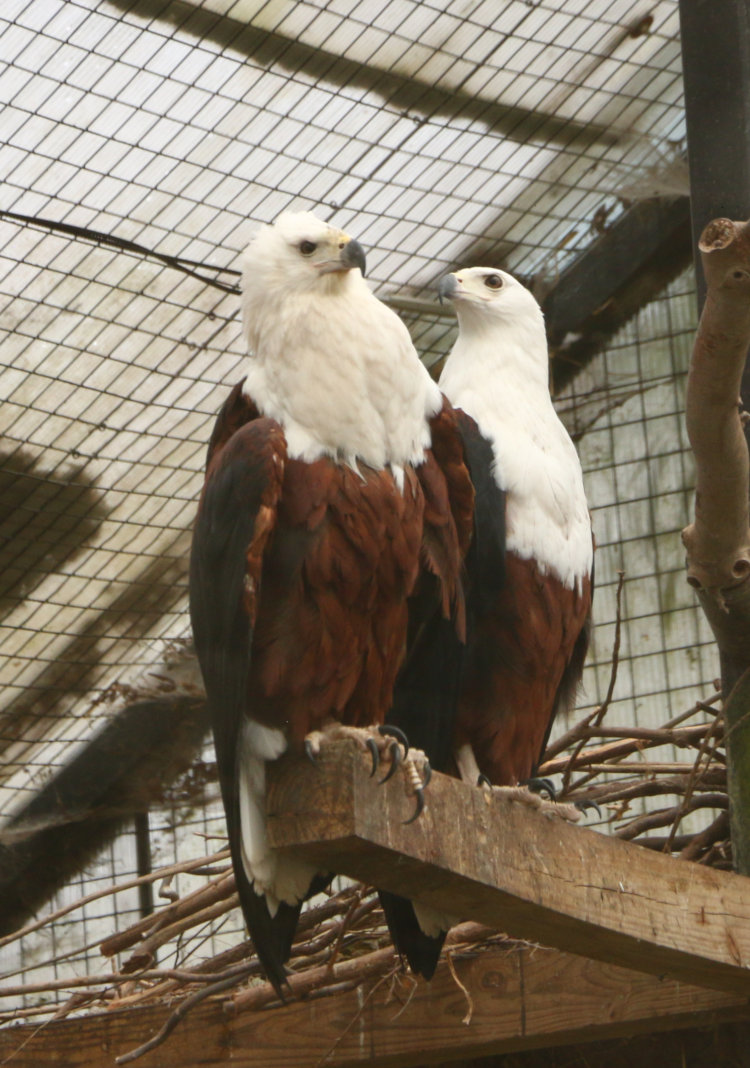
I mean, you can’t beat those faces, from species that really can’t change expression much anyway, and I couldn’t resist calling this, “When we get home…”
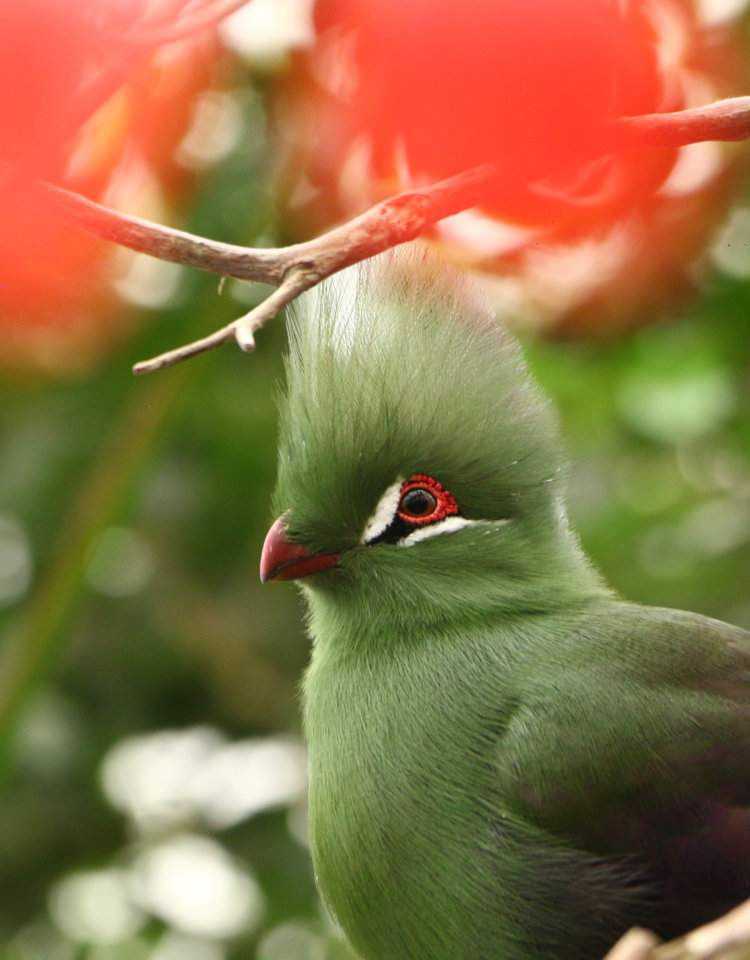
But my favorite is the one below. I really wanted to do more fartsy, portrait-style images rather than ‘cataloging,’ but the opportunities weren’t there very often at all; downward angles, fences in foreground or background, clutter, and fleeting clear views all conspired against doing a lot of good compositions, not helped by being there with three other people who weren’t likely to be patient with spending a lot of time chasing after specific images. Yet this image of a Guinea turaco (Tauraco persa) came together nicely, and I’ll take it.
The other posts regarding Sylvan Heights Bird Park:
Too cool, part 11: Sylvan Heights Bird Park
That latest one was over eleven years ago – we need to do better than that…