
















There are a few minor photo challenges that remain in the back of my head, waiting for the right opportunity to tackle them – some of them are inconsequential, hardly anything to catapult me onto the pages of National Geographic or even The Daily Mail. This is one of them.
I mentioned before that I’ve long wanted to capture the sunrise on the central peak of the lunar crater Tycho, which takes some pretty specific timing, not all of which is within my grasp; despite the length of lunar days, the ideal moment may still occur when the moon is out of sight behind the Earth. But it also occurred to me that perhaps I could get sunset instead, and so I’ve been keeping this in mind too.
A brief bit of the physics involved. Tycho sits very close to a central position on the moon, when seen from our vantage point on Earth, so sunrise and sunset therein will take place at either the first quarter (half moon, heading towards full) or last quarter (half moon heading towards new.) This means the sun is either leading the moon into our sky by roughly six hours, or trailing it by the same amount – it has to be shining on the moon from the side (again, according to our vantage.) So the moon will rise about six hours behind the sun for Tycho’s sunrise, and be visible for half of our day and half of our night. For sunset, the moon rises six hours before the sun and, again, be visible for half the night and half the day.
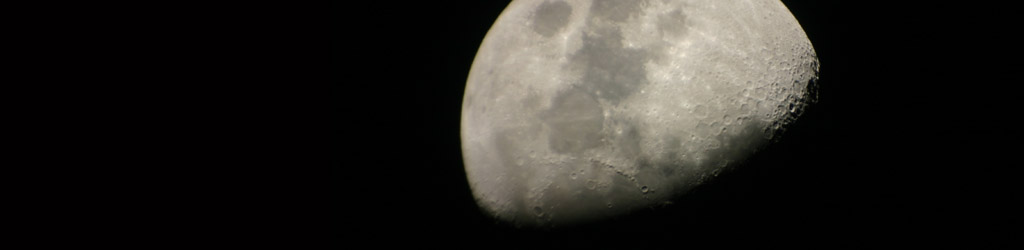
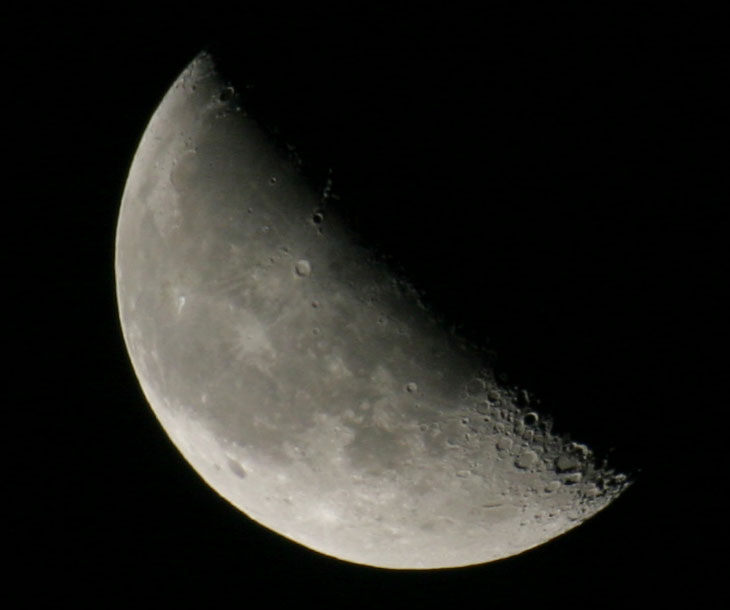
This means Tycho sunrise might be captured in the evening before midnight, but sunset has to be well after midnight – in this case, around 4 am for the moon to get high enough not to be obscured by trees, or dimmed by thicker atmosphere. I was up pretty early this morning (I have a weird sleep schedule anyway) to get the shot above.
And yet, still missed it. Tycho can be seen as the darkest crater about one-fifth of the way up from the bottom, sitting right on the terminator (line of shadow) – not that big crater, but the much smaller one that looks like a hole. The entire crater floor, including the central peak, is shrouded in shadow, and the sun is only hitting the top edge of the far wall. I had been out the previous morning, and the shadow was well away from the crater, so this morning was the best time I could arrange, but it was too late.
 I even took a quick look at the images I’d gotten soon after moonrise, when it still wasn’t free from obscuring trees, and there’s no indication of the peak in those either, so it seems sunset on that peak occurred while the moon was someplace below my horizon. At least I tried.
Now, if I was much more capable of math than I am now, I could possibly calculate the exact time period when the peak will remain in the light while the crater floor is shadowed. I’d also have to be more obsessive than I am now, so it ain’t gonna happen. I imagine someplace online, someone has already worked it out, but I’m going to yield to laziness right now. Snark all you want – I was out twice in the wee hours of the morning, ice crystals crunching under my feet, just to get these images. For nothing. Nothing!
But here’s another perspective. While on the moon, there is no Earthrise or Earthset – not in most fixed locations, anyway. The moon is tidally locked with Earth, meaning the same side faces Earth all the time – mostly. There’s a slight wobble. But anyplace within Tycho, the Earth remains high overhead. It changes phases, just like the moon does for us, but there’s never a dark night in Tycho. When the sun is below the horizon, the Earth is at least half full, and when the Earth’s phase drops down to a crescent or less, the sun is high in the lunar sky. A ‘full Earth’ occurs in the middle of the lunar night, and a ‘new Earth’ occurs during lunar midday – this means that Earth goes through all phases in the course of one lunar day/night cycle, which averages 29.5 Earth days long.
The classic photo of Earthrise, taken by Williams Anders during Apollo 8, occurred because the Apollo spacecraft was orbiting the moon – that’s the only way to see this. Almost. There are some locations on the moon that do see Earthrise, just by the barest amount, because of that aforementioned wobble (technically, “libration.”) From our vantage, they sit in a narrow band that marks the outer circumference of the moon, the limits of what we can see from Earth, and the libration means that the Earth peeks just barely above the horizon once a lunar day. While the far side of the moon, never seen from here, also never sees us.
If you saw the caveat that the lunar day averages 29.5 Earth days in length and wondered about it, that’s another curious aspect of the orbital mechanics, and a demonstration of relative measurements. Picture the sun, moon, and Earth laid out on a grid, surrounded by stars. For now, we’ll consider the sun fixed on the grid among the stars, while the Earth orbits the sun and the moon orbits the Earth – the Earth, at the same time, is rotating to produce its own day/night cycle. The moon is rotating itself as it orbits the Earth, but mostly keeps one side facing Earth – its orbit and its rotation are synchronized, except for that libration.
The moon completes a full rotation, measured by that grid, in a little over 27 Earth days – but because it’s riding along as Earth orbits the sun, that isn’t enough to complete a day/night cycle on the moon; the Earth is almost one-twelfth of the way along on its own yearly orbit of the sun, and so the sun angle is slightly different now, and it takes another two days or so to complete that light cycle. Yet, this varies, because Earth’s orbit around the sun isn’t a perfect circle, but an egg-shaped ellipse with the sun off-center, and as it draws closer to the sun, it actually accelerates in its orbit a little, slowing back down as it draws farther out in the course of the Earth year. The moon is dragged along in this acceleration/deceleration cycle, so the lunar day changes length slightly in this time too.
Makes you realize how much we’ve simplified terms like “day” in the face of the physical actions of orbits and rotations. Astronomers have lots of specialized terms to pin down what, exactly, they’re referring to at any given moment.
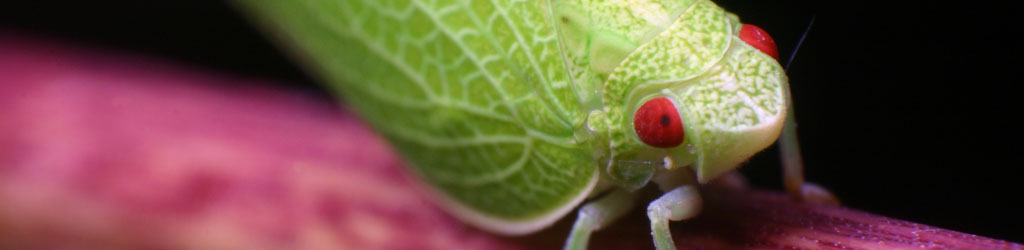
 Shocked as I am to report it, the calendar event of the vernal equinox and the weather coincided quite well – the skies cleared and the temperature got into the twenties (or the seventies, if you prefer,) so I did indeed get out to chase a few spring subjects. It was exceedingly few – it’s still a little early for spring in North Carolina, and more so with the temperature fluctuations we’ve had this year, but there were a couple of things to be found. The most interesting one is shown here, having attracted my attention by waggling when I was doing a close examination of the rosemary bush for the resident green lynx spiders. If it had held still I would have missed it easily, since it’s but a few millimeters long and wonderfully camouflaged as a dried rosemary leaf. I have yet to identify this, other than as a ‘leafhopper,’ which really doesn’t narrow things down too much, but I can at least pronounce it a juvenile, due to the undeveloped wings.
 I discovered the evidence of a recent molt, likely today’s, on the underside of a nearby rosemary leaf. The image below illustrates the scale fairly well, since that’s my fingertip in the background, but also visible are the white spheres that can be found on the leaves – whether these really are what decorates the leafhopper, or its camouflage just resembles this, I am unable to say. Just full of info today, aren’t I?
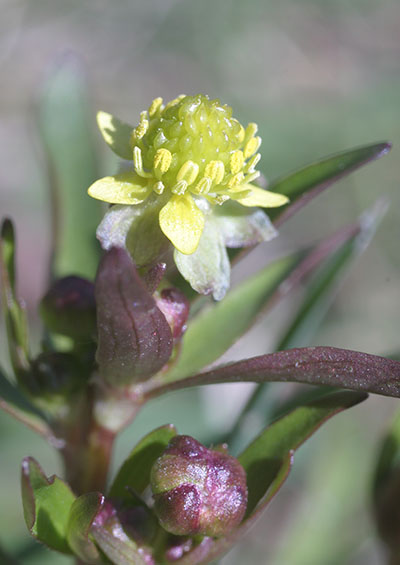 Just for the counterpoint, I sought out the aconite flower that I’d photographed
 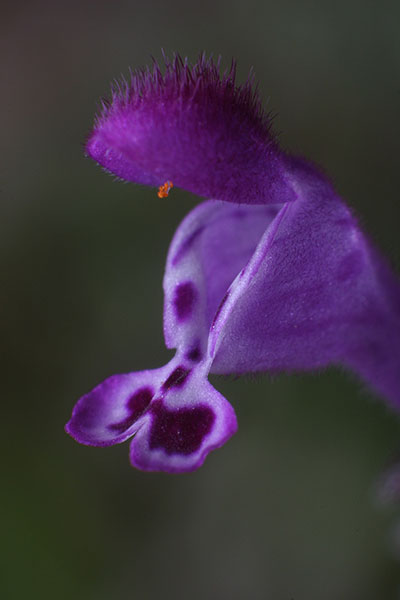 I don’t think the red dead-nettle (Lamium purpureum,) among the
 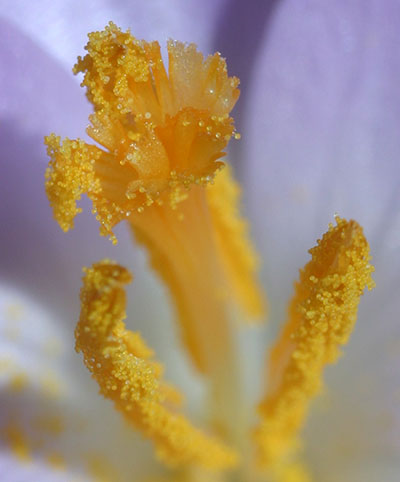 I close with a tight macro shot of The Girlfriend’s Younger Sprog’s crocus, which I may try to get out tomorrow morning and make another attempt at an
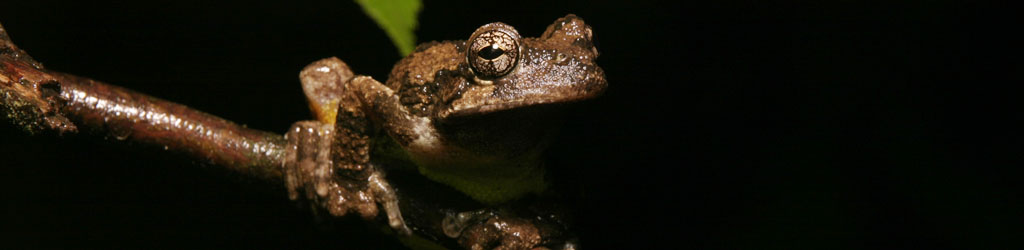
 The other day, with the warm weather assuring us that it was here to stay (dishonestly, I must add,) I donned shorts for the first time to meet with a student and go out seeking the first real signs of spring to a nature photographer, which is generally wildlife in search of booty. While I had earlier been hearing the evidence of the critters pictured here, I had yet to go down to their typical lairs, which are small ponds and even puddles surrounded by high grasses. These are likely southern chorus frogs (Pseudagris nigrita nigrita,) though I stand to be corrected – I am using an Audubon Guide for identification, which unfortunately lacks strong descriptions and photos to make firm distinctions; at least three species could fit what you see here, especially when they give markings as “three stripes along back that may be broken into spots.” All likely chorus frogs in this area have spots…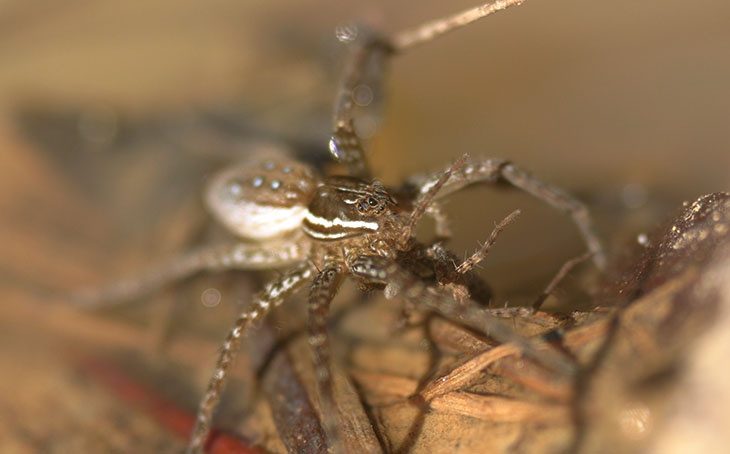
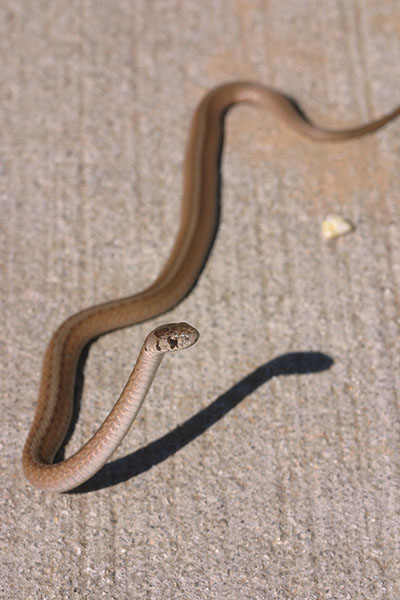 The next day, I was determined to capture the sounds of the chorus frogs, and went to a nearby park that has lots of water basins. The biggest one, that provided some of the
 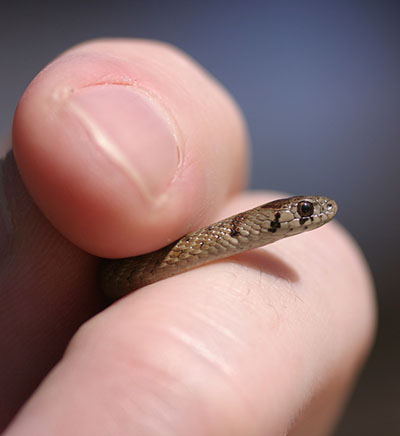 And I can’t let this go without a scale shot. While I’ve seen bigger, brown snakes really aren’t very impressive in size no matter what, though they do outclass the
 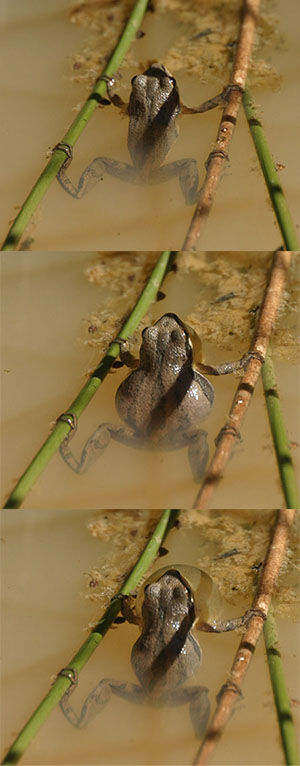 So, as I provide the recording that I made that day, I give you a photo sequence of a frog from the previous day, when I could actually see them. The first pic was ‘at rest,’ as it were, while they were all silent. But imagine the next two alternating regularly during the call – the inflated belly during the silences, with the distended throat sac while emitting that bad-bearing squeak that you can hear by clicking on the tag below. It should be said that there was never the appearance of expelling the air – it simply switched places, being recycled as it were, since the sound is as internal as humming is to us. I had originally tried to produce an animated gif (pronounced “hor-hay”) of this, yet couldn’t get it to appear less than bad claymation and gave it up after playing with it far too long last night. It would undoubtedly be better in true video, but I’ve never bothered to get a digital camcorder and have little enough use for a low-end model – I’d want something that could do serious macro work, but that would require supplemental constant-light sources and a whole lot of playing around for, what, the blog and website? Not justified (no offense.) Anyway, this recording was started as I was a short distance away and approaching, ending up just a few meters from the frogs – the volume is, hopefully, able to express the idea without getting too obtrusive.