Put down the Dymo, Avery

Several recent posts and articles have highlighted a problem that I’ve seen far too many times from, quite frankly, people who should probably know better. It’s rampant within philosophy, and unfortunately, there are still too many who think philosophy is something to be revered, so it tends to cross over into other disciplines as well. For lack of a better way of describing it right now (which will be ironic as soon as I actually get around to mentioning what the hell I’m talking about,) I’m going to call it the Labeling Problem.

Basic premise: We are a species that likes definite answers. In the face of vague, ephemeral feelings or assumptions about how things work, we immediately want to apply a label to them: “consciousness” and “free will,” “socialism” and “dualism,” “science” and “morality.” This isn’t exactly a bad thing – our language would be even more tortured without easy terms to apply to complicated concepts – but each of those terms above, and many more besides, are so poorly defined that the moment anyone uses them, someone else has an entirely different idea what is meant by the usage. Very frequently, this means that endless discussions take place because no one seems capable of recognizing that they’re not working from the same premise.

The last two examples, “science” and “morality,” are the ones I’m going to highlight here. Long ago I settled on a basic definition of science – “a methodical process of learning” – and I have yet to see where this does not apply. That there is an alternate usage along the lines of “the body of knowledge gained from this process” – making science a thing rather than a function – only demonstrates why labels are difficult sometimes; make up another word, for dog’s sake! But because the definition of science floats around a bit, there are those who feel that science requires bubbling retorts and lab results, electronic machinery and microscopes, and this then allows them to feel that science should not, and can not, be used in realms such as morality. This curious perspective is reflected in the “is/ought” dilemma.

While there are myriad aspects of this dilemma, the overall idea is that science can tell us what is, the bare facts of anything, but shouldn’t/can’t tell us what actions we ought to take over them. Science can tell us that animals can feel pain, but not if it’s good or bad to kill them for food. This is true enough, but then again, there isn’t any other pursuit that fares any better, when it comes right down to it – and even demonstrating the failures of them all takes, believe it or not, science. In order to know whether or not one pursuit is more functional than another, you need empirical data, a body of information to provide something other than vague guesswork and emotional reactions. One person may not like causing animals pain, while another enjoys hunting, so there needs to be something more than just personal reactions to serve as a guideline.

Philosophy leaps heroically into the fray here, or so most philosophers seem to believe. The ‘ought’ issue can be decided with long debates! Sometimes, perhaps – it’s true that discussion of salient points or varying perspectives can cause people to change their minds, and I’d be in rampant denial if I tried to claim I don’t use this throughout the blog, much less this post. The effectiveness of this, to demonstrate that it really is a better method of approaching such subjects, still requires an accurate dataset though. Advertisers are quite well aware that compelling arguments don’t reach people one-tenth as effectively as pretty faces and appeals to base emotions (I’m all out of luck on that first part, I’m afraid.) So, is the philosophical approach effective? Well, those who like philosophy will tell you that it is.

And there we have the first inkling of an underlying issue. How we personally feel about something is paramount to the decisions we make, and the pursuits we tackle. We consider morality an important pursuit, but why? Because it’s a part of us as a species, a mental desire to – to do what? What exactly is the goal proposed by these vague feelings within us?

Well, I feel perfectly comfortable saying that there isn’t one, because these feelings are a byproduct of natural selection, an emergent property that simply worked a little better than not having it – there’s no goal involved, any more than water has a goal to run downhill. It simply occurred. Which also ties in with the problem of labeling it effectively. Our desire for “morality” is most likely a desire to maintain a cohesive tribal unit, since as a species we survive better in groups. Morality, after all, revolves around how we deal with others, and whether or not some action is considered “proper” more by them than by our individual selves. But note that this does not apply to everyone else, only those to whom we have a certain connection. The dividing line between our ‘tribe’ and outsiders is arbitrary, very often involving whether others try to do something bad to us. If our family survives, our genes pass on to offspring, which is the only way natural selection can work – but the survival of the tribe is often tied in with survival of the family, and the ‘tribe’ may end up extending across the continent, depending on who threatens us. It is exceptionally muddy, because it is exceptionally vague.

And from these vague feelings of protection, survival, and cohesiveness, we try to develop a rigorous definition of morality – at least in part because we don’t like vagueness, but want absolutes instead (likely another emergent property.) Mind you, it’s science that informs us how these feelings kick in, and explains why we even have them – religion, philosophy, and every other pursuit throughout the history of mankind all attempted, and all got it wrong. And we didn’t find them wrong by debate, assertion, or epiphany, but by comparing the data and performing experiments and tests. We see how altruism has some notable effects in groups of chimpanzees, and what happens when prides of lions intersect – very often, it’s not a matter of other species not possessing traits that we have, but instead possessing them to a different level or effect.

So we come to goals, what we want morality to accomplish, and where we think it’s lacking or ineffective. But, ineffective at what, again? That question, and the answer thereof, depends largely on how we feel about it. The emotional impetus that we define as ‘moral desire’ is what makes us dissatisfied with some state of affairs, and provokes us to improving things. From a rational standpoint, it’s hard to find anything wrong with such desires, so we’re probably safe with indulging them. And we realize that it’s not a rule that we’re following, not a definition that we’re trying to fit into, but a reaction to something that we find unacceptable; crime, poverty, war, class inequities, slavery, abuse, even poor parenting. There’s no way to list them all – we don’t know how to add to the list until we think of a situation and find out how it makes us feel.

Obviously, making a definitive set of rules or guidelines presents difficulties, because not everyone feels the same way. Yet we can always select a rational goal, such as eradicating world hunger, and realize that this will appease the inner turmoil among a large number of people. The emotions are goads towards behavior – not specific behaviors, mind you, and a lot of things may work to answer the internal call. So it’s not a definitive method of being moral that we need, but a way to recognize the desire for this and answer that desire effectively. We can only be driven by a goal if we already find that the goal answers the internal drives.

Let me provide an example. Human overpopulation is already a serious issue in numerous areas of our planet, and promises to be a major issue worldwide in the next century. So, pick any six people that you know, and tell them they cannot have babies, ever, for the good of the planet. See how many of them absolutely lose their shit. But, it’s a rational goal, isn’t it? Yet that really doesn’t matter when it’s fighting upstream against the internal drive to reproduce. What might work is to convince them, with lots of evidence and detail, that their child or grandchild will be among those that starve to death, or succumb to pandemics, or otherwise meet an undesirable fate. Or perhaps, that there are offsets that can be performed, actions that can be taken that provide a net positive effect against the negative impact of a child. While doing this, of course, there cannot be the slightest hint that someone else will be free from having to sacrifice their desires, or then it becomes a class duel, and victimhood takes a hold. Human interactions are complicated…

Here’s what’s funny, as a brief aside. Emotional reactions are often expressed, openly or just internally, as rational decisions – we like to believe that we consider things, rather than follow some automatic response, and this often results in some astounding rationalizations that fall far from actual rationality (just refer to any political discussion for an example.) But by merely mentioning that reproduction is a base drive of our species, someone can be prodded towards disregarding the emotional reaction and commence real consideration. Isn’t that great?

This may sound like philosophical debate, and in a way it is; such debates are often engaged in finding the particular perspective or emotional appeal that causes someone to change their stance on a topic. Randomly attempting arguments is far less effective than specifically targeting someone’s base desires, however, and often we need to think like the advertiser and find the hot button. The desire to reproduce does not come from philosophy, or religious instruction, or even rational consideration, but as a simple evolved trait, and we wouldn’t know this without having applied the methods of science to the issue.

What this comes down to isn’t the ridiculous question of whether ‘science’ can dictate ‘morality,’ but how we actually determine what is acceptable to us as a species, and how we can channel our evolved traits towards something we collectively approve of. It requires discarding age-old assumptions, labels, that are misleading in nature, and taking the time to recognize what’s really at work – and yes, that’s what science can tell us. We end up leaving behind the ‘ought’ concept, because no one can adequately define ought beyond what we want; instead, we can seek effective methods of fulfilling desires in ways that do not introduce other conflicts. Perhaps no less complicated than the interminable discussions before, but almost certainly much more usefully aimed.

And the only way we’ll know for sure is to quantify the results ;-)

The fine line between clever and stupid

Quite a few months back, perhaps as much as a few years ago, I started thinking about how and when I began to embrace critical thinking. I mentioned before that I used to believe in a whole lot of crap and gradually left it all behind, but was there some particular event that started this process? We like to believe that such things come in epiphanies and drama, which really isn’t the case most of the time; that’s Hollywood thinking. But it’s still true that sometimes there is a single event – something that we read, something insightful that someone says, an abrupt dose of perspective – that provides a new tool in our thinking processes. And just now, I think I might have remembered exactly what it was, or at least a significant one: Clever Hans.

In my adolescence, I had obtained an old book at a garage sale, one describing how to test the intelligence of animals; I’m fairly certain it was Animal IQ (since retitled) by Vance Packard. Testing the comparative reasoning powers of animals is rather tricky, because intelligence is not all that well defined in the first place, and reasoning power is relative to the environment. So even devising a test which gives a useful result takes effort, and within this section of the book, if I remember correctly, came the story of Clever Hans.

Clever Hans was a horse owned by Wilhelm von Osten in Berlin back around a century ago, who could apparently answer questions and perform math, even complicated calculations. Everything, of course, had to be answered by stamping a foreleg. If you’re thinking this sounds rather hackneyed, bear in mind that Hans was the case that created the cliché. In fact, the media attention around Hans’ purported abilities sparked a great deal of research into nonverbal cues and kinesics, because in fact it was owner von Osten that was providing the answers – Hans was simply taking his cues as he’d been taught. He just hadn’t been taught what von Osten was trying to teach.

While it’s not hard to find accounts referring to all of this as a hoax, that doesn’t appear to be the case – von Osten believed that Hans actually possessed superior (for a horse) reasoning powers and had been taught how to read and calculate. He was unaware himself of how Hans had instead learned how to read von Osten’s body language, the tense expectation that prompted the beginning of the hoof stamping, and the relaxation that prompted the halt – that was when he received his treats (and positive reinforcement remains one of the best methods of training animals.) Curiously, Hans may indeed have been different from the average horse, putting together the rewards with the unintentional cues from his owner, and it’s easy to see how this aspect could have been missed in contrast to what he was claimed to be capable of.

There was a significant demonstration of scientific methodology within the case, as well. Those testing Hans noticed that Hans was incapable of answering anything that the person posing the questions (it wasn’t always von Osten) could not answer, which became somewhat suspicious. The addition of a simple screen between horse and questioner brought on an immediate attack of standard horse intellect in Hans, and eventually revealed the horse’s ability to read the subtle cues provided by the questioner. Many, if not most, scientific experiments routinely use the same process of spotting anomalies, speculating on variations of cause, and then working to rule out as many as possible – those that cannot be ruled out obviously have the greatest probability of being correct.

Sometime after that, watching an inaptly-named television program called That’s Incredible!, I saw a dog that could answer math problems chalked on a blackboard – except that, armed with this knowledge now, it was exceptionally obvious how the owner was prompting the dog; three quick short barks, then each bark thereafter was drawn out almost into a growl, and upon reaching the correct number the owner would quickly interrupt. Anyone that has never heard of Hans and never engages in questioning could easily be fooled, and this is abundantly visible everywhere we look, from ‘psychic’ readers to political claims, ‘health’ food fads to revisionist history. In fact, Hans was performing a technique, still in routine use by even televised psychics, called ‘cold reading,’ which gives a rather damning indication of how easy it really is. Typically, as children we are taught to listen; we are rarely, if ever, taught to think or question. Which is, of course, why such simple tactics are successful in the first place.

If, however, we build on the process told within Hans’ story, we can see some of the further issues with determining ‘animal intelligence.’ Intelligence itself is a word largely expressing our conceited standpoint – any species that survives obviously has the properties necessary for that survival – but even from the standpoint of evaluating pattern-recognition, recall, and extrapolation, this runs dangerously close to value-judgments. It’s interesting to see where differences lie, and if there are portions of the brain that might be linked to certain kinds of cognitive function, but is a rabbit ‘smarter’ than a horse if if can remember certain patterns to receive rewards better? Or is it just an artifact of the demands of their environments?

The ability to even ask questions like that, to wonder if there are assumptions or blind perspectives influencing any conclusions, I can trace at least in part back to Clever Hans – which is being unkind, because it wasn’t the horse with the easy-to-remember name, but Oskar Pfungst, the assistant biologist who performed the tests, that provided the lesson in critical thinking. I’m not particularly surprised that the trait of animals taking subconscious cues is called the ‘Clever Hans effect’ rather than the ‘Pfungst phenomenon,’ but it’s unfortunate all the same. Perhaps, if more people were introduced to the values of critical observation, even of simply recognizing that there is usually more than one conclusion that can be drawn from every observation, then just a smidgen of the stupider stuff that we get up to as a species would vanish. And it shouldn’t even bother us to have learned it from a horse – it should be more embarrassing to fail to learn it, really.

The return of hummer cam

I just happened to check in on this when reviewing some old posts, and it seems there are already eggs in the nest. So check out ‘Phoebe,’ a returning resident hummingbird (I apologize for the ads – it’s how the server is hosted):


Live TV : Ustream

[You also might enjoy this. I’m a bit of an aircraft enthusiast, and as I was writing this post just now I heard a plane coming over incredibly low. I was getting up to see why someone was so close, in this area that sees practically no aviation activity, when I thought to shut off the computer speakers for a second. Yes, it was coming through the hummer cam…]

Anyway, ‘Phoebe’ is a Channel Islands Allen’s hummingbird (Selasphorus sasin sedentarius) that’s been returning to the same nest for years, and the human residents set up a streaming live web cam to observe her nesting behavior. Soon enough, the young will hatch, and the camera is a great way to observe the behavior. Two years ago I was lucky enough to see the fledglings’ first flights, which were quite amusing – it’s one thing to figure out how to take off, and yet another to, as they say, stick the landing. Imagine, if you will, a sudden surge in humming sounds from offscreen, followed by a green blur crashing into the side of the nest and disappearing again…

At this time of year, you may still see her gathering spider webs, which are used for both lining material and structural support. You’re also certainly going to notice that hummingbirds are hyperactive little things, never actually sitting still at all. This does make photographing them a challenge, especially if you want a natural setting and not a feeder in the shot, but there are some tips to be found on my previous post. Last year I got practically nothing worthwhile in the way of hummingbird images, so we’ll have to see what happens when they arrive this year. It’s still a bit too early to be looking here in NC – the nectar would have frozen solid in the feeder last night.

By the way, if you want a screen capture at any time, simply hit the “Print Screen” (PrtScr, upper right) key on your keyboard, open an image editor, create a new file the size of your screen resolution, and hit paste. Crop as needed.
HummerCapture

Have fun!

More Darwin (less cowbell)

CompetitionNice day out there, so it’s time to go see if there’s anything to be captured in mid-February, with the added incentive that it’s Charles Darwin’s birthday and I should illustrate natural selection. Hmmmm.

Okay, let’s start with the tiny winter flowers that can be found here in North Carolina, in corners and areas that see little traffic. With some poking around, I managed to capture three in the same macro frame (which means less than 4cm.) The blue one at the bottom is bird’s eye speedwell or winter speedwell (Veronica persica,) apparently an imported species; the white one in the middle is star chickweed (Stellaria pubera,) while the purple one at top is the unfortunately named red dead-nettle (Lamium purpureum) – I’m guessing it somehow pissed off a botanist to receive that name. All of these were growing from the same bed, often so close together to make it difficult to differentiate the plants. While I see the red dead-nettle plants more often, this is at least partially because they’re bigger, yet all three seem to do fairly well in the yard – it just takes a close look to see the others, which have flowers roughly 4mm across.

The common belief is that the larger species are the ‘strongest’ or ‘fittest,’ which just says we need to work harder to get the basics of this theory across to people. Biggest does not translate to best, and in fact there is no best in natural selection. The smaller flowers, seemingly at a disadvantage, may reproduce faster, do better in deep shade, or handle the spring saturation much better, and because they’re found in such close proximity, they likely even pull different nutrients from the soil. This would mean that they’re not in competition at all, but complementary, fitting within their own little niches. Also remember that we humans, as big and advanced as we are, remain in constant battles with insignificant little bacteria.

AlmondLast spring while preparing the mulch pile for use in the garden, I spotted a small sapling that had erupted from the rich soil, and in removing it I found it was actually an almond tree (Prunus amygdalus.) I have no idea when we tossed out an almond – they’re popular enough around the house that they get eaten quickly, unless they’re in questionable condition – but I tried transplanting it into the yard anyway. This isn’t really the climate for almonds, so I wasn’t expecting much, but what the hey. It grew about three times its height over the summer, never really appearing to thrive, and in the fall some visiting deer stripped all of the leaves from it. Yet today there appear to be new buds, so we’ll have to see what happens. It’s already weathered several days of sub-freezing temperatures, a light snowfall, and a freezing rain storm, plus last summer’s heat wave, so it’s not likely to see worse. The biggest challenge might be that under ten centimeters of topsoil sits Carolina orange clay, and if almonds don’t like that kind of substrate it’s not going to get very big.

AgainstI was surprised to see a caterpillar on the rosemary plant (Rosmarinus officinalis) – it was too big to have hatched this year, so it would have come through the winter. After a few pics, however, I nudged it to try and get it into a better position, and it simply collapsed and discharged a copious amount of brown goo. Ah. I guess it didn’t come through the winter after all. Whether a late hatching or an unlucky forager, my photo subject here failed to pupate in a reasonable time frame and probably got caught in one of the cold spells.

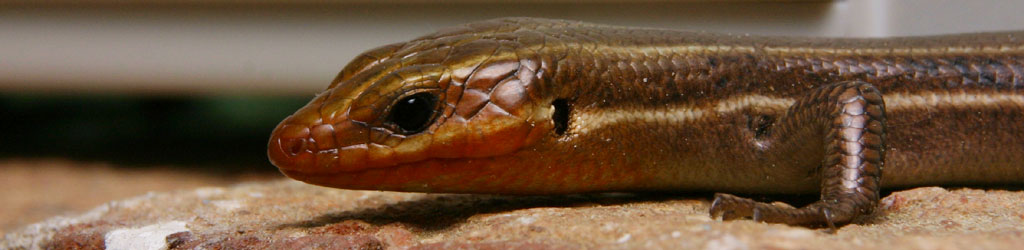
I was also lucky enough to find two of my good buddies, American five-lined skinks (Eumeces fasciatus,) sometimes considered blue-tailed skinks for reasons that will become obvious. But this is the issue with common names, since it is shared with at least two species in North America and one in Australia, and I think one in Africa – that’s part of the reason I always try to give the scientific names, which required a bit of web-fu to provide those flower names up top. Many different reptiles have the ability to quickly detach their tails if danger threatens, and since the tail is often brightly-colored and reflexively thrashes about, it draws the attention of the predator while the reptile scampers to safety. And like many species that can lose limbs to escape predation, the tails can grow back relatively quickly, within a few months in this case. I managed not to provoke this behavior while capturing this one, possibly because I had unearthed it under a plastic ground cover and it was still sluggish, not yet ready for the warmer seasons. This allowed me to photograph it in my palm, giving some sense of scale.

WinterSkink
This is a juvenile; the adults will lose most of the tail coloration (though not the ability to drop it) and will start displaying the sexual variation in coloring. Thus, the same species is often considered a red-headed skink once it’s larger, if it’s a male. And then, there is an overlap in range with the southeastern five-lined skink (Eumeces inexpectatus) which is almost identical, so actually knowing just what the hell you’ve captured is tricky. If someone corrects me, I’ll go with their expertise, which is the cue for anyone to come along and just start messing with my head.

Actually, it would appear that I’m celebrating Linnaeus day too…

Marvel of design

Walkabout podcast – Marvel of design

I delayed this one slightly to serve as my Darwin Day post ;-)

I freely admit that there are some really stunning things to be found in nature – in fact, that’s what many of my ‘Too Cool‘ posts are intended to highlight. Predator/prey relationships, highly specific adaptations, remarkable methods of camouflage – they’re all fascinating and awe-inspiring examples of the natural world’s properties. And, it’s not particularly hard to find someone who will point to these as evidence of a supernatural design, interactions and traits too precise to have arisen at random – this occurs quite frequently, in fact. Naturally (a ha ha) I see some problems with this perspective.

First of all, the idea that it’s ‘random’ is more than a little misleading, a misunderstanding of natural selection the stems from both unfamiliarity and intentional fudging. While genetic variations and mutations are largely random, there’s the ‘selection’ half that’s, really, a very simple algorithm: if it improves the organism’s chances of survival or reproduction, it stands a better chance of being passed to offspring. Add to this the converse – that something detrimental to survival/reproduction is much less likely to pass along – and you have a simple system that produces beneficial changes in species over time. Many people no longer even try to argue against such a selection process, since it’s blindingly obvious how it would work, but instead assert that this would take far too long to produce the drastic changes that had to have occurred. The very same people also ask how come we’ve never seen a new species arise (in the 150 years we’ve even known about this process,) so it’s rather clear that making sense isn’t high on their list of priorities.

Yet there are bigger issues with the ‘design’ aspect than all that. To maintain this perspective of design, one has to possess the same kind of blind spot that fosters a belief in psychic powers: the complete dismissal of every last example that doesn’t support the idea. It’s easy to claim that flowers which mimic female bees to attract pollinators are truly remarkable, but what of the numerous viruses that have sparked pandemics? Moths that avoid being eaten by looking exactly like hummingbirds are almost unbelievable, but what about spiders that fail to fend off the paralyzing stings of wasps, and play host to wasp larvae that eat them alive from within? Perhaps that’s a remarkable design from the wasps’ standpoint, not so much from the spiders’. And let’s not ignore the thousands of species that have gone extinct, absolutely begging the question of what they were designed to do. In fact, the ubiquitous examples of competition, of scarce resources, even of parasites and cancers, really makes the entire idea of design distinctly asinine. Let’s be serious: the first thing anyone would do in designing something is define the goals and ensure sufficient resources. And to be blunt, what possible use is even the ability to change in the first place, much less change for the worst?

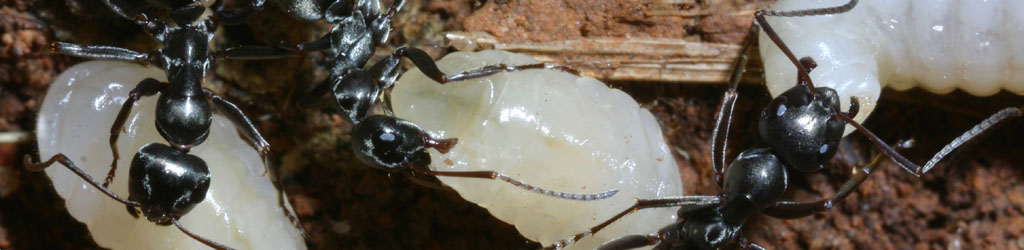
The typical answer to such questions is that there is a huge master plan that we cannot fathom. It’s hard not to see this as being opportunistically two-faced, since it was the very idea that we could see the design that causes people to trumpet this design; immediately claiming that it’s a hidden design demonstrates that there’s only one conclusion that’s acceptable, and logic be damned.

Buried within all of this is an even more revealing facet. We’re in awe of flies that mimic spiders because we don’t see it everyday; nature is not completely full of such things. If it were it’d hardly be remarkable, would it? It’s these rare exceptions that capture our attention and seem so unlikely, because most of what we see is rather haphazard. We’re well aware of the damage to ecosystems, the ripple effects of introduced species, and unchecked depredation precisely because they can occur so easily – things can get out of whack without much effort at all. How hard would it be to design stability, or correcting mechanisms? If there are more people in the world hunting bison or dodos, why don’t their populations keep pace? Why are there even more people in the world? And who the hell thought allergies were a great idea?

So many aspects of nature are remarkable only because they’ve come from such simple mechanisms as natural selection. It’s like saying that your child reads at a seventh-grade level; this is something to be proud of if the child is five, not so much if they’re twenty-five. The various traits of organisms are fascinating when viewed from the perspective that they originated from very slight advantages provided by very slight variations and perpetuated by very slight increases in reproductive success – this is, in fact, a perspective that far too many people fail to appreciate. Given a perspective that everything was carefully designed to be this way, we must wonder what kind of a bumbling fool was at work, and what possible outcome was intended. Thousands of people a year die from choking, solely and entirely because the food path crosses over the air path, a plumbing error that we would never accept in our industrial world. Ruminants, the animal class that includes cattle, have to have multiple stomachs to extract sustenance from the horribly inefficient source of grasses. We have seasonal changes across the entire planet because the damn axis is tilted! It’s fascinating how so many species have developed to cope with the huge amount of adversities available, but designed? Please.

On composition, part 16: Focal length

FocalLength

Focal length. Some people consider it the “zoom” of a camera. It’s expressed, though not really explained, by the numbers on the lens that say “18-55mm” or some such. Essentially, it determines how close the subject appears, the magnification or lack thereof. There are, naturally, the obvious aspects of using focal length in composition – “short for scenics, long for telephoto” – but there’s much more that can be used to create the images you want.

Only slightly less obvious is the cropping aspect, allowing the photographer to select how much of the frame their subject, and its setting, will take up. In the efforts to simplify the image, or to select just the setting that communicates a particular idea, focal length becomes very important. It’s too easy to include too much, distracting the viewer, or too little, and provide inadequate information for context or locale, so changing the focal length allows for the best control of these.

DOFDiagramHowever, there are specific properties of focal lengths that can be exploited as well. The first of which is depth-of-field. DOF automatically becomes greater at shorter focal lengths, assisting in the pursuit of scenic images – and DOF also reduces for longer focal lengths. This means that it is easier to ‘isolate’ your subject by having it much sharper than the background if you use a longer focal length; the blurry background fails to grab the viewers attention and becomes inconsequential. But be aware that DOF is shorter the closer you focus, for any given focal length. In the illustration here, depth-of-field at f16 is indicated in blue for given focus points A and B, for a long focal length such as 250mm (top) and a short focal length such as 24mm (bottom).

So when focused at point A, DOF is relatively short, but at B it might include everything behind the focal point, all the way to ‘infinity’ (this is called hyperfocal distance.) Notice that DOF is different for the different focal lengths; also notice that it extends further behind the focal point than it does in front of it – this it typical.

And then there’s the sneaky trick: you don’t have to use a long focal length solely for distant subjects. Since DOF is shorter both with a long focal length and with closer focus, you can achieve a narrow DOF by using a telephoto lens, focused as close to the camera as possible. The focal length you use can determine how well DOF works for you. This is the reason why you might hear that focal lengths in the range of 80-120mm are good for portraiture; this allows DOF to cover a person’s face, nose to ears, but not much further, letting the background go soft.

FieldCurvatureThere are other effects as well. Short focal lengths, often referred to as wide-angle lenses, typically introduce a certain level of barrel or spherical distortion, as if the image is projected onto the surface of a sphere. Aspherical lenses correct for this to some extent, but the effect is usually still visible, and this can be made worse by straight lines near the edge of the frame, or that are not parallel to the image plane (for convenience, just consider this the camera back.) Thus, if you tilt the camera back to capture a tall building, the building may lean or even bow in the resulting image. This can be used to accentuate height, if desired, but it can also give your images an unrealistic distortion. Most especially, this can turn up when you’re attempting a wide panoramic image, and efforts should be made to keep the horizon centered in the image to avoid producing a bowed horizon. You can always crop the image more usefully later.

This leads to two quick tips. The first is, shooting frames a little wider than what you envision the final print to be will allow for some wiggle room – it’s easy to crop down, quite a bit harder to add to the image afterwards. Shoot as many frames, in different focal lengths, as needed to ensure you have what you need.

Also, if you’re considering doing a ‘stitched’ panoramic image, putting together several images in a line to make a really wide vista, you probably do not want to use your shortest focal length (widest angle,) because the lens distortion will work against you and the edges will never match up correctly. Instead, use a focal length as close to ‘normal’ perspective as possible, which typically means roughly 32mm for APS-C digital sensors (1.5 or 1.6 ‘crop,’) and 50mm for full-frame digital or film. It will mean more frames, especially when I tell you to overlap the frames by 25-30% – this provides that wiggle room in choosing where to overlap and helps to mask distortion, which gets worse towards the edges of the frame.

BodieGrassesThen there’s a little something called forced perspective. The distance of the subject from the camera determines how big it will appear against the background, and this remains the same regardless of the focal length used. While the sun and the moon are quite small in the sky, able to be covered with your thumb at arm’s length, the focal length determines how big they will appear in the frame. Something like a bird or a beachcomber can be distant enough to be quite small – as small as the setting sun, perhaps – and a very long focal length can make them both loom large in the frame (even more than this – remember that you can always crop to make such things take up even more of the frame, but the foreground subject has to be the right distance to give the perspective you desire.) Closely coupled to perspective is your own shooting position, so don’t just stand there – crouch, stand on tiptoe, climb on or under something. Do what it takes to make the most of the different effects of focal length.

Also, the distortion of a wide-angle lens can make small, close subjects become accentuated and very dramatic in the frame, something you can often accomplish easily because short focal lengths can usually focus very close. Also visible in that image is the apparent difference in viewing angle between the bottom and top of the image; you seem to be looking downward at the bottom, but straight out at the horizon at the top – and this really is the case, the same distortion mentioned earlier, and this can be used to good effect to make the image draw the viewer in (it can also be seen in the first image for this post.) Sometimes it helps to consider that a wide-angle lens will produce an image that can ‘curve around’ the viewer. It’s also not hard to imagine why a short focal length is very bad for portraiture.

Something to be aware of, when switching (or zooming) focal lengths, is that the exposure may change because more or less bright sky will be captured, or the background isn’t consistent between a narrow and wide viewing angle. Watch the automatic settings that the camera produces as you switch, and override them if you feel this is necessary.

Another quick tip: longer focal lengths often do not focus very close at all, limiting their use for close subjects, but a simple extension tube can help overcome this. At the same time, it will further shorten depth-of-field, and will eradicate focusing at ‘infinity’ entirely – the longer the extension tube, the more long-distance focus gets cut off.

I never push anyone to obtain more equipment, but if you’re getting the impression that a good range of focal lengths provides for the greatest photo opportunities, you’re not mistaken. And to make the most of it, you should aim for the fastest lenses you can afford (meaning those with the largest maximum f-stop, or smallest f-number, like 2.8 or 4) – these provide even more flexibility in using depth-of-field to your advantage, as well as improving autofocus and giving better low-light performance. I’ll be the first to admit these get expensive, often ridiculously so, and you have to be your own judge about cost versus usefulness; if you’ve only shot a few hundred frames in the past year, spending a lot on lenses may not be justifiable. First, make sure you’re using them to their fullest potential, and remember that it’s your own creativity that produces the image, so exercise that foremost.

Stupidly proud of myself

Lights-smallI mentioned before, I take pride in being able to retrace my steps, even on trips long ago where I’ve never been before or since. But back when I added the Google Earth placemarks to many of the images in the photo gallery, one in particular was a little tricky: the time exposure on the side of the highway.

It was the night of a total lunar eclipse, and after totality had ended, I went out looking for some other night images to capture. My first time-exposure experiment to capture moving traffic came out far better than anticipated, introducing to me the idea that a full moon (quite bright, now that the Earth was out of the way) was sufficient to light up the landscape given enough time. I never took any notes, so I’ve had to piece it all together, but I’m fairly certain this was the eclipse of August 16-17, 1989 – the year, season, and time of eclipse seems right. And I had a rough memory of where I’d stopped alongside I-81, but had noted no landmarks other than what was captured in the image. I remembered the interstate being separated there, cut into a hillside which put the north- and south-bound lanes about 20 meters different in elevation, and that Syracuse was visible from my vantage though I was outside the city itself. I took my best guess on the location where the tripod had sat and created the placemark.

Just this evening, I was playing around again in Google Earth – this time, the Google Street View option was available, and I started cruising up I-81 to try and locate the position more accurately. Eventually, I pinned it down pretty tightly, based on the two yellow diamond signs visible in the image, and loaded the placemark with the intention of correcting it for this new perspective.

I didn’t have to – it was already right smack where I’d confirmed the shooting position when I’d added the placemarks in 2011. Feel free to check it yourself by clicking here to load the placemark (if you have Google Earth installed.) Not only that, but I think I’ve located just where we received the best directions I’ve ever been given in my life – I’ll have to check with my friend (and it bears noting that it was her camera I borrowed for this shot.)

It’s trivial, I know, but I love it when I can nail something this closely after 23 years. Age hasn’t addled the ol’ brain yet…

Yeah, yeah, that’s an opening for a cheap shot, I know…

Odd memories, part nine

It’s funny – as a species, we seem to have a propensity for discovery, to explore uncharted areas in the hope/belief that something magical awaits just over the horizon. It’s probably responsible for most of our explorations across the planet. There is definitely a cool feeling when you’re traveling, and you see a new and interesting place awaiting you on your path; while I have no idea how many people have actually experienced this, here are two of my examples.

While touring Florida over a decade ago, doing a photography vacation, I had an open itinerary and decided each day, sometimes by the hour, where I was going to head next. I have to admit that I have never had the faintest interest in going into Miami, though twice I had the displeasure of doing so anyway, so I was making the valiant attempt to bypass the city on the outskirts, something that the civic planners obviously felt was not in their best interests; there are no ‘through’ routes past Miami when coming up from the Keys, since all of them run a short ways north before turning directly east into the city. In order to avoid the hideous and overcrowded, quintessential urban blight of southeast Florida, you must keep exiting from the road that you are on before it draws you in, and get on another bypass lane, usually at the cost of a toll. After navigating my way through all of my small bills and pocket change, I had finally arrived with relief at the northern limits of the city sprawl, seeking the junction of Route 27 which would bear me northwest to Lake Okeechobee and, I hoped, something unconcretelike to photograph.

This turned out to be harder than imagined, since the exit looped around in a way that destroyed my bearings, and the signage that would lead me to Rt 27 was either inadequate or nonexistent, on purpose I suspect. While expecting to reach a junction with my intended route within a few kilometers, I ended up wasting an hour going into, and back out of, North Miami, not what people imagine when they think of Florida vacations, unless they think of Detroit. You know, motels with large wooden walls around the parking lots so no one can see your car while you park there for an hour or so? Yeah. When I finally reached Rt 27, I was tired and frustrated and eager to get to the lake.

Looking at it on a map now, the distance looks far less than what it seemed at the time, part of the subjectivity of memory I suppose. Rt 27 goes through Florida’s sugarcane industry, running very straight, flat, and featureless for long distances, something I was totally unfamiliar with in my travels well-removed from the western states. In other words, it’s boring, unrelieved by anything to look at, anyplace to stop, and any cars that would permit announcing their states of origin to oneself in a gibbering manner. I think a fox crossed the road once, but that was it. To make matters worse, darkness had settled in with triumph, broken only by my headlights and not the least sign of civilization. Yes, I know that was what I had just been decrying, but when you’re fatigued, a long straight dark road with no place to stop is not the best of choices. Not to mention that it’s where the extraterrestrials tend to hang out.

Eventually, when my estimates had told me I should be coming up on the settlements at the edge of Lake Okeechobee soon, I spied lights in the distance that were not headlights of a Driving Dutchman. Yes! Knowing that I would soon locate a place to bed down for the night, I watched them approach through, seriously, the longest distance I have ever seen something approach except for a storm. It took much longer than anticipated to get to this cluster of lights spelling a large town, which I had apparently spotted from fifteen klicks or so away. As I got closer, it seemed to be surprisingly compact, and also veering off to the left a bit. Quite a bit. I’m hoping you can imagine my feelings as, with the lights now almost three kilometers directly off to the west, I passed the sign which announced the entrance to the Okeelanta sugar processing plant. Visibly ahead on my route: nothing, yet again. That was a dirty trick, Florida.

A few years later, I was making an unplanned move to stay with a friend in Texas for a while, doing a hard drive from Atlanta to Houston in one go. I had just basic maps and had looked at them for only the correct interstates to be on, not bothering to calculate driving times between cities, for instance. Since I was now on I-10 and that led directly into Houston, I had little to do but keep driving.

In Louisiana, I had traversed a long section of elevated highway over stereotypical bayou country, where the road had to be raised on seven-meter columns because the gators could climb anything shorter – we’re not talking Starbucks and Apple Store country, here. Later on, after night had arrived, I reached a complicated cluster of interchanges and bridges where my path crossed a major river, and climbed a high suspension bridge that vaulted over big ship traffic. At the top, appearing before me from below as I crested the bridge, lay a towering Oz of glittering city lights, a metropolis of unexpected height and complexity. It was the kind of city that is imagined by artists and film directors, the sparkling lights on impressive buildings, rather than the overcrowding of industry that makes up most cities. I descended the bridge with this compelling sight awaiting me, a smalltown girl seeking her dreams in show business – well, okay, not quite, but you get the idea. It was exactly that kind of effect.

Suspicion set in when I realized that all of the lights were the same color, that curious amber of sodium lamps, and no lit windows of taller buildings were actually visible. It wasn’t long before this promising city revealed itself as a vast and surprisingly tall petroleum refining area, industrial development at its ugliest – I must have had the wind at my back. My fairy-tale experience of arrival kind of petered out at that point. A little tip, Louisiana Tourist Commission: run the interstates far from areas like that.

It has occasionally happened the other way around, too. Seeking out recommended spots for bird photography, I had ventured into Delray Beach, Florida and was driving through a heavily developed area liberally strewn with gated communities – it does make me wonder why anyone might move into a city and then sequester themselves away from everyone else, but hey. Locating my destination, I stopped in a parking lot typical of a strip plaza, with the discount shoe stores and Little Caesar’s Pizza replaced by a palm line. Quite often, decent nature photography spots have completely unfinished parking areas when they have any at all, so I was having some misgivings at this point – one does not typically seek high-traffic areas. I went up the wooden steps and crossed a boardwalk through the screening trees, and then the sound hit me.

WakGatorOn the other side of the trees was a large wetlands area, and the cacophony of bird calls would have made a jungle movie Foley artist weep tears of joy. Nestled in the suburbs of West Palm Beach and Fort Lauderdale, Wakodahatchee Wetlands has to be heard to be believed, and I deeply regretted not bringing any recording equipment. While photography there requires a tolerance of speed walkers (see ‘gated communities’ above,) the birds, and a few other species, have adapted to their roles as models and present plenty of photo ops. While the most productive areas for nature photography tend towards undeveloped areas (fancy that,) this is a location that is often right on your route if you’re touring Florida, so easy enough to stop at.

I also had misgivings while on the other side of the state. When your directions to a “great area” include turning off a major mid-city route into the entrance to the public works facility, you begin to think someone is either pulling your leg or hasn’t traveled much. You park by the sign and wander down the path (since then upgraded to a sidewalk) and see the island in the middle of a moderately-sized pond. And more wild birds in one location than you are likely to ever see anyplace else in the country. The Venice Audubon Society’s Rookery in Venice, Florida represents nesting conditions that you might think wouldn’t be so hard for birds to find farther from people, but the incredibly crowded conditions there belie that. If you’ve ever wanted to see herons and egrets in every stage of nesting and child-rearing at once, this is the place to go.

Anhingas are a species of waterfowl that are awkwardly named put most others to shame. Ducks, for instance, do not swim – they float on the surface and thrash about like a toddler with a pair of pool noodles. Anhingas occasionally surface for air. My first encounter with the species occurred at the Rookery, as the head of one popped from the water directly in front of me in a manner wholly reminiscent of the trash compactor monster from Star Wars, and just as brief. Later the same day I observed one glide in for a water landing and skid to a halt in a delicate wake – then vanish entirely, despite our distance from Bermuda. Time spent floating on the surface is just wasted, seems to be the attitude.

AnhingaPair2Confession here: I have a special connection with fire ants. Mind you, it is not a amiable one; I will not garner my own television show as some kind of Whisperer, though late night cable might pick me up as The Fire Ant Filthy Blasphemer. If they’re around, I will find them, usually by standing in the ant hill in sandals. And it was on the shore of the pond in Venice when I did this yet again. I had sideskipped away and removed my sandals, beating them mercilessly on the ground to dislodge the remaining ants and take out my frustration over the cluster of newly-arising burning welts, in a pointless yet satisfying manner, when I glanced up to see an anhinga sailing low over the water directly towards me at eye level. Nobody was around at the time to witness this, which is a shame, because this tableau deserves to be imagined at least. Me, kneeling on the ground in mid-invective with one sandal raised threateningly over my head, staring with concern at the rapid approach of a large bird with a beak like Macbeth’s dagger aimed at my skull. I had enough time to wonder if this was some kind of aggressive or protective display by a parent, enraged by my uncouth behavior, and if I was going to have a memorable encounter fending off a bird with totally inadequate footwear (spiked heels would have been at least sporting, but I tend not to wear them in public,) when the anhinga flared upwards into a stall and alighted in the tree directly over my head, immediately alongside another anhinga only two meters above whom I had missed entirely. They then carried on a loving yet croaking conversation while presenting the ludicrous spectacle of birds with webbed feet perching on a branch.

I cannot mention fire ants without relating another story. Riding with friends one night soon after a vicious thunderstorm (this is, again, in Florida,) there was a sudden plunk and a treefrog of immense proportions appeared suddenly on the windshield. They pulled over onto the grass immediately, and I got out to attempt to capture the frog for photographs, and because staying there while we got on the thoroughfare was probably not a wise move on the frog’s part. The amphibian abandoned its perch and hopped under the car, and I flopped down on my belly to try and retrieve it. In four seconds I had determined that it was out of reach, and also that my face and chest had suddenly produced an itching, burning sensation that I was all too familiar with. Just in case you were contemplating this experience, I will tell you that putting your face almost directly into a fire ant mound engenders no hidden charms. My friends eventually understood that I was not displaying a case of Sudden Onset Tourette’s Syndrome, but had an adequate reason, if not necessarily possessing adequate reason…

Since moving back to North Carolina I have been mercifully free of fire ant welts, but I suspect that they miss me and are working north in a dragnet. The last trip to Georgia clued me in on my remaining freedom, since despite my caution while walking through my friend’s yard, I still attracted the advance column – this is the only explanation, because no mound or colony was visible in the slightest. Their ambassadorial overtures resulted in the entire top of one toe turning into a water blister and preventing me from appearing in any kind of footwear commercials for weeks, and only adding to the abuse my foot took on that trip. I’m not joking; if you’re planning any research on fire ants, get in touch, because I will find them for you, and I might as well get paid for my skills. I am very understanding about the place of all species on this planet, but those little fuckers need to die and rot in hell.

Bridges peak in the middle

There is a common confusion among humans between doing something that is fun and doing something that it useful. Put as directly as that, it seems silly – “I can tell the difference between fixing my flat tire and putting plastic wrap across the toilet seat” – but it’s a bit more subtle than all that. As my example, I’m going to use a current internet “fad” (which may be gone by the time I post): Randall Munroe’s “Up-goer Five” exercise.

In short, Randall Munroe of xkcd wrote about how the Saturn Five rocket boosters worked using only the thousand most common words in the English language. This led Theo Sanderson (among others, I believe) to make a text editor that would flag any words that did not fit into this criteria, which led to others describing their careers, research, or simply common scientific principles in the same manner. It becomes clear, very quickly, that a thousand words (or ten-hundred if you prefer, since “thousand” doesn’t even make the cut) is remarkably limiting.

Now, some things to consider. The thousand-word cutoff is arbitrary, a nice round number yet not representative of much, since just about anyone’s vocabulary surpasses this number before they hit kindergarten. So reducing any explanation down to this level doesn’t really have a target audience. Second, in order to do this, one must simplify the subject described to the point where it has little, if any, meaning whatsoever. Some of them may seem descriptive, provided we already know what is being described, but presented to anyone who does not (and needs that thousand-word simplification to begin with,) they accomplish, well, probably not a damn thing. Take Jaime Sterns’ entry:

I use very strong light of different colors to study how the smallest pieces of stuff stick together and change one another. My focus right now is to understand new kinds of stuff that might be used to make a space car go when it’s in space, so we can make better, safer, space-car-go-stuff for less money.

Or maybe Jennifer Wang’s:

In my job I take care of flies and try to make them different by putting something into flies that are not babies yet to make the babies different from their parents. I also watch boy flies try to do it with girl flies to see if they really like to do it or they like boys flies more. This happens when they can’t smell something the girl flies have that makes them want to do it with girl flies or something the boy flies have that makes them not want to do it with boy flies.

Ask yourself in what way these descriptions can help anyone understand what it is the writer is actually doing. While you’re at it, you can edit your own block of text to field the inevitable questions of why colored light shows how things stick together, and precisely what “do it with” means to boy and girl flies…

Am I missing the point? Is this all supposed to be just fun? Perhaps, though it’s a lot of trouble to go through to produce something just for giggles. The moment anyone attempts to justify these efforts as something more than amusing, however, the problems arise. There is already a well known, and significant, problem in science journalism where research and new discoveries are presented in over-simplified, misleading, and often wildly inaccurate manners. I feel safe in saying most people in the US think “cancer” is a specific form of illness, rather than a very broad term like “bacteria” – otherwise we wouldn’t see so many mentions of “the search for a cure for cancer.” Dumbing science down rarely leads to greater understanding, because few fields of science are able to be described in so simple a manner – that’s kind of why PhDs take more than an afternoon seminar to obtain.

Is there a real need to reach a greater audience in scientific topics? Absolutely. Does this audience need something limited to the most common words in English? Absolutely not – no one does, really. While many topics will benefit from the removal of ‘jargon’ and words that are very specific to their field, there is a difference between climbing down to an audience, and reaching down to bring them up to your own level. In fact, it’s even misleading to use “up” and “down” in this manner, and this might even be part of the problem – the goal is translation, using a language that the audience understands. And online, there’s little reason to remove many of the specific terms at all, since it’s remarkably easy to link sources that provide greater explanation as needed, and those who have no need for those links do not have to wade through a word-salad targeted at elementary-school levels.

Moreover, this approach is quite likely to breed the highest level of understanding. Those interested in the subject can easily pursue it in greater detail, and let’s be real: you only need to hear the definition of any given term once. We have such words specifically to streamline communication, and everyone can benefit from the expansion of their vocabulary. Not to mention, they become more common the more we use them.

There is a final perspective to consider. Anyone involved in communicating science to an audience not conversant within the field needs to know how to reach them, which is a skill all its own – and they need to learn how to bridge this gap. It’s safe to say that no one will ever have to explain a DDOS attack to pre-schoolers, but knowing the different approaches to reach both high-school grads and the elderly can have distinct applications. Anyone that wants a fun exercise that may also lead someplace could be spending their time pursuing those goals, and accomplish more for it. Bridges are not intended for one-way traffic, and it’s even possible to meet someone in the middle.

The proper way

Sorry, this will be brief, and pointless. Courtesy of a post by Sean Carroll, I herewith present the proper way to order your favorite drink:

1. Ask for what you want.

2. Drink it.

You will note that I have excluded everything having to do with learning how anyone else does it, receiving instruction, and most especially long discussions about what effect some method produces. It’s your drink. You’re doing it for yourself. If you’re doing it to show off, then you have some serious psychological issues and should spend the time looking for a decent therapist rather than pretending to be sophisticated by, for fuck’s sake, discussing in what manner you fuck your brain cells over with alcohol. Because, seriously, no matter what the pageantry or ritual or pompous bullshit, that’s what it comes down to. You can’t handle reality and need to alter your perceptions.

I’ll take this opportunity (especially because doing a short post makes me itch) and address every one of the various proscriptions over proper grammar and usage with a simple reminder: language is about communication. It fails, not when some arbitrary rule isn’t followed, but only when someone is confused. It’s true, there are countless conventions that we use through force of habit, but there’s nothing against these changing through common acceptance. If you really care about the proper use of an ‘Oxford Comma,’ or that your sentence follows some ideal structure, you’ve got problems completely unrelated to communication. Do not be surprised when someone asks you how you can be that big an asshole with that tight a sphincter.

But, at least Superbowl is over. Now we only have to get through a few more weeks of discussing Superbowl commercials. You realize that someone invented a stupidity filter for internet connections long ago, but people thought their router had failed…

1 283 284 285 286 287 332