A conversation with The Girlfriend this evening reminded me of something I hadn’t brought to mind in a long time, so this is simply one of those stories from my past. I doubt that it serves to help explain why I’m the way I am, but I’ll let you be the judge of that.
In 1991, I had moved to North Carolina exactly one year before, which I can say easily because both this event and the move occurred on my birthday. I had, after a false start working for an idiotic local printer, begun working for the local humane society, which ran the animal shelter (see here for a related story.) Among many other services, the shelter performed emergency animal rescue work in the off hours, nights and weekends, which is where I actually started. I’m not sure what made me acquiesce to working on my birthday, but this was just one of several events which made me resolve never to do this again. It took a few more years to solidify this resolve, though.
At that time, I was working a full-time shift at the shelter and then going “on call” for rescue work, usually one night a week. We had the whole schmeer: a fully-equipped van, pager, and mobile phone – “mobile” meaning, in 1991, almost a carryon bag by today’s definitions, roughly seven pounds and stored in a case with shoulder strap. Virtually any animal call was our responsibility, within the entire county, so some nights were fairly busy. This particular evening, I had received a call about an injured raccoon on campus at the University of North Carolina at Chapel Hill, quite close to where I lived, and I headed out in the early evening downpour to see what the situation was.
The raccoon had decided to seek shelter in a tree, and I was directed to the right one by the caller, otherwise I would likely never have spotted it. I was unable to see how mobile the critter was, and thus gauge the extent of any injuries, so I gathered a likely collection of equipment and started climbing the tree – luckily, it was a longneedle pine of the type so prevalent around here, with plenty of branches to assist the ascent. But this was perhaps the easiest part of this task.
Raccoons, to fill in the uninitiated, are actually fairly dangerous wildlife to handle, close to the top of the list for species around here. They’re aggressive when threatened, afraid of very little, and pack a lot of agility and a mouthful of sharp teeth. Even the heavy leather welder’s gloves we used for animal handling were insufficient to protect one’s hands from a determined bite. Usually, we used a net to capture animals like this, deep and broad like the landing net that fishermen use, but heavier material. Climbing a tree, however, meant that this would only be in the way, and I’d unlikely get a decent sweep anyway. So I was heading up with only a set of gloves and a small cat carrier strapped to my belt. I was realistic enough not to imagine this was sufficient equipment for the task, but what was I going to do? The idea was to either quickly scruff the raccoon, grasping it by the loose skin on the back of the neck where it (probably) could not reach me, and bundle it into the carrier; or, if it was close to incapacitated, coax it backwards into the carrier itself. Neither one of these filled me with confidence.
It was still raining, and the sun had set so twilight was fading fast. I wear glasses, so it was only a minute before I was looking through a combination of distorting water droplets and fog – I’m far too nearsighted to remove the glasses and have a better go without them. It was still warm, which helped, but this doesn’t mean much when the water is running down your back and into your pants. I got close enough to the raccoon to see that it was only limping, able to scoot easily away from me in the tree, and not happy with my approach – trying to get it would have been next to impossible, very dangerous, and probably unwarranted from the nature of its injuries. Wildlife medical care is a little tricky, because you have to balance the help you can provide with the mental state of the animal while you provide this care. Virtually no animal is going to benefit from bandages – they’ll be torn off in minutes. While handling it, and during a captive convalescence, the animal is going to be highly stressed from proximity to people, which isn’t a good thing to induce. And maintaining a full round of even antibiotics would mean ten days of captivity, during which it may not even want to eat, which will not help matters any. With an animal displaying no open wounds, no bleeding, and merely a limp, it can actually do more harm trying to treat this than simply leaving it be. And that was my decision.
When I looked down to begin descending, however, I got the chance to reflect on choices a little more. I was already using my birthday evening to climb trees in the rain, and now I found I couldn’t see well enough in the fading light to spot the branches which I’d need to get down. The descent was a mixture of shaking my head madly to try and clear the glasses a little, and swinging my legs while letting myself down gingerly, until I chanced upon a foothold. Getting down took twice as long as climbing up, but I made it without having to spend the night. I was soaked, scratched from branches, and long overdue for dinner, much less any celebration. Doing animal rescue usually means a certain mindset, ignoring personal comfort and convenience in favor of helping animals in need, but this doesn’t mean you won’t look back and wonder what the hell you were thinking at that time.
It’s also a little disturbing that this was nineteen years ago. A lot has happened since then, but I’m betting I can still find that tree on campus.

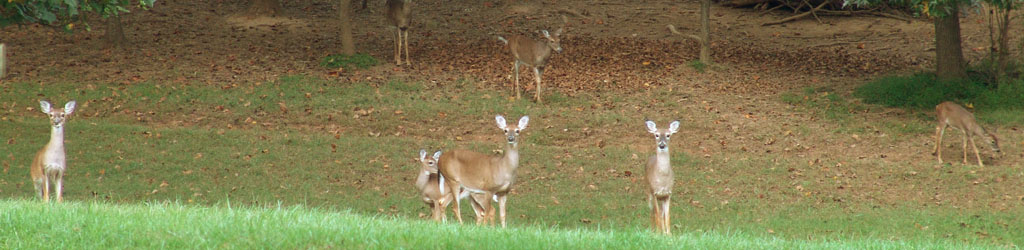


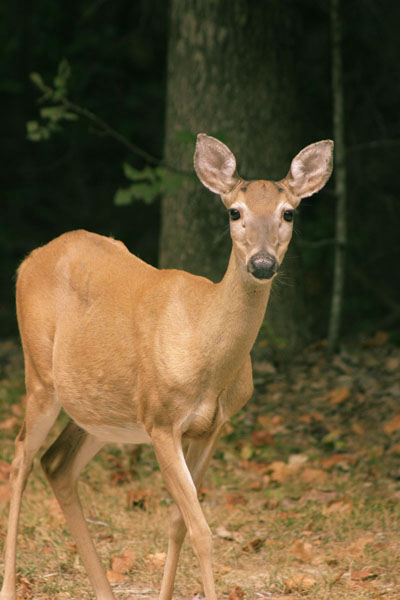 Living on the edge of the woods is a good thing. For some reason, a small herd of White-tailed Deer (Odocoileus virginianus) has taken to visiting roughly around 2:30 PM some days, and when the temperature is cool enough that I can leave the window open, I can hear them foraging. This one was a little surprised to see someone appear in the doorway so close by, but I wasn’t moving enough to spook her off, and she provided several nice portrait poses.
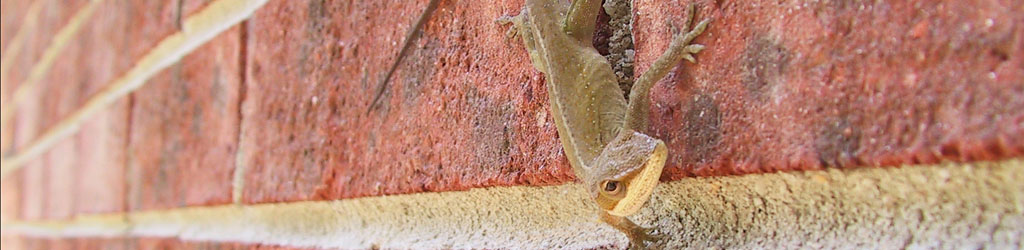
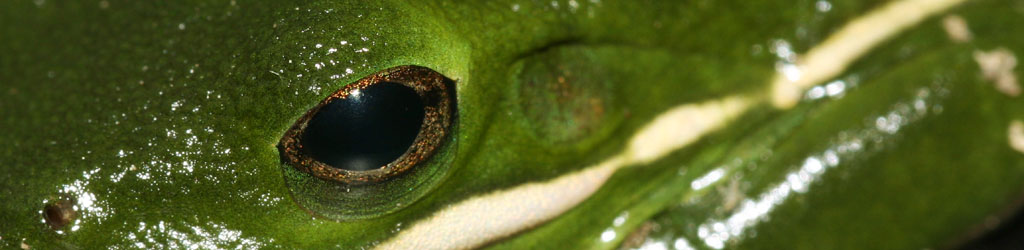
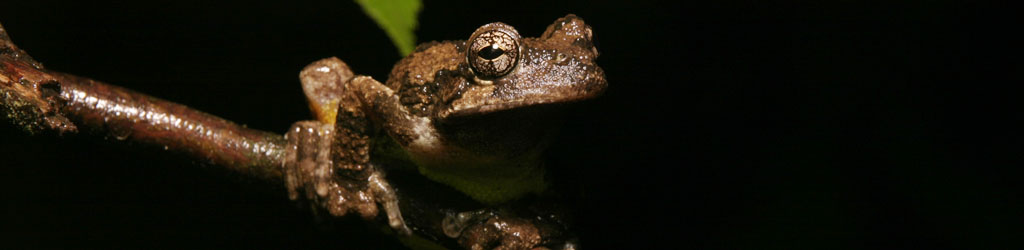
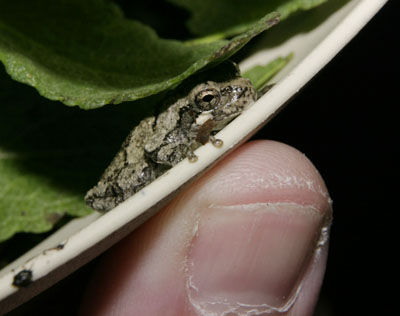 Treefrogs have distinctive toes, ending in a broad and moist pad that lets them cling to vertical surfaces effortlessly. In fact, it can be a little startling to see them jump against a wall and remain there instead of bouncing off. This trait lets them forage for food high in the tree canopies without needing claws, and also lets them scale rocks, leaves, and yes, even people that attempt to grab them. You can get an idea of the size of this specimen by my ugly thumb, included in this shot for scale. I normally see them much larger than this.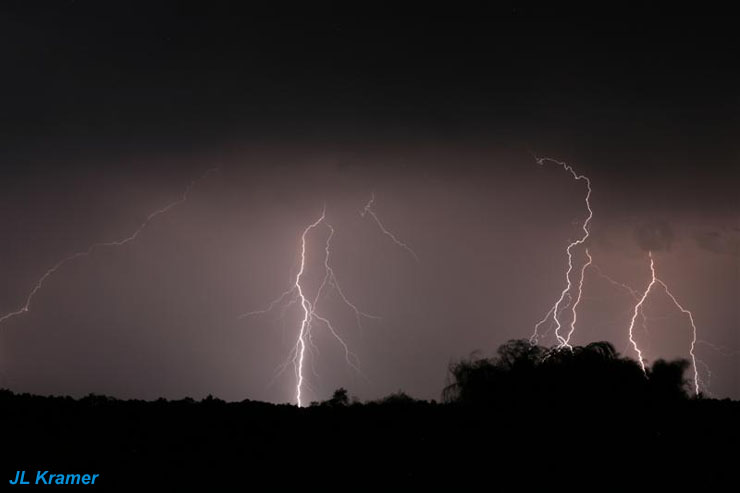
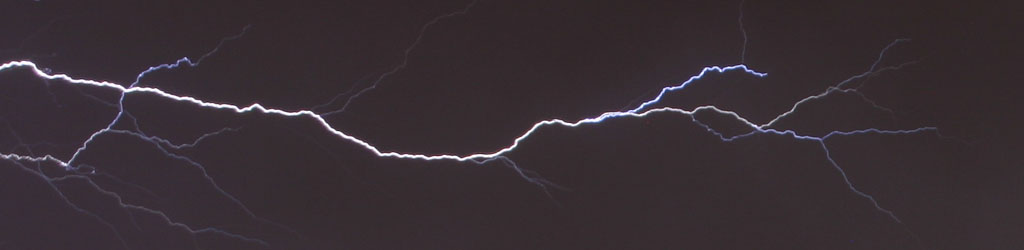
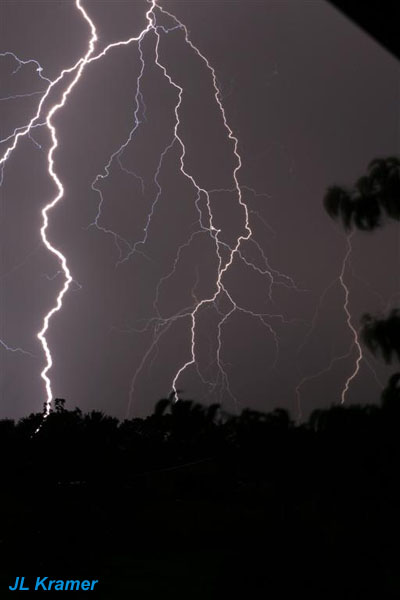 Yes, the midwestern states present some prime opportunities to get lightning photographs, due to their weather patterns and the relative flatness of the land, allowing for good views of approaching and receding storms. I expect, before too long, I’ll get to see (and mutter with jealousy over) some shots he’s gotten among some really sharp scenery or foreground interest. Lightning shots are great, but like everything, they work best if they’re situated among something else in the image that draws attention, creates a mood, or provides contrast. Many times, in order to achieve this, you need to provide some help – the storm itself will keep the skies too dark to provide any illumination of a foreground, so unless your complementary subject works well in silhouette, you need to provide some other light, or get your timing really bang on to catch the fading twilight at sunset to light up your frame, but not too much – remember, lightning usually takes long exposures while you wait for unpredictable bolts. An ideal balance is catching light immediately before sunset, peering in under the level of the storm clouds to throw some light on the ground, while the sky in your frame is darkened by the clouds themselves. Tricky, in many cases, since most storms in the US come from the west where your sunset would be. Such goes the planning of nature photography.
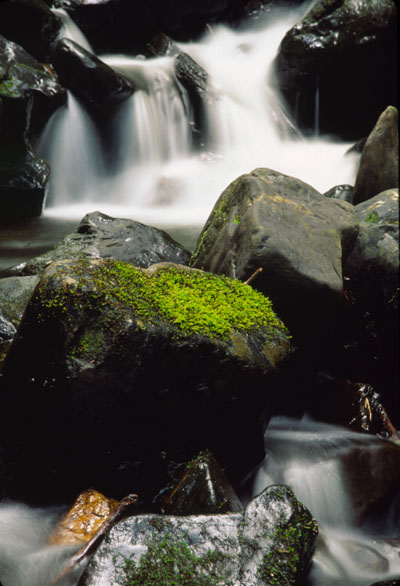 Usually, I can look at an image I take and tell pretty quickly whether it works or not, and so far my judgment seems to be, if anything, a little harsher than the average viewer. But this image has me stumped.