















































Walkabout podcast – Conformity
Secular humanism is the concept that, put simply, human beings can be good without god – no religious or scriptural moral guidelines are necessary, since we have the ability to recognize “good” and “bad” without cribsheets. We’re not abject idiots, in other words. Sam Harris makes this point in his current book, The Moral Landscape, and while I haven’t read it yet myself, I know that there have been several review questions raised about it – more anon. Personally, I am as much, if not more, a secular humanist than I am an atheist, but I use the latter term to identify myself more often because it’s understood better than secular humanism, and because “humanist” often seems to be a term to dodge the negative connotations of “atheist.”
I know this comes as a shock, but I’m not terribly concerned with people’s negative opinions. It is a human trait to have a sense of community, and as I remarked in the last “But How?” post, this often extends to people feeling uncomfortable with standing out in a crowd, atheists included. I’m a nonconformist myself, and try to make my decisions uninfluenced by what the majority thinks, instead concentrating on what works best. Yet I routinely avoid fads, even when I like them, because I don’t like the idea that someone might believe I’m following the herd. There is a definite contradiction in there, in that I’m worrying about the public opinion of perceiving that I’m worried about public opinion, and if that confuses you, welcome to the club, because it confuses me too ;-).
There’s a more interesting aspect to all of this than my own hypocrisy, believe it or not. When we maintain that we can determine what “good” and “bad” are without scriptural guidelines, we are beholden to demonstrate how this can be. This is where Sam Harris received a lot of criticism, because he maintained that this could even be done scientifically, rather than resorting to cultural norms, which admittedly can be widely variable, even among generations. The prime debating point was how someone might quantify “beneficial” in an objective way; Harris’ response at one point was to liken it to health, in that we can strive for good health among the populace without having a measurable definition of what “health” actually is. And I’m in agreement with this – while I’m fine with defining terms distinctly enough to avoid confusion, I know that numerous aspects of science, and life itself, defy concrete definitions; such things shouldn’t hamper us in functionality. The monitor you’re viewing this on, for instance, has no distinct boundary; the atoms that comprise it do not provide a surface, so no measurable boundary at that level, but rather form a cloud with an average distance from each other. So what? The much-larger level that we operate on works very well with that average “surface,” and indeed we can feel no small amount of pain when that non-surface contacts the non-surface of our foot at a decent velocity.
Defining “morality” is much the same. We can get tied up with creating rules that define allowable degrees of individual hardship to provide group benefit, and when and how these should apply, but we rarely, if ever, need such a thing. It usually isn’t too hard to determine what’s bad for someone, and we can generally agree that a group benefit outweighs an individual detriment. We cannot define when a child actually has the cognitive experience to determine their own fate as an “adult,” but can generate an average that functions for most of society. While we might create a test of adult-level decisions to pin this down more distinctly, implementing this would be time-consuming and complicated, far outweighing the benefit of a few individuals either gaining independent status before “legal” age, or being denied it even longer. It’s not a rigid scientific theory that we’re after, but functionality instead.
Yet, issues like “legal age” depend on the culture the child is raised within, to receive the necessary background in both social and thinking skills to cover most adult functions. This may vary significantly from culture to culture (I myself feel that any culture that treats alcohol as something “cool” rather than a mind-altering narcotic isn’t very qualified to judge.) This is where the idea of “conformity” comes in. Providing a benefit to the most people requires, to some extent anyway, the input of the people. Prohibition within this country was an abysmal failure – not because it was ill-conceived, but because the culture hadn’t bought into the damaging affects of alcohol. Their demand for this indulgence created a dramatic upsurge in violent crime that dwarfed the former alcohol-related injuries and deaths. The problem wasn’t the legalization (or not) of alcohol, it was the inability of the public to accept the obvious detriments against their own indulgences. Social morality not only needs to be defined by the culture it is within, it needs to be accepted by the same.
But relying on majority opinion and cultural standards has its own problems. In the US, we took a ridiculously long time to accept that women and different races should have the same rights as white men, partially because of scriptural influence, but also because of social inertia. Slowly, we are heading in a similar direction with same-sex rights, but against a backdrop of people justifying their homophobia with scriptural references to what is “proper” (blissfully unaware, of course, of their wholesale disregard of accompanying passages.) Homosexuality, as a moment of exercising warm brain cells will demonstrate, offers no social detriment, no negative impact on lives, rights, freedoms, or anything else. It’s not infectious; it doesn’t harm children (that’s pedophilia, a different concept practiced by catholic priests.) We have no reason whatsoever to be prejudiced against it.
See what I did there? I made a short, distinct case against cultural influence, showing that there was no reason to have it. It wasn’t hard – reason rarely is, but it needs to be practiced as true reason, and not abject justification of emotional influences. If you want to see it in a quantified way, you can compare the benefits of a homophobic society (let me know if you find any) to the detriments (denial of rights and privileges, ostracism of individuals, creation of judgmental behavior, reduction in adoption homes for needy children, etc.) For the exact same reason that we ignore the whole “sacrificing of animals” portions of scripture (e.g., it’s stupid,) we can ignore the homophobic portions as well.
That’s how secular humanism works. It works in another way too, when one finds oneself, and most especially their religion, to be among the minority within a country, and all of a sudden without the influence of numbers. Scripture can be considered by many to mean absolutely nothing, especially in competition with other scripture, and in such cases feeling “right” isn’t really enough anymore. Authority, even divine authority, is only effective as long as it’s respected. If the only way to determine what defines “good” and “right” is the arbitrary selection of historic writing, it’s hard to make a case against someone else doing the same. The things that define value to society should probably have higher standards than that, such as something that can be argued rationally.
Yet we run into an apparent contradiction here. Morals, laws, rights, and such all entail how we deal with others – the function not of the individual, even if that’s how the laws might apply, but of the individual’s interactions with the community. They require thinking of not of what is best for someone, but what is best for society, or even humans overall (and in some cases, like animal cruelty laws, what’s best for other species as well.) However, it is easy to see how this can be interpreted as yielding to the majority, or that a “democratic vote” should determine what works for the greatest number of people. This definition leaves a little to be desired. We also run into the law of superlatives, where people, desiring there to be no ambiguity or hard thinking required, try to determine what is “best” or, as we see in Sam Harris’ critics, distinct definitions and measurable quantities. This isn’t necessary in the slightest, though – all we really need to determine is what’s “better.” If we can compare two options and figure out one is an improvement over the other, should we need to stall in order to find an unbeatable alternative?
 As a species, we already have instincts towards sympathy/empathy, avoiding unnecessary suffering, and even altruism. We don’t need something to goad us in these directions, we simply need some guidelines towards their applications. “Morality” is already an accepted, desired concept. But we also have instincts for competition, protecting our resources and most especially the assets that we’ve worked to obtain, and for very good reasons. It’s not hard to find these in conflict at any given time. The problem lies in that these are instincts, evolved into us because they provided some benefit, but not specific enough to be applied unquestionably to every situation we encounter. On the biological level, we get a surge of endorphins when certain stimuli occur, and we evolved these because, on average, they provided a benefit for the species. But we rarely recognize that these are simple processes, and that what we think is a good idea might be only because of a positive reinforcement from undiscerning glands. Feeding the homeless can be seen as sympathetic and a moral cause for society as a whole, or as being asked to part with money or food that we worked hard to obtain and is not available to those that did not. Either one is instinctual; it all depends on which instinct we feel applies more.
Or, of course, we can recognize the rather simplistic mechanisms of sympathy and competition as something that helps, but needs a bit more guidance than glands provide, and bring out the big guns: rational thought. We can then ask whether someone falling on hard times or catching bad luck with their health deserves to be separated from society and allowed to suffer, or alternately whether a contribution will be used towards an addiction rather than needed sustenance. Obviously, this cannot apply to every situation, but needs to be decided on an individual basis, and thus easy rules cannot be used. However, exercising the brain for a moment or three doesn’t exactly take beaucoup calories or induce a sweat (in most people anyway,) so this shouldn’t be considered difficult in the slightest. All that is necessary is recognizing that simple answers are only for simple people.
Listing the pros and cons of an argument or choice isn’t difficult – there’s an assumption among humans that anyone with a firm decision has already done this (that’s why they have a firm standpoint, right?) In reality, this is often not the case, and what we’re actually hearing from is a self-indulgent opinion, occasionally buttressed by cherry-picked facts. I think this describes 98% of all voter decisions. Decision-making should always involve the pros and cons, and as many of them as can be determined – not just the ones that reinforce our original standpoint. I actually heard someone arguing against same-sex marriage from a tax disadvantage – this is not someone who is expending any effort in their decisions. It wasn’t clear whether they had actually fooled themself, or simply thought it would be sufficient for others; either way it’s disturbing.
Moreover, we need to recognize that we are a cooperative species, and that building communities takes a higher precedence than building walls. None of us are, for instance, going to set our own bones. Think you feel qualified? Show me you can construct a x-ray camera. None of us are going to grow all of our own food. None of us are going to defend our property against all contestants. Despite the apparent attitude of major corporations, we really do need each other. Again, this isn’t a rule to be applied so we can leave the brain in a drawer – some people, such as con artists, have their own interests in mind and should not be accommodated in the interests of “community.” Then again, thwarting their schemes actually is a community interest.
There is a lot of emphasis right now, at least here in the states, on corporate-raider thinking, the idea that making a living is a competition – this is occasionally referred to as “social darwinism,” the concept that our success is measured in how much money we’re making or the power we can wield. It doesn’t bear any relation to the Theory of Natural Selection, and in the long run it produces exactly the situation we see far too frequently: businesses that sacrifice stability for short-term gains, which crash spectacularly when this fails to pan out. As pointed out above, competition cannot take precedence over cooperation, and even the most cutthroat organizations require support from a community or they fail. But it is up to us, the consumer, the citizen, the people that actually make the community, to restore the emphasis on people overall, rather than individualized factions dueling with one another.
Would this work for human beings as a whole? Can we apply moral guidelines to every culture and society on the planet? There isn’t any particular reason why not, but there is a separation between the concept and the implementation – as mentioned above, cultures are slow to change, and are even influenced by an unnecessary deferral to tradition. There may be additional influences, for instance economic and climatological – in the areas of the world where food is scarce, there should be more emphasis on seeing that everyone obtains proper nutrition, than what “fair market value” for food might be (especially if sold to other countries.) Cultures that have allowed a huge profit-structure to be built up around what should be considered a basic human right, such as healthcare in the US, cannot abruptly change this. Like prohibition, it is not that it’s a bad idea, but that the merits of it have to be established and accepted by the culture before the change can take place without undue repercussions – the monetary pyramid around things like medical insurance and pharmaceuticals cannot simply be eradicated, but phased out gradually and rebuilt in other ways.
The way that we apply our standards, how we make our decisions, gives the greatest guidance towards what our morals end up being. It’s not the rules that we make, but the process that we instill to make them that provides the key functionality. Using slavery as an example, we could measure the cons (subjugation, denial of freedoms, physical abuse, familial separation) against the pros (inexpensive labor, competitive market for product.) Seems kind of a no-brainer to us now, since we generally don’t place personal wealth greater than someone else’s well-being, and this is a perfectly reasonable and rational standpoint. One key factor in all of this was that people with negroid (and occasionally oriental) characteristics were not considered “people,” or at least not as advanced and moral as white people, so their hardships counted less than the wealth of proper, god-fearing white folk. This changed in part because it became clear that the differences were superficial and cultural, not racial and inherent.
The same kind of process can be applied to most moral decisions that we face today. Can we, for instance, show a rational reason why socialized healthcare is not something that we should strive for? To do so, the cons must be shown (and they need to be better than some asinine rhetoric about “socialism.”) Issues about same-sex marriage become a complete wash – who can demonstrate that they’re harmed, or even inconvenienced, by permitting such? The worst they can claim is that not everyone in the world is respecting their personal choice of religion (boo fucking hoo.) None of this is hard, or even takes much thought – it only takes the recognition that such decisions should always be made in this way, emphasizing benefits and detriments, not supposed authority, elitism, or some long-obsolete concept of caste.
 Maybe this is obvious, but not everyone around us is making decisions rationally, and this is where non-conformity comes in. If we find that rational thought leads us away from what any group of people, large or small, is advocating, then we need to feel comfortable in speaking up, and most especially challenging anyone to put as much thought into it as we have. Another aspect affecting the aforementioned slavery and equal rights was the social inertia, and the fear of standing out from the crowd by speaking against the cultural concept of “lower-caste negros.” Our reluctance to go against the majority is a base instinct too, which has its uses but obviously can lead us astray – again, the brain can take over as needed. That’s what it’s there for.
We need to recognize the difference between what amounts to base urges, and what reasoned thought provides for us. Evolution can accomplish a lot, but the trends developed in times past will not necessarily continue to apply; this is actually a parallel to the idea of how hard it is to distinctly define overall rules for moral conduct. Natural selection’s “rules” may be no better than a rule on how to respond to panhandling or who to vote for, and thus we need to let rational thought override our urges and emotions sometimes – perhaps even most times. And this means speaking out when we’re sure that society’s actions aren’t in society’s best interests.
This can produce a distinct benefit, completely apart from what we fear might happen. Speaking out can suddenly reveal numbers of people who agree wholeheartedly with our points, who had prevented themselves from speaking out because they yielded to conformity. And abruptly, the ones who dared buck the trend find themselves in a new circle of support, feeling more justified in their decisions and no longer standing alone. This is most aptly demonstrated in online forums, where anonymity and the reduction of longer-term consequences allows members more freedom in speaking out. Families, coworkers, and other “face-to-face” social groups can inhibit our desire to voice disagreement, because of the ongoing unpopularity and impact on future interactions, but online forums allow us to gain the support we desire, should our view merit it, or alternately dodge the bullet of ostracism if it’s not shared, since leaving a forum or abandoning a screen name is relatively effortless and consequence-free. In this way, we can build some confidence in the act of speaking our minds, and gain a little experience in doing so effectively, perhaps in the easiest way possible.
Human rights and moral guidance require an overriding view that we’re all human, with the same basic needs, desires, drives, and emotions. This means tearing down the imaginary walls that define us as “American,” or “Republican,” or “christian” or “upper-class” or “white” or “intelligent.” It might be viewed as conformity on a global scale. But it also means rejecting the standards of society if and when they work against collective human rights – which might be considered non-conformity. The sneaky point is, “conformity” isn’t honestly a factor, even though I seemed to base this post around it. It’s a misleading interpretation of our societal interactions, implying that there is a value of some kind within it. However, the main factor is a cooperative human society where different levels of value as a human being (like a caste system) don’t exist, regardless of how many people currently operate exactly this way. We can only develop decent moral guidelines by accepting this, as well as rational consideration, first and foremost. The value falls not on society, but on our attitude towards humans as a whole, and whether we can recognize and overcome justifications and base human emotions.
The followup to this, which will come eventually, is how we might extend moral behavior to other species. That promises to be fun ;-)
 But, I think I’ve pinned down the responsible party, pending further confirmation. The little spud seen here had a web too far above my head, and while not horizontal, it was leaned over at nearly 45 degrees and the right size. This would appear to be a



 First off, let’s get something clear: ghost stories are popular, and have been for hundreds, if not thousands, of years. Yes, many of them are made up entirely from someone’s imagination. This does not say that all of them must be, but it does mean that some effort should be made to rule this possibility out before proceeding (lest one look like a gullible fool.) If all you have is a story, well, you really have nothing to work with. And despite the insistence of many that they can tell when someone is lying, such abilities have never been demonstrated successfully in the history of mankind, and even science hasn’t found a dependable way of determining this. Should we presume that those that claim this ability have never had a bad relationship, or even watched a terrible movie based on its marketing hype? Such ideas strain credulity.
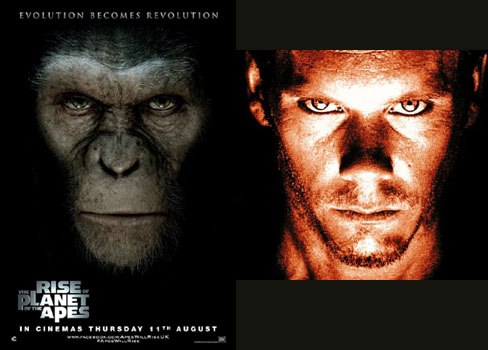 I don’t watch a lot of TV, but this past week I saw more than normal, and subsequently saw trailers for the new movie, Rise of the Planet of the Apes, virtually every time. There is no commentary intended or implied in this, merely an observation, but I kept seeing Kevin Bacon.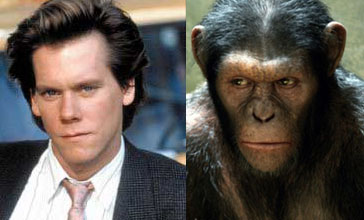

 Jagged ambush bugs (genus Phymata) are common throughout the US, but most people have no idea what they are, or look like. The flower seen here is about 35mm (1.5 inches) across, so the little green bugger could hide under a pea with room to spare – if you’re not looking close, you’re not going to notice it. This lack of attentiveness holds true for many different pollinating insects, which visit the flowers that serve as the favorite hunting grounds of ambush bugs, and thus transition to a different stage in the food chain. Ambush bugs are predatory and insectivorous, fitting in with mantises and spiders, and are quick to react when something comes near. I would have thought their camouflage would be a bit better than this, but I certainly couldn’t pass up this color palette, could I? This is most likely a nymph, based on the half-formed wings seen jutting from the midsection, with a splash of reddish-brown at the base.