What follows is my extra special beef rib recipe, because the subject came up on the Bad Astronomy blog. Bear in mind that I cook by eye, so these measurements are approximations and, should anything seem too much for you, adjust as you see fit. I don’t tend to write things like this down.
This is a semi-homemade recipe – obviously I do not brew up my own barbecue sauce, but hybridize it instead. What this means is I can have ribs ready in an hour ;-)
These are mildly spicy, less so than you might think from the ingredients, and reheat well. All spices are common supermarket powdered kind – feel free to substitute fresh, knowing that they’re probably a bit stronger that way.
* 4 lbs boneless beef ribs, cut into chunks (boneless ribs tend to be much meatier cuts and, of course, you’re not paying for bone)
* 1 cup Bullseye Original barbecue sauce
* 1/2 cup Aroma Chef Thai Sweet Chili sauce (oh baby)
* 1/2 cup chopped fresh onions (yellow, vidalia, whatever you like)
* 1/4 cup water
* 1 or 2 Tblsp worcestershire sauce, or soy sauce
* 1 Tblsp chili powder
* 1 Tblsp parsley
* 1 Tsp ginger (powder/ground)
* 1 Tsp curry powder
* 1 Tsp garlic powder
* 1/2 Tsp cayenne pepper (powder)
* 1/2 Tsp black pepper (ground)
Simmer rib meat in water just barely at low boil for approx 20 minutes, drain.
Mix all ingredients in small bowl.
Place rib meat in deep narrow dish, thoroughly coat with sauce mixture. The goal is for at least partial submergence, more like a stew – this keeps the meat from drying out.
Bake at 350 degrees (F) for 35-40 minutes, serve with bread or rolls on side, perhaps some nice chunks of seriously sharp cheddar.
Serves 4-6 hungry people.
The Aroma Chef Thai Sweet Chili sauce is something I’ve only found at WalMart, and is very tasty stuff. It’s responsible for the zing in this sauce, so substituting is not something I can walk you through, but possibly any kind of oriental sweet/hot sauce would work.
Give it a shot, alter as you see fit. Hope you like it!
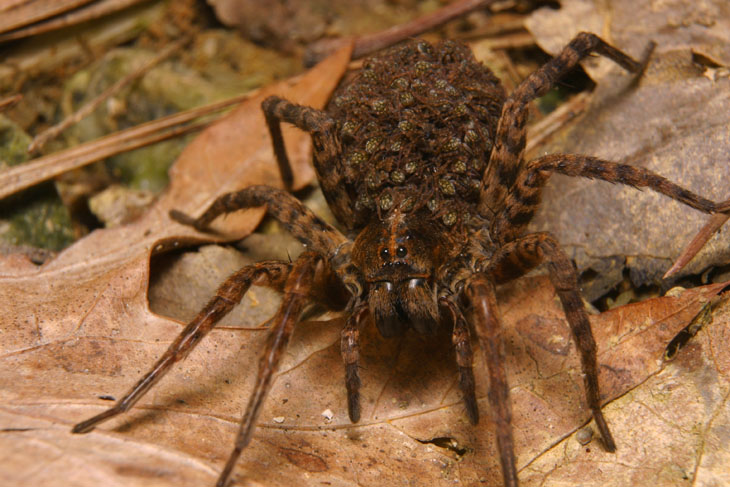
Finding myself in need of some supplies, I ran out tonight (okay, this morning) to the store, leaving my porch light on of course. But I think I’m getting broken of that habit, because the sheila above was waiting for me when I got home. Yeah, right smack alongside my door.
If you haven’t looked close (but of course you have! You didn’t immediately smash your monitor or quickly switch to ICanHasCheezburger or anything,) you may have missed that she is not alone. That’s the whole family on her back. Isn’t that adorable? Lookit all dem widdle cute-ums! You just wanna boop! them all on the nose, don’t you?
The funny thing is, this is the third time this year. A few months ago, I found a female towing her egg sack, and about a week later, one of similar size (I suspected the same one) appeared with her abdomen decked out with babies. But it’s happened twice more since then, too far apart for me to believe it’s the same one – the young should have grown and left her in the intervening time. Yes, I appear to be living in an arachnid megalopolis. Well, I suppose if anyone should, it should be a nature photographer who likes macro work…
While I can certainly get some really closeup shots, making this spider seem more impressive than she really was, I can provide proof of scale – yes, that’s my own forefinger in the pic. Now, there’s a photographers’ trick called “forced perspective,” where a high depth-of-field can be used to make two radically different subjects appear similar in size. I’ve used this to make people appear to stand taller than lighthouses, for example. But here’s the thing: if I had used it here, my finger would have to be a lot closer to the camera than the spider, and thus appear much larger than reality. The spider herself would have been even larger in comparison to my finger. Faced with that thought, the idea that this is an accurate pic is a little better now, isn’t it? And yes, I got that close – most spiders are actually a bit shy, and I had to keep her close with nudges from a stick to get these pics. It gave me the chance to try out a softbox flash diffuser, which worked pretty well actually.
Even so, maybe I’ll leave the porch light off from now on to avoid attracting my neighbors. Then again, it might simply mean I’ll be walking up on them in the dark. Hmmmm…
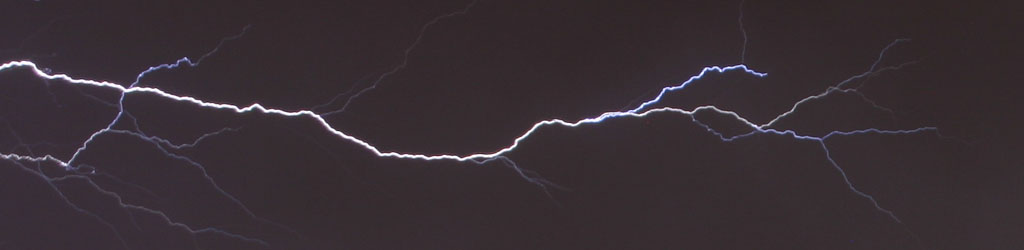
Some days back, I made an offhand note about trying to get some lightning pics, and decided the revisit the subject (and springboard from it) for a new post. Lest I give you the wrong impression, no, the image above isn’t recent, but actually a composite of two frames, taken minutes apart, from Florida a few years ago.
Lightning photography is a tricky thing. In theory, it’s actually not hard. The idea of shots like this is, you find a storm and lock the shutter open – this is what the “B” setting of the camera is for. It stands for, believe it or not, “Bulb,” which is how, 540 years ago, you could hold the shutter open as long as you wanted (I’m being facetious with that number – it’s a little less than 400 years.) Anyway, you open the shutter, and it stays open, exposing your film/sensor until you close it again. This would make a terrible mess of your image unless you a) use a tripod, and b) pick a dark area to be aimed at. Sometime while that shutter is open, however, lightning cooperatively strikes right inside your frame in a vivid manner, and you can then close your shutter with a nice photo of lightning all captured inside.
Yeah right. All photography is easy, you just point the camera and click! The devil, of course, is in the details. A storm that gives you a good view of its approach, or better its retreat, is the first part. The second part is it doing this at night, when conditions are dark enough to leave the shutter open for a while. Having some kind of landscape that gives you an unimpeded view of the storm and some foreground interest helps a lot, especially foreground interest that stands up under the dark conditions.
Then, you make a best guess as to where the lightning will strike, and wait. Most fronts are fairly wide and present a large area for lightning to appear within. So it’s hard to frame the image the way you might for most other subjects, and shooting with a wider angle lens provides the best chances, unless you get really lucky and have a small, active thunderhead that you can zoom in on – I’ve had this happen once, and it can be seen in the header images eventually (refresh the page for a new one.) The thing is, a wider angle lens makes everything appear smaller, which can reduce the dramatic impact of the lightning bolt itself, especially if you’re maintaining a safe distance from the storm.
That’s a crucial bit, by the way. Not only keeping yourself and your equipment out of the rain, but too often when attempting this your best vantage point is out in the open. Lightning can strike well ahead of the apparent front, so protecting yourself should be at the front of your mind, and I heartily recommend trying for retreating storms.
Then, of course, there’s the lightning strikes themselves. Cloud-to-cloud strikes, inner-cloud strikes, weak wandering bolts – these are all common and can expose your frame while not giving you anything photogenic. A few inner-cloud strikes can dramatically light up the puffy thunderheads, and I’ve done plenty of shots like this, but they’re not the same as a nice clear bolt. Too many things like this mean that, if you leave the shutter open to wait for the nice bolt, you end up with far too much light in the sky and everything becomes kind of muddy. Remember that the clouds are often moving while your shutter is open, so repeated inner-cloud strikes don’t provide nice detail from the clouds, but instead overlaps them and smears details together. If you’ve had three bright inner-cloud strikes without a clear bolt, you’re going to have too much light and should simply close the shutter and skip that frame for a new one.
You would think that timing a strike would be completely random, but here’s something funny: in my experience, lightning actually follows a loose timing pattern. When you see a bright bolt, start counting until you see the next one in the same area, and use this as a baseline. Then, about ten seconds before you reach that count again, open the shutter and wait. Lightning seems to follow a pattern of building the charge, and this rough timing gives a little bit of an edge. I said “in the same area” above because different portions of a front can have their own timing – a bright strike here every forty seconds, a weaker strike over there every thirty, and so on. I’ve even seen alternating weak and strong strikes. It’s not guaranteed, but I’ve seen this pattern too often not to use it anymore.
Camera settings are a hard thing to recommend, because they depend on your foreground subject and lighting, as well as how active the storm is. This is a photo subject that digital helps with, because you can review a rough idea of your results (I have yet to see a preview LCD that gives an accurate rendition of exposure.) As a starting point, I can say ISO 100 (for color rendition and detail,) aperture set at f8. Lightning strikes are brief enough to act as a strobe and light up your landscape at times, but this is difficult to count on. A strike that gives your foreground enough light will blow the bolt itself out into low detail most times, which is why reflective water works pretty well – you’ll notice in the pic above, not much land detail has been captured. The storm itself, though appearing over the land, is actually miles beyond the narrow barrier islands that make up the land in my composition, so they’re actually backlit. All of the cloud illumination comes from within, but a hint of it, at upper right, actually comes from a full moon making an appearance – you can even make out a couple of stars above the clouds. The orange glow in the upper right corner is from low-lying clouds reflecting the city lights out of the frame.
Location, of course, can help a lot. Florida is the world leader in lightning, because of its unique weather conditions as a narrow peninsula with warm air masses driven across from the gulf. In summer, violent thunderstorms late in the day are very common. We’re starting to see this same trend here in NC this summer, but the land is not as flat and the storm fronts not as distinct, which means so far, I’ve not gotten a decent shot at one recently. Lakes can provide a nice setting and good view of the storm, but this also puts you and your tripod out in open space, making you more of a target for a strike. Be careful. Scouting out areas ahead of time, with the knowledge of how most storms move through your area, can only help – this applies to sunrise/sunset pics as well. Do you think most dramatic pics from the pros just happen? Chances are, they spotted the conditions for the image long before they came back at the right time to capture the pic with that kind of light.
But, given all these tricks, it is still (pardon the expression) hit-or-miss. And this is where the analogies come in, because all of nature photography is like this. You can do your best with knowing the conditions and preparing ahead of time, and knowing habits or tendencies, and knowing what settings it can take to get the best results. And a lot of your success will still be dependent on that lightning strike, the moment of drama that you capture in an instant. You increase your chances by knowing as much as you can, but you’re still subject to random factors that can make a photo expedition virtually fruitless (I have thrown away more failed lightning frames than I can count, to say nothing of all of the other subjects I chase.) The best way of dealing with this is to let it roll off your back and try again later. You’ll get another chance, and that time, you’ll have the experience you gained through failure. Take advantage of as many opportunities as you can, though – you won’t succeed without trying.
A month ago I made a post asking some questions about wildlife photography ethics, most especially the how, when, and why of staging shots using captive animals or controlled conditions. Audubon Magazine decided to one-up me on this topic and posted their own article, naturally going into a little more detail than I did (but I brought mine in under a much tighter budget, so there!)
To their credit, they exposed the dubious practices of some game farms, which are places that maintain a selection of animals to be used for (in these cases) photographic purposes. The animals are in no way wild, have usually been captive since birth, are fully habituated to humans, and in some cases trained to perform. And nature photographers are the prime customer.
Some nature photographers. This can in no way be considered universal among photographers, any more than any other practice. Most of the photographers I know (myself included) don’t think much at all of the practice, and most especially consider the misrepresentation of such photos as contemptuous.
Now, you should feel free to question what the difference is between game farm shots and, for instance, a zoo. For the most part, not very much. A key point is that zoos exist for a much broader purpose, and most strive to maintain very high standards in animal care. Photographers aren’t a target customer of the zoos and aquariums – they’re aiming more for education, and often for endangered species support. This can be argued too – does it work better leaving the animals out of it entirely and using only films and photos for education? Is captivity even ethical for any purpose?
I’ve had that discussion before, and it really is a matter of opinion. I’ve also had the discussion of vegetarianism and veganism, too, and remain a blatant omnivore. Your opinion is all up to you. We can, of course, make distinct efforts to maintain standards for any animals under our care, and this should certainly hold true for game farms. It’s unfortunate that the regulation of such tends to fall under individual states and even counties – federal level laws govern only endangered/threatened species, trafficking, and animal fighting in the US.
But there’s another aspect of this, akin, believe it or not, to drugs in this country: if there’s a market, it will be exploited. And this is where the Audubon article fell a bit short. It seemed quick to blame photographers for the brunt of it, and the game farms close behind. But this is a bit of a disingenuous face for a magazine to put on, especially one that purchases wildlife photos. I touched on this in my own post, and am reiterating it here: the provenance of the photo is rarely, if ever, a factor in the editors’ purchases. There is no price difference between staged and honestly wild photos to the vast majority of editors and publishers, and few that stipulate that they want only wild images. To be fair, the article made it clear that Audubon itself, as well as several other major magazines, made distinct efforts to buy genuinely wild photos. But, as they admit, they’re a small share of the market. Should I be doing this for a living, the occasional sale to those particular magazines isn’t going to cover the bills.
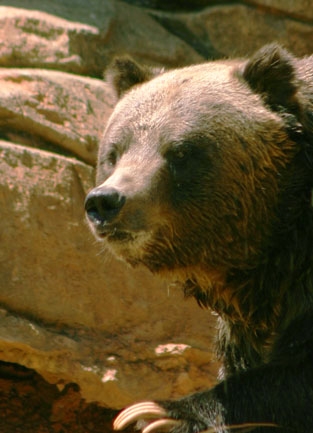
Let’s look at it from the market point of view. I am an editor, and I have a new article in my hands about a disease hitting brown bears. I have three days to get to press, and it needs an illustrating image. Moreover, the layout of the magazine requires an image that works well as a vertical composition, a certain size, and facing to the left – graphic layouts really do require such things, and many more besides. Note that the article is not about brown bears in a certain area, habits, populations, or anything specific – I just need a bear. The photographer I’m going to call is the one who has the best selection of brown bear shots so I can find one that fits my intended layout quickly. One-stop shopping. I have no reason to care if it’s actually a wild shot or not.
The photographer who has camped out in the wild, shot from blinds, and spent weeks of discomfort and sometimes outright danger to get the long shots of a bear family can lose out to the game farm photographer, who has 200 photos from one afternoon, nice and tight and sharp. Moreover, even if those wild shots sell, they sell for the same price, and nature photography, seriously, is on the low end of the photographic payscale! Shit, why bother? Ethics? That’s all well and good. Here I am, ethical photographer – do I get my camera equipment cheaper because of it? My utilities, housing, travel expenses? Don’t make me laugh. As nihilistic as it sounds, in these cases ethics are good only for an individual’s piece of mind. Sometimes, that’s enough, but it’s silly to think this should apply universally.
So are the photographers to blame for the market? Please. Which makes the point repeated throughout the article, as well as the blatantly accusatory tagline, rather offensive. And their point is really far too scattered for a magazine of their caliber anyway. They talk about photographers, editors, documentaries, calendars, and posters, even going back 100 years! Disney, Wild Kingdom, even David Attenborough! Okay, fine, it’s a common practice, only now receiving some strictly voluntary ethics. How did photographers get to be the baddies?
Using the illustration example above, what’s unethical about it? It really is a brown bear, and no one said it’s in the wild. The article makes no mention of that bear, only studies of an illness. So? Illustration does serve a purpose, and frankly, if an article mentions capybaras, and I have no idea what a capybara is (we’re making pretend for the sake of argument,) am I being disadvantaged or misled when the image is of a captive capy? Do I even care? Should I?
Audubon’s article made a big deal out of the intentional misrepresentation of some images, and yes, it does happen. They’re more capable of tabulating this than I, but a few examples isn’t exactly an epidemic. Especially when, pardon me for pointing this out, they’re asking for contest images from the general public and using them without fees. Hey, you get what you pay for! It’s not particularly hard to determine if an image is genuine or not – good photographers usually have a whole sequence of images that can show the conditions, as well as the receipts for their expenses, even journals of their expeditions. Determining authenticity, and making it important, is the responsibility of the publisher. The photographers have only moderate control over end usage, and may even lose out on credit lines. If Audubon decries the practice and wants better standards, blaming the photographers is a shitty way of going about it.
Yes, it's wild - and that's momma's tail in the foregroundHere’s an even harsher point. As I mentioned above, ethics isn’t really a paying concern. Should I, however, make the effort simply for pride and piece of mind (check the site,) this article failed to even reward me for that by making a distinction between types of nature photographers. The only credit goes to the few publishers who have finally set long overdue standards. Wow, thanks for that!
[If I seem overly defensive to you here (“the lady doth protest too much“,) I apologize. While I would love to do this for a living, the nature of the market makes that extremely difficult, and this has been dictated by the publishers themselves. To then see one trying to defer blame is more than a bit irritating.]
Lest you get the impression that all I could get photos of during our recent trip were captive animals, I feel obligated to show off the beasts captured au naturel – which actually means “naked” I think, which also applies, but isn’t exactly what I meant. Anyway…
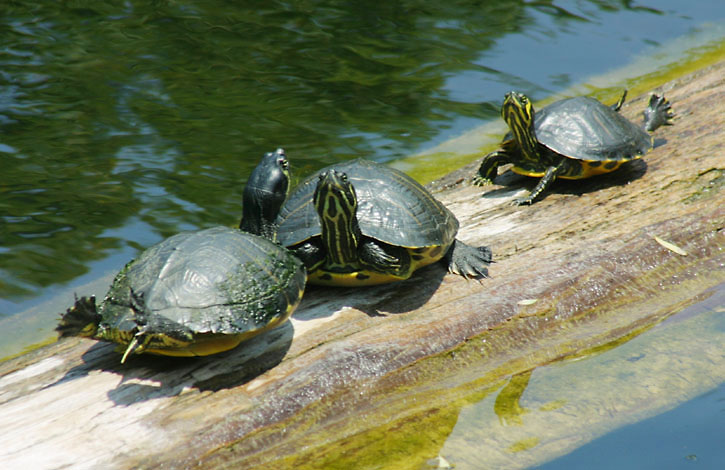
The NC Aquarium at Fort Fisher features an outdoor area of gardens, bogs and ponds, wherein resided the Yellow-bellied Sliders (Chrysemys scripta scripta) seen at top. Like every aquatic turtle I’ve seen, these spent a lot of their time basking on logs and rocks in the water, warming up and drying out some of the weeds and algae that grow on their shells, but always alert for danger. They’re kind of like the timid base-stickers during Tag games when I was a kid, never venturing far from a safe haven they could run back to at the first sign of being caught. Spoilsports. Two of these display a behavior I haven’t yet found explained (not that I’ve tried very hard,) holding their rear legs high and wide while basking. It makes it appear like two reckless sledding turtles are about to crash into the poor guy in the middle…
Plants, unless they’re very exotic-looking, don’t really hold my interest, but I’ll examine them carefully to find the insects that they host. Parsley plants in the garden were getting ravaged by Black Swallowtail caterpillars (Papilio polyxenes asterias), who seem to favor that plant above all others. They’re very brilliant in color, getting brighter as they get larger, and will make their chrysalises right on the plants they consumed if the time is right.
[Photographer’s note: As I type this late at night, I’m hearing thunder in the distance, and considering taking the equipment out to a likely spot to photograph lightning. After having left Florida, I’m in withdrawal from decent lightning opportunities – we have few electrical storms and even fewer good viewing locations here in NC. But the weather radar shows sporadic storm cover, difficult to plot a course to intercept the front, so I guess I’m staying put.]
The following day, after an abortive attempt to find a place to snorkel (I’ve about given up on this in NC,) we checked out River Road Park on the Cape Fear River, a place mostly distinguished by a small boat launch and fishing pier. I did a few scenic shots, just about the only ones on the trip, on the quiet river and bordering marshland. I also spent some time chasing pics of the Fiddler Crabs that ruled the area, but these are all on film, medium-format no less, so I won’t have these back for a while (especially since I’m waiting to finish off two more rolls before shipping them for processing.) The crabs were so numerous that the ground appeared to be alive at times as they scampered for cover, and it only took a brief wait, remaining motionless, to let them venture back out again. This was worth the wait, because they were displaying that morning, waving the larger of their two pincers (claws) in the air hypnotically. To the best of my knowledge, this both intimidates other male crabs and shows off for females, serving the same purpose as saggy pants among human males… okay, maybe not. But I witnessed one curious bit of behavior while there: one crab, lacking the large claw distinctive of the species, nevertheless actually chased another crab of similar size back down into its burrow rather aggressively. I guess it’s true when they say it’s not about size, but what you do with it.
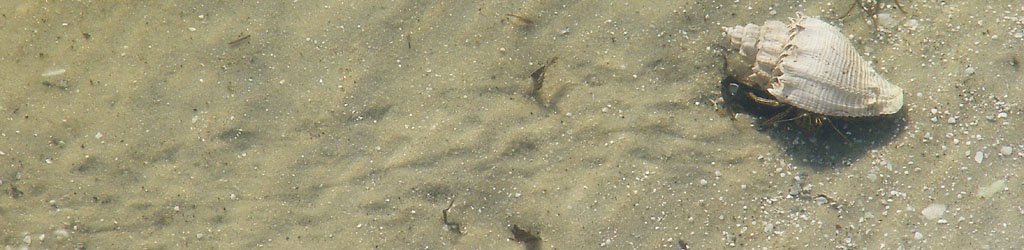
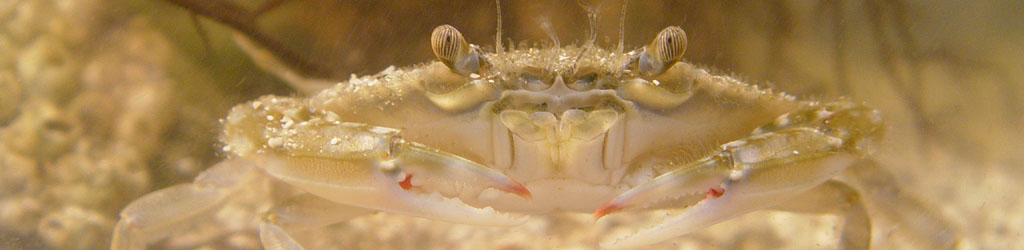
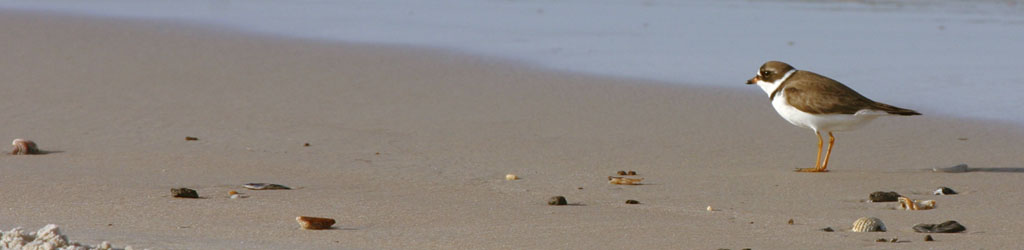
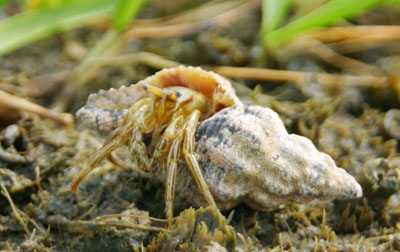
The last day of our trip, we elected to take the ferry over to Southport, and while waiting we wandered around the public access area just beyond the ferry port. We’d been there the day before and chased a few obligatory pics of wading birds near the boat launch, but this time we went to the northwest side of the point onto a small beach area. Here, still early in the morning, the Thin-stripe Hermit Crabs (Clibanarius vittatus) were foraging at the edges of the peat where it gave way to sand. I think a lot of people miss this, because the crabs will retract into their protective borrowed shells as danger approaches, and the motionless shells in the beach grasses don’t attract attention. Again, a little patience pays off, and soon enough they’ll emerge slowly from the shell and return to foraging. Typically when they retract the shell opening is facing the ground, but I cheated a bit by rocking the shells backwards a half-turn, to get sequence photos of their emergence.
The one shown here had produced a nice little cluster of bubbles that filled the shell opening, which might have worked against it. Many species of crabs do this for a number of reasons, and I suspect this one was either keeping its gills moist, or performing an aggressive display. What it meant was that, as it slowly peeked back out to see if the coast was clear (Ha! Take that, Dave Barry!) it had to get its eyes past the froth.
The tails, or at least the rearmost part of the body, in many crustacean species serves some interesting purposes. In shrimp, crayfish, and lobsters, it’s a heavily-muscled escape mechanism, remaining stretched out relatively straight until danger looms – this is often determined by something contacting their long antennae. The tail then snaps closed against the belly, propelling the crustacean backwards at an impressive speed, taking it out of danger in an eyeblink. Hermit crabs also have long tails that usually remain hidden deep within the shells. Not only can they maneuver the shell around with it, but when threatened they do much the same thing that their cousins do, only in this case it pulls them back inside the safety of the shell in a fraction of a second. The ones I found here could all retract almost to the point of invisibility within the shell, unlike many of the land hermits you can occasionally purchase at pet stores and cheesy beach souvenir shops. I suspect this is because their smaller pincers provide less protection, as well as there being more dexterous predators in the waters here, but right now that’s only speculation.
It was a fun trip, but right now The Girlfriend and I are a little soured on the Wilmington area, because it’s become too urbanized and crowded – I never think much of beach areas where scenic shots are hard to find (and I don’t find beachfront highrises scenic.) The Outer Banks area is likely to be our next coastal destination later on this summer, though memories of the fantastic meal we had at Hieronymus Seafood restaurant might draw us back down from time to time ;-)
This past weekend The Girlfriend and I took a three-day trip out to the beach, in this case the Wilmington, North Carolina area. Wilmington is the shortest beach drive from the center of the state where we live, features the best aquarium, and is only a short distance from Topsail Beach. Topsail is of interest because it’s the home of the Karen Beasley Sea Turtle Rescue and Rehabilitation Center, and while I have an interest in them, it’s outshone by The Girlfriend’s interest. We were hoping to witness the annual release of rehabilitated turtles, but we’d missed it by a couple days. As we found out, they don’t advertise this because they lack the means to control the crowds that would gather, but this was little comfort to us.
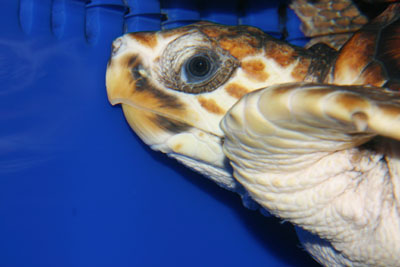
We also have no photos of it, because they don’t allow strobes and the lighting is too poor to operate without one – plus, these are turtles in rehab tanks which offer little in the way of opportunity or background. The image you see above actually came from the aquarium, but more about that in a sec. The sea turtles that make it to the rehab center receive most of their injuries from human contact – though they are preyed on by sharks, and this may account for more fatalities than human contact, the sharks also tend to finish the job and not leave the turtles crippled and disabled. The hospital sees lots of boating and fishing net injuries, and receives veterinary assistance from the NC State University School of Veterinary Medicine, abbreviated around here as the “Vet School.” Like most non-profits working with wildlife, their staff is almost entirely volunteer – donations go towards the cost of caring for the animals first and foremost, and state or federal funding for such pursuits is practically nonexistent.
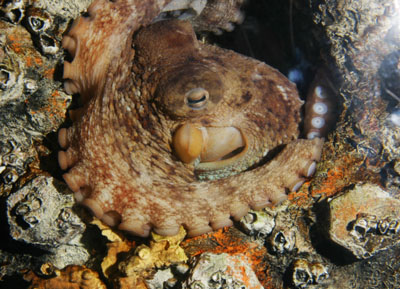
We spent a lot more time at the NC Aquarium at Fort Fisher, which we consider the best of the three NC Aquariums. They have a sea turtle program themselves, mostly monitoring nest sites and protecting hatchlings – the photo at top is an 8-month old loggerhead (Caretta caretta.) We shamelessly played around with the hermit crabs, sea stars, and anemones in the touch tank, and I chased detail photos of species that I’m dying to capture in the wild someday, among them this octopus. Octopi are shy creatures who favor darker places, and this one was faintly put-out by the repeated flashes from my camera. I liked this shot for the “cave of skulls” look that the ersatz-barnacles provide – in reality, that opening is only about about 18 centimeters (7 inches,) making this octopus a respectable size, but not nearly as impressive as any Disney movie has ever portrayed.
Octopi, of course, have the ability to camouflage themselves with reactive pigments under their skin, and will also use this color-change ability to express some basic emotions. Here, I suspect it’s irritation at the flash – this was taken one second after the photo above. One tentacle stretched out and probed about the tank for a different hidey-hole to inhabit, one that would be safe from annoying photographers, but it found none and the octopus stayed put. I’m pleased with the quality of these images, because the tank was a cylindrical affair that’s great for putting in the middle of the floor and allowing access to groups of people, but plays hell with distortion, and this often gets worsened with camera lenses. I wish they’d switch to something like octagonal tanks for something like this.
Shooting captive animals in zoos and aquariums is a great way to get detailed photos of marking and behavior, but it still doesn’t guarantee good results, and it’s often hard to get images that don’t show evidence of the cage or tank, like all of these do. It can take repeated trips, lots of dodging for a good angle, and still plenty of patience. Perhaps the most important thing to remember, though, is to be considerate of others that are enjoying the exhibits. Don’t stay too long while blocking people’s views, and allow others to jump in once you’ve gotten the shots you wanted, while the animal is still displaying. Sometimes, it even works better to stay back and wait for everyone else to leave – shy animals may venture out or change behavior when the crowds thin.
Coming up soon: the wild-caught pics from the same trip.
I treated the idea of finding intelligent life elsewhere in the Milky Way Galaxy in three parts earlier, starting here. But something that I kind of blew past is the idea that we have already been contacted – let’s face it, a lot of people can argue that this really is the case. So, I’m tackling that aspect now. And yes, it’s another long one. Nature photography will return at its regularly scheduled time.
There are people who find every baby adorable, and every young fluffy animal to be cute. I’m not one of them, though I can find certain behaviors to be amusing. But this – this is just too cute for words!
There is a new initiative from the catholic church now – they’re reaching out to atheists and agnostics to try and improve church relations. That article has, to my mind, the right angle on it – the church needs some improved relations desperately, after the long string of cluelessness it’s spewed recently. However, it does not appear that they’ve hired experienced help.
They’re hoping to stage a series of public debates next year, and are reaching out to atheists and agnostics – kinda. It’s not really clear how they’re reaching out, but they’ve set some specific ground rules already:
The foundation, [Archbishop Gianfranco Ravasi] said, would only be interested in “noble atheism or agnosticism, not the polemical kind – so not those atheists such as [Piergiorgio] Odifreddi in Italy, [Michel] Onfray in France, [Christopher] Hitchens and [Richard] Dawkins”.
I’m left wondering just what exactly “noble atheism” is – I’ve spent enough time trying to understand what “New Atheism” is. I’ve finally determined that it’s the kind that actually speaks out rather than hiding under a rock. I can only guess that the noble kind is probably pretty close to the opposite.
But it’s nice of them to reach out to somebody, I guess. I’m just wondering why they think this is then going to be a debate. I suppose having god on their side won’t weigh the odds in their favor enough to handle the out-of-control and vociferous Richard Dawkins? I mean, this is the catholic church itself sponsoring this – I can only guess their resources won’t stretch enough to bring in a heavy-hitter for their viewpoint.
Let me be fair – Ravasi goes on to explain his concerns:
Such atheists, he added, only view the truth with “irony and sarcasm” and tend to “read religious texts like fundamentalists”.
Umm, hmmm. Can someone explain how Christopher Hitchens reads religious texts like fundamentalists? Does this mean left to right? Or that he reads religious texts in the same manner that he reads fundamentalists? Because it damn sure can’t be that he reads them as if the texts are the literal word of the one true god, which is how fundamentalists are actually distinguished from the merely religious.
But hidden within that short sentence fragment is an even bigger indication of how badly this is going to fail, and exactly why the church has so damn many public relations problems in the first place. It’s the bit that says, “…only view the truth with irony and sarcasm.” You see, you’re not really ready for a debate when feel your standpoint is “the truth” – that’s actually arrogant, and insulting to your debate opponent. And you’re certainly not ready if you can’t handle irony and sarcasm. What is actually being said here is that the church wants to find someone that won’t argue against them, and make this a big media event. I have to wonder what they’re paying to take a dive…
More cluelessness follows:
“When we speak of a New Evangelization, these people are perhaps taken aback. They do not want to see themselves as an object of mission or to give up their freedom of thought and will. Yet the question of God remains present even for them, even if they cannot believe in the concrete nature of his concern for us.”
Translation: We know the approach is a big turn-off, but we’re going ahead with it anyway because our way is right. Using an approach that isn’t condescending would be silly.
No, Sparky. The question of god does not remain present for atheists – that’s the definition of atheism. And I, for one, certainly believe in the concrete nature of god’s concern for you – or to be more specific than this tortured sentence, I certainly believe that you think it’s important. The kind of debate that I’d be willing to see is how you establish its importance, or even relevance, to anyone else. That’s how a debate works: you attempt to demonstrate why your standpoint is stronger. This, however, doesn’t seem to have registered.
But you really have to be clueless to actually come out and say that your standpoint involves giving up freedom of thought and will. C’mon, how can anyone not be sarcastic when faced with that attitude? I’m trying, really hard, not to let it slip out.
Aw, fuck it: “Oooh! Become an automaton? Where do I sign up?”
Yeah, I’m still at it – there are links where you can find Part One and Part Two of this extended essay to catch up or keep continuity. Meanwhile, I’ll keep going with the idea, which basically is, what are the chances of us contacting intelligent life elsewhere in the Galaxy? This time, I talk about long-distance life affairs.
I’m just doing this to break up long strings of posts unrelated to nature photography. You know that means that yet another will be coming up next, I’ve just been taking my time completing it.
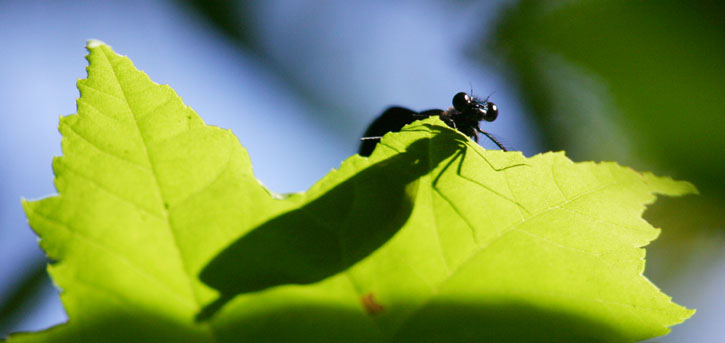
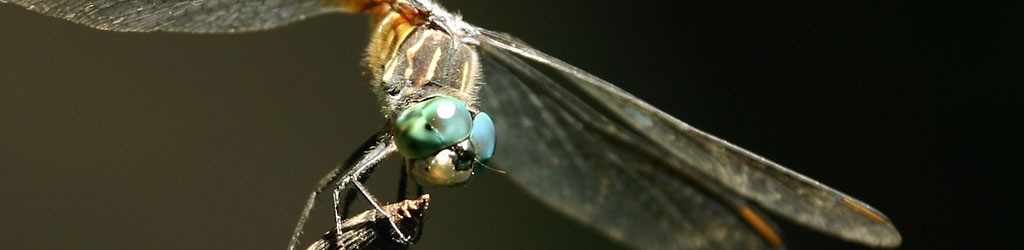
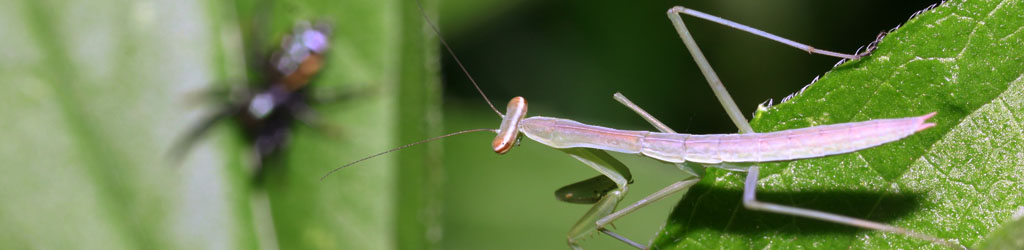
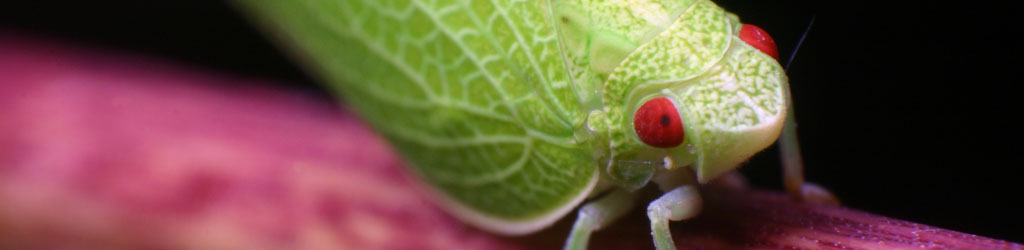
Just remember, no matter where you are, an insect may be watching you. Whether they’re judging you or not depends on how mellow they are.
Which makes me wonder what could horrify a damselfly, but with a name like that, I imagine it doesn’t take much…

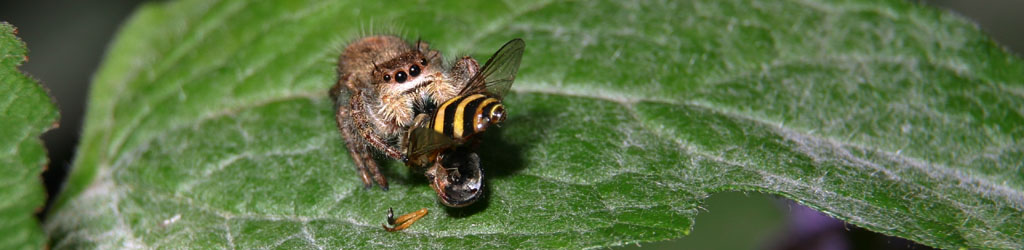
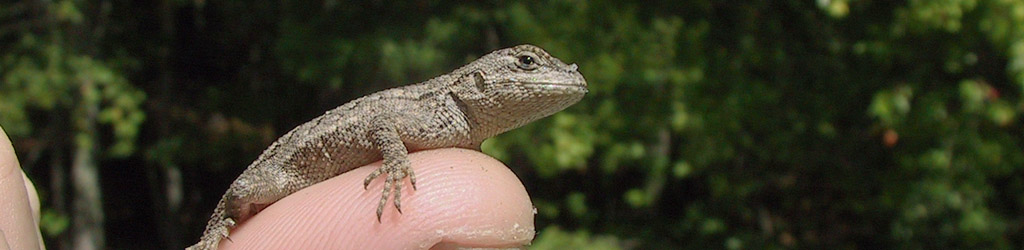
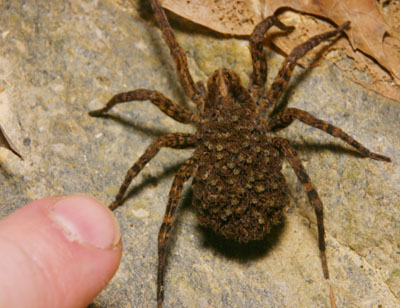 While I can certainly get some really closeup shots, making this spider seem more impressive than she really was, I can provide proof of scale – yes, that’s my own forefinger in the pic. Now, there’s a photographers’ trick called “forced perspective,” where a high depth-of-field can be used to make two radically different subjects appear similar in size. I’ve used this to make people appear to stand taller than lighthouses, for example. But here’s the thing: if I had used it here, my finger would have to be a lot closer to the camera than the spider, and thus appear much larger than reality. The spider herself would have been even larger in comparison to my finger. Faced with that thought, the idea that this is an accurate pic is a little better now, isn’t it? And yes, I got that close – most spiders are actually a bit shy, and I had to keep her close with nudges from a stick to get these pics. It gave me the chance to try out a softbox flash diffuser, which worked pretty well actually.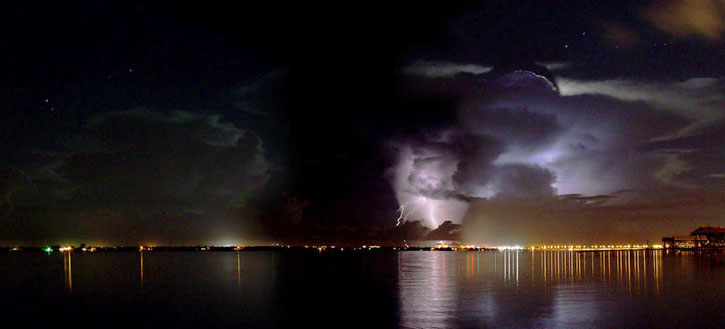
 Let’s look at it from the market point of view. I am an editor, and I have a new article in my hands about a disease hitting brown bears. I have three days to get to press, and it needs an illustrating image. Moreover, the layout of the magazine requires an image that works well as a vertical composition, a certain size, and facing to the left – graphic layouts really do require such things, and many more besides. Note that the article is not about brown bears in a certain area, habits, populations, or anything specific – I just need a bear. The photographer I’m going to call is the one who has the best selection of brown bear shots so I can find one that fits my intended layout quickly. One-stop shopping. I have no reason to care if it’s actually a wild shot or not.
 Plants, unless they’re very exotic-looking, don’t really hold my interest, but I’ll examine them carefully to find the insects that they host. Parsley plants in the garden were getting ravaged by Black Swallowtail caterpillars (Papilio polyxenes asterias), who seem to favor that plant above all others. They’re very brilliant in color, getting brighter as they get larger, and will make their
  The last day of our trip, we elected to take the ferry over to Southport, and while waiting we wandered around the public access area just beyond the ferry port. We’d been there the day before and chased a few obligatory pics of wading birds near the boat launch, but this time we went to the northwest side of the point onto a small beach area. Here, still early in the morning, the Thin-stripe Hermit Crabs (Clibanarius vittatus) were foraging at the edges of the peat where it gave way to sand. I think a lot of people miss this, because the crabs will retract into their protective borrowed shells as danger approaches, and the motionless shells in the beach grasses don’t attract attention. Again, a little patience pays off, and soon enough they’ll emerge slowly from the shell and return to foraging. Typically when they retract the shell opening is facing the ground, but I cheated a bit by rocking the shells backwards a half-turn, to get sequence photos of their emergence.
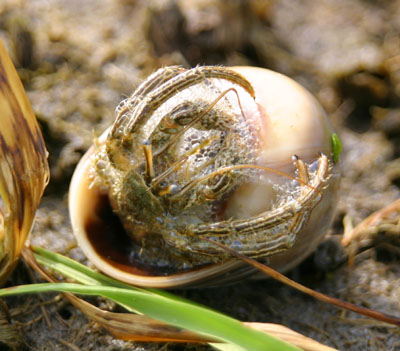 The one shown here had produced a nice little cluster of bubbles that filled the shell opening, which might have worked against it. Many species of crabs do this for a number of reasons, and I suspect this one was either keeping its gills moist, or performing an aggressive display. What it meant was that, as it slowly peeked back out to see if the coast was clear (Ha! Take that, Dave Barry!) it had to get its eyes past the froth.
 This past weekend The Girlfriend and I took a three-day trip out to the beach, in this case the Wilmington, North Carolina area. Wilmington is the shortest beach drive from the center of the state where we live, features the best aquarium, and is only a short distance from Topsail Beach. Topsail is of interest because it’s the home of the
  We spent a lot more time at the
 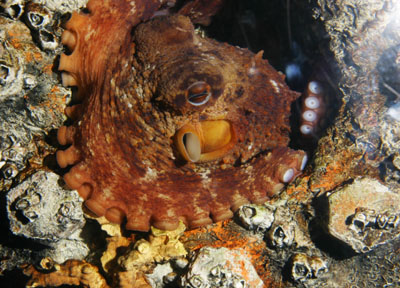 Octopi, of course, have the ability to camouflage themselves with reactive pigments under their skin, and will also use this color-change ability to express some basic emotions. Here, I suspect it’s irritation at the flash – this was taken one second after the photo above. One tentacle stretched out and probed about the tank for a different hidey-hole to inhabit, one that would be safe from annoying photographers, but it found none and the octopus stayed put. I’m pleased with the quality of these images, because the tank was a cylindrical affair that’s great for putting in the middle of the floor and allowing access to groups of people, but plays hell with distortion, and this often gets worsened with camera lenses. I wish they’d switch to something like octagonal tanks for something like this.