



























Astronomy Picture of the Day today had a lovely sunspot image.
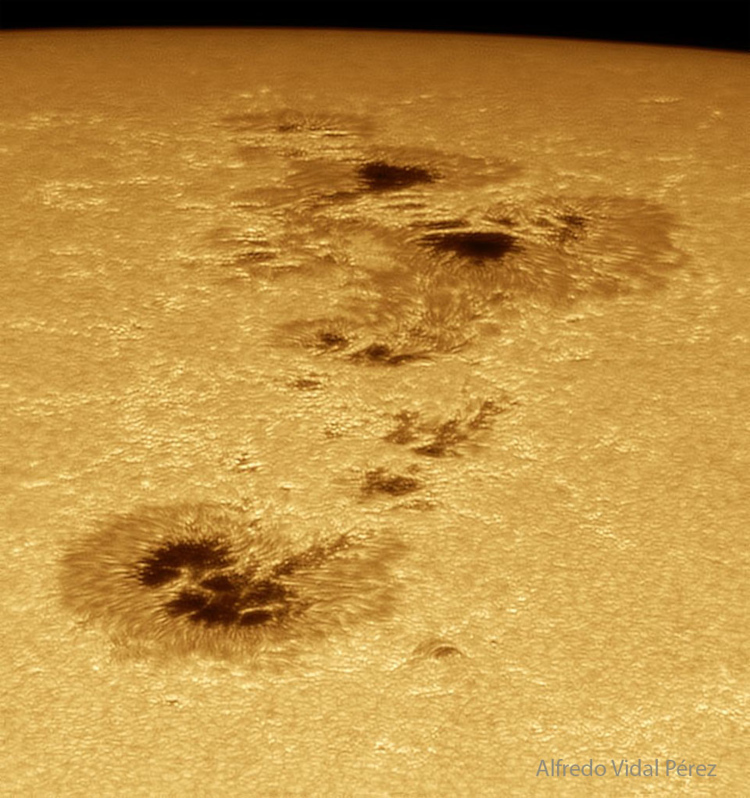
… which they said was presently crossing the sun. We’re in a narrow window between scattered clouds and rainstorms that are due within hours, so I quickly grabbed the solar filter and went out to see just how visible this sunspot group was. Actually, not too shabby.
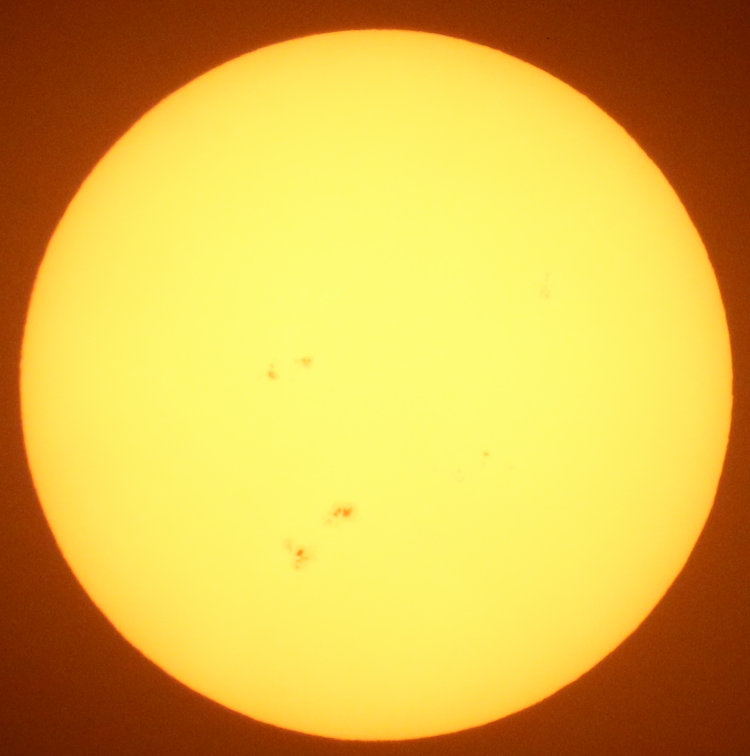
 As always, it took several frames to get one that was sharp, since autofocus is notoriously untrustworthy on something like this (virtually nothing to lock onto, save the edges of the disc,) and even with manual focus, the resolution in the viewfinder is quite small, roughly like the image at right. So I shot numerous frames, tweaking focus between each one, and this was the sharpest.
The image above is roughly half-resolution; full resolution for the Canon 70D looks like this:
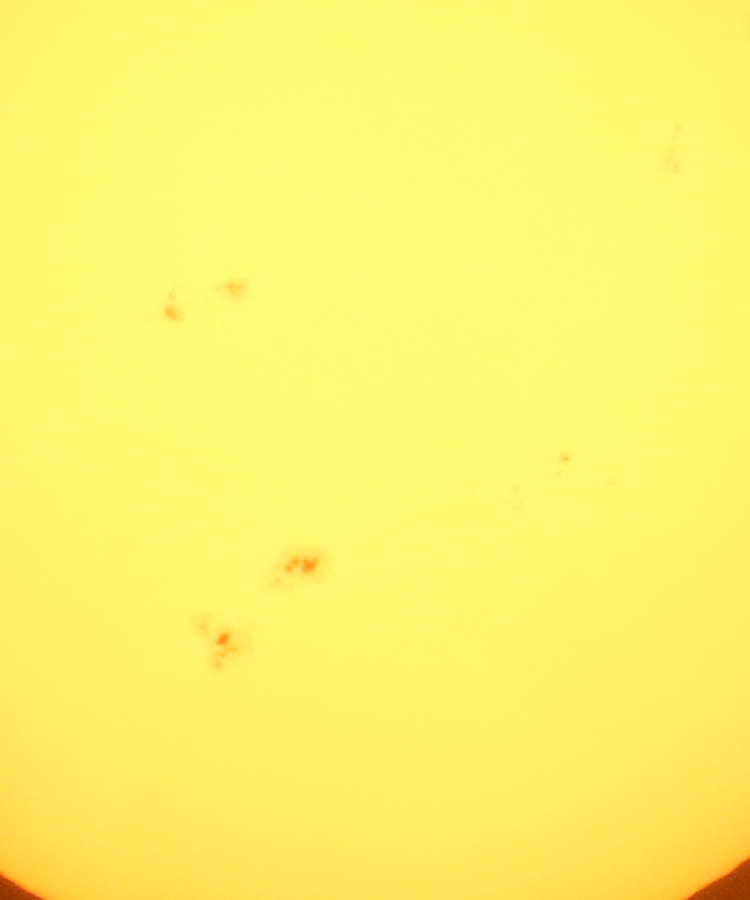
Sure, Alfredo Vital Perez has me beat – I admit it. I doubt he’s working from a consumer zoom telephoto and a $20 solar filter, either. From the income my photography pursuits and blogging have garnered, though, I’m probably only 99% of the way away from purchasing a rig comparable to his.
Since his was shot two days ago and things evolve in that time, I can’t be sure if Perez’ image is showing the upper cluster or lower in my pics – I suspect the lower. You can tell from the angle that it was much closer to the edge at that time, which makes it more dynamic, even though it’s farther away.
Now, will I ever be able to image a solar prominence, those great arcs springing from the sun’s surface, with this filter? Chances are, no. If we compare the brightness with the images I’ve captured of such during the total solar eclipse, you can see that, even without a filter, they’re pretty dim – the solar filter likely eradicates any trace of them from the pic, and even the detailed images from astronomers use specialized filters for specific wavelengths – again, much more sophisticated than what I have. Still, it’s neat to be able to capture these from time to time.