










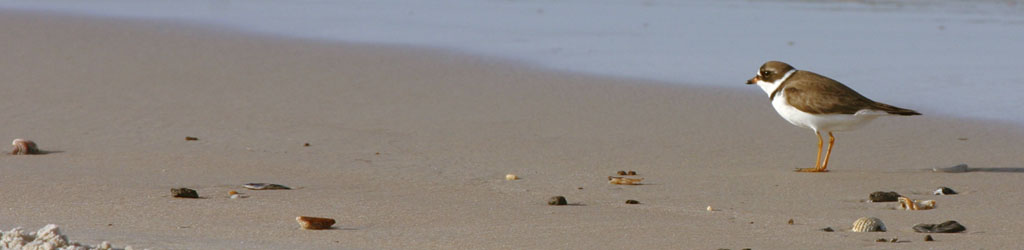
It’s been a while since the Magic Bucket of Variety has caught anything more than beetles, and in fact, it’ll be a while longer, since this is a beetle. But it’s a beetle I haven’t seen before, so it’s getting featured here.
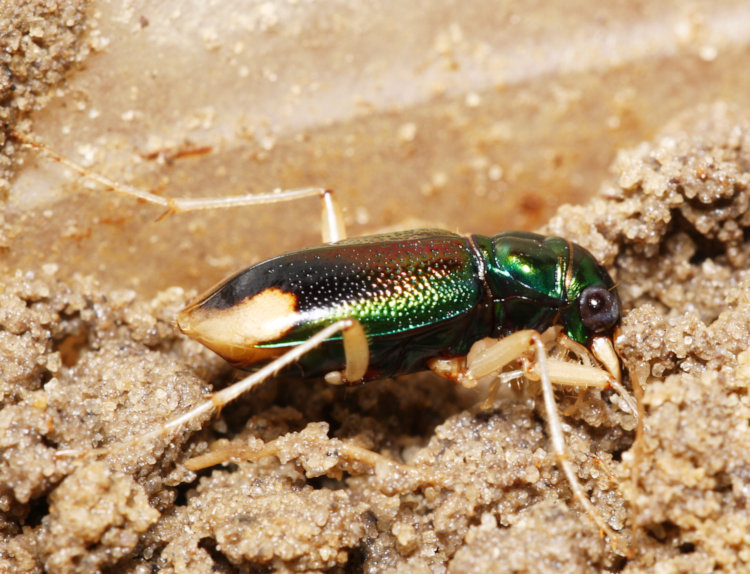
I knew right away this was a tiger beetle, since they have some distinctive traits like the spots on the abdomen and the eyes and chelicerae, but a species I hadn’t seen before. It was easy enough to find, but not through BugGuide.net – they have a weird thing where too many hits on the search term will stall their servers or something, and the page comes up blank, so I found this with a basic Ecosia search and then plugged in the appropriate scientific name, which is Tetracha carolina, more commonly known as the Carolina metallic tiger beetle. The species I’ve always seen before, and featured just once herein, is the brilliant green six-spotted tiger beetle, a bit larger than my specimen here.
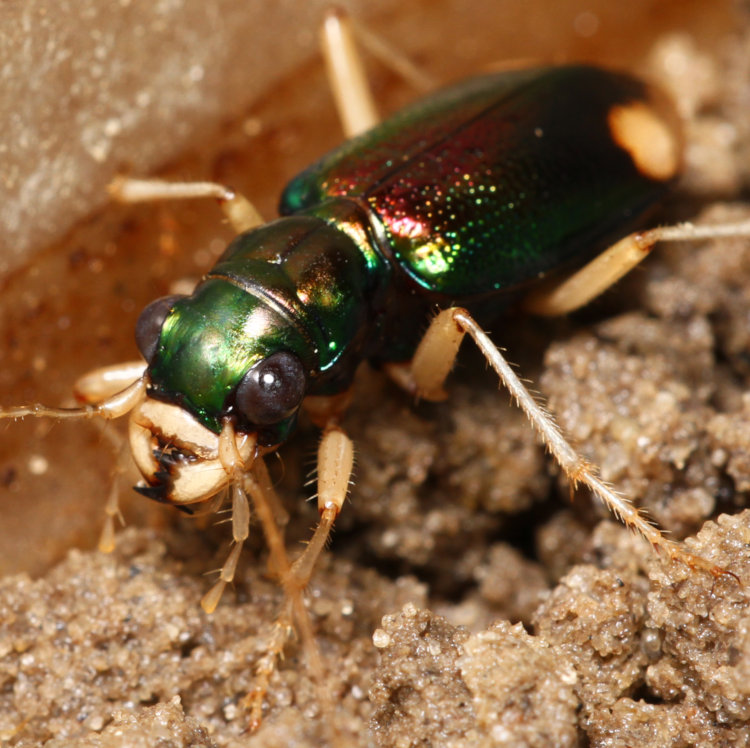
Tiger beetles are hyperactive, which makes doing macro work rather challenging, but at least this one wasn’t inclined to fly off like the six-spotted variety – I probably wouldn’t have found it in the bucket if it had. BugGuide notes that it not only is attracted to lights, which means it likely dropped in there last night after banging around the glass on my office door right above the Bucket, but “Apparently, does not fly often.” Still, it didn’t like holding still for very long, so while it remained in the shallow dish I was using as a macro studio, it frequently scampered out of focus range before I could trip the shutter. It’s overall length was probably in the realm of 12-14mm, so I was aiming for high magnification, and that means the range of sharp focus is measured in a couple of millimeters at most.
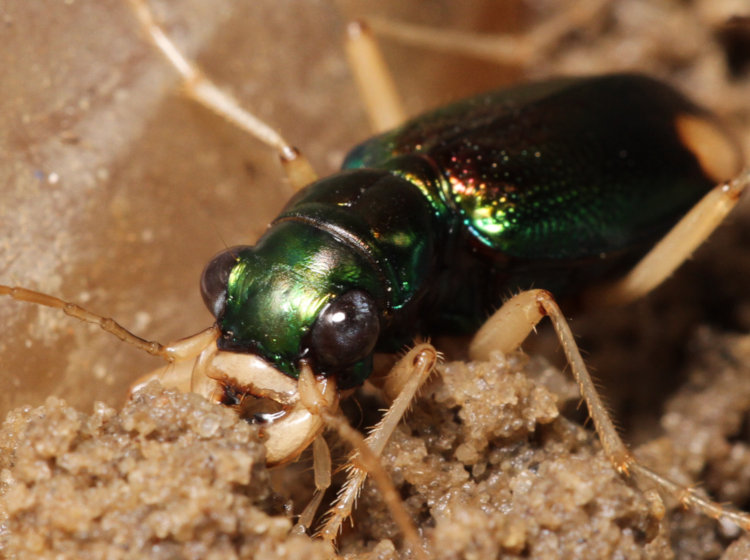
It also tended to plow through and rearrange the soil that I was using, obviously unimpressed with my interior decorating skills. Since I wanted detail shots of the head and especially those mouth parts, this wasn’t helping at all. I also need to look into making a light tent to go over such subjects, to diffuse the light more than the custom softbox – which may or may not work with such reflective and iridescent chitin.
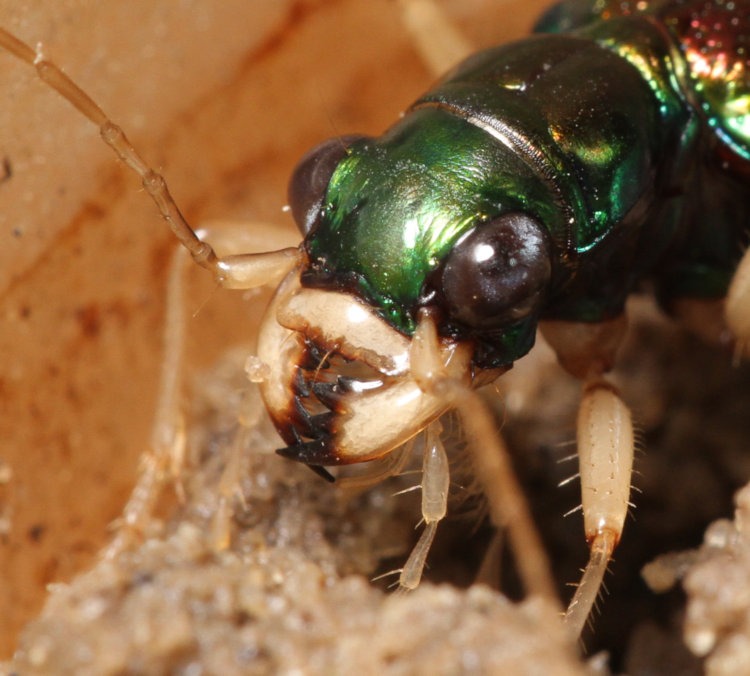
I did finally get some detailed shots of those nasty little jaws, or chelicerae, which it uses to snag other insects as food. There’s an interesting trait seen here, too, in that the sharp-serrated bits of those jaws are dark reddish-brown. I’ve seen this in spiders, where no matter what color variation the spider has, the fangs are always reddish-brown. This may indicate that the harder, sharper chitin for such things has to be that color, by nature, but that’s only speculation based on observed similarities, though I’ve observed it a lot.
Once I was sure I had a few detailed frames, I let my subject go its own way, though not until after I’d unearthed it from beneath the soil where it had secreted itself. You know you got wings, right?