


Odd memories, part 10: Shattered childhood

The year is 1970, or maybe ’71. I am in kindergarten, embarking on a field trip in New Jersey to one of the many Revolutionary War sites in the area. Like all other boys in class, I have my colonial tricorn hat made of three pieces of blue construction paper stapled together. The bus ride isn’t long, and I remember turning off at the hospital (where I had not long before had my head stitched up, but that’s another post that may explain a lot) and traveling not far down that road. It ended at the edge of the Delaware River, across from Philadelphia, and a small park there. We were visiting the former site of Fort Mercer, and the current site of the Whitall House.

The house, maintained since that time and long doing duty as a museum, had served as a hospital during the war. I vividly remember our kindergarten teacher pointing repeatedly to the bloodstains preserved under the floor varnish, getting quite frustrated with us because we had no grasp of the color blood turns over time and she hadn’t bothered to explain it to us (she really shouldn’t have been a teacher, certainly not of young children – this also may explain a lot about me.) All we saw were variations of the floor stain that bespoke the same bad shellacking job visible in the school gym…

It was the exterior of the house, however, that fostered the most indelible memory. On one blank wall of the house, embedded in the concrete, were several cannonballs, small to my cartoon-fed mind and leaving rust stains down the old surface. They had been fired by ships on the river, we were told, and had been left there ever since. Aside from the impression that they seemed too small to be of much use, perhaps fifteen centimeters (six inches) across, there was the undeniable fact that they couldn’t effectively penetrate someone’s house.

Many years later, I started wondering about my recollections – was there really a Revolutionary War site that convenient to where I grew up? Was the river as close as I recalled? None of this was too strange – my hometown featured an ancient (and of course haunted) house formerly belonging to a war surgeon, that my sister and I timidly explored, if by “explore” you mean my venturing a short ways into the front door in broad daylight, and my sister actually getting partway up the stairs until spooked by a falling wedding photo. And only a few blocks away, workers doing renovations on another old house discovered a hidden narrow stairwell running from the attic down to a basement tunnel, later discovered to be part of the Underground Railway that transported escaped slaves. Listen, folks: names that accurately describe the situation will undoubtedly help kids understand history much better. It wasn’t a goddamn train and it didn’t go underground (except, at times, like it did in this situation.) It was a network of sympathetic people who found creative ways of getting slaves to free states. But anyway, it wasn’t too farfetched to have a war site in the area, though I wondered just how accurate my memory really was.

Doing some poking around on Google Earth, I discovered it was surprisingly accurate. Despite no one else that I spoke with seeming to know the least little bit about it, the Whitall House sits right where I remembered, and it can be reached with only one turn off of the road past the hospital. Yet searching through the various images I could find online failed to turn up those cannonballs, surely a major attention-getter. I was starting to doubt my memory again when I came across a short passage, in an article relating a bit of folklore that I did not recall in the slightest:

But the story is a popular one, and in the 1930s, when, as part of a Works Progress Administration project, the building’s brick north wall was covered with stucco, about a dozen ornamental cannonballs were nailed through the stucco to commemorate the battering that the wall supposedly took during the battle.

Today [the story was published almost exactly 25 years ago], a $200,000 renovation of the building’s exterior, which includes the removal of both the stucco and the ornamental cannonballs, is nearing completion.

They… were… FAKES! No wonder every image I could find of the brick north face of the house failed to match my memory of a concrete wall! No wonder all of the webpages that detailed the house and its history failed to mention the most striking feature! (Yes, another pun, I’m going to hell, we know that already.) Worse, they belied the real story (perhaps) of the cannonball that hurtled through the wall and came to rest at the feet of Ann Whitall. This at least gave a little more credit to the guns of the time not being so damn wussy…

The funny part of all this is, I really had no intention of doing something ‘appropriate’ for Independence Day, since I get tired of seeing the efforts of everybody and their brother who feels obligated to honor every holiday that comes along. Seriously. I was spending the evening chasing down various items in Google Earth and revisited this (along with the taco place in Georgia that had a superhero out front urging new patrons inside.) When I found the blatant misrepresentation foisted on my malleable little mind I just wanted to share, and didn’t realize the coincidence until I caught the publication date of the linked article. No, I don’t expect you to believe that, but there it is anyway.

But what if it is broke?

I’m very fond of pushing different perspectives, because I believe it helps us to understand many things better, and changes our predefined views of our world. Some perspectives, however, are heavily ingrained, and perhaps even self-perpetuating, so introducing something ‘new’ is complicated.

With the lead-in out of the way, let’s take consciousness, and to do so, we’ll begin with the official definitions. Merriam Webster says it’s

1 a : the quality or state of being aware especially of something within oneself
   b : the state or fact of being conscious of an external object, state, or fact
   c : AWARENESS; especially : concern for some social or political cause
2 : the state of being characterized by sensation, emotion, volition, and thought : MIND
3 : the totality of conscious states of an individual
4 : the normal state of conscious life <regained consciousness>
5 : the upper level of mental life of which the person is aware as contrasted with unconscious processes

While Wikipedia starts with

Consciousness is the quality or state of being aware of an external object or something within oneself. It has been defined as: subjectivity, awareness, sentience, the ability to experience or to feel, wakefulness, having a sense of selfhood, and the executive control system of the mind.

…and in true Wikipedia fashion, goes on for paragraphs. What becomes clear, in both cases and all other sources as well, is that one can follow explanatory links almost indefinitely, seeking to define awareness and will and so on.

Mostly, what is being referred to here is simply sensory input – perceiving physical surroundings to some level, and this level isn’t always very distinct; we have subconscious awareness, and unconscious responses, and even the ability to drive to work and remember almost nothing of the details of the roads. Then there are states of consciousness, such as differentiating between being asleep and awake, but mostly this refers to the body ignoring various levels of sensory input – the alarm usually gets through, while the TV may not. We understand that we may ‘tune out’ certain accepted sounds, but to do so, the brain has to perceive them and filter them according to acceptability, so it is conscious of them to a significant extent, even when it does not activate any kind of response from ‘us’ by interrupting our dreams. Or such sounds may incorporate into dreams and influence our imaginations therein. The dividing line is not distinct at all, making consciousness rather hard to interpret in any given usage.

Then comes all the fun bits, such as the distinction of mind from our mushy brains, creating a duality that opens up loads of philosophical debate. This mind even persists, according to a large number of religions, after the physical body ceases functioning, and in many cases yet perceives sensory input, though for what purpose remains to be determined. There are also the special properties we supposedly possess that all other species lack, but what exactly these are is unclear as well.

In some cases, the mind is considered the sum total of our experiences, the matrix of sensory input and personal emphasis on such, a unique property. The brain is considered the storage medium or even the computer running the program, analogies that do more harm than promoting understanding. The mind is damaged by any damage to the brain, sometimes in seemingly disproportionate ways, such as the case of Phineas Gage. The mind may not function as well if the brain’s development has been hampered in some way, the same way that interfering with any other part of our body may affect our abilities – it even falters with minor changes to the chemicals supplied to the brain (such as narcotics) or serious breaks in routine (such as lack of sleep.) The differentiation of mind and brain is more a convention, a tradition if you like, than a supportable concept.

So many of these concepts were established long before we had the faintest understanding of our biology – in fact, defined, redefined, debated, and treatised for centuries without the barest clue what went on in our brains. To say that consciousness is culturally supported is extreme understatement. So it’s very hard to do a simple little thing and ignore it entirely, wipe every last vestige of its definition and implications from our minds, and see if we arrive at it by examining only what we have evidence of.

Biologically, we are organisms with external sensing functions, able to perceive our environment primarily in ways that are important to our survival. The most extraordinary development that we’re aware of is the ability to form abstracts, imagining someone’s reaction to our requests for a date or picturing how this painting will look on our walls. While it’s safe to say that we have developed this in excess of any other species, we cannot rule in the slightest on how much other species still possess this ability – it is, when you think about it, pattern recognition. This person smiles at me every time I speak to them, so I extrapolate that to mean they will be receptive to my overtures (usually incorrectly, but that could be just me.) How different is this from the chimp that uses twigs to fish for termites, or for that matter any learned behavior?

What about the function of sensory input itself? There are countless things we remain unaware of, and certain kinds of input that register far more strongly than others, such as recognizing particular voices even if they’re quieter than the babble that surrounds us. We can also miss something blindingly obvious (completely changing our perception of obvious) while we’re concentrating on a particular task – the importance of our sensory input is subjective depending on the circumstances, giving no delineation of something we could call consciousness.

Descartes’ famous quote, “I think, therefore I am,” is considered rather profound, basically an admission that the only thing we can actually be sure of is our own consciousness; instead, it’s an excellent example of philosophy carried to pointless extremes. While questioning whether some sensory input has been interpreted correctly is an integral part of critical thinking, doubting all of it obviously cannot go anywhere, and produces no beneficial effect in any way. At the same time, there are vast areas of neural function that take place with only the barest nod towards what we consider cognition, the ‘thinking’ part of the brain. We’re able to recognize this in many other species, confident that the honeybee does not think about its mortality when it stings, and the caracal does not wonder what it’s like to be a hyrax – we believe such species simply follow instinct, while we alone are sapient, willed, and above all capable of directing our lives. The problem is, we have no way of establishing this difference quantifiably, and there’s a good chance this is simply self-absorption; ego relates directly to survival, since the organism that does not place importance on itself does not compare, or compete, well against another that does. Emotionally favoring ourselves is not any different biologically from seeking sexual partners or avoiding pain.

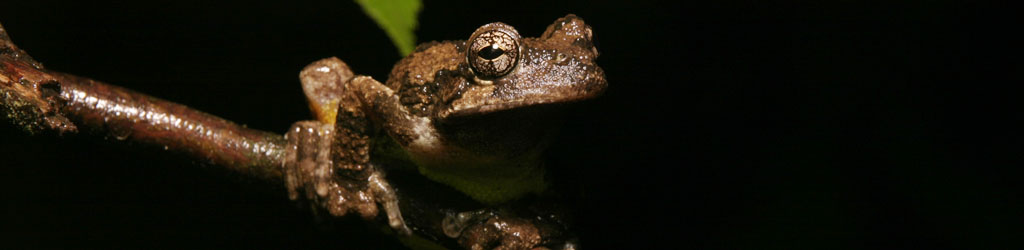
ThinkingFrogAh, but we are aware that we’re thinking! This is the self-awareness, sentience, supercool bit! So, let’s try an exercise: what are we unaware of? Take your time. Self-awareness is the same kind of nonsense as the Weak Anthropic Principle, which says that we exist in a universe that has the conditions for our existence; we will not see a universe in which we cannot exist, and we have no awareness of how much we’re unaware. Another species observing us might find it amusing how unaware we are, such as our inability to see infra-red, or why we’re entertained by skateboards, or why we feel better about ourselves when someone else demonstrates that they’re lesser in some way (as if this was an accomplishment for us.) And as near as we can tell, all of our decisions are biased by unconscious traits, past experiences, personal preferences, and even physical condition of the body – we may not even be able to fulfill the idea of ‘rational‘ that we extoll. The abstracts that we consider part of higher cognition could be entirely imaginary, subjective constructs of an organism with certain survival demands – not a special level of awareness, but a structure to our perception that we cannot escape. For example, most reptiles likely have no concept of ‘evil’ since they have no social structure, and thus no use for it. So does this make us more aware, or just different?

The biggest failure of consciousness is that it doesn’t actually fulfill any function – it gives us nothing specific or unique, and doesn’t explain any physiological state of even abstract idea firmly. In fact, the only thing it really seems to accomplish is reinforcing the idea that we’re special as a species – with the distinct possibility that this is a common trait among living organisms. The curious thing to consider is how much worthless concepts like consciousness actually affect us negatively, by wasting our time with misdirection and functionless debates where we could instead be more aware of our development as a species. Perhaps it’s only because such things are not too deadly that we haven’t simply evolved away from them yet.

So, what happens when we discard consciousness as a concept? We’ll keep the meaning that translates as attentive, like being conscious of what someone said, and the one that means alert/awake. But get rid of anything resembling consciousness as a trait of the mind, and stuff like conscious decisions. What’s the result?

Well, first, the recognition that there is no dividing line, but a spectrum of mental activity ranging from mere reflex to formulating the phrasing within a blog post, and the underlying ideas to communicate. [Do you like how I did that? I hinted that blogging is the highest level of mental activity available. Did I do that intentionally, or prompted by egotistic influences within?] We stop thinking of our mental processes as ‘special,’ and start thinking in terms of evolved beings with lots of behavioral traits, not entirely unlike the bear that protects her cubs. Perhaps we even realize that a complete understanding of our own brains is highly improbable, because they simply don’t have the structure to fully self-comprehend, even if we’re pretty sure we’re higher on that scale than a starfish.

The mind disappears of course, and that pretty much trashes the soul as well. So transcendence and various spiritual ‘connections’ go away too (don’t let the door hit you in the ass on the way out.) But wait! What does that say for all those mystical experiences people keep reporting that they’ve had? Is this dismissing a wealth of human experience rather capriciously? That all depends; we’re a species with a history of being dead wrong about a lot of things, from witch hunts to the geometric perfection of matter to freeing demons by drilling holes in our skulls. It’s ludicrous to think that sometime between our very recent past and now we crossed some threshold where we can no longer fool ourselves (one of those great ironies; believing we’re free from self-delusion is self-delusion – gotta love it.) But, but… if they were wrong, then there must be other ways to explain their experiences, right? (Don’t worry – I’m halting the Clint Eastwood tactics here.)

GullSunriseFLThis process is better approached from the other side, which is to view any such experience critically from the start, and try to see if it can clear the “fake/hoax/wishful thinking” bar, but either way requires the same methodology. The tests are simple, even though they might have a wide variety among them: recounting solid information not available through any other means (such as words or objects hidden someplace,) retention of all aspects of the mind/soul after brain damage, even a religious experience with a high degree of ‘accuracy’ from someone who has no interest in that religion. It seems reasonable to expect that transcendent experiences should demonstrate something not just miraculous, but with evidence on a greater scale than personal emotions, yet even the rather mundane experiences don’t hold up to examination, and often the only thing we can use for judgment is whether or not we should take someone at their word. And we must realize that having such an experience makes someone special, which is more than enough motivation to misinterpret some sensory input, much less perpetrate a hoax, so the standards to judge such things should always take this into account.

We’ll leave behind spirituality to switch to the medical aspect of it. Someone in what is called a ‘persistent vegetative state,’ or perhaps a coma they’re considered unlikely to come out of, has a level of awareness that is unknown; they may respond to certain kinds of sensory input, such as a family member’s voice, and not to others. They may display spikes of brainwave activity (measured by EEG) that correspond with normal averages, yet these are isolated and, above all, lack the kind of response that makes someone functional. So how conscious can we say they are?

Stop right there, because that’s where the stupid reliance on this concept introduces its unwarranted assumptions. There is no line to be crossed, no ‘black/white’ situation to be found. Decisions on whether or not to continue life support often revolve around the belief that the comatose person could maintain a will to live, and might in essence be a fully functioning brain trapped in an unresponsive body. Yet we already know it’s not fully functioning, but more to the point, why would brainwave activity be the crucial factor? Imagine actually having a fully-functioning brain, in a body with full external sensory input but no motive functionality – no moving around, no talking, no signaling, no responses to anything in any manner. Some people – I am not one of them – do not have to imagine this, because they’ve already experienced it in the form of sleep paralysis, where the motor functions are disabled, including even the ability to respond to adrenaline, while a certain percentage of external awareness persists (though the line between real awareness and imaginary dream scenarios, such as the approaching alien or rapist, gets blurred frequently.) There are occasional case studies of people who remained resistant to the dissociative properties of anesthetic and were aware of everything going on during surgery, in some cases fully capable of feeling pain as well, but unable to do anything about it. It’s easy to see that brain activity isn’t really beneficial in these cases, and can easily be said to be far less beneficial than none at all.

I can only confidently introduce my own perspective here, but I imagine it’s shared by a large percentage of people: my brain activity is meaningless without the external bits, and if there’s no chance that I will regain the external bits, the brain is completely and utterly useless. I could have the most astounding insight in the world, simultaneously unifying physics and explaining why hetero women always become infatuated with gay men, but it means nothing if it remains solely inside my head. And it’s safe to say that this scenario effectively denies the free will definition that so many people cling to, if that perspective illustrates the situation better. What if we are simply a brain in a jar, and we know it? We should also consider the idea of incomplete consciousness, mere moments of lucidity or fragmentary awareness, like barely waking enough to hear voices in the next room but having no context for them. Add to this the bare fact we have no way of actually telling how conscious someone is; EEGs measure microcharges in the brain, not thoughts. Not only is this simply a electrochemical artifact, it’s not even limited to neurons, as the infamous Jell-O experiment demonstrated.

The philosophical conundrum of consciousness, and the ridiculous amount of time wasted trying to find a distinctive definition for it, really has no practical application. And I’m sorry to go through all that jazz above before introducing something that should be at the very beginning, but it probably wouldn’t have had the same impact had it come first. So here’s the little rule that has served me well, one I wish more people used as a starting guideline: if we are spending any time at all trying to pin down a definition, we have absolutely no reason to be using the word or concept in the first place. Yet its frequent use in our culture, dating back a very long time, has convinced us of its importance even as the meaning vacillates wildly. Sometimes we have to consider that a long provenance doesn’t mean it still works – or, in fact, ever did.

Moon of steel

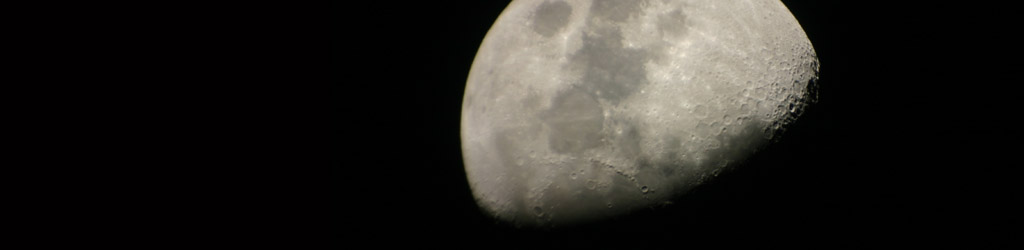
SupermoonHaze
Yeah, it was a non-event, even in areas that had good visibility – mass media really can’t handle astronomical events very well, but much worse is the social-media-fueled rumor mill. “Mars will be so close it will appear to be the size of Jupiter in the sky!” yeah, yeah…

Now, a curiosity. The haze is from the moon shining through scattered thin clouds, but the stepped rings in the haze are not artifacts of overcompressing the jpeg – they’re present in the original file. There’s a chance this is from storing images in-camera as jpegs rather than RAW, but if so, this is the first I’ve ever seen any such artifacts, and cannot find them in any other examples of gradient tones. Right now, I’m inclined to think they’re either a) lens artifacts from aiming at a bright subject centered in the viewfinder, or b) an actual effect of light shining through the clouds. This isn’t as odd as it might sound; rainbows are obvious ring effects from reflecting from, and refracting through, raindrops (we get an arc only because the rain stops when it hits the ground,) and several different surrounding effects can be found in the right conditions: sundogs, moonbows, circumhelial arcs, and so on. Yet, I’ve never seen or heard tell of exactly this effect.

MoonGifSmallBut while I was at it, I did a few sequences that showed the movement of the clouds, and combined these into an animated gif (pronounced “jiggawatt.”) The shots also showed the movement of the moon across the frame, as well as some tripod wiggle since I wasn’t shooting with a remote release, but I re-centered the moon in editing. Mostly, anyway – if you watch close you can see a twitch where I didn’t do the best job.

I had to

Couldn’t pass up this post, which is going to be long without being wordy. I know you don’t believe me, so watch carefully.

Some of my resident mantids have gone missing for the past week or so, but the brown one returned last night. This evening at dusk, it had no sooner ventured out than it snagged a leafhopper meal, and I was able to capture a sequence of it knocking back this repast.

Hoppermeal1

HopperMeal2

HopperMeal3

HopperMeal4

HopperMeal5
I know, not half as much fun as the equivalent column space full of text, but hopefully still entertaining. I even got a scale shot so you can see the growth, especially when compared to this post (note the leaf sizes.) My shooting angle slightly blocked the light, but when I shifted position to try again, I spooked my model into hiding.

JuneMantisScale
It’s fun watching them grow up, but also a little sobering. Out of a dozen or so that could be found when they’d first hatched, I can now spot only two dependably. Moved on? Became a meal for something else? Cannibalism? I haven’t witnessed any of them come to an ill fate but remain confident that most have – that’s how it goes.

On composition, part 18: Illustration

If you've ever wondered what makes the clusters of foam seen on plants sometimes, it's this spittlebug nymph, shown in the process of hiding itself
If you’ve ever wondered what makes the clusters of foam seen on plants sometimes, it’s this spittlebug nymph, shown in the process of hiding itself. This illustrates behavior, but not anatomy too well.

This one was inspired by this recent post, but let’s look a little closer at using photos for illustration.

While all of photography might be considered illustration to some extent, there’s also a more specific purpose, separating it from genres such as portraiture, journalism, art, and so on. If it helps, the idea is to visually represent something explained in accompanying text, or provide a good example for identification. Advertisements, of course, provide illustrations of their product, and some images are aimed not just as displaying some subject, but invoking a mood or environment at the same time.

Yet, those ‘excluded’ topics above can also be illustrative in many ways: a portrait can include elements of hobbies or interests, and photojournalism often provides a portion of a story. Even tourist shots can fit the bill if one thinks in the right terms. One thing I often tell my students is, the photo stands alone. It doesn’t matter how hard it was to get a particular shot, or how limiting the conditions were (even those these can make good backstories); the image is strong or weak on its own, without excuses or explanation. The same can be said for choosing what and how to shoot; does the image convey the conditions or locale adequately? Does it give the intended impression? If someone sees just the image, how much can they infer from it, and does this match with your expectations as the photographer? Note that your expectations are not necessarily to be accurate – it’s just fine to give an impression that belies the reality.

The hardest part of this is recognizing the subconscious cues we can take from images. Overcast skies reduce the reds and yellows, the contrast and distinct shadows, and so we’re able to spot images taken in such conditions – even when we can’t always put our finger on why we get this impression. Shadows can produce certain moods, especially in how they fall across faces. It can take time to realize what factors are at work in our own images, and the best advice I can give is to look at a lot of photos, especially the ones that provide the strongest feelings (good or bad,) and try to pick apart what visual aspect produced the effect. Imagine it in different light, or with a different background; plot the colors you see, not the colors you interpret.

All of that reflects how any image can be an illustration, something that evokes a mood or tells a story. But what about the very specific uses mentioned earlier, where the point is to give a visual to the story or text? What are the more effective ways of going about this?

A position that shows the subject and the display, in low-contrast light that permits the display to even be seen, and the proper way of holding the camera; this was all carefully planned.
The first thing, obviously, is to know how and where it will be used. This is easy when you’re writing the accompanying text yourself, much harder when you have to match another person’s work (especially if, like with many publication sales, you have only a brief description from an editor regarding their needs.) Some genres or subjects actually have preferred approaches; a plain white background for arthropod and botanical images used solely for identification, for instance. Yet other uses may demand a natural setting, a demonstration of some behavior, or even matching the mood of a piece. This is hard from the standpoint of producing a stock of images for multiple uses, because it means shooting any subject (often, as many as you can) with an eye towards this broad spectrum, which translates to lots of images with different approaches, variations of setting and lighting and angles, and loads of time spent. It’s little wonder that many photographers choose to specialize.

Knowing your subject can help a lot. If there’s anatomy or behavior unique to a species, flora or fauna found only at this locale, even a particular style favored by this artist, then you know what to try and illustrate, at least. Very often, simply catching something happening puts you ahead of the game, because the image is no longer just “this,” but a slice of life – I know I’ve shot more than a few images of behavior I didn’t recognize at all, to research it later (and learn something in the process.) This approach doesn’t let you prepare as much as would be ideal, which I’ll touch on shortly, but at least you’re getting something that could be used in more places than just a ‘portrait’ of the subject.

The ability to portray a subject in different ways is useful, and again, this may take looking at a lot of images to get the feel for it. Food illustrations are often in soft, yellow-orange lighting in a cozy setting, communicating relaxed and comfy – imagine how poorly it would work to see food in a clinical setting instead. Product photos often go for dramatic lighting and angles, even using lens distortion to enhance the perspective. Travel images (I know this will come as a shock) display ideal vacation weather, but think about this for a second: the photographer not only had to be present for the right sky and clouds and surf conditions, but have the light angles pinned down and just the right amount of attractive ‘tourists’ in the shot. Illustrations often rely on what’s not in the image to help sell the idea.

An aquatic snail in the process of laying eggs - the light angle and quality needed to be just right to show both the shape of the snail's body and the outlines of the eggs themselves.
An aquatic snail in the process of laying eggs – the light angle and quality needed to be just right to show both the shape of the snail’s body and the outlines of the eggs themselves.
Lighting is huge. Of course you want the right light on the salient details, and this sometimes takes no small amount of effort, especially when photography produces higher contrast than we see when viewing the subject, and detail can get lost in shadows or washed out by being too bright. It’s no secret that good photographers often have a wide variety of lighting options at their disposal, with some really esoteric devices like grids and barn-doors (I’m sorry, I’m not going to go into how these work right here, but some other options can be seen on this page.) It’s almost a science to produce a photo with controlled lighting that nevertheless looks perfectly natural. But there’s also the technique of using lighting for drama, as well – backlighting to produce mood or an ‘aura’ that highlights the subject, shadows that shape someone’s face for a sinister look, even a subtle ‘spotlight’ effect that illuminates the subject while leaving everything else faintly darker. And never forget that it’s shadows that give us shape and textures from a two-dimensional photograph, which means using the light angle to your advantage.

Not surprisingly, if you intend to illustrate something, it should be very clear and distinct, yet you might be amazed at how easy it is to miss this. Backgrounds should be undistracting yet appropriate; key details should have good focus and necessary contrast (which means not too much or too little.) For instance, insect wing veining shows up against a brighter background, but the iridescence from the transparent membranes requires a darker one. Shooting from eye-level is enormously helpful for any subject that has them, from pets to children to reptiles – it’s no surprise that I crawl around or climb on things a lot, but every photographer should recognize the value in this.

Which leads into the next part: take a lot of images. Subtle variations can make large differences in the overall effect, and some things may not be immediately apparent in the viewfinder or even the LCD preview, especially if a flash is being used. It rarely hurts to approach the illustration in multiple ways too, if possible – choices are never a bad thing. This doesn’t just mean layout, but also consider changing focal lengths (which can affect distortion and perspective,) aperture (which affects background blur,) lighting color, and perhaps even the mood or setting you chose initially.

Depending on how serious you are about illustrations and how often you might have to tackle them, you may end up needing a lot of equipment – lighting and its accessories foremost, but also backdrops, props, braces and supports, and so on. I have several items I use for mini-studios for insect work, and I’d have a more dedicated studio if I had the space (mostly to save the setup and teardown time.) I’m always focused on the money-saving end of things and rarely see any need to pay for professional equipment when anything else can be used instead – my reflectors are often sheets of paper or matboard, diffusers are fabric or white plastic bags, and supports are stiff wire with alligator clips attached. Such efforts apply very well when you only have to produce illustrations on occasion.

The more you do it, the more techniques and tricks you learn, like using petroleum jelly on plant stalks to prevent an insect subject from passing a certain point, stretching a bit of nylon stocking over a lens for a soft-focus effect, or putting small items on a lazy-susan turntable to change shooting angle easily – a variety of different books to stack beneath changes the height quickly too. Very often, you’ll be forsaking spontaneity for staging, candid for controlled – not everyone likes this idea, but it’s hard to produce good illustrations, routinely anyway, without it. This is where slowing down and considering the end result provides the greatest impact.

No explanation. Instead, what does this image communicate to you?
No explanation. Instead, what does this image communicate to you? Why this diagonal angle on the headstones? What does the backlighting do?

You don’t look a day over eighty

So not only is today the summer solstice, but also World Humanist Day – which is, admittedly, an odd thing. Not in that I believe we shouldn’t bother with it, but in the implication that there’s only one day to consider or celebrate humanism. It’s like having a National Don’t Set Your Neighbor On Fire Day; it’s something that we shouldn’t need because it’s automatic. But perhaps the main idea is a day to promote the awareness of humanism, and if so, I can handle that.

Secular humanism is the ideology that we can determine effective moral, ethical, and social guidance without resorting to any religious, supernatural, or spiritual influence. While it is often confused with atheism, there’s a distinctive difference: it’s possible to be an atheist and not give a damn about social welfare. This attitude is remarkably rare, however, so the crossover between the two is common, but this distinction still appears in odd ways. Religious folk desperate for a way not to lose another argument will often point to the dictionary definition of atheism, as if this renders all socially-based arguments from an atheist null and void – apparently there’s a belief that a label must be exact or it’s irrelevant. I’m quite direct in calling myself an atheist, even though ‘secular humanist’ is far more accurate (and ‘critical-thinker’ even more so); besides the fact that far fewer people even know what the term means, calling myself a secular humanist sounds both pretentious and like I’m shying away from the negativity of the word ‘atheist.’ It’s my small way of saying, “Fuck your feeble preconceptions.”

The first usage of the term, according to Merriam Webster, appears to be from 1933 – surprisingly recent, given the long history of the overall concept, which can be traced back for thousands of years. In fact, the actual origins of it may predate every form of religion on the planet. But let’s start from the other end.

We are assured, so often that it’s practically a cultural assumption (at least in the US,) that religion is the source of all morality, and even forms the basis of all laws. When it is pointed out that scripture is remarkably weak on countless concepts of morality, and outright contradictory to others, it is usually asserted that the gist of scripture leads the way – laying the foundation, if you will. There are so many ways that this fails I can’t possibly enumerate them all, but I can provide a representative few. Women’s rights not only lack the barest hints of either existing or being recommended, abrahamic scripture is very distinct in considering women both chattel and unimportant beyond the baby-making angle, something that still exists in countless sects today. Such a basic thing as equality among humans is directly denied, from the sins and low origins of other ‘races’ (there’s just one race, which explains why we can interbreed) to structures like caste systems and chosen people. Followers are openly instructed to beat children and stone heathens and pillage wantonly among the lesser folk. And should anyone wish to claim that these were radical misinterpretations of what scripture really says, we need look only at the long history of holy wars, religious persecution, and declared privilege to determine that the true message was lost on so many people that it defines the most inept body of law in the universe – in fact, actively and repeatedly achieving exactly the opposite of moral guidance. Hiding behind “the fallibility of man” is a feeble excuse; this supposed guidance was directed at us, created to be this way. The message that can be taken from this is that we are intended to run rampant – if we bother to accept such nonsense assertions.

This also means (and this is not an atheist manipulation, but a direct assurance from countless religious folk) that without religious guidance we will descend into self-absorbed, nihilistic behavior, often compared to the “beasts” (another factor in decrying evolution, by the way.) I’ll take a moment to point out that the social structure of many “beasts” is superior to our own quite often, especially when it comes to slaughtering members of the same species. Yet what especially needs to be noted is that every culture developed their own moral guidelines, remarkably similar in more ways than religions have ever managed, and the further any culture gets from reliance on religious authority, the higher its social standards and general well-being. There’s even a study that religion and racism are closely tied. True, this does not mean that religion causes racism, and I’ll be direct: religion is very often just one manifestation of class consciousness, racism being another. But since we’re talking about the moral imperative of religion, we should expect to see much lower levels of racism and higher levels of social harmony. It becomes obvious when one bothers to check: religion isn’t providing much of a guidance.

The question of where moral behavior does come from was the topic of my first “But How?” post – we’ve always had it. It’s the benchmark of a social species, and as such, found in far more than just Homo sapiens. Species that gain a benefit from any kind of group behavior must have cooperative functions, and even see social interaction in a positive light. This is such a fundamental trait that even some species of insect, like ants and bees, possess it; it boggles the mind to think that we would need to learn such behavior.

SquabbleAnd yet, there’s the negative behavior above to consider – just as obviously, the internal guidance wasn’t working too well in the bad cases throughout history. Mostly, this is because it’s not the sole behavioral trait we possess; competition is also pretty strong, and since these are in conflict, there must be some ‘criteria’ for when one or the other is to take precedent. I put ‘criteria’ in quotes because the word implies a much more elaborate structure than what our brains would actually possess. We have strong familial bonds, protecting our spouse and offspring, and these get weaker with the ‘tribe’ and vanish entirely against any perceived threat. So there’s quite a bit of subjectivity about our in-groups and how we interpret anyone as “fer us or agin’ us.” We know that it’s good behavior to favor our in-group against any outsiders, but the method of determining where these lines are is vague. Most religions are remarkably adept at drawing lines, relying on such manipulative concepts as the perfection of the self (“saved,” “chosen,”) the idea of ultimate authority, and of course ideas such as there being One True Religion™ – no need to prove any value or superiority, just proclaim it. Very self-indulgent, but hardly a guideline for moral behavior. As a species, we’re not very good at distinguishing the desire for social cohesion and the desire to feed our egos (another nail in the coffin of the “designed” idea.) Our penchant for drug addiction makes it clear that it’s too often the good feelings that count, not necessarily how we achieve them.

Any immaterial justification for any behavior is going to fare as badly – it’s far too easy to create something that supports our pre-existing views without fulfilling any other function. See if you ever run across someone who announces a spiritual property or “way of knowing” that they themselves do not possess or that fails to boost their ego – good luck with that. But various scholars and philosophers throughout the ages have argued that morality really should be about more than indulgence, one set of guidelines able to apply to everyone without drawing lines. Crazy talk. Even a cursory examination of our Constitution reveals (to those not scared of the idea) a basic principle of equality, fairness, and the reduction of privilege, though it was soon realized that they didn’t specify the dismissal of religious authority within our government, correcting this with the First Amendment. And of course, this whole idea forms the backbone of secular humanism.

It’s not hard to find people claiming that the goal of secular humanism is to eradicate religion – only religious people though, imagine that; I always thought honesty was one of those important things to them, but whatever. Secular humanism, however, only affects religious privilege over others – it destroys pedestals to bring everyone to ground level. No secular humanist would be any more valued or privileged than any member of any religion, and no less answerable for their actions either. Decrying this can only come from someone with something to lose from it, angry that they would be considered as morally responsible as everyone else. A whole orchestra of the world’s tiniest violins has sprung to life…

It could be argued that, if we are born with a socio-moral objective, there is little point to humanism. It could also be argued that humanism is simply attempting to do the same thing as religion – there have even been attempts to have it declared a religion, though what purpose this would serve is unclear, except for leverage in the weird legal system we have over where religions can and cannot appear. So we’ll take a look at both of these, in reverse order.

The definition of religion has always been up for grabs, though legally it is specific enough to rule out humanism, and of course the bare meaning of the word “secular” also puts the kibosh on the religion angle. There seems to be some difficulty with telling the difference between a religion and an ideology; humanism is an ideology, which means it forms an underlying approach or attitude towards decisions and actions. Every form of government is an ideology, as are cultural standards for schooling.

Tackling the former argument about not needing an ideology for social and moral structure, the points above should have made it clear that we have tendencies towards social cohesion, but a hell of a lot of ways in which we get confused, sidetracked, or deeply involved with disguising indulgence as morality. While better than nothing (especially the nothing that the religious insist we would have without their stalwart help,) it’s still a lot worse than we can imagine. Evolution doesn’t always produce strict behavior, but nudges in useful directions – and there are a lot of nudges for a lot of different circumstances in our complicated lives. Not to mention, if we were as dependent on our rational minds as we like to think we are, drug addiction and sexual affairs and arguing over music wouldn’t actually occur at all, much less all the fun we tend to have over how to define and regulate moral behavior. We really do need something that we all find as agreeable and functional as possible, that we can resort to when there are doubts. Hold that thought, because we’re going to come back to it.

Secular humanism, for the most part, isn’t about creating rules, or dictating behavior. It’s about producing a perspective, an underlying concept of what a goal should be, that gives structure to rules and decisions. Someone driving in a residential area does not need a speed limit sign to infer that the limit is probably much lower than the freeway – traffic is thicker, more opportunities for people to pull slowly out into the road, and bicycles and children are far more prevalent. The structure behind all this is, “It’s far more hazardous so stopping distance and reaction time are far more important.” I feel safe in saying most drivers understand this perfectly well – but a few too many think that it somehow doesn’t apply to them, or that a temporary exemption just for them should exist because it’s inconvenient otherwise. Self-indulgence; it’s not that it makes sense, it’s that we’re a species that is adept at manipulating things to our individual advantage. This perspective, this glaring realization of how egotistical we can be, is but one aspect of humanism.

Most notably, secular humanism eliminates (or at least greatly reduces) any reliance on broad labels, pronouncements, or assertions. Good and evil are not properties, but indefinable abstracts; there is no action (much less person) that can be said to be universally good – there is always some way in which someone will fail to benefit from it. Decisions based on the promises of post-mortem states are ludicrous when we have real-world, demonstrable, and above all dependable consequences that are easy to see. Morality is solely about other people, how we interact and the importance of functioning socially – otherwise why would anyone care in the slightest? To make any claim (as many religious folk indeed do) that morality is only about how one appeases their deity not only makes it a pointless concept to promote, it inevitably produces exactly the hedonistic nihilism that is supposed to be so horrifying. “I am good, you are not; since you’re going to hell anyway, let me hasten the process.” Lest anyone thinks this is a straw man representation of religious viewpoints, let me remind people how often phrases such as, “Kill them all and let god sort it out,” are still heard, and how angry evangelists tend to be, and that religion has been used as a justification/motivation for war for nearly all of written history (how many religions specifically chronicle the wars they’re most proud of?) If we think this isn’t accurate anymore and such historical behavior is behind us, it is only because of the secular influences that our culture has been promoting, and increasing.

We can look at scriptural exhortations to stone women who talk without men’s permission and say, “Damn, that’s stupid!” – because it makes no sense. We can create laws against driving while intoxicated, not because there is the faintest religious backing for it in any way whatsoever, but because we know what the consequences are, and find it remarkably unfair that someone far removed from the complete idiocy of alcohol can still come to harm because of it. We can contemplate laws restricting same-sex marriage and say, “Hold on a second – isn’t this creating a double-standard, where a legal practice somehow becomes illegal based entirely on who engages in it?” (Note that I said we can, not necessarily that we do.) And this means we can pause for a second and realize that laws are to prevent harm, not to reinforce someone’s pointless prejudices. That’s secular humanism; guiding our decisions through the application of objective, rational perspective and observable consequences.

Yes, this does mean that secular humanism can actually be pursued by religious folk, as well – and it is, more often than we might think. The laws in this country regarding freedom of speech and freedom of religion, including the ones protecting religious observances as special cases (look up animal sacrifice under santeria, and how kosher foods are classified,) demonstrate that secularity is not anti-religious. And I’ll openly admit that there is a difference between what someone wants to use as their personal worldview, and what they should be pursuing as standards for everyone. Religion is stupid, self-indulgent, petty, and dangerous – it is the dumbest thing any culture can ever embrace. For the record. Yet, making a law against it would be both pointless and oppressive. It’s up to people to make the decision on their own, and my part, placing value in fairness and reason, is to make the case about how stupid religion is, trusting in people to have working brains. If I cannot plead my case convincingly, perhaps it’s not strong enough.

[For anyone who reads that and smugly assures themselves that I haven’t convinced them to give up religion, that’s quite all right; the ball’s now in their court to try and convince me to take it up ;-)]

SocialAbove all, humanism recognizes that the primary focus is the human race, and not whatever subgroup anyone places themselves within. Distinctions about nationality, or skin tone, or sexual preferences, or what is eaten for breakfast, are only methods of feeding ego, of drawing lines that place us on the good side. Don’t get me wrong; lines are undoubtedly beneficial, when drawn in a functional way, such as between the greater populace and rapists. Humanism uses social interaction, and empathy, and a generous helping of demonstrable consequences as its primary guide. It helps reduce the emotional influences upon what we do, especially regarding others, and substitutes careful consideration instead. True, one can argue that empathy is an emotional influence (especially if their goal is to challenge anything they don’t like rather than fairly consider it) – but empathy, or what it produces, is also a considered response: we rely on social interaction as a species, which requires fairness, trust, and mutual benefit. That’s why we developed it.

The only people who argue against these standards, don’t; they inevitably misrepresent humanism in fatuous and wildly creative ways, mostly to (and I hate to sound like a broken record here) feed their own ego and maintain their own privilege. It’s pathetic, and ironically, it’s exactly what those standards are intended to move mankind away from, and in doing so, ahead. We already know selfishness isn’t very beneficial – we just need better skills at recognizing it.

And with that, we return to the comment made above about a system that we can resort to when there are doubts. Because another aspect of secular humanism, also represented quite well in critical thinking, is the ability to evaluate our social structure objectively – to actually have doubts. It’s very easy to think in terms paraphrased as, “I’m happy with it, so what more is needed?” Obviously, this is hardly a functioning method of defining morality – which makes it all the more astounding how often it appears in cultures. There remains no small number of people who believe that a majority vote defines the ‘best’ approach to laws and governing, never comprehending what laws and government are actually for. Or those who believe that a right is something that should apply to one group of people and not another. Both of these fall under a concept called, ‘the tyranny of the masses,’ other times simply referred to as, ‘mob rule.’ There are enough historical examples of how this leads to bigger and nastier mobs that it’s pointless to reiterate here, except to say that less attention should be paid to the culminating events and more to the underlying attitudes that fostered them – treat the illness before it irreparably damages the body.

It’s entirely possible there is, or will be, some better method of approaching social and moral structure – though it’s hard to imagine how, to be honest. What has been demonstrated throughout history is that secular humanism far exceeds any other approach we’ve tried, and provides the structure for the greatest benefit and the highest function. So on World Humanist Day let’s at least recognize what it’s accomplished for us so far, and consider what it may yet accomplish in the future.

Meaningless milestone number, uh, whatever…

DelicateFittyThou-s
Today, I shot the 50,000th image on the old Canon 300D/Digital Rebel. That is, since I’ve had it, anyway – I got it secondhand, so from its own personal standpoint, well, I got nothing, since it’s a piece of electronic equipment and doesn’t have a personal standpoint.

Mind you, this is not the 50,000th image I’ve taken, because I passed that long ago, nor the 50,000th image in my stock. It’s way under the 50,000th insect image in my stock; I have a ways to go on that end (I am somewhere in the realm of 11,000 images there.) The best I can say is, there’s a certain amount of luck involved in this being not just a keeper, but one I can feature in a post. I’ve spoken at length about the trials of macro photography, and chief among these is that I miss a lot of shots (I suspect most photographers do in the same circumstances, but I can speak on authority only for me.) The image immediately before this is getting tossed out, along with a lot of macro stuff – the zone of sharp focus is very short, as can be seen from the larger version you’ll get if you click on the image, which means that anyone wielding the camera who is not perfectly steady can twitch out of the focus range at the crucial moment. Ahem.

This is a thread-legged bug, or thread-legged assassin, or perhaps several other common names as well, so the dependable moniker is Stenolemus lanipes. Body length, proboscis to wingtip, is roughly 13mm. Obviously, spotting something that looks like a bit of lint involves a bit of luck itself, unless for some odd reason you find it on the kitchen table as I did this one (it’s summer in the south – it happens.)

BadassFoofooAnyway, you may virtually join me in this non-celebration of our species’ peculiar obsession over evenly-divisible numbers from a base-10 system, even though the image I’m showing to the left doesn’t count (“count,” a ha ha, you missed it didn’t you?) but I still like the perspective better than the above. What the two shots illustrates, though, is how with such a short range of sharp focus, trying to get as much of your subject within that range means some selective shooting angles (such as the full profile approach at top) or deciding on exactly which anatomical feature should get the attention – unless you have a very good reason otherwise, it should be the eyes, just to provide a hint. The sneaky bit that can come into play is finding a way to have both the eyes and some select other feature in the same plane, such as the forelegs here (I admit this time it was more chance than design, since insects are abysmally bad at taking pose advice. But never admit that. The blind luck in getting decent images, I mean – you can admit to the intransigence of arthropods to your heart’s content. It’s a lot of fun.)

As a final note, this is the kind of post I won’t use for a podcast, partially because it has illustrations, but mostly because there’s no way I will inflict having to say “thousandth” multiple times on myself. Seriously, what total moron came up with that consonant combination?

Getting there

HumidityAtTheGatesI’m starting with an image largely unrelated to the post topic, simply because I like it better. I did get a few dewy morning photos of the plant I’m about to mention, but this one’s much stronger, and it does illustrate the conditions nicely. Just don’t call it art.

In the attempt to get nice natural settings for subjects like hummingbirds (who are raiding the feeders madly right now,) I’ve tried cultivating several different kinds of flowers to attract them. Most simply didn’t take well. The salvia blooms have been too small. And the birds aren’t showing any interest in the butterfly bush (probably Buddleia davidii), though it’s now gaining the attention of a few other species, so it’s starting to fulfill its purpose. Plus it’s National Pollinator Week, which had escaped my attention until this post was in final draft despite the fact that it fits nicely…

The other morning the dew was off the charts, plus it had gotten surprisingly chilly overnight. The bumblebees (best guess is Bombus bimaculatus) had been plundering the butterfly bush routinely, and a few had decided to camp out overnight on the blossoms – the result was several soaking wet, extremely sluggish bees in the morning. This allowed me to go in for the closeups without frightening them off, though it did engender some leg-waving warning behavior. As I was getting sharp focus, I could see something moving off to the side, too small to make out clearly, which turned out to be an unidentified insect who’d warmed up a lot faster than my primary subject, and was scampering about without regard for personal space or proper decorum.

Socrates
Below is a tighter image for the detail, letting you determine that this is a female. What? You mean you didn’t know that twelve antenna segments denotes a female, and thirteen denotes male? That’s okay, because neither did I before I started this post – I end up doing no small amount of poking around just to try and give proper scientific names, which can get very involved with arthropods. Anyway, females only have twelve because god used one to make the males, or so the story goes. Makes perfect sense…

PassTheTowel
It’s a shame that this resolution doesn’t let you see the detail within the compound eyes, because I did capture it, but for the blog image size it was either good framing or closeup detail – I chose framing. This time.

A little later in the day, I noticed that a bumblebee moth (Hemaris diffinis) was visiting the bush, and I hustled inside to get the camera, lucking out considerably in that the moth was still busy when I returned. Usually I spot this species, and its kin the hummingbird hawk moth, fleetingly, and have less than a minute to get anything decent in the way of images. This time around the moth seemed perfectly willing to ignore me, and I was even able to chose my shooting angle occasionally.

Diffinis-1
Unlike bees and most lepidoptera, hawk moths don’t land to gather nectar but remain hovering, and of course this isn’t perfectly still either, so tight focus is a challenge – I should not have the number of useful images that I do. Even less so because I was on the phone the entire time (hands-free headsets are wonderful things) – my friends are used to this, to be honest, and even offer advice. One suggestion that I received, which seems to make perfect sense, actually doesn’t work: you can’t select a spot and wait for a bee or moth to wander into it, because there’s nothing systematic about the way they gather nectar. I’ve tried this a lot, and have been successful only a tiny percentage of the time, and certainly not with the Hemaris.

Diffinis-2
This image seems like a somewhat boring angle and framing, until you realize that the proboscis can be seen going straight down into the bloom – I’m pleased. A curious thing that I noticed during the shoot was that the bumblebees were smaller than I often see them, only about 25mm long, but the hawk moth was the same size, significantly smaller than I’ve ever seen one. I have no idea if this is just by chance or if there’s some natural mechanism that helps them blend in as closely as possible, so they appear most often among bee species of similar size.

Diffinis-3
I might have to look up the properties of the Buddleia flower genus, because all of the insects that were visiting the blooms were the most intent I’ve seen, disturbingly so. I was able to pet a bumblebee (showing off for The Girlfriend) without producing even the slightest reaction, during the heat of the day when torpor was no excuse, and my friend the hawk moth was so close it actually passed within 3cm of my leg, while I was sitting on the ground and looming over it with the camera and softbox. That nectar seems to be heady stuff.

I’ll close with a detail crop of the previous image, to show just how lucky I got this time around. While I might have liked a better contrasting background or to have caught the wings in an ideal position, I can’t knock the focus on the eyes and proboscis. If there’s anyone out there that mutters disparagingly over my use of captive subjects and studio shooting, this image, taken of a hovering, hyperactive insect, is my “Bite me” response ;-)
DiffinisDetail

The dude is hot. Or cold. So, so cold…

Courtesy: NASA
Courtesy: NASA
A few years back when I was still following the Bad Astronomy blog, Phil Plait posted an image of odd geological features on Mars, along with the current speculations as to how they had occurred – which were not quite fitting the visible details. Definitely read the post for the salient bits, but long story short, the idea that subsurface deposits of frozen carbon dioxide sublimating into vapor, which would vent upwards and cause the overlying sand to fall away to the sides, would have produced a fanning effect at the ends not visible in the images.

This is the fun of using photographic surveys of other bodies in the solar system. Often planetary geologists have just one photo, from one angle and one lighting condition, to try and puzzle out what kind of feature they’re seeing. It’s not something that comes up often, since us laypeople generally see images of very familiar things, but the two-dimensional trait of photography can produce lots of peculiar impressions. We can’t shift slightly to the side to see how the shadows or perspective changes, we can’t use the inherent depth perception of our two eyes, and we can’t even be sure we’re seeing a real shadow or simply an area of darker material. A gully or a ridge can look exactly the same with the light coming from opposite directions, so often it’s not just a single feature that needs to be examined, but all of the conditions surrounding it.

I’m not going to even imply that I have anywhere near the abilities of those who evaluate geological images professionally, but I have done a fair share of photographic examinations, sometimes to detect hoaxes, but also just to tease out illusions. It helps to know that, for any given shape, texture, or geology, light direction tells us how oblique a surface is to the angle of light. In other words, if we imagine ourselves traveling in the same direction as the light falling onto a shape, whatever turns “uphill” to us will become brighter and more reflective, and what turns “downhill” will become dark, maybe even fall completely into shadows since it’s “out of sight” over the ridge. So, I had stared at the sample photo for a while before posting (at that time, under the nym “Just Al”):

I don’t know – looking at the first image under higher res and additional magnification, I suspect something else entirely is at work here.

Look at the shadows of the central large furrow, and most especially to the right of it. Unless I’m misinterpreting them, that furrow is actually running a ridge line, and while it turns downslope slightly (lower right) it then turns away. That somehow doesn’t seem right.

The other thing that seems counterintuitive is that the furrows, nearly all of them, show pushed-up edges on both sides. This might simply be an artifact of crosswind sand deposits, but it doesn’t seem likely that this would occur on both sides. Fluids digging furrows don’t typically push up deposits on both sides unless they’re moving pretty fast, and then they display turns with greater washouts and “elbows.” They also seem unlikely to peter out so abruptly without either fanning or “pointing.”

The lack of points also seems to rule out some kind of erosion “slipping,” the crust cracking and splitting towards the downslope side – the ends shouldn’t look like that.

Then there’s the idea that when the forks come together, the channels don’t widen, seeming to indicate that the channels were carved singly at different times.

Now, here’s what’s occurring to me right now: is there such a thing as a CO2 glacier? Because this seems to fit the furrows closer than anything else I’ve thought of so far, and the cohesiveness of a glacial body might prevent sideslipping a bit. Not a perfect idea, I admit, but the best I’ve come up with so far…

I don’t maintain regular access to planetary and astronomical studies anymore, and so wasn’t following any new developments in this area, but today’s Astronomy Picture of the Day was a nice little vindication.

Courtesy: Astronomy Picture of the Day

A leading hypothesis — actually being tested here on Earth — is that these linear gullies are caused by chunks of carbon dioxide ice (dry ice) breaking off and sliding down hills while sublimating into gas, eventually completely evaporating into thin air.

(Where the hell did the idea of huffing on your nails and polishing them on your shirt come to indicate smugness? Regardless, I’m doing that like an annoying bastard right now.)

None of this is proven yet, of course, and won’t be until we find an actual chunk of solid CO2 plowing its way along the Martian landscape. In the meantime, I’ll be happy to offer my services to the Jet Propulsion Laboratory – for a hefty fee, I think it goes without saying…

Just more arthropods

EyedClick
We’ve been seeing some steamy weather lately, high heat preceding wicked thunderstorms, and I was dumb enough to go down to the river in the former looking for subjects. Between bad sinus reactions and sweating buckets, without finding much of anything to shoot, I elected not to stay long. But I did bring back an eyed click beetle (Alaus oculatus) to get some more detail images of. These are among the largest beetles to be found in the area, this one hitting about 50mm, and completely innocuous. I had been hoping for one of these when doing the illustration for the Brain Bugs book review last year, but never located one.

Apheloria
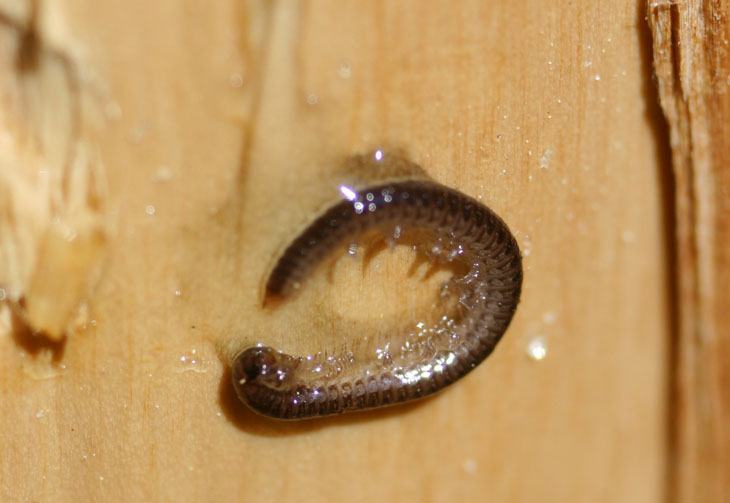
The only other species I saw was an Apheloria virginiensis montana (I believe, anyway, though mine sported only faint dorsal spots, unlike every identifying image I’ve found for the species.) This one’s just a wee bit longer than the beetle above and fairly common around here, even though they don’t appear to have a common name. If you’ve ever heard the old chestnut about the smell of bitter almonds indicating cyanide, and wondered what this actually smelled like, handling one of these will provide the experience. Accurately, as well – they really do produce a cyanide compound as a predator repellent, so at least wash your hands immediately afterward. Those bright colors are yet another example of aposematic coloration, high-contrast warning colors to make the species memorable and easy to spot, once an unlucky predator has been unfortunate enough to get a mouthful of nasty secretions.

Quite a few species exhibit these traits, all utilizing the same basic combination of distinctive, contrasting colors and discouraging response; essentially, the repelling method creates an indelible learned memory, even in species not particularly known for reasoning skills, and the colors are distinctive enough to get connected to those memories, so predators learn that festive colors do not promise a good time. I had originally suspected that somehow, many species automatically recognized bright colors, because the learning method seems rather inefficient; most predators can do a lot of damage before any defensive response could take effect, meaning the organism could die despite their defense – it seems unlikely that this system could evolve effectively. But then there’s the problem of just how any predator would have evolved the idea that bright colors mean something bad in the first place, as well as the fact that any species would only have to develop the bright colors to protect themselves, and not any other form of defense.

ApheloriaMiteCarl Zimmer talks about this trait among poison arrow frogs in Costa Rica, which display significant color variations within a surprisingly small geographic area. Be sure to read the comments for more speculation about how the process works for these amphibians. Meanwhile, one of the images I got of my multipedal subject showed an enterprising mite traipsing across the cranium (as well as some spiderwebs.) This is the best image I have of it, unfortunately – the millipede was scaling the vertical concrete walls of the spillway, and I was standing on the submerged apron aiming straight down rather awkwardly while my subject was wandering unpredictably. In short, there weren’t a lot of options at hand for those conditions. The mite was discovered only after unloading the images once back home; I couldn’t have possibly spotted it in the viewfinder, but even if I had, I doubt I could have done much about it. It was bad enough getting the focus on the bobbing head of the millipede, without trying to catch the mite in its own perambulations…

DifficultMimic2
DifficultMimic1A few days ago, I’d managed to capture another specimen I’ve been wanting more images of, an ant mimic jumping spider. Only about 5mm long, they really do appear like ants unless you know what to look for. For instance, they only have two body segments – spiders have a fused head and thorax, called a cephalothorax, while ants do not – but to me, it’s easier to spot them from their habits; spiders just move differently from ants. Especially this species, which is highly active for a spider and very difficult to capture in the tiny focus range of macro photography. These images were from my second attempt, the first yielding nothing worth keeping. And these are admittedly studio shots, using a sprig of grape buds held in an alligator clamp, with a little petroleum jelly on the base of the sprig to prevent the spider from escaping (on foot, anyway – there were a few tries at rappelling down on a web strand.) The background is a photo print, close enough to be lit by the same flash and softbox. While I could try to photograph this species in the wild, I know I would achieve nothing except drastically shortening my lifespan through stress and frustration. Police investigators now know, if they find someone dead in a field with a camera nearby, to check and see if a macro lens is attached. If so, the ruling is simply “natural causes” for nature photographers. And you thought the biggest hazards were bears and hippos…

EvilMimicAll of my attempts to pin down this species have failed so far, but I’m leaning towards a member of the genus Synemosyna. Anyone who can help out is invited to comment, or contact me directly – I may end up submitting them to BugGuide.net to see what their crew has to say. Meanwhile, this image remains my favorite, not because of any professional reason, but because the secondary strobe I was using for fill lighting provided a great sinister effect when the spider peered down in that direction – I suspect this is aided by the creepy position of the forelegs. What’s really happening, I believe, is the arachnid is collecting strands of its own silk and consuming it – this is a recycling trick of spiders (one of these days I’ll branch into video, but I don’t imagine that reducing stress in any way at all.) You can also see evidence of this same lighting technique in the first spider pic above, but I wasn’t using it for the second. Note the different reflections in the eyes, between the overhead softbox that illuminates the body chitin smoothly and the sharp reflections from the mini-strobe placed well below. While this subject might have benefited from the white box technique, I’ve had a lot of issues using that with reversed lenses, which pick up too much glare (lens coatings and structure are designed for using a lens the right way around…)

ThirstyAssassinMy final subject is another specimen provided by The Girlfriend, who spotted it on her car and quickly captured it within a film can that she carries for expressly that purpose (yeah, I know, I’m a lucky little shit.) There is a chance this is actually the same species that she caught last year, just a much-younger nymph stage – still working on that bit. I initially considered it an assassin or wheel bug, judging from the body shape and proboscis; suffice to say it’s an Hemipteran (True Bug) who took advantage of some dew while I was set up to get the shots – every once in a while you get some nice cooperation. The spot in the eye is not evidence of my lighting technique, even though I just taught you how to look for this, but a pollen grain instead – another clue is that there are no other sharp highlights on the front surface of the legs, proboscis, or dewdrops.

I’ll close with a scale shot, purposefully done this way because it communicates the size so much better than giving length in millimeters – and because this was the only specimen that cooperated enough for an easy shot. The spider was many times smaller than this, while the click beetle and millipede were both about the length of my little finger. It provides an idea of the range of magnifications possible when pursuing arthropod images – which also indicates how much can be missed without looking closely.
AssassinScale

1 276 277 278 279 280 332