Rehab6

This is actually the sixth time I’ve posted this particular writeup – it’s now become a yearly thing right around the time that wildlife starts becoming most active, and fits in nicely with National Wildlife Day, which is today. Plus look at all this content that I only have to cut-n-paste! So without further fanfare, we delve back into injured and orphaned wildlife.
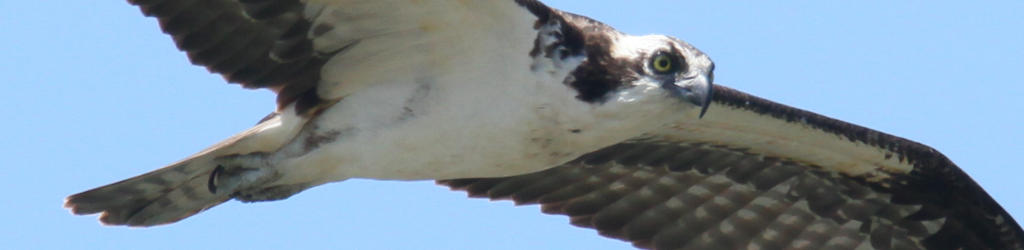
I used to work in this field a fair amount, both in administration of wildlife organizations and as an active raptor [birds of prey] rehabilitator, plus I served as wildlife adviser in several different situations. So I’m familiar with most of the more common reactions people have when they find ‘orphaned,’ injured, and ill wildlife. It’s hard to give enough useful information without trying to cover every situation or alternative, so treat this as an overview. One thing that I especially want to emphasize here is that there is an immediate emotional response in most cases, which tries to override the advice given by those who work in the fields, so be aware of it. There isn’t an ‘instinct’ we might have that applies to wildlife, and the rational mind is the part that needs to take control.

Additionally, the amount of folklore regarding wildlife is not just abundant, in most cases it’s ridiculously wrong. I’m not even going to say, “If in doubt…,” because you should doubt right off the bat, and consider that most of what you’ve heard is highly suspect. This means, contact someone who is supposed to know, and go with their advice.

Number one rule, and I can’t repeat this enough: Don’t try to raise wildlife on your own. Their diets are specialized, their needs varied and specific to the species, and their adult behavior dependent on how they’re raised. This isn’t the place for guesswork or experimentation. Even if they seem to be ‘doing well’ (like the viral video of the guy raising a baby hummingbird,) they may have developmental issues from an improper diet or exercise, or simply have imprinted on the wrong species, and you are in essence just prolonging the death of the animal. In the US, it’s illegal to raise any species without a specific permit, and songbirds are federally protected. It’s possible to obtain these permits, and quite frankly encouraged, because there are few places with enough rehabbers, but if you’re going to do it, do it right. More further down.

So, we’re about to enter baby bird season, and this accounts for a large percentage of wildlife encounters. I’ll dispel the first myth that touching a baby bird will cause the mother to abandon it. Utter hogwash, pure and simple – yet, I don’t always discourage parents from teaching this to their children, because it’s one way to try and get kids to leave them alone, which is a good thing. Better, perhaps, to teach them to leave them alone for the right reasons, which is to avoid interrupting their feeding schedule, or injuring them, or thinking it would be neat to have a pet robin. But returning to the myth, baby birds will occasionally fall from the nest, and it’s perfectly fine to return them to it, and in fact this is recommended.

It doesn’t always work, however. Some species will discard young that are not doing well, and some even kick their own siblings out – this is nature’s method of selecting the most viable offspring, as ruthless as we find it, and we’re not going to change it. Basically, if it’s a baby bird not ready to leave the nest (not fledged; we’ll return to this,) put it back. If it keeps coming out, there may not be much you can do.

Can’t reach the nest? Try to find a way, first. If that’s not possible, occasionally the parents will accept a substitute nest, such as a plastic berry basket with soft tissue as bedding – this should be placed as close as possible to the original nest, firmly anchored so it doesn’t come down. Observe the nest carefully, but from a safe distance, for 30-60 minutes to see if the parents have indeed found the substitute. If not, seek out a rehabilitator or wildlife official.

Abandoned nest? Maybe, maybe not. Once the eggs hatch, the parent birds go into feeding mode, gathering food constantly during daylight hours and stopping at the nest for brief periods to jam it down the gullets of their ravenous progeny. The 30-60 minute rule above is because waiting less may mean you’ve simply missed the brief feeding period between the extended gathering periods. Observation has to be done at a distance that does not alarm the parents – minimum is six meters (yards,) and more is recommended. Also, being low key is paramount, so take a seat (with binoculars, for preference) and remain still and quiet. Yes, it’s boring, but it’s for the health of the offspring, and if you didn’t care about that you wouldn’t be reading ;-)

fledglingsAs the nestlings become fledglings, they abandon the nest on their own in learning how to fly. This does mean that they’ll be found unable to fly, fluttering around at low level and even just sitting there staring at you. This is normal, and they should remain undisturbed. The parents are nearby, providing food and encouraging the flight attempts. Most bird species know enough not to give away their progeny’s locations to predators, or draw attention to themselves by moving a lot, so your ability to approach, or not being attacked by angry parents when you do so, means nothing at all. Again, observation is good here, as is knowing the calls of the species in question – the parents may be coaching their young towards them.

Now, telling the difference in ‘nestlings’ and ‘fledglings.’ A nestling is a baby bird that must remain in the nest for a while; they will have few feathers, or perhaps even odd ‘quills,’ which is what the feathers look like as they are growing out. Unable to support itself? Eyes not open? Nestling. Fledglings are the babies that are ready to learn how to fly. Their feathers will have good coverage with little to no stragglers or ‘stuffing coming out’ (the baby down.) One rule I always used over the phone was to ask if there were tail feathers – if there are, they’re about ready to fly. These are fledglings and should only be observed.

If in doubt, contact a rehabber/official. This is before doing anything else, save for getting it out of immediate danger. No food, no water, nothing at all. I can’t tell you the number of times I’ve heard people say, “We’ve tried giving it water and worms” – birds can aspirate the water if it’s not given the way the parents do (you’ve noticed the beak getting jammed halfway down the throat, right?) and only one species in North America eats earthworms. Again, folklore – ignore it and be safe.

Also, bleeding in birds is serious, no matter what. Birds have very thin blood that doesn’t coagulate easily, and they can bleed out quickly. Also note that those ‘quills’ of new feathers mentioned above have a blood supply for a while, and these can be broken and start bleeding as well. Time is important in such situations.

HappyOwletBaby raptors will tear you up – they know how to use the beak and talons very early (often on their siblings) and will not hesitate to protect themselves. And adult raptors will protect their young. This is where it’s best to leave it to the experienced.

And it may seem funny to have to say this, but baby birds do not look like their parents. Adult kestrels and screech owls, both diminutive raptors, are often considered “babies” when found by those not familiar with what a real juvenile looks like. Basic rule: if it has a smooth appearance and good coverage of feathers, it’s at least fledgling age, probably older.

What about mammals? This is a little different – mammals are generally not found away from their parents unless something has gone wrong. Most especially, if the youngster’s eyes aren’t open, they’re wet from the rain or dew, or if they’re cold or dehydrated, this is the time to contact someone. Test for dehydration by gently pinching up the skin over the shoulders or side in a ‘tent’ and releasing – if the skin takes more than a second to go back into position, this is dehydration.

Always use gloves. Juvenile mammals can certainly bite, and there’s an additional risk to this: rabies is active throughout much of North America. This is an invariably fatal disease once it passes a certain point (much more so than HIV,) so this needs to be taken seriously. It is not just the bite that can transmit it, but contact of an infected animal’s saliva with mucous membranes can introduce it as well, which means that picking up a damp animal and rubbing your eyes puts you at risk. Animals do not have to be showing symptoms to be infectious, and symptoms vary anyway. BE SAFE.

It’s not just rabies. Mammals are far more likely to introduce other zoonotic issues than birds – they’re enough like us that parasites (internal and external) and some viruses can be transmitted to us. Bringing them into the house may mean you just introduced fleas, lice, giardia, and so on into your home. You’ve been warned.

possumpeepingAlso, and it pains me to have to always say this, but cute does not mean safe. Any animal can defend itself. I have never been bitten by a raccoon, despite their aggressiveness, but I have a scar and a touch of nerve damage from a grey squirrel – one, moreover, that was raised in a house. Rabbits and mice can bite the hell out of you. Shrews even have a toxic saliva. Yes, I am trying to scare you – if you’re scared, you’re cautious, which is better than incautious.

In many cases, mammals about half of the adult size can be on their own without issues – they learn how to forage for their own food reasonably quickly. Again, the stillness thing doesn’t mean they’re lost – it may simply mean they’re trying not to attract attention. This is especially so for white-tailed deer fawns – they often curl up in the grass and conserve energy while mom forages, and will not move even when someone approaches – occasionally not even when picked up. Leave them be, and come back in a few hours. If they’re still there, that’s when you should contact someone.

Rabbits are notorious for abandoning the nest if it’s been disturbed, even with a full brood of young within. This is doubly hazardous because their nests are often in clumps of grass and can be inadvertently discovered by cleaning the yard. If it happens, immediately put everything back as it was, without touching the young, and place a few distinctive blades of grass across the nest opening (preferably something you can see from at least a short distance away,) then leave it entirely alone. Come back in a few hours and check to see if the grass has been moved. If it has, things are probably okay. If not, it may be time to check the warmth and hydration of the young. Contact a rehabilitator.

Again, trying to raise them yourself puts them at a high risk. This is especially true for rabbits, which are among the hardest mammals to raise in North America. I can’t count the number of people who have assured me that they did it once before, so “they know how to do it.” While this may be true, it ignores numerous things, such as how viable the released offspring were and whether they lasted longer than a month, whether they had developmental deficiencies because of improper nutrition, and even whether they had habituated to food or behavior that left them ill-prepared for their conditions. There is a shortage of rehabilitators, so believe me, if it was easy most people would be encouraged to tackle this on their own. The fact that not only is it discouraged, it is unlawful in most areas, should be a good indication that there’s something more to consider. And the welfare of the animal should take higher precedence than anyone’s ego.

Injured animals are extra dangerous. Yes, they may seem incapacitated or helpless, but you know what they say about appearances. One of my colleagues rashly checked an injured, near-comatose squirrel bare-handed, and it bit through her finger, joining its teeth together in the fleshy part of her index finger – I actually heard them grinding together. It then passed out without letting go. Animals in pain (even pets) often respond aggressively – they have no concept of your attempts to help them, and restraint can make them even more agitated. Deer can do vast amounts of damage by thrashing with their hooves, and the big waterfowl like herons and cranes can drive that beak into your face (and yes, they aim for effectiveness.) I really want to emphasize this, because the nurturing instincts are badly misplaced here, and extreme caution is necessary instead.

“There’s a nest of animals in my attic/crawlspace/walls and they need to be removed!” No. Most especially not when they’re raising young, which is most often when anyone notices them. Once the young are there, no further damage is going to be done to your house, because the parents are concentrating on raising their brood. Trying to relocate them is hazardous, both to the animals and to people in many cases, and pointless. Let them be, and in a few weeks the young will be old enough and move out on their own – about the only exception to this is bat colonies (more below.) Once there are no young to raise, the adult animals often leave on their own – nests are primarily for young – but they can also be encouraged to leave or stay out at that point. Squirrels are pretty bad about wanting to return to successful nest areas, and will even chew through wire mesh at times, but most others take the hint and find better places to live.

“But what about rabies?” Animals raising young, even in the eaves of your house, are not an especially high risk. Contrary to belief, rabies does not cause animals to leap suddenly out and attack people; those events are remarkably rare. While anyone should be quite cautious of any mammals that openly approach, living near them does not place anyone at special risk – you’re at greater risk of being killed by the tree near the house falling on you, and we won’t even talk about road risks. Like snake bites, most contacts with rabies vector wildlife occurs by people initiating the contact.

beaverspoor“Animals are doing damage to my property and need to be removed!” No. I can’t tell you how much this attitude annoys me, but that’s what a blog is for, right? Wildlife goes where the habitat is ideal, and pays no attention to humankind’s imaginary idea of “property.” First off, anyone should enjoy the opportunity to see behavior, something that is often hard to accomplish even when making the effort. If someone has wildlife around, chances are they aren’t in a high-rise apartment, which means they wanted to live with at least some vestige of nature visible; surprise surprise, it comes with other animals. While we might decry the damages to our gardens or landscaping, that’s part of the territory, just like road noise and power lines. Learn how to cope, and the ways to exclude animals from certain areas so we can have tomatoes. I’m sorry that a $500 tree was stripped, but no one should have planted something that was that appealing to the local species in the first place, and chances are, numerous appropriate trees had been cut down first so that the fancy landscaping could be put in its place (and I used to work for a landscaper, too.)

Trapping and removal is rarely effective. If there’s a habitat, someone else will move in. And wildlife populations have been shown through numerous studies to be fairly self-regulating; the issues come because habitat destruction by humans is not. We can put in housing developments much faster than the natural cycles of population reduction and management, and those displaced animals end up somewhere. They likely feel the same way about us – dread the point where they develop opposable thumbs.

But what about bats? Ah, the poor little guys! Much of our population considers them ugly and creepy, not at all helped by folklore and horror stories, yet bats are actually way cool mammals, and good to keep the insects down. But most species nest in colonies, and this does sometimes mean in attics, which can produce lots of guano (bat poop) and increases the risks of rabies exposure, primarily when one gets lost and ends up within the human spaces of the house. However, the damage that they can do is minuscule, since they do not dig or gnaw, and excluding them only takes 1/4″ hardware cloth (small-holed wire mesh.) Again, this should be done when no young are being raised, and should always be done with gloves and a breath mask (guano turns into dust easily and can be inhaled.) Should you find a bat in your house, contact your local animal control, since states differ on how they handle potential exposures.

I said I’d get to this: So you want to learn how to rehabilitate wildlife? Once again, this is actually encouraged, but like riding a motorcycle, it should be done properly and responsibly. If there isn’t a wildlife center or organization available in your area, contact your regional Wildlife Resource Commission office (for the US at least) to find out who in your area can train you, and most especially what permissions you need. In the US you’ll need at least one permit, possibly several. What you’ll mostly need is training, because any species requires a decent body of knowledge to tackle well – which also means pick a species, at least to start. Your local rehabbers can suggest a few, which might mean picking something you didn’t initially desire, but which is either easier to learn or presents the greatest needs within an area (and again, is this about you, or the animals?) Expect to spend a lot of time at it, since most animals need lots of attention – mammals may need feedings every four hours around the clock, and birds every 15-30 minutes during daylight (yes, I knew a songbird rehabilitator that kept baby birds in the desk drawers of her office.) And it’s almost certainly all coming out of your own pocket.

SquirrelFeeding
I feel obligated to say this, too: wild animals are not pets, and should not be raised as such. There are lots of reasons. The domesticated animals we have as pets, like cats and dogs and horses, have been bred that way for thousands of years and quite likely were chosen because they already had traits that assisted the process. Animals do not domesticate by simply raising them around people, and in many cases have behaviors that cause them to run afoul of our own (I mention once again the squirrel scar I bear – that story was posted a few years ago.) Many animals also do not have diets that are easy for humans to replicate, meaning that they’re unlikely to thrive and may develop serious disabilities. But most distinctly, what we might imagine them to be like is rarely ever the case – they are highly unlikely to bond with humans in the slightest, and aren’t going to make good companions, do tricks, or even exhibit any appealing personality. They belong in the wild, and that should be your only goal.

Now, if the demands of rehabilitation are too much to contemplate, you can always volunteer with a local organization, and do rehabilitation on a rotation as your schedule permits. This helps prevent burnout and lets you have vacations and family emergencies. This also allows you to get involved without necessarily requiring the permits, because you can operate under the aegis of the organization and its own permits (which is how I worked with raptors, since my apartment would not fit the 15-meter flight cages required.) Still, expect to be dedicated to the job, even when it’s unsavory – cleaning cages and wounds, and even euthanizing injured animals, is a requisite part of it all. Not to mention how many species expect live or fresh food. If you’re thinking of cuddling fluffy bunnies, you’re not ready; rehab requires lots of ugly stuff, and very little bonding – they’re not pets, but wildlife, and need to be wild.

Or, simply donate money or materials. That works too, and is just as necessary – the nice thing about the subject is how nearly everyone can find a niche (provided they accept the reasonable expectations.) Despite such things as Wildlife Resource Commissions and the US Fish & Wildlife Service, there really isn’t money being put into wildlife rehab, especially not from a state or federal level. The vast majority of organizations run solely on donations and grants, and often even have to have veterinary services donated. Experienced workers are great, but donors are just as important, if not more so. Even people who can promote greater donations are important. Just about everything is grass-roots level, all of the time – the few exceptions are great, and demonstrations of what can be done, but not what you can expect throughout the field. Your help, whatever it is, will be appreciated.

A final note: find out, now, how to contact your local wildlife people. Before you find yourself with an injured owl on your hands. In some areas, it’s not self-evident or easy to find, and if it’s not a registered organization, you can forget about searching any telephone listings. Local animal control usually knows, and the 24-hour emergency vets. Often, 911 operators do not, and even local law enforcement may be stumped. A few minutes to get prepared can save a lot of hassle later on, and as I said, we’re entering baby season.

Hope this helps!

Just once, part 8

eastern kingsnake Lampropeltis getula chilling
So not only has this species only appeared once before here, I’ve only seen them once in my entire life (in the wild anyway,) despite the fact that they’re supposed to be quite common. So I was delighted to spot this eastern kingsnake (Lampropeltis getula) just snoozing out in the open in a heavily wooded spot alongside Jordan Lake, but it also was amazingly cooperative in deciding to slink away slowly instead of shooting off in a flash, allowing for a whole sequence of images, and came within centimeters of my foot as it did so. It’s a harmless species and thus didn’t concern me with this, but to the best that I could determine, I was standing between its napping spot and its routine shelter, and so it detoured around me with elaborate calm to avoid attracting attention with sudden movement; had I done anything more than slowly pivot to follow it, I might have seen a more energetic escape. But isn’t that color pattern slick, especially on the head? I couldn’t tell you what purpose this serves, and it seems to me that horizontal banding enhances the motion of the snake and would make it easier to track by a hawk or an owl. I’ve chased plenty of snakes, and their habit of following through a ‘fixed’ curve makes you fixate on the midbody, which seems not to be moving that fast until the tail snaps through that curve and vanishes; this is a common trait and one that I’m sure helps a lot, so banding that defeats this illusion doesn’t seem right to me.

But yeah, I’m always hoping to eradicate this species from the ‘just once’ list, preferably with a lot of photos. This will be the year… right?

These might work

Just so you know, Thursday (February 22nd) is National Wildlife Day, so call in sick that day and go find wildlife, even if it’s captive wildlife in a zoo or nature park or something, but preferably really and for true in the wild, which means outdoors. Now, c’mon – how many of your coworkers failed to show up the day after Super Bowl or some such rot? Okay then – this is a much better reason.

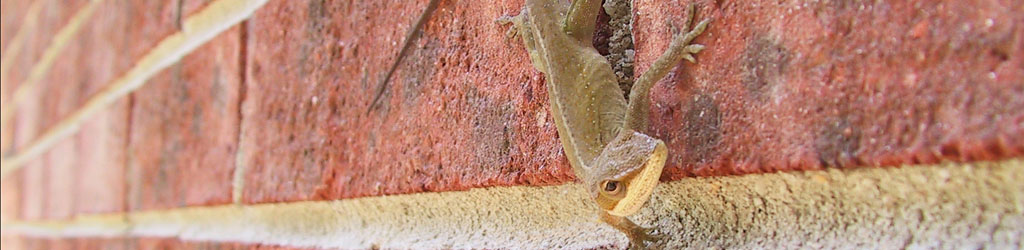
I actually have plans to do some shooting that day, so we’ll see what happens, but at least there’s a little motivation and the weather may be good for it; it’s been remaining a tad too cold, though we have the occasional warm day, as the fella below attests (that was taken a week ago.) And I have a post already lined up, which means there might be more than one for the day. No promises.

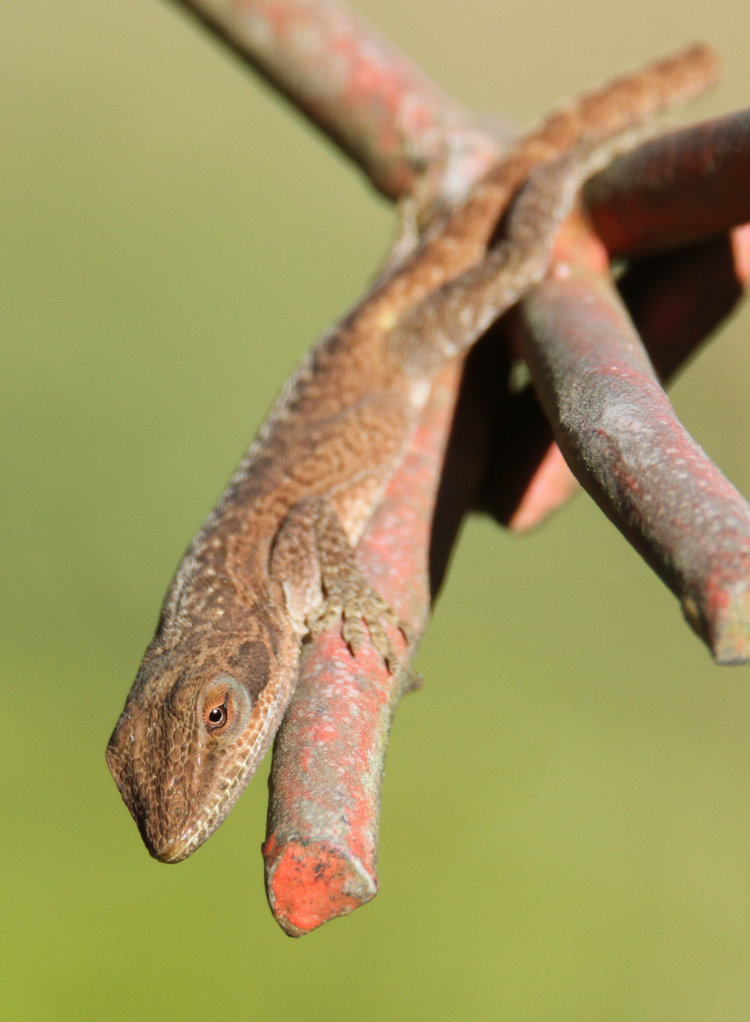
Carolina anole Anolis carolinensis on wall of Walkabout Estates in mid-February
Plus there’s another holiday coming up on Saturday, I believe, though I haven’t figured out what it is yet can’t quite remember what it is. But I do remember that it’s cool.

I’ll drop another reminder in here, though I doubt you’d have missed it since all forms of media seem to be on top of it, but the total solar eclipse is coming up on April 8th, crossing a very large swath of the contiguous US and Mexico; the band of totality is quite impressive, but the band of partial eclipse can be seen by damn near all of North and Central America. Make sure you have your glasses and necessary filters, and your timing is bang-on – totality will only last a couple of minutes. I will be in Ohio within the path of totality and will be getting as many pics as I can, hopefully doing even better than the last opportunity.

The day before (April 7th,) the tiny crescent moon will occlude Venus during the day, for observers in much the same band as the eclipse – Stellarium will help you determine if and when this will occur for your area. While the moon will be extremely difficult to spot during the time (this will occur at roughly 12:30 PM EST,) Venus will be especially bright at a magnitude near -4, so with clear skies and knowing where to look, it will be easier to find than the moon, and hopefully will highlight that crescent as it draws near. I’ll be aiming for that too. I’m well aware that the weather may make either impossible to see, and that’s just how it goes, but I’m doing my best to ensure that if I miss either, it’s not through any fault of my own.

Stellarium plot of the occultation of Venus by Moon, April 7 2024
So there are a couple of things to chase, should you be inclined (and why wouldn’t you be?) As always, if I’m successful with any of them myself, you’ll see the evidence here soon enough.

Good luck!

Living in the past XXIX

Things are still slow on the nature photography end, and even I won’t post about hashing out designs for the 3D printer (there – we found a limit to what I’ll post; happy now?) So I’m bringing up one of the entries I had in reserve, if needed, to bring the count up last year and make a meaningless anniversary, while we wait for more current items of interest.

red-shouldered hawk Buteo lineatus finishing off a captured black rat snake
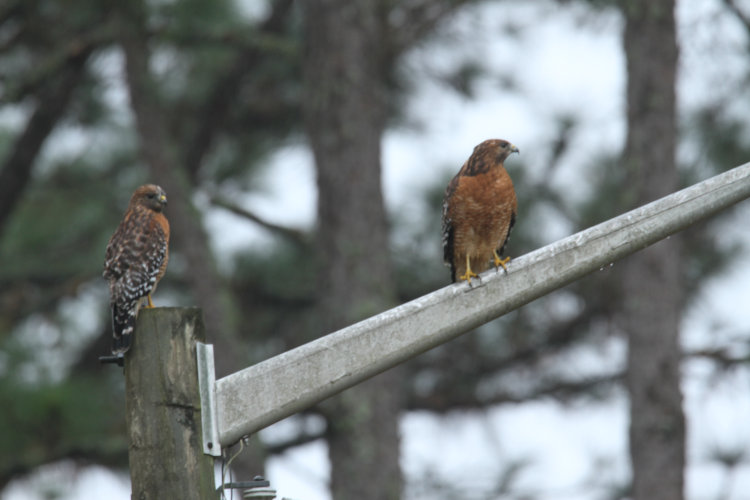
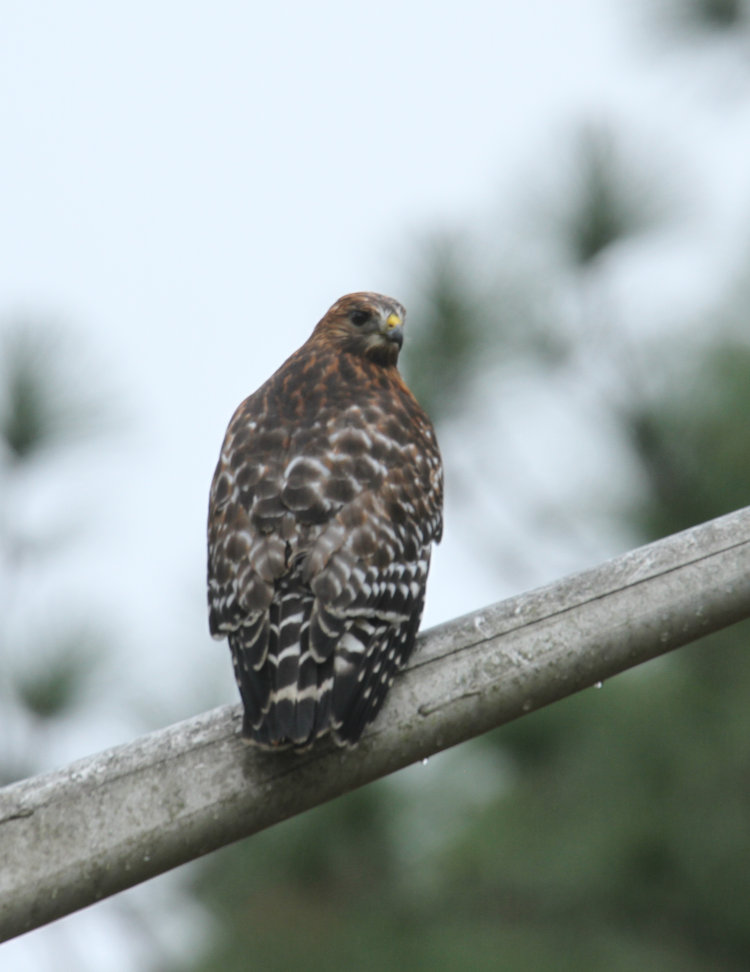
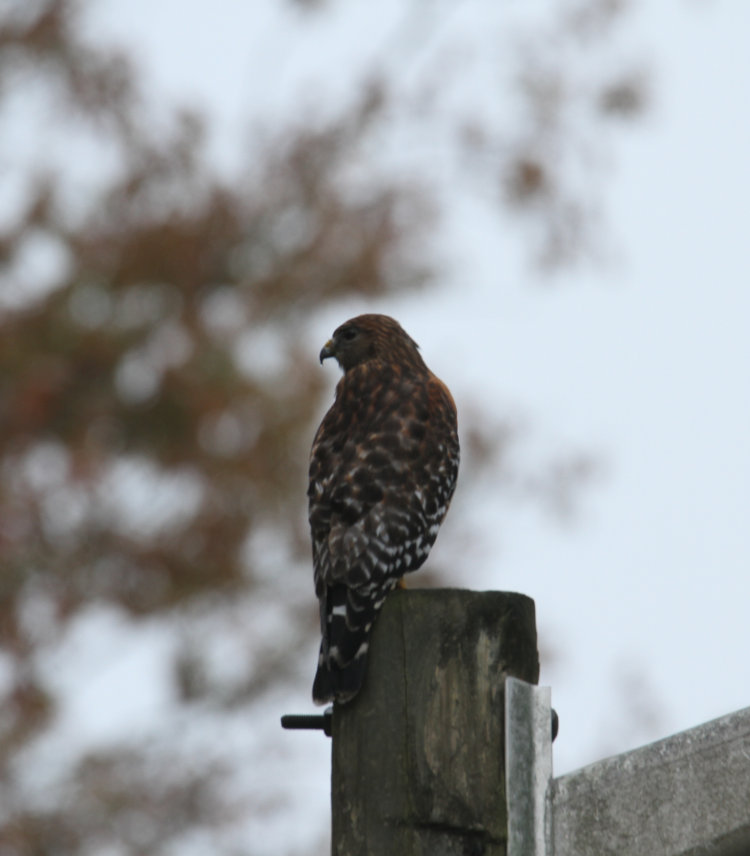
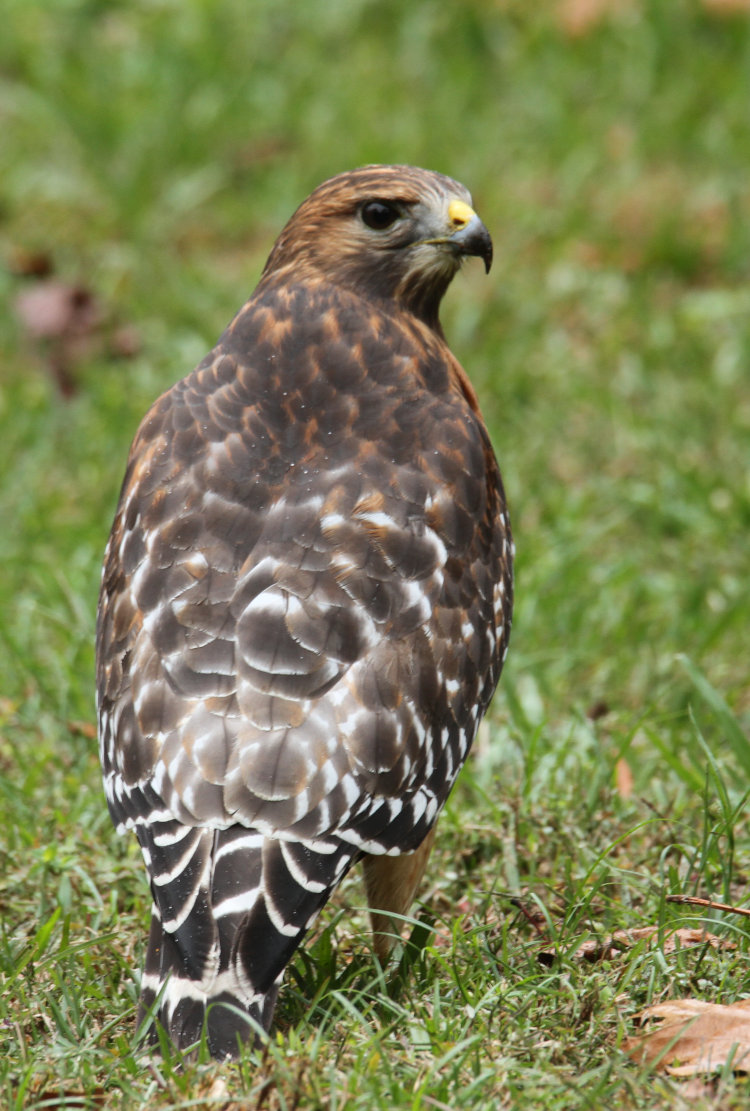
2016 was the year that a family of red-shouldered hawks were raised in a nest that, though a little distant, was in plain view off of the back of the property. Regrettably, I didn’t have a quality long lens nor the ability to do video at that time, both remedied now, though the hawks have not deigned to return. But as I was out there photographing the young squabbling in the nest, one of the parents (I tend to think it was the dad) returned with a medium-sized eastern rat snake, though he alighted on a branch a short distance from the nest to ensure that the snake was dead before it was introduced to the sprogs. I had to pick up the tripod and move it forward about a meter, turning the camera about 90°, but it gave me a nice view that was much closer than the nest itself.

Man, video capability would have been great to have at that point! I did create an animated gif (pronounced “JAW-fee-joe-fur“) from a long sequence of stills of the nestlings having a tug-of-war with a smaller snake, but this experience, among others, prompted me to obtain a video-capable camera body (because a camcorder wouldn’t have the reach of a 500 or 600mm lens) as well as a halfway-decent shotgun microphone. Those came in handy with the beavers and the woodpeckers so, improvements are being made.

Just once, part 7

summer tanager Piranga rubra peeking from foliage
This post has changed a bit. First, I had a subject that I realized would fit better later on in the year, and so I rescheduled it. Then I chose another subject, but as I was finalizing that draft, I noticed that it was going to post on a holiday, and thought I might be able to find something more appropriate, and pushed that one to next week. So at least we now have something red for Valentine’s Day, which is probably as close as I’m going to get.

This is a summer tanager (Piranga rubra,) and I probably would have missed it entirely had I not twigged onto the calls that I didn’t recognize, right behind the car as Mr Bugg and I arrived at the lake for a photo session. I could have stalled this for the first day of summer, which is also when I photographed it, but I didn’t have anything else that seemed to fit for today. Though if I find something later on, I’ll use that for the first day of summer. No, that’s on a Friday this year – never mind.

Jordan Lake has a tendency to feature more bird species than I see in my immediate area, despite being only about 12 kilometers away, though if we maintained a well-stocked bird feeder here, that might be different. My attempts to establish some plants that attract more birds have never panned out, but I blame that on the seed companies

Nothing has evolved

Even his likeness gazing down at me from above my desk failed to inspire
Today is Darwin Day, celebrating the birth of Charles Darwin on this day in 1809, and I got bupkiss for it. I’ve known it was coming for over a week, even had routine reminders popping up in my calendar, and haven’t found a damn thing to actually post about. This holiday really shouldn’t occur in February (and February shouldn’t be spelled February,) and maybe I’ll make the effort to change this in some way. We could always use July 1 (1858,) which was the date that Darwin’s and Wallace’s ideas were first screened by the Linnean Society, or November 22 (1859,) the first publication of Origin of Species (or to be complete, On the Origin of Species by Means of Natural Selection, or the Preservation of Favoured Races in the Struggle for Life,) though November 22 is only slightly better than February 12 for finding something that illustrates Darwin’s ideas decently. Or perhaps I’m just being close-minded and not contemplating the options available to me right now. I mean, there are two domestic shorthair felines asleep on the desk alongside me right now (though not alongside each other – they won’t let that happen,) and I could speculate about the factors that allowed and encouraged this state of affairs, but I’d be more blathering than informing, and certainly not reflecting Darwin’s meticulous examinations in the slightest.

So you’re on your own this time. Do a little research, poke around online, get out those books that you’ve been meaning to read, take part in a five-year sailing voyage taking copious notes on geology and obtaining specimens – whatever works. Just, like, do a better job than I have. I set the bar low for you; no thanks are necessary.

Wait, you’re not green

small American bullfrog Lithobates catesbeianus hanging out in backyard pond
While grabbing something out of the yard tonight by the light of the headlamp, I happened to check out the backyard pond, because it’s reasonably warm and raining, which is usually enough to stir any resident frogs. And sure enough, at least one was sitting idly in the shallows, but another might have skipped into the water at my approach. So I went back inside and got the macro rig, for the first time since the butterfly house, and did just a pair of frames before the frog spooked and disappeared back under the surface.

It was as I was editing this frame just before uploading it here that I checked an assumed detail, which was missing, and realized I had a different species than I thought. Generally, it’s been a handful of green frogs (Lithobates clamitans) that have made this little pond their residence, but green frogs have a ‘vein’ ridge that runs from the crest of the head back towards the hips – this one only curls around the back side of the eardrum. That makes it an American bullfrog (Lithobates catesbeianus) instead, only a very small one, maybe about 50mm in body length – that’s smallish for a green frog, but quite small for a bullfrog, which can get to be the size of my fist (and you know how huge that is.)

This is part on an ongoing and curious saga. Some time last year, the green frogs seem to have vacated and a bullfrog, a big one (compare the pine straw,) moved in – I have not ruled out the bullfrog eating the greens. This remained the case for a few weeks I think, then the bullfrog was no longer able to be found, and this occurred quite close to the time that a red-shouldered hawk was hanging out suspiciously close to the backyard. They’re fond of frogs, and not in a decorative ceramics way, so I suspected that the bullfrog may have been consumed. I couldn’t recall if I had seen any new green frogs after that or not, and so I went back through the stock folders to check: nada. This might actually be the first frog that I’ve seen in the pond since the bullfrog left last September – it’s certainly the first I’ve photographed.

(If you’re thinking this might be one of the young-uns deposited in the pond by last year’s bullfrog, I’m going to burst that bubble; there would have been dozens to hundreds of tadpoles, probably far too many for a little pond liner, but I certainly would have seen evidence of them more than this, especially since I cleaned a lot of the debris out of the pond in October or so. I know it doesn’t look like I did here, but the winter deposited a buttload of stuff back into it.)

Anyway, I shot a picture! Yeah, it’s been that kind of season…

Walkabout recommends: Under Fire

Yes, the DVD cover art really is this color, though slightly better elsewhere
For our second obscure sleeper, we have Nick Nolte again, with Joanna Cassidy and Gene Hackman, in a 1983 film about the civil unrest in Nicaragua in 1979 and the American journalists assigned to cover the events. The film is not billed as “based on a true story” and is distinctly a dramatization, but the events that are covered are historical, and there’s a key bit that mirrors a significant development within – to say more would be to give away too much.

What promotes this to the level of our recommendation here, however, is the portrayal of the journalists thereof, their attitudes and motivations in a country not their own and not really impacting their lives – immersed yet professionally distant. Journalists are (or at least were) often given free rein in such situations, serving as neutral parties and impartial observers of the conflicts, much like medical personnel being permitted to aid the wounded and civilians while distinctly prohibited from being targeted. Allowing journalists to witness firsthand what is going on is a measure of, to put it bluntly, righteousness – “You can see for yourself, we have nothing to hide and are doing nothing wrong.” It is often in the interests of all parties within a conflict to permit free access by journalists – until and unless there really is something to hide. Yet the journalists are also on their own in such situations, in as much danger as they dare to put themselves, and this is immediately evident in Nolte’s portrayal of photojournalist Russell Price right at the very beginning of the film, clearly driven more by snagging the dramatic image than by remaining safely out of the line of fire. Dedicated? Foolhardy? That’s a perspective up to the viewer to determine.

Neutrality and mere observation is a key factor to these pursuits, however, and many journalists have struggled with the internal conflicts that occur when their social, compassionate nature reacts to the events unfolding – it isn’t possible to entirely shut off such reactions, no matter what their career demands. The handling of this within the film is superb, allowing the viewer to realize what changes are taking place without being heavy-handed about it, and one can begin to understand that there may be a disconnect between ‘proper’ and ‘right,’ and even how those terms are defined by individuals.

The background is the efforts of the Sandinista National Liberation Front (FSLN) to depose the ruling regime of Nicaragua under Anastasio Somoza, who was aided and backed, at least diplomatically, by the US. Like far too many of our affairs in Central America, the American public had a poor understanding of Somoza’s actions and policies, and it remains hard to believe that US diplomats were just as unaware; more likely, the US government was willingly aiding and supporting a rather nasty dictator and keeping the knowledge of such behavior from the US public. The film remains fairly distant from most political commentary, despite the fact that the events therein had already passed, but the intrigues and actions of the Nicaraguan government and military make things more evident as the film progresses.

As an interesting historical aside, the Sandinistas/FSLN did in real life gain control of the Nicaraguan government and ruled for many years. The infamous Iran-Contra Affair in the US, breaking around 1985 and thus two years after this film, revolved around the private funding of the Nicaraguan Contras, a rebel group opposed to the FSLN, by covert monies from the US, obtained by selling arms illegally to Iran. While in the hearings that followed, the attempt was made to portray the Contras as noble freedom fighters, the evidence of their behavior firmly belied this, to say nothing of why our government should be inclined to hide its involvement. The history of US/CIA-backed puppets in both Central America and the Middle East is a disturbing one, while at the same time, trying to determine which side is more “just,” or even to fully comprehend the politics of any foreign country, is far too complicated to reduce to simple black-or-white perspectives.

Getting back to the film, the acting is almost all excellent; director Roger Spottiswoode brought out the best from the cast and there is nothing that takes you out of the film. Ed Harris is notorious for playing diverse roles, and his portrayal as a mercenary here becomes more captivating as the story progresses. Joanna Cassidy is one of those actors that deserves more recognition, and here she carries the part of an American journalist far beyond the ‘love interest’ that many writers or directors would have aimed for. Jean-Louis Trintignant delivers some of the best lines in the film, yet while he identifies the FSLN derogatorily as the “poets,” implying that they are more about rhetoric than about politics, he and Somoza’s representatives offer the only meaningless platitudes, while the Sandanistas express a bitter practicality; a line from a nurse within an aid station is brutally poignant. The one exception in these performances is the character of PR representative Hub Kittle (Richard Masur,) who is too superficial and clumsy. I feel obligated to mention that Nolte’s camera equipment and handling is entirely believable – real photojournalists should find little to annoy them.

Despite some heavy-handed ‘tension’ music at a key part, Jerry Goldsmith’s soundtrack fits well, unique yet expressive; I am not one to speak of notes and chords and how they work on our emotions, but the underlying feel that I get from the music seemed to express the mood of a country sundered from within. There is not the triumphant fanfare or the grim resolve of a typical ‘war’ film soundtrack, but more of a plaintive despair as the people find their government has no concern for them.

Overall, the entire film makes you think as well as portraying believable and nuanced characters, that still do not overwhelm the story itself. Definitely worth checking out.

[For the time being at least, this is available to stream for free from Tubi.]

Just once, part 6

Mottled sea hare Aplysia fasciata swimming
It’s not particularly surprising that this critter has only been featured once here, since I stumbled across it at the beach along New Topsail Inlet, coastal North Carolina. I’ve been to the inlet itself several times, including one short snorkeling excursion, but it appears that vagaries of currents and conditions drove several examples of this species close to, and onto, shore on one particular day. To the best of my ability to determine, this is a mottled sea hare (Aplysia fasciata,) and if you ask me, “Yeah, but what’s a sea hare?” I’ll simply reply, It’s one of these. Basically, it’s something that Charles Darwin worked up when he was trying to create evolution, about the time his wife had been out of town for a couple of weeks and he was a little distracted.

Mottled sea hare Aplysia fasciata swimming
All right, the Walkabout Fact-checkers are on my case again, so I have to inform you that the above sentence may not be entirely true. But sea hares are gastropods, like slugs and snails, and are specialized for their marine environment despite reminding you of how explicit Hustler magazine was. And it was not little, estimated at 20-22 cm in length. While this one had actually been on-shore when found, I did not know what it was at the time and slid it back into the water with my sandaled foot, so I did not handle it nor examine it for a mouth or tracheal ovipositor or anything – there’s a limit, even for me. I have only rudimentary knowledge of aquatic species and no idea how many things have nasty little defensive mechanisms, though granted this one was more camouflage-colored than many of its cousins the nudibranchs, which are often brightly-colored as an indication that they do indeed possess nasty little defensive mechanisms.

But wait! We have video!

[You can just mute the audio – it’s a smutphone video without external mic or wind protection, so all you’ll hear is thumping anyway.]

So can we expect to see more of these show up in later posts? I wouldn’t be watching anxiously for it; I don’t get out to the beach as often as I should, and don’t see too many aquatic specimens when I do, plus as I said, I think these were extenuating circumstances. Nor am I particularly motivated to chase these as a photographic subject – I think we’ve just about exhausted their potential right here. But, you know, I won’t rule out finding an exciting, agile, and considerably more cuddly example, say, with big eyes and plush fur…

Better to be prepared…

After realizing that I could use some enhancements to my shooting rig for a particular topic, I ended up designing and making them in record time. And to my own surprise, they work quite well, with fewer issues and modifications than I thought I’d need. I present to you the tactical special ops night stalker imaging rig, the Beav Team Six:

distant night shooting rig with long lens brace, focus ring extension, and focusing flashlight holder
Actually, it’s missing the Vivitar 285 strobe unit on top, because I forgot it for these photos, so it’s not as ‘complete’ as it should be. But here’s what you’re looking at.

The Canon 7D and Tamron 150-600 are obvious, but then we have the focusing ring extension, visible between the lens barrel and tripod plate here – this allows the focus ring to be turned while still supporting the lens farther out towards the end, for more stability. This was only practical because the lens has ultrasonic, real-time focusing, so the focus ring itself is decoupled from internal lens arrays and does not spin during autofocus. This means that the ring extension lever can be moved exactly where it can be reached best, or even out of the way atop the barrel (which is especially useful in that I often carry this heavy rig upside-down by the tripod mounting plate, directly underneath the lever here.) It’s attached by a pair of zip-ties that are quite tight, because there can be no play in the add-on with the leverage that’s put on it out away from the attachment point. Additionally, it is close enough to the lens that the lenshood will fit over it when stored reversed, so it does not need to be detached when returned to the case.

Then there’s the flashlight holder, which despite making a stupid mistake in the design of, I was able to modify enough to fit, and it fits snugly and aims that flashlight right where it’s needed, centered in the viewfinder even when the lens is extended to 600mm. It is not bright enough to allow autofocus at night, but it is enough for manual focus, thus the extension lever. This add-on fits right over top of the long lens grip, visible protruding from underneath the flashlight, but is easily removed when it is not needed.

distant night shooting rig with long lens brace, focus ring extension, and focusing flashlight holder
Both of these, as well as the long lens grip, were designed in Blender software and then 3D printed. The initial design of the focus ring extension wasn’t quite adequate, so this is the second version, and I am contemplating one that will attach tight enough to the ring but not require zip-ties, thus more easily detachable.

While I’d been toying with the idea of a focus extension, these were created with one particular subject in mind: the beaver(s) at the neighborhood pond. So the very night that they were completed, I went out to do the acid test on a real subject, and saw absolutely nothing – the beaver wasn’t active at that time. So I tried again on a subsequent night – and then again, with the same results each time, and I’m not sure if this is because the beaver moved on or simply wasn’t active the specific times that I was over there. It’s a little frustrating not to find my subject when I’m this prepared, I admit, like getting a new dive mask for christmas, but the modifications are still useful for other subjects, so they’ll get their use even if I never see the beaver again.

Will I be uploading these for others to print and use? Very likely on the focus extension, less so on the flashlight holder, which is designed around the dimensions of the flashlight that I had handy and likely won’t fit too many others. The focus extension is designed around the Tamron SP 150-600mm F5-6.3 Di VC G2 (the second-generation version,) and may not even fit the first gen version, much less any other lens, so the application to the general public are limited to those with that lens. Before that happens, however, I may try out a few variations to see if there’s a better approach.

Anyway, when I get images with this particular rig, you know where to find them.

1 45 46 47 48 49 325