



So let’s talk about something that all nature photographers should retain in the back of their mind at least, but remind themselves of often as well. I mean, all photographers can benefit from staying safe, but nature photographers expose themselves to more hazards than many other classes.
Equipment: Almost goes without saying, but have decent padded bags that fully protect your equipment, and most importantly, stow your equipment before tackling any hazardous terrain or situations. Sure, we want to be ready for that sudden appearance of a chartruese-assed warbler or whatever, but walking around with the camera in hand means it’s likely to get shoved right in front of us if we stumble – or, if we have slightly more presence of mind, flung away so our hands are empty to break our fall. Which is an important distinction: if we sustain an injury requiring even just a doctor’s visit, we’re likely to exceed the cost of replacing the equipment right off the bat, unless our insurance and deductible is very good (granted, this applies most to those of us in the US where healthcare is considered this rampant luxury and not a basic right.) If it’s a choice between you or your camera, you choose you. Equipment can be repaired or replaced, and cheaper than you can.
Better, though, not to provide the option to find out. Pack the equipment away before those tough slopes (or even the damp ones,) wading in the stream, climbing the rock face, and so on. And never, ever walk around with the camera and long lens affixed to the tripod you’re carrying – I’ve seen far too many photographers do this, avoiding the inconvenience of detaching the camera, and it’s asking for trouble. Chances are you’ll do more damage because the tripod will pivot slam that camera into the ground harder than if you simply dropped it.
No bag is waterproof, but having it closed tightly can be adequate against a brief dunking, though get the equipment out afterwards as soon as possible, because the wet material will leach moisture into the equipment in short order.
A rain cover, for you and the bags, is paramount – always have at least one in the bag. Sudden squalls can come up at any time, especially in summer, and you want to be able to protect against the rain quickly. The disposable rain ponchos are great and take up little room.
Camera straps are something I abhor, even though at times they might be useful. At other times (far more often,) they let the camera swing about and bang into things, especially if you bend over. Your bag should be chosen to allow the camera to drop into it easily with your most common lenses.
Backpacks suck. There I said it. If you have to take the damn thing off to get at any equipment whatsoever, you might as well not bring it along. That said, I routinely use a sling bag, which puts the weight on my back for most of the hiking but easily slides down to one side to allow quick access.
Which brings up balance. A single shoulder strap with the weighty bag on the end is simply asking for back problems, either that evening or as you get older. Equal weight, or close to it, on both shoulders is more recommended (I know, this is how a backpack is made, but again…) Switching off routinely is better than not doing so. So is limiting the amount of weight in a bag, which is a dilemma if you’re trying to be prepared for varied subject matter – this is the story of my life.
By the way, blowing mists, sand and so on? Put the camera away. Sand will scratch a lens faster than anything else. A lenshood can help (including against crowds and rowdy kids and so on, anyone not spatially aware enough to avoid running into you,) but it’s not that much protection.
High winds? Hand on the tripod – they can be blown over, no matter how heavy. Also, this is a case where removing the lenshood may help, because they catch more wind.
Hiking/exploring: First off, if you can let someone know where you’ll be, all the better. When you don’t check in or come back, they know where to start looking.
Staying on the trails is better, for a number of reasons. The footing is more assured, the path easier to examine for hazards, you know that the ground is stable, and again, this is where people will look. Also, slightly less chance of encountering venomous snakes, and more chance of seeing them.
Pay attention to trail names, the maps, and so on. If you need to let someone know where you are with a broken ankle, you can do this better with specifics. Also, there’s far less chance of you getting lost. It’s not a bad idea to stop at any fork or crossing and turn around completely, familiarizing yourself with how it looks from any approach, so you know what to look for on your return, or if it loops around.
Be aware of the sun – it tells you the direction you’re heading pretty easily, if you pay attention. Of course, this fails when the clouds roll in, or at night. Also listen to the sounds, specifically traffic noise, running water, or nearby housing – these can be used to orient you as well.
Your smutphone is a great tool for orienteering, or contacting someone – until it isn’t. You can lose signal, battery power, or even break the damn thing, so never fully rely on it. Bear in mind you’re quite likely to lose use of the phone if you encounter the very situation that you might think it’ll help within, such as a fall. This is where a simple whistle, if nothing else, can save your ass.
Learn not only how to pick good footing, the solid and more level patches of ground, but also how to balance and maintain a safety grip on something. I avoided what would have been a nasty fall down a rock face along a waterfall with this grip, ending up dangling from one hand with a wrenched shoulder, but otherwise intact. Also, backing down very steep slopes is far better, since our bodies bend to accommodate this more readily, and we can use all four limbs as needed.
Footwear is important. It should be sturdy enough for the terrain, but also comfortable not not blister-producing. I am almost always in hiking sandals in decent weather, partially because my feet heat up first and most, partially because this means I can wade in at any time and they’ll dry soon afterward. But this also means I pick up far more grit and debris, and the protection from snakebites is only passing. Hiking boots are better, especially with ankle protection, and thicker cotton socks is best since they also wick away moisture.
By the way, know what snakes are in the area, as well as what poison ivy and stinging nettles look like.
I tend to view it from the standpoint that I’m never farther from the car or a public area than I can drag myself, should I shatter a leg or something. I’ve done remote areas before, and found I was getting far fewer photos than simply being selective over where I went, paying attention to wildlife activity. Your mileage may vary, but the idea that getting farther out means you’ll produce the more exotic, unique images doesn’t hold water.
Animals: The temptation to keep working closer to a species, because it hasn’t reacted so far, is great, and should be avoided. Always maintain an emergency escape plan – few animals will provide warning if they’re reaching their limits, and situations change rapidly. Don’t believe you can ‘read’ an animal – this is routinely nonsense and wildly misleading (this comes from someone who has not only encountered plenty of wildlife, but rehabilitated them as well, and has learned not to trust ‘instincts’ or behavior.) That great shot should never come at the cost of hazards to yourself, and moreover, if you do become a victim of pushing your limits, you’re the kind of photographer that we all hate because it makes us all look bad.
Most especially, if we’re engaging in these long hikes into remote areas in pursuit of photos, we need to be aware of what might be found there and be prepared for it. Mating season causes a lot of behavioral changes in most species, but far worse can be a mother with young; the best advice overall is, “Maintain your distance, period.” And appropriate distance means, “I can run to a safe area before mama can reach me,” which in the cases of big cats, bears, moose, bison, and the like means having one hell of a head start. In some of the larger parks in the US, far too many people believe that, if they can approach something, it’s okay, and this is a damn stupid idea to have; ‘habituated’ does not in any way mean, ‘safe.’ Animals do not think like we do, do not ‘make friends,’ do not classify people. While there may be rare exceptions, these should always be considered outliers and not anything to expect. What you expect and prepare for is hostility – that way, anything that surprises you is in a good way.
Even the little critters can be hazardous. From working animal rescue, I can tell you that a feral cat will do more damage to you than anything else you’re likely to encounter, with cute little raccoons close behind – they both go strongly on the offensive when threatened. Mice, squirrels, rabbits – if they bite, you’ll know it. Not to mention possibly having to go through rabies treatment, depending on state laws. Is it worth it?
Weather: At best, check weather reports and plan accordingly, knowing that such reports are getting more and more inaccurate due to unpredictability. Have extra clothing, but also the ability to switch to lighter, cooler clothing as needed. If you’re following my adage about distance to car above, this can stay in the car and not be lugged around. Also bear in mind, if you’re not carrying a first aid kit, then your clothing is going to have to serve to close gashes and stop bleeding. It’s easy to believe the chances of such are small, but all it takes is one fuckhead leaving behind a broken bottle than you encounter unexpectedly. And if you’re in the US, this is damn near a national past-time…
Sudden changes in weather can occur without much warning – again, especially in summer when we think it’s ‘nice.’ This often brings a temperature drop, which doesn’t go well with getting soaked. It also may affect our return trails – that steep hill hike might now become impassable. Generally, try not to get caught out too far from shelter or your vehicle, or a public area. Also be aware that ‘public areas,’ like parks or boat launches, may cease to be that way when the weather gets bad and everyone goes home, so not necessarily someplace to find help.
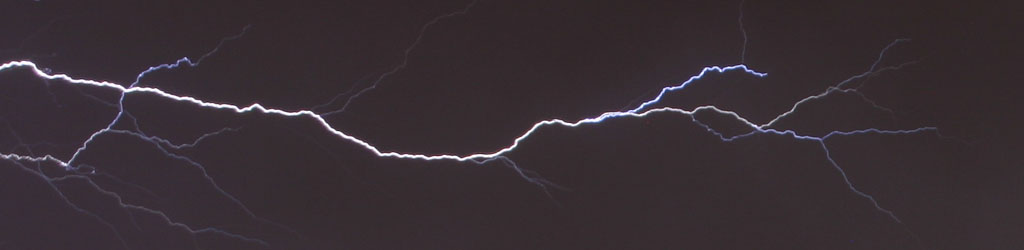
Weather photography can be dramatic and a nice challenge, but it comes with built-in hazards. Lightning, especially, can strike well outside of the area that we think is active, so avoid exposure to open areas when the skies get dark. Also, know that a growing hiss is usually a sign that the rains are advancing towards you, and you have mere seconds to be prepared for it. A heavy rain storm can also make seeing difficult, and snow storms can obliterate the visibility of a path within minutes. But even clear days can present the hazards of sunburn, sunstroke, heatstroke, dehydration, and so on. Carry plenty of water, use sunscreen, have loose but concealing clothing, and wear a decent hat. And take it from me: even being thigh-deep in a cool stream does not help lower your body temperature if the air is too hot, and the sunlight reflecting from the water actually makes sun exposure worse. Which remains true for all beach and lake side excursions.
By the way, you’re not out to prove anything to anybody with your outdoorsyness. Nobody actually cares. If you’re getting hot or cold, wrap it up immediately. Also know that, if you have a long hike back, waiting until you feel too hot or cold is already far too late – start the moment discomfort is noticeable, or before.
And above all, remember that they’re just photos. Fleeting recognition at best, but typically, they’ll have no additional value even if we go through great hardship to achieve them. Most of the time, viewers never even recognize what the efforts might be. Maintain perspective, and don’t expose yourself to hazards for no good reason – and I consider ‘good reason’ to be rescuing someone else, not trying to stroke our own egos.
Some more specific links:
Preparedness, which has a good bit about what to carry and hiking properly.
ADDENDUM 07/15/26: This post hadn’t been up for six hours when I ran across the account of a man that had been charged and thrown into the air by an American bison in Yellowstone National Park, which was captured on video. I’ve never been a fan of the lurid or of watching someone else’s misfortune, but I was curious to see just what kind of behavior the victim was engaging in before the attack took place; I’m not going to link to the video but it’s easy enough to find.
I did not see what I expected to though, and indeed, to all appearances in the video and to all accounts so far, the man was not actually doing anything stupid, and was adhering to Yellowstone’s rules of distancing and avoiding provocation. And to his credit, he apparently got his grandson out of harm’s way. The man was seriously but not critically injured and is expected to make a full recovery.
There was no evidence that Yellowstone’s rules of distance had been explained to the bison, however, and this is kind of the key point: There are no definitive guidelines when dealing with wildlife. The bull bison got aggravated, for no readily apparent reason, and charged, targeting the man because he was convenient and remaining visible. We may never know why, and we may never find what anyone did “wrong.” There is a risk involved anytime you’re within reach of wildlife, and that ‘reach’ extends to whether it can get to you before you can get to a safe location.
I admit that I was stunned at the amount of tents set up in the immediate vicinity, that the bull was actually charging between. That strikes me as irretrievably stupid, and might have contributed to the behavior – can’t say. Overall, however, the message is clear enough: wildlife doesn’t always behave as expected or predicted.