


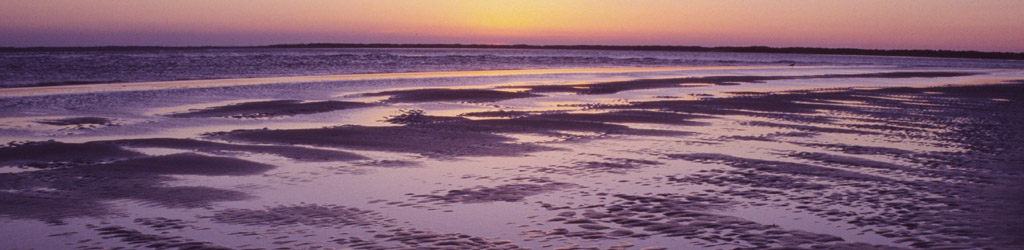
So, the pond has been bouncing up and down rather dramatically; the first big rain that we had following the drastic draining filled it entirely back up again to the previous level, quite impressive considering how far down it extends, not depth-wise, but laterally south – it was a hell of a rain. Then, over the period of three days, it subsided back down to where it had been, mudflats and channels. It’s obvious there’s a smallish breach someplace that’s permitting it to drain out, but we haven’t yet located this, and it’s complicated to explain. Then we had another horrendously heavy rain, and presently it’s full again. We’re not really sure how this will play out, or if this is the norm now.
A few days ago while it was down to its lowest level, however, the ground around the Haunted Tree was exposed, and in the afternoon on that muddy flat we found an ominous scene:
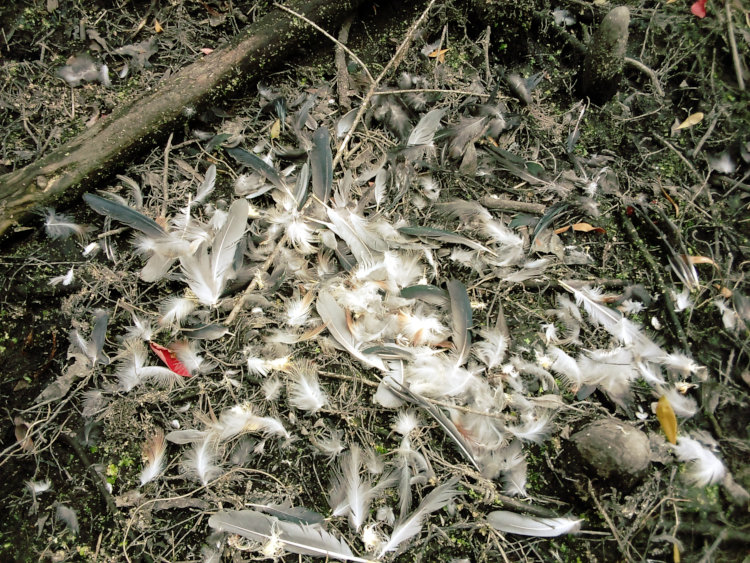
It was clear this was fresh, and from the cluster of feathers so close together, some predator had captured and at least starting eating a bird here, and not a small one. A flying predator like an owl or a hawk might leave a few feathers, but would typically carry away the victim to eat at a safer location, and had it been eaten in the branches above this site, the feathers would be scattered over a much greater area. We also found no carcass or even parts. We surmise that the predator was a raccoon, given how often we see them on the pond edge in the immediate vicinity, but the mud was criss-crossed with countless tracks: raccoon, deer, nutria, and squirrel visible, but nothing resembling anything else could be found. I would suspect fox or coyote too, except we’ve seen no sign of such in the area, save for finding some probable fox scat in the middle of the driveway immediately after moving in nearly two years ago, and nothing since.
Close examination of the feathers (a few collected for some detail shots) yielded the identity of the victim.
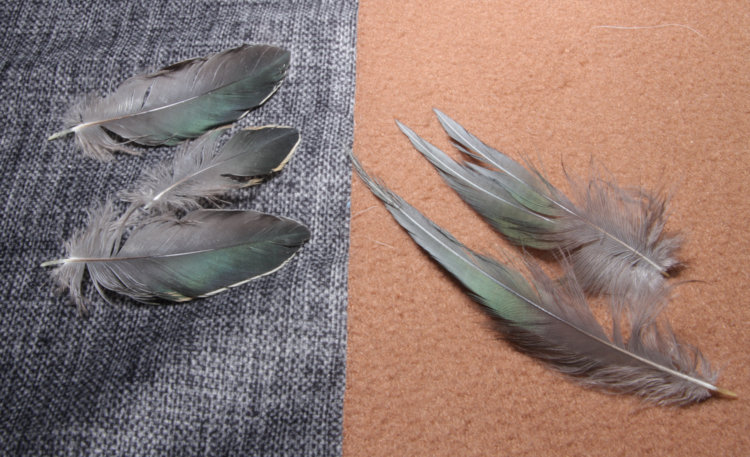
I have a cloth that I use for a mini-studio backdrop, gunmetal grey on one side and medium brown on the other, and folding it over gave me both to set off the feathers for appropriate contrast. What we’re noticing here are two things: the pointed nature of the feathers on the right, and the size of the body coverts on the left, and while I should have included a scale, the weave seems to give a decent impression. These all show the iridescent dark green, but the kill site had plenty of brown and a little white.
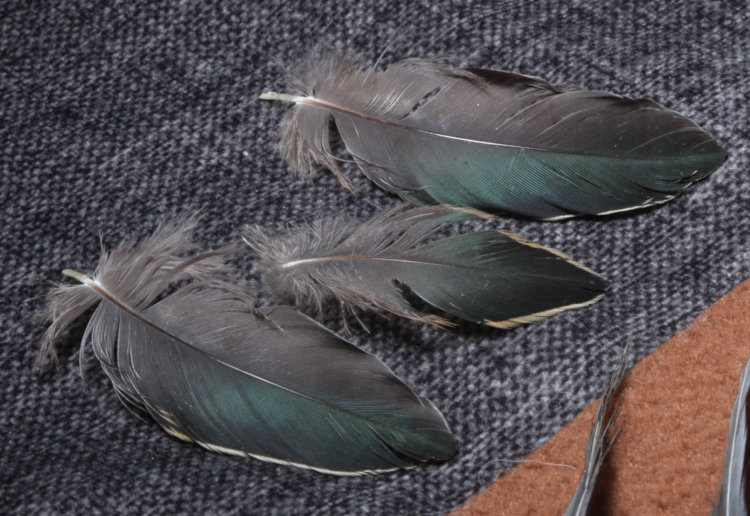
While several different species have the deep green in places, this is the most telling detail, that fine edging of tan on most of the coverts (the feathers that cover the main body of a bird, generally atop a layer of downy feathers.) We’ve seen this before, very recently.
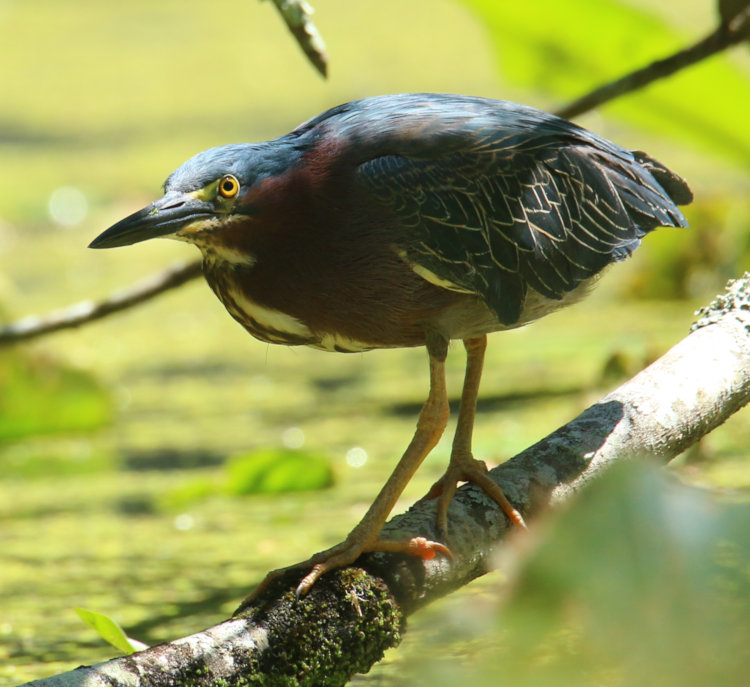
Yes, almost guaranteed to be a green heron, and apparently, one that nested overnight in some lower branch within reach of a raccoon. Both The Girlfriend and I are very practical about how nature works, and that even preferred species will serve as a food source for something else, but that doesn’t mean we have to like it. And since we had one notable resident green heron on the pond, albeit one that would chase off an interloper from time to time, we had reason to believe that we’d lost him (very likely a male from that behavior) to a raccoon.
Except, before even finding the kill site, that same morning I’d seen a green heron hunting around the north end of the pond, so, which one of the two had it been? Was the resident now gone and the interloper free to hunt as desired? It would be nice if there was a decent way to tell them apart aside from glimpses of behavior, like who’s chasing who.
While here though, I get to illustrate something I talked about in that linked post, since I could photograph the feathers in controlled conditions. I mentioned why they didn’t always appear green, so here we go.
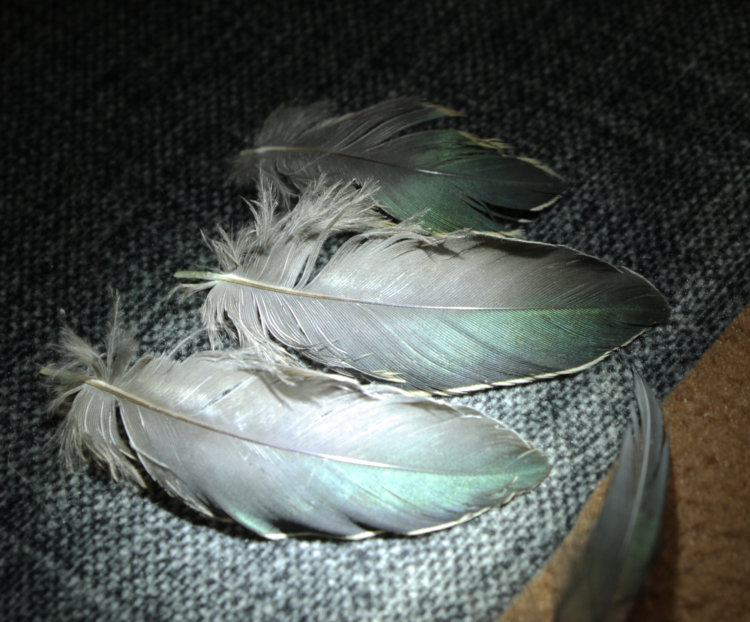
Using a bright white LED flashlight to illuminate the feathers at a specific angle (from us, straight ahead but lower – note the shadows on the lower edges,) we can see that the green is iridescence, likely an interference pattern within the structure of the feathers that allows only deep green wavelengths to bounce back to our eyes. Changing the angle to directly overhead gave markedly different results.
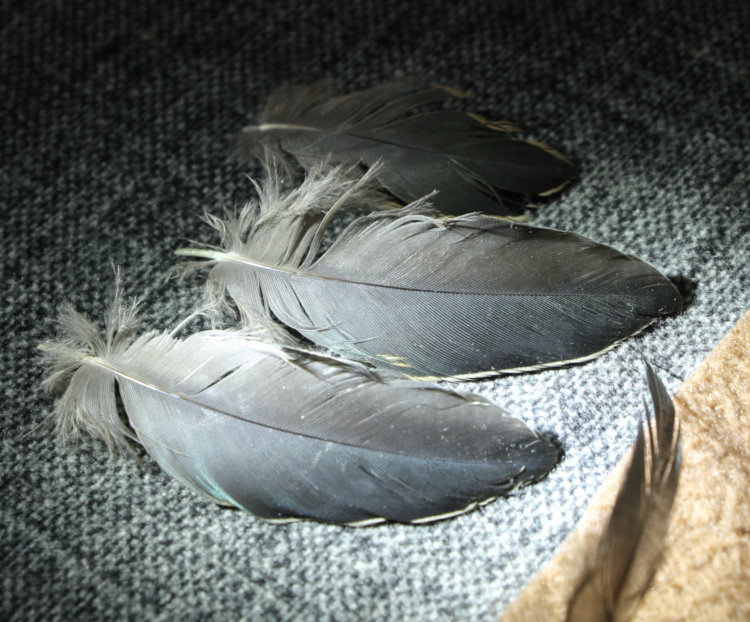
And boom, the green is gone, and so is the sheen to the feathers, allowing the bird to appear more slate grey when in direct sunlight. It’s actually pretty cool how this serves to preserve their subtlety in typical hunting conditions, and I imagine that during mating behavior, the herons know to fluff their feathers a certain way (and in certain light) to show off the brilliance of their colors to potential mates.
Now the follow-up to all this. Just two evenings ago when the water level was back to its former glory, we saw three green herons simultaneously – two together on one tree on Duck Island with no apparent animosity, and another hunting down on the low branches of Turtle Island just like the previous posts. I’m a little inclined to think the pair were siblings, this year’s brood, though this is the first evidence of fledging that we’ve seen, and only inferred at that. Still, good to see at this point.