

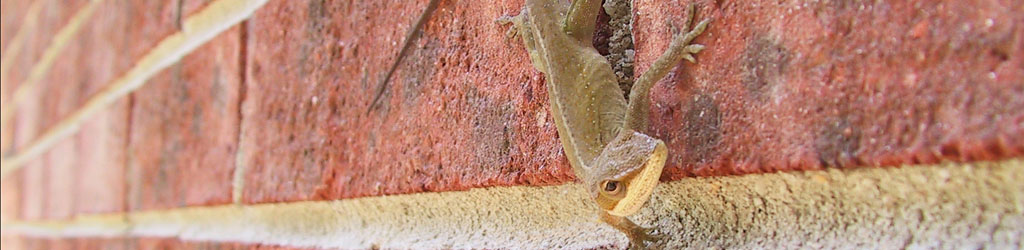







In a previous post (don’t I say that a lot? Livin’ in the past, livin’ in the past) I mentioned that the tag, ‘Carolina anole’ was the most prevalent on the ol’ bloggachomps here, and since we just recently had a post about the runner-up, ‘Chinese mantis,’ we now have to feature more anoles just to prevent slipping from first place. This is how I justify featuring more of the same subjects…
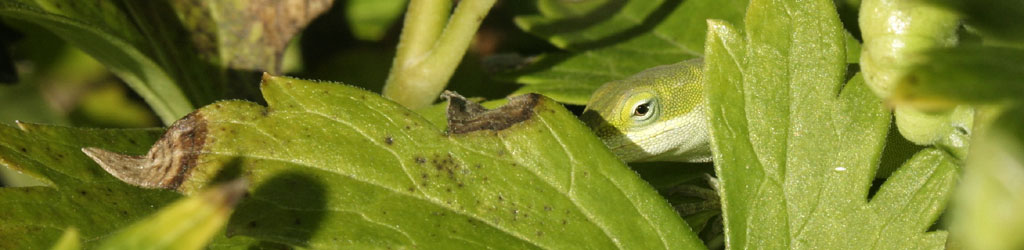
When last we left our heroes, I had complained about not being able to get images because the lens refused to avoid fogging up, regardless; this picks up later on that evening, when I was able to see enough through the camera to continue to pursue the subject. So we have an example of what I could see from a ‘normal’ viewing distance:
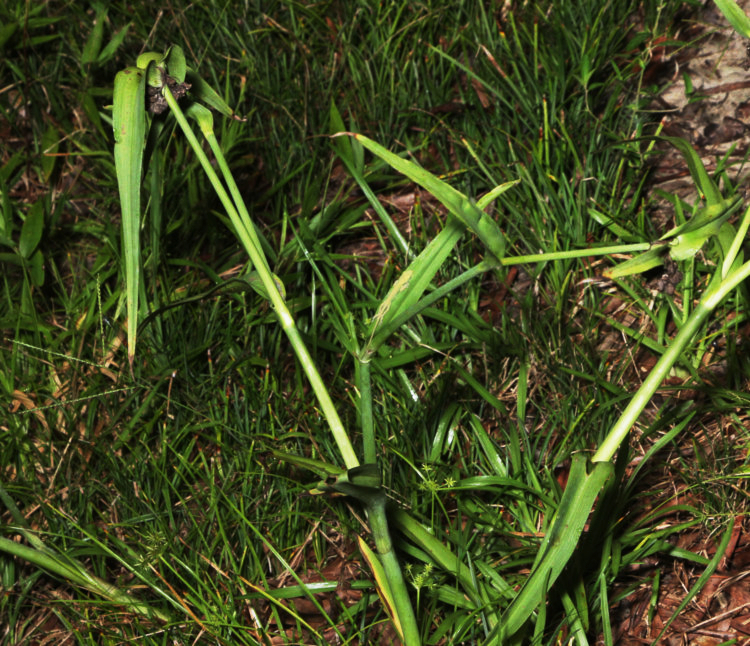
This, I think, is a pretty good representation of the visibility, especially on something with paler leaves. And now we go in closer.
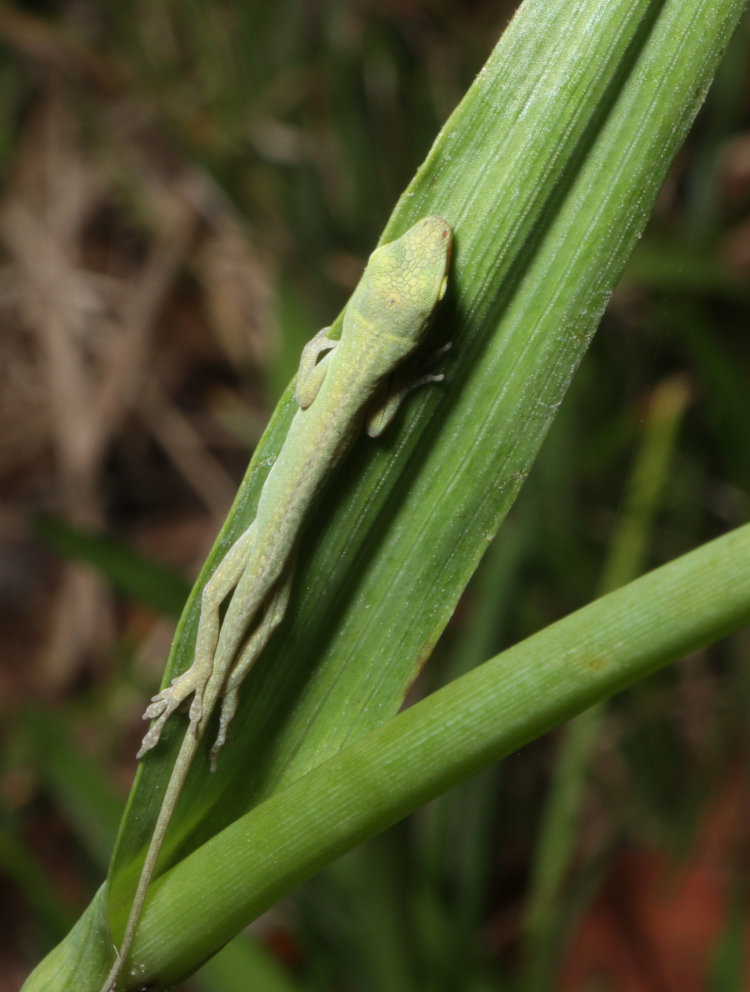
That leaf, of a hairy-stem spiderwort (Tradescantia hirsuticaulis,) is about the width of my finger. If the anoles stayed the color they normally are during the day, they’d be a lot harder to spot, but they tend to go quite pale at night, more towards yellow, and this makes them easier to see against the leaves. We have a plant out front, dunno what it is, with mottled chartreuse leaves, that I have yet to find an anole on at night, and it might simply be because I’d have to be looking carefully from right on top of it to see it.
I moved around for more of a portrait angle, revealing that the anole was awake.
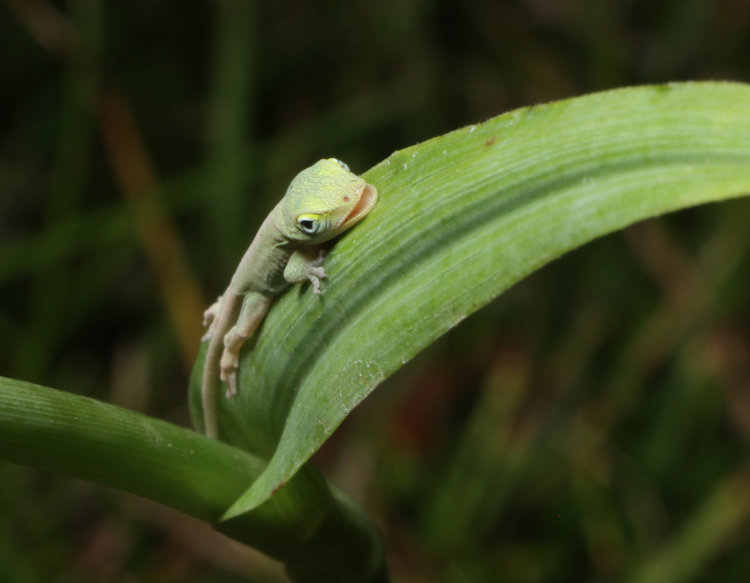
I didn’t see this little action while I was getting the pic, so it seemed to have happened right as I tripped the shutter – it does make the anole look, I don’t know, vaguely affronted maybe? Stuffed up with a cold? I’ll let you decide.
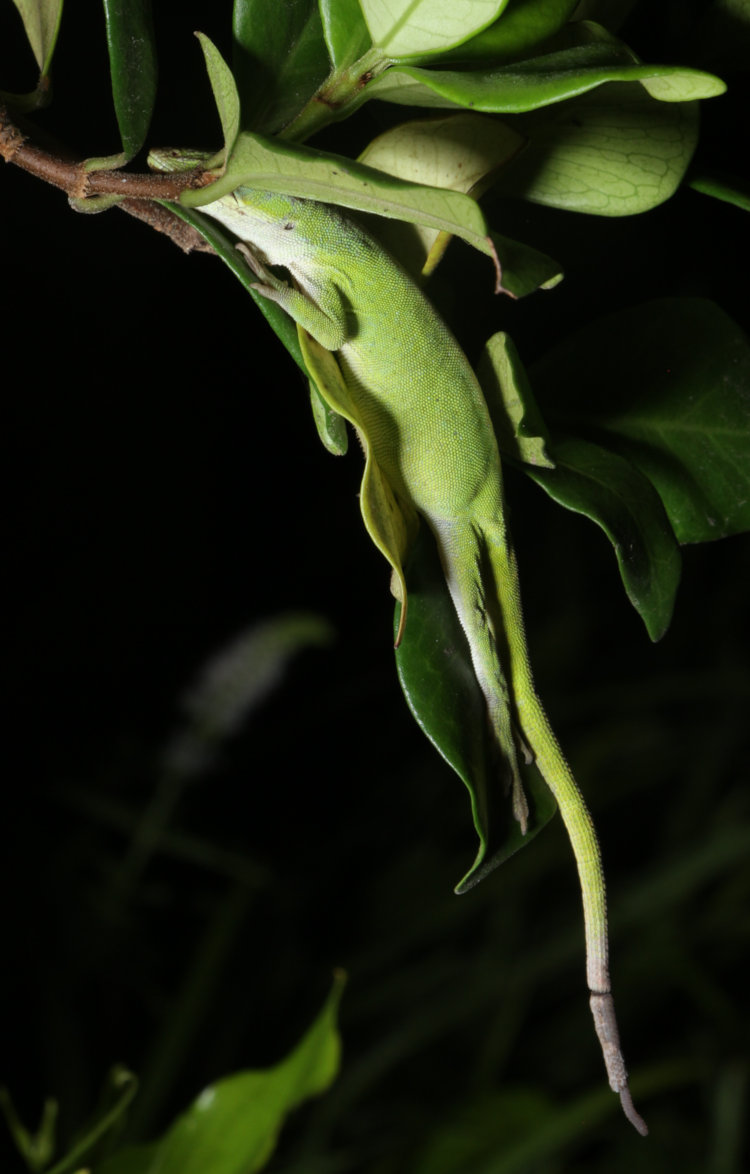
Not too far away, the dangling leg and tail gave away another, quite large adult.
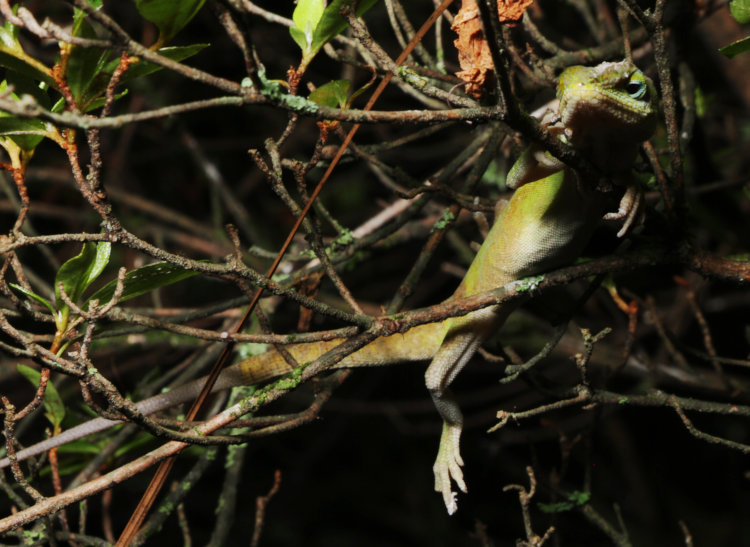
This one was immediately aware of my presence, though as usual, disinclined to actually do anything about it. I think this is less due to complacency and more to going into a semi-torpor at night, perhaps because their night vision is lacking, perhaps because of their metabolism, perhaps because staying motionless is generally safer than drawing attention by attempting to scamper away – plenty of predators recognize specific movements to indicate prey. Meanwhile, don’t ask me what that brown ‘thread’ stretching through the frame is, because I don’t recall it – possibly a dried vine.
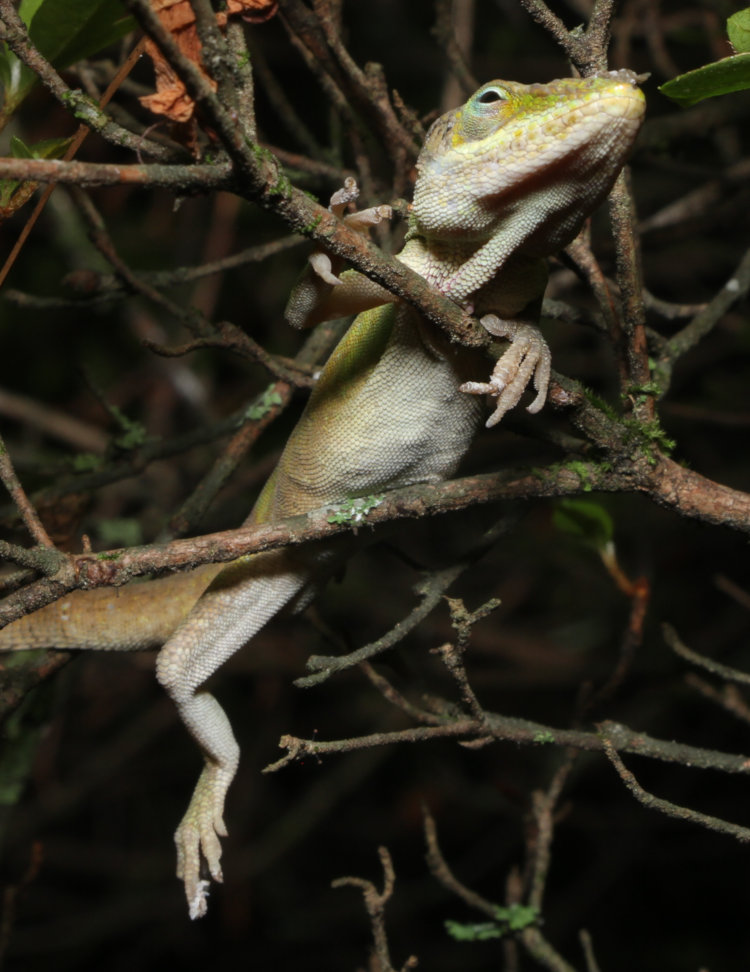
If you look closely, you can see faint vestiges of dried skin on both the nose and the toes, indicating this one was in some stage of molting. This fits, I think, because I believe I’ve tended to see it happen following a rain, and it’s possible they need the additional moisture to facilitate the process. You’d think from the overbearing heat we’ve had that their skin would be flaking away frequently and without issue, but this is the first I’ve seen molting this season.
In a way, I’d almost like to be able to sleep like this, though I don’t want to know what my back would feel like in the morning…
Around front, we check back in with the female with the ratty tail.
Easily identified by that tail damage, she’s taken to sleeping on the star jasmine (Trachelospermum jasminoides) wrapped around the lamp post out front. Which she has occupied for quite some time, to be honest. It’s handy to have a way to identify an individual, so I can keep track of their habits and life events – this one appears to have hatched a few broods right here, or at least deposited the eggs for such, but since the location always sports a few newborns when that season rolls around, the evidence favors her being successful, especially when no other anole is seen so regularly here. Have to fine an appropriate nickname for her…