

This past weekend I got back to my old stomping grounds, a metaphor that I don’t exactly know the origin of and hopefully it’s not another that’s sports related, but by this I mean the area that I lived in until not quite two years ago, a more central portion of central North Carolina. Sure, I’ve done this numerous times since we moved, but this time I had some time, the first time in a long time, and so met up with the Intrepid Mr Bugg again. We elected to try for two outings to Jordan Lake, attempting both sunset on Saturday and sunrise on Sunday; according to the weather reports, neither was looking all that promising, and as you might surmise from the title of the post, that promise, or lack thereof, was fulfilled. But we made the most out of the conditions at least.
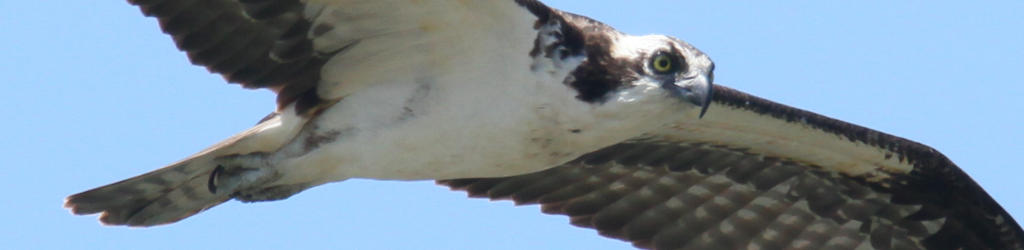
I could say the conditions were poor, but let’s put it this way: for the earlier half of the day it had been pouring, and for the past several weeks it’s been hot as hell, so a cooler dry outing was not actually bad, though the persistent overcast certainly wasn’t ideal for photography. Still, Jordan Lake has more opportunities for things like ospreys (Pandion haliaetus) than where I am now – they’re here, but sparse and usually distant. Much more distant than this:
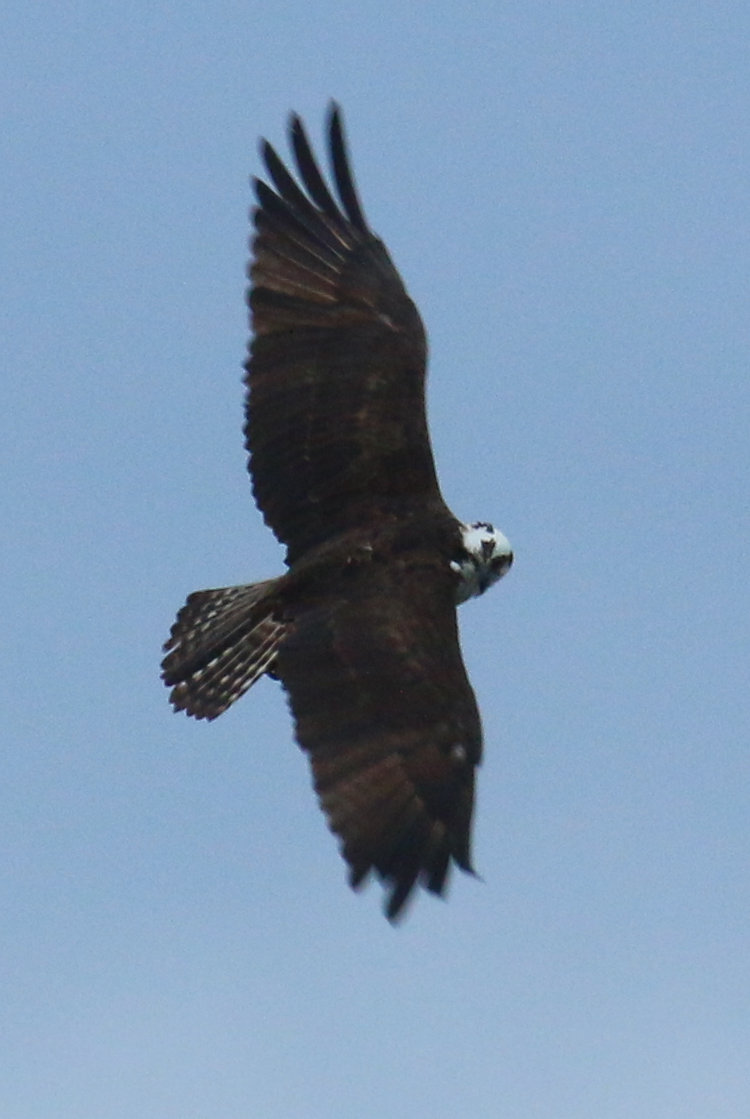
Darker skies with a moving subject and, worse, a +2/3 exposure compensation to account for the sky taking up most of the viewfinder is a recipe for motion blur, so I’m thankful that this image is as sharp as it is, even when it could have been sharper. The option to try and improve that is to boost ISO, which we’ll see the effect of in another post.
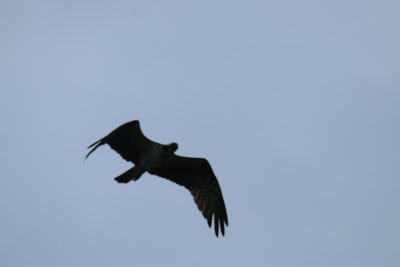 You might think you wouldn’t need exposure compensation when the sky is right around that 18% grey middle tone that meters are calibrated for, but the key factor is, the sky is significantly brighter than the subjects against it, especially without direct light on them to brighten them up a bit, so without compensation, the frames were looking like this. And yes, the sky looks exactly the same hue as above – the overcast is never perfectly uniform, so the frame at left was actually brighter than the frame above, since the frame above has been lightened by 2/3 of a stop; the difference is plainly visible in the osprey. This is exactly why exposure compensation is usually linked by default to the dial that sits under your thumb, so this can be adjusted on the fly as you might switch from aiming into the sky to aiming against dark foliage – you just have to remember to keep adjusting this compensation, better than I did for this frame.
The ospreys were hunting only half-heartedly, getting late enough in the day for their activity to drop off noticeably, but a couple did at least provide some poses.
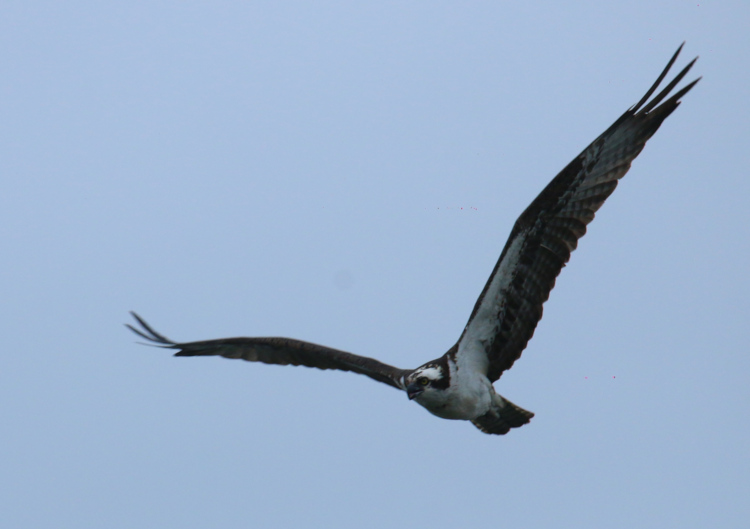
This one conveniently passed pretty close, to the protests of another nearby, perched in a treetop but out of sight to us. No eagles were forthcoming that evening – in fact, we might have spotted a cormorant or duck, too far away to identify even that far, but that was it for other species to be found, save for the ubiquitous herons of course.
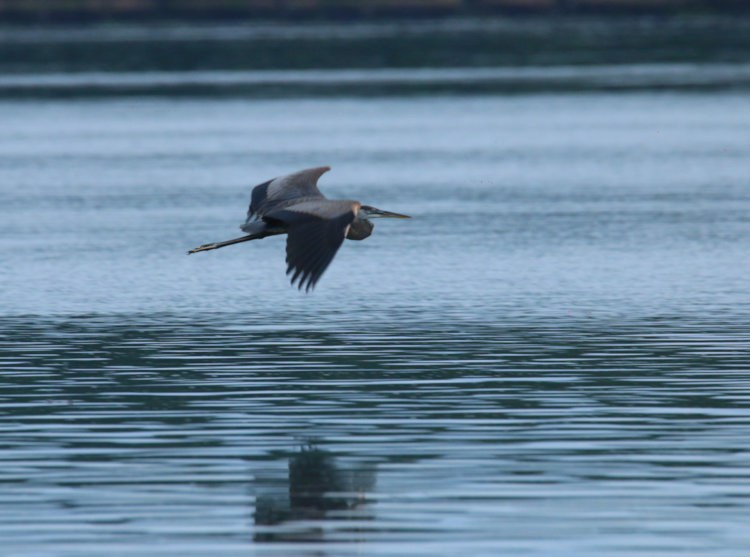
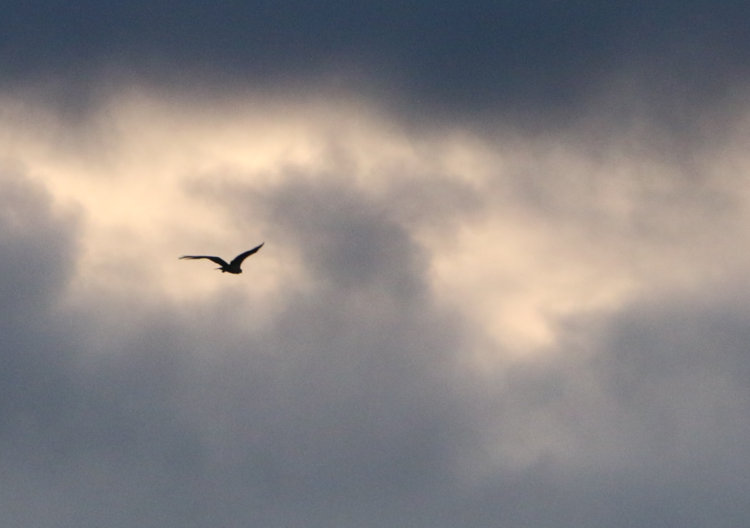
Just timed things a bit to frame this great blue herons (Ardea herodias) between the bands. It might look like a hint of sunset color on the leading edges there, but it’s only the natural coloration. The sun hadn’t peeked out at all, and it wasn’t until we switched to another arm of the lake that the clouds even broke a tiny bit. I took advantage of this little patch to frame another passing osprey that was at the correct altitude.
We could see the clouds shifting a little, but they obstinately refused to part very much until the sun was quite low, so only the faintest hint of color came through.
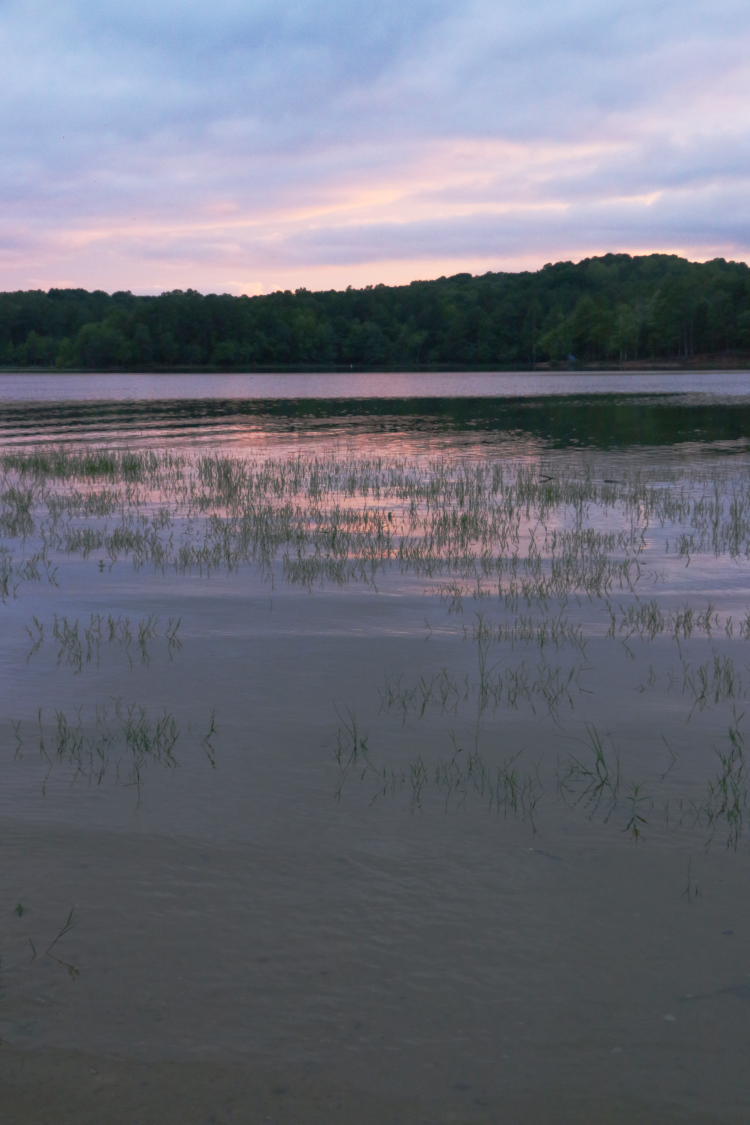
We were patient and waited it out, hoping to see the clouds light up underneath as the sun broke through right near the horizon, but it was not to be. Instead, all we got was a hair more color as the more scattered clouds to the west got the benefit, visible to us only through the break in overcast near the horizon.
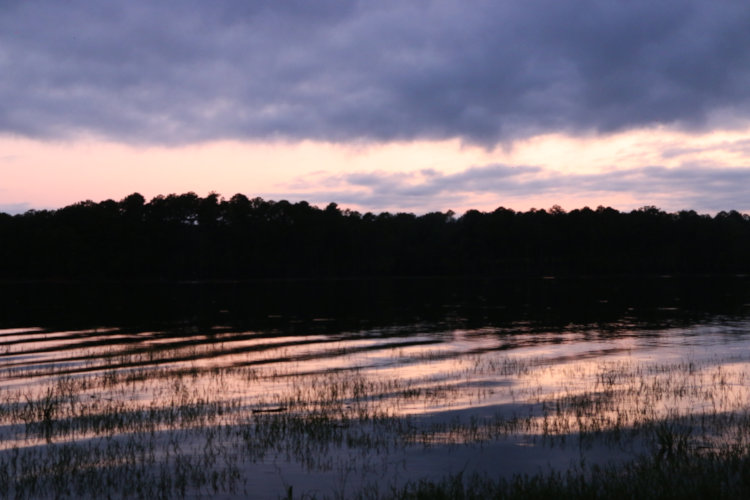
And that was it for the day. We wrapped it up and hoped for better conditions at sunrise, or at least a little more activity. Part two will answer this question, of course – to the extent that the title hasn’t.