Suddenly, autumn

Not really, but last night the temperature dropped more than it had in weeks, coupled with high humidity, and dew formed with a vengeance, which we also hadn’t seen in weeks – it doesn’t often hit the dewpoint overnight in summer here. And so, there were a couple of subjects to be found because of this.

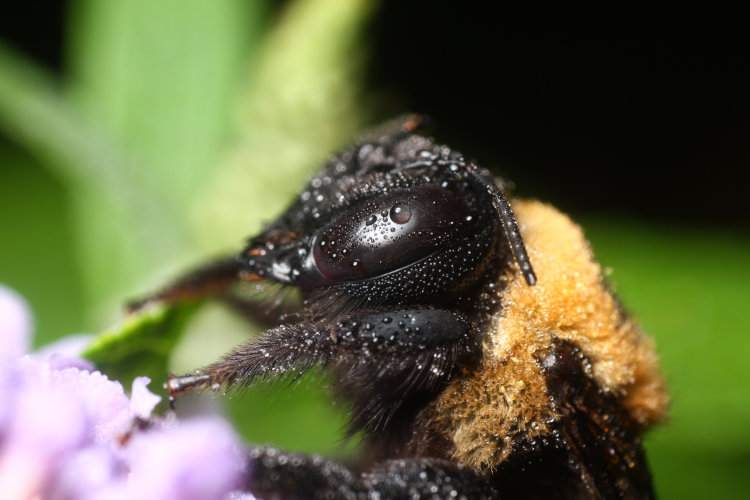
The Girlfriend and I had seen this eastern carpenter bee (Xylocopa virginica) already snoozing on the butterfly bush at dusk, but the dew hadn’t begun forming then. It was a much better subject with that addition.

dew-covered eastern carpenter bee Xylocopa virginica snoozing on blossoms of butterfly bush Buddleja davidii
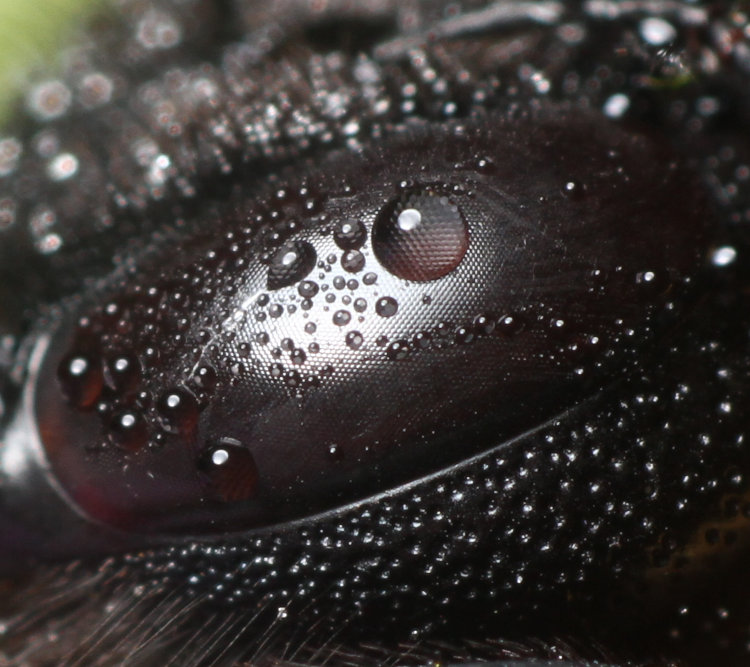
… which is all well and good, but we need a closer look at that eye:

closeup of dew-covered eye of eastern carpenter bee Xylocopa virginica
It took several tries to get the light angle right, so that both the facets of the ommatidia and the magnification of them in the dewdrop came out clearly. This was with the reversed Mamiya 45mm medium-format lens, which I hadn’t used in years in this manner and dug back out recently to experiment. Worked pretty well.

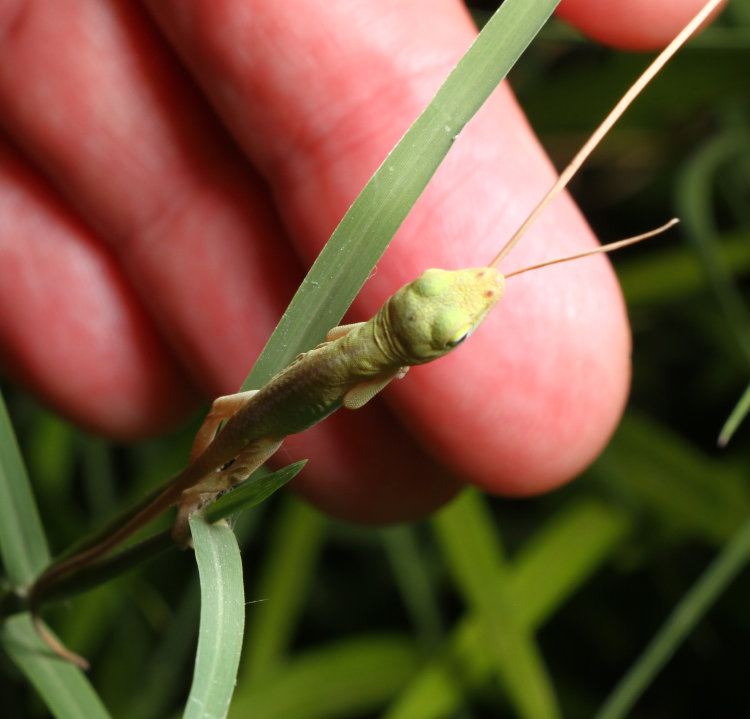
And another subject in much the same manner. First, I repost the image for scale taken a few days back, of the newborn Carolina anole (Anolis carolinensis.)

newborn Carolina anole Anolis carolinensis sleeping on weed stem with author's fingers behind for scale
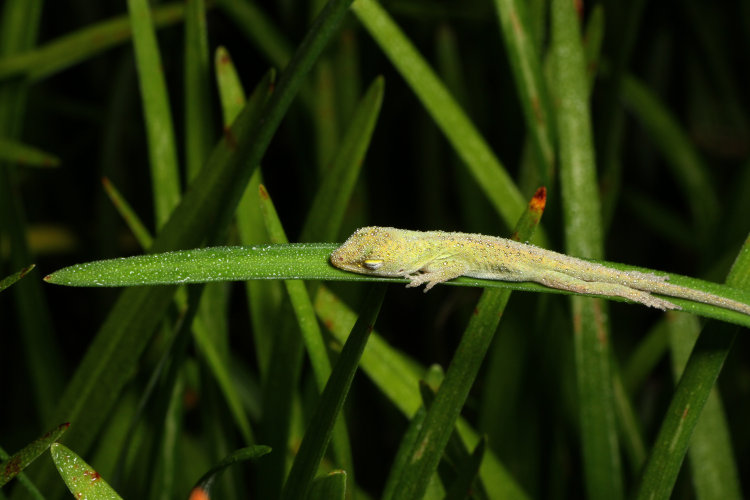
Because I found this same specimen again, only a short distance away from that location, this time asleep on the liriope.

dew-covered newborn Carolina anole Anolis carolinensis sleeping on liriope blade
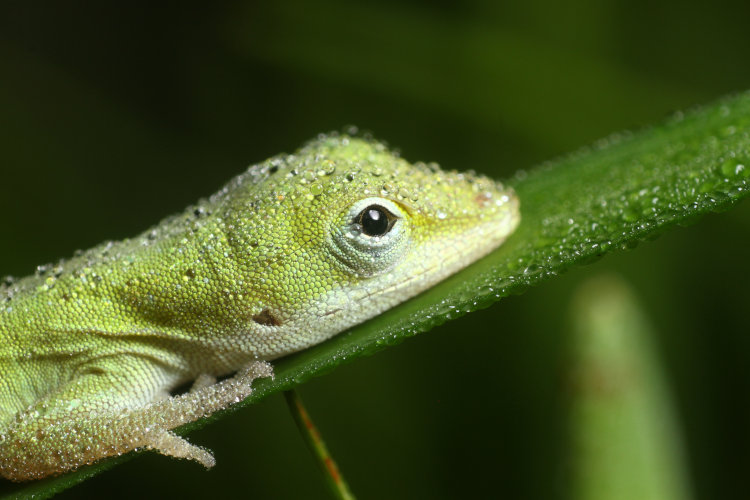
Naaahhh, that’s boring – let’s go in closer and more of a portrait angle:

dew-covered newborn Carolina anole Anolis carolinensis now awake on blade of liriope
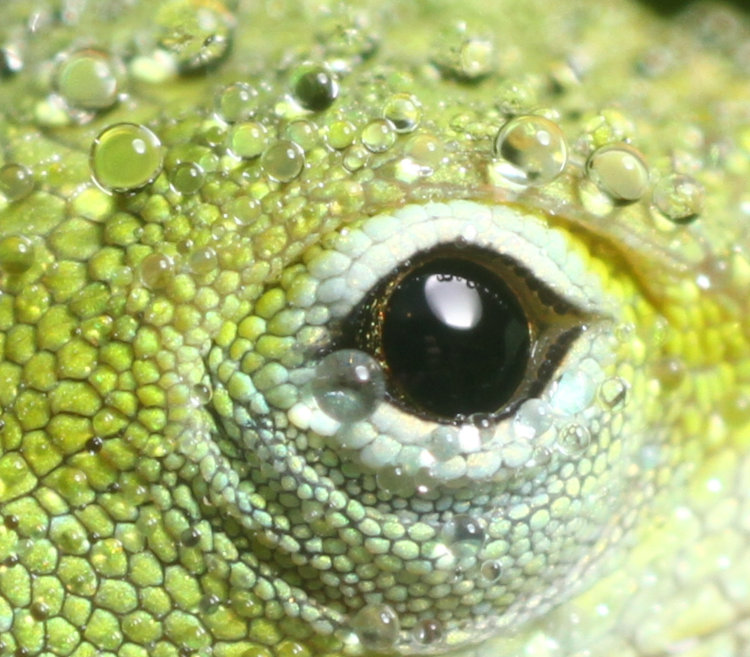
Despite endeavoring to keep things still and quiet, the anole awoke and was watching the headlamp beam bobbing around with a small amount of concern, yet it remained motionless except for its eyes. With a reversed wide-angle lens, the range of sharp focus is quite short, and so I took a series of images to ensure that at least one of them was at that precise focus distance for maximum sharpness. And this one qualified, because we can go in very close in a tight crop to see what it looks like when we narrow down our field of view:

extreme closeup of eye of dew-covered newborn Carolina anole Anolis carolinensis
That – is going to be a print soon. And you can clearly see the benefit of a round softbox diffuser, because it looks many times better than having rectangular light reflections on all of those surfaces. But yeah, credit to the luck of having so many dewdrops right there on the edge of the eye.

Well, I’ll take a little credit for being steady enough to nail focus, and creating the macro flash rig, and knowing how to use lens reversing, and managing to lean out over the grasses to get a good angle without disturbing them, and finding the minuscule anole in the first place, and getting my butt wet just to be down there, and…

Estate Find XXVII

I was hoping to have a specific subject for this one, as we pass the halfway mark, but so far no luck – the vagaries of nature and all that. So this is kind of a fallback, with not very good images, but I’m doubling down on it so there’s that.

Just three weeks back we featured a golden silk orbweaver (Trichonephila clavipes,) not a large specimen yet one of many that had exploded on the property, and now we have a small followup.
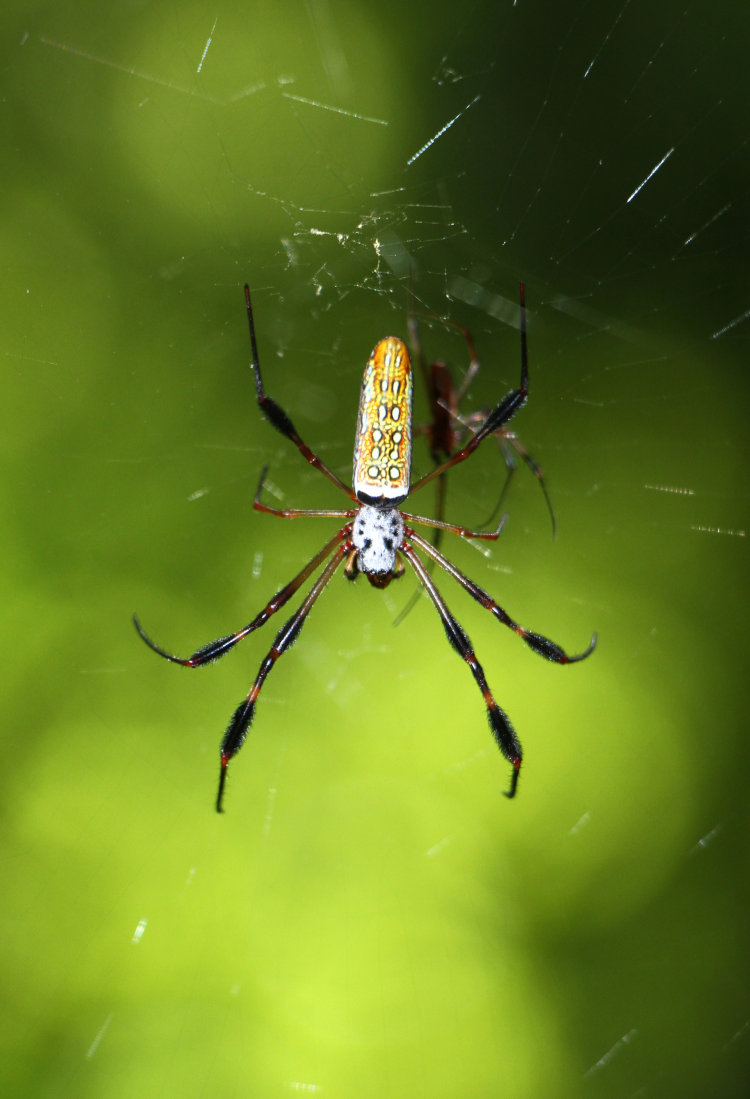
mid-sized female golden silk orbweaver Trichonephila clavipes with male suitor in web alongside
Now roughly twice the length as what I photographed three weeks back, this one had company in the web with it, specifically a male suitor. I was having a devil of a time getting sharp pics and unfortunately cannot go back and reshoot them, for reasons soon to be revealed, nor did I even have the macro rig in hand. So I did the down-and-dirty trick of popping the on-camera flash, which tried desperately to overexpose the very close subject, and tempered the light by blocking half of the flash head with my finger. Still a tad high, but serviceable.

Then I flipped the camera the other way around, so the flash head was oriented to the right instead of the left, and focused on the male:
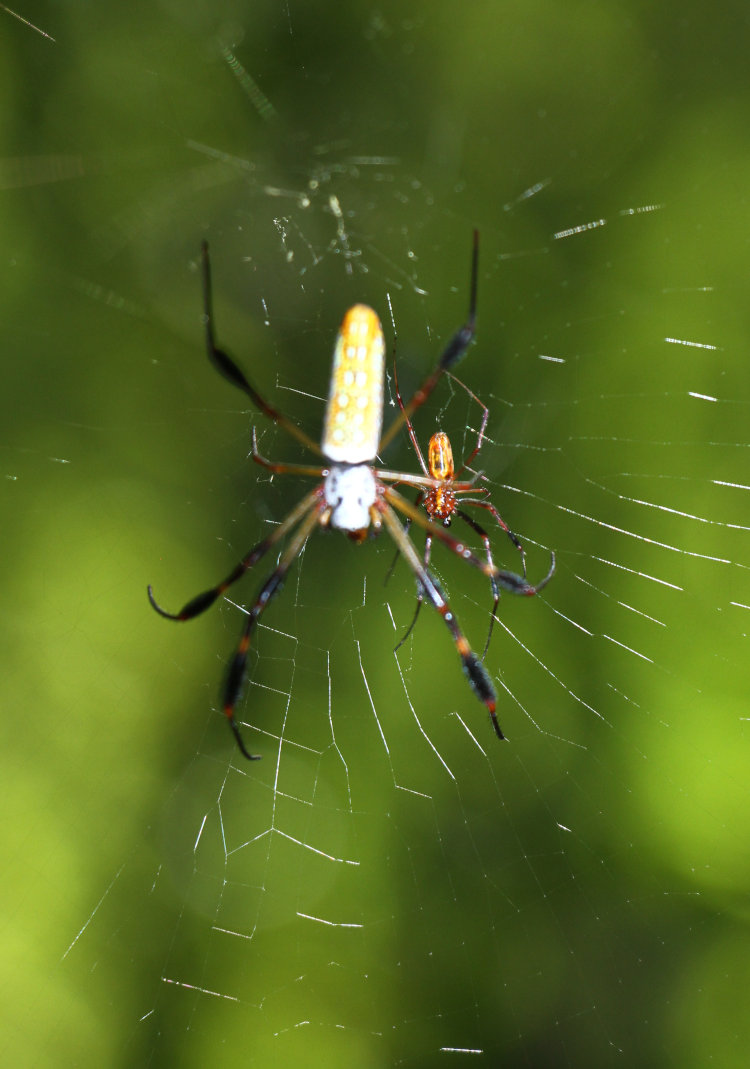
mid-sized female golden silk orbweaver Trichonephila clavipes with male suitor in web alongside
This is probably as large as the males ever get, while the female will exceed this by a large margin – at least twice this in linear measurements, so four times the mass or more (this is why measurements like “twice as big” are next to meaningless.) While this was going on, there were small twitches from both parties, but that may have only been from my presence and occasional bumping of the lower web. Actual mating was not in evidence, though I wasn’t observing for very long.

male golden silk orbweaver Trichonephila clavipes with mid-sized female in web behind
The light was much better from this side, though for some reason this was the sharpest frame that I achieved, which is pathetic; it only serves to show the male’s coloration and little more.

As I said, I couldn’t/can’t go back and reshoot these, because the web is no longer there, by my own hand. She had strung it directly across the path that we take to go out onto the island, and I was fine with ducking underneath – she’d provided enough room for that – until we had to lug a ladder and a kayak along that path, and avoiding the web was more effort than it was worth.

Why were we hauling these down the path? Because the wood duck nest box had fallen.
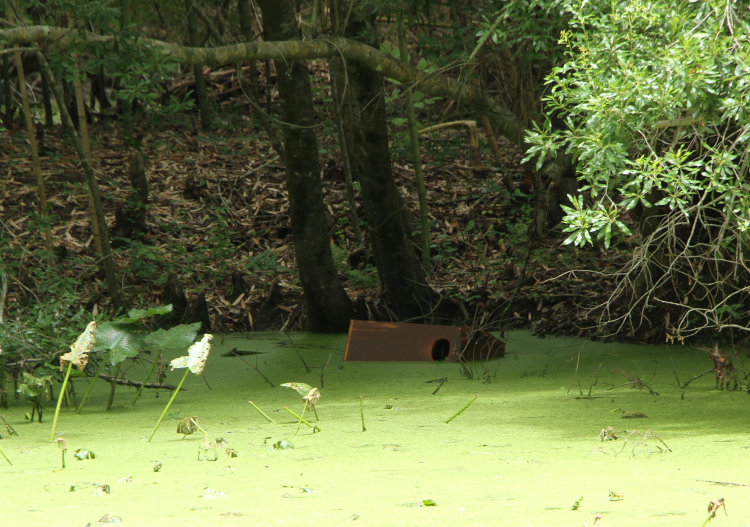
wood duck nest box fallen into pond
This was taken the day after that previous golden silk orbweaver post, so three weeks ago, right before we dropped the kayak in the pond and I paddled/thrashed over there to get it. The stalks of the yellow cow lilies were still pretty evident and so the kayak wasn’t gliding very well, almost having to be pushed through the weeds in places, but fishing the nest box out was fairly easy, and this was well after any ducks should have been occupying it, for which we were grateful. Once back, we could examine it for the failure that caused it to fall.
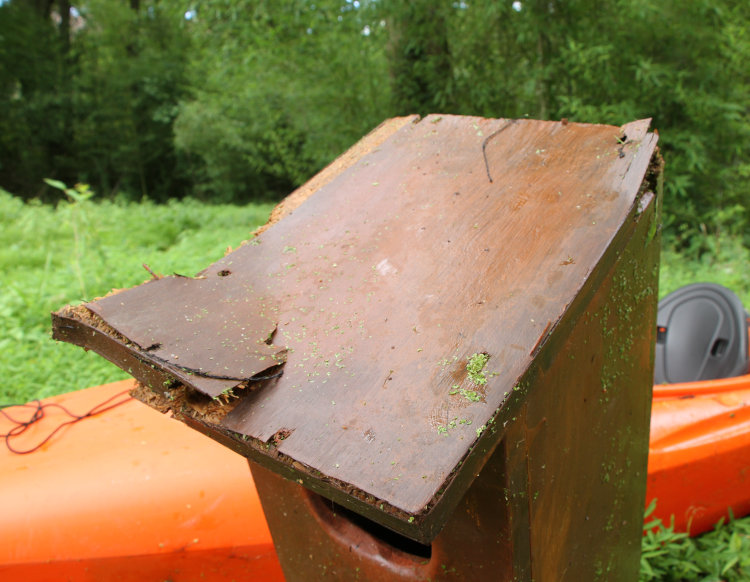
fallen wood duck nest box with degraded particle-board roof panel
As I said back when it was constructed, we couldn’t find the boards we wanted in the sizes necessary, anywhere, and so it was constructed out of what we had on hand, old shelf boards. Despite coating it heavily with watersealing stain, the ‘wood’ (what I took to be pine, but this looks a hell of a lot more like particleboard) wasn’t up to the job and degraded rapidly, allowing the cable that it hung from to simply rip through the holes drilled through the roof panel. Luckily, however, the remainder of the box seems perfectly solid. And yes, we did have a look inside.
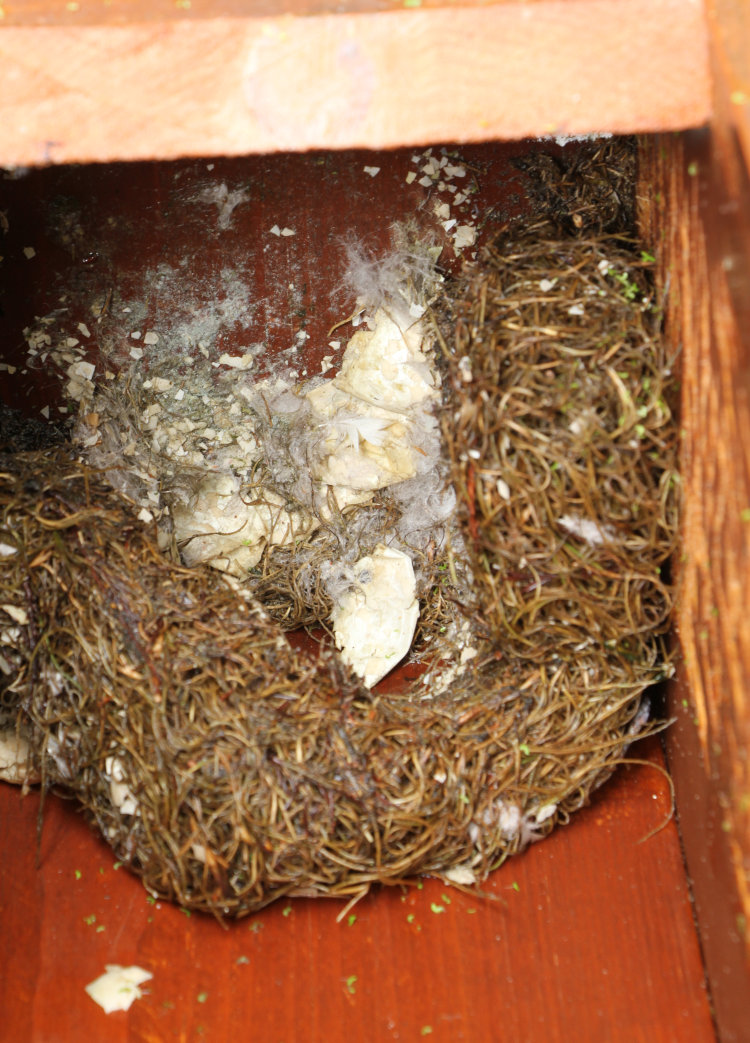
remains of wood duck nest from retrieved fallen nest box
The box had flooded in the pond and had to be drained out to get in onto the kayak, so some of the nest material likely flowed out with the water, but enough remained to demonstrate that it did serve its purpose at least once; there were a lot of eggshells in there. The Spanish moss is what I initially put in to encourage the females that this was suitable, and I was surprised to see that not much appeared to have been added to it, though again, maybe it washed out.
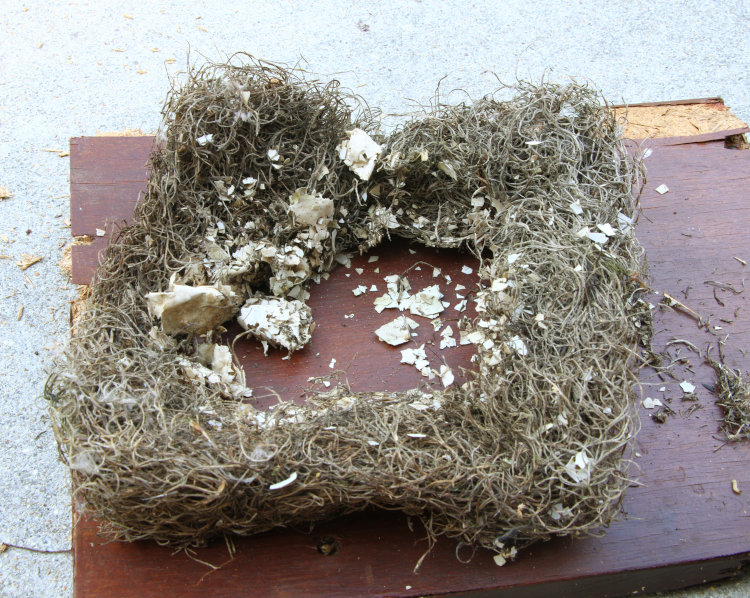
wood duck nest remains removed from fallen nest box
She (perhaps ‘they’) clearly pushed things around into a circle at least, and a few feathers were in evidence, but nothing like what i expected. And no, I’m not going to try and piece those shells together to determine how many eggs there actually were.

This time, I found some solid cedar planks, actually fence slats I believe, and used those for the roof – again, heavily stained/sealed, though I’m no longer very sold on the efficacy of the sealant, but the solid cedar should be up to the job for a few years at least.
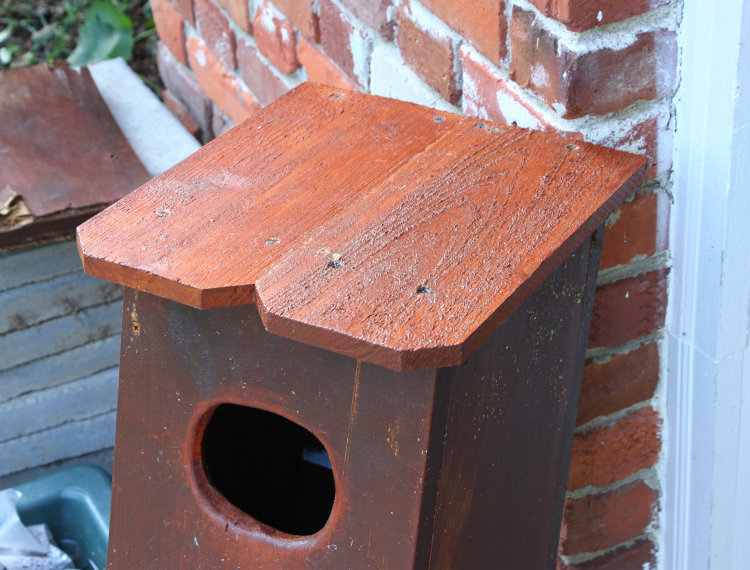
new roof panels on wood duck nest box
They were stained before assembly, and glued along all seams. But then I added another layer for protection:
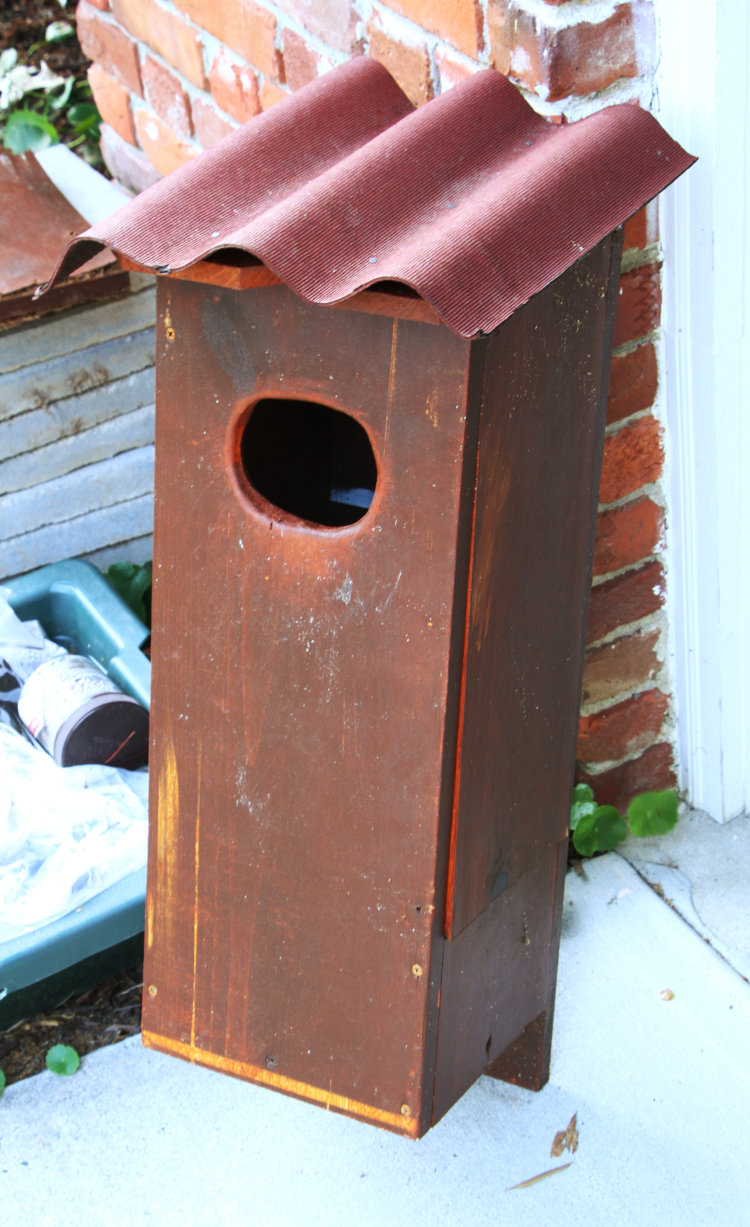
additional waterproofing on new nest box roof
I’m not even sure what this stuff is, but it was on the roof of a shelter found back on the island and appears to have been there for a few years, with the wood underneath in great shape; some kind of corrugated tarpaper material, it seems. Overlapping the roof edges as it is, it should deflect the majority of water/snow/ice away from the roof and box. And I changed how the box was hung, as well.
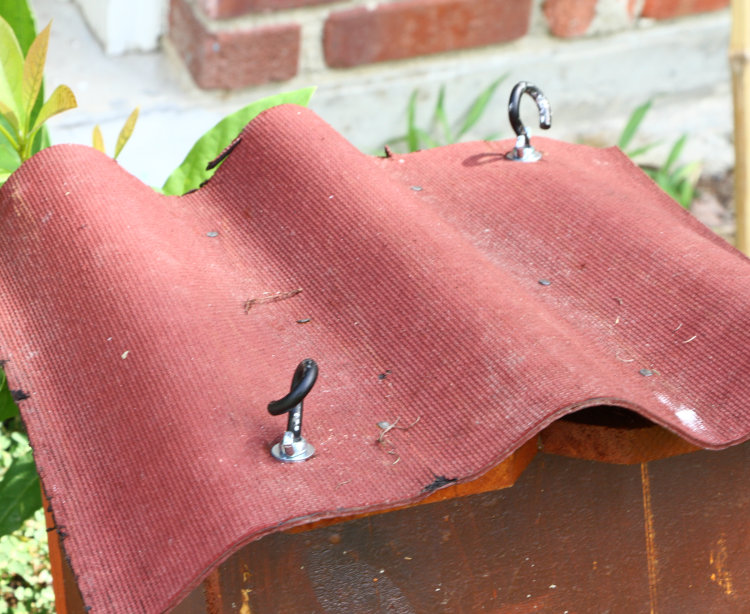
new roof of wood duck nest box with altered hanging eyes
We bought a couple of heavy-duty eye hooks, bent to allow them to hang over the cable because it was still intact on the tree and I didn’t feel like unbolting and rebolting it. The wingnuts beneath the hook (unfortunately edge-on here) can be tightened by hand after the box was hanging and would orient to help close the gap that remained, though the box would have to achieve some pretty wild gyrations to free the cable from the hooks.

And we tripled the amount of Spanish moss as initial bedding:
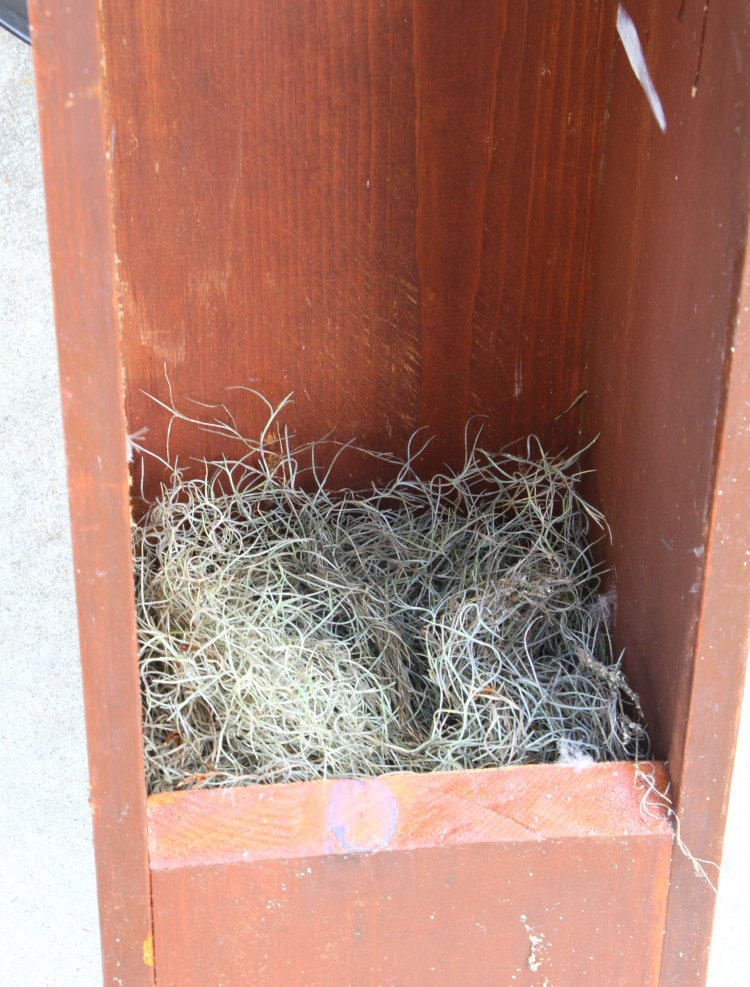
thick mass of Spanish moss in bottom of wood duck nest box as bedding
You can’t see how deep the hollow is in this pic, but the moss is like 10cm deep.

And so, with all that done and the horrendous rainstorm past, yesterday was the day to rehang it. We did it the same way as before, which was to extend a ladder from the pond bank out onto a kayak to serve as a scaffold, and I marched (in a very loose interpretation of that word) out along the ladder to this floating platform to hang the box. While there, I also added some rubber sheathing to the cable to prevent it from damaging the branch that it wrapped around.
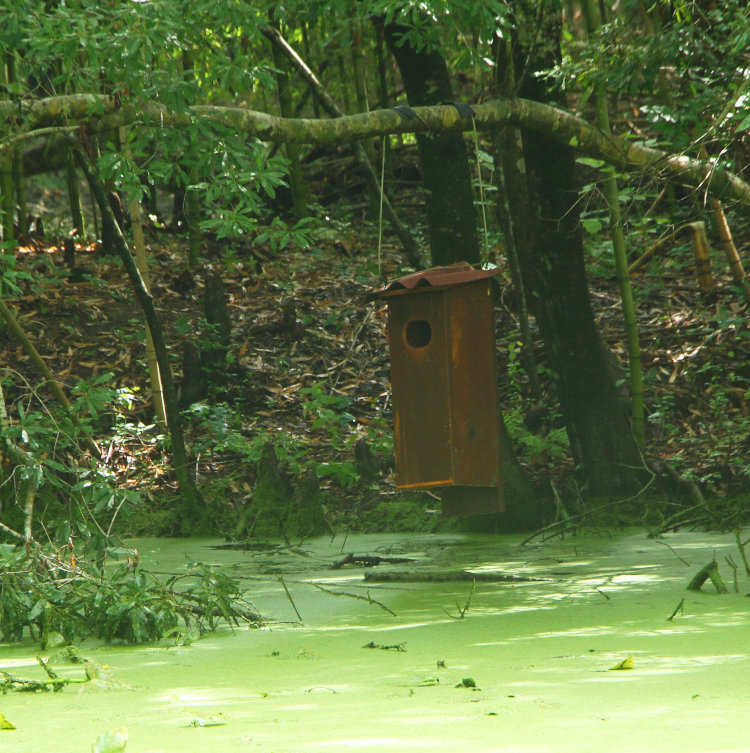
wood duck nest box reinstated hanging over pond
We were pleased to note that no predators seemed to have found the nest box, without even squirrels bothering it, even though ideally, it should be on a post in the water that has a predator skirt underneath (mostly for snakes.) Driving the post was a conundrum that I tackled in my mind several times over before finally settling on hanging the box instead, and so far it’s been okay; this is not to say that we won’t have to revisit this in the future.
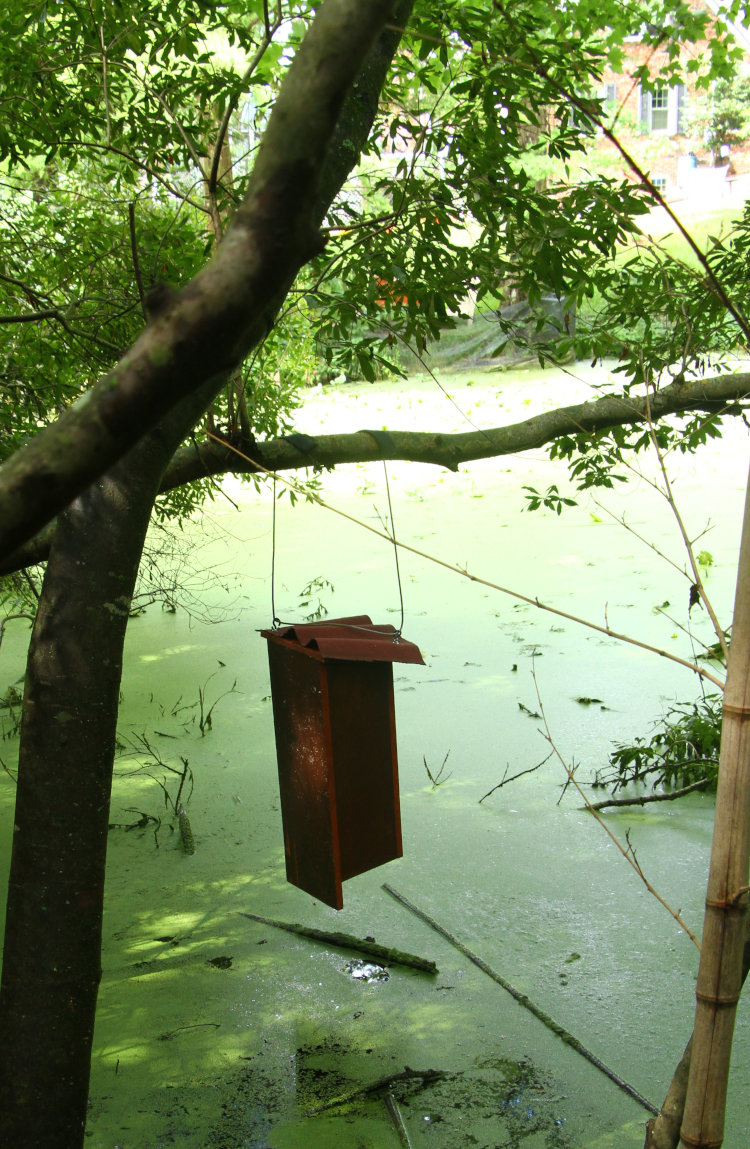
other view of reinstated wood duck nest box
And since, at this latitude, wood ducks might actually have a second nesting season, it was kind of important that it go up soon; it awaits them if they are so inclined. Meanwhile, we get glimpses of the various broods of ducklings that visit the property now and then, though decent pics or video are elusive – you’ll see more shortly.

[Again, that’s not algae on the pond, but ridiculously prolific duckweed, as well as several trunks/stalks of fallen bamboo, of which we have far too much. But you can see Stately Walkabout Manor Plus in the background…]

Got enough?

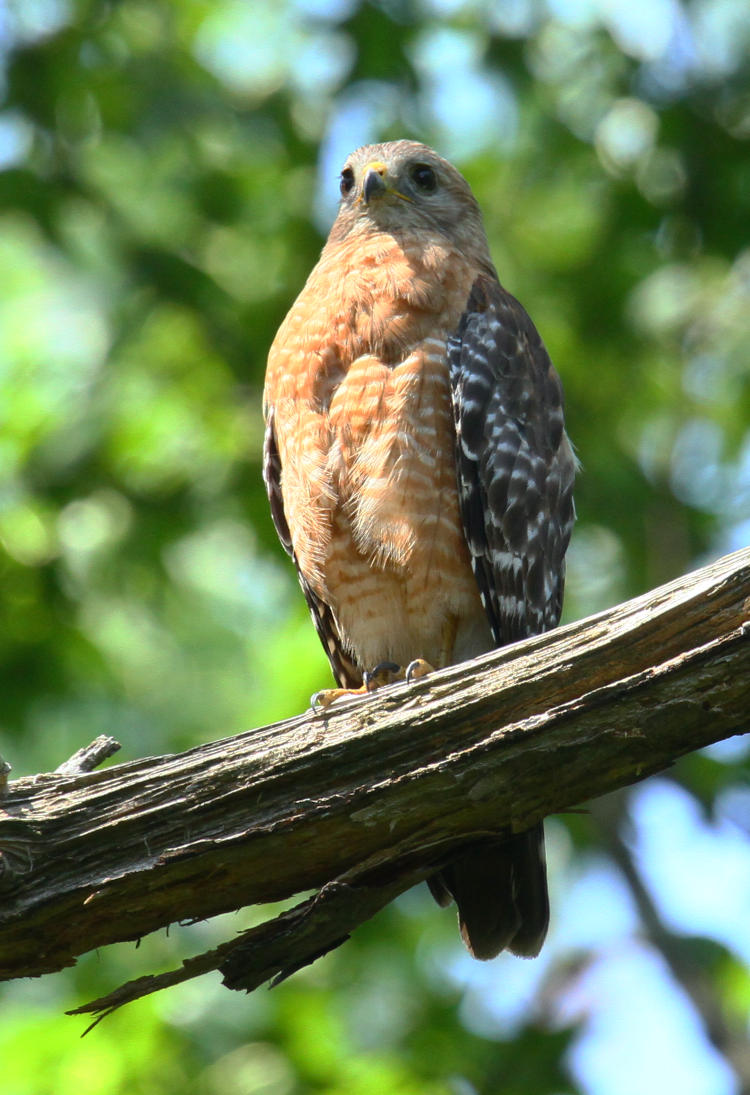
I was busy taking care of things in the backyard when I realized that the calls of a red-shouldered hawk (Buteo lineatus) seemed a bit too clear. It’s quite common to hear them as they wheel overhead marking territory, but this was fixed and quite close. It took no effort at all to spot it sitting on a dead branch just off the back of the property.

red-shouldered hawk Buteo lineatus being obvious and complacent
This is fairly uncommon; unlike the red-tailed hawks, red-shouldered tend to be a bit more secretive, alighting in thicker foliage where they’re not easily spotted, and I’ve spent plenty of time trying to find one that I knew, from the calls, was right there and yet couldn’t quite lay eyes on it. This one probably couldn’t have been more obvious if it tried, and I was in plain sight myself no more than 15 meters away. It stayed put as I got the camera, and even as I returned to my chores.

red-shouldered hawk Buteo lineatus from a different angle
The one thing it didn’t do was offer up any calls while I was shooting, the only evidence that it even recognized my presence. Well, there was another bit, and we’re about to get to that. Eight minutes have passed between the first image and this one, and you can see how the sun has moved on and thrown more shadow on my friend here, but at least I got a nice frame with some lighting into that eye. It hadn’t moved – the change in perspective is due to shooting from different parts of the yard, which really isn’t that big, so you get a faint impression of how close the hawk was, even though these frames are significantly cropped.

red-shouldered hawk Buteo lineatus making eye contact with photographer
Eventually it made eye contact, though even this wasn’t an indication of anxiety because it remained where it was – it spent far more time looking over its shoulder at something behind it than down at me, though I saw nothing back there myself. Most likely, it was hearing something stirring in the undergrowth and was watching for prey.

Given that this was only 20 meters, if that, from the nest that I featured six years ago, it remains possible that this was one of the young raised therein, or even a parent – but not likely. Six years is a long life for most birds in the wild, not to mention that we’ve always had plenty of the species around, so who knows? So although I haven’t spent a lot of time the past few days in chasing pics, I can present a handful that represents a little activity. And I’m working on some stuff that will appear here eventually – just want to get it right.

The backstory (part 1 perhaps)

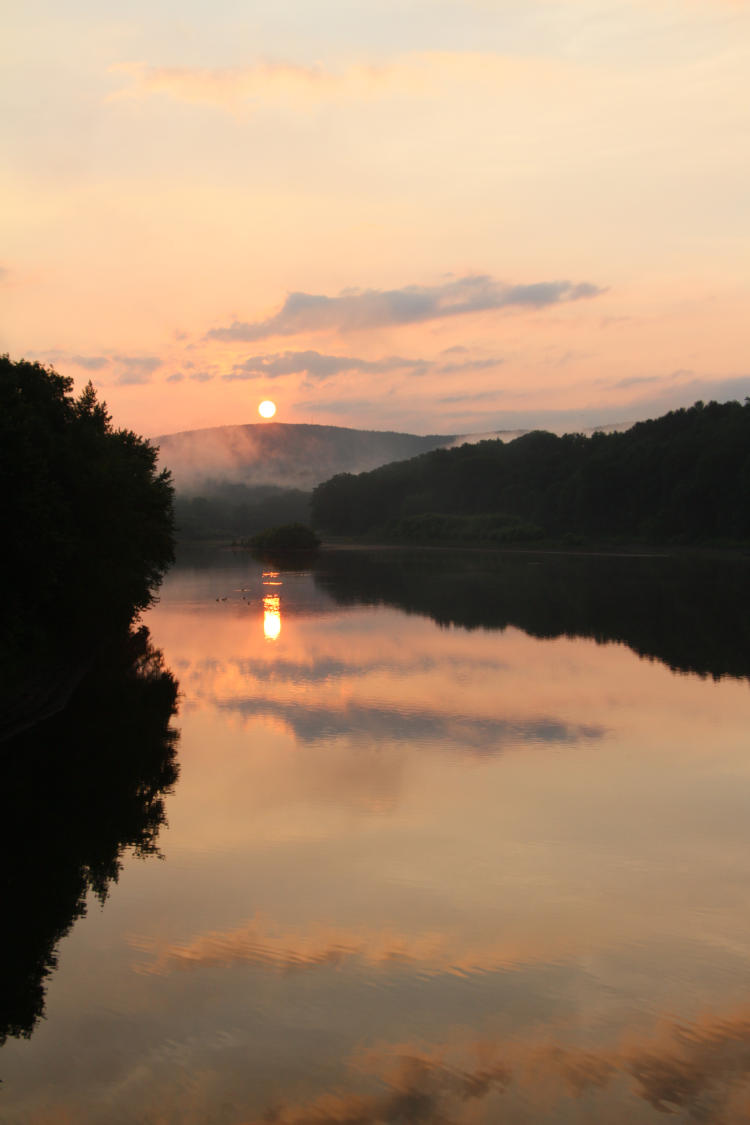
Let me paint the scene: It’s very early morning on Interstate 81 in Pennsylvania. I’d driven through downpours in the Philly area that were reputed to stretch for kilometers, but the roads were dry here. I’d been seeing the sky lighten steadily for over an hour, and knew it was about sunrise, but here in the foothills between the Appalachian and Adirondack ranges, the sun itself might not become visible for a while. Thick patches of water vapor could be seen rising from the valleys, and I knew there would be something scenic to present itself if I kept my eyes open, ready to stop and grab the pic.

Descending, I crossed a bridge – one of many on the trip, but this one was over the Susquehanna River – glanced to the right, and leaned hard on the brakes. The cooler on the passenger seat alongside me headed towards the footwell but was stopped by the dash, while various items shifting on the rear seat could be heard. I was already well aware of the lack of traffic at this time and place, sharing the road with only the occasional rigs which weren’t even visible right then, so no hazards to anyone else with this maneuver. I quickly found a small apron before the offramp that came almost immediately after the bridge and knew the car could be well out of the way there. Hit the hazard lights, jumped out, grabbed the camera from the backseat, and trotted back up the road about a hundred meters to the bridge I’d just passed over.

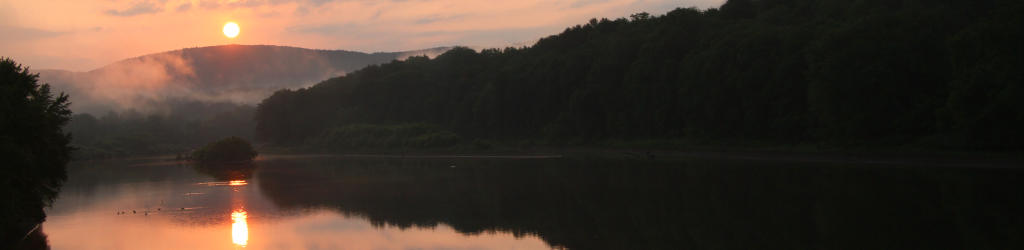
misty sunrise over Susquehanna River
Seriously, would you have passed this up? All right, then. As indicated, most of the surrounding hills were still shrouding the sun from the rest of the landscape, and it was being in the river valley that allowed this view at that moment. Also, this was only a few days before the summer solstice, when the sun was as far north as it would get, so this particular view would be different for most of the remaining year since the sun would be off to the right.

misty sunrise over Susquehanna River
Had I hit the road ten minutes earlier, I could have caught the sun just making its appearance over that ridge, though it’s possible that, without the sun, I wouldn’t even have stopped; it was the distinct red ball over the water, seen in a mere second, that induced me to pull over so quickly. The mist differentiating the layers of trees gives extra depth to the scene, and the white balance was set for ‘sunlight’ to retain those orange hues – in truth, I rarely ever switch it off of that.

family of ducks on Susquehanna River at sunrise
One of the things I like about this is the incongruity, because I know I was standing on on the shoulder of an interstate bridge littered with scrap metal bits and gravel, bouncing under me as the rigs roared past at over 100 kph (usually politely switching lanes because they were empty enough,) the ambient sounds exchanging between that and the early morning birds as the trucks got far enough off. The images are all serene, giving no indication of the warehouse just a few hundred meters to the left, and within an hour or so, the traffic noise wouldn’t abate again until well after night had descended. Every time I see these images, I’ll make that association – which means anyone else will get a measurably better feeling from them than me, even though I’m pretty good about separating the visual aspect from the circumstantial.

Anyway, I got back on the road within a few minutes, happy that I had some solid images already from the trip.

Happy birthday Boogs!

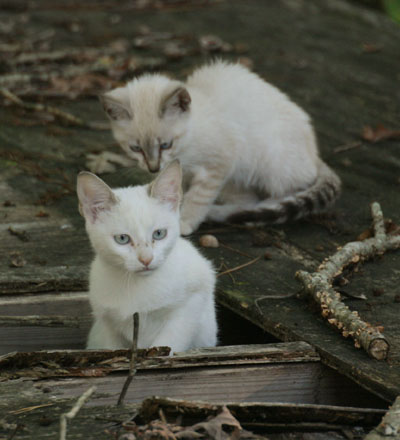
The Boogs as kittensFour years ago today, the Boogs were born. More or less, anyway. When they showed up at the house, it was Labor Day weekend and they were roughly eight weeks old, so we picked a date that was easy to remember.

The most notable thing about them is the color change they underwent, which you’ll see clearly in a moment when you compare this image, taken while they were still semi-feral and had not yet been in the house, with the recent photos below. But it’s also been interesting to watch their personalities develop, including the faintly obsessive behavior of both.

Little Girl (otherwise known as Zoe) is the tiger-striped one, at the back in this photo, the last to be tamed down – of the four that originally showed up abandoned at the house, she took much longer than the others. But largely because I was the one that forced her to sit still and endure some pleasant attention, she became “my” cat. She’s cool with everyone, but she has several behaviors only displayed around me, including the idea that if I crash for an afternoon nap, I must make a tent of the bedsheets so she can stretch out alongside. If The Girlfriend and I are both napping and we make space in between, this is not acceptable. She has also decided that, when I’m working at the computer late at night, there are specific times for attention. Not to mention the insufferable offense of being locked out of the bathroom when I’m in there…

Kaylee is the randomly-colored one though she appears pure white in the first photo, and while a Siamese-mix like Little Girl, the exact ancestry is muddled but surely eclectic. She became The Girlfriend’s cat, and as the time draws near, she sits impatiently at the window watching for The Girlfriend to come home, becoming a little spastic and racing around excitedly when it occurs, trying to trip people. This is an extension of the ‘keepaway’ game she played when she first came into the house, purposefully darting past people when they reached down to give her attention, then returning to dart past again, a game she still occasionally plays. She is also notoriously bad about eye contact, and will look fractionally off to one side instead of directly – on occasion she meets my gaze fully but looks away again immediately.

recent image of The Boogs
Here they are just a few days ago, in an image purposefully taken for the post – you can see the string that coerced them into posing, since they don’t really take direction well. Little Girl is the one reclining. Clearly, their colors wandered a bit from that as kittens. Kaylee, by the way, is obsessive about string, especially if it’s dangled from the upstairs balcony, and if she has been overstimulated with it (The Girlfriend’s Younger Sprog is usually the culprit,) will need a few days to come down before she’ll stop sitting alongside the string and crying forlornly for anyone to animate it.

The Boogs on the porchThis pic is from March, not showing off their colors as well but you can at least see their blue eyes – they’re very pleased with the screened porch of the new house. And the top perch is definitely Little Girl’s – it’s as tall as I am and so she can gaze down at me, engaging in swatting matches and occasionally bopping me on top of the head when she gets excited.
Some time back I discovered, by accident, that they both respond surprisingly well to whistling – I can only guess that the pitch that I achieve resembles their mother’s call. When getting the indoor photo above, the flash was giving me both confirmation and recharge beeps, to which Little Girl kept answering, eventually walking over to see why it was calling her.

They’re not pleased with loud bangs, however, so as all of you out there celebrate their birthday (and I’m surprised at the following that this blog apparently has,) let’s skip the fireworks over it this year, okay?

The long-awaited mantis update

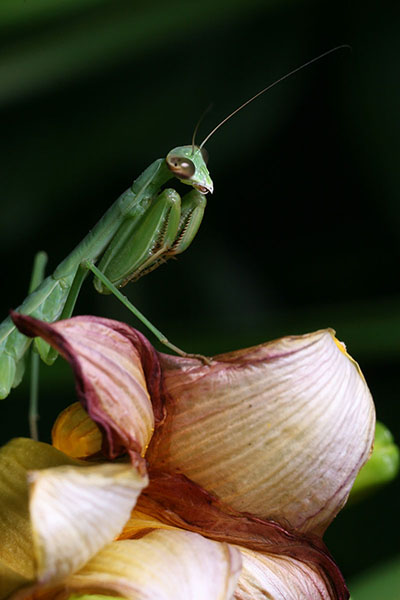
Chinese praying mantis on day lilyPosting is still slow – I’m finding a lot of my time taken up with other things, boring things from a blogging perspective – but I’m trying to keep up with images at the same time. There will be another post featuring various arthropods coming shortly, but for now I’m going to focus on just one.
One of the many mantises that had inhabited the Japanese maple has now switched to the front flower garden not far away, and stalks the daylilies (genus Hemerocallis.) When we first moved here, the maple was crawling with mantids, but most of them have moved on or simply disappeared, while the one seen here is an established resident, spotted pretty much daily. The change in size is, as always, fascinating to watch, especially when you’ve seen how tiny they are when first hatched.

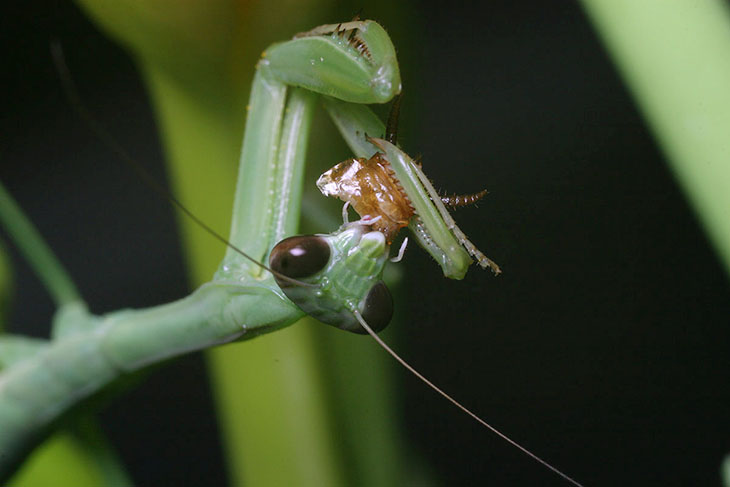
I was on the phone with a friend and, as usual, wandering all over the place while talking – I’m a great fan of my hands-free headset, though the neighbors often don’t spot it and think I’m strange, but I am, so no biggie I guess. Anyway, during the conversation I spotted my resident chowing down on a recently-caught meal, and had to go inside and get the camera rig. Yes, I still do nature photography while speaking on the phone, and my friends are used to this, even though it occasionally involves strange grunts and truncated sentences. I’m probably one of those taxing acquaintances. Are there a lot of people who chat on the phone at 10:40 pm while lying with their head in the front garden, shooting almost vertically at a mantis eating a roach? I bet the numbers would surprise you…
Chinese mantis eating cockroach
By the way, while most people associate roaches with bad living conditions and all that, there are actually quite a few species, and the wood roach (genus Parcoblatta) is fairly common in many areas of North Carolina. They’re not a pest and don’t reproduce in the home, but they make great meals for nocturnal insectivores like mantises. My subject here, in fact, was growing so noticeably larger that I knew it was due for a molt, but I wasn’t watching close enough, and only caught the aftermath a few days after I photographed it with its meal. Since this was captured during the day, the mantis is not displaying the dark eyes that it had with the night shots above.
Chinese mantis with newly-molted exoskeleton
As always, following a molt they appear significantly larger, and today my subject measured 60mm (2.5 in) in length, quite an increase from the 10mm measured a few days after hatching, and still only half as long as the reproducing adult stage will be.

Chinese mantis drinking dew from leafWe’ve been a little sparse on rain during a heatwave, so I was watering the plants and, getting close to the mantis’ stalking grounds, I switched the sprayer to the ‘mist’ setting. Once again, this was greatly appreciated, and the mantis immediately began drinking up what it could from the leaves. I was slightly unprepared here, in that the strobe batteries were weak and taking too long to recharge; this shot was slightly off in focus, and by the time I had replaced the batteries the mantis was no longer displaying this behavior – it was getting a little antsy with this strange creature looming overhead, bearing the bulky contraption that makes up my macro field rig. However, I wafted in another mist treatment, which gave me an opportunity for an even better display.
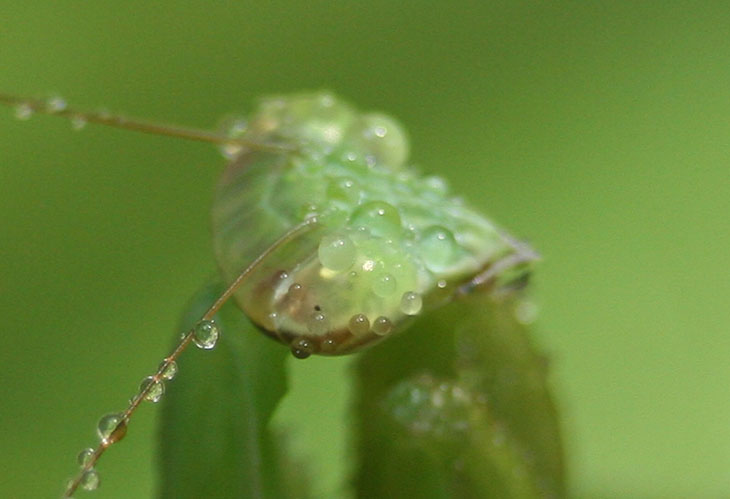
mist drops on mantis eyes
You can see the difference in light quality and focus depth here as I switched to using natural light without the flash, needing to use a larger aperture to keep the shutter speed high enough. You might think this much water is unnatural, but it occurs just like this on cool evenings, and the mantids can cope readily. Watching it in action was actually pretty damn cool.

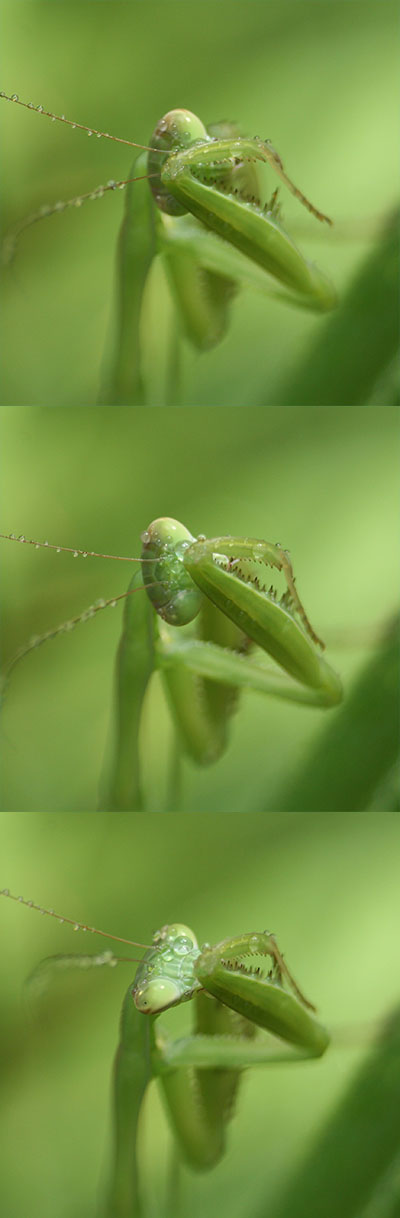
Mantis clearing dew from eyesThe eyes, of course, are important, but so is the moisture when it’s dry, so the mantis made sure none of it was wasted. With a motion remarkably similar to a cat cleaning itself, the mantis swept its eyes clear with a foreleg, then drank the moisture collected on its leg. Switching to natural light was a major blessing here, in that I could fire off sequences of frames without worrying about strobe recharge times.
Will a praying mantis realize I’m behind this benefit, or remember my generosity? It’s safe to say, not a chance – about the best that might happen is it gets somewhat used to seeing the macro rig nearby without anything bad happening, and I find it a little easier to snag pics, though I can’t say I’ve seen any real evidence of this. Today I brought the calipers in close to try and get an accurate body length, and it really didn’t like that; it dove for deeper cover in a near-panic, though I was able to coax it back out and get the measurement – it was far less concerned about my fingers than the metallic shine of the calipers. Like many species, a lot of it depends on the actions themselves. Sudden movements, eclipsing the light, bearing down from above – these are all predatory behavior, regardless of the shape or appearance of the offending object.

I remember reading a study, many years ago, where a frog was tested in response to certain stimuli. A cricket model, very realistic, that simply sat still didn’t garner any attention from the frog, but a wood block, moved in the same manner that a cricket does, provoked strikes from the frog. Since then, I’ve observed numerous different species, and the pattern holds up surprisingly well; overall, it’s the actions, not the appearance, that most often provokes a response, defensive or complacent.

Maybe someday I’ll sit down with a bit of thread or wire and some little innocuous object, and see if I can provoke a strike from a mantis by making it move like a tasty bug. It might be interesting to see what details the mantis pays the most attention to.

Lost in your eyes

LostInYourEyes
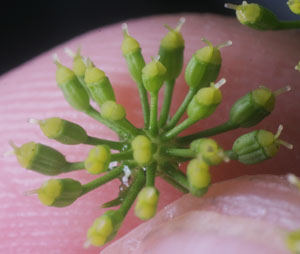
ParsleyScaleOn Saturday, I was chasing bug pics when I got an expected call to meet with friends, and snagged one frame of some amorous flies on the parsley flowers before I had to put down the camera (sacrilege I know) and head off. I couldn’t see these eyes in the viewfinder (for the reason illustrated at right,) so the surprise came much later when I unloaded the memory card.
Now, the big question: why do the eyes look like that? What function could this possibly serve? And the big answer: I DON’T KNOW. (Sorry, that was the only way I could make such a wimpy answer “big.”) No source that I’ve uncovered yet has the faintest explanation for why Orthonevra nitida should have such a pattern.

So the amateur naturalist in me starts to speculate ignorantly and wildly in lieu of contacting as many entomologists as I can find in the hopes of uncovering something reputable (that’s the kind of mood I’m in right now.) And so, three things come to mind:

  • It has a camouflage function;
  • It is a sexual display;
  • It provides some specific function to sight, unique to this species.

The first seems a bit suspect, insofar as finding any pattern like that elsewhere strikes me as unlikely, plus the idea that the eyes depart radically in appearance from the rest of the body. The second is also questionable, since this is not a sexually dimorphic species – males and females appear the same. It might, however, serve a purpose in differentiating a compatible mate from similar species, such as O. bellula and O. flukei, both of which have patterns but not this pattern. The biggest problem with this is it supposes the species diverged enough to create distinctive genetic variations that were beneficial (such as favoring plants indigenous to the different geographical areas where they had spread) but not enough to prevent intermingling of the separate species that had developed. Those are mutually exclusive.

The third option, so far, is the one showing the greatest evidence. In a paper by H.L. Leertouwer and D.G. Stavenga, it’s been demonstrated that pigmentation in the upper layers of the eyes affects what wavelengths of light are reaching the optical sensors below – in essence, color filters for portions of the compound eyes. No particular surprise, yet what this would mean is that portions of the compound eyes would have different functions – basically, vision in certain directions would be different from others. Vision straight up might be adapted to avoiding predators, while that nearer the mouthparts could be dedicated to identifying food.

Which doesn’t help much with this funky pattern. Horizontal lines, for instance, may help with horizon sensing for flight, while a radiative/starburst pattern might assist in helping an insect “zero in” on a target. About the only thing I’ve come up with, so far, is that the pattern presents numerous areas of near-equal spacing, which might provide some kind of measuring function. Compound eyes are peculiar things, essentially a collection of tubes radiating out from a common point. They have fixed lenses at the top and each tube can see only a tiny portion or the surroundings, so the optical nerves at the base of each tube give “object in precisely this direction” information to the insect’s brain. Lateral motion is easy for them to differentiate, but something moving directly towards their eyes only becomes obvious when its increasing size impinges on more of the tubes. So for a “measuring” function to be valid, it would have to be in a situation where the proximity to the subject was known, alighting on a flower head for example, and then the fly could determine which stamen or whatever was the ideal size to provide food. All of this assumes that the pigmentation really does provide a specific difference in optical transmission, which it may not. Mysteries of the ages…

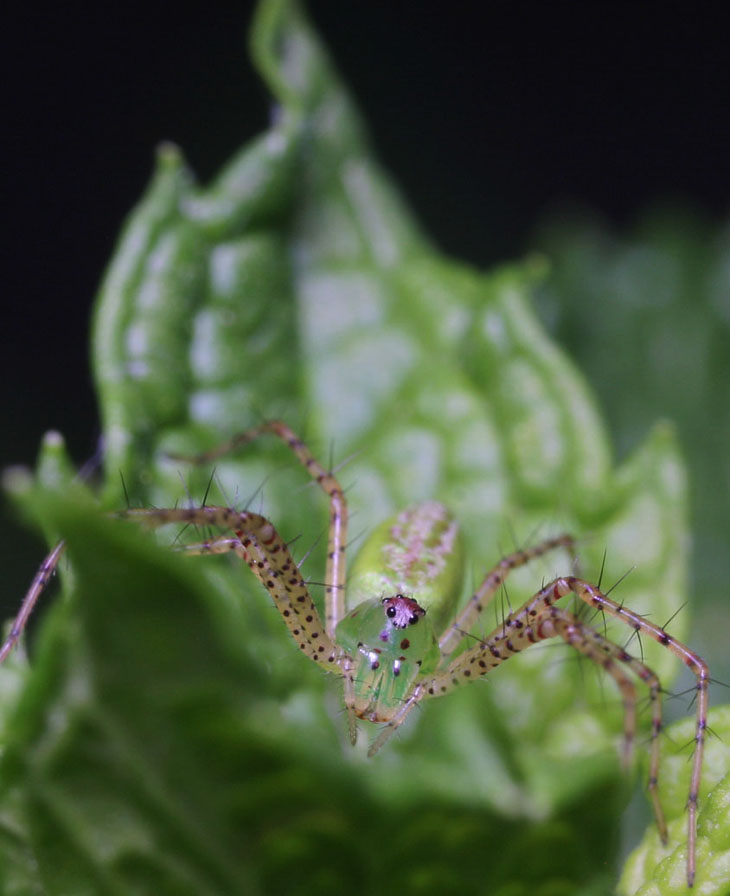
Arachnids, on the other hand, have eyes with moving lenses that are much more similar to our own than compound eyes are, so the subject below was likely quite well aware of how close I was looming, but the slow advance wasn’t right to trigger her instincts to seek cover – I’ve seen the difference between hasty movements while much further away and the gradual increase in proximity I used for this image. Then again, maybe she just preferred a full-face shot or liked the ominous effect. Either way, I have to be careful when picking the spearmint…
MyMint

Odd memories, part 10: Shattered childhood

The year is 1970, or maybe ’71. I am in kindergarten, embarking on a field trip in New Jersey to one of the many Revolutionary War sites in the area. Like all other boys in class, I have my colonial tricorn hat made of three pieces of blue construction paper stapled together. The bus ride isn’t long, and I remember turning off at the hospital (where I had not long before had my head stitched up, but that’s another post that may explain a lot) and traveling not far down that road. It ended at the edge of the Delaware River, across from Philadelphia, and a small park there. We were visiting the former site of Fort Mercer, and the current site of the Whitall House.

The house, maintained since that time and long doing duty as a museum, had served as a hospital during the war. I vividly remember our kindergarten teacher pointing repeatedly to the bloodstains preserved under the floor varnish, getting quite frustrated with us because we had no grasp of the color blood turns over time and she hadn’t bothered to explain it to us (she really shouldn’t have been a teacher, certainly not of young children – this also may explain a lot about me.) All we saw were variations of the floor stain that bespoke the same bad shellacking job visible in the school gym…

It was the exterior of the house, however, that fostered the most indelible memory. On one blank wall of the house, embedded in the concrete, were several cannonballs, small to my cartoon-fed mind and leaving rust stains down the old surface. They had been fired by ships on the river, we were told, and had been left there ever since. Aside from the impression that they seemed too small to be of much use, perhaps fifteen centimeters (six inches) across, there was the undeniable fact that they couldn’t effectively penetrate someone’s house.

Many years later, I started wondering about my recollections – was there really a Revolutionary War site that convenient to where I grew up? Was the river as close as I recalled? None of this was too strange – my hometown featured an ancient (and of course haunted) house formerly belonging to a war surgeon, that my sister and I timidly explored, if by “explore” you mean my venturing a short ways into the front door in broad daylight, and my sister actually getting partway up the stairs until spooked by a falling wedding photo. And only a few blocks away, workers doing renovations on another old house discovered a hidden narrow stairwell running from the attic down to a basement tunnel, later discovered to be part of the Underground Railway that transported escaped slaves. Listen, folks: names that accurately describe the situation will undoubtedly help kids understand history much better. It wasn’t a goddamn train and it didn’t go underground (except, at times, like it did in this situation.) It was a network of sympathetic people who found creative ways of getting slaves to free states. But anyway, it wasn’t too farfetched to have a war site in the area, though I wondered just how accurate my memory really was.

Doing some poking around on Google Earth, I discovered it was surprisingly accurate. Despite no one else that I spoke with seeming to know the least little bit about it, the Whitall House sits right where I remembered, and it can be reached with only one turn off of the road past the hospital. Yet searching through the various images I could find online failed to turn up those cannonballs, surely a major attention-getter. I was starting to doubt my memory again when I came across a short passage, in an article relating a bit of folklore that I did not recall in the slightest:

But the story is a popular one, and in the 1930s, when, as part of a Works Progress Administration project, the building’s brick north wall was covered with stucco, about a dozen ornamental cannonballs were nailed through the stucco to commemorate the battering that the wall supposedly took during the battle.

Today [the story was published almost exactly 25 years ago], a $200,000 renovation of the building’s exterior, which includes the removal of both the stucco and the ornamental cannonballs, is nearing completion.

They… were… FAKES! No wonder every image I could find of the brick north face of the house failed to match my memory of a concrete wall! No wonder all of the webpages that detailed the house and its history failed to mention the most striking feature! (Yes, another pun, I’m going to hell, we know that already.) Worse, they belied the real story (perhaps) of the cannonball that hurtled through the wall and came to rest at the feet of Ann Whitall. This at least gave a little more credit to the guns of the time not being so damn wussy…

The funny part of all this is, I really had no intention of doing something ‘appropriate’ for Independence Day, since I get tired of seeing the efforts of everybody and their brother who feels obligated to honor every holiday that comes along. Seriously. I was spending the evening chasing down various items in Google Earth and revisited this (along with the taco place in Georgia that had a superhero out front urging new patrons inside.) When I found the blatant misrepresentation foisted on my malleable little mind I just wanted to share, and didn’t realize the coincidence until I caught the publication date of the linked article. No, I don’t expect you to believe that, but there it is anyway.

Stars around this planet

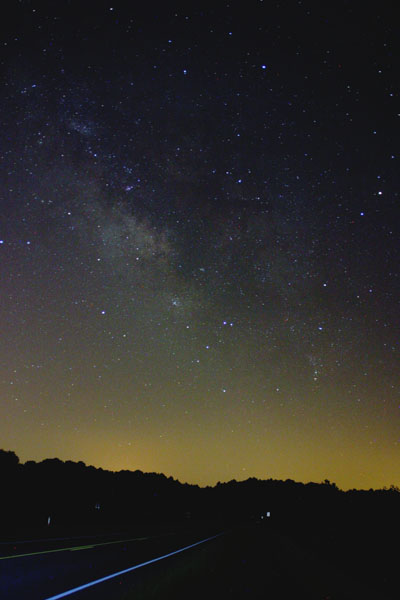
Tonight, the sky was exceptionally clear, especially for summer, and I trekked (well, drove) down to Jordan Lake to see what I could capture. Jordan Lake is about the only place in the area with largely unobstructed views and relatively dark skies, and that “relatively” is key – there are too many cities nearby pumping light up into the sky for really good night views.

Nevertheless, I managed to capture a first for me, believe it or not: a detailed stretch of the Milky Way. This picture has been enhanced slightly from the original, correcting the color cast a bit and increasing contrast, because digital doesn’t work as well as film on the night sky. This was also taking a chance, because I’m aiming mostly south here, which is not the best move from the Northern Hemisphere – the stars to the south show the most apparent movement, and smear across your photo frame more. This is a mere 26 second exposure and movement is still visible in the full res version. For further specs, this is ISO 800 at f2.8.

The stars at the bottom of the photo, curling around and upwards to the right, are the constellation Scorpius – look for the two pairs of close stars. The pair towards the middle of the frame are the “stinger,” and the other pair is the base of the tail leading into the scorpion body facing towards upper right. Portions of Sagittarius are peeking in from the left, which would make, I believe, the center of the Milky Way Galaxy appearing towards the top left of the frame. It isn’t apparent from our position, because too much dust obscures our view. And somewhere in there is a massive black hole.

One of these days, I’ll do a beach trip during good weather and get out on the shore during really clear nights. The Outer Banks has lots of areas well away from city lights, and of course, half of the horizon is ocean and free from light pollution. When I do this, I now know I’ll need some decent high speed film to get results like this. Alternately, I could construct a tracking platform that counteracts the rotation of the earth, tilting the camera slowly to keep the sky “unmoving,” which allows for very long exposures without star streaks. This plays hell with the horizon, of course, and for most of those shots you’ve seen where the horizon is sharp and the sky is intricately detailed, the horizon has been patched in digitally afterwards. Film and digital sensors just don’t handle the sparse light from the night sky in short exposures, and most especially without grain or noise. ISO 800 is far from ideal – I usually shoot 100 for detail and color rendition, and some films I use are rated at ISO 40 – that’s less than 1/16th as sensitive to light as ISO 800, and so the exposure time would have to be much longer: seven minutes! Yeah, you get some pretty heavy star streaks then.

At some point later on I’ll go into the trials of long exposures, pushing film, and reciprocity failures. Dim light photography has all its own body of knowledge, almost making it a specialty in itself. I’ll warn you adequately so you can skip it if you like ;-)