A post

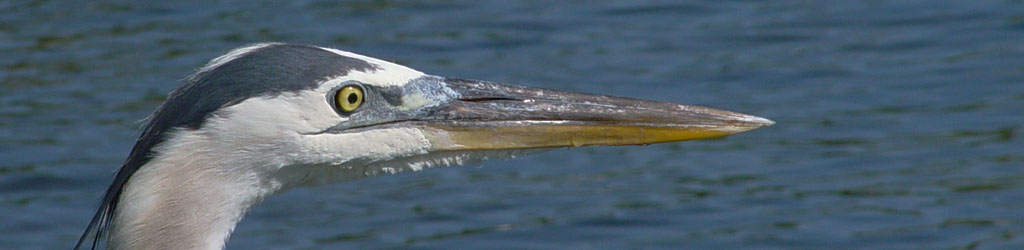
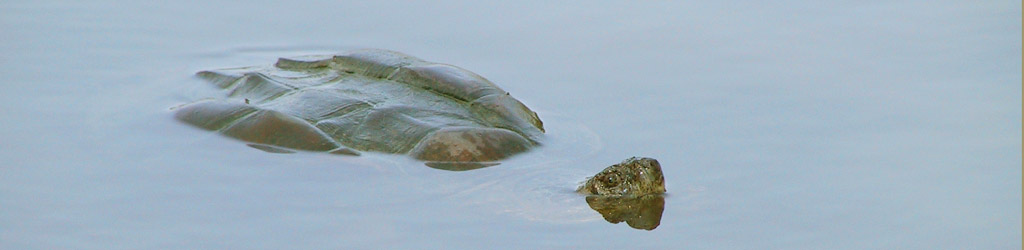
pair of yellow-bellied sliders Trachemys scripta scripta on snag
I have found myself fairly busy for the past several days, but not in a way that can be reflected here too well, so with a few minutes to spare, I’m just doing a small update for my millions of imaginary followers, who have already flooded my inbox with imaginary e-mails asking me if I’m okay and when the hell I’m going to put up something new. This is what you get for being demanding.

Between work – that other job that helps pay bills and is in that way alone essential – and various house projects, I’ve been not only busy, but beating myself up a bit, crawling under cars and the house and up on the roof while the weather was amenable, which it no longer is, having turned colder again, so now I won’t be chasing any other critters for a few days even when I do have time. It’ll change back though, soon enough.

I’ve also been helping The Girlfriend with her projects, among them doing some video shooting and editing – not like I’m some kind of authority on it, but among the two people that she can actually ask for assistance right now, I’m the only one who’s done anything of the sort; the most experienced video editor in the household according to JD Power and Associates (no, that’s not at all true, because we didn’t give them a dime to make that claim.) Given that I still have to render video projects multiple times to find the balance of size and quality that I’m after, plus the search for the right free background music, this takes a long time for a brief video clip, but that’s the nature of the beast.

I’ve done a couple of local excursions, really not finding anything worth an entire post, but the occasional bit here and there.

male eastern bluebird Sialia sialis in tree
There’s the photo sorting, deleting all of those that don’t pass my exacting and stringent standards (let it go) and relegating the remainder into appropriate categories. I’d put this off for a little too long as usual, but it’s going faster than anticipated and I should be done with it today. This is also the opportunity to catch those images of interest that I didn’t immediately write about and set them aside for a later post, but most of the worthy ones have already been featured here.

And then the ongoing, little things, an ever-changing list. Among the items awaiting attention on my desk or otherwise:

  • Getting Linux to play nice with some exterior IP cameras to monitor the property, for critters and assholes;
  • Getting a webcam to work with Linux too, because I may be engaging in some online games and meetings soon. No, I don’t have a laptop with that shit built in, because laptops suck (just for the sake of it, I have three harddrives, 10Gb of RAM, expanded USB ports, and a multi-card reader installed on my system, all to support my normal activities, so you can keep your portable folding toys);
  • Cleaning the sensor in the 30D, which is notorious for attracting dust, though my habit of changing lenses in less-than-clean-room conditions just might be contributing to this;
  • Planting and transplanting a bunch of stuff – we’re a little behind on that too;
  • I was recently given a Bio Orb, a glass globe containing live dinoflagellates, so the obvious next step is to obtain photos of them through the microscope. The idea of capturing their bioluminescence is intriguing but most likely impossible without special equipment that I do not have. Nonetheless, I’ll at least make the attempt;
  • Along the same lines, I’ve had a zoom magnifier head for some time, having picked it up from university surplus, a bit of lab equipment that would fill the gap between macro lenses and microscopes very nicely, if I can get it in a useful mount – I’m almost there now, so pics and results will be forthcoming once I get the whole affair in order;
  • And there’s a big project that I’m not going to say a lot about right now, mostly because this may take a while to come to fruition, not at all helped by a) going about this in no approved manner, b) trying to tackle multiple aspects at once, and c) requiring a certain mood, motivation, and block of free time. When it all comes together, however, you’ll be sure to hear about it here.
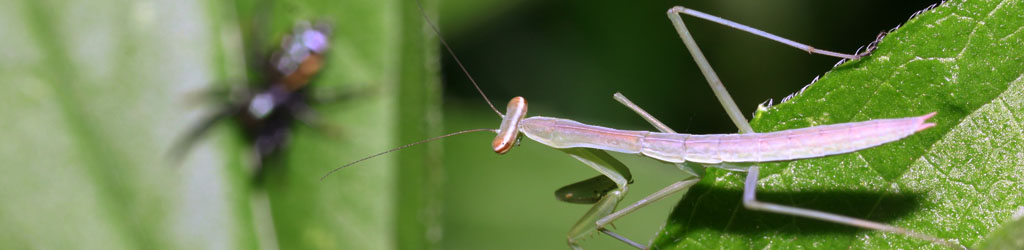
  • So hang loose, more is on the way, and in the meantime, I leave you with another mantis image that I neglected to put into the appropriate post about a week ago. How could I miss this one?

    newborn Chinese mantis Tenodera sinensis standing upright between two leaves

    Looking back while time is scarce

    Just so you know, today is the 4th anniversary of Philae touching down (bouncing repeatedly off of) comet C67/P Churyumov-Gerasimenko – I say this so you have time to make dinner plans.

    I keep thinking that I’m past the busy spell and can finally start posting a bit more regularly, but this has yet to be proven. Still, I’ve got a little time today, even if I have no recent photographs to pass along, so while my gut is playing games, I’ll try to tackle one that’s been sitting in the background for a little while now. In fact, during a quiet spell I actually attempted a little work on this while in Ohio, but didn’t get very far. At the same time, Halloween produced another post idea, and here we are twelve days past that and no closer to it than before.

    I’ll use this opportunity to briefly touch on the initial reactions to the photo exhibit. First off, the staff at the Visitors Bureau seemed to approve, and at least one person there mentioned their favorites. When the 2nd Friday Art Walk arrived, we had a small collection of visitors – more than normal, I’m told – but the night was chilly and drizzly, so not conducive to prowling around downtown for the sake of art. But overall, the response was pretty positive, I have to admit; there were the typical and expected responses of, “Very nice,” which I usually take to mean, “Ehhhh,” but that came from two couples, while everyone else seemed quite enthusiastic and complimentary, and honestly so (if I’m any judge, anyway – we all know how weird I am.) People seemed quite taken with many of the images, and I have a couple of new potential students that may arise from the show, which has only been up a week so far. Most curious were the comments, multiple times, that the ‘creepier’ subjects were the favorites; two people admitted to being big herpetology fans (so, lizards and frogs,) while another would have liked to have seen my spider photos. This is amusing to me, because The Girlfriend and I specifically chose to limit such photos, concentrating more on scenic and Carolina-themed images to fit in with the Visitor Bureau vibe, as well as avoiding the kind of subjects that people might find icky. Me being me, I was not about to eradicate all of the creepy subjects (and I did pick the more fartistic compositions of such,) but I’m entertained by the idea that I might have gotten away with more.

    Anyway, on to the main subject.

    The author testing out a macro periscope, by Paul Denelsbeck
    I had a project that went through multiple stages over a period of many years, from idle conception to working model, which you see here (that’s me without the beard, right there in my old haunt of the Indian River Lagoon in Florida, with the causeway in the background.) Basically, it was a reverse-periscope for photographing aquatic subjects right in their own front yard, or, uh, whatever. The body of it is that green portion with the black collar, attached to a monopod that also supported the camera in a precise position in relation to the periscope. It was all carefully planned to use the Sigma 105mm macro lens, between the shape of the lenshood and the view angle of the lens itself.

    display view of reverse periscopeThe key portion that promoted the whole thing from an idea to a work-in-progress was a front-silvered mirror, and let me explain. Most mirrors are back-silvered, the reflective surface being on the back side of the glass because it’s delicate and easy to scratch. But doing any photography, especially high-magnification photography, with one of those means there are always secondary ‘ghost’ reflections from the front surface of the glass, so the goal is the make the front surface the most reflective. I thought this was going to be a tricky thing to purchase until I came across replacement side-mirror panels in an auto parts store; the unfinished back was exactly what I was looking for, and it was available in larger pieces for truck mirrors. The remainder is all PVC pipe and a piece of clear acrylic for the viewing window. The elbow is actually a T-joint cut on a precise diagonal and sanded flat for the mirror to mount to, and I painted it all green both to reduce its obvious contrast to any undersea denizens that I got close to, and to cut the glow from reflected light onto the photo subjects and surroundings. On the black collar (a simple reducer) was mounted a 1/4-20 threaded insert for a standard tripod screw, as well as a 3/8-16 threaded stud for a mini ballhead to hold a flash unit, which could be aimed to fire into the water just ahead of the scope. Seen behind the camera is a Manfrotto 3028 head, which as far as I’m concerned is a necessary tripod head for anyone into esoteric photography experiments, since it can get into countless different angles, and was the only one that would accommodate the needs here. All submerged seams were sealed with silicone, and the inside of the whole assembly was painted deep matt black to eradicate internal reflections – before the mirror and viewport were attached, of course. Planning ahead a little can make things much easier.

    So with all that, did it work? Well, kinda…

    kings crown conch Melongena corona in persicope view
    It was constructed around the 105mm macro, since that could focus closest and sharpest, but also had to have a certain length to be of any use at all – bear in mind that the longer focal length ‘true’ macro lenses hadn’t been released when I started the project, nor were they within my budget range at any point during construction, but I had the ability to use a 2x teleconverter to produce an effective focal length of 210mm, too (not used for the test shots here.) Essentially, it did work as intended, but the conditions that would permit it were pretty narrow, and at the same time I was doing aquarium photography, which was several times easier and more versatile. Obviously, one had to either cope with a circularly vignetted image, or have enough magnification to completely overlap the rectangular photo frame.

    [By the way, that’s a king’s crown conch, Melongena corona, in that shot, not a true conch but a sizable carnivorous snail instead, and not something that you want to step on, because their shells are fairly sharp and incredibly durable. This specimen is probably 5-6 cm in length, and this image was taken with the Sony F-717 instead of the Canon Elan IIe seen at top.]

    More noticeable were the vagaries of use. It still had to be pretty close to a subject, so one that wouldn’t spook too easily. Often, this meant something resting on the bottom, thus angles became an issue (especially since I was trying not to drive the scope down into the sand and shells.) And within these parameters, even a flash unit was going to provide more top light than frontal. So it didn’t see much use. I did make a straight unit though, just a tube with a port on the end, for shooting more-or-less straight down into the water, and this might eventually see some use again (though I’ll have to rebuild it, since I discarded both during a move, being the worse for wear in the intervening years.)

    minnows in front of periscope
    This was the first of the tests, and an amusing one at that. I was using the pond behind the apartment complex, first just for water tightness and methods of stabilizing – I will note that any such device will be buoyant, trying to push back to the surface, enough to potentially tip over a tripod, which is why I switched to a monopod that I could actively press down, and also move a lot easier. But once everything seemed kosher, I needed something to photograph, within a very short distance of the viewport, and so I cheated a bit. I made up a collection of tiny breadballs and began dropping them in front of the periscope to coax the minnows within range, which worked pretty damn well – there are roughly thirty within the narrow field of view here. This was before the scope was painted so I think some of the light is sunlight reflected from the white surfaces.

    But as I was working on the support rig and the depths and all that, I was out there barefoot sprawled by the water’s edge, and eventually stretched one foot out into the water for better bracing. After a moment or so I felt a curious tickling, and looked down at my foot to see what was happening…

    author's foot being viciously attacked by piranhas
    As you can see, I’m lucky to still be here, and walking unassisted to boot. The hazards of nature photography abound…

    [Yes, that’s a fanny pack in the topmost photo – calm down. It worked a hell of a lot better for wading and biking than anything else, including a backpack that has to be taken off to access.]

    Podcast: And more projects

    As the nature photography shooting season winds down, we start looking for other things to occupy our time. I already have a podcast about winter activities and projects, so check that out, but this one is about what I’ve got planned, or am smack in the middle of.

    Walkabout podcast – And more projects

    A curious note: One of the projects that I mentioned in there was a focusing lever for lenses, for video work. As I was editing the audio after recording, I realized that this might be more common than I originally thought, and once I finished, took a look on Ebay. Sure enough, they make them, and I went ahead and ordered two on the spot. And then uploaded the podcast file. Which means that I struck one item off the list before I even told you about it. That’s efficiency.

    The post with the cicada molting. Since the photos have time stamps, it demonstrates just how much time can be spent trying to illustrate one topic, and that’s with being there exactly as things started. Finding a subject and waiting for something interesting, much less catching the crucial action on video, is an entirely different matter, so this may be quite challenging. I’m not counting on producing a lot of video clips.

    The video that came about also entirely by chance (the ‘bumping sluglies’ clip.) Again, imagine if I tried to stalk these gastropods in the hopes of seeing this occur.

    I mentioned a spider shot that required a tough shooting position, and that can be found with this post. You may disagree with me on the value of these efforts…

    So, a little something about major trips that I meant to mention in the podcast and forgot. First off, when intending to go someplace totally unfamiliar, especially out into forested or overgrown regions where natural subjects are best found, it’s vitally important to know what can be found there – most especially, what’s dangerous. This applies not just to things like venomous snakes, but also what kind of plants to avoid and even what form of parasites are common; vaccinations might even be in order. On top of that, knowing as much about your subjects as possible will greatly increase your odds of actually locating them, as well as capturing something interesting. What’s their habitat? When is their mating or nesting season? When do the primary food sources grow/arrive/migrate? This means research, and a lot of it, so it’s never too early to start.

    And even though the funds for such a trip might be a while in coming, the planning itself can be encouraging, plus you might have an edge on bargain rates for flights or accommodations, and you’re ready should a sudden windfall occur in your financial situation (like, you know, someone deciding to help fund a trip by purchasing a lot of prints.) So mentally change it from, “sometime in the future,” to, “let’s get this all hashed out now.” It can’t hurt.

    And below, one of the images that will be in the upcoming exhibit. Not too creepy, right? I think I can get away with this one, a nice balance of bug and fart. At least to me, but what do I know?

    newborn Chinese mantis Tenodera sinensis on calla lily blossom

    Podcast: But anyway…

    And so, things finally come to a culmination, or at least most things. I’ve been deeply involved in several projects, some of them offshoots of others, some of them needlessly, but here we are. I’ll let myself explain it orally. Or aurally. One of those is correct.

    Walkabout podcast – But anyway…

    The first and foremost thing that I have to include is the link to the new page that I added on cropping images. And the reason that this took so long is that it’s a video, and not a casual one at that. I mean, music and dissolves and everything! Now I can add Producer and Director to my résumé.

    crop example of ruby-throated hummingbird Archilochus colubris at salvia blossom
    The other major project, which I completed just a couple of days before my deadline, was re-recording the first generation of podcasts, dating from 2012 and 2013. Those had just been audio versions of posts and not off-the-cuff like the current versions, but they had also been done with shitty equipment and I personally found them painful to listen to anymore, so just out of this frustration/embarrassment (frustrassment?) I redid them with the setup I’m using now, and they sound so much better. You can find them at the ‘Podcast’ link just beneath the banner image above, or by clicking here. I will note that the first few ‘casts from the new format, started in mid 2016, still suffer from bad equipment – they’re kind of stream-of-consciousness and not really conducive to being redone, so they’re gonna stay that way.

    I cannot recommend Audacity enough for audio work – a wonderfully versatile and easy to use program, and it’s open-source so it’s free.

    HitFilm is the package that I used for this particular video, and it seems to work pretty damn well, though so far I only have the one project that I’ve done with it – we’ll have to see if it holds up as well over time.

    By the way, I mention early on that the weather “wasn’t even producing snow” and was thus too boring to be shooting in. That changed only eight hours later, so there might be something to show for it soon. Which is my way of obligating myself to get out, shoot something, and post about it. We’ll see how well this works shortly, I guess.

    P.S. Oh, yeah – I mentioned the previous collection of podcast fuckups in there, and they can be found here. I imagine it’s pretty clear that I have no lineage to Puritans in any way whatsoever…

    Podcast: What to do in the winter

    Night snow exposure showing light pollution
    Okay, so these are conditions where you could be taking photos, but this is a night exposure experiment, with all light coming from city light pollution reflecting from the low cloud cover and the snow itself

    I’ve mentioned far too many times that it’s the slow season, but now, I’ve finally done something about it! And that something is, telling you what you can do about it. This fulfills my personal obligations and alleviates my guilt, so I don’t even have to follow any of my own advice imparted aurally, just below:

    Walkabout podcast – What to do in the winter

    And a few other links to expand on topics touched therein:

    Cold weather tips, for when you do actually get out to do some shooting.

    Using weather as a compositional element might help too.

    Tackling black & white photography when the conditions support it? Then the posts on monochrome and contrast may offer some assistance. And while I’m at it, this one on mood & metaphor might contribute too.

    Oh, and a post on cleaning lenses.

    ringflash, voltage regualtor,m and focusing light projectsProjects? Here’s one example, and another – you’ll have to gauge your own shooting needs and what will work for you.

    The image to the right, by the way, is evidence of three separate projects: an adapter to make a ringflash work with a reversed lens, a voltage reducer to keep the flash power from frying the sensitive camera circuitry, and a focusing light for macro subjects.

    I mentioned planning trips, and here’s one that anyone might be interested in, the total solar eclipse this August. You know what I said about contingencies? Good – if you are planning to get this, have a couple of other topics or things to visit during the trip, in case the clouds prevent you from capturing your primary objective.

    Ever wanted to mount a webcam in a birdhouse or above a nest? Do it now, before nesting season starts.

    And here’s a project that I’ve just reminded myself of, good for not just the insect photographer in all of us, but garden and flower and even bird images: purchase the seeds that you need for the right kinds of flowers and plants and start them off indoors, getting that head start on spring weather. Perhaps you might want to order some mantis egg cases as well.

    Hope this helps! Good luck!

    Coming together

    When The Girlfriend purchased this house a little over a year ago, it was of course necessary to begin personalizing it, which is one of those things that goes slowly and I don’t think ever really gets ‘finished.’ This means that I often have several projects on hand, either planned or in progress, and sometimes they’re not always known to her until they’re completed.

    The house has a decent-sized screened back porch, and almost immediately, we affixed a string of holiday lights along the ceiling edge – I had discovered long ago that multi-colored dim lights are actually very relaxing, and so this provided mood lighting for this space, and we often eat meals out there. After a period of time, The Girlfriend obtained a nice outdoor glass-topped table to replace the small, basic one that we had placed there initially, the only one we had to spare when we moved in. The textured glass gave me an idea, so while she and her daughter were away for another surgery, I arranged a second set of holiday lights under the textured glass surface to surprise them when they returned. I ended up with a lot of the string left over, so I poked it up through the hole in the center of the table (intended for an umbrella) and stuffed it into a mason jar, creating a simple lighted centerpiece.

    This went over very well, and even increased the amount of times we ate out there, but The Girlfriend noticed one night that the mason jar could build up quite a lot of heat if the lights were left on for a while, and I figured we needed something ventilated. Brainstorming occurred. Shortly, I located what I was looking for on eBay and ordered it, for far less than I imagined I would have to pay.

    vintage but filthy Swallow barn-railroad lanternWhat I found was a vintage barn or railroad lantern, and it arrived in “as found” condition, complete with old spider egg sacs (barely visible to the lower right of the chimney.) It took a while to clean up, and the kerosene had stained the enamel around the base, but I figured that just added to the rustic charm. Despite the grime, it was in good enough condition that I could have filled it and lighted it immediately, and I debated about cleaning it up and reselling it, but I liked the look of it too much. Once cleaned, I removed the wick assembly and drilled a large hole in the bottom of the kerosene tank, then fed the lights up through the bottom and clustered them within the glass chimney. From discussion to result was less than two weeks, and from arrival to display less than two hours.

    modified Swallow lantern centerpieceIt looks quite nice in place, and my only regret is that it is not self-contained and running from batteries, with that fill-spout serving as the power switch. Even during the day, it produces a nice effect, but at night it really comes into its own. I know there are some people that think multi-colored lights are garish or old-fashioned; good for them. We’re pleased with the ensemble, and that’s the only criteria we need.

    So when I’m not posting as often, occasionally it’s because I’m chasing some other projects – this is just one that I decided to show off. The starbursts in the image below, by the way, are courtesy of a small aperture, in this case f22. It’s a simple trick.

    [And if you’re surprised that nothing “buggy” is evident on this porch, well, let’s be realistic: the photography is a pursuit, not a lifestyle, and doesn’t have to be present everywhere. But the metal ants seen earlier are actually out of sight on the porch railing to the right ;-) ]

    lantern centerpiece showing night effect