





This is courtesy of The Girlfriend, who asked me to come out onto the deck to see something, which turned out to be in her overstuffed herb planter (that’s not a euphemism, shut up.) We were a little late to the game, and won’t be having any fresh parsley.
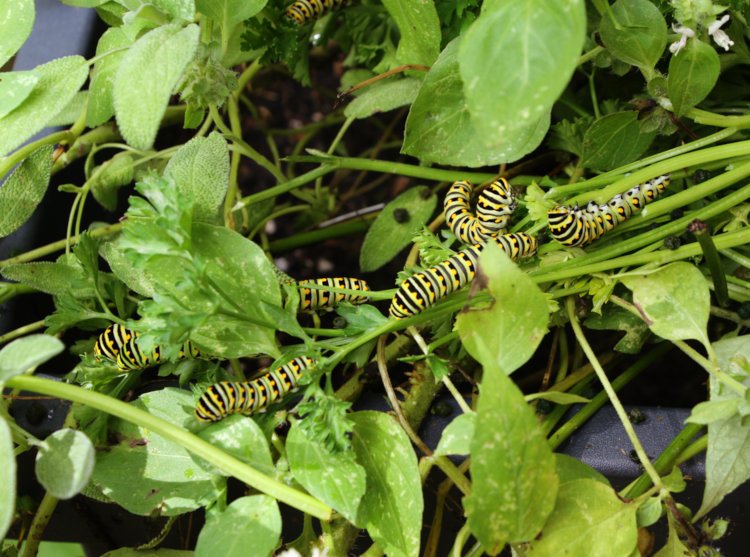
Those are the larvae of the eastern black swallowtail butterfly (Papilio polyxenes asterius,) and this was actually the intention – we don’t give a rat’s ass about parsley, considering it a tasteless herb or garnish, but this species of swallowtail adores it. The Girlfriend actually planted it just to attract them, and once they get big enough, they’ll produce chrysalides (chrysalises) to pupate into adult form. She used to do this each spring, but it’s been a while now – a few times the parsley just never took. Quite frankly, she should have planted much more, because it’s disappearing rapidly.
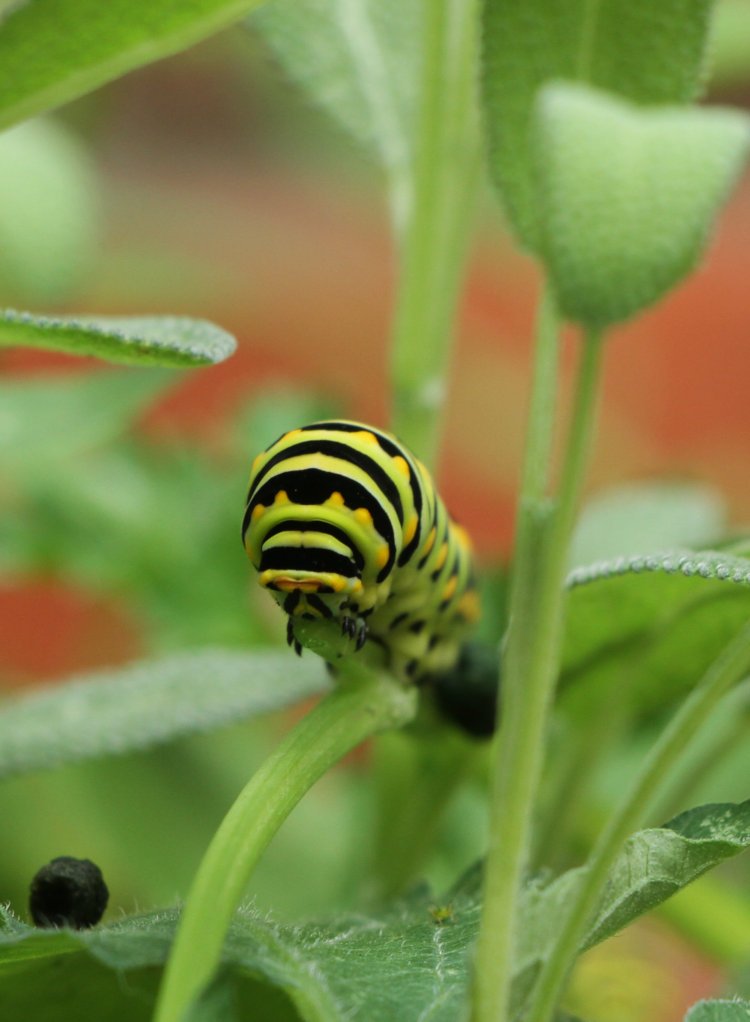
The good news is, they’ll eat fresh parsley from the grocery store, which is all they’ve been getting for the past two days, since they decimated what had been planted. The species also likes celery, carrots, and dill, though we have none of those in the herb garden, so if we want to keep them around for the full cycle, we need to keep them fed. Parsley’s cheap, and whether it harbors cyclospora or not probably doesn’t make any difference to the larvae, who cycle things through so quickly the parasite would probably be killed by friction burns. Yes, that’s caterpillar feces in the pic – it’s kind of hard to avoid it.
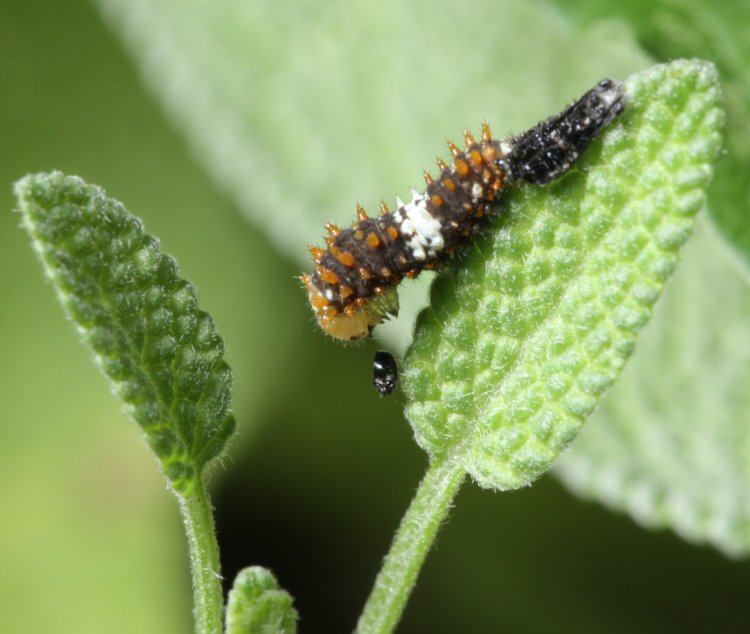
The appearance of the newborns is a little different, which is typical in my experience; at this age, they don’t have the defenses and must convince predators they’re a dead leaf. But as they get more of the age of the other pics here, they develop a little defense that is hinted at by their bright, contrasty coloration, that ol’ aposematic, ‘keepaway’ thing. When disturbed, they extrude their osmeteria, and I’m sure you know what that means.
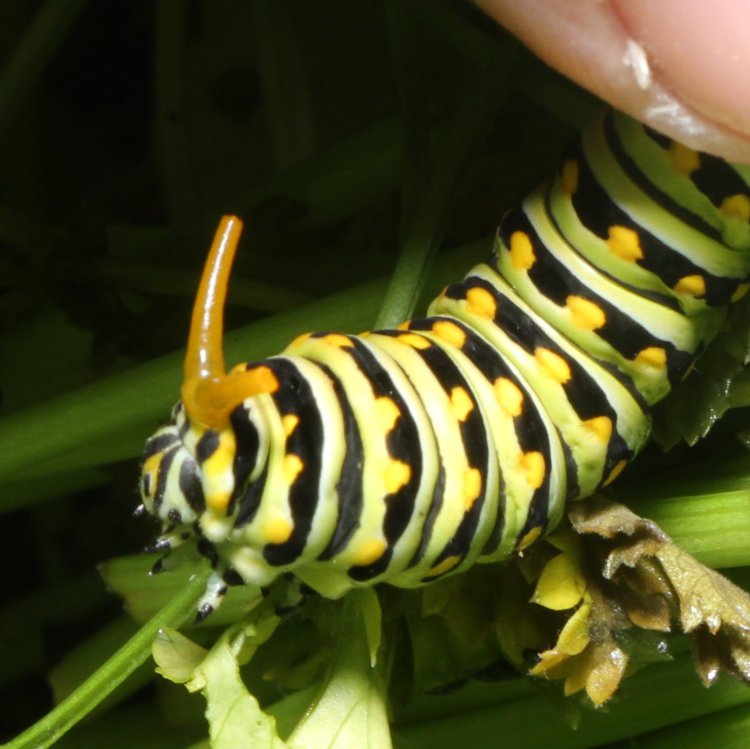
That’s them, the bright orange ‘horns,’ and these emit a pungent aroma [that’s too good a word for it] stank that repels birds and other predators, but only makes nature photographers have to wash their hands at least twice. This was uncalled for, since all I did was pinch a little of its chub. Don’t these guys have grandmas?
But that’s what the bright colors indicate, and this is true for many such adorned species. The defenses, whatever they may be, function quite well, and the distinct coloration makes them memorable so predators learn and never try again.
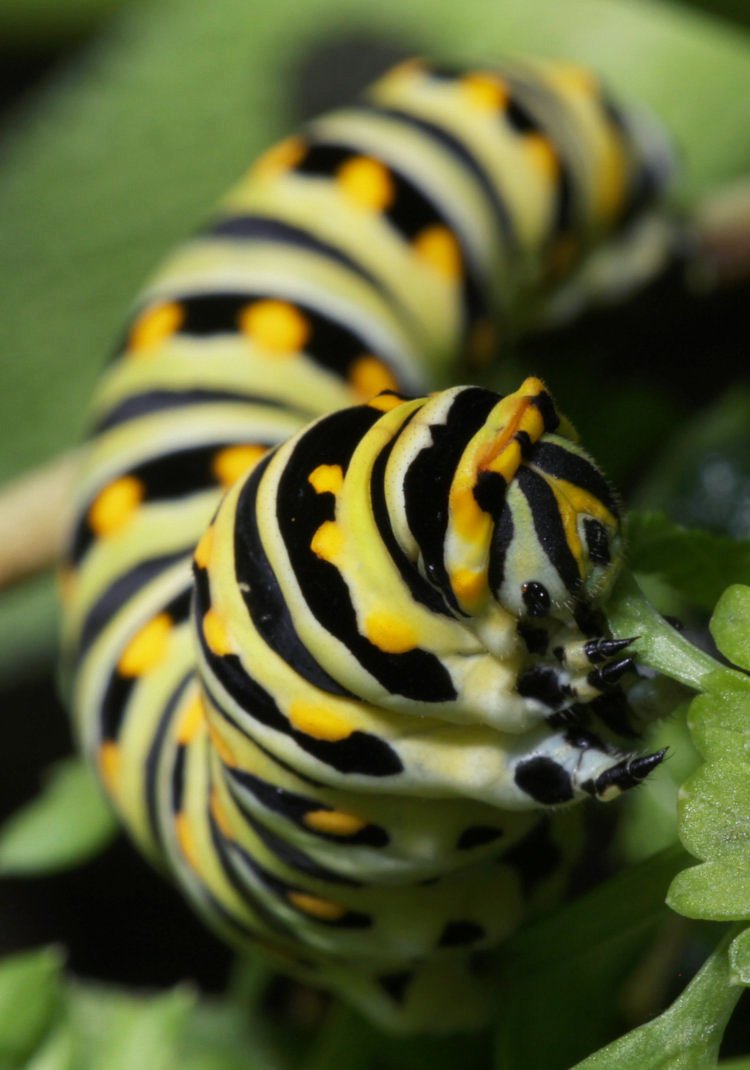
If you look very closely, you can see the three eyes at the edge of the dark spot about, well, about where you’d expect to find eyes. They really don’t need them for much at this stage, but I’ve remarked before on how drastically the eyes change between larva and adult for the lepidoptera. Thing is, everything changes drastically, a complete floor-to-ceiling remodeling more reminiscent of a mad scientist producing some bane of mankind from a petri dish of goo in a science-fiction cartoon; seriously, they pretty much dissolve into sludge in the chrysalis and rebuild a butterfly body, MacGyver-style. Well, without paperclips and hairspray…
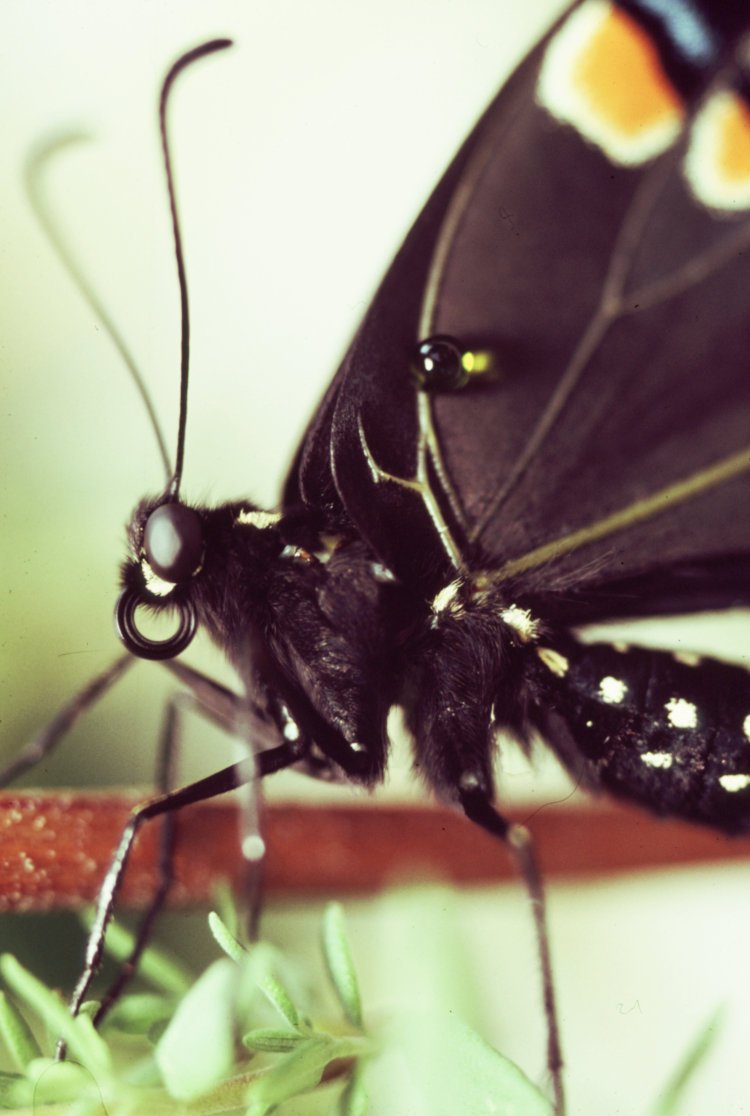
Should said chrysalides be forthcoming, you’ll get further pics, and hopefully some of the emergence, too, so look closely to see if you recognize any of these later on. Meanwhile, I leave you with an ancient slide scan back from the last time The Girlfriend was successful, and raised several to adulthood. This is from probably about 16 years ago, and the emerging butterfly had injured itself in the process, resulting in a blob of green hemolymph on one wing. I had to dig this one out – the lengths I go to for all you readers…