Despite the fact that, just this past weekend (as I type the first draft anyway,) friends of mine have made disparaging comments about debates that take place on the Intersnarl, I return once again to the fabled Fountain of Free Will, a topic sure never to die because philosophy has taught us nothing if not how to continually fail to “get it.”
This time around it’s a post on Why Evolution Is True regarding a mathematical approach to free will. Right off the bat I’m rolling my eyes, since math is entirely, and undeniably, an abstract – it is nothing but how any value relates to another, and does not “prove” anything physical in the slightest. The very best that we can expect is that, if we have a firm and unquestionable set of values for any given physical object/property, we can predict a certain result with math. The problem, as can be seen, is how rarely we have a firm and unquestionable set of values for anything physical, most especially when down at the subatomic level, things start to get very dicey (a ha ha, that was an Einstein joke, oh you can’t hope to compete.)
John Horton Conway, the mathematician with the Free Will Theorem, hasn’t established much of anything, if the interview linked from Why Evolution Is True is any indication at all (pdf download.) Conway starts from a premise that remains unsupportable, in fact forms the very basis of free will arguments, and uses this to postulate his proof. It’s philosophy at its worst.
If we make reasonable assumptions, including the assumption of free will, this one thing tells us that the little elementary particles are doing their own thing all over the universe.
And that right there demonstrates that everything relies on his ‘reasonable assumption,’ which is far from reasonable and has yet to be demonstrated in any way. He goes from here to pointing out that, since the quantum superposition of subatomic particles remains undetermined until observed (by humans possessing free will,) then particles possess free will too!
Suppose there is only a very tiny amount of free will in humans: you can press either button A or button B in a manner that is not predetermined. That is a very tiny part of what we normally consider free will for humans. And if we have that tiny amount of free will, so do the elementary particles, in a sense that a particle in response to some experiment can choose which path, C or D, that it follows. It has free action. It chooses C or D in a manner that is not a predetermined function of all the information in the past history of the universe.
Unless, of course, the very part he assumes, the free will of humans, doesn’t exist either and remains a predetermined function, whereupon his entire case only supports determinism. Feel free to look over the entire interview, because he repeatedly and unashamedly brings up that we believe we have free will, so this supports the assumption that his entire theory rests upon. Sheesh.
[Side track to explain, skip this if you already know what quantum superposition is. At the hard-to-observe subatomic level, any particle like a photon or electron is said to exist in all of its possible states until something interferes that forces a particular state – generally, this is any interaction at all outside of quietly hanging with an atom. Trying to see this in effect, however, requires interfering, so the superposition (sometimes called the probability curve) disappears and we can make a distinct measurement of property. Yes, this begs the question of how we could possibly know about superposition when trying to find it makes it go away, and I’ll explain in a later post when I’ve been able to understand it myself. The other part that Conway misses is that interference does not need to come from any living thing and usually doesn’t, so the idea that this has any connection to free will implies that free will is all of physics. I guess it’s okay if, like in religious apologetics, you change the definitions to suit your conclusion…]
Moving on, there’s a (perhaps common) misconception, one that I’ve had far-too-long discussions about before. One of the main arguments against free will is that, in a universe of deterministic physics, there is no place for will to exist or spring up; given enough information (the proper scientific term for it is, “a goddamn fuckload more than we’ll ever be able to grasp in a billion years,”) the position and reaction of any atom could be predicted, and with it, everything that relies on atoms, which is everything in the universe, including our minds and where my recently-charged camera batteries have gotten to this time. Thus, deterministic physics means that the eventual fate of everything is set and always has been.
The argument against a deterministic universe is the ‘observed’ weirdness of subatomic particles, and things like vacuum energy, quantum tunneling, and entangled particles – shit gets freaky when outside the nucleic classroom. And, to be perfectly honest, I have no argument with this. Except… there’s no actual way of determining whether something truly is random and chaotic, or if we simply haven’t puzzled out what physical laws are at work at the subatomic level. There are three major problems with the claims that things can be completely random: first, that physics corrects randomness above this level very quickly, becoming very predictable again; second, that we see no evidence of such randomness propagating upwards in a “butterfly effect” or “chain reaction,” even when supposedly, every subatomic particle is inherently unpredictable; and third, that if this were true, half-lives couldn’t actually be different (or do not demonstrate the random property they are often claimed to possess.)
[Side track to explain, skip if you already know what a half-life is: radioactive decay, or ionizing radiation, the stuff that makes nuclear power and weapons and all that, takes place in an almost unpredictable manner. For any given amount of material like plutonium, half of the atoms within will have decayed into a stable state in a given period of time – this period of time is a half-life. In the following half-life, half of the remaining has decayed, and on and on. It means any particular atom may decay within a millisecond, or not for a few million years – but in a large group, there is an average that is so dependable that we can run atomic clocks and age ancient materials and all that jazz. Yet, half-lives are different for every element, which means something is governing its behavior physically – it cannot just be random decay, because then all radioactive elements would behave the same and there would be just one half-life for them all.]
Now, with all that said, the bit that a few too many people keep missing: while deterministic physics trashes free will, it is not the lack of determinism that allows it (some have even gone so far as to believe proves it.) Randomness does not fit the description of free will any more than rigid predictability does. As I’ve said before, imagine if we performed some random action while driving down the freeway. Would we feel great about that kind of freedom? No, we’d be even less in control, (and more pissed off) than at the idea of being inherently predictable. It’s kind of startling that I’ve had to argue this with anyone, really.
So now, what does this leave us? We have Option One, which is Physics Is A Law – that doesn’t leave room for free will. We have Option Two, which is Physics Can Be Random (in whole or in part, doesn’t matter) – that’s not free will either. The only other option is Option Three, which is Our Evolved Minds Made Up Of Simple Proteins Able To Be Found Everywhere On The Planet Can Somehow Defeat Common Traits To Alter Physics As We Please – if you like, use the term “Magic” here as shorthand if you really don’t like OEMMUOSPATBFEOTPCSDCTTAPAWP. Because not only is that the only other option that could be present, it’s exactly the case that anyone arguing for the inane concept of free will is making. We are not beholden to physics, but able to transcend it to decide on a Big Mac or a Three-Piece Combo for lunch. Seriously.
But, what if it’s not us doing the magic, but a supernatural being? Nope, that’s what free will was created to counteract, to make us responsible for sin and not mere puppets in the creator’s game.
But what if it’s just an ability to put quantum indeterminacy to use? That would mean either going with the random option again, or selecting a state when it occurs (acting only when the collapsed superposition is what we desire,) in which case why would we need any quantum input at all?
But, what if it’s a special, as-yet-undiscovered property of our minds (from whatever source) that produces such an effect? The first part of the answer is, “What effect?” We can’t even demonstrate where or how it departs from common physics. The second part is, how and why should our brains, so ridiculously similar to other species on the planet, suddenly get a new property? When did it occur, why us and not goannas, are there levels of free will, and can we break this down to the subatomic level where it takes place?
Or, are we just ridiculously mistaken over a concept without a decent definition or measurable effect? Call me crazy, I’m going with the evidence that it’s just an ego trip because we evolved to desire control.
* * * *
Okay, now on to part two, because that last statement begs its own question. If it’s true that we evolved a desire for control, but there really is no such thing because everything is deterministic, how would the process of natural selection produce such a trait? Wouldn’t it be pointless?
The answer is simple: there is no ‘point’ to natural selection – it is an emergent property, a basic algorithm of what works best. If it worked better for humans to possess a desire to make reasoned decisions (to a certain extent anyway,) then we got the trait, regardless of whether we actually had the ability to make decisions or not. As I’ve said before, it’s not the freedom that we really get all worked up over, but whether or not we’re happy with the process. By our nature, we’ll be happy if we believe we’re at the helm (or if we realize the decision-making process involves results that might ultimately be predictable, but only with information far beyond our grasp, so we’re still able to enjoy the experience of life itself.)
There’s a hidden kicker in here. The evidence really is against free will, in that our brains are simple matter and run on known physical properties, demonstrating nothing that’s transcendent – at least, to those unafraid of facing the facts. Yet, the debate over free will demonstrates that the desire for control, for the decision-making ability, remains a very important part of our thoughts, so much so that it often overrides what evidence tells us. This, all by itself, is an interesting avenue of both research and philosophical consideration. How necessary is it for cognitive function, how many other species have it and to what extent, how does it evolve? And even, how far astray does it lead us when we’re unaware of the bias it produces?
Going back to the physics end of it, let’s not mistake what determinism really is. It’s not that there is an ultimate goal involved, a particular end result that is intended or fated or whatever, but an artifact of the rules of matter and energy: given this set of operating parameters, stuff is only going to behave the way the parameters allow. It is the ultimate manifestation of dependability.
(You can have a lot of fun with the religious folk who proclaim a major benefit of faith is that god has it all under control, by pointing out that physics does too – moreover, in a way we can actually see. The old “plan we mortals cannot comprehend” is present too, in the bare fact that we could never grasp all of the information needed to fathom the ultimate fate of the universe, or even just tomorrow’s fate. Presumably, this would meet with no argument, but that won’t ever be the case, because it’s not the dependability or even the mystery they treasure, but the personal state of specialness that they’re assured they have.)
I feel the need to point out that I am not completely sold on determinism being accurate, precisely because of the aforementioned shenanigans of subatomic matter – it remains possible that there are truly random influences within physics, ones that largely cancel out to give us the laws we use every day, but occasionally produce something odd. Yet as I said above, the difference between “truly random” and “as-yet-unknown cause” is academic, not demonstrable in any way – so we’d never really know. Which also makes determinism an abstract idea unable to be proven without omniscience, to be honest.
But there’s also the idea that most manifestations of this randomness are within very narrow parameters. Radioactive decay is a toss-up between two states: temporarily unstable (retaining energy and particles,) and stable (having released them.) There’s nothing else; no regaining them, no changing them, no increasing or decreasing their energy – just two states. It seems a bit odd to call something so rigidly defined “random” solely on the basis of when the state changes.
And finally, it should also be noted that the concept of free will existed long before any vestige of quantum mechanics was even suspected; unlike DNA and heritability, QM didn’t serve to explain an effect we’d been observing, but has been used to try and salvage the inherent problems with the entire concept, some of which are presented by physics itself. Cute, isn’t it?
Potentially Related Posts:



















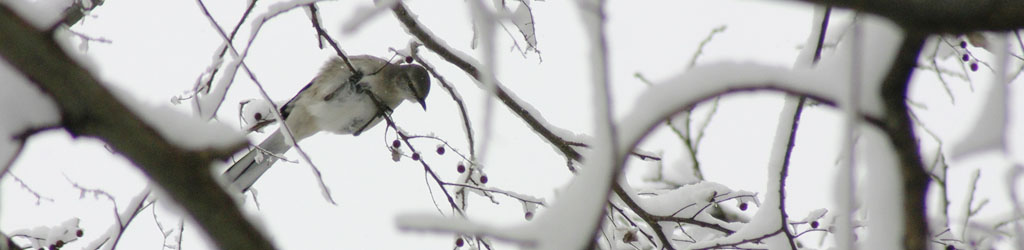
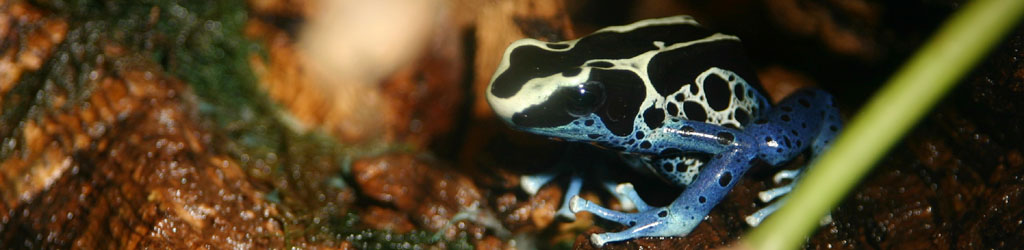

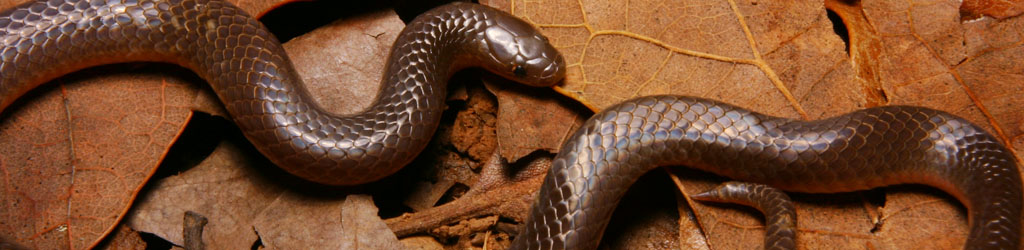









 While I was poking around the park trying unsuccessfully to locate the translucent caterpillars, I still took the opportunity to gather other images as well. We return now to days from the dim recesses of time, insofar as the blog is concerned anyway, and a post regarding the charmingly-named spiny oak-slug moth (Euclea delphinii.) I remarked then that my example images, working very well as camouflage, nevertheless reflected much less flamboyant coloration than most other pics I’d come across while trying to identify it. I haven’t spotted any other examples of this species (though admittedly may have passed quite a few of them without noticing.) Until now.


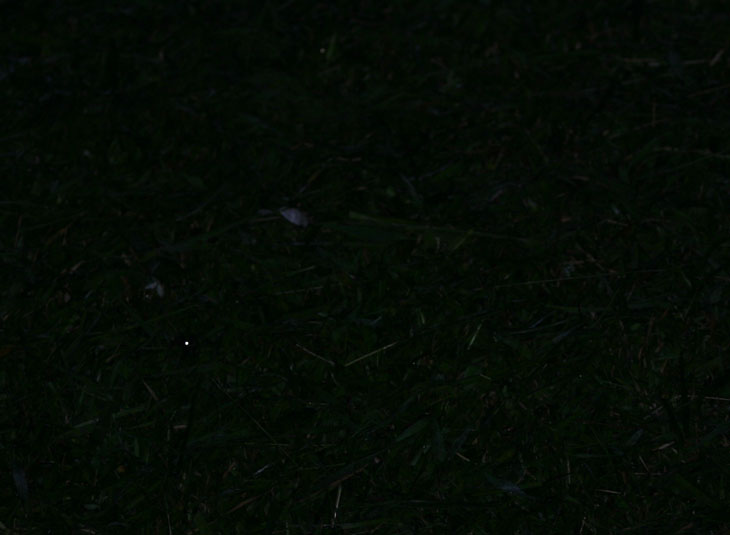
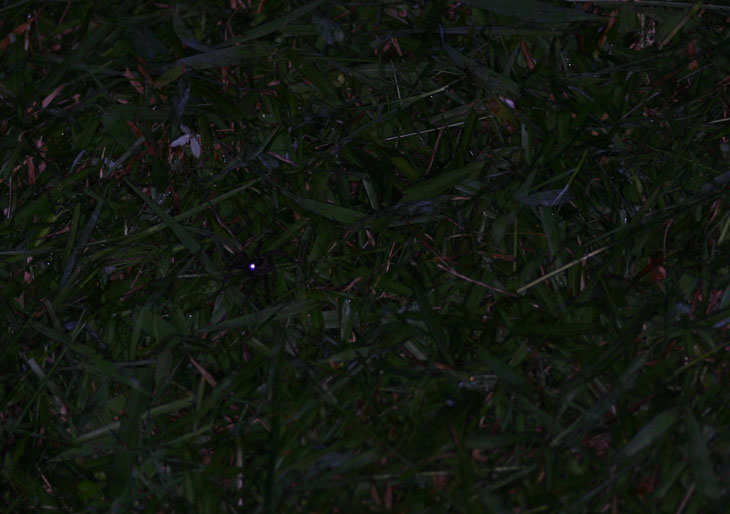
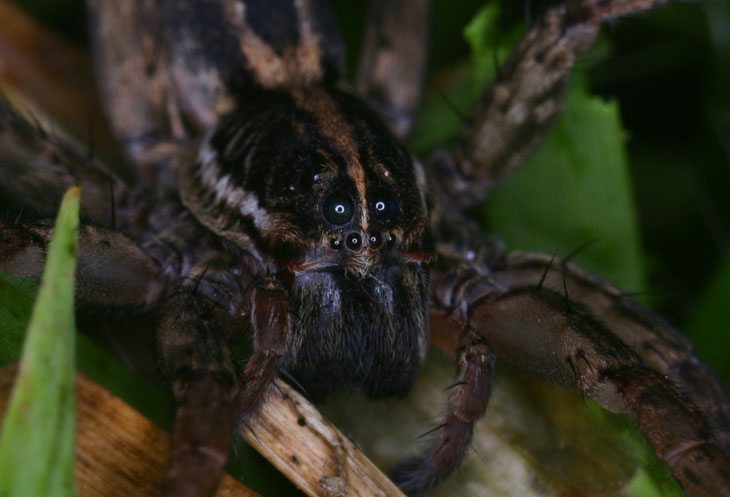
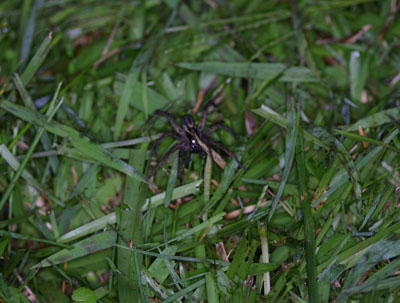 I didn’t quite have focus nailed for this one, so I’m not showing it any larger, and typically by this distance you would have stopped seeing the reflection. The various species of wolf spiders are the easiest to find, because they tend to be very active at night and their eyes possess this characteristic the strongest that I’ve found, able to be seen from several meters away, but I’ve produced the effect from many other species as well, including black widows. It’s just the structure of their eyes. If you’re creeped out by spiders, this can be a bit sobering, as you realize how many might be found in your lawn; at the same time, it’s always been like this, and no harm came to you, right? Most spiders are actually very shy and avoid any kind of contact – I often have to be cautious in my approach for photos because many species try to hide. Wolf spiders are more mellow, and often don’t care how close you get, nor are they the least aggressive. This little exercise is actually a great way to start getting over a fear of spiders, since you can see for yourself (at whatever distance you like) how little they affect anything. Then, if by chance they

 Photography is an art form, not in that it’s
  Yesterday I briefly tried out a
 Arrived early to meet with a student, spent some time investigating what the park had to offer. I just happened to like this one, largely because of the focal plane capturing two separate subjects so well. And there’s something about the marvelous shape of the buds.
 The culprit is a type of leafhopper known as a sharpshooter, in this case a broad-headed sharpshooter (Oncometopia orbona.) Colorful and rather large for a leafhopper at over 10mm for an adult, they get their ‘sharpshooter’ appellation from their habit, which has been a source of frustration to me for a few years now. Like most of the Cicadoidea superfamily to which they belong, they feed on plant saps obtained through a needlelike proboscis, and process it in large volumes. That which is not needed is expelled from t’other end with the exuberance of a suddenly-diaper-free infant, leaving copious amounts of sticky/oily residue everywhere that the arc reaches. I have to admit to some jealousy, since with an extra glass of iced tea I can spell my entire name, but I’ve never been called a sharpshooter. Broad-headed or otherwise…
 A few years back I’d seen the same thing, only this time with a glassy-winged sharpshooter (one gets the impression that whoever was naming these was tired and not trying for originality anymore, but anyway, the scientific name is Homalodisca vitripennis.) Even in open shade without direct sunlight, the flash is plainly visible, and I spent a lot of time in the botanical garden where I’d spotted it, trying to get an image of the effect. Let’s put it this way: the effect lasts less that 1/15th of a second, probably closer to 1/100th if I’m any judge. Shutter speed is 1/200th, strobe duration less than 1/1,000th. Human response time is