Crap, but amusing crap

immature white-tailed deer Odocoileus virginianus buck foraging at dusk
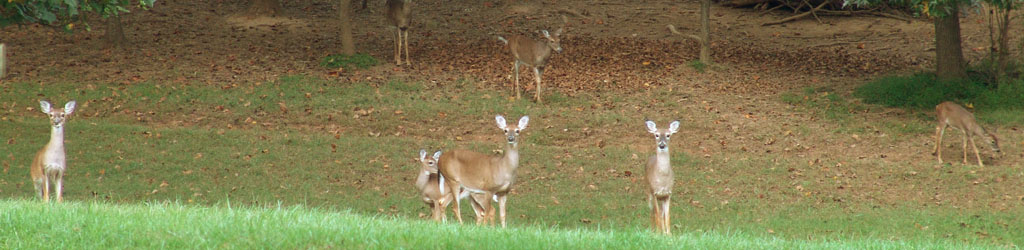
Earlier this evening, as I was working on something in the backyard, I heard some rustling not far off and noticed a trio (at least) of young white-tailed deer foraging just beyond the fenceline, which put them no more than 12 meters from me. I drew out the smutphone and attempted to call The Girlfriend, who I believed was inside the house somewhere, but this failed because she was actually coming up behind me. The deer were aware of our presence and a little wary, but not scared off. This occurred at dusk, and the number of trees behind the property effectively rendered this twilight even though the sun barely peeked through in random patches, and as one of the deer paused in one such patch, I went inside to get the camera and long lens. Naturally enough, it did not remain in the better light long enough for me to take advantage of this.

A tripod was out of the question – just trying to set it up would at best have taken too long, but might also have scared the deer off, between the various metallic noises and the sight of the extending silvery legs. So I was shooting handheld at long focal lengths in twilight under a canopy of trees, a distinct recipe for blurry pics, and that’s primarily what I got. Boosting the ISO to 1600 helped a little, as did bracing against the fence when I could, but nothing that I got was worthy of publication (except here, of course.)

One of the deer started heading back the way they’d come, which meant towards a busy road, and The Girlfriend ducked around the house to try and head it off discreetly. Meanwhile, I stood in the middle of the backyard and tried for decent pics. The result was interesting.

female immature white-tailed deer Odocoileus virginianus watching The Girlfriend
With the imminent arrival of a new shed, I had removed two portions of the fence along the back of the property line, which meant it was wide open to the deer, and the one that had started towards the road was essentially standing in the opening, and aware of me – had I not been there, I have no doubt that it would have come into the backyard. But it was also intent on heading back towards the road, and this drew it ever closer to The Girlfriend, who was taking her cue from things that I’d said in the past and not staring at the deer, but glancing around casually while remaining unobtrusive. The result was the deer walking up to within five or six meters of her, which was slightly frustrating to me because I wasn’t carrying a lens that could get both in the frame to demonstrate this. It was starting to look like she was about to hand-feed a new friend. Naturally, I’ve been calling her ‘Snow White’ since this.

immature white-tailed deer Odocoileus virginianus doe looking dead into cameraThe first image at top was a buck, as can be determined by the stubby little horns – obviously, we’re talking pretty young here, and none of them were fully adult. The Girlfriend’s pet was a doe, seen here looking curiously at the source of the shutter sounds for a moment before resuming its stalking. Eventually, The Girlfriend waved her arms a little to spook off the deer, since it didn’t seem inclined to stop approaching the road despite her presence, and it (with some reluctance) hastened to join its departing siblings. I had thought that was the end of it, and resumed making noise in the back yard, but about 45 minutes later while I was grilling burgers on the deck, I realized that not only had they returned, one of them had entered the backyard and was foraging near the little pond – not quite as close as it had been to The Girlfriend, but then again I wasn’t standing silently by any stretch.

If this is going to become a habit (the fence seen at this link is the same section that is presently removed,) I may have to stake out the backyard more often, with the tripod and some supplemental lights, and see what I might capture when prepared. And I will note that all of these images here are full-frame as captured, not cropped at all, though I will admit to tweaking away the bluish twilight colors.

Storytime 20

juvenile Virginia opossums Didelphis virginiana protecting nest box
For this week’s storytime, we have a trio of Virginia opossums (Didelphis virginiana) intimating far more drama than was actually present, which is why I like this image so much. No, there was no imminent danger, even if I stuck my hand in there.

You’re peeking into the nest box of some rehab patients that we had, back in ’96 or ’97, at the facility where I worked, and these are juveniles just a couple of months old, if it’s not immediately apparent. Juvenile opossums are experts at appearing vicious and bloodthirsty, while the adults tend to be less so; this trait protects the young, which would be easy pickings for many predators in the area because they’re not fast, and not adept at finding shelter when danger threatens. So they display this mouthful of remarkable teeth, growling and hissing as needed, and it usually works. But the funny thing is, they rarely ever use these teeth in defense, and don’t have to – it’s a threat display, like butterflies with eyespots, or these guys.

Five or six years previously, I had been called out during rescue duty on a ‘baby possum’ call, and arrived at a small house bordering the woods to find one as young as these, cornered alongside a stoop by three dogs, all massing about a hundred times as much as the opossum (you shouldn’t ask why the caller or owners did not take control of these dogs long before I arrived; this is rural North Carolina, and it would take more sense than is often found in these parts. It’s the bible belt after all, so people aren’t ever expected to think.)

The amusing bit is, while any of the dogs alone could have easily killed the opossum in one snap, none of them could even approach – the opossum was crouched with that mouth wide open and displaying those needle-sharp teeth, occasionally doing short lunges at the dogs with a barking, creaking growl, a sound with a phenomenal amount of malice behind it. I managed not to actually say, “Can you get these fucking dogs out of here?” while communicating the exact same sentiment, and could eventually approach the opossum without any interference from canines. I was treated to the same display, but as I reached in with heavily-gloved hands, I found the juvie easy to scoop up, whereupon its fury vanished and it merely struggled feebly. I popped it into a cat carrier (don’t ask me why we did not have specialized possum carriers, but we didn’t,) and carried it back to the van to release in a safer locale. The opossum, for its part, did not hide in a back corner of the carrier or burrow under a towel as you might expect, but swarmed up the wire door and hung upside-down from the bars, tail tightly wrapped around the wire for security.

I actually had to make a detour on the way back to the shelter to show my roommate, because prodding the opossum gently in the exposed belly or feet, while it hung inverted from the carrier-front, would produce this fantastic creaking, groaning sound, exactly what we want doors in haunted houses to emanate; this wasn’t anything more than a mild keepaway warning when its threat display had failed. As expected, an examination revealed no wounds or issues at all – the dogs had been unable to overcome their fear at this minuscule marsupial’s bravado.

Years later, I came across another outside a dumpster while in The Girlfriend’s presence (this was not a date, so hush,) and knowing their habits, didn’t even bother with the gloves this time. Despite a few barks and creaks, I slipped my hand under it and held it aloft for a quick exam while its tail curled tightly around my fingers for security, enough that it could actually dangle supported only by its tail – I did this momentarily just to demonstrate. The adults lose this ability, because they don’t need it; it’s one of the ways that the young remain attached to the back fur of their mother while she forages, the other being their agile little toes. I had myself almost completely forgotten about this incident, but was reminded not long back when The Girlfriend repeated it to someone else – apparently it stuck with her better than with me.

I been busy, part 2

Misty morning at Mason Farm Biological Reserve
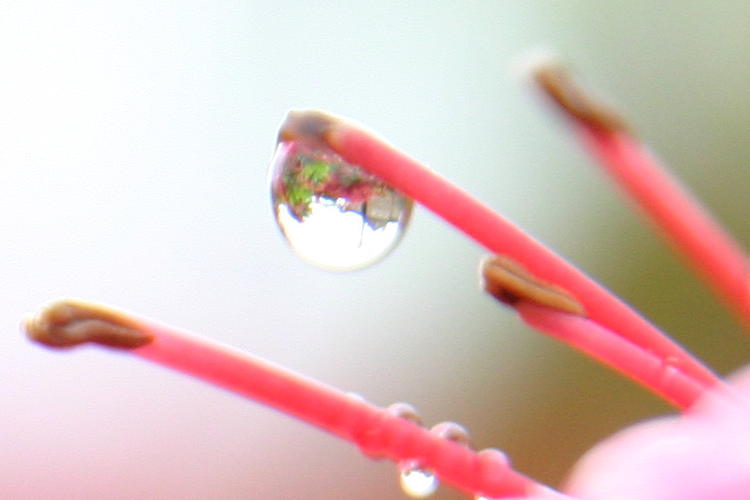
As we continue our quest for currency, not in the monetary sense but in the calendrical, or something, we move up to the beginning of this month, and a sunrise outing during a foggy morning out at Mason Farm Biological Reserve. I need encouragement to move away from mist and dew drops, but seeing as how I have hundreds of photos of other subjects waiting in the wings, I no longer feel as bad about posting these now. I had, in fact, prepared and uploaded all of these to the blog server before leaving on our trip, with the idea that I might perhaps put up a post while out on vacation – and I did, but not this one. I can blame it on time and motivation, and will, but part of the reason was also that there was no desk or chair in our accommodations, and I would have had to type this whole thing from a keyboard balanced in my lap while propped up with an inadequate amount of pillows, and that simply wasn’t happening.

I was also thinking about posting these in honor of International Surface Tension Day, but then I discovered that there is no such holiday, which isn’t a surprise I guess – what a stupid thing to celebrate, you know?

unidentified white wildflower dressed in water droplets
But seeing as how the birds were exceptionally scarce that morning, and no other critters saw fit to fill in for them, we have what we have, and the Irrepressible Mr Bugg and I attempted to make the most of it. Shooting by dim existing light, I opted for f4 from the Mamiya 80mm macro and selected which drops I wanted to remain sharp. These are the kind of conditions and subjects where a macro flash actually works against you, changing the character of the light and colors.

mist drops on grape leaves
White balance is also something to consider carefully. I recommend only using Auto White Balance in situations where there is mixed lighting or you’re attempting to do away with the color cast from indoor lighting, but choosing the right option for these conditions is tricky too. Technically, the circumstances were “open shade,” and using that setting would keep the images from going too blue, but the light really was a bit blue, and that color cast provides a bit of atmosphere on its own. Sometimes, you stay with the Sunlight setting (essentially no correction) and do what’s needed in an editing program afterward, perhaps muting the blue-grey effect without eradicating it entirely.

spider web in early morning fog
I didn’t get close enough to this species to identify if (I suspect a young barn spider,) but no matter anyway – it’s the curious effect on the orb web that we’re after. My uneducated understanding is, the spiral strands that show up so well here are the only sticky ones, with the radial ‘spokes’ being non-sticky and the ones that the spider itself uses for footing. But their different nature was also attractive to the humidity, making them much more visible in the conditions. And if you ever want to get a good understanding of just how many spiders are around you, a foggy morning does a great job, because so many of the previously-invisible webs are thrown into sharp relief.

possible multiflore rose Rosa multiflora with sunrise dew
In an attempt to be informative (I know, I know, “Why start now?”) I am identifying this as a multiflora rose (Rosa multiflora, duh,) but only among those that won’t hold it against me. The identification, I mean, not the flower itself – you can do what you want with that. As the sun rose above the trees, we had a short period where the dewdrops were brightly illuminated before they evaporated away, and these little blossoms became another short depth-of-field subject. With that, however, sharp focus becomes even more challenging, because the range of focus is millimeters at best, captured during the swaying within the light breeze and my own natural swaying because, hard as it may be to believe, I’m not a robot. There are plenty of frames that I missed, but I won’t tell you about those. Yet, as I stood there, the subject matter changed.

unidentified hoverfly on possible multiflora rose Rosa multiflora
A hoverfly, which I’m not going to bother trying to identify, alighted on the blossom and gave us more to work with, remaining there for quite a while. Near as I could tell, it was after the dew and not nectar or pollen, because it largely stuck to the outer petals. Take a moment and look at the abdomen above, before we go to another perspective to compare against.

unidentified hoverfly on possible multiflora rose Rosa multiflora
It is still a little early in the season, given how often it got cold again recently, which might explain this emaciated appearance, or it might simply be how this species usually looks – I admit I don’t see them directly from the side too often. Now you know where the phrase, “You eyes are bigger than your belly,” comes from (and I’m probably showing my age with that one – go ask your grandma.)

I’ll close with one of my favorites from the day, just for the contrast. Is this art, or not? I’ll let you decide. I’ll still put it on my wall in either case.


Just one, if you only count today

Great egret Ardea alba and reflection
I’m sure you were wondering if I got the chance to observe World Migratory Bird Day, and here is my answer: just one, really, but that’s because half of the day was spent on the road, starting pretty early in the morning, and the other half dealing with the typical post-vacation schtuff. The Girlfriend and I just got back from a week in South Carolina, checking out a new location for us, and there will be posts aplenty about the trip, soon. But I have a few other things that will appear ahead of them, because if I don’t do them in order, I probably won’t get back to them.

So today’s capture is a great egret (Ardea alba,) who posed nicely as I returned from shooting sunrise on the beach, and represents one of the three or four migratory birds that I had the opportunity to do something with during the day, the others being sanderlings and least terns out on the oceanfront; none of them were as photogenic as the egret here. However, the entire trip could be considered in celebration of migratory birds, including one species that I have yet to identify, which is more than a little frustrating at the moment. Bear with me, because they’ll all be coming along in due time.

Storytime 19

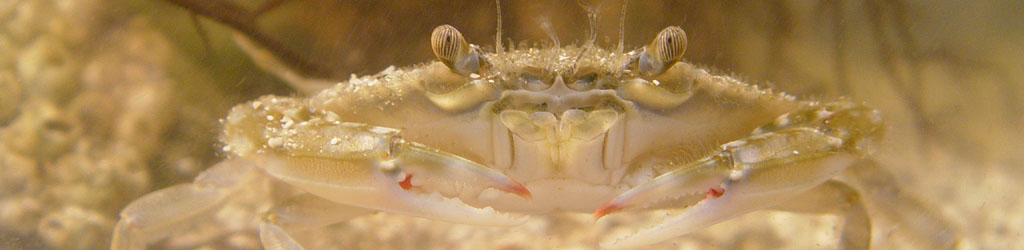
blue crab Callinectes sapidus illuminated by waterproof flashlight
Our story this week hearkens back to an ancient time and forbidden land, the stuff of legends and lore, the mystical realm of Florida in the early 2000s. I mean, c’mon, these are photos we’re talking about – how far back do you think we can go?

In this case, it’s an old (relatively) collecting location for me, the docks on the Indian River Lagoon near one of the causeways. Here, I could lie on the docks with my face hovering just above the water and survey the bottom for interesting critters, and because of the subtropical environment, I was able to find plenty, though admittedly, this particular one can be found at least halfway up the east coast. Looking to do some esoteric experiments, I decided that I’d try a nighttime long exposure by the light of a waterproof flashlight, and sought out any likely subjects. I’d done the same with some of the grass shrimp that were abundant in the area, but they’re as close to transparent as possible and thus are very hard to make out in the resulting images. But this cooperative Atlantic blue crab (Callinectes sapidus) proved to work very nicely. I simply propped the light up at the right angle on the bottom, aiming into its face (or what passes for such with a crab – you define the edges if you like) and, somehow, stabilized the camera aiming straight down into the water.

[This part is actually a small mystery to me, because I don’t remember how I did it. I have the impression that the camera was anchored on the dock, but this doesn’t seem feasible. More likely was that the tripod was planted in the shallow water, with a lateral arm holding the camera a little away from the center – I’ve had a tripod where the center post could be removed and repositioned horizontally for decades, so this isn’t a stretch, but it still had to be pretty low. I’m honestly not sure.]

Perfect clarity was not going to be achieved, partially because of suspended sediment, but mostly because I was still shooting down through the gently rippling surface, so during the time exposure there would be distortion from that; overall, however, it wasn’t too bad. And then I added a small variation.

Atlantic blue crab Callinectus sapidus by flashlight and fill-flash
I had a couple of little slave strobes, handy for macro work, and while they weren’t waterproof themselves, a zip bag took care of that, and I simply triggered one with the test button through the bag while I held it underwater. I’d still done the long exposure by flashlight, but the strobe added a lot more light and a bit more accurate color. It also highlighted the bubbles on the surface, which answered one question that I had, which was whether or not I’d used one of the reverse-periscopes that I’d made to get a clear view through the surface; obviously not.

And for giggles, I’ll add in another photo taken at the same docks though probably not the same evening, another long exposure, but this time a selfie – I think I took it with the intention of sending it to my mother but never printed it. The light is a combination of moonlight and a streetlamp a few dozen meters away at the parking lot, and the exposure time was probably between ten and thirty seconds, so I had to hold still – there’s a faint hint of blurring to my face that tells me I wasn’t perfect at this, but then again, this is undoubtedly for the better.

The author during a long night exposure on the docks

Your little reminder

Canada geese Branta canandensis and great blue heron Ardea herodias on foggy pond
Quick one here, a shot from a few weeks back, to remind you that tomorrow, May 11th, is World Migratory Bird Day, so go out to your favorite big box store and purchase yourself a brand new migratory bird. Or, perhaps, just get outside and try to spot or photograph a few, or feed some, or learn about some, or pretend you’re one and run north and south – whatever works. Once again, I’m going to be a little tied up this day, so I’m not sure what I might produce myself, and I’m not the biggest bird photographer (got about another 32 kilos to go.) But we’ll see what happens, I suppose.

Just because, part 29

unidentified possibly holly bush with blue-grey berries
Not enough time to research this bush to find out what it is – it appears to be a variety of holly to me, but that’s all I’m permitted to tell you. This didn’t fit in with the other images I have stacked up awaiting a more detailed treatment, so it appears here without further exposition. But aren’t those berries cool looking?

How did you do?

black-crowned night heron Nycticorax nycticorax in flight with twig
As you undoubtedly know, because you’re on a nature photography blog, today is Nail The Pan Day, the day when we successfully pan the camera with a moving subject and keep it sharp. For my submission, I present this black-crowned night heron (Nycticorax nycticorax) heading out with a bit of nesting material. Note the linear blur of the background, as well as the ghostly effect on the wings, while the eyes and even the twig remained pretty damn sharp. Ordinarily, you might credit this more to luck, but it is a distinctive nature photography holiday, so you have to admit that would be a hell of a coincidence.

I will readily note that this is a captive, so a lot easier to get this close than a wild specimen, but that doesn’t affect panning technique – if anything, it’s harder because the motion is greater. I’ll provide more details in a few days, because I’m typing this on a touch-screen right now and it’s pissing me off, but I had to prove that I was on top of the holiday.

I been busy, part 1

black rat snake Pantherophis obsoletus napping
We’ll start off with a snake. Everybody loves snakes, right?

All of the images herein came from one trip to a local botanical garden a little over a week ago (I’m hedging because I don’t know when this will post) – a very busy day there as far as visitors, so this napping black rat snake (Pantherophis obsoletus) surprised me a little, given that it was snoozing right next to a bench. But it was in a sparsely-visited portion of the garden, and had remained unbothered. Mr Bugg and I managed to creep up on it for some closeups, which is what convinced me that it was asleep – snakes don’t have eyelids and thus sleep with their eyes open, and sometimes, as long as you don’t cross open sky or throw a shadow onto them, their brains never register your proximity. Cast a shadow across them, though, and they’ll take off like a shot. This one finally started stirring after a minute of our shenanigans, but we were already close at that time and I suspect this didn’t register as high on the threat level as approaching would have, though I’m only speculating now. Either way, we left it there to finish its nap.

Most of what we saw that day were waterfowl, though, and that was because they get free food and aren’t bothered by crowds. Oh, and flowers, of course, but there’s only so much you can do with flowers.

male red-crested pochard Netta rufina in mid-ablutions
Not all of the ducks found there are native – the gardens feature a variety of resident exotics, like this red-crested pochard (Netta rufina) which is from Europe/Asia. Still, in such circumstances one can take the opportunity to get some behavioral shots that would be much harder to accomplish with a truly wild/feral species, and so we fired off a bunch of frames as this one preened and groomed itself. The bright light and its proximity allowed for some detailed and brief frames, so the water drops could be captured in midair.

male red-crested pochard Netta rufina splashing
Sometimes, what you end up capturing is something a bit warped looking, which is part of the fun. There aren’t too many expressions that birds can display, so we interpret body positions as an indication, usually incorrect, of what’s going on or their underlying emotions. Like awkwardness. But my favorite lies below, with that little portion of the open beak poking out – you can almost imagine it stepped in an unexpected hole.

male red-crested pochard Netta rufina submerging
Other times, you might be observing behavior and trying to determine exactly what is going on, which can be exceptionally tricky – we filter everything through our own social structures and expectations, which have no application whatsoever to any other species, and truly knowing what’s going on socially among another species takes long experience and often the input of other, more knowledgeable people. Like this shot of two different species, a mallard (Anas platyrhynchos) on the left and a northern pintail (Anas acuta) on the right.

male mallard Anas platyrhynchos and male northern pintail Anas acuta seemingly conversing
They certainly look to be interacting in some manner, like a neighbor leaning over her fence to share some gossip (all that we’ve seen have been males, by the way,) and someone more familiar with territorial protective instincts might have expected a squabble (heh, “squabble.”) But the completion of this tableau was anti-climactic; the pintail simply plopped into the water alongside the mallard and swam off a little ways. To the best of my knowledge, the mallard was swimming up just as the pintail decided it needed to go for a dip, and there was a momentary pause as they encountered one another – basically, the mallard in the way and perhaps wondering what was on the pintail’s mind as it loomed overhead, neither threatened or even concerned about the presence of the other. But at least, as the pintail swam out, it presented a nice profile to show off its plumage.

male northern pintail Anas acuta in profile
Mallards, of course, are a dime-a-dozen virtually everywhere in the US, and I usually don’t even bother with them anymore, but as one snoozed on the bank, I took the opportunity for a direct perspective.

male mallard Anas platyrhynchos napping
In the case with most ducks and, really, a very wide variety of birds, the males have the brightest plumage, mostly considered by ornithologists to show off their worthiness to the females, while the females are considerably more muted in coloration, often very drab – they typically choose the males, but more importantly, they’re vulnerable to predators while on the nest, so they tend to blend in better to avoid attracting attention. There’s lots of speculation regarding the actual values of such differences, such as why the males aren’t less attractive to predators and how they determine a healthy female to court, but it must be working because it’s distinct in so many species. Yet not all.

likely male great blue heron Ardea herodias in repose
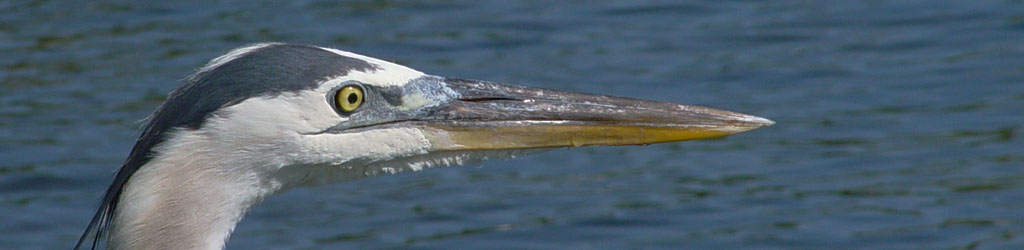
Canada geese, for instance, are difficult to tell apart by gender, as are great blue herons (Ardea herodias,) seen here. For years, there always seems to be one visible at the garden, and I suspect it’s the same one but have no way of knowing. From the size and the blue hints around the base of the beak, I’m leaning towards this one being a male – often, you have to see a pair alongside one another to feel comfortable with differentiating sexes. I couldn’t pass up this portrait, though I really wanted that twig out of the background, but whatcha gonna do? On our first pass, this one was simply dwelling in the shadows out of contact with people, perhaps digesting a small meal, but later on it became slightly more active.

likely male great blue heron Ardea herodias with reflection
Believe it or not, the heron is in almost the same location as the previous photo, but we’re seeing it from a different vantage; the earlier shot was when it stood in those shadows behind it, and was taken from almost the opposite direction. I fired off several frames with space for that reflection, and choose this one from the limited distortion to the head and neck – ripples can make or break a water shot, especially if you’re after the reflections.

When we paused to look at the heron, it suddenly and without much warning snagged a small fish and swallowed it, in the space of a few seconds – too fast to get the cameras out (neither of us walks around with a camera in hand at all times, because it’s too easy to damage the equipment, especially when the footing might be tricky, but during pollen season it also helps keep the crud on the camera to a minimum.) Intrigued now, we waited, watching carefully, and another two minutes of patience paid off. There was a brief hint of alertness and repositioning that gave warning, and that was all.

great blue heron Ardea herodias striking at fish
Herons are one of the easier waterfowl to catch making a capture, I have to admit, but timing still plays a role. The strike is lightning fast, because it has to be – fish, for some odd reason, try to avoid being eaten. Go figure.

great blue heron Ardea herodias with capture
Not exactly a big meal here, but enough of them will provide, of course.

I have seen ‘the’ resident here at the gardens come down to hang out when people appeared with food for the ducks, which seemed slightly curious at first – they couldn’t care less about the duck food. Ducks are largely herbivorous and feed on submerged water plants, while herons are carnivorous and mostly feed on fish, though I’ve seen them taking out snakes and even a vole, but this means that the commercial duck food (that can be purchased from the gift shop) isn’t very palatable to herons. However, they’re good observers, and the duck food attracts turtles and especially catfish in the pond. On a previous visit, I’d watched a heron approach remarkably close to some people feeding the ducks, and did a few tight portraits as it hung out, but eventually I moved on. Less than ten seconds later, there was a splash and a cry of surprise from the people, and the heron flew past with a truly massive catfish. So much for my patience.

likely male great blue heron consuming small fish
The heron juggled the little capture for a few seconds, getting the position right – most fish have spines along the dorsal fins which pretty much require them to have to be swallowed headfirst. So far too few have evolved spines that can face in any direction; instead, like countless other species, most fish thwart the predator aspect by reproducing in vast numbers so at least a couple offspring get through the meat grinder. Seems like an odd way to handle predation, but the “make lots” genes came out ahead of the “change body style” genes in such cases, and it still works.

Meanwhile, check out the ripples and reflections, just to show that I was lucky with the earlier portrait.

likely male great blue heron Ardea herodias finishing off fish
And down the little fish went. Meanwhile, I’ve been attempting to distract you from another detail visible in these two shots, one that I never spotted while shooting them, but look towards the rear of the heron. That’s a turtle head poking out (of the water,) likely a red-eared slider (Trachemys scripta elegans) – they’re not native either, but they might as well be, considering how many can be found in the area now, especially this pond. Its positioning is a little distracting, though.

Admittedly, I was in a garden so I did a few flower shots, but seriously, I consider them overdone so I tend to keep them limited, and try to find something a little different.

unidentified flower with water drops
same frame in tight cropWe were there late enough on a bright sunny morning, so I know this isn’t dew, but evidence of a watering system instead. I never bothered to identify these flowers, I was just after the sun on the droplets, which had an interesting effect when out of focus, as shown at right. However, I also had to try a small variation of the same framing, to show a little trick.

unidentified flowers with starbursts
I’ve talked about this many, many times before, but with a point light source, using a small aperture can produce a starburst from it, and that little change adds a lot to the composition. I’ve done better, though.

And we’ll close with some variety of iris, I believe – there are a shit-ton of varieties and I haven’t located one that looks just like this, but we’ll go with it for now. Mostly it’s just here for the colors, but there’s this other little aspect that I saw during the sorting, that gives me the impression that they ran out of paper towels in the washroom.

some variety of wet iris, perhaps
As the “part 1” bit implies, there will be at least a part 2, and possibly more than that.

Storytime 18

unidnetified red ant scrambling to conceal pupae
I went for a long time without anything to post, no new photos or anything, and now I have several hundred to choose from and not enough time to do anything about it. We’ll see how I fare in the next week, but it’s not looking too promising. In the meantime, we’ll do a brief Storytime post this week with a difficult capture from years ago. Turning over a rock in the yard, I revealed a significant ant nursery – these were smaller red ants, fairly common in the immediate area, harmless to people, but that’s all I can provide for identification right now. Maybe Mr Bugg will jump in with a distinct ID.

As usual, the adult workers scrambled to find someplace to conceal the hundreds of pupae that had been exposed, while I endeavored to capture this in some kind of detail. This, I should tell you, is an exercise in near-futility, for the very simple reason that ants are remarkably quick little arthropods, and move about seemingly at random – tracking them at macro magnifications and keeping them in focus is unbelievably difficult, so mostly you just pick a spot and focus and attempt to capture anything that ventures into that range. Generally, you have a fraction of a second to do so. Notice that the region of sharp focus is perhaps the width of the ant itself; in this frame, you can see the abdomen starting to get fuzzy from falling out of that range.

I was hoping for a sharp shot of one carrying away a pupa, but it was not to be within this session. Not only would focus have to be bang on, the view would pretty much have to be directly from the side, full profile as I have above, in the mere seconds before the worker made off with the pupa to a safer location. Too, it had to occur when the flash was fully-charged and ready, so after each attempt there was a period of several seconds before I could try again. The result was, I have a couple of shots from a bad perspective, but not what I wanted.

Nonetheless, there remains a great selection of pupae in varying amounts of detail, and the focus on the worker ant is pretty sharp, sharp enough to show the stippling texture of the exoskeleton itself. While not exactly what I was trying for this session, I certainly feel comfortable with keeping it.

1 166 167 168 169 170 325