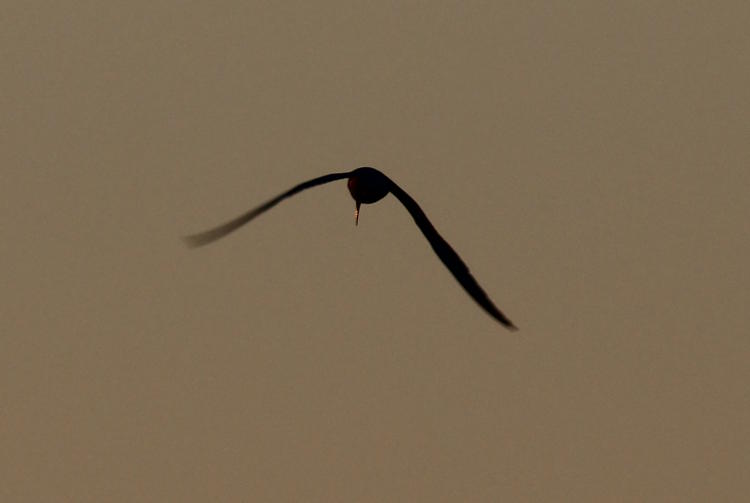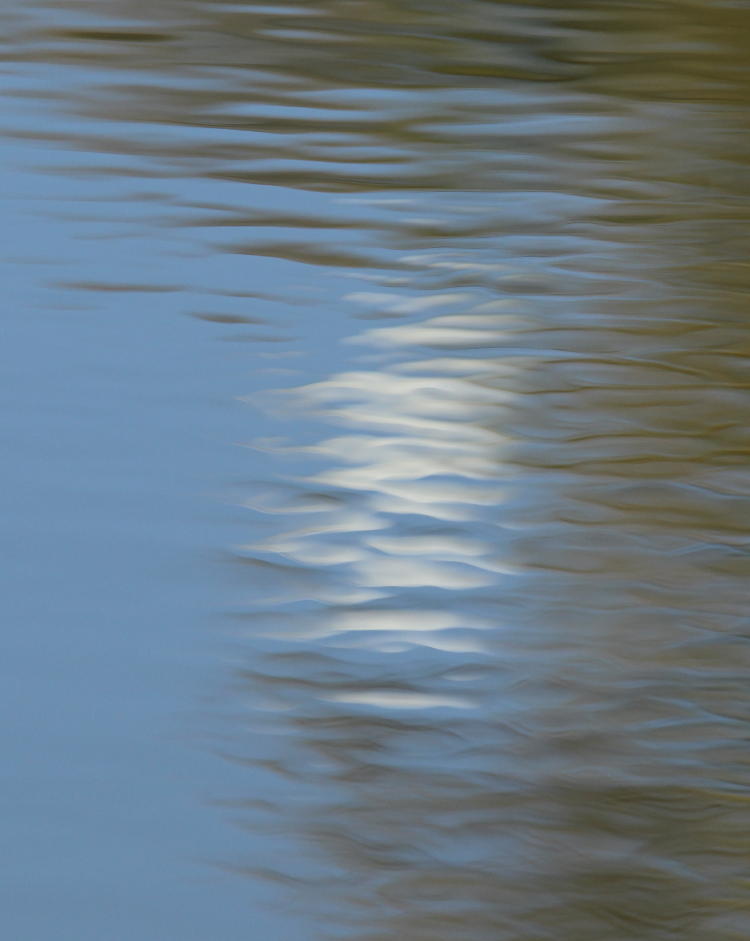
The season for getting good conditions for nature and wildlife photos in North Carolina is winding down, as it does every fall, and like every fall, I find no nice colorful landscapes within easy reach to do broad scenic images. Partially, this is because of the trees themselves; this region of NC at least has far too many hateful longneedle pines, which are ugly any time of the year but often overbearing a good selection of deciduous trees that may actually show some color, while the deciduous trees that we do have are varied both in color response and times that they change. Which means at any given time, what’s visible are the sparse tops of the evergreens, some bare trees, some brown trees, and maybe a splash of color. Which is why I tend to find little abstracts rather than big scenes.
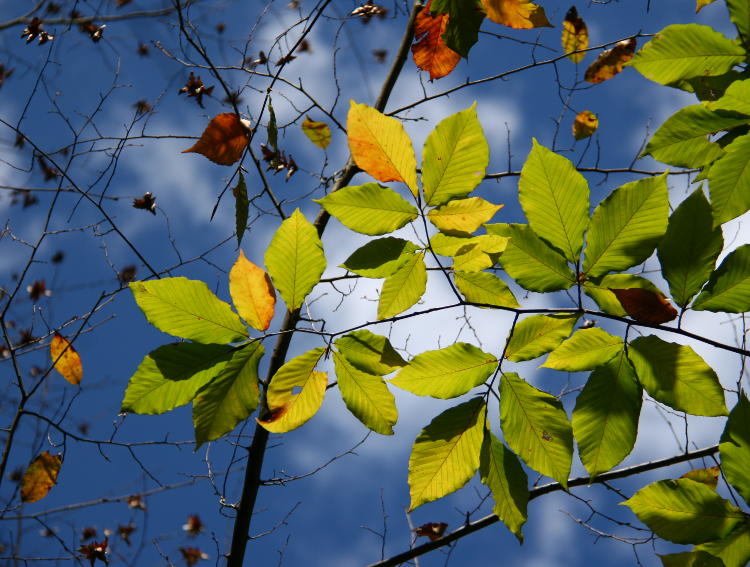
And part of the reason, this fall, is that we went through a two-month drought, which usually kills the rich colors. But a couple of rains just as the color season started might have helped a little – we’re still finding out. A recent outing netted a small handful of images – nothing exciting but, you know, proof that I’m still trying. The image above I happened to like because, unintentionally, the leaves largely fell into one plane and it almost appears as if it’s a branch resting on the water, with the reflection of the sky behind. The sky, at least, was pretty cooperative this day.
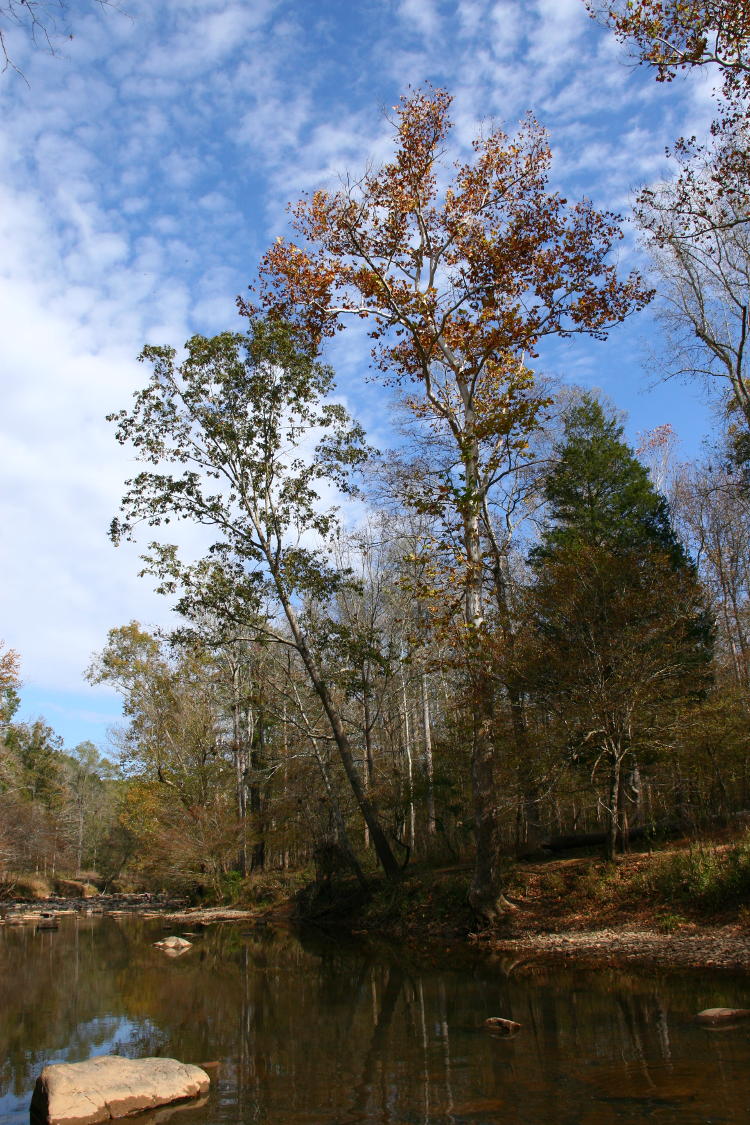
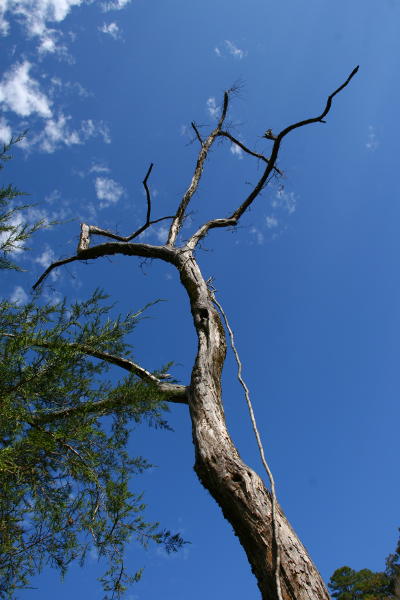 The outing was to one of the parks on the Eno River, one of the few places that provides a variety of trees in a variety of conditions, and occasionally you can find a nice stark dead one – except in this case, the cedar next to it was a bit too close for the perspective and light angle and kinda intrudes into the frame. Different angles would have put the sunlight too much behind the tree, washing out the sky and mostly shadowing the trunk, or would have put even more trees in the frame and background; sometimes you simply can’t make it work ideally. I mean, without cutting down an intrusive cedar…
The temperatures have dropped significantly, getting down close to freezing some nights and not terribly warm most days; while I was out in shorts and water sandals (well, I had a shirt on too,) some of the hikers that I encountered even had heavier jackets on. It sort of depended on when you actually left home, because by midday it had gotten reasonably warm, but the morning had been pretty crisp and I wouldn’t have been out in the sandals then. And the shallow water of the river itself, never balmy at the best of times, was frigid that day. These conditions precluded finding any snakes at large, and in fact, the only wildlife to be seen were just a few birds. With one exception.
Wading at the water’s edge, I spooked a tiny cricket frog from cover, and it leapt into the water before appearing to immediately regret it and head towards shore again, pausing partially-submerged on a leaf.
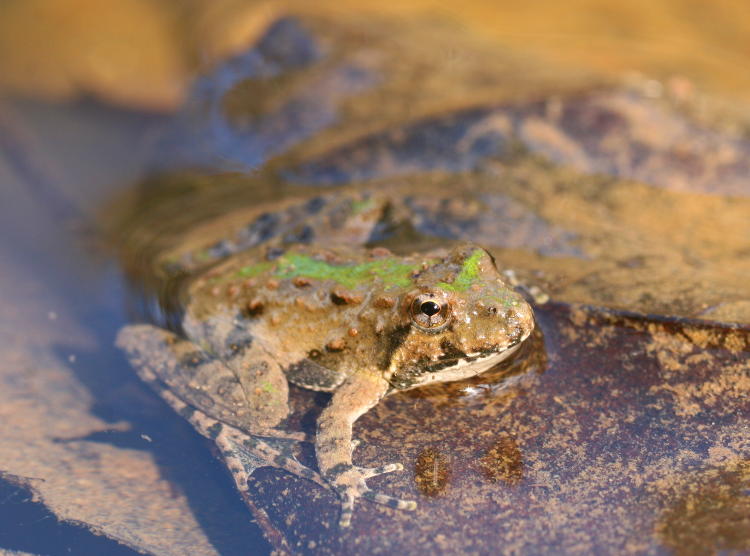
I’m tentatively identifying this as a southern cricket frog (Acris gryllus,) only from the webbing on the hind feet – the northern variant has more, I believe, but they’re very close together in appearance. It was only my close presence that prevented the frog from regaining dry ground, which it likely desired (and achieved as soon as I passed,) because the sunlight was providing much-needed warmth while the water was taking it all away. Don’t blame me – had it held still I would have passed this minuscule specimen (less than 20mm in body length) without noticing, but nooooo, it had to panic and attract my attention by springing into the water. In doing so, it became the only wildlife to appear clearly in my photos from the day. Which means we’re going back to flora and foliage now.

I keep doing this thing that I shouldn’t, which is take a photo of something with too few identifying characteristics. I’ll be thinking, Hey, maybe I’ll feature this image in a post, but not, So figure out what it is so you can tell your voluminous readers. Thus I don’t know what this tree is, but it’s damn cool nonetheless. Don’t hate on me, just savor the imagery. Or something.
(I’m pretty sure that’s an American sycamore leaf in the foreground, but I’m not sure it originated from the same tree.)
I was testing out a lens that I might buy from a friend, so I did a few shots to check out the image stabilization feature, which included doing some longer exposures handheld. I purposefully dropped the ISO down to 100 and the aperture to f16 to push the shutter speed down to 1/13 second, blurring the water while trying to keep the rocks sharp, and chose a shadowed area to do this within.
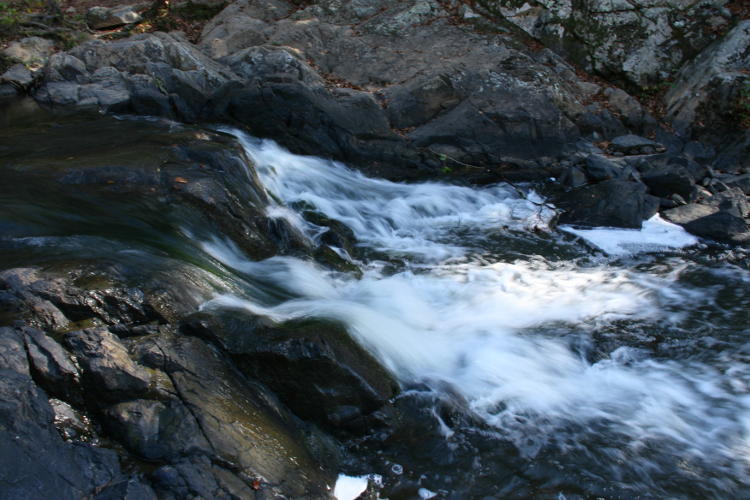
The results were acceptable, at least at blog resolution, but probably not quite up to snuff with my existing lenses, and certainly not exceeding them, so I probably won’t be purchasing this one (a Canon 18-200 IS, nosy.) The reach is of course better than my 17-85, but I don’t like sacrificing sharpness for that, and so later on I might give the 18-135 IS STM a shot, which may also be more useful for video work. But later on after wading across the river (which was an exercise in cold endurance in itself,) I shot the same torrent from the opposite side, this time framing some (also unidentified) leaves against it and getting a bit more fartsy.
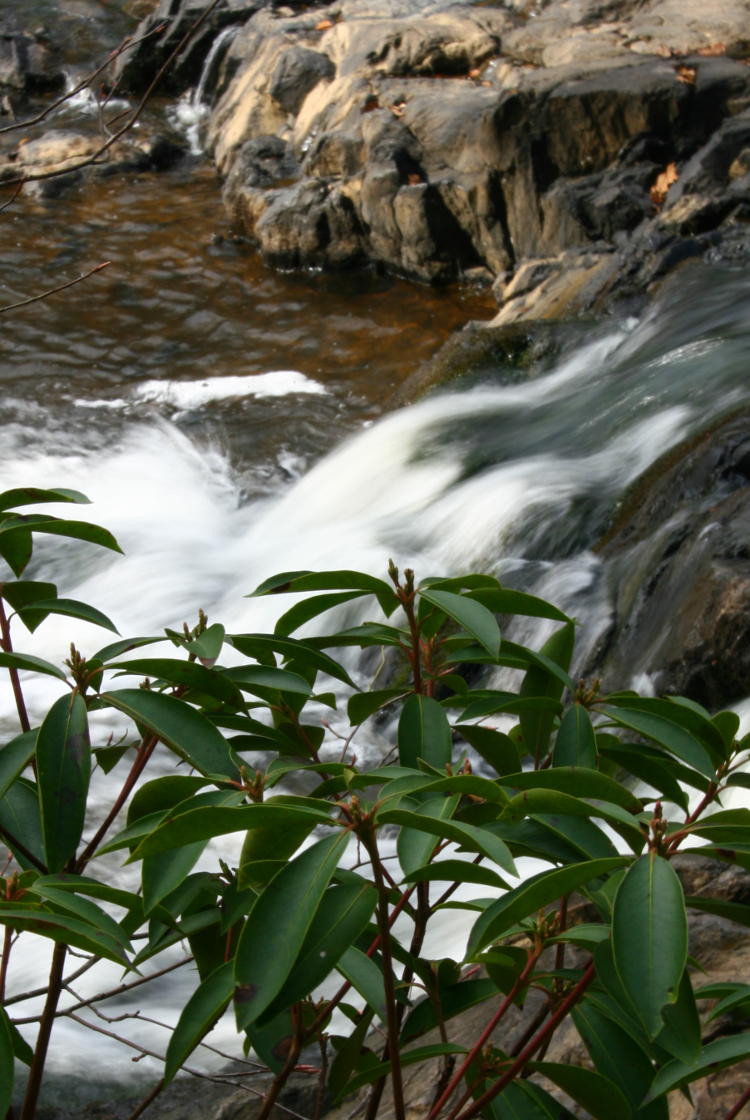
I said a bit, okay? Stop making those annoying little noises…
At least the sun angle and the thinner trees permitted more chances for backlighting leaves, which I took advantage of because I’m that kind of opportunistic swine. One tree in the area turns a nice brilliant red, and I’d tell you what it is but I want you to find out on your own, since it’s good research practice.
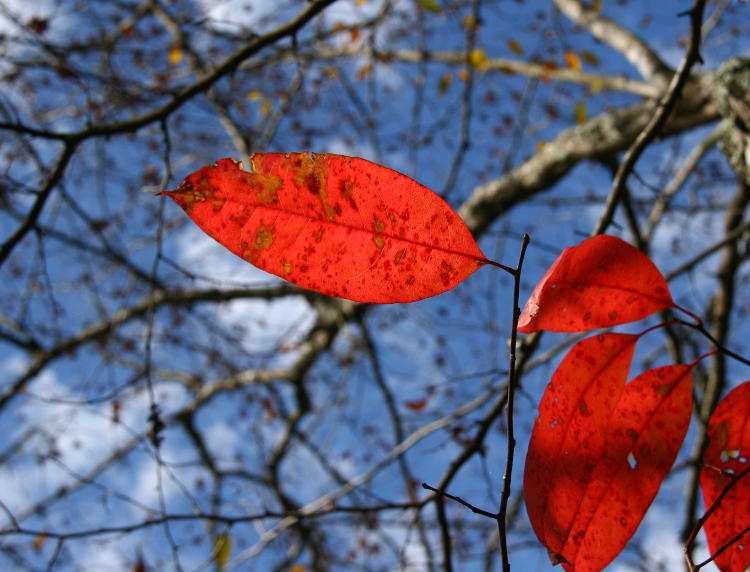
I will say that a ‘normal’ perspective from the trail would have placed these leaves against a grey-brown landscape of bare trees on a shaded riverbank, so this is an example of thinking about the frame a little. I had to slip down a small embankment and crawl under some low branches to get the leaves against the sky, but that added blue certainly helped, didn’t it?
It was a lot easier to get the next one.
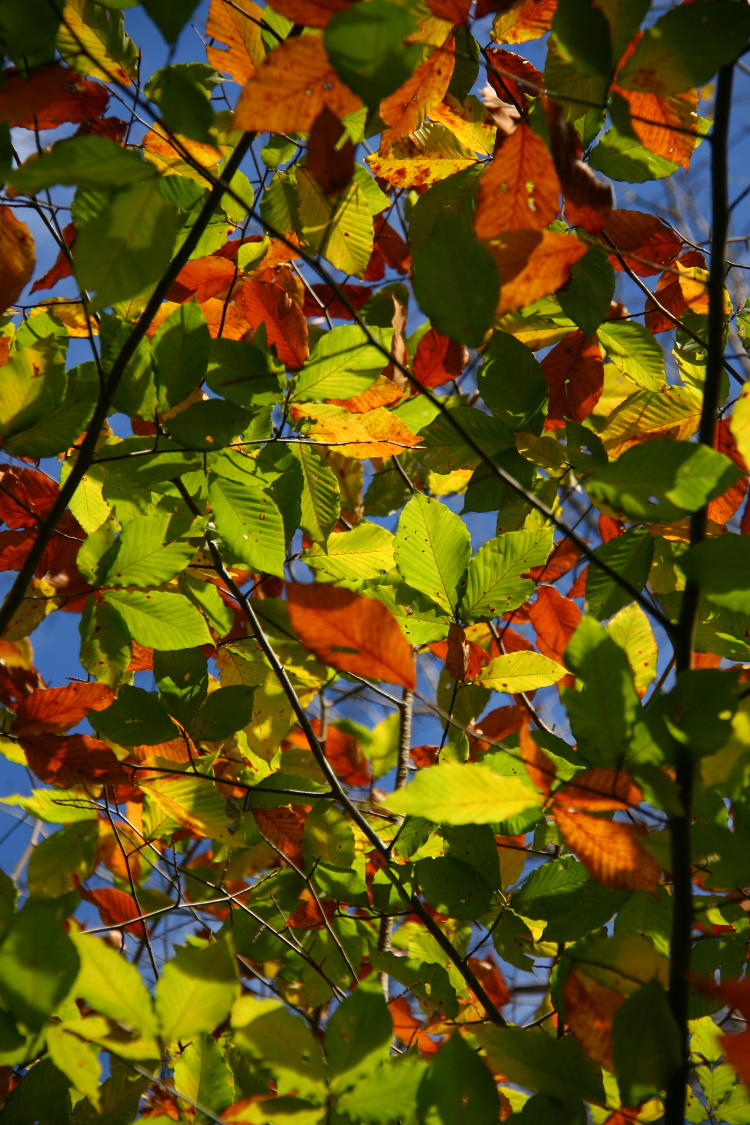
This particular tree (do the research) was nicely placed right off the trail and was easy to walk around underneath to choose whatever framing one might desire, and I picked several, but this is the one I’m featuring. The mix of colors was nice, and it’s quite possible that in the four days since, half of these are gone now, but at least the almost-complete canopy didn’t actually shade too much of its own display and instead let the sunlight through. To me, the hues are particularly pleasing, and even though there’s no subject per se, it still might make a nice accent print.
Two more.
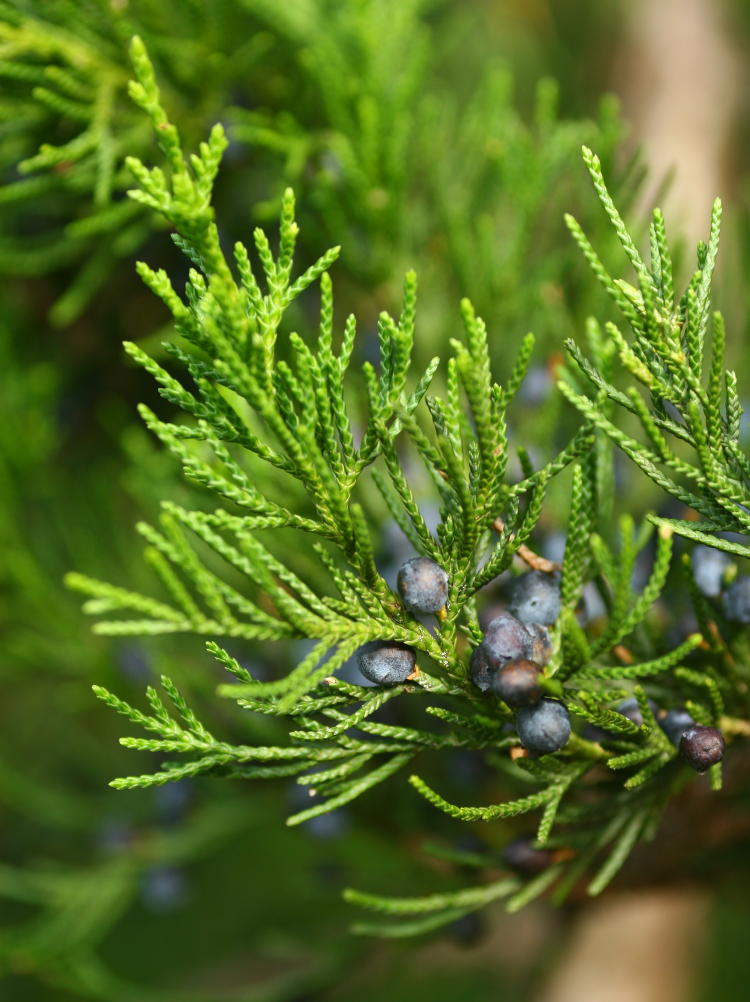
The clouds were slowly increasing and the sun would tend to get shaded for a short while at a time, so I never achieved quite the effect I was after with these cedar needles and berries, but this is what I have for now – unlike the others trees, this display may remain largely unchanged for days or weeks, so maybe I’ll revisit it later on. Cedars are one of the evergreens that I’m more than okay with, and even the dead trunks, standing or lying throughout the woods surrounding the river, have their own sharp charm. We need to breed a variant that can out-compete the loblolly pines.
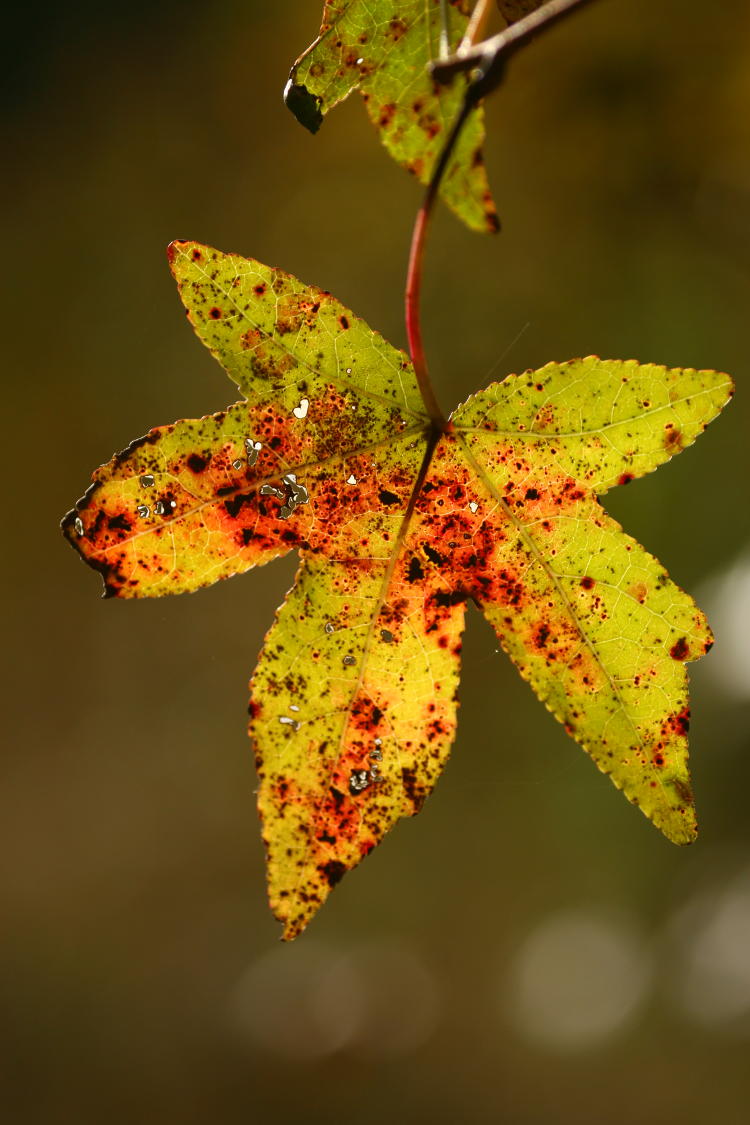
I’ll close with a lone American sweetgum leaf (Liquidambar styraciflua.) Sweetgums are one of the few that are reasonably abundant in the area and pretty photogenic by themselves, spring, summer, or fall – I just don’t want the damn gumballs in the yard. This one leaf, standing out in the lowering sunlight, not only had a mix of colors within just one leaf, but some radical textures as well, a juxtaposition of softness and harshness that I particularly like. You will, of course, want to buy a print yourself. Right?
Potentially Related Posts:


 Meanwhile, I’ll let you in on another method of motivation, which is to publicly proclaim what you’re up to so you’re obligated to follow through by your demanding audience. So, one of my projects, not exactly related to photography but still relevant to my pursuits here, is to compose my own music for the podcasts and videos – soon. Since as yet I don’t play any instruments, I wouldn’t expect to see something, like, next week, but I’m motivated to have my own work here and not use someone else’s. Feel free to pester me if you haven’t seen any progress (oh, yeah, I neglected to mention the value of a ‘nag,’ someone who knows your goals and is willing to remind you of them as needed.)


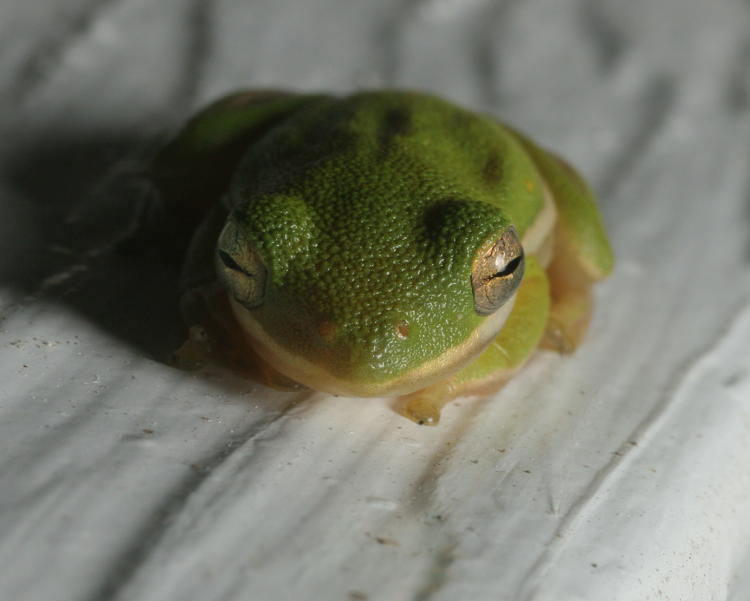
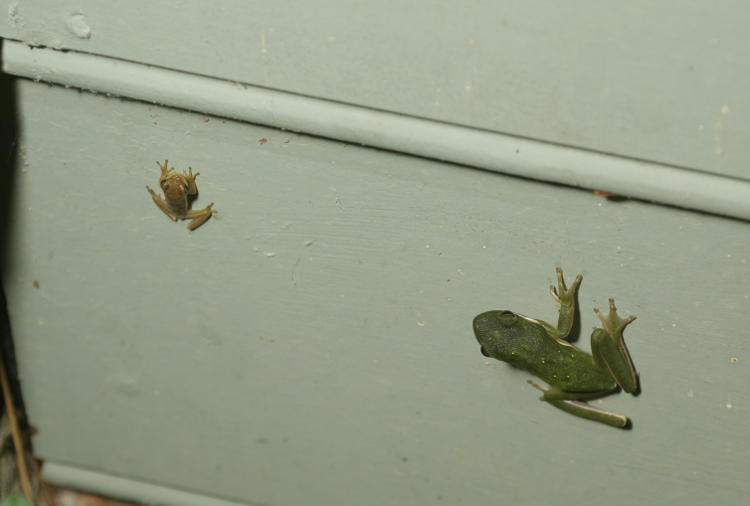
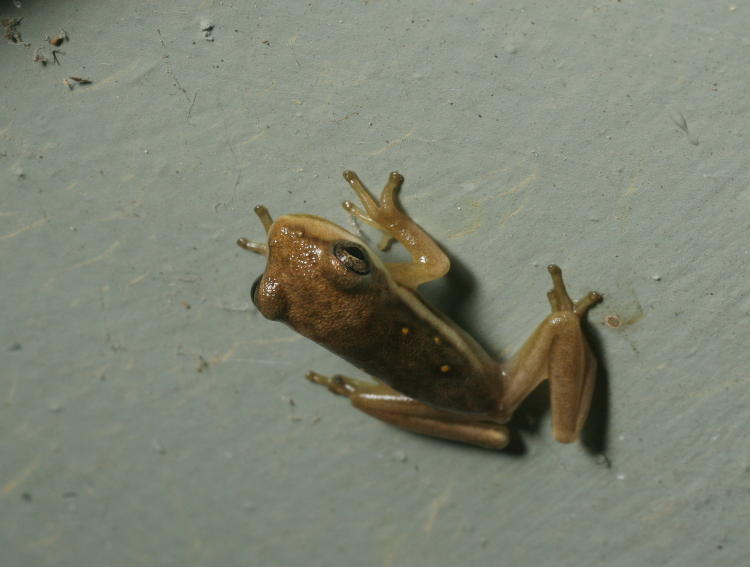
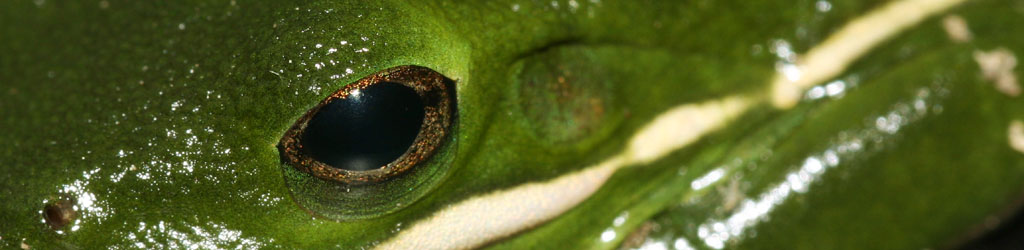
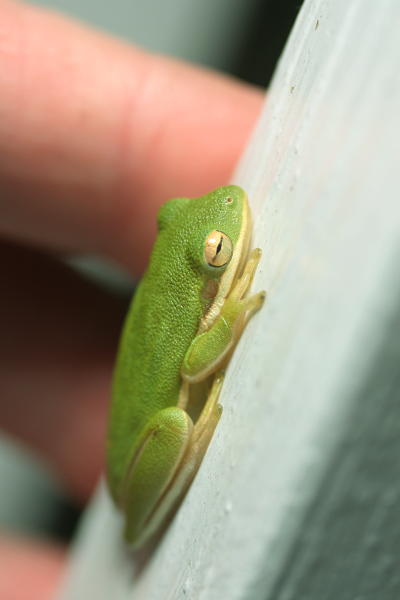 Yes, it’s another green treefrog (Hyla cinerea,) but I’m cool with that, because I was hoping to get them established in the area and it looks like it’s working. The combination of higher temperatures and rain seems to have brought this one out, possibly assisted by our porch light being on, which was certainly attracting its share of insects. I had to do a scale shot with the fingers of my left hand in the background, but because the aperture on the Mamiya 80mm macro lens is manually controlled with a spring-loaded lever operated by my left hand, this meant that I was shooting wide open at f4, so depth dropped a bit. Still, I think I effectively demonstrated that this is a juvenile, roughly half the length of an adult (I did not measure it, but I’m estimating it at about 25mm in body length.) It was pretty patient with me as I got a variety of angles, including going in for the portrait.