





Big honkin’ bug post

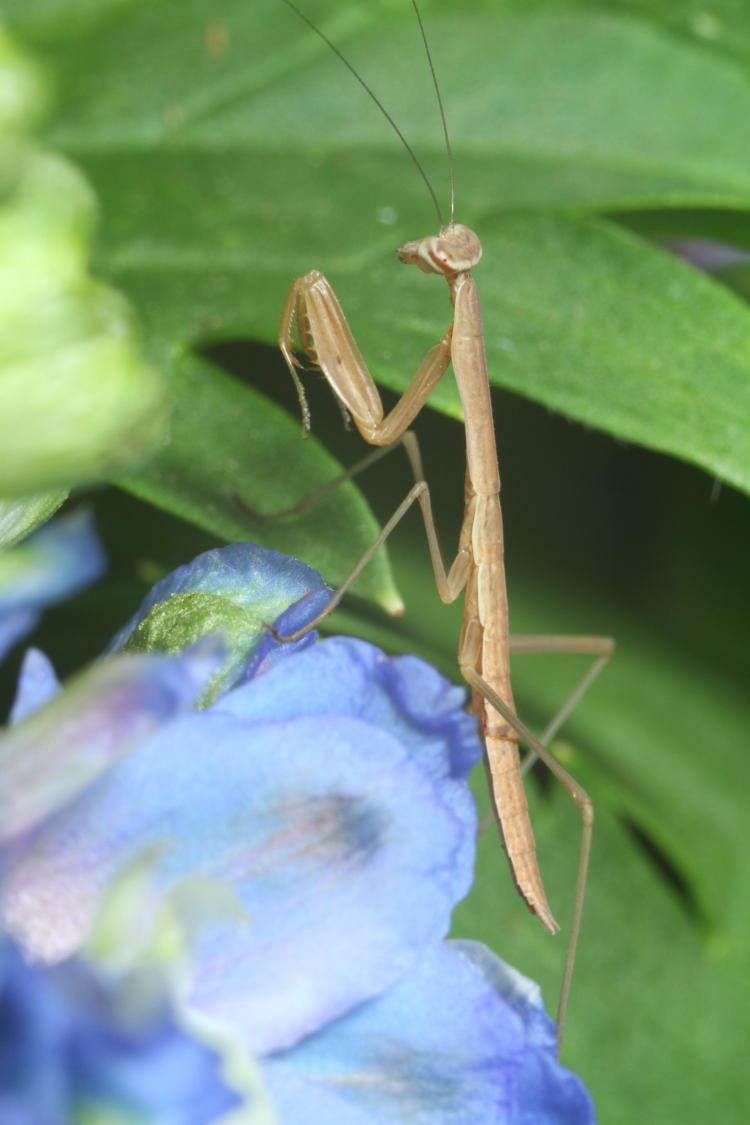
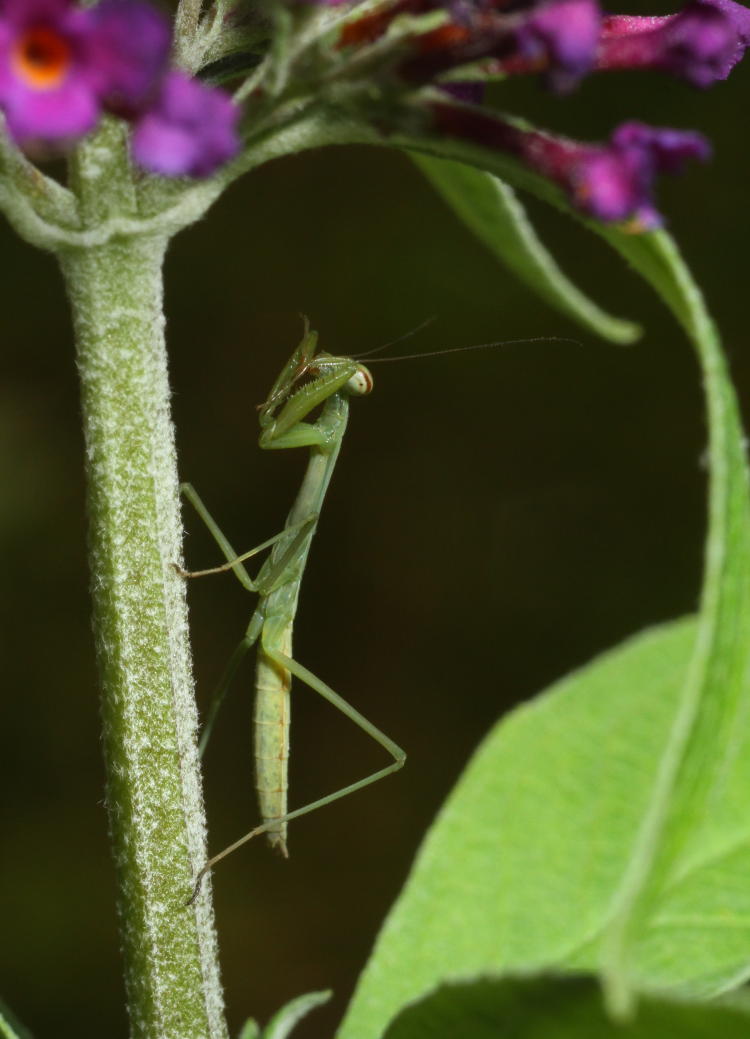
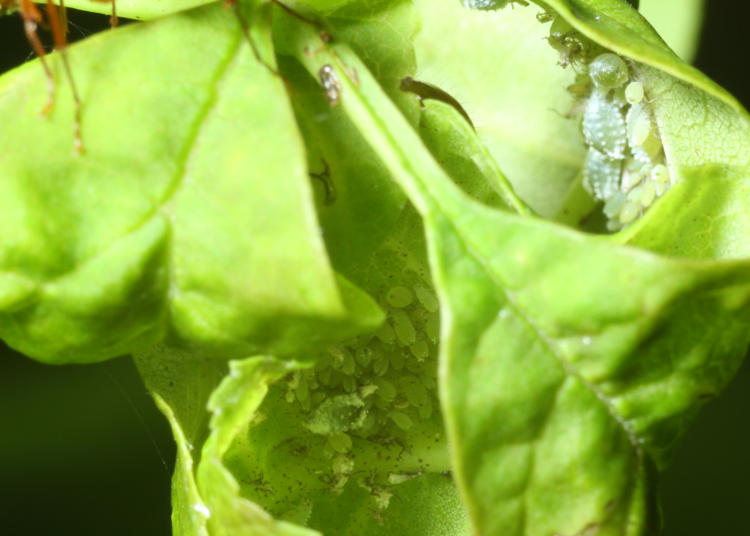
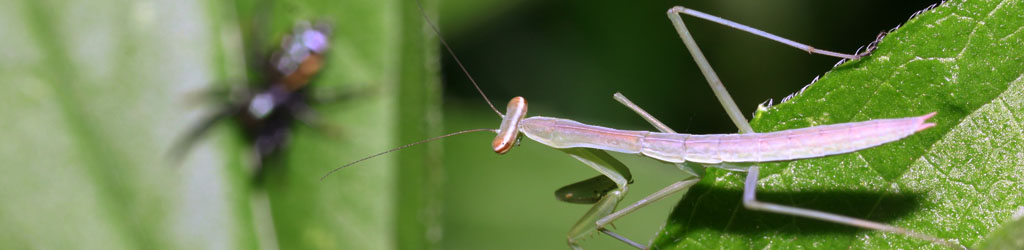
newborn Chinese mantids Tenodera sinensis upside down under leaves
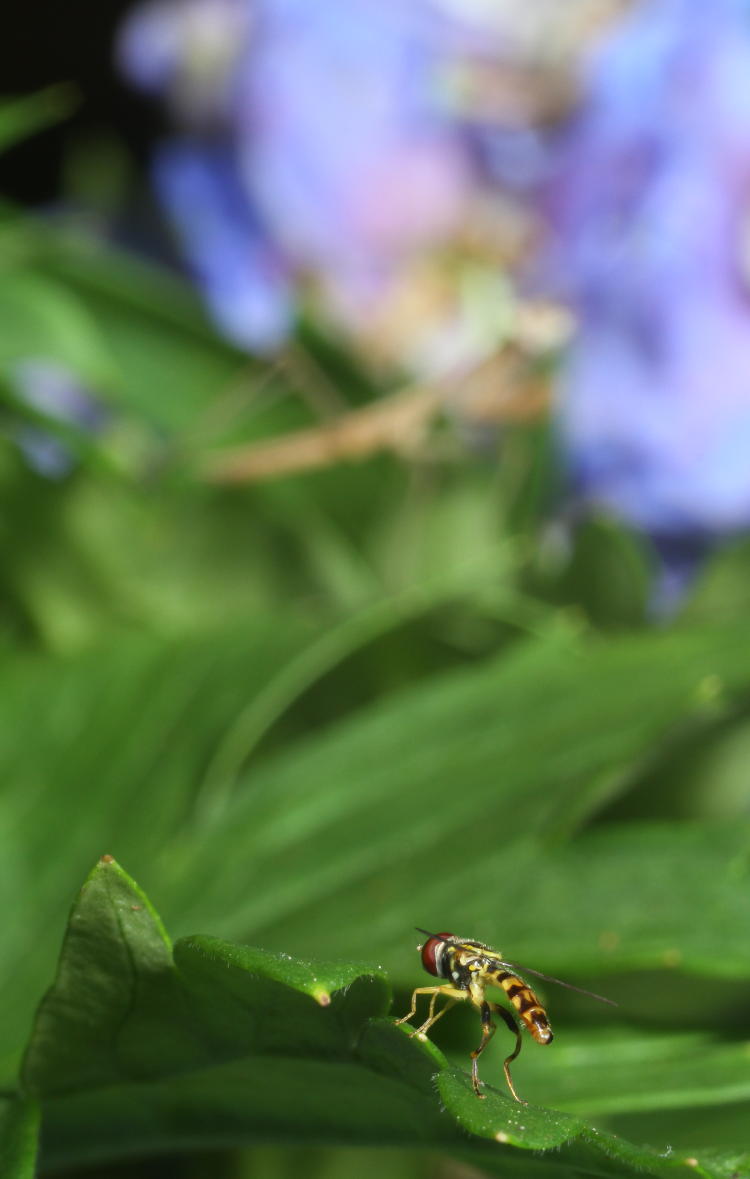
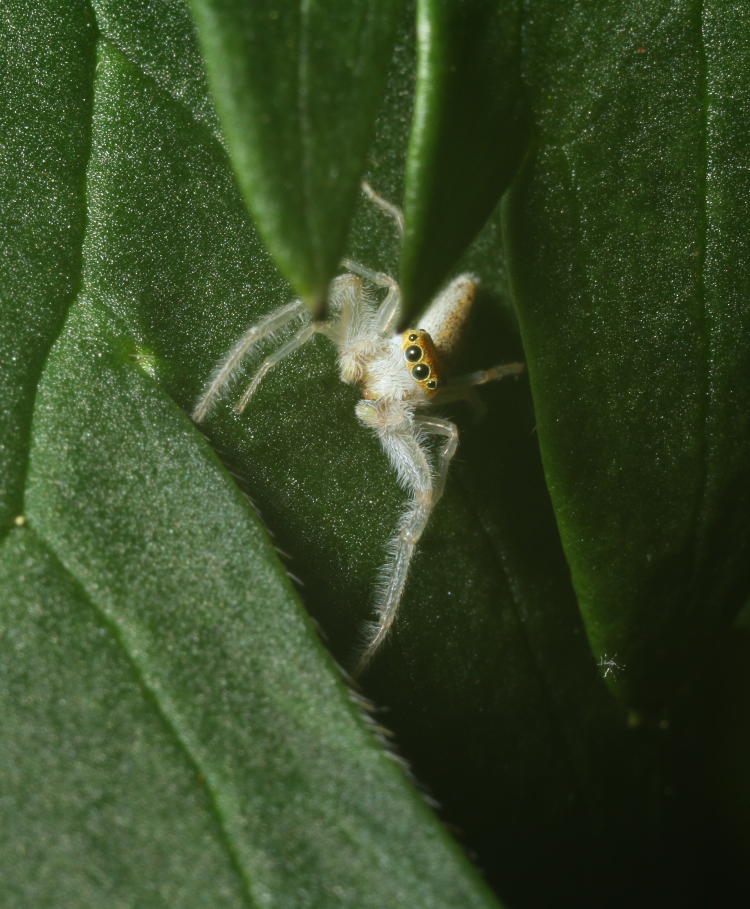
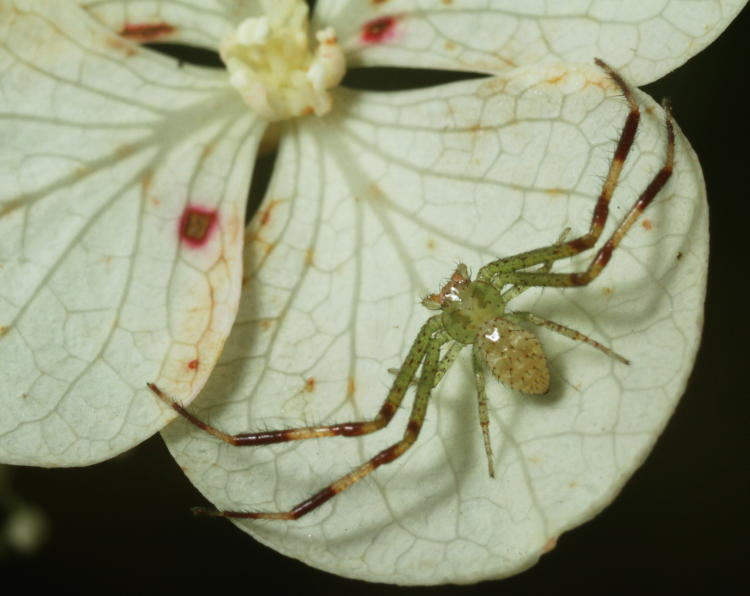
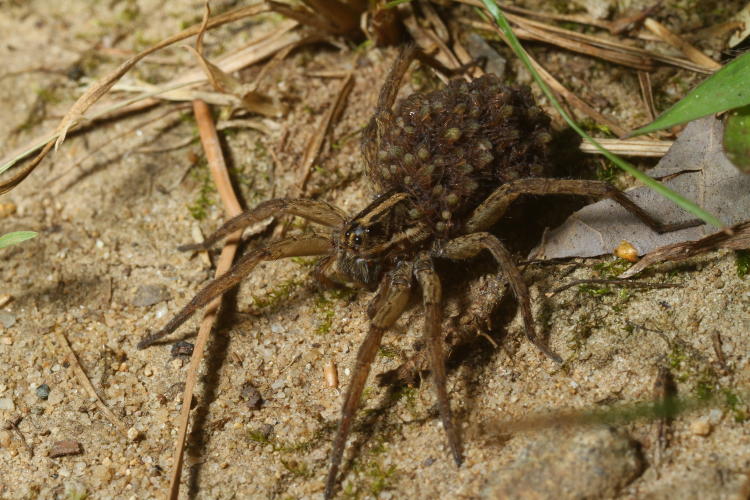
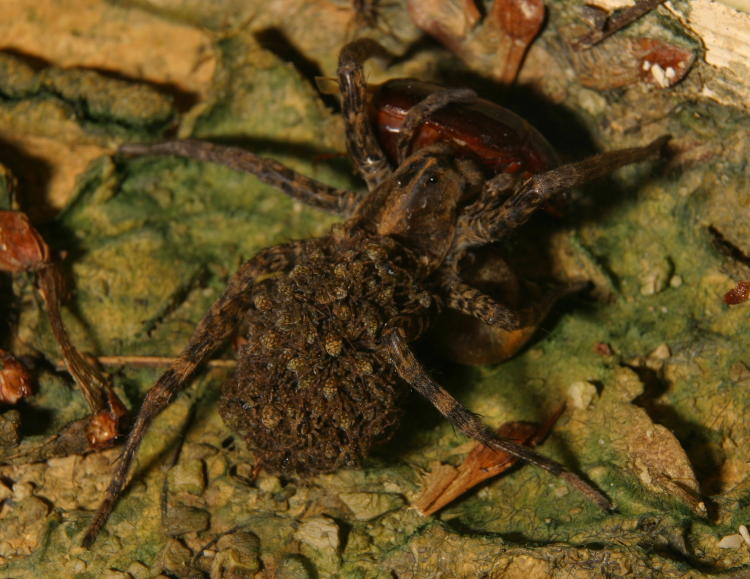
That title’s an homage to a coworker of mine from history back, who described a spider in that manner and sparked a bizarre mental image…
So around Walkabout Studios, as I said earlier, are arranged several egg sacs (“oothecas”) of Chinese mantises (Tenodera sinensis,) specifically so I can photograph them in various life stages, including hatching. Along for the ride are two Carolina mantis (Stagmomantis carolina) egg sacs that arrived with our shed, and an egg cluster of wheel bugs (Arilus cristatus,) all of which I’ve been trying to keep my eyes on. The first of the Chinese mantis sacs hatched out not quite a week back, but I was a hair too late to capture their moment of emergence. But then, checking on the wheel bug eggs a few days ago, I found I was a bit too late for them, too, seeing that it was liberally clouded with bebe wheels. When hatched, they’re yellow-orange in body color, which changes to black within a few hours (the abdomen stays brilliant red for a few weeks though,) so finding them with black bodies means I was at least a few hours too late.

newborn wheel bugs Arilus cristatus congregating around egg cluster
I was hoping to see some late arrivals and set up both the still-camera high mag macro rig and the video rig, but captured very little of interest; in the process of trying to clear the area beneath the fence of undergrowth and poison ivy (should have done that sooner, but to be honest it wasn’t growing much more than a week ago,) I spooked the spidery sprogs around the edge of the fence and only had a foolhardy few to work with. I did what I could, but wrote off any detailed sequences or video for this species.

Giving that up, I was passing a white azalea bush that overhangs the fence and stopped to do a few flower photos, and suddenly realized that I was staring at another mantis egg cluster at eye level, smack in the process of hatching. Well, alrighty then! I got the taller tripod down and set up shop, and this time, my timing was bang on. This is a much longer video than the previous, because I was able to catch some specific events.


I have to note that, after a couple of years of unsuccessful attempts, including seven egg cases that I paid for and never hatched, I was able to get what I was after this year with an egg case that I didn’t even know was there…

But we need some more detail pics of course.

Chinese mantis Tenodera sinensis emerging from egg case ootheca among earlier hatchlings
Dead center is one at the moment of emergence – well, that all depends on how you measure it, because it’s been seeing daylight for a minute or three at this point, but it’s also not yet out, so whatevs. An earlier hatchling hangs out on the case above, observing I guess, and one that appears to have gotten trapped and died, brown and dessicated, is immediately to the right. You can also see some of the molted “chaff” hanging from its anchor thread, appearing to be erupting from the head of the new emergent, but that’s just coincidental.

I went out a little later on when the light had shifted for some wider shots.

egg sac ootheca of Chinese mantids Tenodera sinensis showing newly hatched, molts, and unsuccessful hatches
Most of what you see above are ones that didn’t make it, for whatever reasons – tangled in the threads, or simply not viable, or what have you. But there are a few live ones, easily distinguished by their upright stance and antennae and so on. Then we’ll back off to see the blossom at the end of that branch.

newly hatched Chinese mantids Tenodera sinensis hanging out above egg sac ootheca
A handful of them were hanging out under cover just above the case, while plenty of others adopted similar poses at various other nearby locations – some of them lose their footing and drop, only to snag leaves further down, and even if they make it all the way to the ground (better than a meter and a half from here,) they have so little weight and momentum that it has no ill effect whatsoever.

But I also backed off a little more to show the context, and how easy it would be to miss the case itself if you’re weren’t looking carefully.

hatched egg sac ootheca of Chinese mantids Tenodera sinensis among azalea blossoms
I probably sound like I’m being defensive for not spotting this earlier, but this actually sits outside our fence where I almost never go. Still, I got the crucial moments that I was after, so believe what you want.

I couldn’t resist the expressive posture I found, either.

newborn Chinese mantis Tenodera sinensis peering over edge of leaf towards egg case ootheca
It certainly looks like it’s viewing the egg case intently, but I suspect it simply dropped something off the leaf…

I went out front to the rosemary bush to check on the new arrivals from a few days previously, and couldn’t actually find any – the bush was notably bare, and while I will certainly admit to missing a few, given their size, their ability to conceal themselves, and the density of the bush, I wouldn’t miss dozens. They appear to have abandoned the rosemary, leading me to believe that they didn’t like it, but I have plenty of photos of previous mantids hanging out on the same bushes, so I have my doubts. However, on the purple azalea bush nearby – one much smaller and offering much less concealment and camouflage than a rosemary – I did at least spot one.

new Chinese mantis Tenodera sinensis after moving to azalea bush
The color made a nice backdrop, I admit – the various azaleas are vivid this spring.

Okay, for each photo, I type a meta-tag description that includes the subject’s common and Latin names, and I’m damned tired of typing “Tenodera sinensis,” so let’s move on.

I did a little poking around the back yard afterward, both examining the other cases and looking for further activity on this gorgeous day, and on the gardenia bushes found a few other little subjects.

possible long-legged sac spider Cheiracanthium inclusum in web lair under leaf
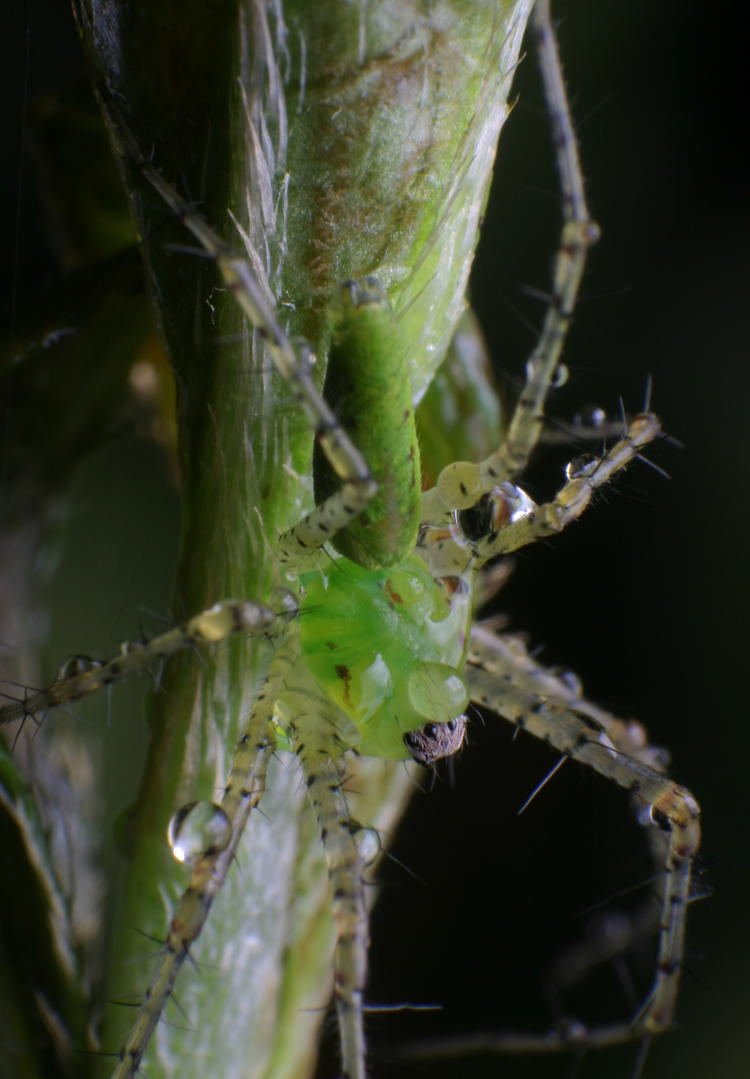
Underneath one leaf sat what may be a long-legged sac spider (Cheiracanthium inclusum) in a breeding nest, probably – leave it to me to pin down all the details. Sac spiders are rather intriguing; some of them may have a potent venom, in that some people have reported strong reactions to them, and are occasionally considered dangerous, though not to the extent of widows or recluses, but among entomologists the jury is still out, it seems. I’ve seen these all over the backyard, but they’re small enough that even if this particular species’ bite was reactive, the circumstances where they could successfully bite someone are few and far between, so I don’t worry about it. The telltale features are the pale and translucent body color and the over-length forelegs.

Under another leaf on the same bush sat something that has yet to be identified.

unidentified small insects on underside of leaf
closeup of unidentified small insectI had to turn the leaf over to expose them to the sun (that’s my thumbtip in the corner,) and it was making them antsy, so these shots lack the detail I can usually obtain. I have only the faintest idea what these might be, because they resemble the springtails that I’ve found on water surfaces, but they’re much bigger and of course not on or near the water. The larger one among the smaller gives the impression of a mother and brood, but the closer look makes them all appear to be juvenile/nymph form, so that pretty much exhausts my guesses regarding the species, and I simply don’t feel like submitting them to BugGuide.net right now – this post has been delayed long enough, plus I’m not that interested in them anyway. We’ll just call them doodlebugs because it seems appropriate and leave it at that. Professionalism all the way.

On this date 14

northern black widow Latrodectus variolus showing eye reflection
Eight years ago this very day, I was endeavoring not to get bitten while attempting to actually photograph the bitey bits. I succeeded in the former but failed in the latter, still producing this enigmatic (so I say) portrait.

Those red marks are a clue of course, and the fact that they’re markS and not A mark tells you this is the northern variant – specifically, a northern black widow (Latrodectus variolus.) The hourglass on the belly of the northern subspecies is split, broken, divorced, call it what you like, but it’s two marks instead of one, with some additional markings on the back because the northerner is an attention whore. We have both species around here, by the way. What I was trying for were the chelicerae, the fangs, which are remarkably small, tucked tightly to the face, and just as jet black as the rest of the spider (save for the red bits,) which makes them next to impossible to photograph. This was not helped by not having a macro flash rig at this point that was adequate to the job, though it did produce a menacing reflection from two of the eyes, which is perhaps spookier than if it got four or eight reflections. In most circumstances, not being bitten by a black widow is quite easy, because they’re shy and tend to avoid contact enthusiastically, but irritating them like I was doing by trying to get the precise angle needed for the shot is a great way of failing to not be bitten. Some indication of this state of mind of the spider can be seen emanating from the spinnerets: harassed widows will emit a nasty-tasting fluid among their web strands to discourage those that haven’t heard of their normal reputation. Expert that I am, I avoided any taste of that, too.

There’s another reason for posting this image: my cousin’s birthday is today – no kidding – and he’s allergic to spiders. I figured he’d like a closeup of something that he wouldn’t normally get very close to.

American five-lined skink Plestiodon fasciatus basking near azalea bushAnd another, from the exact same day – busy busy busy! (Actually, it’s a very rare day indeed that, if I actually start taking photos, I only photograph one subject.) And technically this is two frames, blended together into an animated gif (pronounced “gesh-TALT”). The sun went behind a cloud while I was shooting, and the two frames were so close together except for the lighting effects that I had to overlay them – a slight tweak in position lined them up perfectly. The appearance and disappearance of the shadows is obvious, but if you look closely, you might also be able to see the color register change, especially if you look at the body of the skink itself (oh, yeah, this is an American five-lined skink again, Plestiodon fasciatus.) The shaded version gets a bit of a blue register to it. I’m used to spotting this now, plus I had the two images side by side in the folders to compare, which is what prompted me to overlay them so it was more obvious, rather than simply showing them alongside one another where the effect might not be as clear to those not used to doing color corrections.

Just because, part 34

I should be working on video editing, or even sorting, but I don’t feel like it. Plus there’s this thing about the number of images uploaded for March, which is gonna be a pretty big number, to a four-year old anyway.

So another handful of pichers, without a lot of exposition.

large collection of turtles sunning themselves on log
It was a warm and sunny day yesterday (totally unlike today,) and the turtles were taking advantage of it. This was shot from quite a distance off with the long lens, because I knew they’d bail as soon as I got even a wee bit close. I was right.

But these guys hung out a little longer, allowing me some more fartistic frames.

trio of pond sliders Trachemys scripta on snag with reflection
It would have been better on a perfectly still day when the water wasn’t rippling at all, but this isn’t bad, and it’s rare that we get those kind of wind conditions, at least not with good light – it occasionally happens first thing in the morning.

It took a slow approach to net the next photo too, and the entire time I was being watched warily.

pair of double-crested cormorants Phalacrocorax auritus on pilings
These are double-crested cormorants (Phalacrocorax auritus,) so named because during breeding season (so, for like six weeks out of any year) the males develop two lines of white feathers on their heads. I have yet to ever see this, despite the hundreds of cormorants that I’ve found, so either I’m seeing an awful lot of females, or there’s a mighty big hoax going on. But I still like the double portrait, and the fact that the eye-color can be discerned. Soon afterward they bailed on me too.

And finally, the wisteria is in bloom, great hanging bunches of lavender flowers (just not lavender flowers,) and so I inject a little more color into the post.

wisteria blossoms in closeup
That’s all.

Late but early

Wholly without intending, I have two more entries for the end of the month abstract – shot right at the end of the month, as in, this morning. However, the official post had already gone up by the time that I shot them (it was scheduled to appear at 1 AM,) so I’m just adding a post. There might even be another today, of photos that I shot yesterday, and it appears another video is coming soon too. But for now, we got these.

Canada geese Branta canadensis coming in for landing on pond
I was up early this morning, and ventured over to see what sunrise did, which was nothing due to light overcast skies. But while the light was still low, a handful of Canada geese (Branta canadensis) cruised in to land on the water, and I tracked them as they did so. The light was far too dim for a decent shutter speed, which resulted in yet another impressionistic rendering. Clicking on the image will take you to a larger version to show a little more detail.

And another, in sequence.

Canada geese Branta canadensis skidding to a stop on the water
You can click on this one too.

I’ve long had a goal of capturing a goose or duck skid-landing on the water in good detail – obviously these do not qualify. The timing has to be right, the light good, the angle good, and the long lens affixed, and those various factors have not come together yet. But for now, we’ll go with the implied motion in these. I mean, you don’t really have a choice, do you? Except to go get your own…

March timeses on

… or something like that. It’s end-of-month abstract time, is what I’m saying.

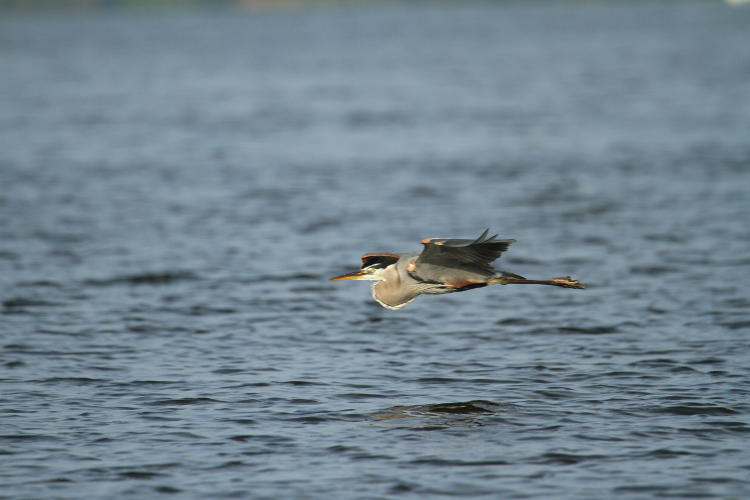
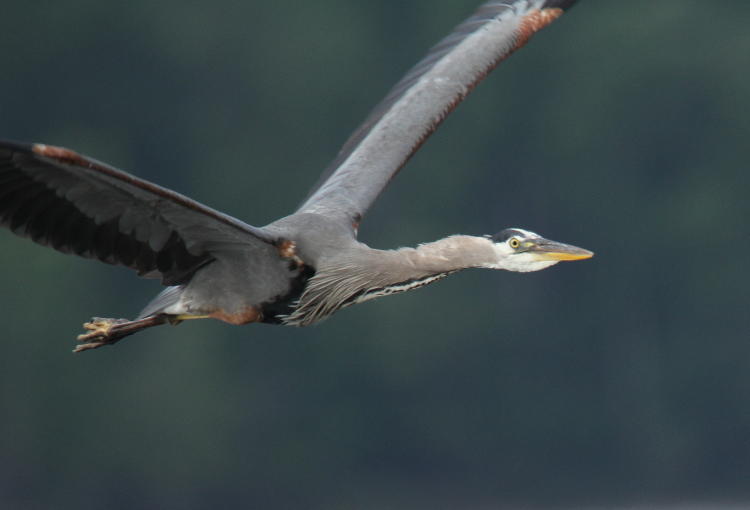
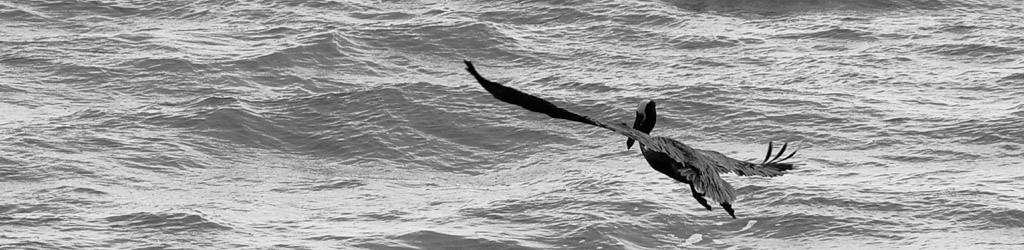
great blue heron Ardea herodias taking off in bad light
Our abstract here is a great blue heron (Ardea herodias) that I’d waited until the light was bad so the shutter would drag, and captured it on takeoff – this was all carefully planned to appear like impressionist brush strokes, y’ see. Really.

And another, because I got two that I liked in March. Well, felt appropriate for the purpose, anyway. I wouldn’t describe myself as ecstatic, per se.

tiny lily pad surrounded by bubbles and pollen
During the productive botanical garden trip, I saw this tiny lily pad in a raised pond, surrounded by bubbles and sporting its own centerpiece of a water drop encapsulating pine pollen. I can’t say if it was the pollen that kept the bubbles intact up against the leaf, or if there was something else in the water affecting the viscosity, but I don’t need to understand it to take pichers of it (good thing, too.) It’s impossible to avoid having pollen in photos this time of year, so I embrace it. Cursingly, of course, kind of a reluctant embrace of a hated relative, carefully timed to be the minimum to prevent offense, teeth bared in an obviously-fake smile that no one dares call out, but embracing nonetheless.

BREAKING NEWS: We have a third, late entry for the end of the month, taken just hours earlier.

budding leaves of bald cypress Taxodium distichum
I’m fond of the bald cypress trees (Taxodium distichum) that can be found around the nearby pond in places, and noticed that they were now starting to leaf out. Picking one verdant branch to shoot along, I liked the horizontal pattern, the short depth, and the sweeping curve, so it slides in at the last minute.

Someone will be cooperative

That’s what you can count on in nature photography: even if your primary subject fails to appear or do something photogenic, another subject will fill in the gaps.

Actually, you can’t count on that at all. Don’t listen to me. [I know, you weren’t anyway. Thanks for that.]

Having spotted some bald eagles at a particular spot that seemed promising a few weeks back, The Girlfriend and I did a small excursion down there again, about a week ago, to see if any were to be found. Short answer: no. Longer answer (by three letters): maybe. In the extreme distance, two birds were flying away in a position and wingbeat pattern that might have indicated eagles. Since it was a weekend and a fishing spot, the place was undeniably busy, so we didn’t hang around long.

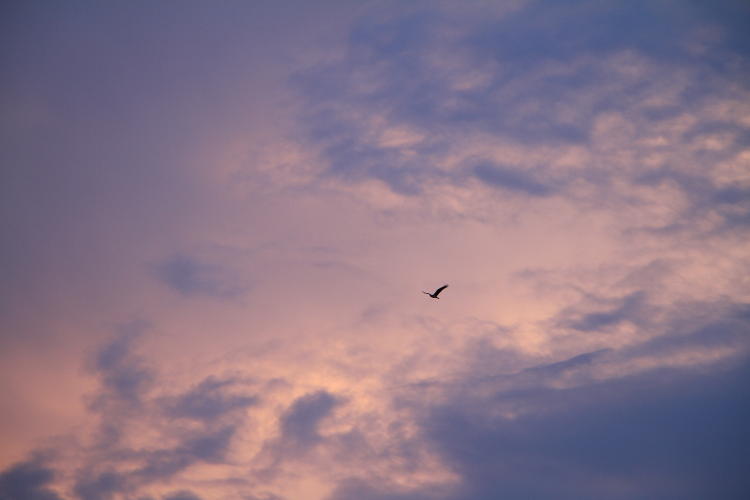
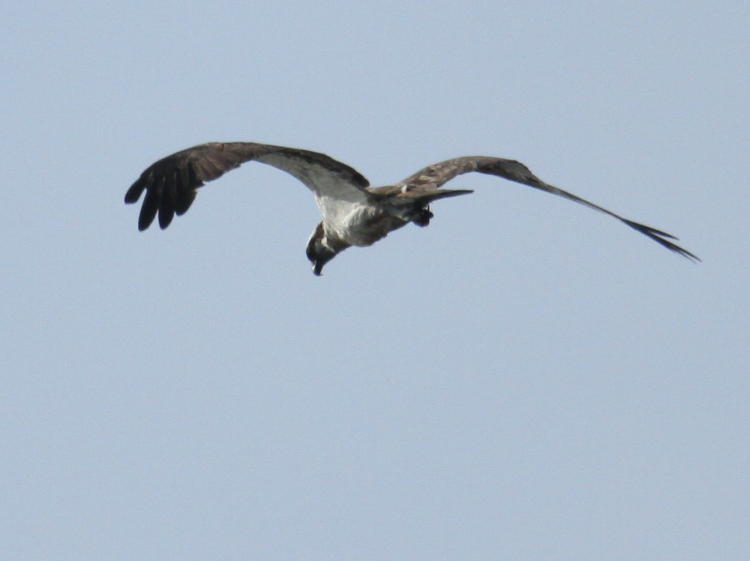
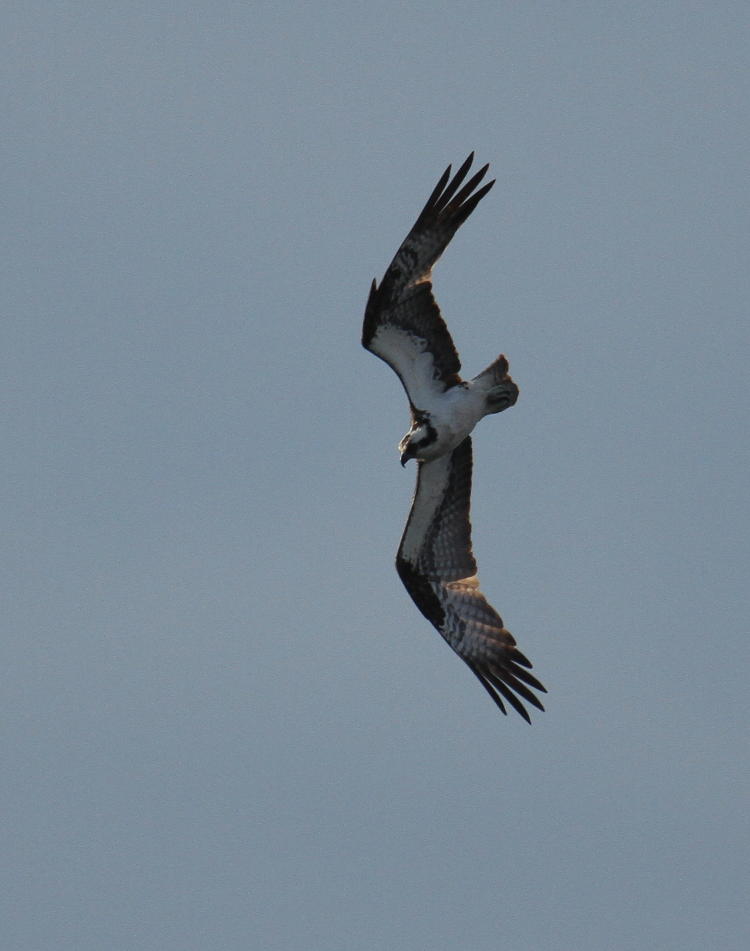
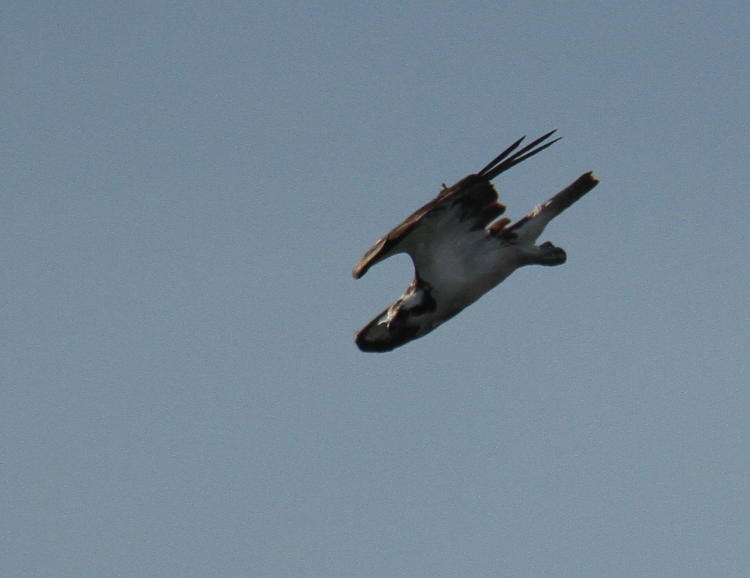
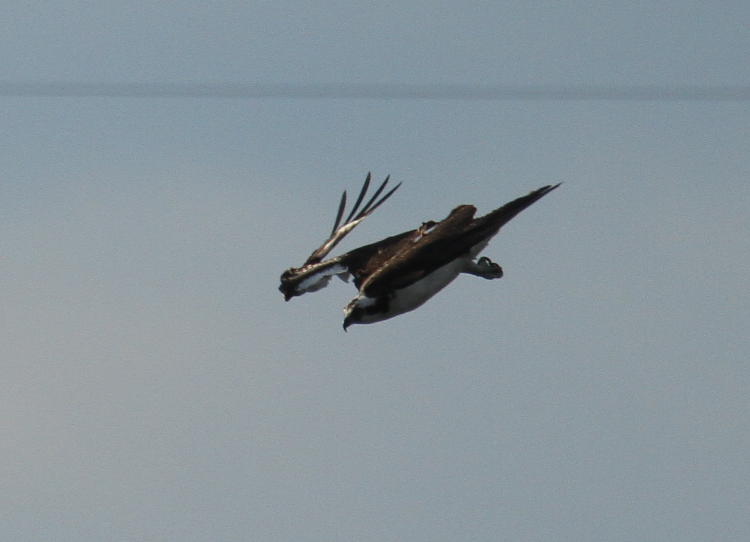
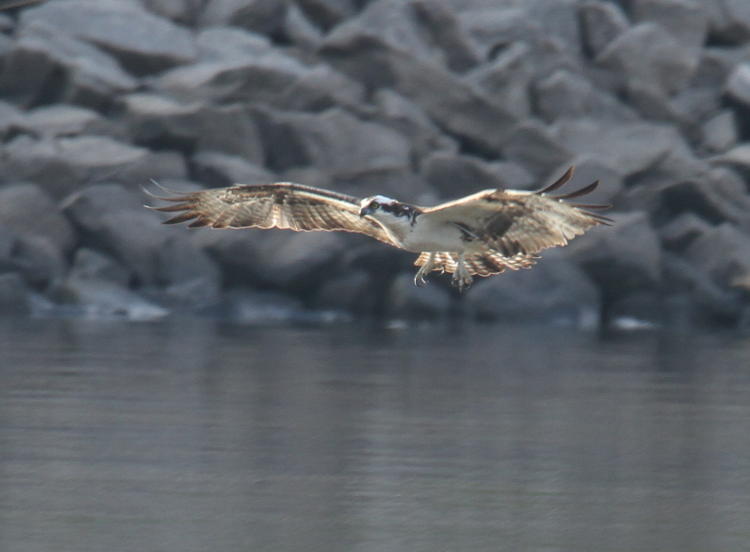
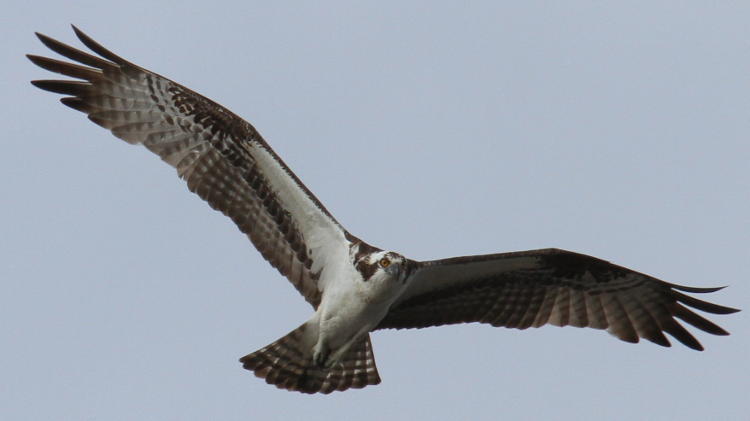
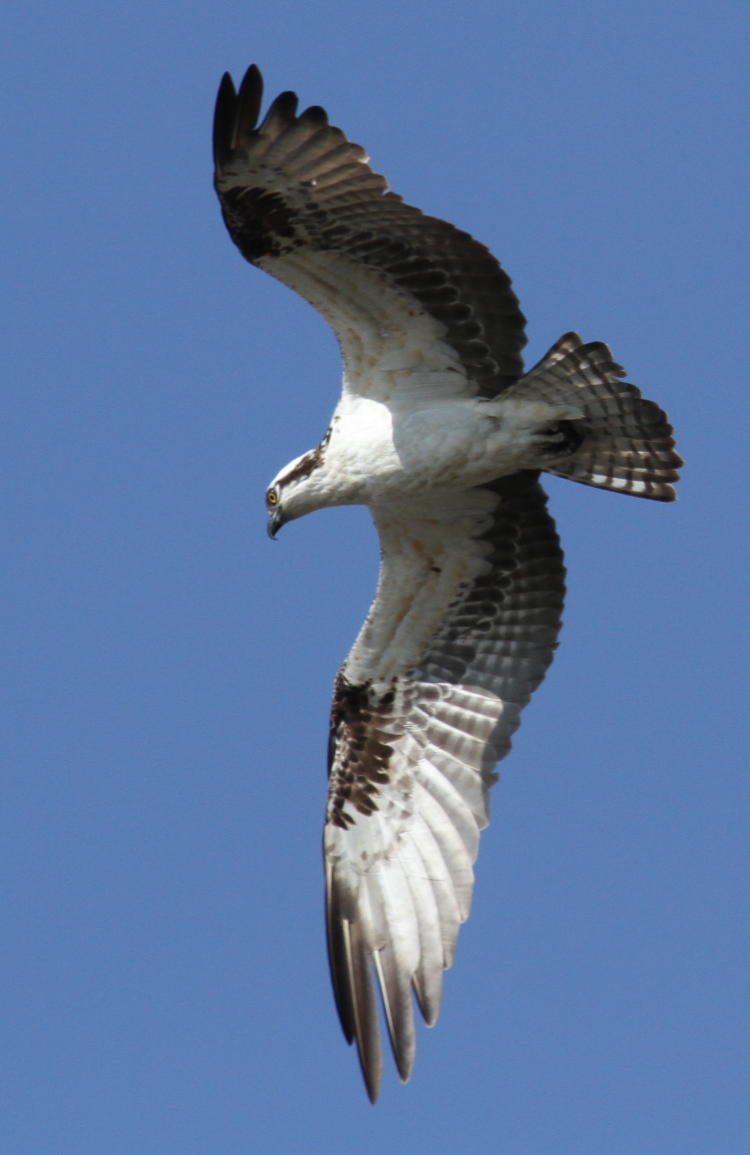
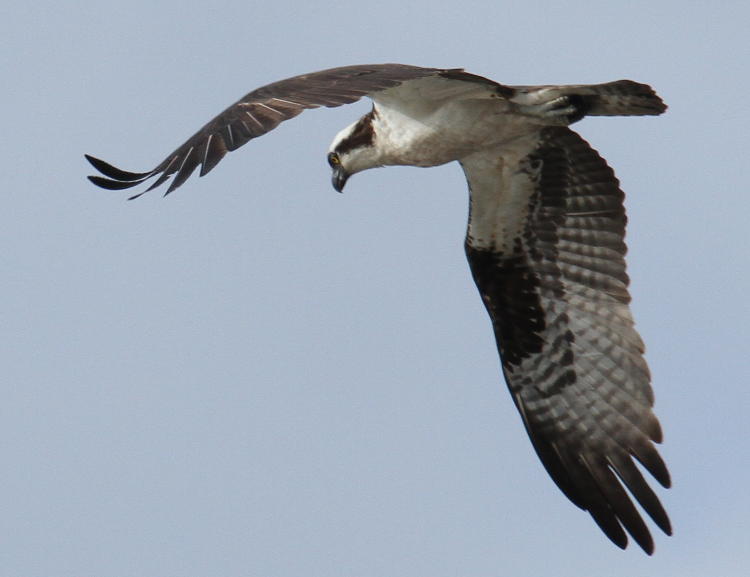
But while there, an osprey (Pandion haliaetus) did some distant wheeling overhead, and eventually passed from cloudy sky into a small patch of blue, and I was tracking it as it did so.

osprey Pandion haliaetus soaring against partly-coudy sky
I thought I’d mostly corrected the autofocus issue, but this series of photos showed focus to be just slightly off, so apparently not; I’m beginning to suspect that it locks focus initially, perhaps not perfectly accurately, and then doesn’t readjust often enough. Still experimenting, but in the meantime, this is close enough for this kind of framing and usage.

While at the location, however, we did a small amount of exploring, and I kept the long lens affixed and ready, so when a black-capped chickadee (Poecile atricapillus) began flitting around on branches and vines right smack in front of us, I put it to good use.

black-capped chickadee Poecile atricapillus closeup
Chickadees are generally pretty mellow, if hyperactive, birds; they don’t fret about closer approaches as much as most other species, and while there was no question that it knew we were there, we held still enough that we didn’t appear threatening. So I just kept firing off frames, and this time the autofocus was doing its job properly.

black-capped chickadee Poecile atricapillus staring at photographer
It looks suspicious here, but that’s just a momentary eye-contact thing as it examined the entire area, as they do. These frames are cropped a little, but not a lot; this guy was less than four meters in front of us, and at 600mm focal length, that’s enough to make it quite dominant in the frame. If you’re not familiar with chickadees, they’re small enough to be enclosed in your hand with just the tailfeathers sticking out.

And one more for detail, because.

black-capped chickadee Poecile atricapillus in tight profile
I’m not complaining about this at all. Even if it’s a fairly easy subject to capture.

I fired off fifteen frames in the [checks EXIF info] ten seconds that the bird was perched in easy sight, and while we didn’t see what we were after, I can count this as successful anyway. You can never be prepared for everything, but keeping your options open can help a lot.

By the way, my current project (among many of the outstanding ones) is to capture the grebe in the nearby pond. Every damn time that I’ve seen it has been in poor light and at significant distances, so much so that distinctive identification is impossible, and I think it’s baiting me. I’m still male enough to consider that provocation, so we’ll see how this pissing match plays out.

Closer than last year

… or the previous one, for that matter.

I’d mentioned earlier that I’d primed the yard with egg cases of the Chinese mantis (Tenodera sinensis) – seven of them, to be exact – and this morning I found the first of them had produced progeny. Unfortunately, I was a bit late in discovering this, since no mantids were emerging as I observed the case, and a few dozen at least were scampering among the rosemary leaves where I’d placed the egg case. Nonetheless, I was prepared with stills and video this time, even if there wasn’t a tremendous amount to capture in video.

newborn Chinese mantises Tenodera sinensis among rosemary leaves
The weather was great for this, if not a tad too hot and bright, but this was certainly better than rain or overcast skies. And I’d thoughtfully placed the branch that the egg case was attached to within a small gap in the rosemary bush, so I had a reasonably clear path to get close. It was still a little tricky, given the macro softbox, but nothing too serious.

dorsal view of newborn Chinese mantis Tenodera sinensis still clambering on egg case ootheca
Those little yellow specks on the eyes, among other places, are pine pollen that’s all over every damn thing this time of year.

A brief rundown for those few who haven’t memorized everything that I’ve ever said in posts: mantises emerge from the egg case in a form more resembling a worm than anything else, and slowly unfold their limbs over a period of many minutes, but also appear to perform an initial molt within the first hour or so, with the exoskeleton being anchored to the egg case by ultra-fine threads. These molted skins are left to dangle from the case like chaff, and are often the best indication that a hatching has taken place, given how small the newborns are. Some of them can be seen in this image.

And occasionally, those very fine threads tangle up the newborns as well, though I suspect today’s gusty winds had a little to do with it. There appeared to be two that suffered this fate, out of dozens or hundreds that emerged, and this is how the species deals with the high mortality rate of the pre-adults; as long as one or two survive to reproduce and pass along the genes, the purpose has been served.

newborn Chinese mantis Tenodera sinensis appearing to be tangled in exoskeleton remains
We humans protect our young, but many other species cannot actually do this (it would have required overwintering of the adults, and that’s a radical change in physiology,) so they do the next best thing and increases the odds with lots of babies. In a few months, it will be down to a mere handful.

But let’s get to the video.


First note: for the egg case clips, I was on a newly-modified tripod that I made strictly (okay, mostly) for macro work, and it served pretty damn well, but for the upper reaches of the rosemary, I could get close enough without disturbing the branches, so I was shooting freehand, thus the instability. The video that I got three years ago was admittedly better, but it’s all a matter of timing and availability – none of the egg cases from two years ago (that I’d purchased) even hatched, and last year I missed all of the hatchings with a bad work schedule, so I’m taking what I can get.

Now here’s a closeup of the one I tried to rescue:

newborn Chinese mantis Tenodera sinensis with legs entangled in molts and threads
Note that this is before I made any attempt at all, having clipped the threads that it hung from and set it on the camera bag; the ballistic nylon fabric gives a good indication of scale. But the legs could only get that way because they were still soft and flexible from the emergence.

While I was at this, I asked The Girlfriend to shoot a few images of me to illustrate just what it took to get these closeups, and so, at the risk of scaring everyone off, I make another rare appearance within.

The author with his macro rig getting photos of hatching Chinese mantises Tenodera sinensis - photo copyright 2020 by Susan Rice
This has been edited ever so slightly, increasing the visibility of the egg case itself just so it’s more noticeable. That’s the macro softbox rig, and the reversed 28-105 that serves as my high-magnification lens. Now we’ll step back a little.

The author with his macro rig getting photos of hatching Chinese mantises Tenodera sinensis - photo copyright 2020 by Susan Rice
This shows the shooting position a bit better, right at the edge of the driveway and buried pretty deep in the rosemary – the 28-105 has to be pretty close for these kind of shots – while the second body with the Mamiya 80mm and extension tube attached sits nearby on my custom tripod (actually, my old Manfrotto that I cut the legs down on and attached my old ballhead, but it works fantastic.) By the way, I’d purchased a used Canon 7D a few months back and that’s been my primary workhorse now, and that’s it on the mini-tripod, but I brought out the old 30D for the still photos. Damn sensor badly needs a cleaning, though, so I had to touch out a lot of dust from those photos.

Another shot from today (well, yesterday now, since editing the video and writing this took longer than I wanted,) another hatching.

unidentified newborn spiders
On numerous strands of webbing stretched across the top of the gate, little specks revealed themselves to be newly-hatched spiders, though I can’t tell you what species. I’d lean towards barn spider myself, since they seem to be the most numerous in the area, but that’s only a guess. None of them wanted to give me a dorsal view of their markings, and I had almost nothing to brace against for stability and focusing – I tossed a lot of frames in the attempt. But hey, you can say there are a lot of birthdays to celebrate on March 28th… except none of these, or the mantids, will even be alive when it rolls around again next year.

At the tail end of the video I included a clip of tadpoles, and that references this post when the eggs were laid. They (some of them, anyway,) may well be around next year, so we can celebrate their birthday if we like.

One more thing: it’s time to start monitoring the eagle nest cam, since the eggs are due to hatch any time now.

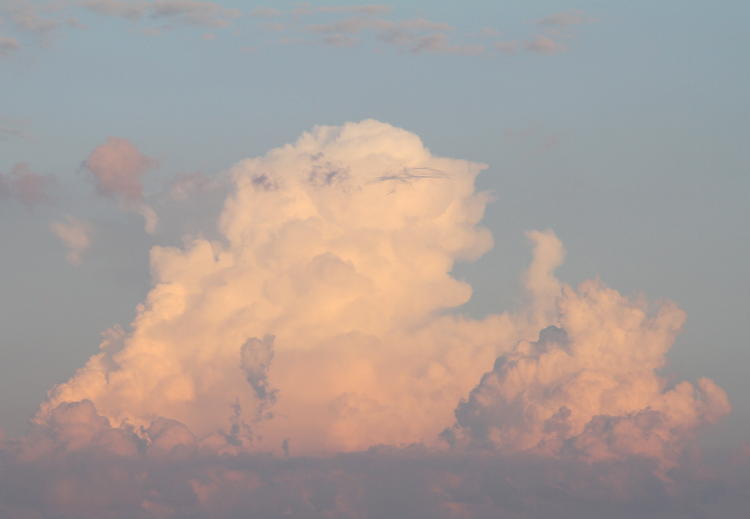
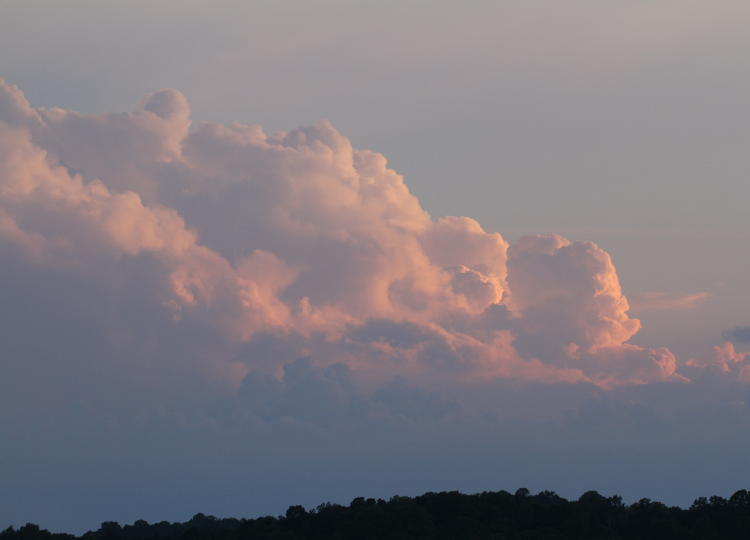
A splash of evening color

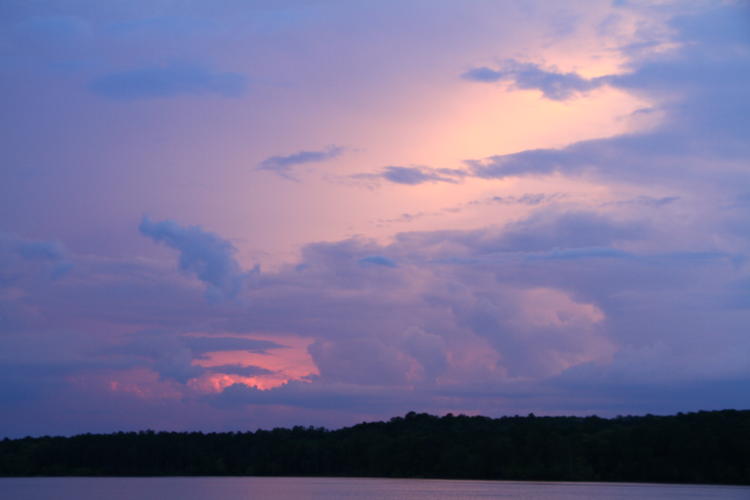
pink and blue sunset over pond
Just a quick pair of pics, taken less than an hour ago. There will be another post coming, hopefully before the day is out, that has more of those words that you all love so much, but for now, we have color.

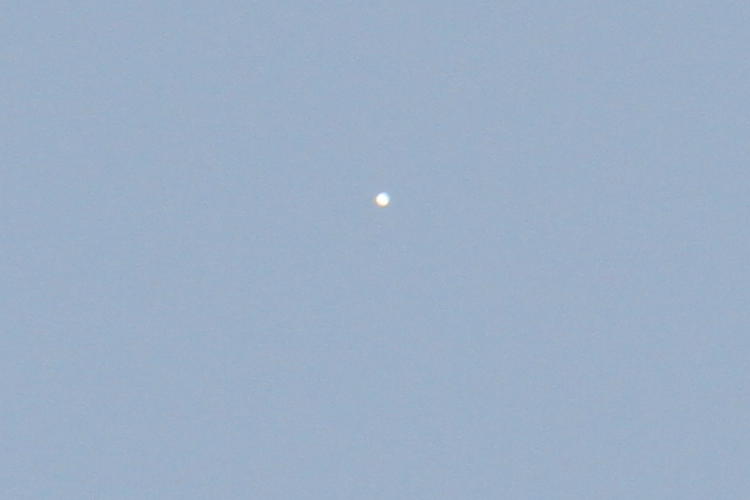
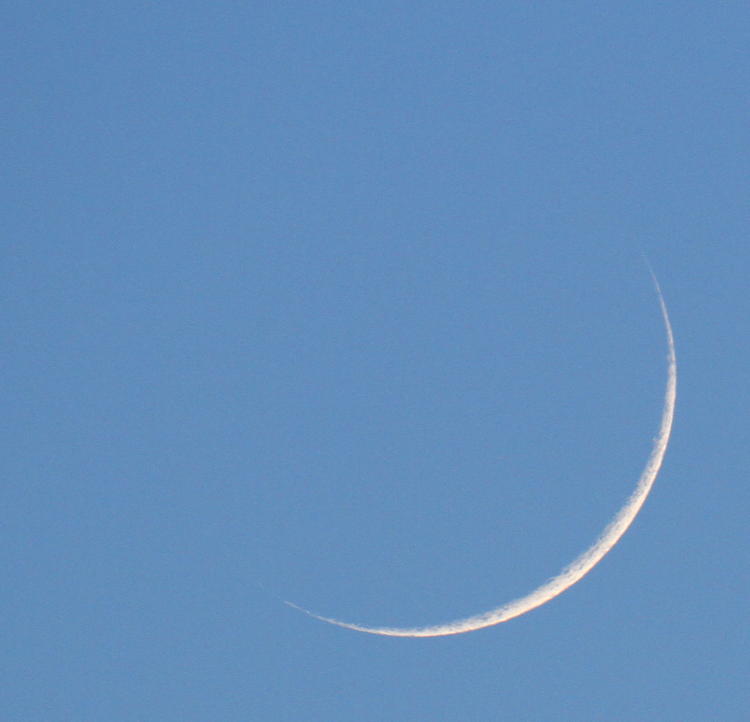
And a moon. And if you look closely, Venus. I think it’s Venus.

crescent moon during sunset with Venus visible
Yeah, just checked through Stellarium – it’s Venus. You might see it better later on, depends.

On this date 13

probably Short-tailed Ichneumon Wasp Ophion with pine pollen
This week, we’re going back just three years, partially because this image shows typical conditions for the season, which is the deluge of pine pollen that occurs. Those are the little yellow specks all over the main subject, which I am taking to be a short-tailed ichneumon wasp (Genus Ophion) – that seems to be what BugGuide is indicating, though their listed identifying characteristics are all not visible in this photo, so who knows? Those long antennae are impressive, but leave it up to entomologists to name the species after its smaller abdomen, instead – that’s just rude. Ichneumons are petite wasps that are parasitic in nature, laying their eggs in caterpillars so they hatch out in a living specimen and consume it from the inside – Darwin had some choice heretical words about this. They’re not protective of nests since they don’t have them, so as wasps go they’re mellow and not very reactive – you’d have to grab them to get stung.

And another from the same day, because. I was out at the nearby pond after sunset as the Canada geese were departing, so used the sparse twilight sky color as best I could.

Canada geese Branta candensis against post-sunset twilight

Drawn to scale

Carolna anole Anolis carolinensis on fence in NC Botanical Gardens
I’ve mentioned in two previous posts about a trip to the NC Botanical Gardens, a session The Girlfriend and I did before their closing, and I would have warned you about the closing had I had more than a day’s notice myself. Note that this just applies to the gardens proper; the nature trails out back remain open.

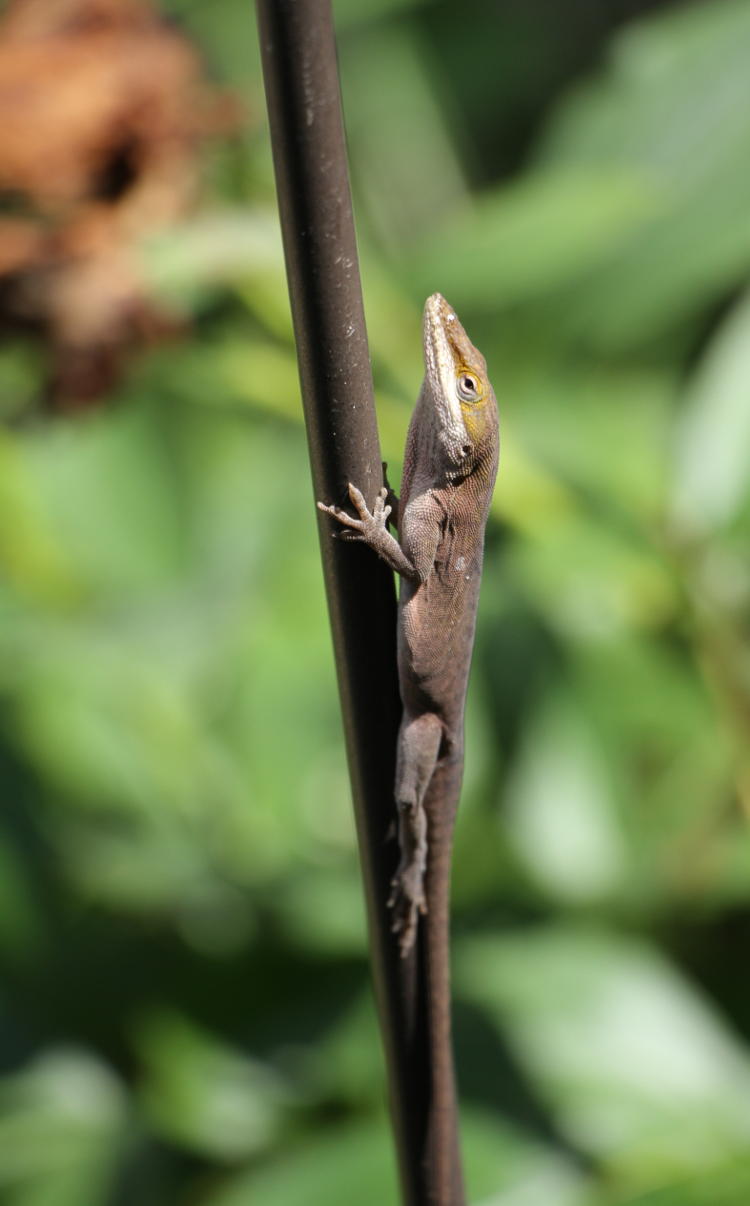
Anyway, I was hoping to see at least a Carolina anole (Anolis carolinensis,) which can often be found in the garden but I wasn’t sure if it was a little too early yet, the warm temperatures still fairly new. The activity that we found was not just gratifying, it was better than any previous trip, so I’m counting this one as successful. Above, the first anole in evidence scampered warily along a fenceline, pausing just for a moment as I loomed in closer to get the detail shots, then slipping around behind to avoid us. With typical behavior, though, it peeked out to see if we’d moved on, and I was ready.

Carolina anole Anolis carolinensis peeking out from behind fence
I have a few frames like this, shot within about three seconds, with subtle differences as the anole surveyed the surroundings – I was holding still, except for the index finger twitching on the shutter release. This frame, however, conveyed more of a sense of horror, solely from the eye position because expressions on reptiles really don’t change.

Not even a minute later, I was examining the palmlike plants (I can’t recall their name and am not wasting more time looking) that the anoles prefer the most, and found another one, providing a fetching pose that I particularly like.

Carolina anole Anolis carolinensis showing shadow through non-palm frond
I just like the idea that the lizard was doing its best to camouflage itself while getting some sun, but in a way became more obvious, at least when seen from this angle. Still, most people blow right past displays like this, never paying close attention and already having considered the kindapalms as ‘uninteresting’ – they have no flowers, after all. Their loss, of course (the unobservant people, not the unpalms.)

Meanwhile, my subject knew we were there and peeked out to check on us.

Carolina anole Anolis carolinensis peering from behind nonpalm frond
I get the impression of a reptilian carpenter checking the accuracy of their cut. But maybe that’s just me ’cause, you know, lizards have no expression. This is a tight crop of the original, partially because the semipalms made me keep my distance (the anole being more to the center of the plant,) but we really needed to see the scale detail here, and that shading ridge ahead of the eye.

Elsewhere in the garden, a skink was also checking out the lovely day.

American five-lined skink Plestiodon fasciatus in herb garden
This is an American five-lined skink (Plestiodon fasciatus,) which make occasional appearances in our own yard, at least one living within the bricks of the front porch – I mean, probably not this one, but one of the same species. I would like to convince the anoles to come live here but have no idea how to do that, short of catching a few and introducing them, but I’m not sure the habitat is what they’re after. The skink here was reasonably mellow and I was able to switch sides of the planter and go in for the portrait while the skink struck a no-nonsense board meeting pose.

American five-lined skink Plestiodon fasciatus getting down to business
No, that’s just silly; reptiles don’t have expressions. I think I heard that once.

As we’d entered the garden, I expressed my intentions to look for lizards and snakes, even though the snakes tend to be few and far between within the gardens themselves, and The Girlfriend remembered a previous visit and suggested we check out the walls of the gift shop and plant sale area. The shop was closed and the plant shelves empty, but as we approached, she pointed ahead and said, “There you go.” I looked in the indicated direction and saw another anole scampering around the empty tables, so I crept in for a few more frames. After a minute or so, she inquired rather sharply as to what I was doing, and when I told her I was shooting the anole that she’d pointed out, she corrected me with amusement; she hadn’t meant the diminutive lizard (which she’d never seen,) but the nigh-two-meter black snake sprawled across the walkway in plain sight beyond it, already attracting the attention of two other photographers. Remember what I said about people missing the small details? No? Good.

black rat snake Pantherophis obsoletus on walkway in NC Botanical Garden
Black rat snakes (Pantherophis obsoletus) are the largest snakes in the region, and this was the largest I’ve seen in years, perhaps just shy of my own body length and as thick as a garden hose. The other photographers told me it had emerged from along one wall and was making its way unhurriedly across the middle of the garden public area, but there were few visitors so it was remaining mostly unnoticed. Eventually, it slipped casually into a planting bed with thick undergrowth and largely disappeared from view while I maneuvered around for more of a head shot. I was just remarking that we wouldn’t see much unless it decided to rear its head, which I considered unlikely due to it foraging for food species, when it reared its head. Well, fine – happy to be wrong.

black rat snake Pantherophis obsoletus rearing from ground cover and sampling the air
The scattered clouds abruptly parted for a few moments, providing some nice distinct light for some shine on the scales, and the snake sampled the air with its tongue several times as we watched. The image above is better for the angle on the head, but the one below shows the tongue better, so I’m providing both.

black rat snake Pantherophis obsoletus rearing from ground cover and sampling the air
I had to crop these pretty tightly, because it emerged right alongside one of the many plant identifying signs throughout the garden that I found distracting. After a moment, the snake slipped back down and disappeared from sight with elaborate casualness.

Just a little beyond that The Girlfriend stopped, having seen some movement and unsure if it was a leaf on the gusty day. Then she confirmed her suspicions and pointed out another Carolina anole on the ground alongside some plant pots. I came up from behind and did a couple of frames, noting the color change that helped it blend into both the gravel walkway substrate and dried leaves in the area.

Carolina anole Anolis carolinensis in middle of walkway, NC Botanical Garden
You can see the distinct demarcation at the base of the tail, and I had a vague impression of an incompletely shed skin like I’ve seen before, but other images (getting ahead of myself a tad) show it to be a clear line everywhere, and I’m thinking it’s a new tail that replaced one dropped/taken during an encounter with a predator.

The anole paused for a moment, then scampered quickly across the open area towards a region of shadow near a bench, and we dismissed it. We hadn’t left the immediate vicinity though, and were discussing the various trees in bloom when we spotted it atop the bench. I was thinking that the reptile had scaled it with remarkable speed when I saw another down on one of the legs, which was the first we’d seen; the one atop the bench was another anole altogether. This was worth pausing for, to see if they’d even notice each other, and whether we’d see some mating or territorial behavior if they did.

pair of Carolina anoles Anolis carolinensis facing off in territorial display
pair of Carolina anoles Anolis carolinensis simultaneously performing territorial displaysWe were not disappointed.

It seems possible that the first that we’d seen had spotted the second, on the bench top, from some distance away and was hurrying to dispute the land claim, but I’m not sure how good their distance vision is. They drew within range and quickly commenced their dominance displays, which consist of head-bobbing and repeatedly flaring their dewlaps, the bright pink semicircle under their chins. Neither one had any intention of backing down, and pretty soon they were drawing closer together and circling warily. Ourselves, we weren’t budging a millimeter.

[The autofocus, up until then behaving as intended, now tried to lock onto the background flowers through the slats of the bench, so I quickly switched to manual for a bit but didn’t quite nail focus on the wider shot at right, so this is as large as I’m making it. They get better, though.]

pair of Carolina anoles Anolis carolinensis in serious territorial dispute
Notable now was the change in coloration, especially the dark spots behind the eyes, and the raising of the crest on their head and neck, both something that I don’t think I’ve ever seen before. I’ve watched very brief territorial displays where one quickly concedes to another without altercation, but this was not to be the case today, and I switched over to video mode.


And a quick still frame, between video clips, of the victor looking smug. No, that’s ludicrous; reptiles don’t have expressions. I suspect that’s urine staining the bench from when the loser was seized bodily and thrown (momentarily) from the ring.

male Carolina anole Anolis carolinensis after encounter
By the way, this is the one we first saw, with the discolored tail, which was ever-so-slightly larger than the other, and the victor of all encounters. I cannot say if it took ownership of the bench away from the other, or discovered an interloper on its own territory while on the ground some meters away, and the second was not easily convinced to give up, but eventually the matter was settled. While this was going on, I managed some detailed frames of the color display from the larger one.

territorial display of male Carolina anole Anolis carolinensis
The dewlap is obvious of course, the crest slightly less so, but I want to point out the rust-to-brown color on the head, the mottled stripes on the legs, and of course the eye spot. I may have mentioned, sometime in the distant past, that reptiles don’t have expressions, but that’s patently untrue. They don’t have expressions like we expect to see, but these colors definitely communicate intent and/or mood, and in an encounter with a notably smaller specimen they likely say, “Get lost,” very well, though they’re seen as a challenge to another that’s of comparable size.

We had seen plenty by this point, including some flowers, and started making our way back to the exit, but the reptilian gods weren’t done with us. On a small wooden bridge just ahead of us in the quiet garden, a juvenile fence lizard was basking, remaining largely motionless even as I knelt painfully (that substrate gravel gets everywhere and digs into one’s knees) nearby for a better angle.

juvenile eastern fence lizard Sceloporus undulatus basking on bridge
Eastern fence lizards (Sceloporus undulatus) do not seem to be as numerous in the area as skinks or anoles, but they’re both quite shy and remarkably well camouflaged for their favored habitats, so it’s possible that they’re too easy to miss while numbering much closer to the others – I know I hear plenty of sudden rustles not far from the path when hiking, which could easily be one getting under cover. This one was only about ten centimeters in overall length, counting that tail, and they can get many times this mass as adults. They have a pleasantly spiky sharp appearance but their skin isn’t really sharp – biting is more of their defense when it comes to personal encounters. And because I’m here, I’m including a couple of images from way back that I sized for blog use but never used then, because this post is kinda thin on expressive reptile portraits.

mating pair of eastern fence lizards Sceloporus undulatusThis is a mating pair, snagged in action while out at Duke Forest, if I remember correctly, and it shows off their peculiar electric blue belly scales a little – what purpose these serve I can’t say, but they’re almost impossible to see in any normal circumstances. The one benefit to spotting fence lizards is that they rely on their camouflage a lot, knowing that movement can attract more attention than appearance, and with a slow approach you can sometimes get within great photographic range.

eastern fence lizard Sceloporus undulatus posed on tree showing blue scales under neckAnd another. These were both taken on the same outing in May of 2010, but at different times during the day I think. Again, great textures and that splash of brilliant blue, not something that you expect to see from just about any species in this country. Maybe it’s just a vanity thing, the only color they can get away with while still avoiding hawks and crows. Yeah, that’s probably it…

Anyway, I think that covers us for reptiles for the remainder of the year. Now I’ll just have to concentrate on other things for the next nine months.

1 148 149 150 151 152 326