


Not gold

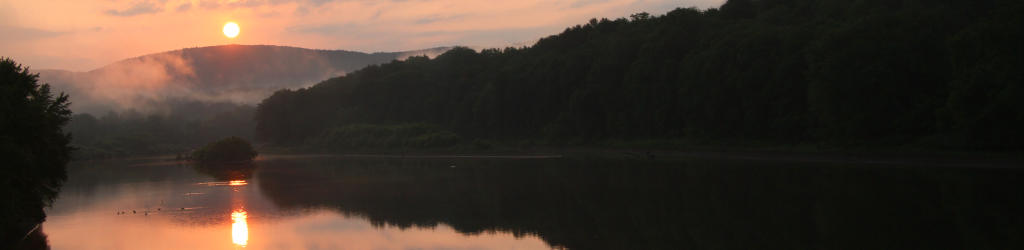
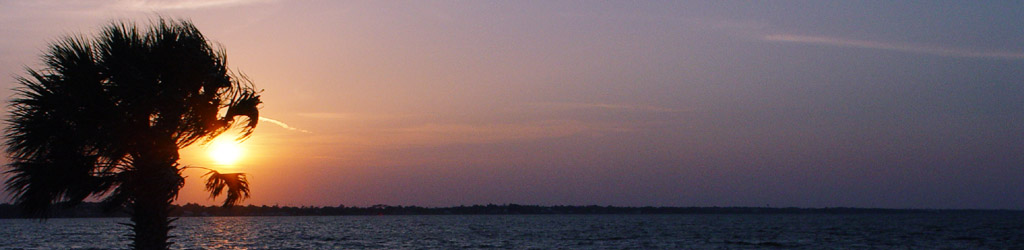
pre-sunrise twilight on Jordan lake
The Insuperable Mr Bugg (who has abandoned his blog and now relies on [urk!] social media, so you can only see his photos if he’s your ‘friend’ or whatever, while I welcome everyone) and I went down to Jordan Lake for sunrise yesterday, and it performed as typical for this area, which is to say, not very well. Colors peaked a little higher than this, in that the clouds got a pinkish tinge for a few minutes, but that was it. And this revealed one of the negative aspects of the “golden hour,” those times right around sunrise and sunset where photography is greatly improved by the color change in the light. Because yes, there was still a bit of a golden hue to the sunlight for a while – but only if you had the sun at your back. Facing anywhere towards the sun meant dealing with blinding glare and primarily silhouettes. Of everything.

flock of great blue herons Ardea herodias herodias crusing past just before sunrise
This is not an area where the great blue herons (Ardea herodias herodias) tend to flock, so seeing a flock cruising past was notable, if not the most photogenic. Sure, if the sun were actually up then it might have been better, more light on them and faster shutter speeds to make things much sharper, but they chose the time, not me.

The distant (now) osprey nest was visible only in silhouette for the entire time we worked that portion of the lake, but at least we could make out some activity therein.

pair of osprey Pandion haliaetus on silhouetted on and near the nest
This is cropped significantly, but an osprey (Pandion haliaetus) was easy to make out on an adjoining branch, not to mention that I’d seen it arrive. What I wasn’t terribly sure about was if the nest itself was occupied, or if that was simply evidence of the supporting branches – there seems to be something in there, but it also seems a bit wide in comparison to the other. Not that this is bad of course, just, you know, in comparison.

But a subsequent image answered that question.

lone osprey Pandion haliaetus silhouetted as it approaches empty nest
It was definitely not a branch making that hump in the nest, and I even checked the angles of these two images carefully to make sure that I hadn’t moved significantly along the lakeshore between them and changed details through parallax. Neither of the osprey were choosing to do any fishing early in the morning, but another image that I have might explain why, since one of the them is arriving with a long stick, so they’re still working on the nest and likely haven’t mated yet. Eggs will still be a little while, much less the frenetic fishing activity that comes when the young are born. We’ll keep an eye on it – but in the afternoon, when the sun has switched sides and is shining on the nest rather than behind it.

Still, the light provided a little to work with, for the few subjects that showed up in the right direction.

spotted sandpiper Actitis macularius foraging halfheartedly on a rock in the lake
Normally this distance and detail wouldn’t be enough for me to confirm identity, but this spotted sandpiper (Actitis macularius) displayed the bobbing motion that is typical of the species when meandering around his Piece of the Rock (stay with me here.) Plus I’d seen one nearby earlier, maybe a hundred meters from this spot. I chose this particular angle because it was the only one that showed the catchlight in the eye.

A turkey vulture (Cathartes aura) passed nearby and caught the sun, differentiated from the black vultures that were flocking and doodling around the entire area.

turkey vulture Cathartes aura overhead catching the morning sunlight
The sunlight and the angle really brought out the silvery undersides of the primary flight feathers on the wings, turned more bronze by the early sun, plus we’re now close enough to see the red head of the species, which is actually difficult to make out even at a moderate distance. Both vulture species soar with their wings held at a slight dihedral, a shallow V-shape, which helps distinguish them even at a great distance from ospreys and eagles, which hold their wings flat in a glide. And of course the coloration under the wings (silvery here, white ‘palm’ patches for the black vultures,) is the next characteristic.

Mr Bugg wants credit for spotting the following one, so if you’re one of his ‘friends,’ you can do so.

Carolina wren Thryothorus ludovicianus singing with something in its beak
I have a sequence of frames that I know were taken when this Carolina wren (Thryothorus ludovicianus) was singing, and in only one is the beak even slightly open, while you can see the standing throat feathers here that usually signify vocalization. In other words, it was talking with its mouth full, perhaps trying to entice a female with this magnificent capture, which is probably about as effective as wearing the hood up on your ‘hoodie’ in class. C’mon, that’s smaller than a ladybug! Put some effort into it!

Now, we’d seen a couple of bald eagles (Haliaeetus leucocephalus) while there, but only quite a ways off and silhouetted by the sky, barely distinguishable as eagles. Then we switched to another nearby location, putting the sun more behind us as we looked out over the lake, and there the eagles were playing hide-and-seek for a bit. Our first encounter netted too few images of worth, as the eagles were close, but obscured by the trees rather than out over the lake in open sky. Eventually, however, a pair began wheeling together, first several hundred meters off, but finally drawing close enough for something worth keeping.

pair of bald eagles Haliaeetus leucocephalus wheeling together in non-aggressive manner
We watched what I can only assume is the same pair wheeling together in wide circles for quite some time; there were no aggressive or even playful moves, and in fact no attempts at any contact were visible, but no fishing behavior either. I suspected courtship, but cannot confirm this in any way.

Watching without aid, they were difficult to tell apart at first, but the photos helped illustrate how to distinguish the two.

bald eagle Haliaeetus leucocephalus showing coloration that may indicate transitioning into fourth year
While ostensibly showing ‘adult’ coloration (meaning four years or more old,) we can see dark edges to the tail feathers as well as that dark patch behind the eye; to me, this likely indicates that this one is just transitioning into its fourth year, molting out the different plumage that they have at earlier ages. From the long sequences of frames that I gathered, this one was mostly holding the lower position in circling, and I’m thinking this might mean it was the female, being courted by the male from above. But that’s all I have to go on, and like I’ve said before, I’m a photographer, not a birdyologist.

bald eagle Haliaeetus leucocephalus showing fully adult coloration
While this one shows very clean white head and tail feathers, as well as that damaged feather out near one wingtip, obviously not from molting, so easy to tell apart from others. Potentially older than the previous eagle from that coloration, but beyond year four it’s impossible to tell, and since it maintained upper postion all throughout the circling, I’m inclined to call it a male, but again, I’m inclined to do a lot of silly things.

pair of bald eagles Haliaeetus leucocephalus in midair encounter, not distinctly aggressive
Throughout nearly all of my frames, there is no evidence of the talons dropping as they got close together, which would be an indication of territoriality; eagles are such heavy and slow flyers that they cannot simply rush one another as smaller birds might, but use their slow gains in altitude and repeated wheeling to bring themselves into a position above their opponent to pick up speed in a dive and attack, so even when being nasty to one another, often times they simply look like they’re just sharing airspace without concern. Here, however, the upper one has its talons extended, though the lower one wasn’t rolling to meet these (as they often do, even turning upside-down,) so I still don’t think this is aggression, but perhaps overtures to mating. You know, like how we rush at a potential date with our hands outstretched like claws to show interest. That’s not just me, right?

Here’s the full-frame version, and this is at 600mm, so you know they were pretty distant – I certainly couldn’t make out those talons from this.

full frame of previous image of bald eagle Haliaeetus leucocephalus encounter, demonstrating distance
Nothing ever came of this that we saw, even when they circled overhead and shifted laterally by hundreds of meters, so if it was courtship, the male was having my luck. They drifted off and we were at the end of our session anyway, not to mention cold from the low temperature and wind of the early morning, so we packed it up. But I have a couple more images to share, from just a little earlier.

possible male bald eagle Haliaeetus leucocephalus overhead looking down at photographer
During the circling behavior, they would occasionally separate for brief periods and apparently cruise off in different directions, but never for very long, During one such period, Notchy here passed fairly low overhead, and for once, autofocus remained cooperative even as I started craning over backwards to track him. Meanwhile, he appears to be paying attention to me in return, though from the sequence of frames I didn’t hold his interest for more than a few moments. Still, we need to go in closer for those eyes.

tight crop of previous image of bald eagle Haliaeetus leucocephalus overhead
Same frame, but now at full resolution, and if I could only see the left eye, I’d say he was staring right at me, but the right eye seems to say otherwise. Is this strabismus, or can eagle eyes do that (like chameleons,) or is this simply a trick of the light? I don’t know, but it’s faintly disconcerting.

One more, because.

bald eagle Haliaeetus leucocephalus in shallow glide
I just liked this one for the position, especially the wing over the head, and for once I captured some good light on the eyes. From examining the other frames, I can tell this was actually a different one from the pair above, much earlier. But overall, these all made the last hour far more productive than the previous two, and I fired off a lot of frames – I’ll only keep the best of course, but when they’re interacting, often times singular frames display something crucial that isn’t immediately apparent, so I always go through them carefully. We’ll see if anything else of interest pops up during the sort.

Meanwhile, more images of other subjects will be along shortly – I’ve been more productive the past two weeks that I was for the first two months of this year. No surprise, really, because winter and spring and all that, but it’s good to get back into the groove again.

Just once, part 15

pair of mating  Orthonevra nitida on small flower buds
These two are small, so it’s no surprise that I only have one example of images of them, though I think I might have seen another last year when I didn’t have the camera in hand. This is a type of Syrphidae, or the hover fly family, known only as Orthonevra nitida, and the eye pattern is apparently specific to the eastern half of the continent.

Why do the eyes look like this? I have found no explanation, and even idle uneducated speculation (well, my own, anyway,) hasn’t provided a clue. Given the other markings and even the wing veins, I’d be inclined to say it was camouflage, but likely not from blending in, since hover flies routinely alight on flowers that look nothing at all like this. However, it’s possible that they resemble something like caterpillar feces and thus avoid predation through germophobia. Then again, if you refer to this image, it’s easy to believe they do it on purpose just to freak out the stoned predators.

And while the short depth-of-field makes it far less obvious, this is actually a mating pair, though which one is facing us, I can’t say. But notice that one simple eye, right in the middle, staring right into our souls…

Exactly/mostly as feared/intended

I don’t know who comes up with these holidays, I really don’t – it’s makes little sense to celebrate something so banal. Why don’t we have National Spaghetti Day or Stay Away From Seattle Day while we’re at it?

[Oh. We do.]

But anyway, today/yesterday is/was Encounter Extraordinary/Rotten Luck Day, and since there are few, if any, holidays that I’ll let slip past me (because I’m a True Patriot™, and not one of these self-absorbed poseurs,) I am celebrating/celebrated it by chasing the total solar eclipse – which I realize that you might not have heard about here in the US, but there is/was a total solar eclipse today/yesterday across much of the country. I’d already driven north to be in the path, and so The Manatee and I are driving/drove off a bit further to get almost centered in the path for maximum exposure – or, you know, lack thereof. Whatever.

We’d been examining the cloud cover predictions something like twice a day to see what meteorologists said about it, but this is far from an exact science, only slightly better than economics, really, and so it is/was mostly down to luck. I am/was kinda psyched, because my luck with the barn-door tracker had been rather poor, and thus I was due for better luck with the eclipse itself, because that’s how luck and random events work – I have this on good authority from my gambler friends, who oughta know.

As you might recall, should you actually exist and should you have read anything else here, I have/had plans to try for two things on top of the eclipse itself: earthshine on the moon during the eclipse, and comet 12P/Pons-Brooks, which is/is presently in the sky rather close to the sun and predicted to become visible when the sun goes dark – both of these were what the barn-door tracker was intended to help with, since they would require longer exposures. Without that help, however, I am/was forced to resort to higher ISOs to keep the exposures brief.

So how did it all go?

Pretty terrible, really. Cloud cover was near-complete at the time of totality and I got nothing at all worth posting about, and would have nothing here if it weren’t for recognizing this stupid holiday. Not too shabby at all, I must say. The day started out raining, but quickly cleared to a cloudless sky that remained that way for the hour-long drive to be in peak path. Our first choice of a location turned out to be packed, even well over an hour ahead of the start of partial, but without much poking around we found a church [urk!] parking lot that was both empty and not blocked off, and set up shop. Meanwhile thin, high cirrus clouds had started rolling in, and we despaired about seeing the comet or even the planets when totality struck. However, it was an exceedingly pleasant and warm day for Ohio in April, and thus easy enough to hang around outside the car while we waited.

Now, the solar filter material that I had gotten well in advance turned out to be pretty wretched material, or it might have been the pieces of glass that I sandwiched it between to keep it in good shape and easy to handle, but the results during the partial phases were not the slightest bit impressive.

partial phase of total solar eclipse of 2024, roughly 45 minutes before totality
This was about 45 minutes before totality, but the resolution is pathetic. I maintained a few frames as things progressed, but really, there isn’t much to see here except the reduction of the visible sun disk – the sunspots that I’d hoped for had never developed.

As before, the reduction of light from the sun was weakly noticeable, but not half as much as one would expect – about like deep haze, except the contrast and sharp shadows were still plainly evident. The sun itself remained impossible to look at without filtration (eclipse glasses et al) right up until a second or three before totality. But like before, I did a couple of comparison shots.

a pair of images showing relative exposure between 'proper' and 'sunny 16' settings
The image on the right was taken on automatic, allowing the camera to set exposure, while the one on the left was taken using the “Sunny 16” rule for a proper exposure in bright sunlight. Obviously, it was much darker than “bright sunlight” out there, roughly two stops less or 1/4 as bright (which actually seems high to me, since this was about 15 minutes before totality.) The real darkness rolled in only moments before total, and once that struck, I was working without any filter.

solar eclipse of 2024 just as it enters totality showing 'Baily's Beads' of the sun peeking past the lunar terrain
I screwed up a little here, in that I was aiming for the ‘diamond ring’ effect of the last vestige of direct sunlight peeking past the lunar limb with the intact corona, but the exposure was too low for the corona. This effect is known as ‘Baily’s Beads,’ though, and shows the lunar terrain edge on, so you’re seeing light through the valleys and plains of the moon right along the edge. I’m not going to do it right now, but I’ll see if I can determine the actual terrain that the sun is peeking through later on. Meanwhile, if you look very closely towards the left of the effect, you’ll see the faintest vestige of a solar prominence, which you’ll see better, well, right now.

total solar eclipse of 2024 showing multiple solar prominences around edges of moon
Because of the faintly obscuring clouds, I hadn’t bothered to set a ‘proper’ exposure for the corona, so this is less than I’d aimed, but the pinkish solar prominences are easily visible, and if you look closely below the one on the left, you’ll see another faint, wispy one extending off into space. Of course, this is all relative, since that’s probably several times longer than the Earth is wide.

But moments later I exposed more for the corona.

total solar eclipse of 2024 exposed more for the corona
Once again, this was plainly visible without aid, and even the tiniest pink spots of the prominences could be seen by naked eye, but the sun is actually quite small in the sky so of course the long lens helped a lot. The clouds obscured less than expected and Venus and Jupiter were immediately visible at totality, even with the clouds visible in the sky, but I didn’t even bother with looking for the comet. My attempts at capturing the eclipse, Jupiter, and Venus lined up in the sky with a second camera came to naught; I literally just fired off a few frames on autoexposure between the various other images that I was trying to capture, but you know, handheld images of ‘stars’ never turn out well.

I did, however, make several different exposures in the attempt to bring up earthshine, but on initial examinations, no details were showing up before the glare from the corona overloaded the frame. At some point later on, I’ll bring them into GIMP and play with the light levels, see if anything at all was captured, but I suspect the difference between the brightness of the corona and the dimness of the earthshine is just too great.

Annnnddd I did successfully capture a ‘diamond ring’ at the end of totality – not quite what I was hoping to get, but it suffices.

direct sunlight beginning to emerge at end of totality during solar eclipse of 2024
I had alarms set and was ready for re-emergence, but they weren’t down to the second, so I just fired off a sequence of frames as it began – they very soon descended into pure glare. Exposure was still set for the corona, so this was 1/60 second at f6.3, ISO 200; I probably should have had a much smaller aperture to try and produce a starburst, which would have either slowed the shutter speed awfully far, or pushed the ISO much higher to compensate – tricky to get correct, and the conditions existed for a mere second, so no opportunity for experiments. Maybe next time around.

[Unless I get a whole lot of money to travel, the next one for North America will be in 2044, and it’s unlikely this old fart will be attempting to capture that one. So, you know, donations are welcome…]

Later on I’ll bring up the brief video that I captured, scanning the entire surrounding horizon because the ‘sunset’ glow in 360° was indeed visible, the benefit of being out in open farm country. But this post has taken a long time to put together, especially since I’m still visiting with friends and cannot devote a lot of time to it, so I’ll close with a pair of images taken by my companion out there, The Manatee – I was unaware that he was doing so, otherwise I would have looked even more dashing, if you can imagine that.

image of the author during the partial phase of the solar eclipse of 2024, showing long lens and solar filter, taken by The Manatee
This was during the partial phase probably not too long before totality, taken with a [bleagh] smutphone, and I don’t have a timestamp and so cannot tell you how far along the eclipse was – maybe it’ll be edited in later.

image of the author during totality of the solar eclipse of 2024, taken by The Manatee
And this was during totality, when the surroundings were all ‘twilight’ and dim, but bright enough to see what you were doing. If you look closely at the side of the car by the taillight, you can see the reflection of the surrounding orange glow from the horizon, and if you look at the bottom edge of the widow on the back door, you’ll see the reflection of the eclipse itself – not detailed, but that’s the bright spot.

But at least I tried to get I got a few decent images out of it, and got some gaming and entertainment out of it as well. I’m cool.

Note to self: Delete inappropriate options before posting. Don’t forget this time, you putz.]

Ze Frank is back… again

Yes indeed, we have more True Facts from Ze Frank, and this time, they’re about shrimp. Not one of which has anything to do with eating them, either.


Naturally, I can’t let it go at that, because ego. Plus the fact (true) that I’ve had two of the varieties that he featured close at hand, when I maintained a basic saltwater aquarium during my tenure in Florida. The first would be the pistol, or snapping, shrimp:

bigclaw snapping shrimp Alpheus heterochaelis in home aquarium
I actually had this one for a while before I stumbled upon the correct species, which is bigclaw snapping shrimp (Alpheus heterochaelis.) Which helped explain a peculiar occurrence some weeks previous to that, because I’d been almost asleep when I heard a sharp ‘clink!‘ from the aquarium, far too loud for it to be from rocks moved by any of the small crustaceans that I had in there. I actually got up and examined the tank thoroughly, because it sounded like the glass had cracked, but of course I found nothing. Later on when I’d discovered the species and its habits, I realized what I’d heard.

bigclaw snapping shrimp Alpheus heterochaelis peeking out of weeds in home aquarium
I only have a handful of photos, because my specimen here was quite shy and tended not to venture out in the light often (unlike the little crab alongside her, which was quite brazen.) I don’t recall how I’d captured this one, though I certainly wasn’t treated to its namesake attack, but I do recall being down on the docks at night, examining things in the water by flashlight, and hearing the occasional sharp report from nearby, trying to determine what caused them; I now know that I had no hope of actually seeing it in action.

But it was on one of the nighttime foraging trips that I snagged the other example, which is seen in the video but not named:

grass shrimp Palaemon paludosus perched against glass in home aquarium
This is a grass shrimp (Palaemon paludosus,) and the lighting is faintly deceptive; I was using an off-camera flash angled to bring up the detail, because this species is really transparent, and a lot of my previous photos had the shrimp hard to make out against the background. Curiously, while I was shining my flashlight down into the water alongside the dock one night, I saw two tiny ruby reflections but nothing else, and finally slipped a small bowl into the water underneath it. I captured it, lost it to my great chagrin, and then recaptured it (or another just like it) in the exact same spot on the piling; the ruby reflections were from those eyes, though I never reproduced the effect in photos. Only about 20-25mm in length, they (I eventually obtained several) were very fond of drifting through the water propelled by their pleopods – I’m not sure where Ze Frank got his info, but that’s the name of those little legs under the abdomen, that you unfortunately cannot make out in this image. Yet if danger threatened, or if they simply touched something they didn’t like with their antennae, the tail would snap down and propel them backwards several centimeters in an eyeblink. They were also easy to care for, since they foraged for algae and debris on clumps of weeds, which I’d replenish a couple of times a week while getting fresh water – none of that stuff that you see in the background is growing.

I haven’t the faintest education in marine biology, but I was picking up a significant amount just by having the aquarium – and easy access to the sound of course. Never did spot an octopus, though, one of my great regrets.

You can’t escape

Normally, I avoid the ‘popular’ news items (or, for that matter, nearly all news items) because frankly, there are enough sources for such out there and I certainly don’t need to offer my two pfennigs, much less jump on any bandwagon, and I have established my own typical subject matter herein anyway – stay in your lane, kind of thing. At this point in time, however, the ‘greater public’ is bringing its focus more into my realm, and so, while it might appear that I’m becoming one of the crowd, it’s more accurate to say that the crowd is starting to cluster around me.

Or not. But what we’re talking about is the upcoming total solar eclipse across a great swath of North America, and Randall Munroe of xkcd has featured not one, but two eclipse-themed comics recently:


Both are quite accurate, though right now I’m identifying more with the second, since I’ve been doing, and seeing, the exact same thing: cloud cover for where I will be is predicted to be less-than-ideal and getting worse. The accuracy of weather reports recently has dropped – things getting too unpredictable what with, you know, nothing at all happening, according to Republican fuckwits – and so I can hold out hope that the skies will be clear enough at the crucial time without being too blindly optimistic, but I’m also prepared for the likelihood that I’ll see nothing.

Small update on the tracking motor, because I know you’ve been hanging on every word (If you even exist, which is unlikely): I said I had two options for getting it working, and option one failed to pan out. Option two was using a different motor, requiring a driver chip that I’d ordered. This arrived the day before I was scheduled to leave early in the morning, and I spent far too much time getting it all together and wired and programmed. But it doesn’t work. The whole shebang is still coming along, on the chance that I figure it out and get it working before Monday, but it’s not looking good right now – call it a weak, ‘maybe.’ We’ll see.

A little content

I’ve been a bit busy of late, and haven’t been taking the time for posts – this will continue a little while longer, too. So I’m going to throw something down pretty quickly, the frozen pizza of the online world, because we need something here.

First of all, while this image isn’t the slightest bit impressive or even interesting, it’s evidence:

mostly hidden American five-lined skink Plestiodon fasciatus, venturing out as the weather warms
It’s even hard to tell which way the head is – to the lower right I believe – but this is an American five-lined skink (Plestiodon fasciatus,) the first for the season on Walkabout Estates at least, and it dates from March 31st. Earlier that same day I’d seen something scamper up a wall and under cover, and I thought I’d seen evidence of stripes, which is something that the anoles don’t have. A few hours later on, I heard a rustle in the leaves too close to my feet as I crossed the yard, and waited for less than thirty seconds before this one revealed itself. I knew their habits and continued waiting, camera raised, but this guy perhaps knew my habits a little too well, and had barely raised is head from the leaves before it hurtled off across the yard, without pausing, and disappeared into cover near the wall again – the camera never had a chance to even autofocus. So this is all we have for now.

We do slightly better for an anole.

Carolina anole Anolis carolinensis basking on crook hanger
This was a day later, and in The Jungle out front, well removed from the skink’s territory; this represents the first appearance of a Carolina anole (Anolis carolinensis) from the front area, near the oak-leaf hydrangea that serves as a favored habitat. This one is roughly half adult size, and was inclined to bask while I was there so I avoided disturbing it. A little later on as I brought The Girlfriend over to see it, the anole had moved from this plant hanger (or in our case, the Japanese beetle trap hanger) to a bush beyond it and favored us with a territorial display of its dewlap, naturally while the camera was no longer in hand.

Later that same day…

hatching eggs of probable lady beetles coccinellidae
The eggs seen earlier on one of the rose bushes were hatching in the evening, and I attached the reversed 28-105 for detail pics, since the entire egg cluster didn’t exceed 6mm in spread. It’s not quite as sharp as it should be, but not only was I working freehand with a sharp focus range measured in millimeters (if not fractions thereof,) I was attempting to focus by headlamp since I have to redo a lighting system for the macro flash rig. Excuses excuses, I know, but buy any print and you can complain more. These are most likely some form of lady beetle (Coccinellidae,) and will help rid the bush of aphids, though my own efforts seem to have done a pretty damn good job.

But while we’re here…

first blossom from white rose bush
This is not from the bush with the lady beetles, but another obtained at the same time and just two meters along the deck – it was blooming the other day, so I shot it in passing. Should’ve bracketed exposure to produce a version without blowouts of the highlights, but oh well.

And finally,

juvenile green treefrog Dryophytes cinereus posing patiently
While I still had the 28-105 affixed from the egg shots, I poked around the yard and revealed this young green treefrog (Dryophytes cinereus,) who cooperatively stayed put as I maneuvered around in the ivy to get this perspective. This is half adult size, so roughly 30mm in length. If you look closely at that reflection in its eye, which is the macro softbox attachment that I designed, you can see the hotspots that it produces: a semi-rectangular one at bottom near the flash head itself, and then a crescent from the reflective bowl on the far side. I’d like to correct this and produce a nearly uniform circle, but I also don’t want to cut down the light by using a more diffuse surface, so I may be playing with the design again – perhaps a more oblique angle from the flash head so what transmits is mostly the reflection from the bowl. Then again, did you notice it before I pointed it out? Maybe I worry about it too much…

There are a few more pics in the queue, and they’ll be along shortly. Try to contain your excitement.

Just once, part 14

vole, likely meadow vole Microtus pennsylvanicus, realizing the photographer is getting closer
This week, we have a meadow vole, or at least I believe it is (Microtus pennsylvanicus, if I’m correct,) coming to the realization that the guy with the big black thing in his hands was actually closer every time it looked up. Meadow voles aren’t particularly scarce, but they have preferred habitats and are easy targets for numerous predators, so this represents perhaps only the fourth time I’d seen one in the wild and the first time photographing one, though I’d handled a couple while doing wildlife rehab. The funny thing is, so few people have even heard of them; many more, perhaps, have seen them, but mistook them for rats or rabbits solely from that unfamiliarity. They’re benign and unassuming little herbivores, and probably do less damage to gardens than rabbits.

This was at the rental condo when we were staying out at North Topsail Beach, NC, one spring, and a pair could often be seen near dusk right out in the back common area. Already out there to photograph ospreys or eagles, I took the opportunity to practice my stalking, creeping closer as the vole looked away and pausing as it looked up, which worked far too well. Even when the vole decided that I had approached nearer than seemed prudent, it merely hopped over closer to a thicket where escape was easier, and resumed eating.

In size, it was probably a little larger than your closed fist, so yes, about rat size and smaller than adult rabbits, but on a par with juveniles. Pretty cute, and I need to add more images of them to my stock.

No foolin’

I said I’d be back to ‘fess up, and I keep my word – eventually, anyway. I mean, there’s still time to make good on some of those things in my past…

In this case, however, we’re talking about the month-end abstract. But first, another image from the same session, to see if this helps things along any.

hairball clog from a sink in Chernobyl
Is it more evident now? I can’t know if it helps, or how much – I was there, of course, and responsible for the very abstract nature of the images. Had I taken them straight, it might have been a little more evident.

Last chance to figure out either or both, before we move down to the reveal.

.

.

.

.

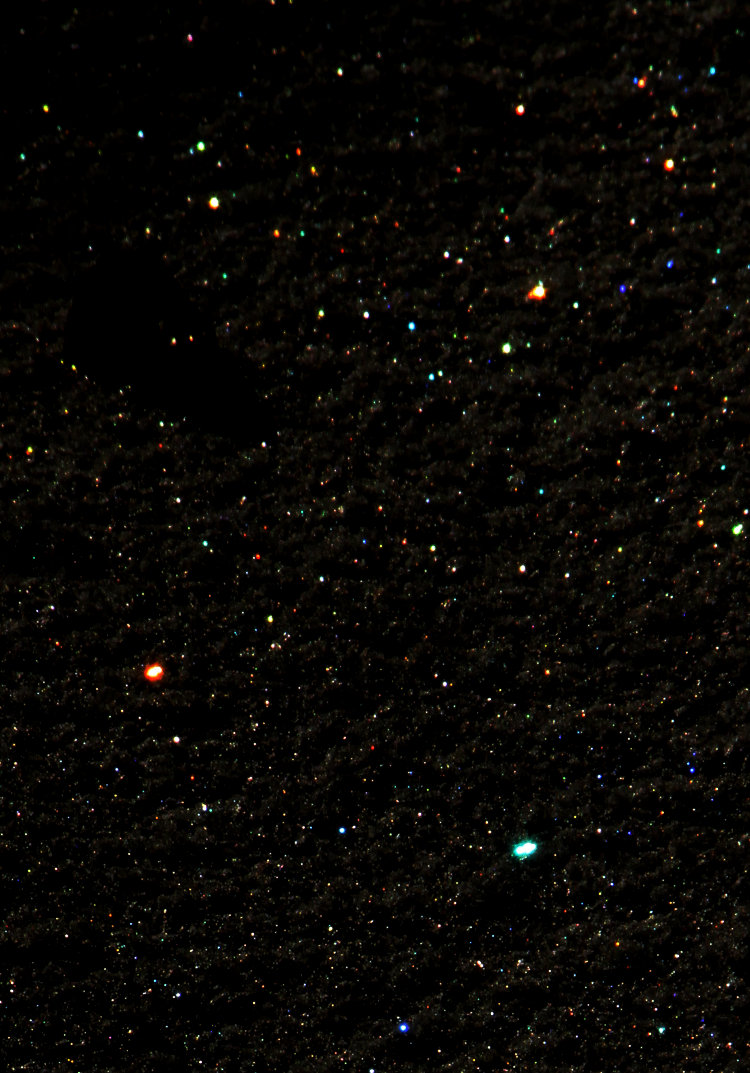
We had a lot of scrap lumber to get rid of, which would have necessitated a trip to the landfill, but we also had a fire pit, and I’m a guy, so the obvious solution was to simply burn it off. I’d spent a few hours in the afternoon continually feeding wood into the little bowl of a pit that we have, then let it die down for the night. Much later, I went out to check and see how well the remaining charcoal was burning off, knowing that it might remain hot coals completely overnight. Stirring around the ashes produced quite a bit of heat and a nice bright glow, and the appeal was obvious. I got the camera and tripod, and with a few frames determined the best length of exposure. Then I started experimenting.

The month-end shot yesterday was a 20-second exposure while slowly zooming the 18-135 lens in, thus the streaks. You’ll notice the ‘dotted’ nature of most of the streaks, which came from the lens itself; still photo lenses aren’t made like video lenses, with a buttery smooth zoom function, and so they tend to be slightly ‘sticky’ or ‘grabby’ as they’re turned, and that’s what you’re seeing: tiny little jerks and twitches as I attempted to move the zoom ring as smoothly as possible. I actually went back in and tried it with an older lens, a manual focus Vivitar 28-200 that has a push-pull zoom, but it doesn’t maintain constant focus (this close, anyway) while doing so, and the effect of getting softer as it got larger wasn’t better than what I posted yesterday.

And now the pic above. It shouldn’t be too hard to figure out, given what I just said, but instead of tracking the zoom, I let it be and simply leaned over and blew heartily into the embers themselves; all those squiggles are sparks flying free. I did make it a point to blow in a couple different directions, to even things up. I also did a few frames where I stirred around the embers during a long exposure, but believe it or not, the effect was barely noticeable – the embers moved too quickly during stirring to produce much blur, the majority of the exposure coming when they were still.

But maybe it gives you some ideas for your own experiments, so have at it!

Not March

And so we find ourselves at the end of a slowish and lackluster month, which needs to be saved by the end-of-month abstract – a tall order, for sure. Will it be able to rescue us from this dismal month? Let’s see:

dull orange, um, starburst?, in the darkness
Well, that’s certainly… dynamic, I guess. Intriguing. I dunno, what would you call it?

In fact, I’m not going to tell you what this is, even though I knew it would make the month-end the moment I unloaded the card. Well, not the moment, because I had to rename the files and open the thumbnail program, but when I saw it in detail at least. One of many experiments, this one seemed to be the best.

Oh, I’ll be back shortly to tell you what, exactly, this is, but I’ll give you time to figure it out on your own first. I’ll provide a clue, though: it’s not very big, and not very small. I had time to work, but in a few hours the opportunity was gone.

Have fun!

Much the same, but bright at least

pink azalea bush in full bloom
So, it’s more of the same images that I get every spring, because they’re all on Walkabout Estates, but it’s what I could get today and it’s cheery, so deal. It’s not pics of food or me dancing in a halter top, you know? Okay then.

One of the azalea bushes out front is in full bloom, while the other, which is right alongside, the same species, and planted at the same time, has only two open blossoms and the rest still buds. Go figure. It’s like that neighbor that’s always the first to get the Halloween decorations up.

Meanwhile, out back, we have even less.

white azalea buds still a little ways from blooming
This is from the white azalea bush, which is huge and healthy, just not ready to bloom yet. It always does very well, but it runs later than the others, usually about the time that the mantids hatch (which I hope doesn’t take place while I’m away, but if given the choice between mantids and the eclipse, well…)

The tall ginkgo (Ginkgo biloba,) planted in the yard, is slowly starting to stretch out.

first leaves from outdoor ginkgo Ginkgo biloba tree
You can see the indications that pine pollen season is well underway, and a little yellow thing that might be an arthropod, and might not – I didn’t see it when I was getting the shot, but I also wasn’t using the macro lens. The tree seems happy with its location, so we’re pleased with it, but it stands in marked contrast to the potted, dwarf ginkgos that spent the winter in the greenhouse.

exuberant dwarf ginkgo Ginkgo biloba tree seen through side of greenhouse
It wasn’t actually banging on the glass, which isn’t glass anyway, but that was the impression that I got. It and its sibling will probably move out in about two weeks – we still have some cold overnight weather to contend with. The ginkgos probably don’t have to be in the greenhosue, but we lost a few potted plants one year to a long cold spell that penetrated through the pot and soil, so the potted plants go into one of the greenhouses over the winter.

Now two for The Girlfriend.

Japanese silverberry Elaeagnus umbellata almost at peak bloom
In the past two days the blooms of this one started kicking it, and they’re one of her favorites because they have a very pleasant smell, despite the flowers being very small and unassuming. This goes by a wide variety of names, including Japanese silverberry, autumn olive, and spreading oleaster, but Elaeagnus umbellata is the biological name anyway. I felt sure that I’d identified it here before, but there’s no sign of any of the names in the tags, so I suppose I’d only featured the unidentified flowers or berries in previous posts. The only problem we have with the plant is that it’s a small tree, but leggy and a bit droopy, and sitting right by the gate as it does, it’s often in the way. I actually put up a simple arch to hold it up, but it stretches out over the edges and drops off.

Of course, what spring would be complete without the cherry tree?

Yoshino cherry Prunus × yedoensis showing older flowers and new cherries in development
The Yoshino cherry (Prunus × yedoensis) is doing quite well itself, shown here with some remaining late flowers (minus their white petals,) as well as a selection of developing cherries. The cherries never get larger than 8-10mm and are mostly pit, but the birds still appreciate them, so there’s a narrow window when I can capture images of those, a few weeks hence. This tree, along with the almond tree, tulips, and one of the rose bushes, has been receiving regular coatings of the deer repellent ever since it started to bud out, since the deer were far too fond of the new shoots and kept it cropped from its natural ‘weeping’ nature, but we’ve found that, by treating it early, the deer quickly discover that it tastes like shit and will only sample it a couple times a year to confirm that it still tastes like shit. Provided I maintain the repellent, of course.

[If you have the interest, it can be found here, Recipe #2 – a little involved to make, but works extremely well, and will even keep in a bottle over the winter. It’s concentrated, so mix about 1:10 with water and apply with a spray bottle.]

Naturally, we have a guest appearance by the blackhaw viburnum (Viburnum prunifolia.)

blossoms of blackhaw viburnum Viburnum prunifolia against clear  blue sky
There were plenty of ways to approach the blossom clusters, many of which I’ve done before, but I liked the contrast with the blue sky best this time, along with the abstract modern-fart shapes of the leaf shadows. Had you noticed them? Now you have.

It was warm enough today, so we have some critters too.

Carolina anole Anolis carolinensis perched on overflow hose
A pair, at least, of Carolina anoles (Anolis carolinensis) have been appearing the moment it gets warm, largely because I believe they spent the winter in the crack in the wall around the dryer vent pipe, so they never really hibernated. Here, however, one is venturing across the hose that drains the overflow from one of the rain barrels – it could have blended in a little better than this, but I suspect the brown color is to absorb more UV radiation. Let’s have a closer look, shall we?

closer crop of Carolina anole Anolis carolinensis

I never get tired of that mosaic-nature of their skin, even if the eye-shadow is a bit too 70s.

But in the downspout that the hose empties into, was another find.

half-sized green treefrog Dryophytes cinereus hiding in downspout stub
From having seen it there before, I suspected that this green treefrog (Dryophytes cinereus) was hiding down the spout, and wanted to get them both in the frame if I could, but my maneuvering around wasn’t kosher to the anole and it moved too far away to frame properly, so we have this one all by itself. I find it hard to believe that this exposed downspout remains warm enough during the overnight chills, even when it leads briefly underground to a longer drainpipe that empties a few meters further down the yard, but any number of treefrogs continue to use it, so what do I know? Meanwhile, we also need a closer look at this one.

closeup detail of green treefrog Dryophytes cinereus showing pine pollen
That’s enough to see that, even sheltered as it is, it cannot escape the pine pollen. Nothing escapes the pine pollen! Little chartreuse bastards (the pollen, I mean.)

One last, then I’ll let you go.

eggs, likely from ladybeetle, on underside of rose leaf with accompanying aphid
We received several rose bushes late last year, discards from a nursery, that got a head start in the adjunct greenhouse and have now been moved onto the deck. Despite being lined up together, only one of them proved susceptible to an aphid infestation – I blasted them off a couple times with a high-pressure water stream, and we’ve had a couple of overnight near-frosts since then, so their numbers have been decimated. The eggs seen here, however, look a lot like lady beetle eggs, which makes sense because aphids are their main food source, and if you look closely, you’ll see one aphid hanging out as if in defiance of this, below and slightly right of the eggs. Go ahead, stay right there, nothing will come of it, I swear…

So, that catches us up a little, for about an hour of shooting, and I feel more normal now. Well, normal for me

1 42 43 44 45 46 325