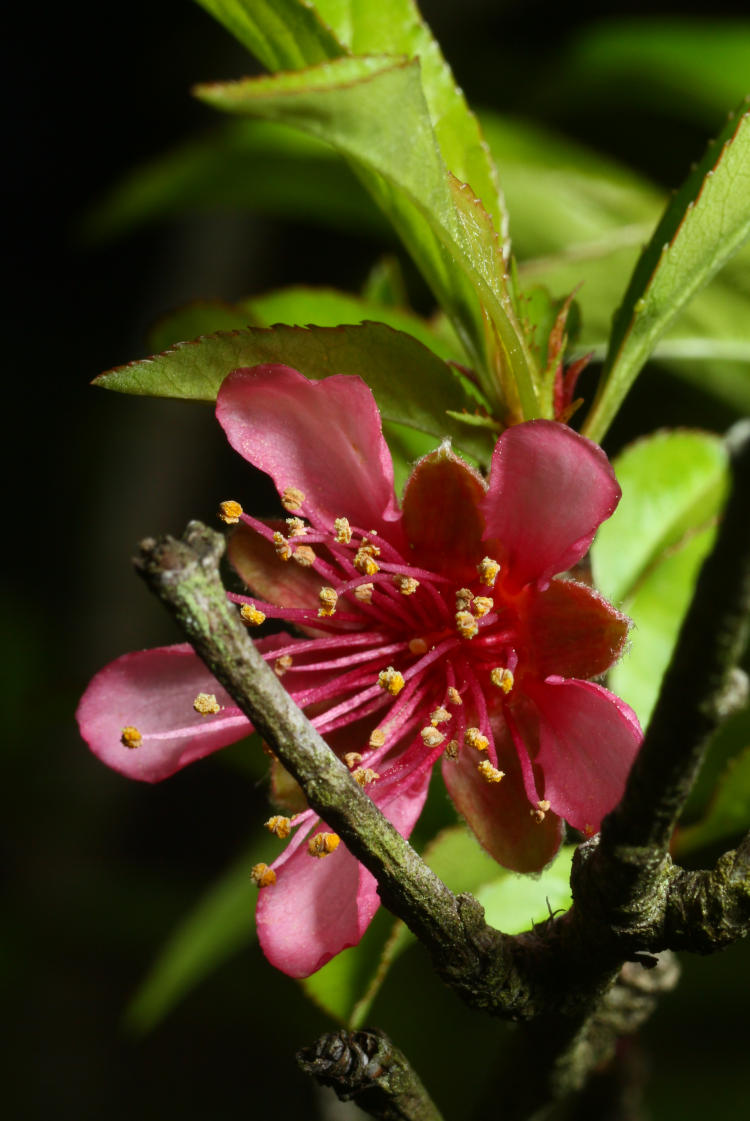
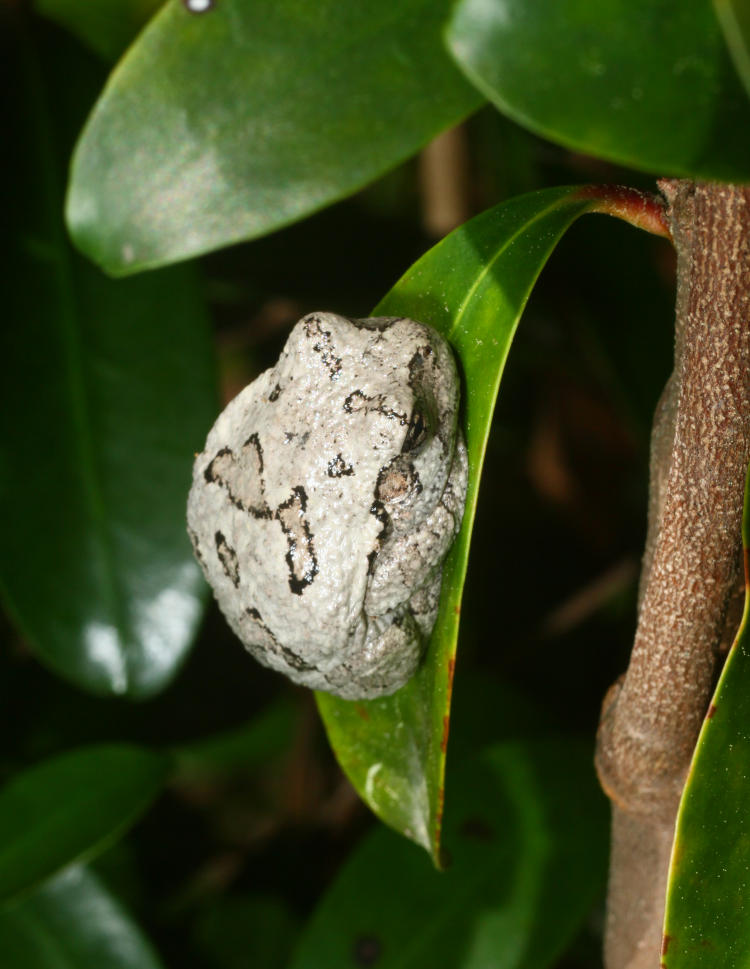
During a recent outing to Jordan Lake, Buggato and I received the barest cooperation from our subjects – enough for them to claim they were doing their part, but not enough to earn any tips over it, you know what I mean?
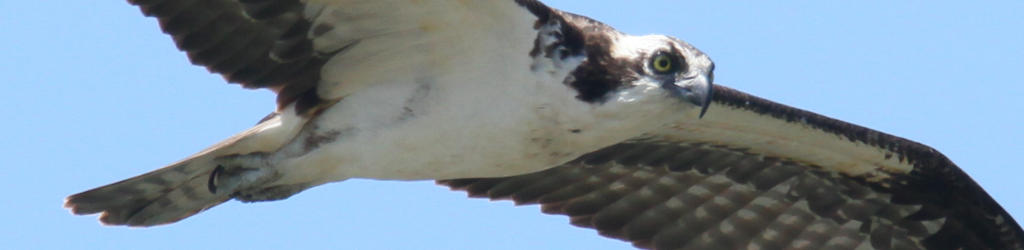
The animal subjects this spring seem to be slow in getting active, though maybe this is only perception, but I’m more than happy to put the blame solely on them. We saw a handful of osprey (Pandion haliaetus,) including one that circled for several minutes within easy sight, but it did not deign to even try for any fish, despite the fact that numerous fish were jumping from the water right in its immediate vicinity. Well, kinda – the fish were in the water, the bird in the air, but horizontally, mapwise, they were very close.
It’s not like it wasn’t paying attention, either.
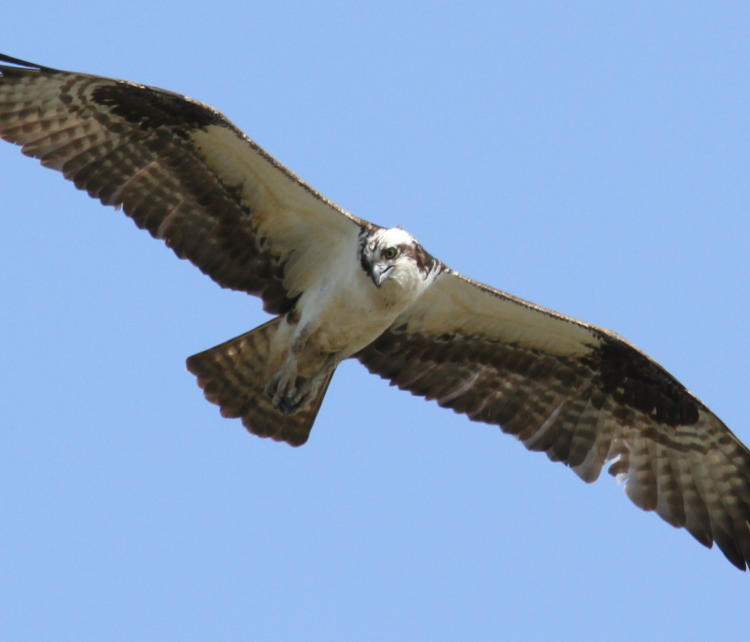
It was exactly the kind of conditions we were hoping for: clear skies and good light, later in the afternoon so the light could get underneath the bird instead of silhouetting it, the osprey sticking very close to us and reasonably low – what more could you ask for? Well, at least beginning a stoop for a fish, to be honest, or alternately, some courtship behavior. But no. We got circling as if it was bored.
I managed to snag a point when it checked us out momentarily.
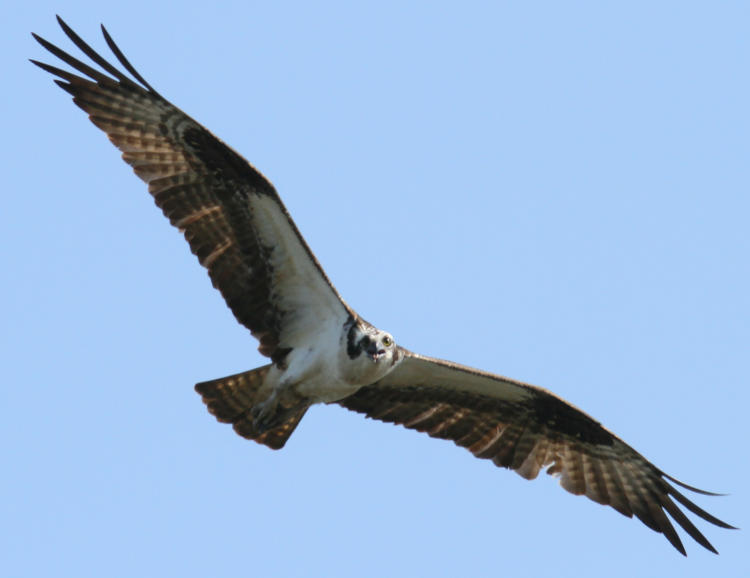
There was no alarm, no change in behavior, just the quick glance in our direction before resuming its scrutiny of the water, perhaps nearsightedly because, as I said, I could see the fish therein. I guess just not the right fish – perhaps none of them had their “GMO/Gluten Free” stickers visible.
Naturally, one engaged in a little bit of action, when we couldn’t see it at all, and then flaunted this by flying directly overhead, very low, and passing smack in front of the sun as we stated tracking it. The glare effect was actually pretty cool, and shows remarkable flare control from the Tamron 150-600. And for reasons unfathomable, it was actually the sharpest frame too.
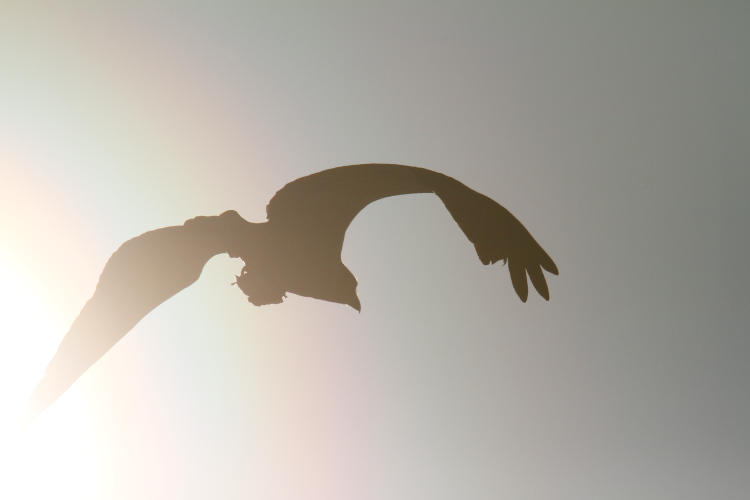
I was, of course, blind at this point, stumbling around screaming and clawing at my eyes though I never really lost my professional composure, and simply tracked the osprey by sound while this was happening. Doubt it not.
The next one I’m a bit proud of, because it shows that becoming familiar with traits of different species can help out a lot. There were countless turkey vultures riding the thermals that day, mostly higher altitude and largely ignored by me because I have far too many photos of turkey vultures. But as we were walking back to the car to change locations for sunset, I looked over a flight of vultures overhead carefully, more out of curiosity than anything. And noticed a different one. Turkey vultures fly with a faint dihedral, a minor V-shape when seen from in front or back, which can often be made out as they wheel in circles. They also have a little ‘droop’ to their wings when seen from below, the front edges of the wings canting backwards very slightly. So when you see something without these, flying with flat wings that have more of a straighter leading edge, you get a closer look.
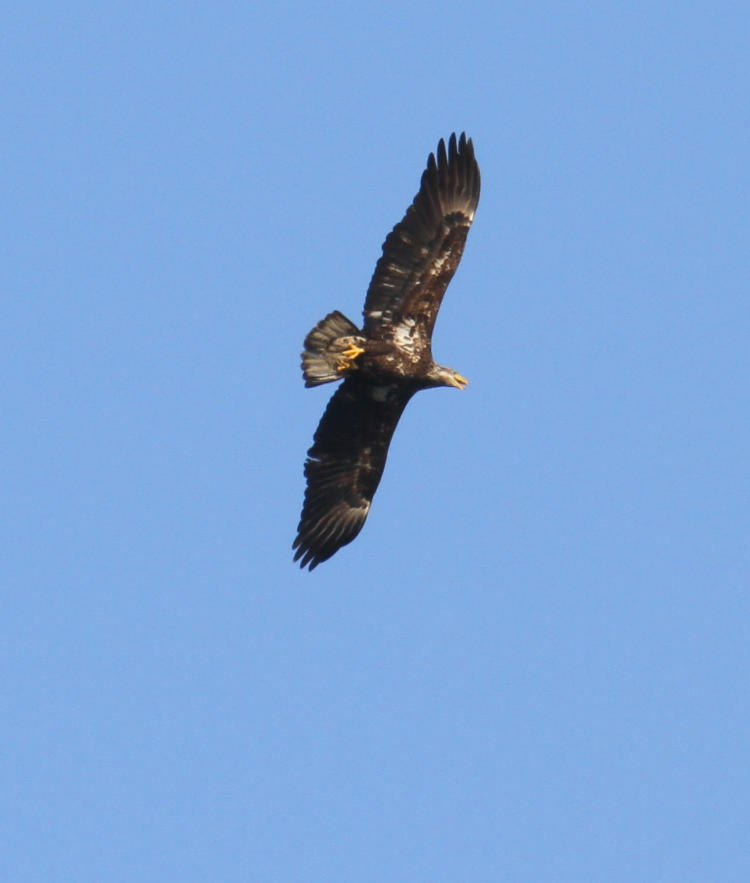
That’s a juvenile bald eagle (Haliaeetus leucocephaus) that was cruising around in the same thermals, almost indistinguishable from the vultures at a distance. From the color pattern I would almost say it was this year’s brood, but it seems far too early for that; it isn’t any older than last year’s, though.
We saw two or three adults as well (meaning older than three years, when their classic coloration appears) – again, maintaining distance and not doing any fishing at all, but worth a handful of frames at least. One of them was eventually seen wheeling around in the same flight of vultures.
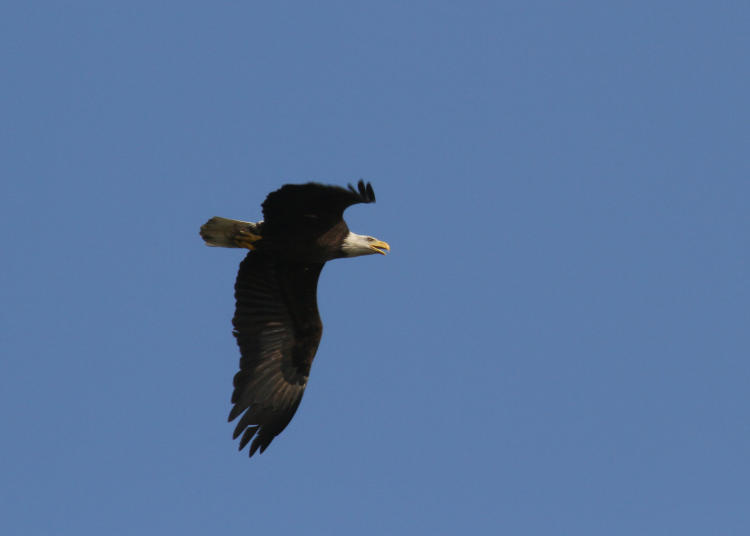
We should be in the middle of nesting season now, but I’ve seen no evidence of any yet, though this doesn’t mean much; it’s unlikely that they would choose a spot close to the busy boat ramps that serve as our primary lake access, and as yet, The Girlfriend and I haven’t taken the kayaks out for a look at any potential nest sites away from human activity. And even if we spotted one, seeing anything from such a perspective would be nigh impossible, at least until the young were fledging out and preparing to fly.
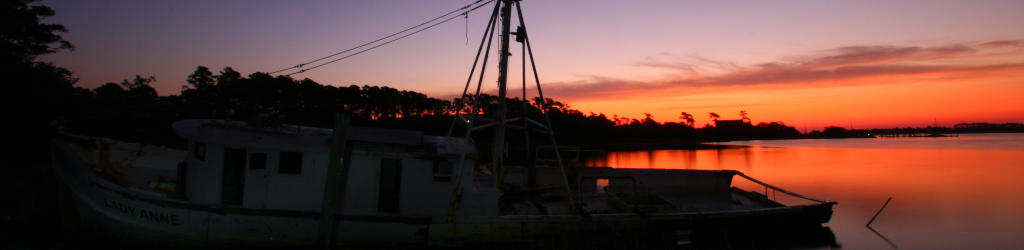
One of the reasons we were at the lake at that time was sunset, which didn’t look terribly promising because the sky was far too clear;
[Okay, I just have to insert this here. At this exact point in typing this up, The Girlfriend wanted to go down to a neighboring city to pick up some stuff for a project, and on the return, we elected to do a quick stop by Jordan Lake just to see what was happening – she hasn’t been since the conjunction, I believe. Anyway, I have more pics, and Buggato’s probably gonna be mad, but they’re going to wait until I get through the backlog of other photos/posts that I have – I’ll try to make it quick. We now return to our story…]
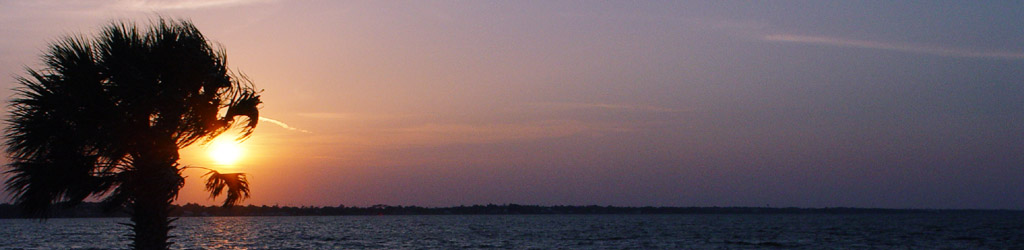
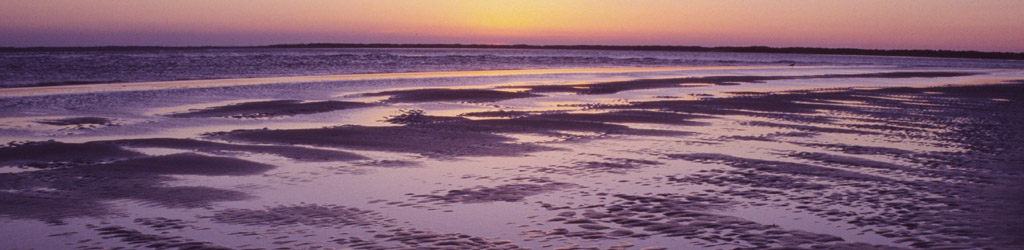
One of the reasons we were at the lake at that time was sunset, which didn’t look terribly promising because the sky was far too clear; the impressive sunsets require some scattered clouds at different levels and decent amounts of humidity. But they’re also unpredictable, so we stayed for the whole show. As it was, we got a couple of useful images.
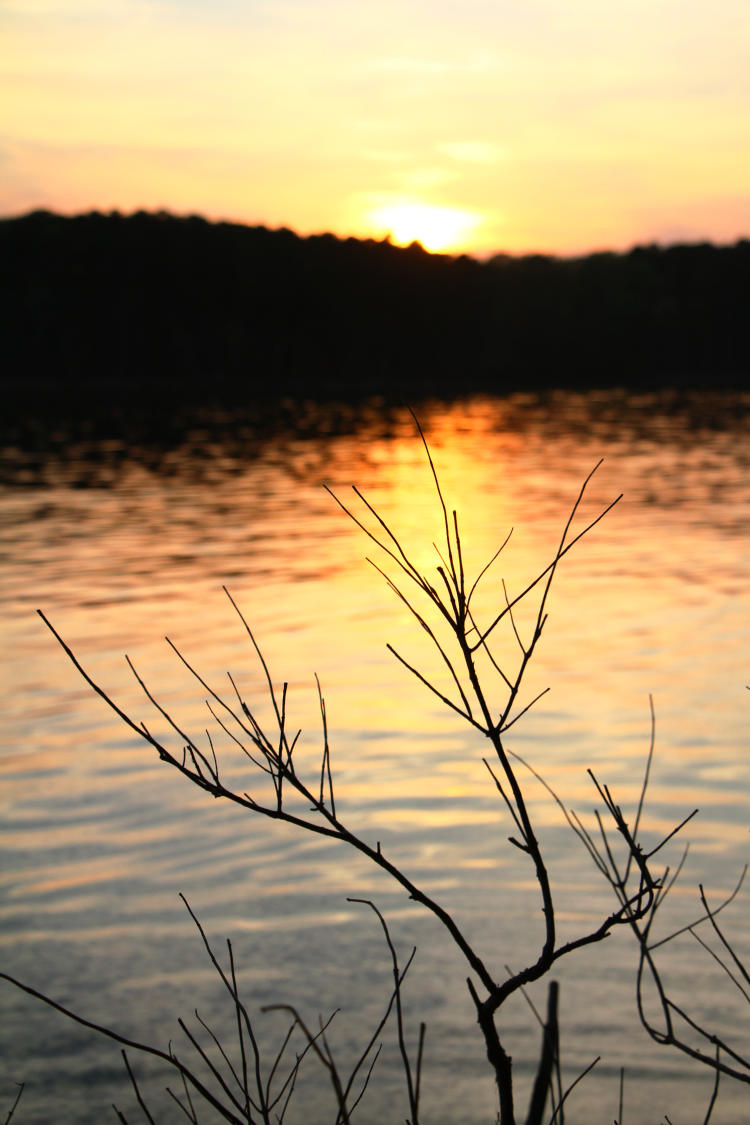
This is actually a demonstration that bracketing the exposure, and changing the contrast and saturation settings, is often better done with the camera than with an editing program afterward. I’d only used one choice of settings for this frame, and back home realized that it needed some contrast and exposure tweaking. But what this ended up doing is making the bright part of the sky too blotchy, not blended enough, almost oil-painting quality rather than airbrush, if you know what I mean. I find it acceptable, but far from ideal, and even when I’m not that impressed with what sunset produces, I’ve resolved to do more camera adjustments while on site.
And one more, a partial illustration.
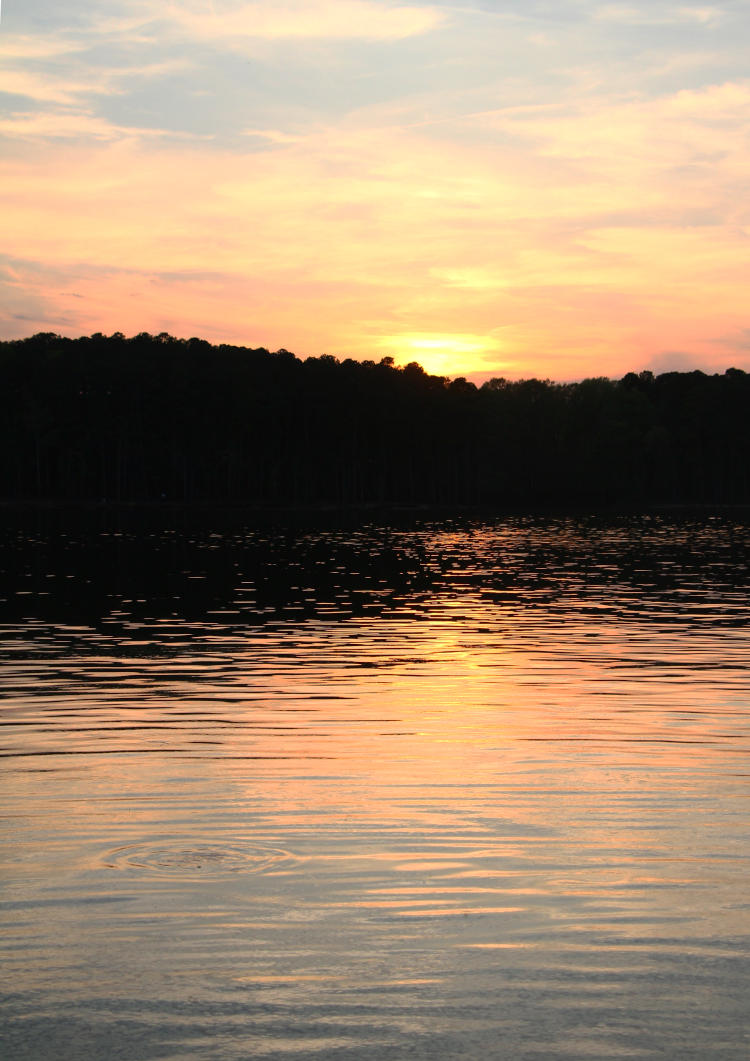
That little ripple ring at lower left is the aftermath of a fish jumping, in pretty much a perfect position in the frame – it would have been an excellent composition had I captured the fish in mid air. Doing this, however, would either involve a lot of luck or the reflexes of a CGI hero. Fish jumps are brief, and if you’re not directly expecting it, the fish is likely gone before what happened even registers, but even if you are expecting it and have the shutter half-pressed in readiness, capturing it still requires exacting timing; I’ve tried this with flickering snake tongues and it’s a damn site harder than imagined. I have actually managed it, but it was with a fish that was semi-predictably jumping in a faint pattern, and of course without any kind of compositional merit. Still working on it.
Potentially Related Posts:





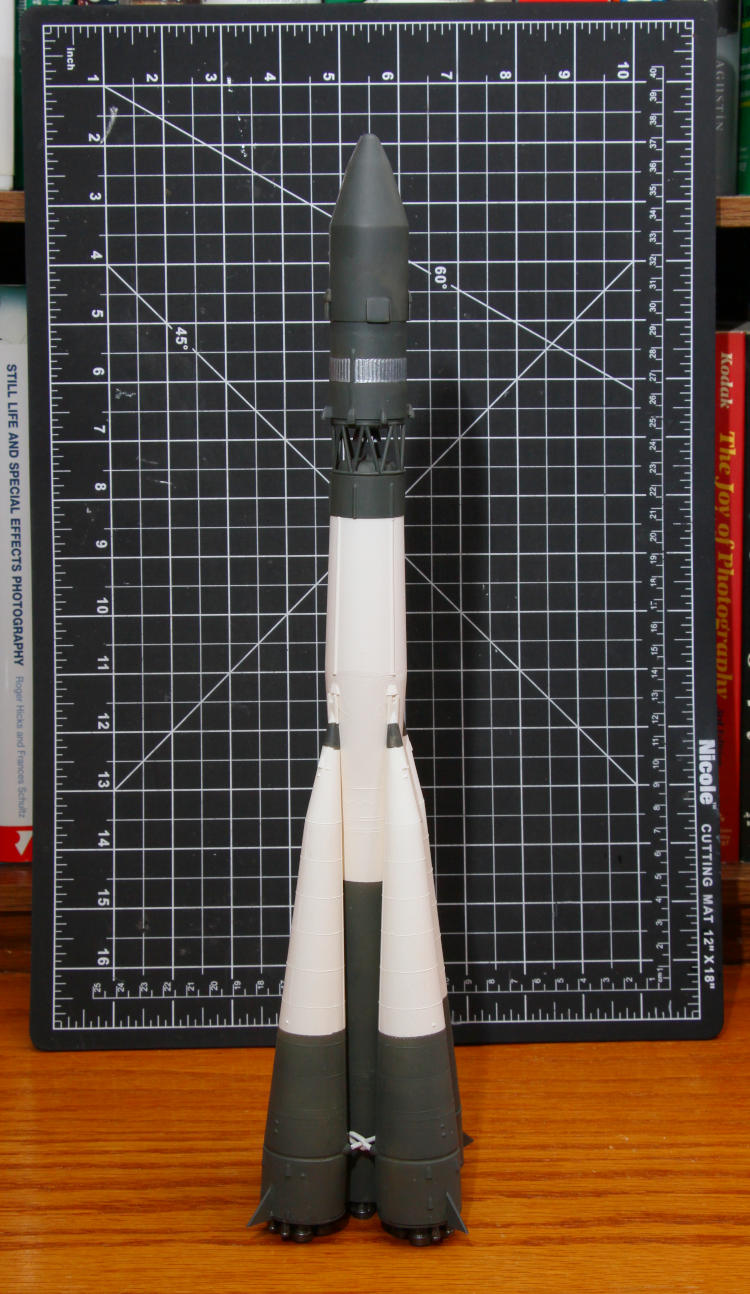
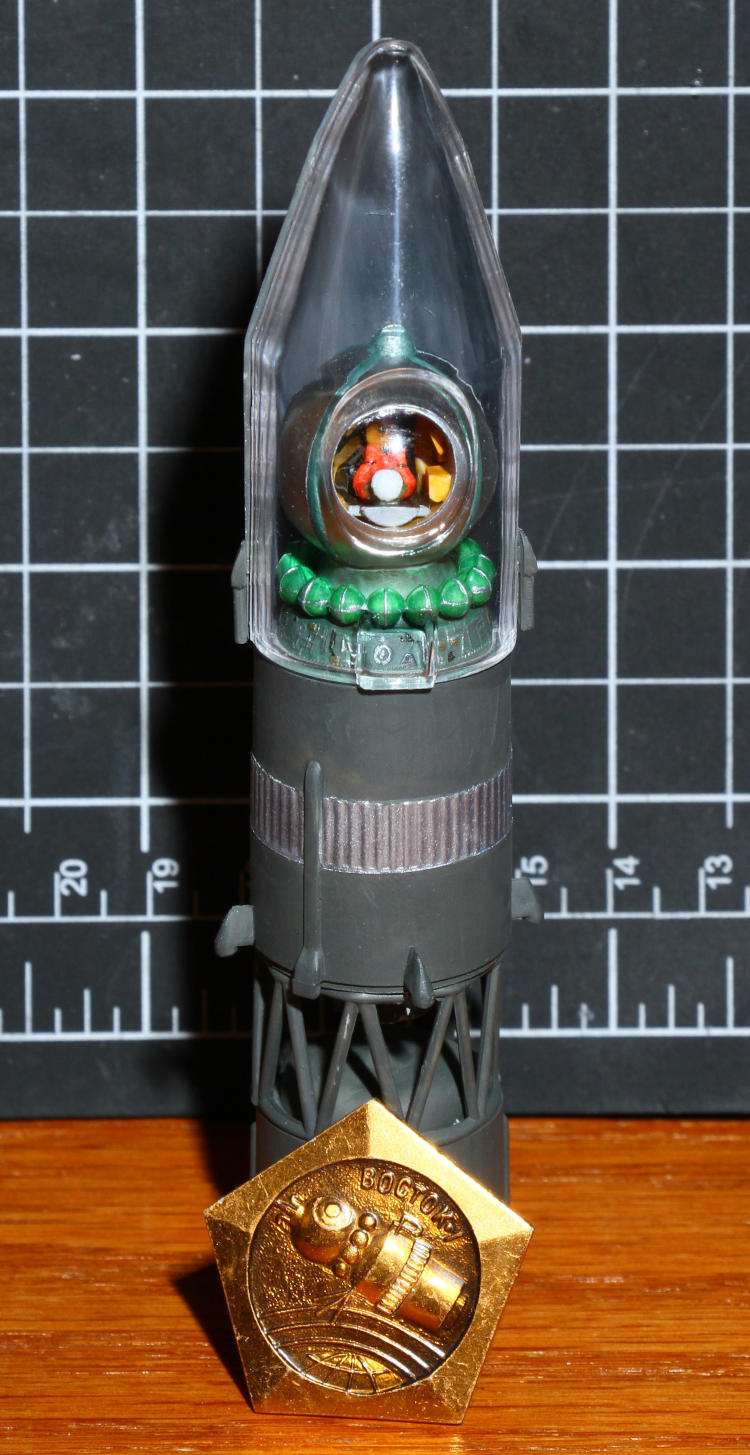
 I had to do a bit of searching for photos of the real thing, of which there are few (as in, just one of the launch itself) to try and get some details correct, and at 1/100 scale, it stands 38cm tall. This particular kit featured a semi-detailed orbital capsule, which also took a few searches to get the details of – this is what modellers do. I didn’t go nuts with it, because if I wanted to do fine detail it wouldn’t be for something so small, but I did end up adding some stuff to the capsule beyond what the kit provided.