Capital punishment yet remains a contentious topic, even while we’ve found comfortable positions on many of the moral issues we struggled with for centuries – slavery and racism, women’s rights, legal adulthood, and so on. Perhaps the biggest reason behind this is, there are too many factors that motivate a response, most of them emotional, and most of those have been bred into us for centuries. I’m going to take pains not to portray any stance on the topic, which hopefully shouldn’t be too hard, because I’m undecided on it myself.
First off, we have the justice system in the US, which has the goal of preventing crime, especially further crimes, and to do this, it has three primary facets:
1. Rehabilitate convicted criminals so that they may re-enter society in a functional, acceptable way;
2. Impress any potential criminals with the consequences of their actions;
3. Prevent incorrigible criminals from continuing to commit crimes.
Unfortunately, too many people don’t feel facet 1 is even viable, and in practice, it’s not demonstrating a very good track record, at least in the US. But also in here is the hidden motivation held by a lot of people, which is vindictiveness. This is kind of an emotional version of facet 2, in that it often qualifies the criminal offense beyond legal definitions, sometimes in the manner of who the victim is, sometimes in recognition of how closely we feel the crime. Someone who lives next door to a child who was killed is far more likely to demand a death penalty than someone who lives across the country. And there are, in fact, very good reasons for this. No, let me rephrase that: there are viable explanations for this, but these explanations deserve no value judgment. They are neither good nor bad, they just explain.
Our moral, social structure is something evolved into us over millions of years; natural selection guided us towards reactions that would create the strongest drive towards reproduction – doesn’t seem to connect in any way, does it? But reproduction relies on both survival and a strong tribe, among other things, and so we have a finely developed sense of what’s acceptable behavior within the tribe, and what’s not. Children are naturally our genetic future, breeding (literally) a stronger sense of protection over them, and our ‘neighbors’ – or immediate tribal members – are more likely to both carry similar genes, and cooperate with us in maintaining a strong tribe. So yes, from an evolutionary standpoint, the death of a neighbor child is worse than the death of an adult far away. But of course, this means that criminal acts can become too subjective, relying on the qualification from individuals as to how severe they might be; laws are a recognition of this problem, a fixed value of severity to attempt to rule out subjectivity. This only works if we realize why they are this way, and how variable it can be to rely on our bare emotional reactions.
Our developed sense of fairness comes into play, often with a simple comparison: how come a criminal, who has taken the life/lives of someone else, is allowed to retain their own life? Often it seems a shame we can only kill someone once, and in times past, capital punishment was occasionally carried out in gruesome ways. It is now usually considered bloodlust or barbarism, but we cannot ignore the basic idea that someone who has killed a lot of people can only themselves die once – the scales could not effectively be balanced with a simple execution. At least, if we consider “life” a measuring stick.
A variation of this might be our concept of “future.” We tend to be optimistic about the future, at least from a personal standpoint – we will be making more money, we will travel to that exotic location, we will finish that book we’ve been working on. But when it comes to the worst criminals, we don’t like contemplating the idea that anything beneficial might happen to them.
And then there’s simple fear. To a certain extent, the belief is that a severe criminal cannot be rehabilitated, and continually poses a threat to us as long as they remain present – this is exacerbated by the parole system, where criminals can often be released without even completing the term of their original sentence. This rarely happens in any capital case, the ones where execution would be considered a potential sentence, but this distinction isn’t recognized by enough people. Influencing this is the peculiar genre of horror movies, where the villain continually, almost supernaturally, returns from apparent death to wreak more harm before being dispatched in some spectacular way – this has never happened in real life (even Rasputin’s demise was less dramatic and possibly exaggerated,) but again, this distinction remains vague.
There are a few other factors, such as the belief that life sentences mean a criminal is languishing in prison with free cable TV and no bills or worries, not exactly an accurate idea. Or that the costs of their continued existence, paid for with taxpayer money, would be eradicated with a death sentence – in reality, executions cost many times more than a life sentence, through the exorbitant price of our legal system and the statutory appeals process. This far outweighs the cost of incarceration, which is considerably less expensive than living independently in any community. Too many of the factors upon which many people form their opinions are not accurate or realistic.
The rational argument often comes into play: there is nothing that can be done to reverse the crimes or ever make them ‘acceptable’ in some way – the families will forever feel the loss and anguish. From that viewpoint, the bare prevention of repeated crimes is the sole function, especially among those who recognize that capital punishment has never been shown to be an effective deterrent. In like vein (okay that was inexcusable, I admit it,) comes the argument that killing criminals makes society no better than those it wants to eradicate. Countering this, however, is the argument that it is not the action necessarily, but the reasoning behind it; consider that we celebrate Veterans’ Day here, essentially glorifying death as long as it’s “for our country.” Criminals, however, may act from a sense of selfish entitlement, unbridled rage, or even dysfunctional empathy, while capital punishment is intended to address how unacceptable this is within our society, as well as preventing it from happening again. If someone on the street stabs me in the bicep, this is a hell of a lot less damage and risk to my system than a surgeon removing my appendix; we have to be careful with how we’re measuring or viewing these topics, and why.
All of these, and likely a lot which I haven’t enumerated, crash together into the debate, everyone involved having their own personal recipe of motivations and considerations. Lately I’ve been considering an additional point, one that I haven’t seen mentioned yet I suspect more than a few people feel, at least subconsciously: capital punishment is not just for the criminal, but for the victims and families as well. It may be seen as demonstrating that we do hold the victims in higher regard, something that can often be lost when we see how oddly our justice system treats the matter. The accused are often guaranteed more benefits than the average citizen, from healthcare to attorney’s fees, concerns over humane conditions and even quick, painless deaths, while the families of such victims have to initiate their own legal actions (often at their own expense) just to obtain funeral costs or adequate compensation for the loss of a provider. There are also the rare cases when the accused is considered a victim themselves, suffering from mental illness, functionally incompetent, or (again, not often in capital offenses) a product of social failings. These – again, rare – cases may be taken well out of context, but more importantly, the problems with our legal system have no relation to what we argue for in regards to capital crimes, even when they’re intertwined.
Or, do they? There’s the perspective of a guilty person escaping “justice” (whatever that is,) but also the perspective of an innocent person being punished – this is where the failure of a justice system has a much bigger toll, and one that isn’t considered often enough. Very often, law enforcement personnel find fulfillment of their job duties in convictions, and elected officials will even run on their record of such. Yet convictions are not the key; accurate convictions are, and there is no worthwhile method of measuring these yet; perhaps there never will be. Juries can be biased over whether someone simply looks guilty, and we’re all familiar with the idea that an arrest means, “they got the guy” – before a fair trial has even taken place. This says nothing of the myriad issues with eyewitness testimony and the glossed-over weaknesses of various forms of evidence, ignored because they weaken the case (and thus the record) of prosecuting attorneys. Our legal system is not a game, but you couldn’t tell that from the attitudes and actions of most of those involved, who feel that a case can be won. The human element is a remarkably weak aspect in the whole affair, emotional and improperly focused and unable to wield, or even fathom, complete objectivity. We cannot even determine guilt, the truth of what occurred; all we can do is decide on what we believe occurred.
There is likely no easy answer to all of this, but to even guide us towards viable options, we have to agree on what we’re trying to accomplish, something that has yet to happen. Going back to the three goals of the justice system, we usually rule out rehabilitation as having any potential at all; that’s why capital punishment is even considered. Consequences are still often believed to be of some importance, even though this is most likely a kneejerk reaction; capital punishment does not demonstrate any deterrent effects, especially when those who we find most deserving are often socially dysfunctional anyway (that’s why they can commit such crimes in the first place – we’re usually not talking about the average member of the public and their social mores.) And when it comes to preventing further crimes for the individual, capital punishment and life sentences are equally effective.
But that’s not enough, is it? We want more, and I’m comfortable saying that this is because we have a drive to maintain a strong society; we want to weed out the bad elements, both by direct action and indirect threat (consequences.) We want to define our lives as being protected, mutually cooperative, and precious. There’s nothing wrong with this – we wouldn’t have survived without it, I’m betting. But how do these drives translate into an effective reaction to major crimes? Is it possible that we are driven, in part, towards execution for our own peace of mind rather than because it serves a specific function?
Most especially, is there a balance point between having a working justice system and believing it is performing as usefully as possible? It’s safe to say there is no perfect society on the horizon, no way that all such crimes will be forever eradicated, no matter what. But can we find something that a majority of people will agree is an adequate response to capital crimes? We easily recognize there is a debt, if you will, that can never be repaid. Or, is there? Is a portion of the problem solely in our perspectives?
Someone who loses a loved one over cancer may be motivated towards eradicating cancer, but overall, the loss is largely accepted as being something that just happened. Auto accidents are sometimes viewed much the same way, or sometimes seen as evidence that we are not accepting high enough standards for vehicular safety. But a murder usually becomes personal, and for far more people than the immediate family – this isn’t something that happens, but the actions that someone performed, deliberate and intentional; the more intentional and the more vicious, the stronger the demand for retribution. This is, again, those functions long bred into us for a cooperative society – we want to shape acceptable behavior for the tribe, and we can’t do this for cancer or random events, so these are viewed differently. But of course, beyond a certain point we can’t do this for people either; we just rarely recognize the futility of the emotional drive. Not to be too weird, but consider the woman who murders her husband for the insurance money; chances are, it’s not going to happen again, so the prospect of anyone else being in danger is not really an issue. Does that make it better? Yeah, didn’t think so.
Then there’s this little aspect that I don’t even have a decent name for, and forgive me for using this case example. It takes no effort whatsoever, at least in the US, to find those who have a strong opinion on the OJ Simpson trials, most especially the first; very often, you can find those who are quite sure what the verdict should have been. Curiously, none of the people I’ve ever spoken with about the verdict can enumerate the evidence presented and how it affected their decision – yet they’re perfectly willing to pronounce how the trials should have gone, and the flaws within. It’s not like the functions and purpose of our justice system are unknown or poorly illustrated, nor is it unclear why this is in place. But it’s disturbing just how few people accept this. From the incredibly ignorant practice of ‘trial by media’ to the fatuous argument, “Who else would have done it?”, our species is incredibly incapable of grasping the simple concept of, “Let’s see the evidence before coming to a conclusion.” These are the same people who make up juries. Is it even viable to believe we are capable of deciding fairly who lives and who dies? If and when a mistake is made, what do we decide to do in response to that? Are the same people who feel that wrongful death is punishable by death ready to step forward and strap themselves onto the table to atone for their incorrect verdict?
There are numerous contributions from our culture that affect our judgment as well. The phrase, “an eye for an eye,” is scriptural and extremely old, mixed in with passages about subjugating women and avoiding shellfish, but we can still hear it now, and a lot of decisions are based on a variation of it. Closely related is the idea of the ‘scales of justice,’ and how a punishment must fit the crime; this is nonsense on two levels. The first is, what purpose does this serve, and who stands to benefit? And the second is, we often don’t believe it anyway – employers routinely check into criminal records, and there are even laws requiring convicted child molesters to notify their neighbors, both of which demonstrating quite clearly that we don’t actually believe in either the ‘scales’ or rehabilitation (again, at least as practiced, or abjectly avoided, by the US legal system.) And then we have the peculiar currency of ‘life,’ often considering death the worst thing that can happen – yet when we’re dead, we’re not feeling anything at all, as opposed to any form of ongoing punishment. There are lots of ways to make people regret their actions, none of which will take place after death – and many of which impinge into the realm of barbarism. Once again we get into subjective ideas of what’s appropriate.
What if we ignored all of the aspects of punishment and revenge and deterrence, and instead simply focused on balance from a functional standpoint? There is no way, of course, to bring back someone who was killed, but what about seeing that the person responsible provides a positive contribution? Put them to work on projects that improve the community, or any community. No concerns over the cost of incarceration, no worries about criminals lounging around with free cable TV – and even a wrongful conviction doesn’t seem quite as bad then. This is actually practiced now, but to a very limited extent and, to the best of my knowledge, never with capital offenses. It isn’t exactly rehabilitation, but then again, neither is anything else currently in place for capital crimes, and in this manner there is a greater benefit than nothing at all.
Again, I’m not leading towards a conclusion; the entire point is to illustrate how many factors compete for attention, many of them emotional, some of those poorly applicable to the issue at hand. Like so much of human interaction, there is a broad emphasis on reacting rather than considering goals or functionality, usually without any realization that this is taking place. What we feel should be done is probably not as useful as establishing a goal and determining the most effective way to reach it – and this applies to a hell of a lot more than simply capital punishment, or any aspect of our legal system. But to go out on a limb here, I’m going to say that if we have a strong and immediate answer, it probably wasn’t reached by careful and objective consideration.








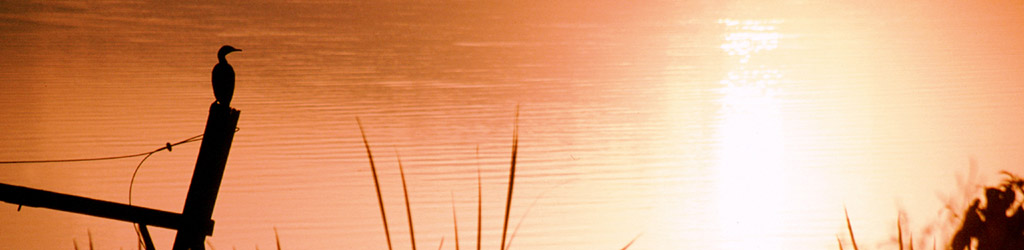















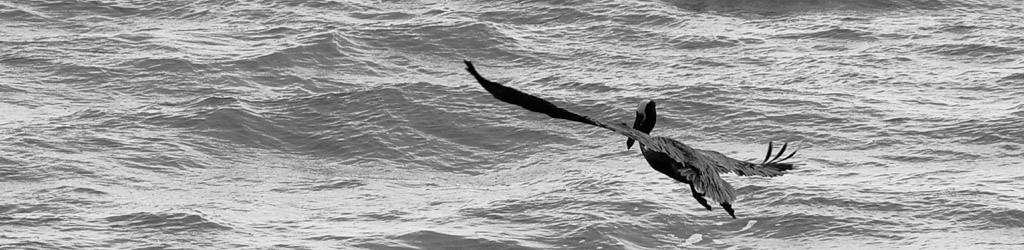



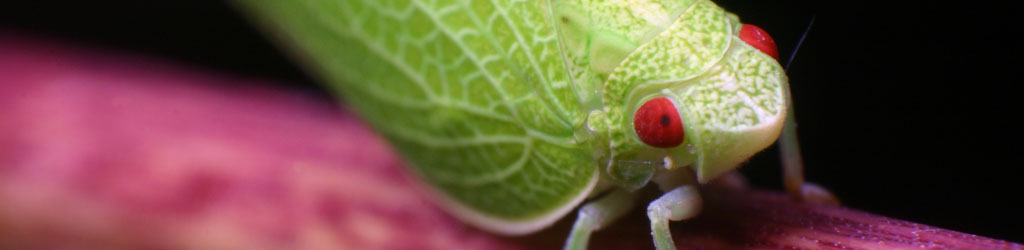
























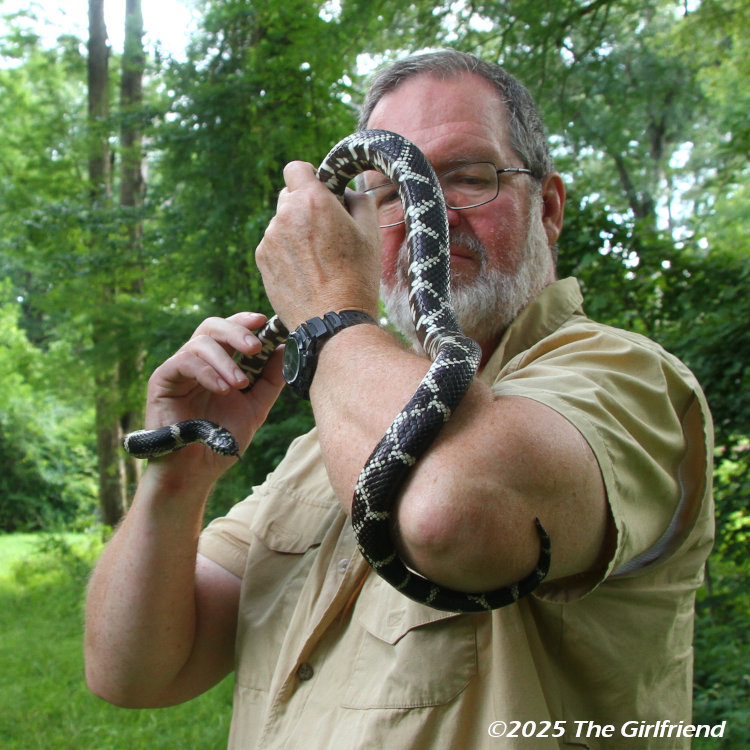









 The first part that I’ll talk about is perhaps the easiest, which is illustration. Just about every photographer ends up tackling such a thing at one time or another; some of us do it routinely. But even product photography requires a certain skill to portray the product in the best manner possible – sometimes this is angle and lighting, sometimes this is the right setting or background, and sometimes this is elaborate staging. When we’re trying to show something in particular, it’s important to give the correct impression to the viewer, and the first step is knowing what this should be in the first place. Following close behind is detaching ourselves from the sense of place that we have, just being there, and recognizing whether or not the viewer can get the same sense (or, even better, an entirely different one that we nonetheless express, falsely as it were.) That might be a bit confusing in the abstract, so let me provide an example. We know, from simply being there, that we’re at the beach, or someplace late at night, or whatever, but the image doesn’t necessarily express this unless we include the necessary details therein. Conversely, many of my macro shots, while done in broad daylight, still look like they were done at night, because the aperture and shutter speed reduce the ambient light so far that it doesn’t expose the image very well, while the flash unit provides the main lighting for the subject, yet fails to reach the background. But even showing someone at their profession or hobby takes having an adequate representation of those within the frame. For an artist, it’s not enough to show them drawing on a canvas; we should have a variety of artistic tools visible as well. If we think of an image illustrating a pilot, we ask, what kind of pilot? Commercial, military, bush, glider? Only the knowledgeable viewer would be able to tell these from a glimpse of controls and gauges, so we need to provide more details to inform all of the viewers of what they need to know. Even the subject’s basic appearance and expression counts for a lot – a portrait of a nurse is likely to require an entirely different expression from a portrait of a judge, to give the impression that we want to give. And of course, knowing how to evoke these from a subject, especially so they look natural and not forced, is a huge skillset all its own.
 Much harder is the genre of photojournalism, which is what most people think of when we talk about an image with a story. In most cases, we have no ability to stage any portion of the shot, or even mess with lighting, so we have to take it as it is and still get the message across. This means framing and timing become the most important aspects to control, sometimes the only things we have control over. Many times, it means anticipating some particular aspect – action or expression, mostly – and firing off the shutter the moment it happens. An acute awareness of everything in the photo is often necessary. I often tell my students about my wedding photography days, when I was after the ‘first dance’ of the newlyweds. There is actually a very narrow timeframe when the elements tend to come together, because if the guests are in the shot, you want them all looking at the happy couple with delight or warm expressions – one guest looking away, or bored, or eating, is going to spoil the mood of the shot, and this becomes more likely as the seconds pass. Meanwhile, try to find a shooting angle which shows both faces of a couple that are facing one another. And a decent background. And good lighting. These are the kind of things that beginning wedding photographers rarely realize are the skills they never thought to develop. Which is why I say that you save money on a photographer at your own risk.
 We read the expressions of any given animate subject (and some inanimate ones,) and nearly every photo can benefit from having something more expressive, more emotional, than simply a straightforward shot. Sometimes it’s simply a matter of observation, and finding the right angle, but most often it takes timing and anticipation. It’s easier with people of course, because they express the emotions that we’re familiar with and we often know when they’re due to arrive. With animals it’s usually very different – most times it doesn’t occur unless the animal is relaxed and acting normally, which is much trickier for wildlife, but can even be a chore when the family pet knows we’re up to something. But for most species, they don’t actually express the emotions we recognize, and when we get something that appears expressive, this is more often than not simply a mistaken impression – which still works just fine, we just can’t anticipate or even provoke it.

 I’ve mentioned this


