Podcast: Getting the feel

I don’t actually think we’re going to have a spring or a summer this year. I think we’re going to just fluctuate in temperatures for the next several months, frosts and snow killing off all the things that start to grow when the temp is higher, until eventually the sun just gives up entirely and stays down.

[There – now I’ve established an excuse not to post too much and the pressure’s off.]

But life goes on, and so does my droning voice, which means it’s time for another podcast. This time, it’s an extension of the earlier equipment monologue. And yet, I wouldn’t do these if I didn’t think there was some redeeming value to them.

Walkabout podcast – Getting the feel

Not a lot to link to or illustrate with this one. I mentioned exposure compensation, and also white balance, so there are those links. Most of what you want to be familiar with, however, will be found in your camera manual, and if you don’t have one, typically they can be found online.

A quick note, something that I tell my students all the time: don’t worry about not understanding what some particular function or option on your camera is for. Manufacturers are now trying to make just about every body useful to any shooting situation, and not only is it not necessary to understand all (or even the majority) of these functions to use the camera effectively, in many cases you will never use them all, regardless of your experience. Some are only for very specific techniques; some are even virtually worthless. Remember, not that long ago there were just a handful of primary controls on any camera, and these are still the ones that have the greatest impact on your images (for the record, that’s shutter speed, aperture, and ISO.) So don’t think that you have to read the manual cover-to-cover to know how to use the camera. However, it’s not a bad idea to flip through it occasionally, and if there’s something in there that you have questions about, the webbernets is a handy resource. Even plugging the term into that search bar over to your right might generate a useful post that I’ve done in the past.

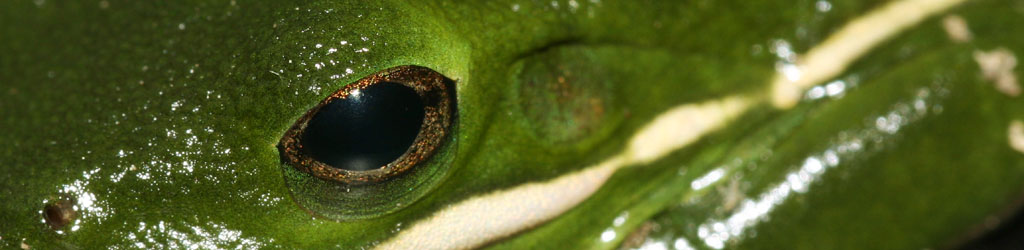
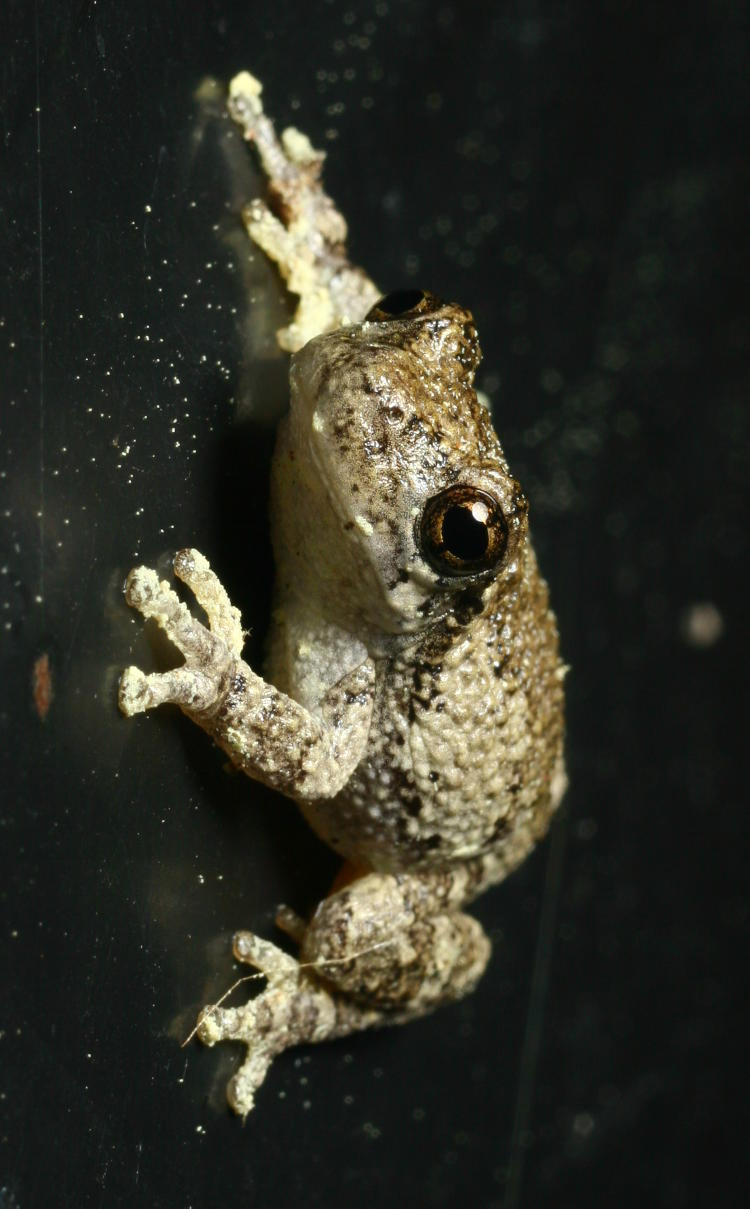
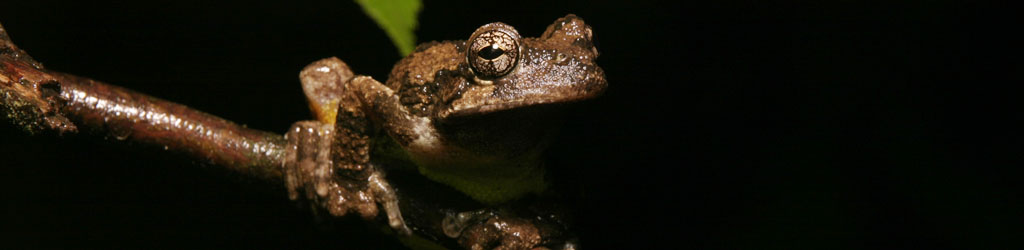
Nothing else that I’m thinking of right now, so here’s the first Copes grey treefrog (Hyla chrysoscelis) of the year, at least for me – this came from April 3rd when the weather was normal for this time of year. By the way, the snow/sleet mentioned in the ‘cast never did come to pass, though the temperature dropped very close to that. Definitely a weird season.

Copes grey treefrog Hyla chrysoscelis looking at me as if I was responsible for this wacky weather

BIAB: Down the rabbit hole

It’s disturbing how many posts I start to work on and find out they’re a lot more complicated than I originally thought – and in this case, underpinned with ethical considerations.

Let’s start with copyright. Original creations in the US, and many other countries, have a degree of protection under copyright laws, which roughly mean that they can only be used under the permission of the creator. For photography, this had a reasonable amount of control until the intertubes came onto the scene and anyone could, with little effort, snag an image and republish it elsewhere – and a really disturbing number of people believe this to mean that if they can, then it’s perfectly legal to do so. Simple (really, only) answer: no. If you didn’t take it, then you need the photographer’s permission to use it. For anything. Memes and Pissinterest and backgrounds to shitty ‘inspirational’ poems included.

[Small, semi-related side note: Jim Kramer, whose name you might recognize, once found that an image of his was being used without attribution or permission on some sappy religious site; Jim is as ardent an atheist as I am. Moreover, they were hotlinking it, meaning that not only were they using it, their site was ‘calling’ it from Jim’s own, so his own site bandwidth was being used to display it instead of the thief’s site. Jim simply replaced the image with a scathing rebuke of unethical practices and, if I remember right, a dig at religion at the same time – the image was named the same, of course, so the thief was now displaying this instead. It remained up for a couple of days before it was discovered and the link removed. I like Jim’s approach to such things.]

Now, music is a curious aspect of this. Ostensibly protected under the same laws, music is publicly ‘displayed’ all over the place – that’s kind of the point; it’s by far the primary way that musicians actually get successful. Imagine if the only exposure to someone’s music was through their live concerts. But there’s this weird, poorly-defined demarcation of what’s permissible (for instance, radio play,) and what’s not (distribution of a digital music file without paying the recording companies.) It’s very convoluted, and the artists and their ‘representative’ sponsors often disagree wildly on this aspect.

And then there’s derivative works. Essentially, any creation that uses a recognizable portion of someone else’s work in their own is not ‘original,’ and copyright still lies with the originator – if I take someone else’s photo and edit it into a collage or creative composite or whatever, they still retain the rights to it regardless of the work that I’ve done.

Which brings us to this. Remixes of well-known songs have their own little niche, and for a particular reason: it takes something that we like, but perhaps have been hearing too often, and gives it a fresh spin, an extra bit of character or even a different tempo and feel. For instance, I had some misgivings a bit earlier when I featured a remix of an album track that was probably unknown to most people, because I suspect the strongest impact of the remix came from knowing the original very well (I’d had it on the album for decades.) This might mean someone hears the newer version first and likes it, then finds the original very flat – I felt that way with The Beatles’ ‘Lucy in the Sky with Diamonds,’ having become familiar with Elton John’s version first; I later found The Beatles’ original to be flat, nasally, and uninspired.

But I believe we’ve effectively thwarted that possibility here, because the song I’m about to feature is Peter Gabriel’s ‘In Your Eyes,’ and if you don’t know this song by now submit yourself for scientific study. Gabriel himself did umpteen versions of it since its original release on the 1985 album So and within the soundtrack of the film Say Anything. Even the 45 RPM vinyl release had two versions – both of which differed from the album release (you may be familiar with the truncated lyrics of the single.)

According to what I just discovered, someone named Bobby Clark, who also went by the moniker “808,” melded these two vinyl versions together to produce “808’s Extended Mix.” This was apparently featured on his own blog until the RIAA (Recording Industry Association of America) requested that he take it down. Which is where things get interesting in this whole copyright business.

All of the music was Peter Gabriel’s, and released through his recording company in two separate tracks. I don’t want to assume too much without knowing the actual facts in the case, but if a) attribution was provided, and b) the song was publicly ‘played’ on a site without requiring any payment or fees or whatever, this is exactly the same as radio play, except to a significantly smaller audience – the only difference is, you can’t purchase this version from the artist or the recording/distributing company. Or anyone else, so there’s no actual loss of potential sales revenue. The same recording company didn’t pay anything or push to have it played on the site, which is what they routinely do for radio stations – insofar as it prompted anyone to develop any interest at all in Peter Gabriel’s music to the point where they purchased something, it actually saved the companies a little money. This is largely why artists are at odds with the draconian practices of their recording companies, because the artists know that exposure results in increased sales. Recording companies often feel that any usage should be a sale, while artists often recognize that any sale is better than none.

[It’s a little different for photographers, because virtually no one ever sees an interesting image and says, “Wow, I like that! I should buy some of their photos!” Most people don’t even look down at the watermark or attribution to note who took it. Which means ‘exposure’ is entirely different between music and photography, even though there are some parallels between freely downloading music files and right-clicking on a photo to republish in a Twit. “Who performs this song?” is asked a billion times more than, “Who took this picture?” I’ll let you ponder the reasoning behind this…]

Anyway, as I dance along the borders of hypocrisy and selective ethics, I present to you Peter Gabriel’s ‘In Your Eyes’ as remixed by 808/Bobby Clark from the two single versions. Right at the beginning, you can hear the telltale hiss from the vinyl sources.

In Your Eyes (808’s Extended Remix) – Peter Gabriel

There are several reasons why I particularly like this version. I’d known about the additional lyrics included in some versions for a while. Curiously, the 45 RPM single seemed to have truncated some of the lines from the chorus, but then added a stanza at the end before the fade out (“Accepting all I’ve done and said…”) – which seemed to thwart the typical reason for clipping lyrics, which is an ‘acceptable’ length for air time. This added section was some of Gabriel’s better vocalizations as far as I was concerned. The extended B-side included these lyrics, with subtle changes, at both beginning and end – but then didn’t really have the primary lyrics of the original(s) within, which is what 808/Clark remixed to include. The B-side also featured the addition of a lot of background vocalists, among them Youssou N’Dour I believe, as well as someone really kicking the bass vocals. It builds up a lot better, more dynamic than the typical Top 40 offerings then or now, with instruments taking turns in appearing within the track.

If you’re only familiar with the popular versions, this one might be slightly disconcerting since the lyrics don’t drop in right where you might expect them, but it didn’t take me long to get used to this. Notable, too, is the extended bass (guitar) and drum work – the original, still audible among the familiar lyrics, is a bit simpler. ‘In Your Eyes’ is a great track in any version; I just found this one to be even richer. Illegal though it is.

Per the ancient lore, part 4

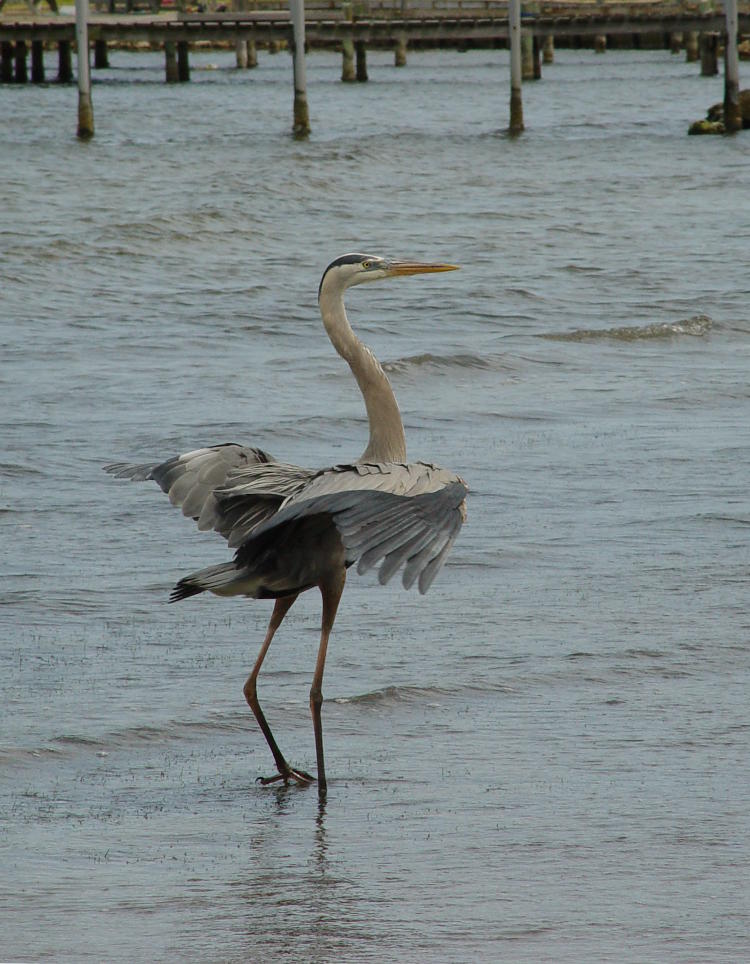
great blue heron Ardea herodias touching down after posing for lovely flight photo
This week, as we follow the folders in alphabetical order, it’s “Birds.” Or “Birds 1,” to be accurate, since in order to accelerate load times and searching functions, I limit the size of each of the digital images folders to about 4,000 pics. I’ll let you guess how many folders I have for arthropods…

So with this loaner camera, I charged it up and did a few test shots with it, mostly of the little aquarium that I was maintaining, then reset the image counter to ‘officially’ start my usage, which means my numbering is a little counterintuitive – Jim had shot almost 10,000 images with it before handing it over to me, and so I have a handful of frames that were first, but numbered quite high since they followed his number sequence. After resetting the counter, I headed out into the ‘wild’ to see what could be found – this is frame 3. Frame 2, only seconds before this, can be seen here (and you want to click on that link, because it’s a much better photo, but why repost something on the blog that’s been in my galleries for years?)

This was taken while wading in my old haunt, the Indian River Lagoon, a pretty cool place for photos and the source of my aquarium subjects, while in Florida at least. The great blue heron (Ardea herodias) had honked loudly as it crested the treeline behind me, and for what reason I cannot determine – I am 99% certain it could see me clearly standing in the open shallows, so I am forced to assume it was attracting my attention to itself. This could have been for territorial reasons, in essence telling me to get lost (which didn’t work,) or there could be another, more interesting explanation.

In some areas of Florida, the great blues have learned that fisherfolk often use live bait, usually medium-small fish about 8cm long or so, like finger mullet. And often, these are collected by casting nets in shallows exactly like the one I was exploring. Once in the bucket, they’re easy pickings for sneaky herons that may dash in while the owner is far enough away trying to collect more, and I’ve watched herons come onto docks and scamper right up to the bait collection; I’ve also watched one sidle up to an empty bucket, peer inside, look around the landscape suspiciously as if trying to spot Allen Funt, look inside again, then stalk off with what I was forced to interpret as a reproachful air. Regardless of my inaccurately anthropomorphic impressions, it is entirely likely that this heron, spotting me wading, thought I might be the source of an easy meal. I’m not sure this is the best explanation, because they seem to know they have to stay undetected when stealing bait and so honking isn’t the best of tactics, but this one actually circled around me at a relatively fixed distance before landing nearby, and launched itself off again less than two minutes later.

By the way, this shot was taken on the same day better than four hours later, but I’m not sure if I was out the entire time (and if so, was likely quite sunburned by that point) or had split up the excursions. I do know that the camera had a noticeable shutter lag, so timing that one to capture the spray was more difficult than might first be imagined, and I almost certainly discarded a lot of near-misses.

And Mr Bugg, just so you know: that’s three out of the four weekly posts so far that are images from Florida.

But what about third spring?

So last night, when the weather was reasonably warm, I went across to the nearby pond to see what I could find. I had two primary things in mind, knowing they were likely stirring by this time: frogs and fishing spiders. With the possibility of water snakes. Of the first and third, I saw no signs, but the fishing spiders were available.

A quick note: The easiest way to find spiders by night is with the help of a bright light mounted very close to the eyes, and LED headlamps, the kind that shine from the center of your forehead, tend to work the best. Finding the battery life to be an issue with my original lamp, which used three (rechargeable, in my case) AAA batteries, I’d sprung for a new one that used two 18650 rechargeable batteries, the same kind used by my LED focusing lamp and a tactical flashlight that I have. These are powerful cusses, and I figured the headlamp should be plenty bright and long-lived. The model I got had multiple lighting options, which was good – I’d had white, red, and green options for my old one, and they worked well for not ruining night vision (red) and for low-power unobtrusive path finding (green.) I couldn’t find a similar set of options, so I settled on one with yellow flood and blue options, as well as a focusing white LED as the main lamp. This turned out to be much better than anticipated, and the same unit I purchased can be found here (at least for a little while, until the Ebay listing changes.) First off, the battery life is great, and the focusing white lamp is very handy, able to be set for path width or sharp bright ‘pinpoint’ beam. But it was the blue lights that held the most surprise. Brilliant blue and good for finding a path but not too bright to trash night vision, it turns out they also shine significantly into the ultra-violet range, which means they can be used to spot things that fluoresce. Last night, I located a curiously reactive bit of fungus, until I determined it was actually a chewed-up piece of fishing bobber…

But on to the night’s finds. With the help of the LED headlamp, I soon located a smallish six-spotted fishing spider (Dolomedes triton) floating in a small pool off of the main pond. It was a little ways out onto the water, not too far but a little farther than nice, close macro work requires. And I digress again, because one of the projects I have slated for the good season is a post, or perhaps a video, on the huge variety of body positions and shooting angles that macro work entails – the photographer’s positions, mind you. This one was no exception. First, the image itself:
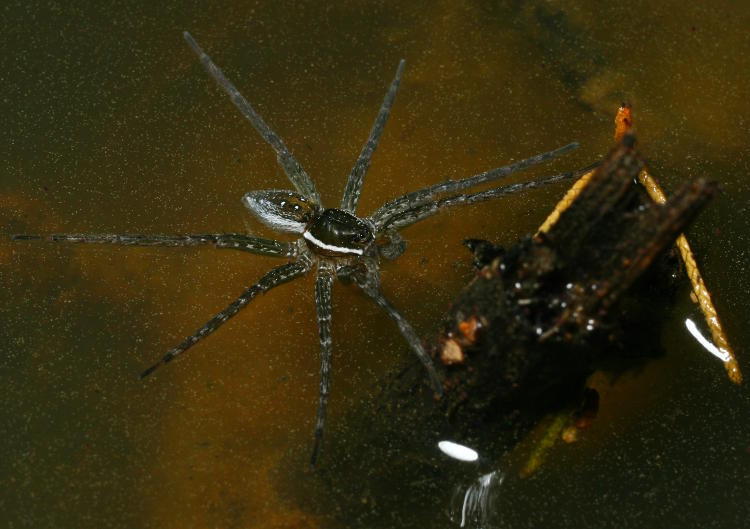
small six-spotted fishing spider Dolomedes triton floating on pollen-stained puddle
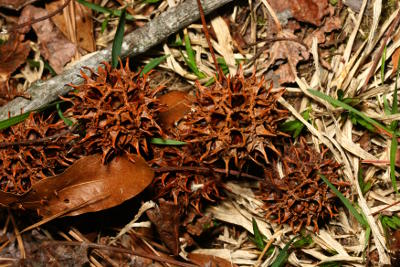
gumball seed pods from American sweetgum Liquidambar styracifluaTo get the above shot, I had to be sprawled flat on the bank of the pool, extending out as far as balance would allow over open water (not deep, but not, you know, ideal for camera equipment.) The biggest issue was the thicket of ‘gumballs,’ the seed pods of the American sweetgum tree (Liquidambar styraciflua) that overhung the pool, some seen at right. These are not quite as hard as pine cones, but not far from it, and so quite far from the ideal thing to be lying prone upon. The spider, of course, waited until I was plastered across these before it decided to switch positions to something less photogenic, and I was forced to scrounge around for a small twig to reach out and try to guide it back into something useful. The moment the twig touched the water in front of it, the spider darted forward and seized the twig briefly, suspecting it to be prey – not the first time I’ve seen this aggressive behavior from fishing spiders. You’d think with eight eyes they could confirm at least animus…

Regardless, I achieved a couple of frames of the spider that met with my exacting criteria for position/angle, and was able to detach the gumballs from my chest [now there’s a sentence that doesn’t do well without context.] I feel the need to point out that the water isn’t as murky as it looks, but instead stained with the onset of pine pollen season here – you’ll see more of this later on.
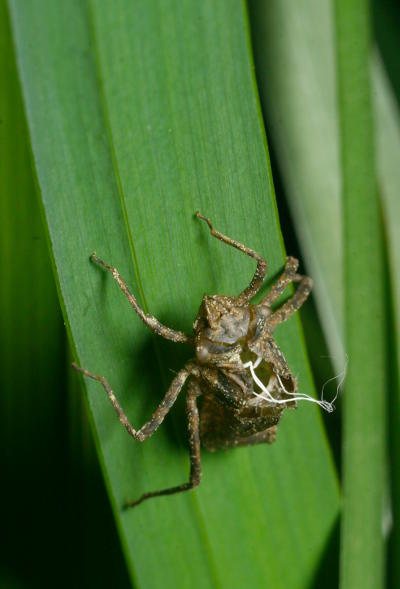
extremely early or very resilient molted exoskeleton of dragonflyThe pond itself yielded no target finds, but as I was looking around I did spot a couple of legs poking out from the underside of a leaf, and I gently turned it up to see what was beneath. Instead of another spider such as a long-jawed orb weaver (this being a favorite haunt of those,) I found the molted exoskeleton of a dragonfly. Now this has me quite curious, because this seems extremely early for them, especially with the number of cold spells (and outright snow showers) that we’ve had this ‘spring.’ However, I also find it hard to believe that this has been present since last year’s molting season, which is generally late spring throughout the summer. Has this been sitting there all this time, or is it evidence of a very early emergent from the water, where dragonflies spend their larval period? I suppose I could do some carbon14 testing to determine its exact age, though I haven’t the elaborate equipment for it and it would only tell me in a range of dozens of years anyway…

But getting this image was part two of the test of Al’s flexibility, because the exoskeleton was on the underside of a leaf, right on the shore of the pond. So this time, I was lying on my side on the ground, head pressed against the pine needles aiming the entire camera rig at an upward diagonal to see the bottom of the leaf. No gumballs this time though, and I chased off a minuscule wolf spider so it wouldn’t get crushed, because I’m me.
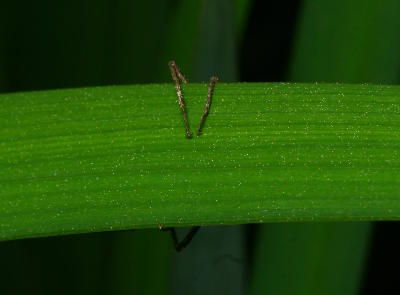
suspicious legs from underneath leafJust so you know, this is all that was visible from any ‘normal’ position, and those legs are a few millimeters in length, the entire leaf being about the width of your finger – pretty subtle, in other words. All those pale specks on the surface are pine pollen, beginning to get all over every damn thing because it’s that time of the year. You don’t see them in the image above because that’s the underside of the leaf.

While I have seen several examples of green treefrog already, and one specimen of green (aquatic) frog, I haven’t seen any of the Copes grey treefrogs that also abound in this area. One tree near the small fishing spider pool has been a source of photo subjects over the course of a few years, and so I was obligated to examine it closely to see if the greys were out yet. That search proved fruitless, but on a neighboring tree, a much larger fishing spider was plastered right at eye level, simply begging for its photo to be taken. Okay then.
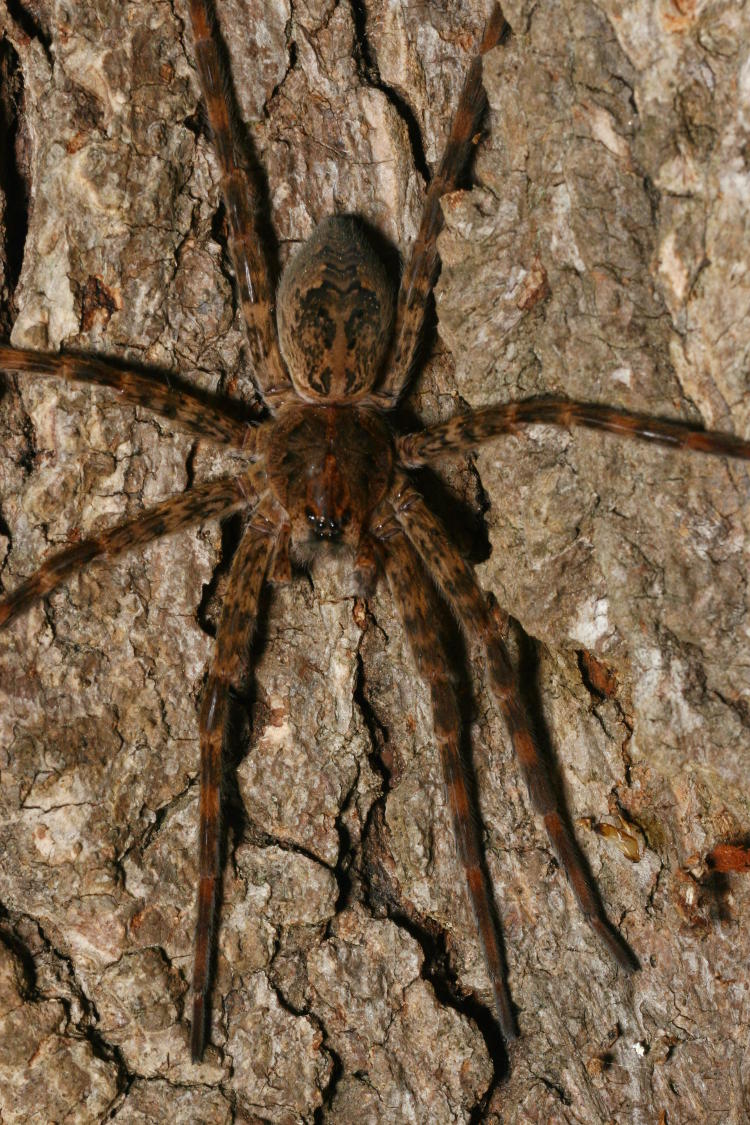
fishing spider Dolomedes tenebrosus posing helpfully but boringlyThe leg span of this Dolomedes tenebrosus was approximately 8cm, so, not a small specimen, though I’ve seen larger. But ‘top-down’ shots are boring, even conveniently at eye-level, so a different perspective was in order. Especially since this is nowhere near menacing-looking enough.
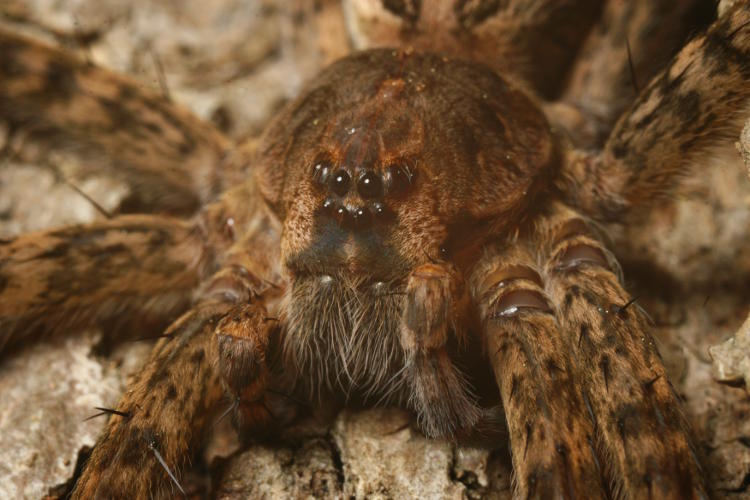
fishing spider Dolomedes tenebrosus portrait
Okay, camera with 80mm macro and extension tube attached, makes it about 30cm in length. Working distance of maybe 8-10cm, a mere leg-span away. The spider, as seen, was in a head-down position on the trunk, so this required a half-crouch, twisted upwards position tight against the trunk (again, that’s me) in order to get this image – too high to kneel of course. I’ve gotten pretty mellow from my original arachnophobic days, which is good, because I was sitting directly underneath the spider in an awkward position that would have made leaping away virtually impossible, should the spider have decided it needed to pounce on this impertinent human. Not to mention that, at this magnification, there would have been no indication of where it went, just its vanishing from focus should it have moved anywhere. Spiders, however, don’t pounce on people for any reason, though occasionally when disturbed they might simply jump away in a direction that may bring them briefly into contact, but this is entirely accidental. I knew this one would likely just sit perfectly still, since I had no twigs to offer it, but I did get to see it tapping gently with its pedipalps, as if idly drumming its fingers. I took this to mean that it was aware of my presence (rather than, as is often the case, simply blinded by the lights that I was using.) And yes, if you look closely you can see some pollen on its carapace on forelegs, though the overall lack tells me that the spider had not been out very long that evening.

Back in the front yard, I shone the light around and picked up more eye reflections, and followed it down to a little wolf spider. This one wasn’t particularly hard to shoot, simply requiring being sprawled on the ground without any painful debris… except for one thing.

wolf spider Family Lycosidae and earwig Order Dermaptera in tense standoff
Almost immediately after finding the wolf spider (Family Lycosidae) on the right, I spotted the foraging earwig (Order Dermaptera) on the left. I thought, Okay, here’s where I get the sequence of a spider’s capture, and waited, aware that I have very few images showing any such activity – I usually just have something from after it’s happened. And you would think that my position wouldn’t be an issue, but I still had to hold the camera in a way that I could aim and focus, and keep the headlamp on the pair, so I was propped on my elbows with head raised (so, thrown back a bit) – and waiting patiently. Even mildly awkward positions soon make one aware that muscles that aren’t used this way routinely get fatigued really, really quickly. Meanwhile, the earwig was poking around without moving much from position and the spider seemed oblivious (which my searing bright LED light was likely not helping in the slightest.)

Then the spider moved a little, turning to face in the earwig’s direction. I waited.

Then the earwig moved a bit closer to the spider, getting within easy range. I waited.

And then, finally, the spider darted forward, just within contact range of the earwig though it wasn’t clear if it had actually tried to pounce. The earwig gave a sharp convulsion and whipped those pincers upwards defensively, hacking at the air above its body, while the spider beat a hasty retreat even before the defensive reaction had completed. It looked to me as if the spider realized this was an earwig and thus unpalatable, though I’d never heard of such a property, so I have a little research to do. I would have thought the spider was large and adept enough to handle such prey, but it was demonstrated otherwise, so what do I know?

Anyway, I have a few more shots that’ll appear in another post, while the weather reports are threatening more cold weather, with a slight chance of snow again, for the end of the week. This is really getting tedious – I’m going to have to get a winter home in central America or something.

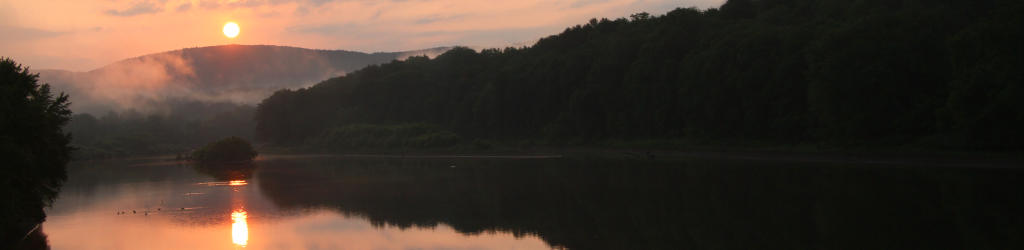
March breaks all the rules

herring gull on warning marker on foggy morning
Maybe, anyway. I can’t remember if I had a specific rule that the end-of-the-month abstract had to be shot within that month, or if I only tried to keep it that way. But I don’t have any abstract images at all from March, so we’re going with February instead. However, I will see if I can snag one before the day is out (the schedule is not looking kind at the moment,) and thus fulfill my unspoken and perhaps unofficial promise.

This is another from the dense fog, and I have a related series that I may put up as an animated gif (pronounced, “prezn”) later on when I get around to putting it all together.

On a faintly amusing side note, last month I realized that I had not done a month-end abstract for February of 2017, and corrected that with an additional frame shot during that month. Just recently, I found that the March entry for last year also corrected that oversight – with the same damn frame. Listen, I can’t remember every friggin’ thing I do on this blog…

Per the ancient lore, part 3

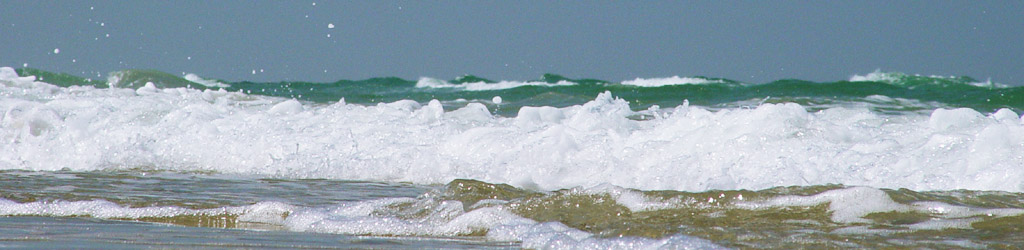
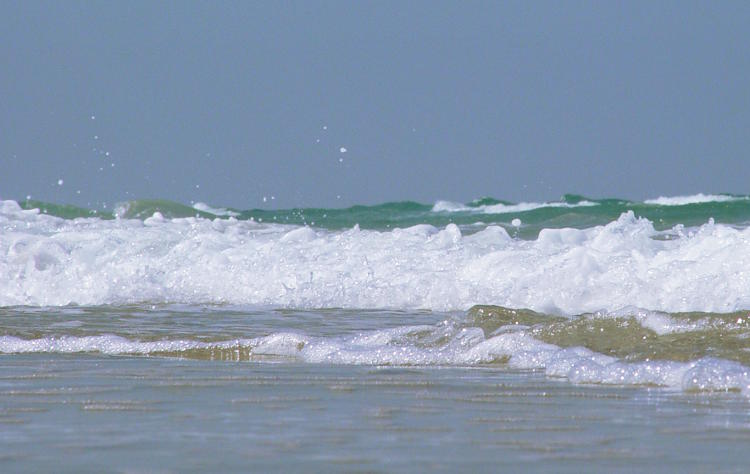
last vestige of breaking waves
Previously we had entries from my Aquatic and Arthropod (1) folders, and now we have Beach. Even though this appears quite early in that folder, it still falls over a thousand images into my use of that borrowed camera, taken while my brother was visiting me in Florida. Walking on the beach alongside Sebastian Inlet, I held the camera down just immediately above water level and shot blind as the last vestige of the breaking waves petered out in front of me – what you’re seeing here is only centimeters high, a macro shot of a dying wave. I was pleased to capture the droplets in midair of course.

Now here’s something curious. I have this unshakeable impression that the waves are not advancing directly towards the camera, but at an oblique angle off towards the left of the frame. I think that this is caused by that little foreground wavelet on the right side, which seems to show a slight diagonal to the foam line, but it might be because I remember how the shot was taken and the method is imprinted in my mind. What do you see?

And suddenly, it’s different

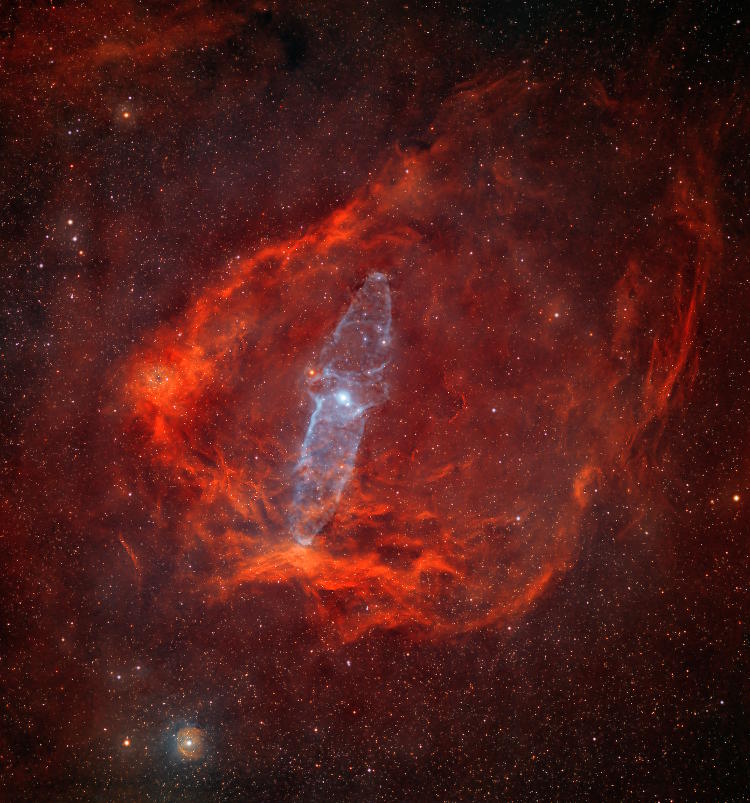
Image credit and copyright: Rolf Geissinger

Or at least, it was for me.

This image has been sitting in my blog folder to feature even since I first happened across it, which was when it was posted to the Astronomy Picture of the Day back in October 2016 – I just never got around to doing the writeup for it. Which is a shame, because it represents this little “Aha!” moment, and I’m curious to know if others see it the same way. I’ll recap the basics here, but you’re encouraged to go the the original page for better details.

What you’re seeing here are two nebulae: Ou4 in blue, otherwise known as the Squid Nebula, and Sh2-129 in red, the Flying Bat Nebula. We have a tendency to see astronomy photos and, in our minds, consider such details as close together, the same distance from us, but nebulae are mostly transparent, often light reflected from vast gas or dust clouds, and so there’s no reason to assume that these have any proximity at all to each other – they could be light-years different in distance from us, and only seen along the same line of sight.

Nevertheless, our assumption in this case appears to be correct: these two nebulae really do lie the same distance from us, in close proximity and in fact intertwined – or at least, as near as we can presently tell. Which would mean that the bright spot in the center, a trio of powerful stars, is the source of the light that illuminates both of the nebulae, and Ou4 is likely gases and dust being blown off by that stellar wind.

And here’s where the optical ‘illusion’ (or sudden lack thereof) abruptly occurred for me. Because, as I absorbed this information, the red Sh2-129 nebula suddenly resolved into a large bowl or cave with Ou4 in the center, a massive cosmic geode – the shaping and depth of it just leapt to my eye and cannot be eradicated now. Do you see it?

Further, it’s likely not a cave, but a bubble instead, completely enclosing Ou4. We just don’t see the ‘wall’ between us and Ou4 because it’s illuminated from the opposite side, reflecting light back towards those stars and not in our direction. Which may mean that it would have been a lot brighter had it not occurred in the middle of the Flying Bat Nebula.

Anyway, I thought that moment of resolution, or whatever you want to call it, was kind of enlightening. The image itself was taken by Rolf Geissinger, undoubtedly with some long exposures and specific filtering to select very narrow wavelengths of the light being produced.

A little reality check

I come across things like this fairly frequently, and I realize that the chances of making a difference in this behavior is extraordinarily low, but it’s absolutely nil if I don’t, so…

One of the mindless time-wasting sites that I visit is The Meta Picture – I’ve linked to specific ‘posts’ there a couple of times – but it’s one of the many, many sites on the webbernets that routinely publishes content that the owner never created, and never provides attribution or even a source of who did create it; in short, it’s an example of the peculiar mentality of many users, who feel that if they can lift it, then it’s perfectly okay to do so.

Naturally, it gets seriously under my skin when it comes to examples such as this, a large collection of some of the most stunning scenic/travel/nature photography that you might come across. This is not, however, the way that it’s presented, oh no. Instead, it’s, “Here are all these great places to visit!”

I’ll be happy to burst anyone’s bubble: visit these all you want; you’re not going to see anything remotely like those images. In the majority of them, it took not only a significant set of skills and knowledge to obtain the shots, but very careful timing and attention to conditions. For a lot of them, it also took some significant efforts to even reach such locations. And I’m willing to bet, for at least half, it took more than a couple of tries (meaning, separate trips, even when trying to gauge the ideal conditions,) to achieve those photos. And then after all of that, the expense and efforts and time, perhaps extending into years, the photographer gets to have their work republished freely without even a, “Nice job!” coming back to them. Seriously, how shitty is that?

Now here’s part two: In a lot of cases, you wouldn’t have to travel all over the world to experience something captivating for yourself. Instead, you have to learn how to find such things. Does anyone really believe they have to travel to Slovenia to see a river cutting through a snowscape, or to a remote cave in Utah to watch a storm approach? It’s not even a secret of nature photographers to know where to find a good foreground or scene when the conditions are right – it’s a basic skill, even a knack if you will. But funny, as much as people seem to like exotic images, they’re conspicuously absent in the conditions that help to produce them. Sunrise out on a busy, touristy island with well-known driftwood stands? Not a freaking soul around. Thick fog on a lake nestled alongside three major cities? I saw three other people in over an hour, only one of them actually shooting anything. Hey, I’m not knocking it – I’d rather there be no one else around! But it’s funny to hear anyone express how much they’d love to see it for themselves. What the hell is stopping them?
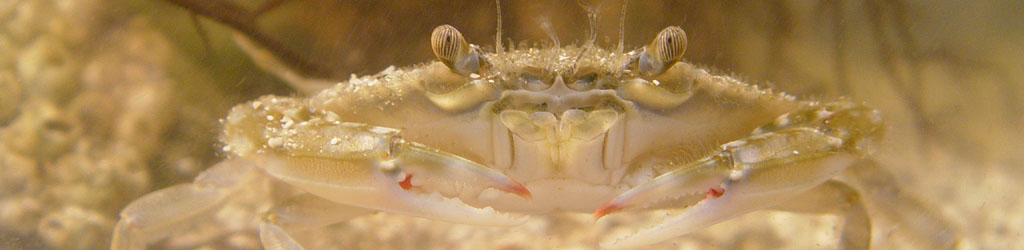
And more than occasionally, it takes just a little thought while there. Take this image from last year.

long exposure from base of Looking Glass Falls in Brevard NC
Particularly hard to get to? No. There were, in fact, at least two dozen cars parked at the access point to this very popular tourist attraction in North Carolina, and the overlooks were crowded enough that we were dodging people both on the way in and the way out. So, a lot of skill involved in setting up the shot? Nope – a decent tripod, some basic knowledge of time exposures, and knowing what white-balance setting to use. I think I needed more skill in rock-hopping, to get to this particular vantage point – most of the people were milling along the rails of the overlook (out of the frame to the left,) and only a few had ventured as far down as I had. The biggest contribution was waiting until no one else was going to be in the damn shot, to provide the secluded and quiet ambience that makes the image work, an ambience that did not actually exist in reality. Oh, yeah, there’s that aspect of these exotic locations, too – there’s very often someone else around, even when they don’t appear to be in the carefully framed and timed images.

Or one from another trip.

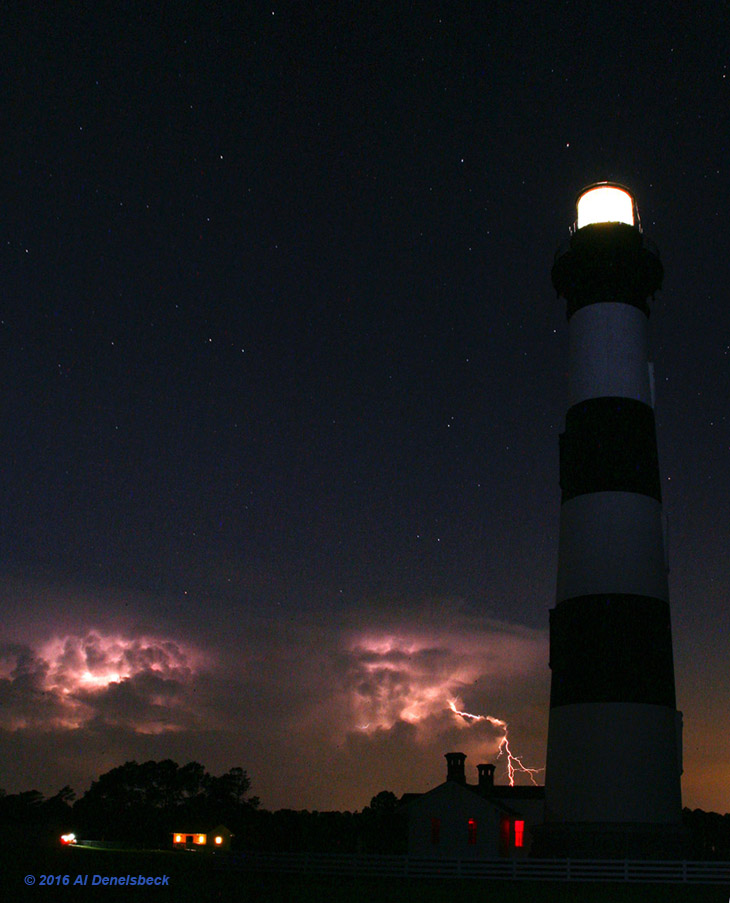
time exposure showing multiple thunderstorms beyond Bodie Island lighthouse
Bodie Island Lighthouse is trivially easy to get to; in fact, it’s probably the most accessible on the Outer Banks, given its easy drive from the main route onto the strand and various places to stay out there. And the approaching storms were visible for kilometers. But while countless people were cycling through the entire time that I was out there myself (the lights at far left are evidence of some,) not one bothered to come anywhere near my vantage point to put the lighthouse together with the active thunderstorm. Meanwhile, to have more than just the bare silhouette of the lighthouse, I had to provide supplemental light of my own. More details in the original post here, but the animated gif (pronounced, “jive”) found here is pretty cool to watch too.

I provide these, by the way, not to imply that they compare favorably against the stunning images in question, but because they’re my own and thus I have full permission to use them, and they still illustrate that such photos are more often created than simply ‘taken.’ There are definitely some places that are more picturesque than others, but this in no way means that great photos are guaranteed or effortless – yes, even in New Zealand.

It’s funny – we pay millions of dollars to sports figures to run fast and throw balls around, for all that this accomplishes; we’re obsessed with the vicarious ‘competition’ that this entails. Yet when it comes to the few (far fewer in count than athletes) who can put together the truly stunning images that captivate and even motivate us, we can’t even give them the bare recognition of keeping their fucking names attached – in some cases they’re even cropped out of the republished versions (or, ahem, reduced to the point of illegibility.) So each time you see such photos on your social media feed or whatever, feel free to say, “Hey, who took this?” or, “Where did you get this from?” or even, “Don’t you think the photographer at least deserves some credit?” It’s fun to introduce a little perspective into people’s lives.

Of course, there’s a slight chance that I might be biased…

And now, the photographers that I could actually locate, because real content is more than copy-&-paste from other sites. You really should visit these.

Morondava, Madagascar – Marsel Van Oosten

Bridal Veil Falls, Yosemite – Mei Xu

Canyonlands, Utah – Dustin Farrell

Mysterious Hallway, Oregon – David Thompson

Soca, Slovenia – Luka Esenko

Lake Baikal ice – Alexey Trofimov

Maroon Bells, Aspen, Colorado – Roger N. Clark

Mt Thor, Baffin Island – Nestor Lewyckyj

Isle of Skye, Scotland – Robert White

Per the ancient lore, part 2

Remember when I said we were going back as far as 2004? I lied.

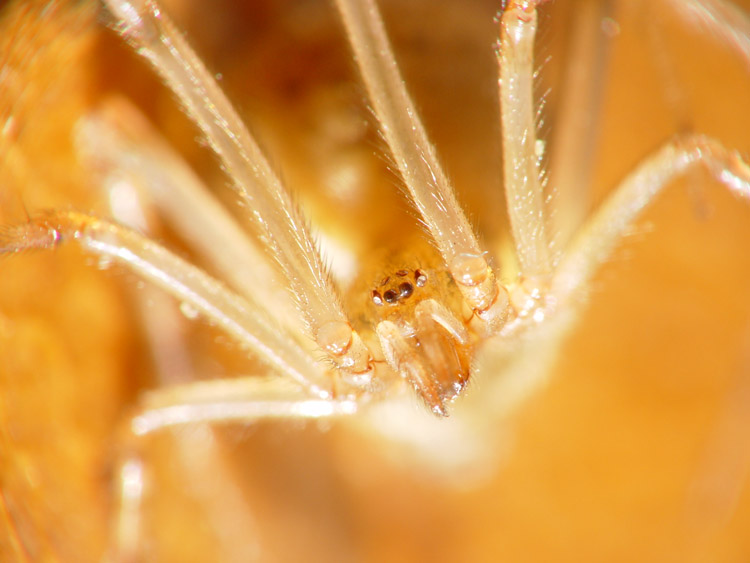
This one’s from November 2003, when I traveled up from Florida to NC for a job interview and Jim and I were kicking back for a bit. I won’t say this is the first of my uncomfortably close spider portraits, but it’s the first with this kind of detail.

common house spider Parasteatoda tepidariorum portrait
In the previous post I mentioned an exercise in shooting images to fit a topic, called the “Shoot-In,” and this was another produced for that (you may see more than a few, because my early digital work and the period that I was involved in the challenges largely coincide.) This topic was, “Bug’s Eye View,” so hopefully you get the idea.

This is likely a common house spider (Parasteatoda tepidariorum,) those bulbous pea-sized grey-brown suckers which should probably be called, “Under a chair in the basement” spiders since that’s where you will always find them. This particular one is dead, gassed with acetone to allow posing because I wanted this face shot; since then, my reputation has become so astounding that they pose willingly. Moreover, this is a macro technique that adapted fairly well to the Sony F717 fixed lens camera, something called, ‘lens stacking.’ Put a 50mm lens reversed onto the end of a telephoto, like 150 to 300mm, and you’ll get some wicked magnification, albeit with a good amount of distortion around the edges as seen here – I’ll probably provide another example in a later installment of the title topic. If you want to try it, determine the filter threads on the two lenses that you want to use and look for ‘double coupling ring’ on Ebay – should cost no more than a few bucks.

By the way, I won’t leave you hanging: I didn’t get the job, though I did get a different position with the same place a few months later on, which prompted my move back to NC. The job, at least, turned out to be a complete waste of time and mental effort, but I met The Girlfriend there, so there’s that…

Yo, I’m all over this one

As intimated in the previous post, spring is indeed being difficult this year, behaving like a child saying, “green light red light!” then giggling maniacally. Which means yes, it’s snowing out there. I didn’t sleep well last night and the sinuses are bothering me this morning, so this is a perfect time to start posting, right? Ah, but today is another holiday – no, not the vernal equinox, that was yesterday – way to be on top of things, there. No, silly, today is Relate An Obscenity-filled Story Day. Now, if you know me, you know this pretty much means every anecdote that I might have at my disposal – I will never be hired to speak at a day-care or pre-school, that’s for shit sure. But, perversely, the particular story that I’ve chosen is not really filled with obscenities – there’s a few, but less than, for instance, some posts. However, you know that they were there all the same; you can just hear them ring out frequently throughout the tale, and can imagine the air was deep blue by the end.

I recently re-discovered this one as I was doing site updates, since I’d posted it on a webpage for the benefit (or whatever) of others. To set the scene, back in 2004 I was participating in an exercise among regulars of the rec.photo.equipment.35mm newsgroup (ask your father,) where each week or so we’d be given a challenge to fulfill, usually something simple, and we’d have to present a photo that illustrated or exemplified the challenge topic. At the time I was sharing a crowded apartment in Florida, and decided to do a ‘studio’ photo to squeeze as many examples as I could into just one frame. So, this is where we pick up, with some slight editing for clarity:

How to spend way too much time fucking up a shot: The trials and tribulations (okay, only trials) of an elaborate “studio” photo.

Hmmmm. “Tension.” Surface tension, spoke tension, chain tension, guitar strings, and emotional tension. One frame left on film roll in the Olympus. I can do this…

Stand up mattress to have room against only blank wall in entire apartment that has access to it. Roll in bike. Position carefully. Clean noticeable areas of grime off spokes and frame. Try to clean spokes with old steel wool pad from kitchen – too rusty, making things worse with rust dust. Nice patch on carpet now. Ignore, carpet not in view. Clean bike again.

Prop guitar against it. Shift umpteen times. Keeps sliding down. Brace with boxes.

Bring in glass, play with reflection. Stick boxes and book to bring to correct height. Shift guitar twelve more times to reflect in water surface.

Angle halogen light to illuminate guitar and bike, get good highlights, reflect in water. Tricky. Eventually realize glass is refracting and distorting image through it. Block back with white paper cut to shape of glass. Good, but too bright with light angle. Light cannot move or reflection will go away. Kick over measuring cup with extra water to raise level in glass. Fetch towel to prevent 1/2 cup of water from soaking into carpet.

Cut black plastic instead of white paper to go behind glass. No good – plastic adheres to damp glass and creates patches of deep black where it touches. Stuff plastic inside glass. Perfect! But it floats and tends to lift above edge of water, becoming visible. No prob – it takes a moment to shift, so I can push it down and get the shot before it rises again.

Place mirror in background. It reflects window light into lens. Not good. Hang black sheet from ceiling as backdrop. Takes several tries with pushpins.

Float needle on water. Plunks straight to bottom. Water level too high to stick anything in there to get it. Carry glass into bathroom, dump out. Use tape to hold plastic down in glass. No good. Use camera filter in glass to pin down plastic, catch needle closer to top. Play with needle until it floats (requires coating it with wax and lowering it onto surface with toothbrush). Go back into room, refill glass. Float needle. Remove cat hair (which also floats) from water for sixth time.

Set up camera. Olympus lenses only go down to f16. Want more; tough shit. Adjust focus meticulously. DOF Preview does not work in split-image portion of viewfinder, very dark and indistinct in other portions. Play for a couple of minutes until I’m as sure as I can be. Camera height too low for cheesy tripod, stuff too tight together for versatile Bogen. Get out micro tripod and stack on books and boxes. Leg spread keeps slipping over edges. Finally get it right. Exposure under halogen at f16 is going to be 1 second, must use cable release.

Glass is tilted. Stuff folded paper under one corner so water level doesn’t look stupid. Guitar shifts yet again. Fucker. Float needle, carefully. Unless aligned a certain way, it disappears against dark plastic backdrop. Tap gently. It tends to rotate slightly back into position. Goddamn thing’s mildly magnetized, I just made myself a compass. Now I know what to do if I get lost in my bedroom.

Go sit in position, cable release in hand. Tap needle gently, grimace and grab hair (not an act by this point). Trip shutter. Can see needle moving.
RESULT: Total shit. Too busy, too damn many reflections, needle moving and indistinct, should have shot it vertical, framing bad, spokes out of DOF, too much of bike visible, not enough of guitar, and I look like I’m smiling.
elaborately staged and still pathetic 'studio' shot
I learned a fuckload about studio photography doing this, but the primary lesson is that I don’t want to do it again. Ya gotta admit the black plastic trick worked like a fucking charm, though. And I can see the merits of light tents and movable black backdrops.
But I went archive for “Tension”…

… which means that, having blown the one frame on the roll that I had to devote to this, I wasn’t going to load and shoot another whole roll of film to meet the deadline, and instead went with a photo I already had in my stock. The digital camera that I’d had on loan, just a few months before, had been shipped off to its new owner by this point.

Note that you can also see the rust dust still present on the bike frame, and one of the boxes peeking in at lower right. And of course, the scratches on the negative that I wasn’t going to bother with by this point. Also, my appearance in the frame came courtesy of that aforementioned mirror, since I didn’t have the room nor a long enough cable release to be in that position in the background.

It’s easy to believe that studio photography is fairly simple, since everything is controlled and set up just how you like it. The reality is often something different – and I don’t even do this routinely (obviously.) Reflections (look at how complicated the guitar seems just because it reflects everything around it,) backgrounds, light angles and hues and intensities, to say nothing of the one angle that illustrates what you need it to – which I even had to play with in the previous post, so the softbox and focusing light addition are clear. Sometimes we don’t realize that our perception of something comes from our ability to see it three-dimensionally. I was approached by a glass artist who wanted her artworks photographed for advertisements, who stipulated that she wanted it clear (heh!) that the pieces were glass – it wasn’t always evident in the photos that she’d had done previously. I knew it would be a tough job, because most of the impression that we get of depth and transparency comes from seeing such a piece from multiple perspectives, noticing how the different layers and surfaces shift separately as we turn our head or walk around it – something that obviously wasn’t going to be demonstrated in a still photo. Truth be told, I wasn’t really qualified to tackle it, but she was looking for a bargain rate, so I quoted her a price with the stipulation that she would only pay if both she and I were happy with the results. The price I quoted was probably one-third or less what a professional studio would have charged, and it was still too much for her tastes, so yeah, best of luck with that…

1 190 191 192 193 194 329