I’ve kind of covered this in portions of several different posts, but expanding on it seems warranted, as I change perspective a little just to highlight something. So let’s look at the question that religious folk often like to ask of atheists, “But what would it take for you to believe in god?”
I imagine that half of the time, it’s asked out of frustration, as the atheist displays a higher standard of evidence than the religious querist. They find it hard to believe that the factors that they found compelling could fail to impress someone else. Other times, it’s asked out of a deep suspicion that there really isn’t anything that the atheist would find convincing, that they’re emotionally or ideologically wedded to the idea of no god, and thus there’s no hope of having a rational discussion (which may actually be true, but not for the reasons that they suspect.) Both of these can be rather revealing in their nature.
First off, it should go without saying that when we’re talking about a being that supposedly created, not just a species or a planet, but the entire universe, proving such a thing is a remarkably tall order. In fact, it pretty much defines ‘impossible,’ but we’ll go ahead and grant that a simple demonstration of spontaneous vast creation would at least be a good start. It’s entirely a non-issue, however, because not one religious person can even come close to such a thing; often, they don’t perceive the huge and overriding difference between being personally convinced (or emotionally convinced, if you prefer,) and having something solid to work with.
While the second approach, the belief that atheists are being emotionally intransigent and not reasonable, is almost exactly the opposite, as if most religious folk have arrived at their standpoint through careful consideration of the evidence and all of the ramifications and possible misinterpretations – I know, I should have appended the ‘humor’ tag to this, shouldn’t I? Because, let’s be realistic, every reason ever put forth for belief has revolved around either weak personal convictions, flawed fundamental premises (such as, “Everything has to start somewhere,”) corrupt philosophical arguments, or the incredibly insipid. There really isn’t much point in engaging with someone that would use an inordinately fatuous argument such as, “The bible says it’s true!” It’s like they’ve never encountered a politician or salesperson…
But let me hasten to correct a potential wrong impression: the argument may be fatuous, but the people making it rarely are. They can, in fact, recognize questionable statements from politicians, most especially the ones they don’t like. And they can recognize weak and illogical arguments from scripture or philosophy – for all of the religions that they don’t follow. But yes, there’s virtually always a set of double-standards at work. While nearly everyone can attest to the value of extensive testing for new pharmaceuticals, or perhaps look critically at the labels of the food they buy, often their requirements for ‘proof’ of a god are remarkably thin, largely because they want such a thing to exist. And we cannot forget the simple human trait of taking one’s cue from others, not only responsible for even introducing the concept of religion in the first place, but establishing the One True Religion™ in their mind, without any need for comparing others or weighing the evidence.
There’s a certain level of humor and irony in the idea that atheists might just find that proving an omnipotent being would require some incredibly kickass evidence, and that the standards of evidence should be the same regardless of personal desire (and even that personal desire actually has nothing whatsoever to do with evidence.) Yes, this means we can be accused of being too emotional and not emotional enough while discussing the exact same topic.
I’ve addressed the personal belief angle numerous times in the past, but it bears repeating in this case. It is often argued that religion is a personal thing, akin to liking a particular food or music style, and that would be fine if that was the only way it manifested. No one, however, makes important decisions regarding how their children are raised, how they treat other people, what politicians and laws to support, and so on and so on, based on what flavor ice cream they prefer. If someone is forming a worldview, one that serves as a foundation for a large part of one’s life and decisions, how is it possible that the standards for selecting such a view are almost universally weak and facile? I’ve seen people do more research into where they’re going for vacation than the vast majority of religious folk have done when deciding on what mystical process governs the entirety of creation.
And we arrive at an interesting dichotomy. A lot of religious folk, in my experience, seem to feel that control is in god’s hands – the concept does not originate within them, of course, but is fostered by literally thousands of sources claiming such a state of affairs. And so their obligation, their onus to even make informed decisions, doesn’t actually exist; the one decision that they’re responsible for is simply to be religious, and there isn’t even a factor of which religion, because the only one that counts is the one they have direct experience with when growing up. Until and unless, of course, they run up against something that they don’t like. Then, they will manage to find (or twist) some aspect of scripture into justifying their preconceived notions, secure in the idea that they are following god’s path. All other passages, especially the ones that explicitly deny their notions or any other aspect of their current lifestyle, somehow don’t count. And while it’s easy to believe that I’m addressing a tiny subset of religious folk, the bare fact is that I’ve never encountered anyone that fails to fit into this category; I have yet to find someone devout enough to follow every tenet that their own scripture provides. In a lot of cases it’s impossible anyway, given the contradictions inherent in the passages, but it does mean that, to them, “religion” apparently means a set of guidelines specific only to themselves. Which makes it a lot easier I guess.
Admittedly, some of the blame must be placed on whatever religious leader or organization the ‘devout’ find themselves in the thrall of, since countless concepts originate solely through those. They’re responsible for so many of the ills that religions foster, now and at all times past: witch hunts and heretic purges, anti-evolution efforts and fretting over satanic whateverthefucks (it’s always something different,) what women can be stoned for doing and putting bombs in public places. The scriptural guidance towards these ranges from incredibly weak to completely nonexistent; instead, the idea of these being “god’s will” comes from voluntary conformity to whatever circle of influence someone chooses, not from anything remotely resembling divine provenance (which, as noted above, is impossible to establish anyway.) And the choice of these influential circles is made… how? Again, are we talking solid supporting facts, or liking whatever particular hotbutton of desire happens to be pushed?
It stands noting that none of this should have any bearing whatsoever, as I’ve said before. Opinion and personal satisfaction aren’t any kind of tools towards real and useful information; it doesn’t matter how much someone likes a particular idea, since this has no affect whatsoever on any actual existence. This is the entire point of evidence: we can form a solid worldview only on what we can establish and demonstrate, not philosophically, not through debate, not through personal satisfaction, but only through dependable, repeatable, and above all predictable behaviors or responses. We know the acceleration of Earth’s gravity by careful measurements, despite the overriding belief for so long that it was entirely different, and the connection to mass has been so dependable that we can put probes in orbit around other bodies in our solar system. Who really gives a fuck whether someone believes otherwise? What’s that going to do for them?
Which brings us to another dichotomy. What I suspect is a disturbingly large percentage of religious folk arrive at their surety through rather lax manners: mostly just following family and friends, occasionally some rather lame theological arguments, and at times buttressed with something personal like a dream or a curious coincidence. And this is fine for circumstances that bear little to no consequences – I like birch beer largely because it was the soft drink of special occasions when I was growing up, and not because it’s so much better than other choices. But then, having established their choice through such banal means, many religious folk then derive the confidence that it’s remarkably supportable and robust, and use it to dictate how others should behave, or what values are useful, even (and if you get off on irony you’re going to need a lie-down,) what tenets of science established through countless experiments and measurements should instead be considered outright lies. I mean, thanks for that guidance, you certainly seem to know how to spot them…
Another just for shits and giggles: I don’t think I’ve come across a religion yet that doesn’t have humility as a virtue, or at least a commendable trait, and treating one another with respect and kindness appears very frequently too. Now, I won’t say that these are the most frequently ignored tenets of faith, but they certainly rank extremely high on the list. Even funnier is that these are two of the values that just about everyone, atheists included, actually support. Arrogance is, of course, welcomed by no one.
So we come back to the question of, “What would it take to get you to believe?” Earlier, I’d said that my favorite response is, “What have you got?” knowing that the answer is, always and dependably, superficial. But now I think I’m favoring a more elaborate response: “An omnipotent and omniscient god that created the entire universe and is remarkably involved in what we do as a species above all others? Wow, it would take a lot – give me a week or so and I’ll provide a list. Why, what did it take to convince you?“
Potentially Related Posts:
























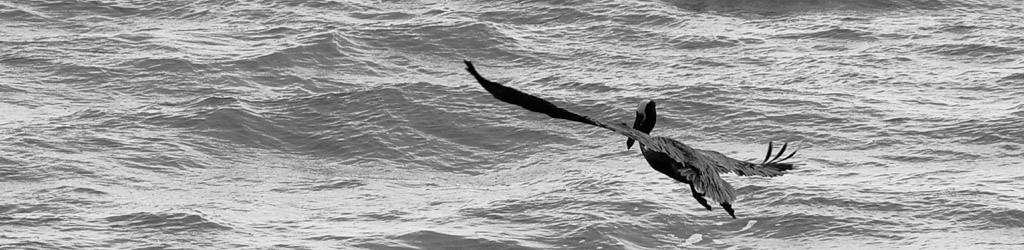





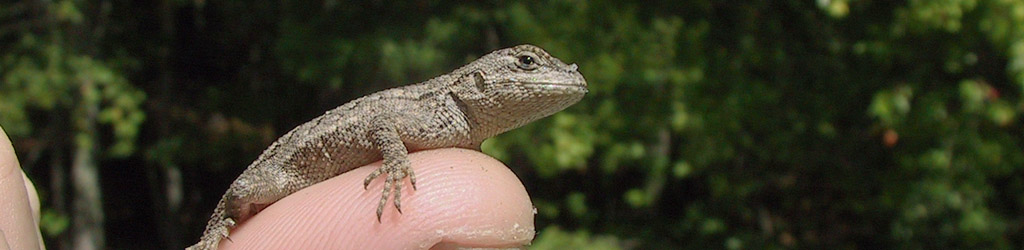

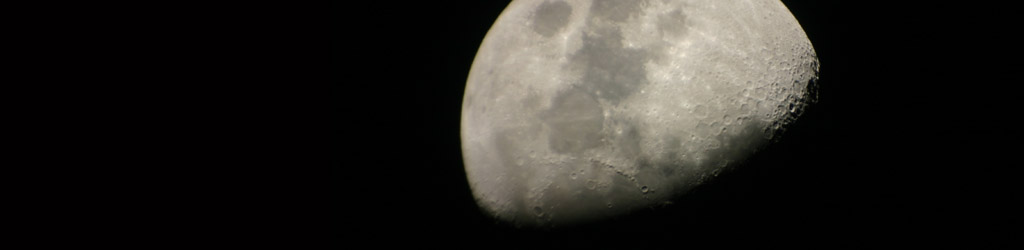






















 Okay, on to more topical stuff. These are the three components of the macro focusing light that I constructed, for only a few dollars all told.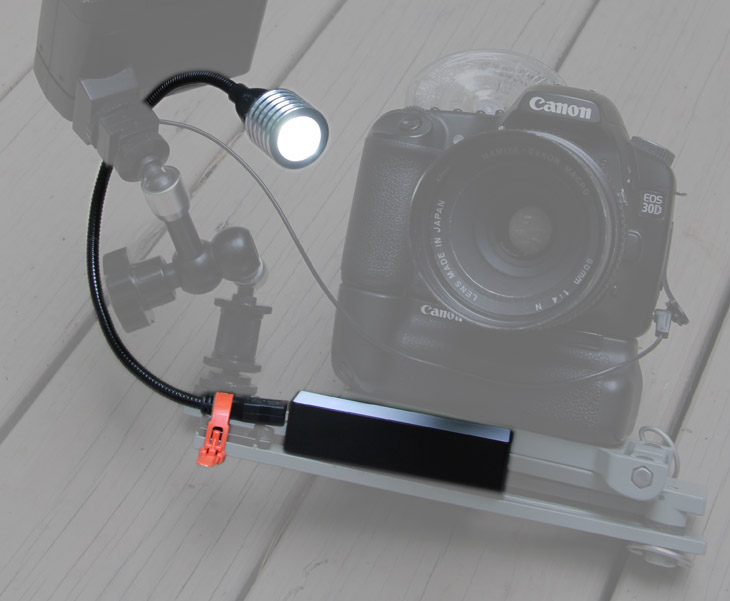





 Okay, no, it’s really still June, and not eight hours into July, so my month-end abstract is still on time. It’s was just… server issues, yeah, that’s it, server issues that prevented this from posting when I told it to.
 I have been trying to get to a couple of posts, including possibly a podcast, for quite a while now, and just haven’t been able to get my shit together. So for now, because I feel guilty and inadequate, I’m going to do a quickie to feature a few of the amphibians I’ve found in the past few weeks.


 Naturally, after I finally got these shots, then one of the quadrupoles decided it would bask at the pond’s edge in bright sunlight and completely ignore my presence. I like this because it shows the full-length tail, something that would soon begin to shorten before vanishing entirely.