As the year winds down, I present the tenth podcast since I restarted them in late June – not exactly one a week, but not too shabby for something I’m still just toying with. And ‘toying’ is perhaps the most appropriate word for this one, as I tackle nothing in particular, and at times a bit roughly too.
Walkabout podcast – Nothing in particular
Terry Pratchett, in case you have somehow escaped his influence. At some point in the future I may do a review of one of his Discworld novels. Yes, yes, I promise I won’t do an audio version, okay? Sheesh…
Did you catch the part in there where I got the movie title wrong and had to dub it in much later on? This is a lot harder than it seems like it should be, not from a technical standpoint (which is only cut-und-paste,) but from a seamless sound quality one, since matching voices on separate occasions, even when it’s your own and you can hear it and are just trying to replicate it, is elusive. Or at least it is for me. But yes, Leeloo was not in The Sixth Sense. I know better, I was just mixing up my numbered Bruce Willis movies.
But here she is (or to be more accurate, the actress who portrayed that part) showing off her vocal abilities:
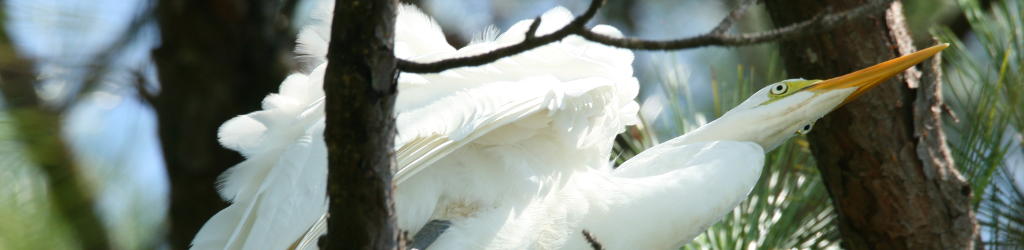
And as a bit of bonus content (or to make up for the podcast – whatever works for you,) I include a link that The Girlfriend passed on to me after I’d recorded the audio, a live bald eagle nest cam in Ft Myers, Florida. As I type this, someone has noted that one of the two eggs is showing hatching activity (in December? Seriously?) so I provide this not a moment too soon. It has infra-red, so you can check it out anytime:
That’s always a hilarious joke whenever it’s played on humans, but it backfires a bit when it comes to the big cats:
I had featured a similar video a few years back and was going to repost it, but came across this year’s offering instead. This is courtesy of Big Cat Rescue out of Tampa, one of several rescue organizations across the country that specialize in animals impounded from unlawful private ownership or illegal cat trade, not to mention the collapse of small tourist attractions and such. We have one nearby, the Conservators Center, which we’ve visited a few times. Always interesting, but photography is not a prime pursuit in such places because the settings and backgrounds are almost invariably ‘unnatural’ and the fencing ubiquitous.
The Conservators Center offers photo tours for a premium price, which allows photographers to shoot through openings provided in the fences, but that does nothing for the settings and backgrounds, so I’ve never sprung for the cost. With some judicious framing and the right conditions, it might be possible to pull off some decent portraits without revealing the setting, but that remains of limited use.
As I’m typing this, The Girlfriend is in the other room baby-talking to our own cats, which seems appropriate. Both of them (the cats I mean) were quite interested when the tree was first put up earlier this month – we won’t talk about how much earlier – but they remained more reserved than the big cats in the video, which we usually consider staid, aloof, and ‘majestic,’ and a lot of that may have to do with the typical conditions of observation in the wild, where the cats are well aware that people are around and their behavior is a reflection of this knowledge, like how we don’t belch exuberantly when company is present.
I shot a handful of frames, and chose this one because of the halo around the blue light, which was purely coincidental. All of the out-of-focus orbs are reflections of the tree in the nearby window, in case it wasn’t clear – the crossbar is the decorative frame between the double layer of glass. Thus the stacked orbs, except for those that fall right on the crossbar, which is between the glass panes and preventing a second reflection from the back glass. But whatever, I just liked it.
I realize that this isn’t exactly timely when it comes to the holiday season, but I can’t imagine there are a lot of people who are turning to me for guidance in what to purchase for christmas, so I refuse to feel bad about it (See? You can justify anything.) Regardless, I present just a few thoughts about equipment and perspective.
Walkabout podcast – Equipment
This image was shot with a consumer zoom lens, a Canon 75-300mm f4-5.6 Image Stabilized lens. It wasn’t the equipment that provided the pic, but being in the right place, patience, luck, perseverance, and picking the settings that would work the best – see here for more details. While there are certainly cases where better equipment will increase your chances of capturing a particular shot, these represent a small percentage of the factors involved; the majority of things that will impinge on your chances are related to technique, knowledge, and just constantly trying harder. For instance, I knew the hummingbirds were coming to feed from these flowers frequently, and knew both their appearance (even out of the corner of my eye) and the sounds they make. I positioned myself where the light was the best, and chose camera settings to increase my chances. And waited, near-motionless with camera raised, in sweltering weather. A much more expensive lens might have made this shot marginally sharper, or might have produced a few more frames that were worth keeping, but it never would have taken the place of any other factor involved – I would have had to have been using the exact same habits.
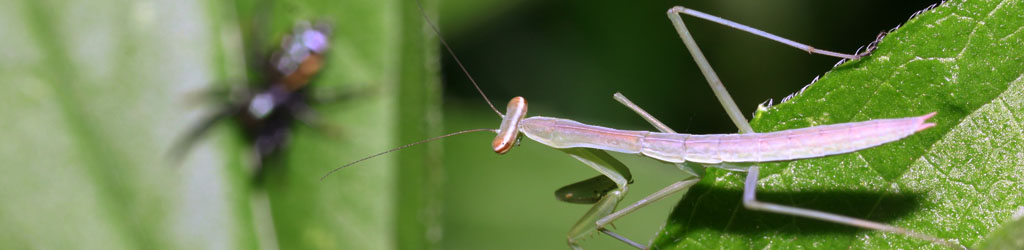
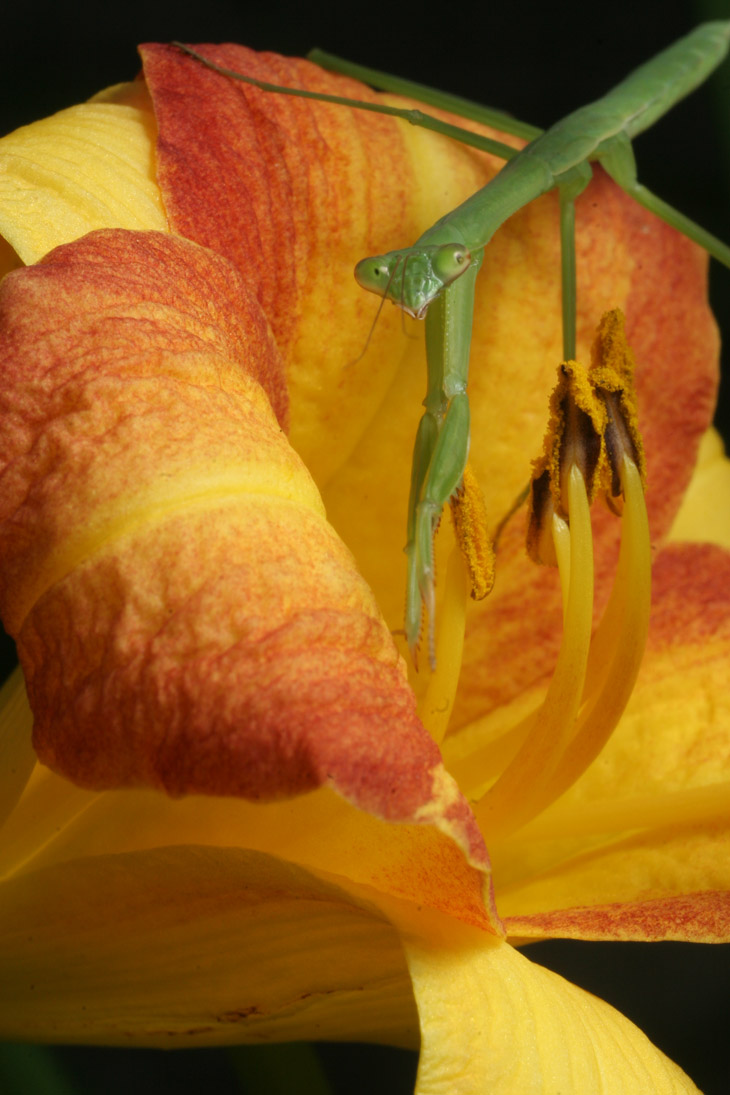
And this was taken with a broken lens, and a consumer zoom at that, a Sigma 28-105mm f2.8-4 (okay, so it was a failed aperture motor, and not any kind of cracked glass or anything – allow me a little poetic license.) While a reasonable performer used normally, it does excellent macro work used backwards on the camera – the juvenile mantis in this shot is not 12mm in overall length, and that’s an aphid being consumed. Credit must also be given to the lighting source used, which I’d modified for my own purposes – it was later superseded with a different version. You can save a hell of a lot of money with a little knowledge and a little creativity. Another example of this lens’ performance can be found here, still my favorite arthropod portrait (yes I’m weird.)
By the way, I mentioned in the podcast about wrenching my arm while preventing a nasty fall? That occurred only minutes after this image was taken, which by the way was using that same lens, only before the aperture stopped working.
Meanwhile, my workhorse lens is a Mamiya 80mm macro, designed for the Mamiya M645 series of medium-format cameras (in other words, not digital, and not even autofocus) – I use it on my Canon bodies with a simple adapter, even though I’d purchased it to use on my Mamiya body. There are a lot of options out there, most of which don’t require throwing any money at them at all. Take some time to examine all of the possibilities, and spend your money where it will do the most good and stretch the farthest. Or at least, that’s my advice.
Sometimes it’s funny, the things we notice and the things we don’t. Today is the winter solstice, or the day with the least amount of sunlight in the year – daylight will only be increasing now up until June, which I consider a good thing. And it’s also credited as the first day of winter, which is completely ridiculous even when you narrow your frame of reference to the northern hemisphere (in the southern hemisphere, it’s the first day of summer.) Back when I lived in New York, the weather was notably “wintry” long before this, and even here in North Carolina we’ve occasionally had snow by this point, and we usually only get a couple of snowfalls per year; none yet this year, by the way, but we’ve had a couple of frosts. The real winter weather is still ahead of us.
I can look on this day and think, Yeah, now the daylight will be returning, even though it’s so gradual there’s really nothing remarkable about today, and nothing will be noticeable for weeks. As for the return of warm enough weather to provide shooting subjects? That’s a couple of months away – we’re not even halfway through the ‘dead season’ for most of the subjects I tackle. Can I look forward to perhaps doing some nice winter snowfield shots? Mayyyyybe, but as I said, the snowfalls here are sporadic, and when they’re good enough to make lovely shots they’re also heavy enough to make the roads treacherous, and there aren’t many options within walking distance.
So let’s face it: this is an astronomical event, and the vast majority of those go past without notice. The only real reason we’re even aware of this one is that ancient cultures had to notice it; the position of the sun was the only way for them to keep track of the days and seasons, since calendars were a long ways off. Thus Stonehenge and the “midwinter” (heh!) feasts that were later co-opted by christians as the birthday of jesus, despite the fact that no one had bothered to record that magical day and all indications from scripture point to it occurring in the spring, but someone had to take a stand against a completely mythical being (I’m talking about saturn here, and not yahweh or jesus. Just in case it wasn’t clear.)
Maybe I should simply create some arbitrary holidays next year, just to make particular days ‘special’ in no meaningful manner at all. Let me think about this…
The other morning as I was rushing out the door, the sky was displaying some rich and gorgeous colors, and there wasn’t a thing I could do about them. Well, there was, if I wanted to get fired, but sometimes you have to prioritize. As I was up early enough again this morning, I kept a close eye on sunrise, and was rewarded with some not-quite-as-gorgeous colors, so I present them for you before the day closes here.
You’ve seen those dock pilings before, or if not, you have now (the water was higher then.) But what’s also visible if you look closely is a faint sun pillar, a column of light reflected from high-altitude ice crystals, in this case pointing towards the not-yet-visible sun and framed in both the gap in the trees and the space between the pilings – again, just subtle positioning to improve the overall affect. When you have conditions like this, you need to move fast – they won’t last long. The photos I have span all of four minutes (I realize as I checked this that I haven’t updated the camera clock for Idiotic Daylight Saving Time,) and the color was already fading.
Yes, I’ve done better earlier this year, but it’s winter, or technically late fall, and I’m taking what I can get, at least until I get those plane tickets to Belize for christmas…
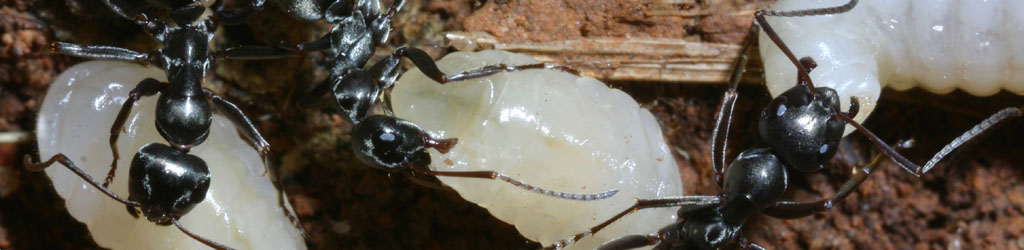
So, the image I am about to show you can be considered creepy by a lot of people, I suspect largely through social conditioning, but whatever the reason, I’m suggesting you get over it; the amount of information and fascination that can result is a lot more interesting and useful than shuddering and saying, “Ewwwww!” And it’s not all that bad anyway.
Several years back in the NC Botanical Garden, I spotted a curious spectacle supported high on the leaves of a local fern. This was in a protected area well off the boardwalk, and there was only so close I could get to it, and just one angle to work from, so this is all I have. It’s a nice illustration of natural processes, but possessed its own mystery.
As a moment’s examination will show, this is a cluster of ants cleaning the carcass of some small deceased animal, with just enough anatomical detail showing through in the remains. The forebody had since dropped to the ground or leaves below, and the few remaining bones up there were too scattered and obscured to provide any details. The whole frame isn’t more than 15 cm in length, so this is quite small. It was taken in August, so this doesn’t narrow down the choice of species too much – virtually everything is active in August.
I’m not a biologist, and my knowledge of the various species around here doesn’t extend to their skeletal structure very well, but I nonetheless hazarded a guess, for years, as to what the departed was. The pelvic girdle is what I was going on for my guesses, knowing that most birds would have a broader pelvis, and that long narrow structure seemed to tell me it belonged to a long narrow critter; I considered this very likely to be a green anole (Anolis carolinensis,) something that I’ve seen countless times within the garden. Any further bits that could be used for confirmation, such as the skull, feet, or tail, had all dropped away under the ministrations of the ants, but it seemed like the safest bet to me.
Until I got ready to post this photo, sitting in my blog folder waiting for the winter slow season, and I started trying to find illustrations of anole skeletons. I quickly discovered that my thoughts on the pelvis were wrong: anoles have very minimal pelvises, certainly not the elongated type seen in my photo. Scratch that idea.
The way the hind limbs were splayed brought another species to mind, and a search for that skeleton came a whole lot closer to the mark. Tree frogs (second specimen shown on that page, scroll down a little) have pelvic girdles of exactly that nature, which makes a kind of sense: it serves as the anchor for the strong hindleg muscles that propel their leaps. In my mind, it should have been wider since frogs are broader-bodied than anoles, but they’re really not – they just sit bunched up most of the time, yet when stretched out they’re pretty slim.
[By the way, one of these days I’m going to try out those oxidizing techniques shown on that page, because I’ve always wanted a preserved skeleton of something. We’ll just have to see what I find dead but intact.]
Which species of treefrog isn’t something that can be answered, I think, from the minimal remains – we have both green (Hyla cinerea) and Copes grey (Hyla chrysoscelis) treefrogs around here, and their body structures are very similar. And how the frog died in that position and didn’t fall from the swaying leaves – that’s another question, one I’m not even going to try tackling. It seems like the ants made quick work of it though, since I doubt it would have remained long there given any rains or stiff breezes. Just one of those curious finds, right place, right time.
I had initially said that I wasn’t timely on this, and that was even a few days earlier when I’d started to type this up, but then I realized how much I was falling for the same trap that has made “news’ the pathetic state of affairs that it is now. Scientific findings of this nature don’t have this bare moment of interest, like a celebrity doing something stupid, but a lasting impact and a value of fascination that persists. So regardless of how many times it’s been covered by other outlets, if you haven’t looked at the details of this yet, you really should.
Lida Xing, a paleontologist from China, had been poking around a market in Myanmar looking at fossils for sale when he spotted a remarkable specimen: a portion of a dinosaur’s tail preserved in amber. Now, this alone is a so-far unique find, since what we’ve been working on for the past century have been fossilized bones and the occasional body imprint in mud, so a portion of intact body – skin, muscles, and so on – is pretty sweet in itself. But this one has feathers, and in remarkable detail too. Why Evolution is True has more information, and I encourage everyone to go check it out, because I’m not going to even come close to doing it justice.
The most frequent comment on the entire subject is how the images of ancient sauropods have changed in the personal timeline of just about everyone. While the idea that birds evolved from some branch of dinosaurs has been around for a long time, it was a casual theory for many decades, having little impact on the popular perception of dinosaurs as just variations of reptiles. The idea started slowly gaining ground and attention as more fossil finds began to fill in the missing factors that distinguished the similarities between the two. In the past thirty years or so, the evidence started to become overwhelming, both in the form of matching skeletal structures like the clavicle/furcula, and in the finding of primitive feathers, mostly in mud impressions. Just a few years ago, I remember reading about one study that had started piecing together the colors of these feathers by noting that black feathers in modern birds contained a significant amount of a certain element; by testing the sedimentary deposits in the mud casts of some of the feather impression fossils, the same elements were found, but only in certain locations within the cast. The feathers, as they decayed, would give up their mineral composition to the surrounding mud, and so finding the same elements among only certain feather impressions gave evidence that at least some of the feathers were black. While far from proven, it remains a remarkable application of forensics, and provides the first inkling of what colors at least some dinosaurs might have been – before that, we only had guesses based on existing reptiles and the supposition of what would have worked best in certain circumstances. Was camouflage an issue? What about sexual selection, like how current birds select mates based on how brilliant their plumage is?
The newest find in amber not only shows excellent resolution of the feathers, including the fine structure of the barbs and vanes, but also a hint of colors. Quite notably, it provides enough detail to start filling in the finer points of how feathers themselves evolved, especially since, at present, it appears as if they have only evolved once in history (as opposed to flight, which has evolved four separate and distinct times, for birds, insects, bats, and pterosaurs, which were separate from the theropods believed to be the ancestors of modern birds.) But feathers have to have a specific interlocking structure to be useful aerodynamically, to form a smooth and manipulable surface, and such flight feathers are distinctly different from even the down feathers of modern avians. Within each feather are ‘arms’ (barbs) that radiate from the central ‘quill’ (shaft,) and then smaller ‘barbules’ that branch from those – these are the ‘teeth of the zipper’ that allows the flight feather to become one smooth structure rather than simply fuzzy like a down feather, and they must alternate position on either side of the barb in order to interlock. One of the questions about the evolution of feathers is if either the alternation, or the ability to interlock, developed first, and this specimen lends weight to the latter; this was definitely a flightless species with feathers that could not form a smooth surface, yet the structures that could hold the barbs together can be made out in examination, without the necessary alternation that would permit a contiguous surface. In other words, the teeth of the zipper are there, but not yet placed where they could fit together.
Just stopping to consider the various aspects of it leads to countless further questions, and Wikipedia’s page on the origins of avian flight provides a lot of the speculative detail (and while we’re here, the origin of birds page is cool too.) But here’s one aspect that I’ll provide, first introduced to me by my raptor rehabilitation training many years back. Most modern birds have scaly legs, which is not unlike the scaly skin of many modern reptiles, and curiously, the scales tend to follow the same distribution pattern of feathers in nearby areas while not found beneath feathered areas at all (nor on the bare face or head areas of species like vultures and cranes.) They are largely the same types of cells, and closely related to the cells that produce fur in mammals despite the wide gulf in evolutionary development between the classes; there is a simple genetic mutation that can produce feathered legs in birds. In other words, the DNA of the cells contains the ability to produce either, with indications that only a small number of proteins regulates how they become either simple scales or elaborate feathers.
It’s definitely worth checking out the original paper, and especially seeking out the full-resolution version of the image that shows the electron microimages, solely for the detail obtained from this amber specimen. And if you’re curious about feathers and skin, this page briefly explains a lot of details about the functions and properties of both.
I have a couple more posts in the lineup right now, but I think I only have time for one this morning, so we’ll just have to see when the others arrive. It’s a shame, because one is pretty damn interesting, but I doubt I can do it justice if I rush it, so we’ll go with something more visceral and less thoughtful at the moment.
It’s gotten to be the dead season around here, so when we were out a few days back searching for photo subjects, I wasn’t holding out a lot of hope for any kind of interesting fauna, and even the flora is pretty sparse – the majority of the trees have shed their leaves and we’re largely into the duochromatic winter phase where everything is brown or grey. [A stupid quick side note: while there is a general consensus on the meaning of monochromatic, meaning one color – even when the most frequent displays of the term actually refers to no color at all, just a range of greys – the word to define two colors is unclear and largely a matter of preference; it can be duochromatic, or bichromatic, or dichromatic, but each of these have other specific meanings depending on the environment. I’m sticking with duo because it’s the most self-evident.] Nonetheless, a small American sweetgum sapling (Liquidambar styraciflua) entangled with an unidentified vine were rashly defying the winter gods by flaunting some bright colors – the green leaves of the vine set off the reds and oranges of the sweetgum nicely. There wasn’t a whole lot I could do with it, but it was something.
Then as I passed it and started facing more towards the sun, I could see the backlighting was bringing up the color and textures of the leaves, but more importantly, there was a section of stream in the immediate distance behind it that was producing ripples, and from that angle at that time of day this meant a glitter trail of sparkles. There was just one position only a handful of centimeters across that would work, but that’s what you have to be alert for. I lined up and fired off a couple of frames, then pointed out the opportunity to Mr Bugg.
The aperture had to be wide open to render the distant sparkles as soft circles, rather than in the shapes of the aperture opening (anything from pentagonal to nonagonal depending on the number of aperture blades in the lens,) and of course this meant focus was pretty selective – not all of the leaves, or even a single leaf, could be in sharp focus. And you can try to use those sparkles as a distinct shape in the background, but it’s tricky: each reflection from moving water lasts only a fraction of a second, so what you get as the shutter trips is unpredictable, and if you choose an area of very dense sparkles to try and increase the odds, you’re just as likely to get too many, which run together and defeat the nice little orbs which give the image character – notice how the shaping to the brightness on the right has become indistinct, not bubbles at all. And since the position of the sparkles will change with sun angle and perhaps blocking tree trunks, the window of opportunity for such things can be pretty narrow, perhaps 20 minutes or less. I’ve done better, but for the slow season, it was a modicum of success and a good illustration of examining the options of a subject.
By the way, if you really want to understand why those circles appear (and why “orb” photographs are utter nonsense,) I have an illustrated page here, and another example here.
It’s gotten cold again and there isn’t a lot to photograph and truth be told I’m not even trying, so we’re going back to May with this one. I’ve had it sitting in the blog folder for all this time (yet it’s far from the oldest photo in there,) because I was doing too many mantises back then. Yeah, I’m finally admitting it, I had a wild and hedonistic youth, if by ‘youth’ you mean just over 1% earlier in my personal timeline, and by ‘hedonistic’ you mean… well, whatever you like, because it appears I don’t even know what it means normally, but probably not a lot to do with blogging about mantids. I’m fairly certain it originated with that, though. You know, back when the ancient Latins were inscribing mud tablets with illustrations of Mantodea and hanging them on the privy walls…
Worse, it’s not really a mirror image, since the mantises are different hues and the legs aren’t even in matching positions, and they’re not directly opposite one another either – but their antennae are pretty close, so we’ll go with that. Let’s consider it a mirror from an apprentice just starting out, with a lot of flaws in it.
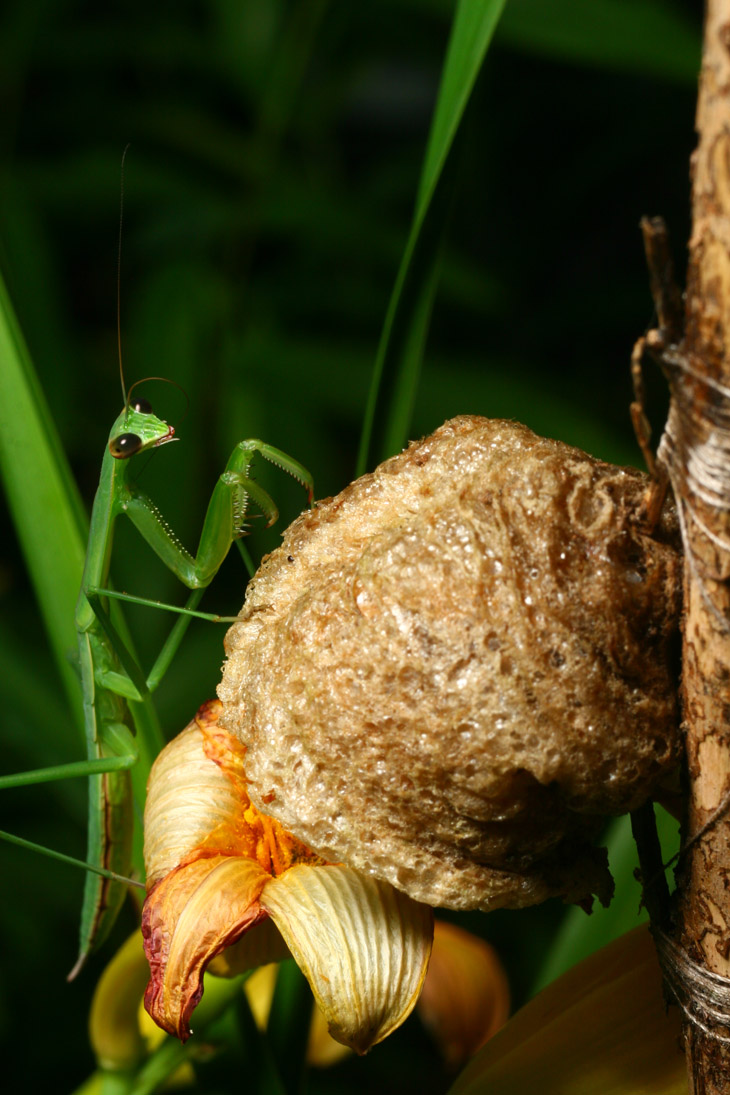
It would be easy to believe this was a variation of the second photo found here, except that they were taken on two separate days and I doubt the mantids held still that long. It’s probably obvious that they’re tiny, and if you know anything about mantids you’d know that from the month that I photographed them in, but it’s safe to say these are under 12mm long. I didn’t have as much luck with them this year, as they seemed to disperse faster and I spotted none of reproductive age in the immediate area when September rolled around, but I recently found an egg case that I can’t be sure is this year’s or not – we’ll find out next spring. Plus I will likely purchase a couple more to try, once again, to capture the hatching as it occurs.
I will be featuring a few more older images in the coming weeks, so you have that to look forward to – I know I’m all excited and antagonistic…