This post marks a particular milestone for the blog, as it is my first use (actually, in my entire life) of the word, “farraginous.” Which spellcheck doesn’t even have listed, so that guarantees that I’m sounding like a pompous ass. But I’m not going to make anyone have to look up the word to see what it means just to understand a simple blog post, so I’ll helpfully say that it’s defined as, “consisting of a farrago.”
Anyway, we’re just going to go through a handful of relatively recent photos, most of them obtained during student outings – no real theme or message, I just can’t let Jim hog all the bandwidth.
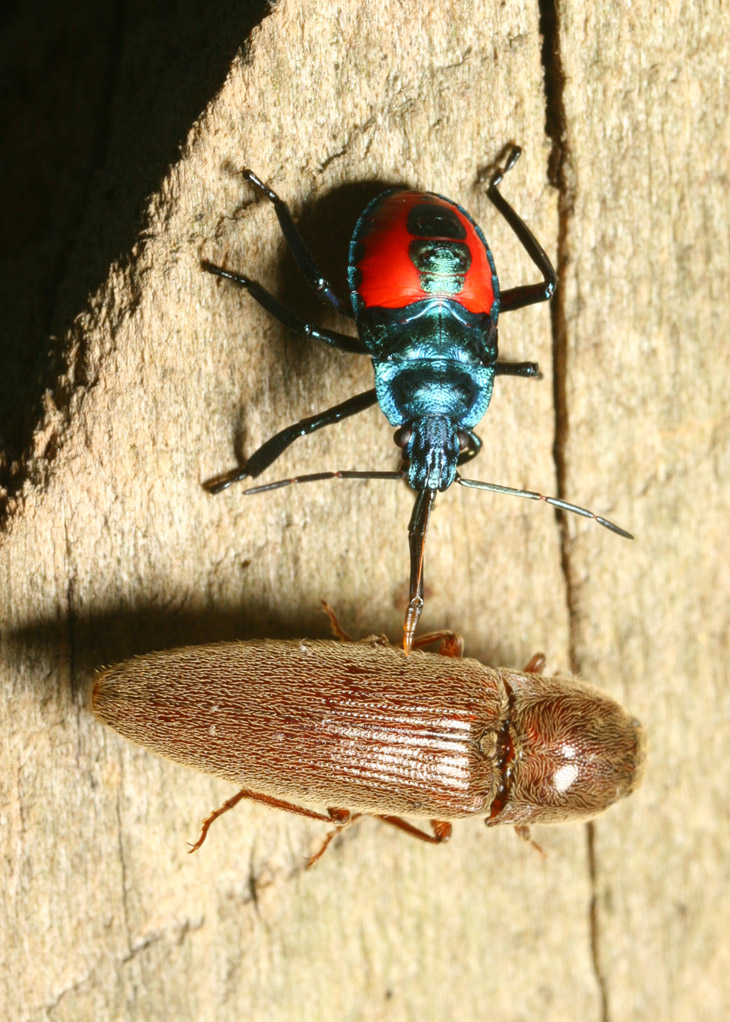
This is the oldest photo among the lot, taken back on May 4th (Star Wars Day if you celebrate that in your culture) – I just never found a good excuse to post it. The insect seen here really is that colorful – it’s not a trick of the flash or anything, but it primarily appears in a certain nymph stage and will become more muted as the insect nears adulthood. This is a Florida predatory stink bug (Euthyrhynchus floridanus,) and they’re often seen in clusters, as this one was, but they’re shy and the rest of the gang dispersed to the other side of the post quick enough that I only have a couple of group pics from the encounter; this one, carrying their shared prey of a click beetle, was reluctant to discard the meal and too encumbered to escape the camera quickly. Probably about 10-12mm in length here, and seen just this once. If you want better details on that proboscis, I’ve covered it before (with another species.)
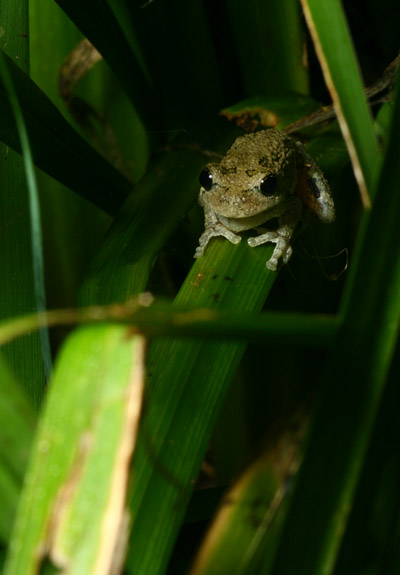 On the same evening that I found the adipose caterpillar featured here, I spotted a Copes grey treefrog (Hyla chrysoscelis) perched on a water reed in the ditch by the road, and did a quick shot. I’ve featured these enough times on the blog that I can type their scientific name from memory, like the Chinese mantids, though it’s virtually guaranteed that I’ll mispronounce it if I tried. The rules, if there are any, for Latinized (which is a slightly different process than Martinized) scientific names are beyond my vast intelligence, but I know the trick that I was taught in kindergarten – “sound it out” – is completely worthless when it comes to these. And I suspect this is done on purpose, so biologists and their ilk can quickly tell when a poser like me happens along. “Did you hear that? The doofus said, ‘kriss-o-SKELL-us,’ instead of, ‘shay-OFF-kay-eye‘ – what a total kanye…”
By the way, I think I have a buttload of these as tadpoles in the backyard pond right now (the frogs I mean, not biologists,) courtesy of the amorous pair seen here. They may be featured soon.
Speaking of frogs…
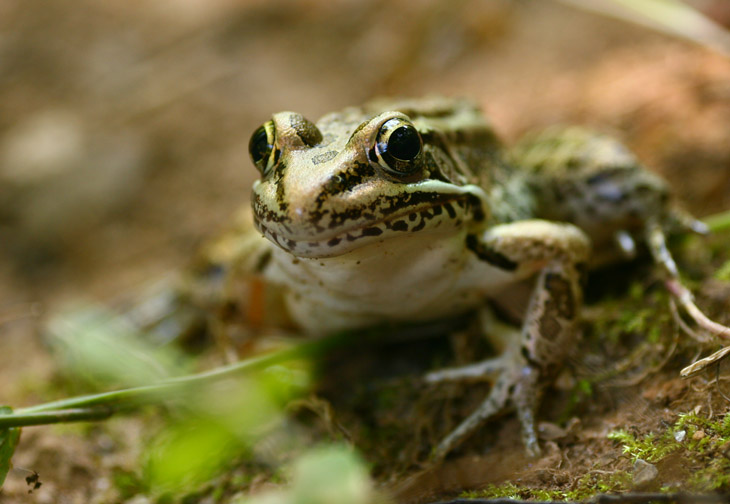
I had initially identified this as a leopard frog, but that goes to show you that you should (or at least, I should) always check a decent guide before posting. This is actually a pickerel frog (Lithobates palustris,) which attracted attention on the side of the Eno River during an outing with the Immutable Mr Bugg, then paused and pretended that I couldn’t see it. It may appear again in a little bit, since I have a post planned on the awkward positions one gets into for certain perspectives that nevertheless often pays off. The image has lost a little at this resolution, since the eye and skin detail came out wonderfully sharp in the original file. Order a print and you’ll see what I’m talking about.

Just some sunflowers that we came across, and using a short depth-of-field to go a bit fartsy.
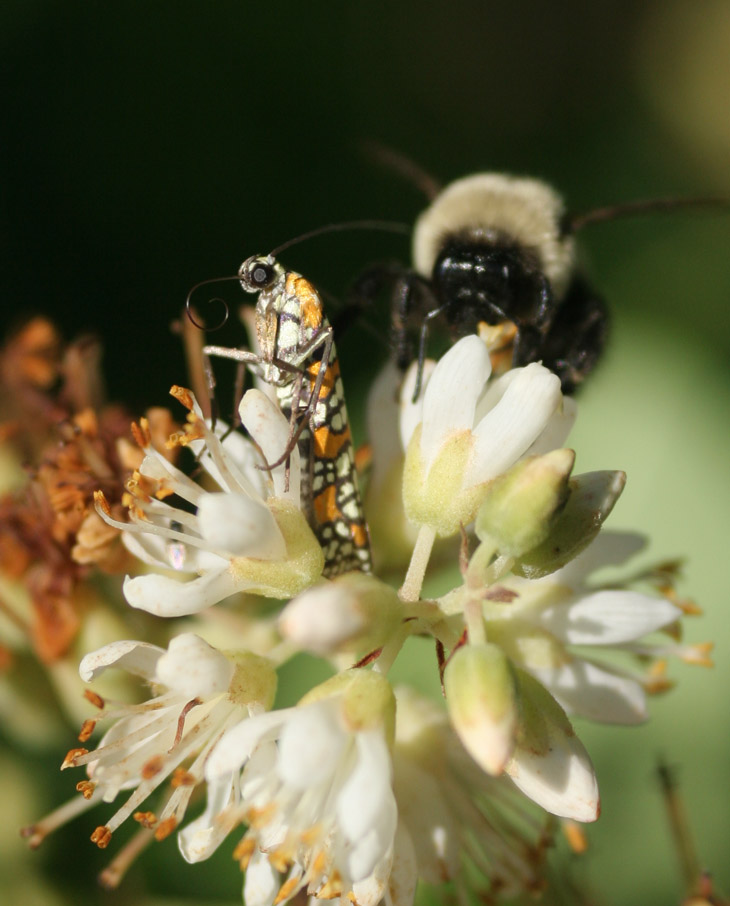
I had spotted this ailanthus webworm moth (Atteva punctella) in the foreground, busily raiding these flowers, and was trying for a particular perspective since the conditions were right. You see, the dark patches on its wings are actually bright iridescent blue when the light hits them properly, and I was trying to capture this effect, but it could only be seen at a specific angle and the moth wasn’t holding still in the slightest. As I was trying to hold focus and snag an illustrative position, the bumblebee landed and came blundering straight up to the moth, so the ominous-looking capture here was more luck than design. The moth, by the way, was far less discomfited by the intrusion than you might imagine, largely ignoring the much-more-massive bee. If it was a bee…
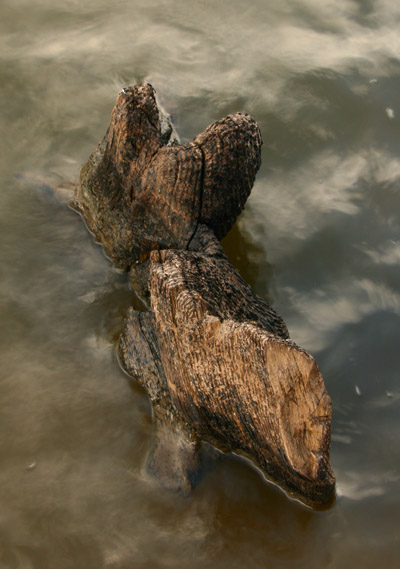 So this one’s a little odd (like that never happens here,) but bear with me. Something like 12 years ago I shot a particular tree stump in Jordan Lake in a couple of fartsy compositions, using the Canon Pro 90 IS. I had remembered it being in a particular location and thought the stump had long since been washed away, but then I recently encountered this one, displaced by a few hundred meters from where I thought I’d shot those. It’s possible I wasn’t remembering the precise location correctly (hey, I’m old, it happens, I shit myself twice while typing this ridiculously long post,) so I took a pic to compare them. Result: inconclusive, since 12 years of erosion might have produced that effect, and there’s nothing specific I can say about the shapes. Looking at the other frames that I took that day, the angle of the background details seems to support the idea of the stump being in a different location. So if it is the same stump, I have to say it’s damn tough wood…
[Seriously, I do pointless challenges like this from time to time, don’t ask me why.]
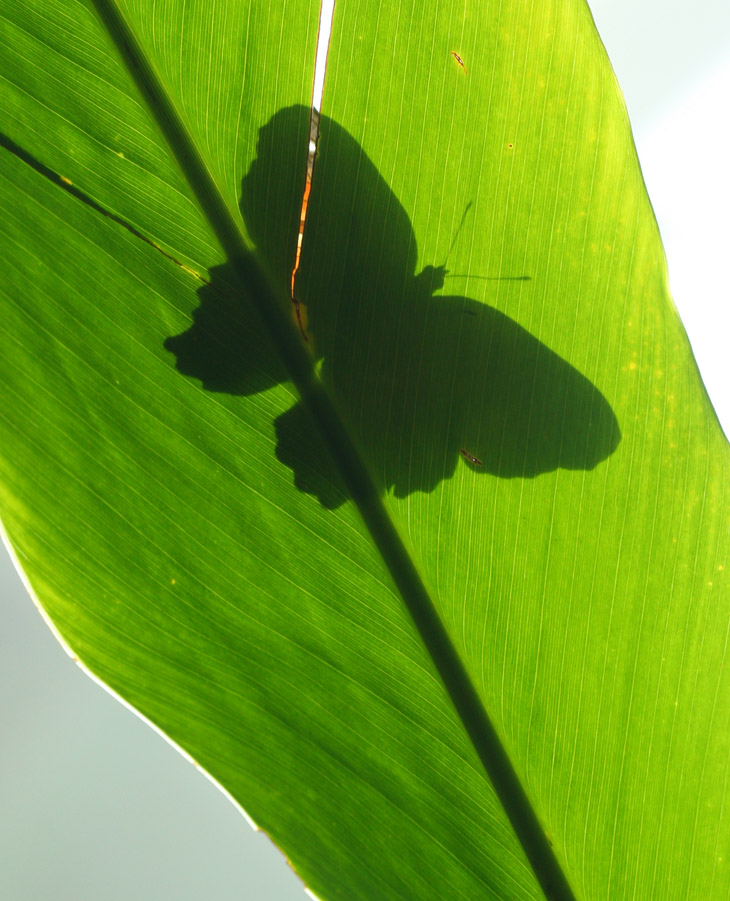
I was thinking of using this one for the month-end abstract, but I have a better one in mind, so I can use this here. I liked it not just for the silhouette and the sharpness of the details (if you look close you can see some dark spots where the feet touch,) but also for the little gap in the leaf that betrays the butterfly’s wing pattern, the tiniest bit of complementary color. I would have liked to have had the eyes peeking through that gap, but that’s a composition for another time.
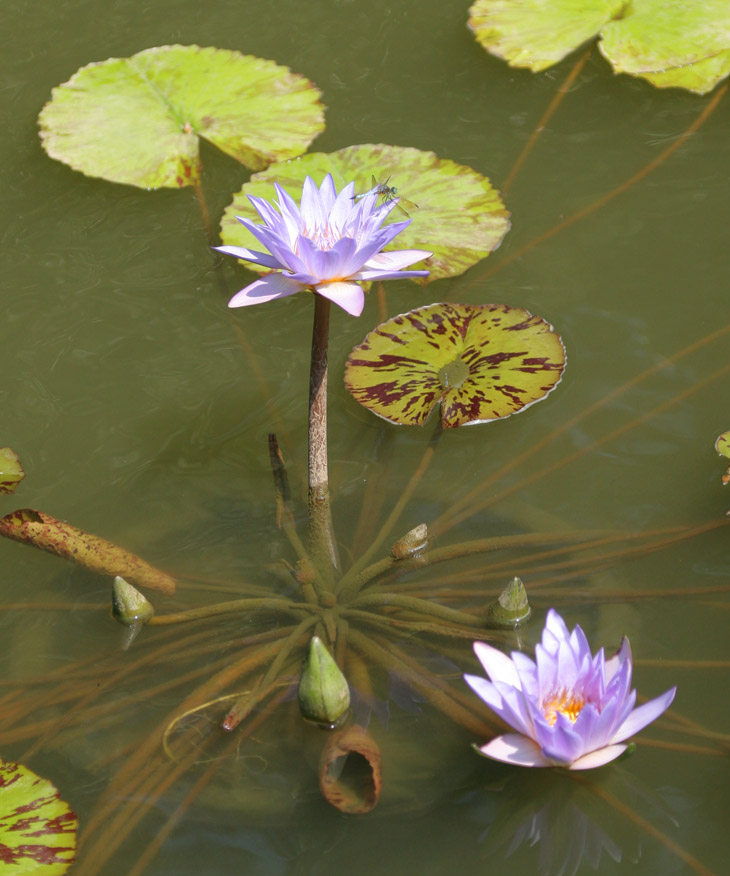
And I probably shouldn’t admit it, but there’s also an extra detail in this one that was wholly intended. I know it’s there and my eyes go straight to it, but I’m not sure how subtle it is (or isn’t) to everyone else…
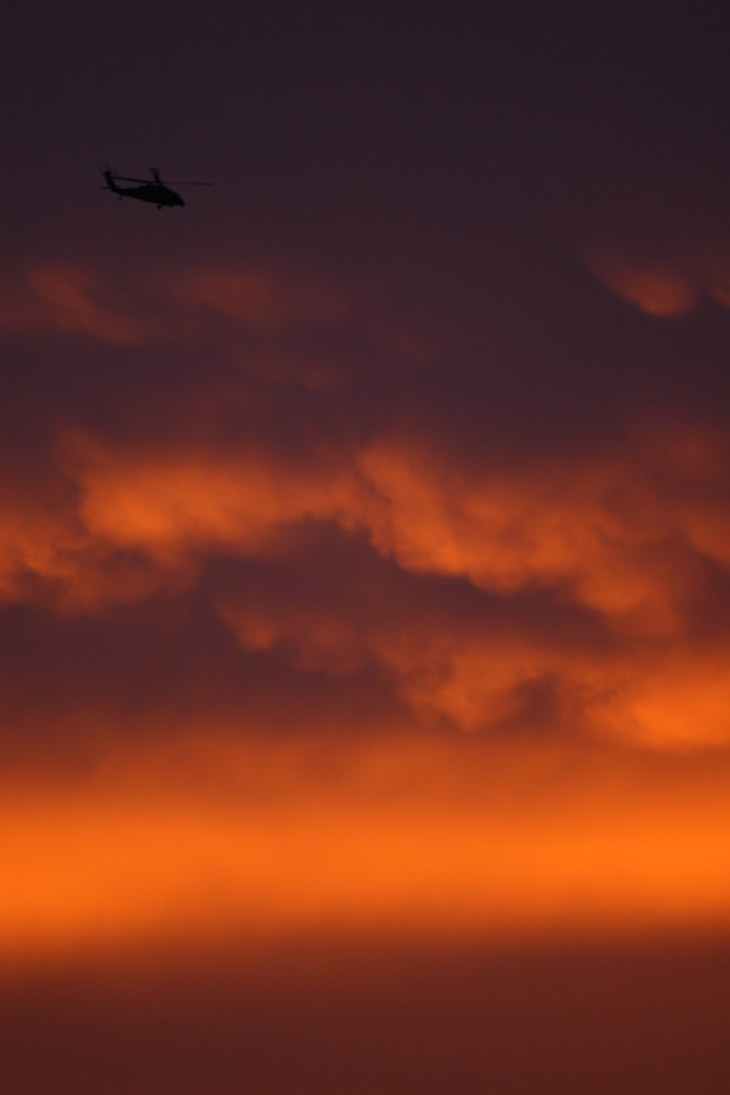
I’ll close with this, as a Blackhawk helicopter cuts across the sky during a sunset shoot. It never got into the really dramatic colors and clouds, those being in a pretty narrow region of the sky, but I think it works okay as it is. And I can’t help wondering what their view was like.
Potentially Related Posts: