Sunday slide 7

matching spider webs in mountain trees
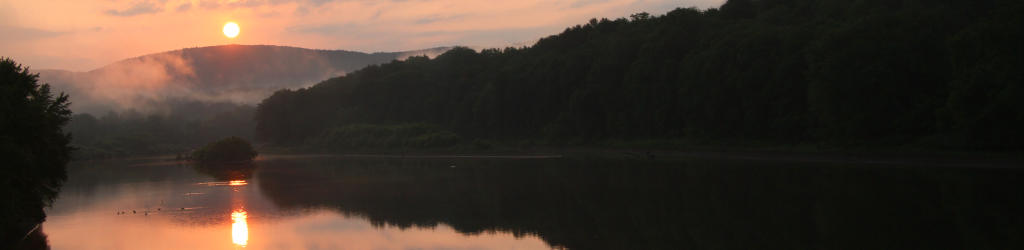
This week, we have a shot from 2005, I think, my first trip to the Blue Ridge Parkway. The fog was lifting (or the clouds passing – way up in the mountains it’s pretty much the same thing) and a couple of dew-covered webs were catching the emerging sun.

“Catching the sun” – isn’t language stupid? Spider webs are amazingly strong for their mass, but even the toughest probably couldn’t actually catch the sun, should it come close enough to earth to even make it possible. The sun would likely break free eventually…

Way behind schedule, but anyway…

old and new sea turtle tire covers compared
So, I finally managed to finish off a project started for last christmas, which is the repainting of The Girlfriend’s spare tire cover. The first had been done back in 2009, and despite our best efforts with UV protectant spray, the vinyl cover was showing its age and starting to tatter at the edges, so it was time for a new one.

I had intended to find a hard shell cover instead of a vinyl one this time, but nearly all of them made for that car have “Honda” embossed into the shell, which wasn’t going to work. The company that I bought this from glossed over the fact that the face was hard, but the rim was still vinyl – easier to paint, but still beholden to the elements and expected to last no longer than the previous. By the time it had arrived I was up against my christmas deadline and wasn’t going to play around with another order, but it means I still have another project waiting in the wings for when I find a full shell cover.

Nonetheless, I had the chance to correct a couple of things with this one, notably some proportional errors and the number of scutes on the turtle shell, at the same time bringing the color a bit closer to reality – it’s nice to have good photos to work from. It could still be more accurate, but I’m pleased, and so is she, which is the important bit.

sea turtle tire cover head detail
I’m most pleased with how the head turned out, especially the reddish ‘tint’ of the scales, but even the fading minor scales came out well. I’m not an artist or painter, though I dabbled back in school and did a shit-ton of model kits which at least contributed to my handling of a brush. We look at things like this and think, “Oh, yeah, it just curves around, I can do it,” but the truth is (at least for me,) that three-dimensional aspect can be very hard to render, getting the shape and distortion of the scales right as they follow the curve of the head. I could point out the significant errors still present, but I suspect that most people would miss them, so I’m okay with this for now; the next one will have to be better, though.

[Okay, fine. See that scale above and behind the eye, right at the corner? The one on the opposite side of the head should be positioned at the same place in regards to the eye, but it’s nowhere near it, is it? Happy now? You can also see the color-matching issues when you’re this close, but you really have to be this close for it to be noticeable. I’m making excuses, aren’t I?]

The grasses had been a corrective addition to the previous version, since I hadn’t stretched the cover to the proper placement on the tire that I had when I painted it, and the turtle came out off-center. It was much easier to center this one, but The Girlfriend thought the grasses added to the atmosphere (aquasphere, whatever,) and so I kept them for this. But I have different plans for the next – it’s just a matter of whether I can adequately pull them off or not. And proper shading would be a nice thing to develop. We’ll see.

Standards of evidence

Some time back in a discussion on religion, someone once told me that we weren’t going to come to an agreement on the existence of god because, between us, we had “different standards of evidence.” And I’ve heard similar sentiments many times over before and since, notably in regards to whether or not we’ve been visited by extra-terrestrial intelligence. The phrase itself most often sees usage in the US justice system since there are different criteria among civil and criminal courts to establish “beyond reasonable doubt” – it’s disturbing how wishy-washy the language is when it comes to determining just what it is we’re going to sentence people with. The issue with the concept, however, isn’t what we hold as standards, but what our goals actually are, and there’s a distinct short-sightedness that’s present in too many such discussions, one rarely recognized.

Some religious pundit, who will go unnamed since because I don’t feel like looking up his name, once made an open cash-challenge to anyone to prove that the Earth was not the center of the universe; apparently, geocentrism was being considered a point in favor of god in some way. He was hoping to capitalize on the simple idea that a center was meaningless without outside borders, and therefore he could consider Earth the focal point of the universe if he damn well pleased. Even a lot of religious folk don’t put any weight behind such non-negative arguments, with good reason: they establish absolutely nothing, and when it comes right down to it, the physics behind the mass-gravity model of orbital mechanics not only explains the behavior of everything in the universe quite handily, they work amazingly well to predict results when it comes time to, you know, put a planetary probe in parking orbit around another planet. A “center” to anything is an arbitrary and useless concept; what matters is, how will the probe behave in proximity to any collection of mass it approaches?

Which begins to highlight the fundamental (a ha ha) difference that exists. Nobody cared that the pundit wanted to believe that the sun actually orbited the earth, therefore god – personal opinion doesn’t provide anything of further value. There’s a distinctive, and vast, difference between self-affirmation and actually deriving something of future use to us as a species. UFO proponents are notorious for simply wanting to win some debate. But while it would be of remarkable interest to nearly everyone to know that extra-terrestrial life, in any form, had been found, the real value lies in actually having some useful information, and especially in being able to take this further. How can we study it, how much does it differ, how did it develop, how old is it, how close is it, how does it reproduce, does it have a DNA analog, and on and on in that nature for the next umpteen decades. These are not yes/no questions, and there is no stopping point to be found – and hopefully, the answers would not just satisfy some facet of curiosity, but provide something for us to use as well, some way in which we can improve our own standards of living or fix some issue that we presently have. That’s really what the pursuit of knowledge is all about, isn’t it? It’s almost certainly how we even evolved to have it, since it worked much better than simply accepting things as they were without question or interest. Notably, a lot of species have this investigative property to some extent, albeit less than we do; we’ve all seen kittens and puppies puzzling out whether a leaf is actually animated or simply driven by the wind, and crows and squirrels can easily be observed to utilize cause-and-effect reasoning, figuring out a way around some obstacle when trying to get food.

Does the puppy believe the leaf is imbued with free will and intelligence, perhaps visiting from another planet? Does the squirrel believe it is being punished for violating some commandment when it comes up against the skirt around the bird feeder? Answering these questions might give us some insight into the thought processes of such species, but no one is bothering to investigate them or really cares. Why not? Probably because, not only do we not think squirrels can provide us with information about supernatural beings, mostly it’s with the knowledge that if they did hold such beliefs, they’d still be wrong. We know where the squirrel-shield came from, and it’s hard to express how little value a theory of a Sciuridicentric universe would provide. Sure, it might make the squirrel feel better about itself, but how does that solve the issue of obtaining food?

Quite often, this is the point where someone feels obligated to state that mayyybe dry leaves really are self-animated and we just haven’t discovered it yet, abandoning that standards of evidence thing altogether and thinking the lack thereof is somehow significant – often this is slyly couched in terms of being “open-minded.” Yet there’s an obvious difference between being open to new evidence, and just trying to salvage a pre-existing belief with whatever two-step one can. For every “maybe” there’s a “maybe not,” and it’s even more open-minded to recognize that too, and hold out for something that leads someplace further than appeals to ignorance.

The value of knowledge is its utility. We don’t need to have any “standards of evidence” – we just need it to work and produce dependable results. At such a point, there’s no debate, and whatever someone’s personal opinion is has no effect or impact. We should never be looking for affirmation or emotional indulgence, we should simply be looking for functionality. That’s how progress is made.

Nothing but iron

Yesterday, knowing there wasn’t a lot of lunch-style food in the house and not having been in a while, I hit the nearby pizza place on my lunch break. I ended up having to get it to-go, however, because the place was packed. Later on when I got home, I started seeing things on various sites about National Pizza Day, which explained the crowd, though it made me feel bad because I generally don’t bother with stuff of that nature. I don’t make a point of non-conformity, but I definitely avoid both fads and manufactured holidays. It was just a coincidence, I swear!

What made this ironic is that today is National Coincidence Day, the day we should all recognize the meaningless coincidences in our lives. I had apparently jumped the gun on celebrating that one, again without even meaning to, which is perhaps celebrating it doubly so. Even worse, tomorrow is National Contrition Day, which means I’m really out of synch and hopelessly trapped amongst the mindless sheep.

But then I found out that the day before yesterday was National Pizza Day, so we’re all good now. It had been getting all irony up in here.

Art vs. misdirection

Listen, I’m not in any position to tell someone what “art” is, not only from my poor ability to execute it myself, but overall just from the term being so ill-defined and subjective. If you get any kind of acclaim or recognition for what you do, great! And even if you don’t, self-expression is still a legitimate pursuit and if it makes you feel good (and doesn’t harm anyone else,) go for it!

And naturally, with all that said I’m going to come out with something a bit more negative, or at the very least, thought-provoking – I just have to get the clarifying statement out of the way first before anyone categorized this post differently ;-)

The ability to edit images has been around since almost the dawn of photography, and remains an inherent trait – we’ve always been able to change contrast and affect how bright something is selectively, and with masking we’ve been able to composite together portions of images from completely separate settings or locales. Going digital just made this cleaner and far less time-consuming, but it hardly introduced the practice; it just introduced a new verb, “Photoshopping.”

Bodie Island lighthouse against impossible starfield and Milky WayBut for some reason, this has really taken off when it comes to astrophotography. While the image seen here is my own because I’m not going to target any specific example from someone else, it is representative of many such efforts that can be found now, and it is manifestly impossible to capture in-camera; no one would be able to ‘take’ this photo. Not just is the Milky Way impossible to even see in post-sunset conditions where the glow from the sky can color the lighthouse, it cannot even appear in this position by the moon, and the light from our galaxy is hundreds of times dimmer than the light from even a half-moon (or a lighthouse beacon,) so in an exposure that captured that cloudy look, the moon would be so overexposed that it would appear like a sunburst in the frame. Moreover, it would scatter so much light from atmospheric humidity that, like the sunset glow, it would overwhelm the Milky Way. It’s simply not happening, and this image is just as fake as one showing me shaking hands with Albert Einstein (who died ten years before I was born – I’m not that old, you shithead.)

Astrophotography is a challenge. The really interesting stellar subjects are pretty dim and low-contrast, so getting a decent image of them requires long exposures, at the very least – from several seconds to several minutes. And they usually require being someplace where light pollution has a minimal effect, so traveling to an ideal (and usually remote) location. That’s fine, and part of what makes the subject interesting in its own right: if it takes skill and effort, then fewer people can do it. This has always been a mainstay of photography, and what so many of us seek. But it largely defeats the purpose when images are digitally constructed. I don’t have anything against digital compositing as a tool, but as a skill set it’s not particularly impressive or rare.

And when it’s being used to represent an astrophotograph that should take skill and effort, that is by its nature known for being tricky, well, what’s the point? I cannot tell you what motivates all of the people who present such composited images, and I’m sure it isn’t all the same thing – but can we consider it any different from any other manipulation?

Most especially, very few of those that I’ve found actually admit that such images are manipulated, which seems to suggest that they don’t want it to be known, and/or don’t want to be recognized for editing skills instead of photography. It’s misleading at best.

And it does a disservice to all others out there who don’t fully understand the demands of the subject matter and want to try such shots on their own, because it simply isn’t going to happen. Really distinct and sharp images of stellar dust and galaxies and so on are going to require very long exposures, and that means counteracting the rotation of the earth while this is going on – in other words, a tracking support that pivots the camera in the opposite direction of the earth’s rotation so the camera remains pointing at the same spot in the sky the entire time. These are expensive, or tricky to build, and require very precise alignment – it’s a skill in itself. And of course, you can forget about foreground subjects because now the camera is moving to track the sky and everything earth-bound will be blurred. Photographers have been dealing with these issues for decades. So when you see a really sharp deep-sky shot with a really distinct foreground subject, the chances are overwhelming that it’s complete horseshit, pasted together from separate frames of hugely different exposure times.

[I’m going to insert a specific caveat here. Many photographs produced by telescopes and NASA, especially the Hubble images, are also digital manipulations and composites, but of a special kind. Hubble, for instance, has a monochrome image sensor that only captures light intensities without any color at all, and a selection of color filters that range far beyond what our eyes can see, while even images from ground-based telescopes often use special filters for certain wavelengths specific to hydrogen or oxygen and so on. Separate exposures are made solely to see how much light is being produced within a very narrow range of wavelengths. The purpose is to tease out information about the nature of the dust clouds, or the age and formation details of stars and galaxies, and when they’re presented for public viewing, they are often ‘false-color’ representations of multiple exposures for better definition and, yes, artistic effect. While these can be misleading for anyone wishing to tackle telescope photography, NASA at least is very good about labeling them as false-color composites, and the primary purpose of the images is scientific, not wowing people with something vivid. I give such pictures a free pass from my rants.]

Astrophotography isn’t the only topic that sees a lot of digital manipulation, since a lot of landscapes (especially exotic locales) show evidence of a technique called high dynamic range, or HDR, which even in name is misdirection – photography has not undergone a significant increase in the range of light levels (dynamic range) that it can capture, and in fact, digital photography actually possesses less range than films of just a few years ago – especially when displayed on the abysmally short range of a computer monitor or LCD screen. HDR is just pasting together images of two or more different exposures, and it’s so trivial that it is an option within some cameras and smutphones. For a typical scene with a wide range of light conditions (such as a sunlit beach and a shadowed cliff overhang,) the camera can capture only one set of light conditions usefully, while any others will suffer from bad exposure – get the beach looking right, and the shadowed area under the cliff will drop into darkness too far. Expose for this darkness, and the beach will be bleached out and overexposed. So two or more exposures are taken and put together using the portions that look best in each.

In a small way, I’m more in favor of this than of compositing night sky shots, because our eyes capture a very wide range of light, more than photography can yet achieve, so in some cases the resulting composite image hews a lot closer to what we see than any in-camera efforts. But again, it’s editing skill (and not very significant at that – I can show you how to do it within a couple of minutes) and not photographic skill. Once again, for years, photographers had to cope with these limitations, and found creative ways to handle them – that’s what made good images of some of these subjects so notable. And while it might be useful to throw down an HDR shot for advertising purposes, does it reflect any particular skill of the photographer? Is it art of any kind? Especially, I ask again, if the photographer somehow never admits to it being a composite?

When I’m teaching people how to use their cameras, two of the key topics are contrast and low-light photography, because they’re constant issues that every photographer deals with regardless of experience. Some things just aren’t going to happen, like stopping action in even moderately low light levels, and in many cases the answer is simple yet not at all encouraging: pick the factor that you need the least in an image, because that’s what you’ll have to sacrifice to the gods of photography. Generally, this is a choice of speed, depth, or quality, but in more extreme cases (and astrophotography counts as such,) it might even be all three. The thought that everyone has regarding photos is, “Hey, I like that shot! I need to know how to do it,” and with too many dramatic images nowadays, I have to explain that it’s not a photograph, but an editing creation. And while the opinion of the legitimacy of this as an art form is all down to personal taste, in many cases, people are far less impressed when they find out that it’s not an in-camera endeavor.

Personally, I’m a fan of full disclosure: if you had to edit it beyond simple cropping and color/level tweaks, then own up to it. Not only does it give people an accurate impression of what can, and cannot, be done with a camera, it even serves as motivation to accomplish the really tricky shots that do take a lot of preparation and effort – that’s the kind of thing that everyone can be proud of.

Seriously, see Sunday slide 6

Wrightsville Beach wetlands channel
This one has appeared before, some years back when I was ranting about a trivial phrase, but I also came across the original slide again last week as I was looking for a candidate then. There’s something captivating about it, forlorn and yet somehow inviting. It’s easy to imagine taking a kayak up that glassy channel, endeavoring not to break the silence, not because there was anyone nearby to disturb, but simply because it seemed wrong.

There’s another aspect of this shot that I won’t mention now – maybe in a few days. Or maybe not. For now, if you can lose yourself in the scene and mood, well, good – that was the intention.

Podcast: What to do in the winter

Night snow exposure showing light pollution
Okay, so these are conditions where you could be taking photos, but this is a night exposure experiment, with all light coming from city light pollution reflecting from the low cloud cover and the snow itself

I’ve mentioned far too many times that it’s the slow season, but now, I’ve finally done something about it! And that something is, telling you what you can do about it. This fulfills my personal obligations and alleviates my guilt, so I don’t even have to follow any of my own advice imparted aurally, just below:

Walkabout podcast – What to do in the winter

And a few other links to expand on topics touched therein:

Cold weather tips, for when you do actually get out to do some shooting.

Using weather as a compositional element might help too.

Tackling black & white photography when the conditions support it? Then the posts on monochrome and contrast may offer some assistance. And while I’m at it, this one on mood & metaphor might contribute too.

Oh, and a post on cleaning lenses.

ringflash, voltage regualtor,m and focusing light projectsProjects? Here’s one example, and another – you’ll have to gauge your own shooting needs and what will work for you.

The image to the right, by the way, is evidence of three separate projects: an adapter to make a ringflash work with a reversed lens, a voltage reducer to keep the flash power from frying the sensitive camera circuitry, and a focusing light for macro subjects.
I mentioned planning trips, and here’s one that anyone might be interested in, the total solar eclipse this August. You know what I said about contingencies? Good – if you are planning to get this, have a couple of other topics or things to visit during the trip, in case the clouds prevent you from capturing your primary objective.

Ever wanted to mount a webcam in a birdhouse or above a nest? Do it now, before nesting season starts.

And here’s a project that I’ve just reminded myself of, good for not just the insect photographer in all of us, but garden and flower and even bird images: purchase the seeds that you need for the right kinds of flowers and plants and start them off indoors, getting that head start on spring weather. Perhaps you might want to order some mantis egg cases as well.
Hope this helps! Good luck!

The end of the beginning

Otherwise known as January’s month-end abstract:
tight crop of hindwing of Low's swallowtail Papilio lowi
I said this might be back, and you scoffed – don’t deny it, I heard you distinctly all the way over here. So let’s gaze deep into the hindwings of the Low’s swallowtail (Papilio lowi) and the curious pattern thereon. Don’t ask me what exactly it accomplishes, but I want you to see something. From a short distance, the wings appear to have gradient tones, shading that almost gives them a three-dimensional shape, but on close examination we can see that the scales come in only two colors, black and pale blue. The shades are produced only by distribution, a lower density of the blue scales giving more of an impression of shadows. This is almost a good mimicry of hollow tubes or stems, but there’s a flaw: the centerline of each should be the brightest blue to carry the impression, the reflection of more direct sunlight, rather than having a darker line which hints at a hollow or crease. Again, I can’t think what this is supposed to communicate, if anything – it might simply be to attract the attention of predators more towards the non-vulnerable hindwings, or it might be a sexual display, or simply something to confound bloggers…

Monday color 17,241

Duke Chapel at sunset
I’m doing that count from memory, so I’m not exactly sure that’s the right number, but it’s somewhere up there, anyway.

As I was going to meet with a student at Duke University at 5:30 last Tuesday, Duke chapel suddenly became visible between the buildings, illuminated by the setting sun, and the stark coloration naturally grabbed my attention. Extending well above the trees and surrounding buildings, the bell tower captured the light of the sun as it was dropping to the horizon while just about everything else was in shadow. White balance was set for full sunlight, which basically means no correction, though I admit I tweaked this a little bit – I bent the curve a tad towards blue for the sky alone, which would have reduced yellow by the same margin – the effect to the tower itself was not even visible.

Many years ago I was working for a place that printed the school newspapers, and I would go to another building nearby at 1 am to pick up the pasteups, driving up chapel Drive directly towards one face of the tower. The chapel is always lit by floodlights from all four sides throughout the night, but on one particular night, during an extremely dense fog, the floodlight on my side was out while the remaining three were still alight. The effect was fantastic, the dark silhouette of the elaborate tower standing out against the brilliant white of the floodlit fog that twisted and billowed gently like steam. See those faint patches of sky peeking through the bell openings at midpoint? Yeah, the light was coming through those too. The appearance of a horned demon with glowing eyes, looming from the smoke of the pits, was undeniable – and alas, I wasn’t carrying a camera, nor could I easily go back to get it. Probably a once-in-a-lifetime opportunity so it remains a regret of mine, but I’ve gotten a couple of other nice pics since then, so I guess I’m okay…

Sunday slide 5

ring-billed gull Larus delawarensis looking pompous
Last summer, I talked about a trip I took to the Outer Banks, and how I hadn’t been there in a while. It appears it was even longer than I thought, because this slide is from the last time I was there, I believe, and dates from 2007! That’s just not right. I’m going to ensure that I don’t wait anywhere near that long between trips, ever again…

Anyway, this ring-billed gull (Larus delawarensis) was posed on the first high point of the beach looking around with a pompous air, and I got low and fired off a few frames against the water and sky; when it finally turned towards me, I was lucky enough to have a curler break in the background. You might think, at the coast, this is a trivial thing to capture, but the truth is, waves don’t always break in a dynamic way, and they do so in sporadic locations along the beach, so having one in the frame for the couple of seconds that the gull turned towards me was more chance than guaranteed. The image accompanying this post was taken during the same shooting session, and I waited a few minutes for the waves to produce a nice inverted mimicry of the cloudbank above. Not to mention that the beach wasn’t as deserted as it appears at all, and the tight vertical composition there cropped out the nearby bathers. I often end up doing this on beaches… but not, as I said, as often as I should.

1 219 220 221 222 223 335